• 1972 ~ I Am Woman, by Helen Reddy, was released by Capitol Records. The number one tune (December 9, 1972) became an anthem for the feminist movement. Reddy, from Australia, made her stage debut when she was only four years old. She had her own TV program in the early 1960s. Reddy came to New York in 1966 and has appeared in the films Airport 1975, Pete’s Dragon and Sgt. Pepper’s Lonely Hearts Club Band. Reddy also had four million-sellers: I Am Woman, Delta Dawn, Leave Me Alone (Ruby Red Dress) and Angie Baby. She had a total of 14 hits on the pop music charts.
• 1992 ~ Billy Joel, American pianist, singer-songwriter, and composer, received an honorary diploma from Hicksville HS at 43
• 2000 ~ British actor David Tomlinson, who starred as father George Banks in the classic 1964 musical movie “Mary Poppins”, died at the age of 83.
• 2002 ~ Dolores Gray, a Tony-winning actress and singer, died of a heart attack at her Manhattan apartment. She was 78. Gray began performing in Hollywood clubs when she was 14, and at 15 she was discovered by Rudy Vallee and given a guest spot on his national radio show. She landed her first major theater success in 1947 as Annie in “Annie Get Your Gun” in London. In 1954, she won a Tony award for best musical actress in “Carnival in Flanders.” After signing a contract with MGM in 1955, Gray began to star in musical movies, including “Kismet,” and “The Opposite Sex.” She performed alongside Gene Kelly in “It’s Always Fair Weather” and with Gregory Peck and Lauren Bacall in “Designing Women.” Gray continued to perform in clubs, on stage, and on television variety shows, including the Bell Telephone Hour. She returned to Broadway for several productions, including “Destry Rides Again,” during which the stage curtain once caught fire as she sang “Anyone Would Love You.” As the theater’s firefighters and stagehands battled the blaze backstage, Gray kept singing, and was credited with keeping the audience calm until they could evacuate the theater. The show resumed after a 40-minute intermission.
• 2002 ~ Joe Derise, a musician, cabaret artist and former big band vocalist, died. He was 76. Derise sang with Tommy Dorsey at the age of 21 and performed as a singer, guitarist and arranger with the Claude Thornhill Orchestra. He went on to form his own group, Four Jacks and a Jill, which performed around the country. Derise made several records and composed some of his own songs with the lyricist Marcia Hillman. His last major performance was at the Algonquin Hotel in New York in 1999.
• 1799 ~ Pierre Beaumarchais, French playwright, died. Famed for his two comedies “The Marriage of Figaro” (Mozart used this for an opera) and “The Barber of Seville” Rossini used this for an opera).
• 1830 ~ Karl Goldmark, composer
• 1876 ~ The first issue of the first music magazine in America, Musical America, was published
• 1892 ~ Ezio Pinza, Italian bass and actor
• 1902 ~ Meredith Willson, American composer, flutist, arranger and orchestrator
More information about Willson
• 1911 ~ Gustav Mahler, Czech-born Austrian composer, died. His last word was “Mozart”. He completed nine symphonies and several song-cycles notably “Das Lied von der Erde.”
More information about Gustav Mahler
• 1919 ~ Dame Margot Fonteyne, British prima ballerina. She started her career with the London Sadler’s Wells company in 1934 and in 1962 began a legendary partnership with Rudolph Nureyev.
• 1948 ~ Joe Bonsall, Singer with The Oak Ridge Boys
• 1968 ~ Tiny Tim’s warbly Tiptoe Through the Tulips was released. An eventual top twenty hit, Tiptoe was a remake of a number one hit for Nick Lucas in 1929.
• 1970 ~ Opening this night in New York City was The Me Nobody Knows at the Orpheum Theatre. The musical had a run of 586 performances.
• 2002 ~ Wolfgang Schneiderhan, a violinist who began performing as a child, became a concert master at 17 and played with orchestras across Europe, died. He was 86. A child prodigy, Schneiderhan quickly rose to international fame, performing with leading ensembles, including the Vienna Symphonic Orchestra and the Philharmonic. A regular at Europe’s most important music festivals, Schneiderhan played with Wilhelm Backhaus and other well-known pianists and gave violin concerts under such legendary conductors as BrunoWalter and Wilhelm Furtwängler. Later, Schneiderhan was a teacher at the Salzburg Mozarteum and at the Vienna Academy of Music. At age 11, Schneiderhan played in Copenhagen, Denmark – his first major concert abroad. Already a distinguished interpreter of the music of Mozart and Beethoven, Schneiderhan became concert master of the Vienna Symphony Orchestra at age 17, a job he also held with the Vienna Philharmonic in 1937.
• 2003 ~ Broadway’s ‘Les Miserables’ Ended After 16 Years. The pop opera based on Victor Hugo’s 1832 novel closed after 16 years, making it the second longest-running show ever on the Great White Way. The show played 6,680 performances since opening at the Broadway Theater in 1987. Only “Cats” has played more performances on Broadway with 7,485. The last performance at the Imperial Theater included a finale featuring 300 alumni of the Broadway run. Although it is now gone from the New York stage, the show is performed around the world by touring companies and is a fixture in London’s West End.
. 1864 ~ Eugen d’Albert, British-born German pianist and composer
. 1885 ~ Sigmund Spaeth, American music scholar
. 1921 ~ Martin Denny, Composer, arranger, pianist
1930 ~ Claude Bolling, French jazz pianist and composer
More information about Bolling
. 1927 ~ Ballet Macanique was presented for the first time at Carnegie Hall in New York City. This was the first symphonic work that called for an airplane propeller and other mechanical contraptions not normally associated with the ballet.
. 1953 ~ Eddie Fisher was discharged from the Army and arrived home to a nice paycheck of $330,000 in record royalties. Fisher sold 7 million records for RCA Victor while on furloughs. Anytime was just one of several hits recorded during his stint in the Army.
. 1970 ~ Officially resigning from The Beatles, Paul McCartney disbanded the most influential rock group in history at a public news conference. The Beatles hit, Let It Be, was riding high on the pop charts. The last recording for the group, The Long and Winding Road (also from the documentary film Let It Be), would be number one for two weeks beginning on June 13, bringing to a close one of contemporary music’s greatest dynasties.
Palm Sunday marks the beginning of Holy Week, the most important week of the church year. At the other end of Holy Week is Easter, the most important day of the church year.
For Christians, this is the big event! And it’s all about the mystery that somehow Jesus Christ makes us one with God.
The days leading up to Easter often have an understandably somber feel to them, particularly as we contemplate Jesus’ arrest, trial, and execution. It’s easy to forget that the week begins with a joyful event: the Triumphal Entry!
Today is Palm Sunday, the first day of Holy Week. On Palm Sunday, we commemorate Jesus’ celebrated entry into Jerusalem just a few days before his arrest, trial, and crucifixion.
The “palm” in Palm Sunday refers to the palm branches waved by the adoring Jerusalem crowds who welcomed Jesus and proclaimed him King. The event is commonly referred to as the Triumphal Entry. Here’s the account from Matthew 21:1-11:
As they approached Jerusalem and came to Bethphage on the Mount of Olives, Jesus sent two disciples, saying to them, “Go to the village ahead of you, and at once you will find a donkey tied there, with her colt by her. Untie them and bring them to me. If anyone says anything to you, say that the Lord needs them, and he will send them right away.”
This took place to fulfill what was spoken through the prophet:
“Say to Daughter Zion,
‘See, your king comes to you,
gentle and riding on a donkey,
and on a colt, the foal of a donkey.’”
The disciples went and did as Jesus had instructed them. They brought the donkey and the colt and placed their cloaks on them for Jesus to sit on. A very large crowd spread their cloaks on the road, while others cut branches from the trees and spread them on the road. The crowds that went ahead of him and those that followed shouted,
“Hosanna to the Son of David!”
“Blessed is he who comes in the name of the Lord!”
“Hosanna in the highest heaven!”
When Jesus entered Jerusalem, the whole city was stirred and asked, “Who is this?”
The crowds answered, “This is Jesus, the prophet from Nazareth in Galilee.”
Chuck Knows Church — Palm Sunday. Have you ever waved a palm branch in a worship service? If so, do you know why? Chuckle along and learn about Palm Sunday with Chuck
Three researchers attempt to bring some rigor to the math of melody.
The annual meeting of the American Association for the Advancement of Science wrapped up last week in Washington, DC. One particularly enjoyable and informative highlight was a session on Mathematics and Music, which presented some work in progress by three prominent researchers in this area.
Noam Elkies of Harvard University presented the first talk, titled “The Entropy of Music: How Many Possible Pieces of Music Are There?” He illustrated his points with virtuosic turns on a keyboard. His basic idea was to apply concepts similar to those used in statistical mechanics and information theory to approach the question posed in his title. Elkies addressed how much a piece of music needs to change before it is a different piece, rather than a variation on the original. He also talked about how much information remains when the redundancy of repeated themes in a piece is accounted for.
All sorts of things can go wrong in a performance. A cockroach can scuttle across your pedalling foot (this has happened to me). The music may fall off the stand (this has happened to me). A blood blister on your cuticle may burst during a glissando (you guessed it, this has happened to me).
But no matter what happens, as they say, ‘the show must go on’. What is the reason for this? Why do you have to keep going no matter what?
Because it’s not about you. It’s about the audience, and their enjoyment of the music you are playing. As a performer, it’s your job to make sure their enjoyment is not interrupted.
So here are, in my opinion, the Seven Deadly Performance Sins:
1. Drawing attention to mistakes
If you say ‘oh sorry’ while you’re playing, or start again, or suddenly slow down during a performance, the…
Back on the subway to the Lincoln Center for the Big Apple Circus. We’d seen them a couple times here but Michael had never seen them. On the grounds of the Lincoln Center, everything is under the tents where here, much is outside.
We found that Michael had bought tickets in the VIP Seating & Lounge. This included:
The best seats in the tent! First row, center ringside
Private Concierge
Complimentary Circus Meal – includes hot dog, soda and choice of popcorn or cotton candy
Cheese, vegetable and fruit crudite
Juice, water, wine, and beer
Dessert
Souvenir Book (We didn’t get this!)
Private restrooms (They called this the Golden Restroom)
Coat rack
Photo opps as you try on our circus costumes and hats
Close-up magician who did card tricks with us
THE GRAND TOUR is a circus extravaganza set in the 1920s and featuring acts from the four corners of the globe. Ships, trains, automobiles, and airplanes will serve as the backdrop for breathtaking acts of wonder, accompanied by the seven-piece Big Apple Circus Band playing live at each of more than 100 performances. Acts will include clowns, jugglers, acrobats, and aerialists, from Africa, Asia, Australia, Europe, and North and South America, as well as domestic and rescue animals, all creating performances that will leave audiences smiling and cheering. The show runs 1 hour and 50 minutes including a 20-minute intermission.
I was glad to see the ringmaster, John Kennedy Kane, was back. The last time we went here at home, there had been a female ringmaster.
There were so many neat acts and we were right there, front and center, to see them. Some of the acts seemed like they would land in our laps.
This is one of the clown acts:
A sample of some of the other acts. I loved the Wheel of Wonder, about 1:20:
And, a short TV interview:
This video is so cool – “Our performers give a bird’s eye view of what it’s like to perform under the Big Top! Get your tickets today and see the joy and wonder of this season’s show for yourself!”
WINDJAMMERS
Circus marches are called “screamers” because they are traditionally so high, loud & fast!! Circus Band members are often called “windjammers” because they jam so much wind into their instruments in the process of playing these screamers. Playing the circus requires incredible endurance & skills on your instrument. The windjammers play almost none stop and much of the music is really difficult!
The greatest circus bands were about 100 years ago in the heyday of the circus. At that time the big top band could be 25 or so, plus there were often sideshow musicians as well. Cowboy bands, women’s bands and bands of Blacks were often part of the sideshows.
Contemporary circuses are much smaller all the way around, and some don’t use live musicians at all, just “canned” music (recordings). Others carry 3 musicians, a drummer, a trumpet player and a keyboard (synthesizer) player. A few, like the Big Apple Circus, still have bands. The Big Apple Circus has 8 musicians on its band stand: a conductor/trumpet, a person who plays alto sax and clarinet, one who plays tenor sax and flute, a violin, a trombone, a bass player, a keyboard player and a drummer.
In the “old days,” being a circus musician was one of the most strenuous jobs a musician could have. In the days before musicians’ unions, the windjammer would be expected to play for the circus parade, play a pre-show free concert for the townspeople, ballyhoo around the grounds before the big top show, play the show itself (nonstop for two or three hours!), play post show concerts on the grounds or play sideshows. Then after everyone left, they helped take down the tents or do other chores around the grounds. It was a busy day and the pay was not very good, but it was an exciting life with lots of great music, and many musicians loved it!
THE MUSIC
Entry of the Gladiators (Thunder and Blazes) was written in 1897 by, the Czechoslovakian composer, Julius Fucik (1872-1916). This march is a classic circus march & one that just about everyone will think, “Ah, circus!” when they hear it. Thunder and Blazes (as it is most frequently called) and Fucik’s Florentiner March are probably his most well known marches.
Most circus marches follow the standard American military march form, but often abbreviated (no repeats in the second half):
Introduction (a bit longer than military marches)
First strain (repeated)
Second strain (repeated)
Trio (more mellow and the key changes)
Breakup strain (often called the dogfight in military marches)
Last strain
In a circus march, the last strain is often the same as the trio, but louder, and often the trio, breakup strain and last strain are not repeated like they are in a military march (in military marches, the trio and breakup strain are often reversed & the way they repeat may vary).
The music sets the scene for the performer’s act. Different music is needed for different kinds of acts: the bareback riders galloping around the hippodrome need a lively tune, the trapeze artists want something more peaceful, and of course the clowns need music that sounds humorous (like trombone smears!).
In the early days of the circus, the band masters would take some of the European classical music and arrange it for the circus band. “The most obvious example would be the beautiful, flowing waltz music that is essential to the trapeze artists (‘flyers’ and ‘catchers’). The bandmaster and musicians must be precise in coordinating the music and the timing of the artists, requiring rehearsal with the artists and the musicians. Similarly, it may be interesting to note that the bareback riders perform in a smaller ring because of the gait of the horses. The centrifugal effect requires a ring of a certain diameter for timing. Thus, the conductor must follow the gait of the horses, whereas the aerialists depend on the tempo of the music for timing their act.”
Modern circuses also play a lot of popular tunes, jazz and other songs that people will recognize. You will likely hear fewer of the standard circus marches at a circus today.
The drummer has a particularly challenging and important role in the circus music. He/she must “play the tricks.” Usually the drummer is situated so that he can see the ring because it is his job to accent and intensify what is happening in the ring. This was true 100 years ago, and it is true today. If the act is getting tense, the drummer will get intense. If someone slides down a rope or vaults off the trampoline, there will be a cymbal crash or drum hit when the performer reaches the floor. Sometimes the cues come from the conductor or from the ring master, but sometimes it is the drummer who is really in charge!
Circus bands occasionally play a John Philip Sousa composition during the traditional Center Ring Concert, but his melodic marches are not the right structure for most circus acts.
Sousa’s Stars and Stripes Forever is never part of the regular program. It is reserved for emergency use – sometimes called the “Disaster March”. If a major problems happens — an animal gets loose, a high wind threatens the tent, or a fire breaks out — the band plays the march as warning signal to every worker on the circus lot that something is wrong.
For lesser problems, the 12th Street Rag was played to alert the clowns to come out and divert attention during the more common mishaps.
Edward F. Shevlin describes what goes on in the cirus band as follows:
“Our music is usually by Karl King, Alexander, Fred Jewell, C. E. Duble and other old time circus bandmasters and musicians. Much of the music by these circus musician-composers is amenable to quick cut-offs and tempo changes as necessary to fit particular acts. Hence, Windjammers usually play two musicians to a stand so that when the conductor cuts to a new piece and tempo, one musician can quickly move the music to expose the next piece while the other continues without skipping a beat! We might quickly go from a march to a Samba or rhumba or galop; or from a waltz to an up-tempo march or galop for the “come down” when the aerialists quickly descend into the net or slide down a rope at the conclusion of their act . . .followed by that ubiquitous B-flat chord! The old circus bands would play anything from Ragtime to a Polonaise or a tone poem!”
*Information from an email from Edward F. Shevlin, a Windjammer who happened upon this page! Many thanks, Mr. Shevlin!
THE BANDWAGON
When the circus came to town, there was always a circus parade — the parade served to get the wagons filled with people, equipment, baggage, tents and animals to the location of the circus, but it also provided some free advertisement. The wagons were very elaborate & were intended to get people interested in the circus so they would come and see the acts. The band road on top of a bandwagon and inside the band wagon was luggage, tents and other necessities.
Hey, have you ever heard the term, “jump on the bandwagon”? Here’s the story. In 1848, when Zachary Taylor won the Whig party nomination for president, Dan Rice, a famous clown whose attire inspired the image of Uncle Sam, invited Mr. Taylor to ride on the bandwagon that Dan Rice had. When the bandwagon arrived at the center of town, Dan Rice stopped his parade and made a very emotional speech supporting Zachary Taylor’s candidacy. Someone noted that Dan Rice was on Mr. Taylor’s bandwagon and the term stuck, so that to jump on the bandwagon means to get involved with whatever the issue is. “He jumped on the ecology bandwagon.” “She is definitely on the civil rights bandwagon.”
Below you will find some links to pictures of bandwagons.
The Columbia Bandwagon– purchased by James Bailey for the Barnum & Bailey Circus — and see this wagon hitched to FORTY horses!!! The picture including the wagon & the band is at the bottom of the page.
Most people pronounce this instrument “cal eye’ o pee”. Circus people pronounce it “cal’ ee ope” (last syllable like “rope”). What is a calliope?? It is a huge instrument made of whistles with a steam engine that blows steam through the whistles when you press the key. Most calliopes are played with a keyboard like a piano keyboard & each key controls one whistle. It is LOUD!!!! Some can be heard up to 3 – 5 miles! Don’t stand too close to one!
The calliope traditionally brought up the rear in a circus parade.
Most performing entities have some superstitions. One of the superstition in circus bands is that you can not play Franz von Suppe’sLight Cavalry March. Quoting from Mr. Beal’s book:
“To play it on the circus lot means disaster and sudden death.”You may not believe this but most circus folks do, at least those who know the facts. Played once in Oklahoma, a train wreck followed and sixteen were killed. Played again, this time while [Merle] Evans was on tour with Miller Bros. 101 Ranch Wild West, a blowdown followed and 38 fatalities resulted. [A blow down is a wind that destroys all or part of the tents.]
“And the last time Merle played it a cornet player died immediately after the performance. That was enough for Evans. He collected the parts, tied them up in a neat bundle, and dropped them over the nearest bridge…
“From that day to this the music of Suppe’s Light Cavalry march is taboo. Even its presence in the music trunk would be considered a serious menace to the life and safety of the circus musicians.”
A second superstition about the music played, is that the only time you can play Home Sweet Home is during the very last performance of the season, the very last song. Otherwise it could mean the immediate closing of the show.
Information from:
Beal, George Brinton. Through the Back Door of the Circus with George Brinton Beal. Springfield, Massachusetts: McLoughlin Bros., Inc., 1938. p. 1-20.
Some important Windjammers and composers of circus music
Karl King — Karl King was the band master for the Barnum and Bailey Circus. He was one of the first composers to write for student bands. Learn about his music and his life.
The Great Circus Parade — here is a section of the Circus World Museum website dedicated to the circus parade that they put on every summer. (WMS students: The video we watched in Circus 2 was of this parade). http://www.circusparade.com/cwm.htm
Sounds of the Circus — This is the site of the South Shore Circus Concert Band which is ” one of the few bands in the country dedicated to preserving authentic music from the golden age of the American Circus.” The site includes pictures, CDs to purchase and a few RealAudio files for circus music. http://world.std.com/~tsh/circus.html
Definitions & ExplanationsScreamers – Circus marches are called screamers because they are so loud, fast & often very high!
Windjammers – Circus musicians are often called windjammers because they jam so much wind into their instruments in the process of playing these screamers.
Ballyhooing – The dictionary defines the verb “ballyhoo” as a vigorous attempt to win customers. When not playing, the musicians went around the grounds & the town shouting about the circus & trying to get people to come see it. Ex: “Come to the circus tonight! See flying trapeze artists and the ….”
Hippodrome – The hippodrome is the track around the inside of the ring where the horses were run.
Trombone Smears – Smear refers both to a trombone technique and to a type of music. The technique (officially called a glissando) where the trombonist pulls the slide in or out without tonguing and you get a smearing sound as the notes move up or down, rather than a distinct set of individual notes. Smear also refers a type of music that includes and features these smear techniques. These pieces are often used as clown music. Henry Fillmore wrote many trombone smears and they had an African-American minstrel sound to them.
• 1726 ~ The first performance of J. S. Bach‘s Sacred Cantata No. 55 Ich armer Mensch, ich Sündenknecht on the 22nd Sunday following Trinity. Was part of Bach’s third annual Sacred Cantata cycle in Leipzig 1725-27
• 1848 ~ Frederic Chopin played his final piano concert at a Polish benefit ball at Guildhall in London.
• 1850 ~ Giuseppe Verdi‘s opera Stifellio was first performed at the Teatro Grande in Trieste despite difficulties with the censors which resulted in cuts and changes.
• 1861 ~ First Performance of Johannes Brahms‘ Piano Quintet No. 1 in g, Op. 25, at a rehearsal in Hamburg, with pianist Clara Schumann.
• 1862 ~ The work noted above received its official premiere with members of the Hellmesberger Quartet; Brahms at the piano, in Vienna.
• 1870 ~ Birth of Australian composer Alfred Hill in Melbourne. d-Sydney, 30 OCT 1960.
• 1876~ The first performance of Peter Ilyich Tchaikovsky‘s March Slav in Moscow.
• 1877 ~ The first production of Gilbert and Sullivan’s opera, The Sorcerer, was presented, in London.
• 1888~ The first production of Tchaikovsky‘s Fifth Symphony in St. Petersburg.
• 1891 ~ Poland’s premier and premier ivory tickler, Ignace Jan Paderewski, made his American debut at Carnegie Hall in New York City. In later years, Paderewski, who suffered from arthritis, settled in Paso Robles, CA. The hot mineral baths located there eased his pain. He played only Steinway grand pianos custom-built to his specifications. In fact, five were made just for his use.
• 1925 ~ Sir Charles Mackerras, Australian conductor
• 1930 ~ David Amram, American composer and French-horn player
• 1938 ~ Gordon Lightfoot, Canadian folk singer, songwriter and guitarist
• 1938 ~ Orchestra leader Kay Kyser, speaking to an audience at the College of the City of New York (CCNY) told of the “inner workings and artistic features of swing music.” It marked the first of a series of lectures on swing music presented by Kyser, who went on to presentThe Kollege of Musical Knowledge on radio.
• 1941 ~ Gene Clark, Singer, guitar with The Byrds
• 1942 ~ Bob Gaudio, Singer with The Royal Teens; The Four Seasons
• 1946 ~ Martin Barre, Guitarist with Jethro Tull
• 1950 ~ Roberta Peters filled in for the lead in Mozart’s Don Giovanni, making her debut at the Metropolitan Opera in New York City. She would become one of the Met’s most famous stars.
• 1962 ~ The 4 Seasons, with Frankie Valli as lead singer, began a five-week run at the top of the tunedex with Big Girls Don’t Cry.
• 1967 ~ Ronald DeVoe, Singer with New Edition
• 1970 ~ Elton John recorded an album live, on what was WABC-FM in New York City. It marked the first time that a concert was aired live and recorded for release as aired. The LP was titled, 11/17/70.
• 2001 ~ Jerry Jerome, a tenor sax player who was a featured soloist with the bands of Glenn Miller and Benny Goodman, died of leukemia. He was 89. One of the big names in the Big Band era, Jerome was a featured soloist with the Glenn Miller, Benny Goodman, Red Norvo and Artie Shaw orchestras. He then became a successful musical director and conductor on radio and television. Jerome also established a music business, scoring and arranging commercial jingles. Three years ago, Arbors Records released Jerome’s “Something Old, Something New.” The sequel recording, “Something Borrowed, Something Blue,” will be released in December. Born in Brooklyn, N.Y., Jerome started playing the sax while in high school. He attended the University of Alabama and went on the medical school, playing gigs at jazz clubs to earn tuition money. He joined Goodman’s orchestra at the height of its popularity in 1938. When Goodman broke up his band in 1940, Jerome joined Shaw. While with Shaw, he appeared in the film “Second Chorus,” with Fred Astaire and Burgess Meredith.
• 2003 ~ Arthur Conley, a 1960s soul singer and protege of Otis Redding’s, died at his home in the town of Ruurlo, in the eastern Netherlands. He was 57. Conley was born in Atlanta and started his recording career in 1959 as leader of the group Arthur and the Corvets. He was best known for his 1967 hit, Sweet Soul Music, which he co-wrote with Redding based on a number by Sam Cooke. Conley had several minor hits in the following two years. He moved to Europe in the early 1970s after several tours of the continent, deciding that he was “fed up with the pressure” in the United States, said Giesen. In the Netherlands, Conley appeared on television and radio, and ran an independent record label. In the last five years he was an adviser to The Original Sixties R&B and Soul Show, which sought to reproduce the sound and look of the heyday of soul.
Daylight Saving Time 2015 ends for the year so the clock change for the fall takes place Sunday morning at 2 a.m. on November 1. Daylight Saving Time 2015 seems overdue, but it is the same time each year.
The clock changes on the first Sunday in November. Daylight Saving Time starts on the second Sunday in March each year.


 1930 ~ Claude Bolling, French


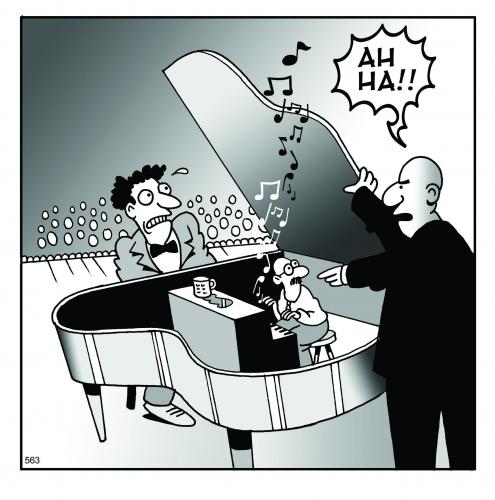 All sorts of things can go wrong in a performance. A cockroach can scuttle across your pedalling foot (this has happened to me). The music may fall off the stand (this has happened to me). A blood blister on your cuticle may burst during a glissando (you guessed it, this has happened to me).




 MaryO'Studio