• 1874 ~ Charles Ives, American composer
More information on Ives
• 1890 ~ Ferdinand “Jelly Roll” Morton, jazz pianist/composer
• 1913 ~ Grandpa (Louis Marshall) Jones, Country Music Hall of Famer, Grand Ole Opry, singer
• 1914 ~ Fayard Nicholas, American tap dancer, one-half of The Nicholas Brothers and actor (The Five Heartbeats)
• 1923 ~ Robert Craft, American conductor and writer
• 1935 ~ Jerry Orbach, American singer and actor for the musical theater
• 1937 ~ Wanda Jackson, Singer, songwriter
• 1939 ~ Jay Siegel, Singer with The Tokens
• 1939 ~ All the Things You Are was recorded by the Tommy Dorsey Orchestra on the Victor label. Jack Leonard was the featured vocalist.
• 1945 ~ Ric Lee, Drummer with Ten Years After
• 1950 ~ Tom Petty, Singer with The Traveling Wilburys
• 1951 ~ Al Greenwood, Keyboards with Foreigner
• 1955 ~ “Day-O. Day-ay-ay-ay-o!” One of the most popular of the Harry Belafonte hits was recorded for RCA Victor. Day-O didn’t make it to the pop charts for over a year, until January of 1957, after its name had been changed to The Banana Boat Song (Day-O).
• 1958 ~ Mark King, Bass, singer with Level 42
• 1958 ~ Ivo Pogorelić, Croatian pianist (1978 Casagrande winner)
• 1962 ~ With Halloween just around the corner, we remember that Bobby “Boris” Picket and the Crypt Kickers reached the top of the charts this day (for two weeks) with The Monster Mash. And someone, somewhere, has resurrected it every Halloween since.
This piece is now in Piano Maestro in the Halloween section and there is sheet music, if you are interested.
• 1962 ~ The musical, Mr. President, written by Irving Berlin, opened on Broadway. Mr. President ran for 265 performances.
• 1965 ~ The Beatles received a gold record for the single, Yesterday. This song marked the first time a cello was used in a pop hit.
• 2000 ~ Li Yundi, an 18-year-old virtuoso from China, has won Poland’s Frederic Chopin piano competition, becoming one of the youngest players to capture the prestigious international prize. Read the whole story
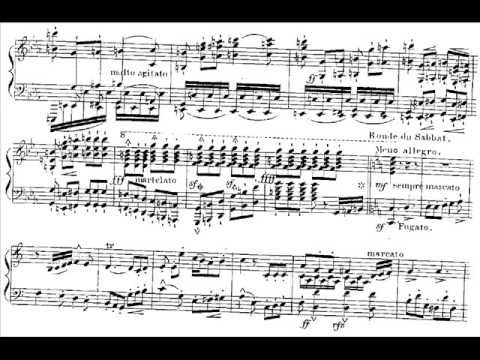
The final movement is the best known part of the symphony, thanks to its use in the Julia Roberts movie, Sleeping With The Enemy. It features a four-part structure, which Hector Berlioz described in his own program notes from 1845 as follows:
“He sees himself at a witches’ Sabbath, in the midst of a hideous gathering of shades, sorcerers and monsters of every kind who have come together for his funeral. Strange sounds, groans, outbursts of laughter; distant shouts which seem to be answered by more shouts. The beloved melody appears once more, but has now lost its noble and shy character; it is now no more than a vulgar dance tune, trivial and grotesque: it is she who is coming to the Sabbath… Roar of delight at her arrival… She joins the diabolical orgy… The funeral knell tolls, burlesque parody of the Dies irae, the dance of the witches. The dance of the witches combined with the Dies irae.”
The Dies irae melody is one of the most-quoted in musical literature, appearing in the works of many diverse composers.
The traditional Gregorian melody has also been used as a theme or musical quotation in a number of classical compositions, notable among them:
• 1911 ~ George Cates, Musician, worked with Steve Allen, musical director of the Lawrence Welk Show for 25 years
• 1916 ~ Karl-Birger Blomdahl, Swedish opera composer
• 1916 ~ Emil Gilels, Russian pianist
• 1938 ~ The Bob Crosby Orchestra recorded I’m Free for Decca. Billy Butterfield was featured on trumpet. A few years later, the song would be retitled, What’s New.
• 1939 ~ Benita Valiente, American soprano
• 1944 ~ Peter Tosh (Winston McIntosh), Singer, baritone and musician. He uses homemade instruments and performed reggae with Bob Marley
• 1944 ~ An actor who would become legend in scores of tough guy roles made his stage debut in New York. Marlon Brando appeared in the Broadway hit, “I Remember Mama”.
• 1945 ~ Jeannie C. Riley (Stephenson), Grammy Award-winning singer
• 1953 ~ Julius LaRosa, popular singer of the time, was unceremoniously fired on the air by Arthur Godfrey. “Julie lacks humility,” Godfrey told the stunned audience, while putting his arm around LaRosa. He said, “So, Julie, to teach you a lesson, you’re fired!”
• 1956 ~ Nino DeFranco, Singer with The DeFranco Family
• 1957 ~ Karl Wallinger, Musician, keyboards, guitarist with World Party
• 1959 ~ Twelve-year-old Patty Duke made her first Broadway appearance, in “The Miracle Worker”. The play would last for 700 performances and become a classic motion picture, launching Patty to fame and fortune.
• 1973 ~ Elvis and Priscilla Presley were divorced after six years and one child (Lisa Marie).
• 1987 ~ Jacqueline du Pre, British cellist, died at the age of 42
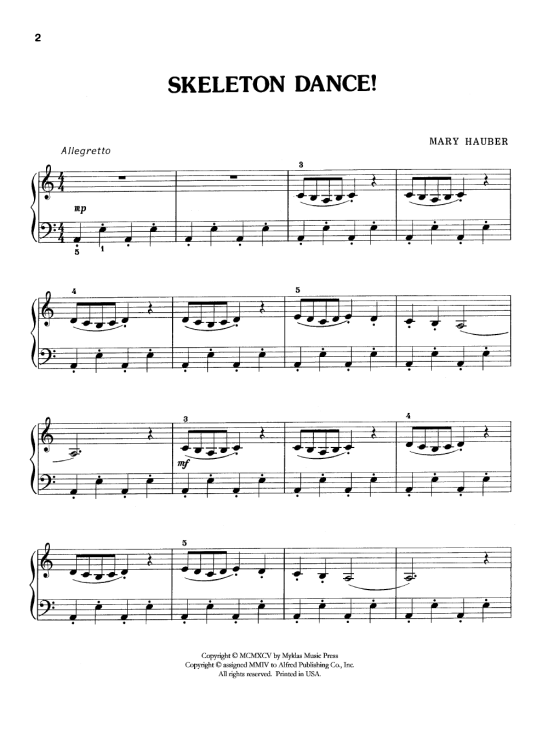
The Skeleton Dance’ comes from a 1929 Disney short film called Silly Symphony, and it’s a perfect example of classical music at its most creative. The light-hearted music scores the dancing skeletons’ movements with various percussion instruments – and one of the skeletons themselves even gets used as a glockenspiel.
As we hear the chimes at midnight and bats flutter from a belfry; as a hound howls at the full moon and black cats brawl on the tombstones; Through the gloom, white skeletons pass, Running and leaping in their shrouds!
• 1935 ~ Victor record #25236 was recorded by Tommy Dorsey and orchestra. It would become one of the most familiar big band themes of all time, I’m Getting Sentimental Over You.
• 1943 ~ Russ Giguere, Guitarist, singer with The Association
• 1947 ~ Laura Nyro, Singer
• 1952 ~ Keith Knudsen, Drummer singer with The Doobie Brothers
• 1979 ~ Following extensive renovation to return Radio City Music Hall to the look and feel of its 1931 art deco glory, the venerable New York City theatre reopened. “Snow White and the Seven Dwarfs” was the first live presentation.
• 1983 ~ Kenny Rogers and Dolly Parton received a gold record to add to their collections for their smash, Islands in the Stream.
• 2000 ~ Julie London, American singer and actress (Nurse McCall-Emergency), died at the age of 74
• 2000 ~ Gwyneth “Gwen” Verdon, American actress, singer and dancer (Cotton Club, Sweet Charity), died at the age of 75
• 2006 ~ Anna Russell, English music satirist and composer, died at the age of 94
• 1849 ~ Frederic Chopin died at the age of 39. Chopin was a Polish composer and virtuoso pianist of the Romantic era who wrote primarily for solo piano. He has maintained worldwide renown as a leading musician of his era, one whose “poetic genius was based on a professional technique that was without equal in his generation.
• 1938 ~ This was a big day in Tinseltown. NBC moved to the corner of Sunset and Vine, the ‘Crossroads of the World’. The new Hollywood Radio City drew thousands of visitors ready to fill studio-audience seats for popular radio programs.
• 1940 ~ James Seals, Singer, guitar, saxophone, fiddle with Seals and Crofts
• 1940 ~ One year before recording that memorable song, Fry Me Cookie, with a Can of Lard, Will Bradley’s orchestra recorded Five O’Clock Whistle, also on Columbia Records.
• 1941 ~ Alan Howard, Bass with Brian Poole & The Tremeloes
• 1942 ~ Gary Puckett, Singer with The Union Gap
• 1945 ~ Actress Ava Gardner made news. She married bandleader Artie Shaw.
• 1946 ~ Jim Tucker, Guitarist with The Turtles until 1965
• 1949 ~ Bill Hudson, Comedian, singer with The Hudson Brothers, was married to actress Goldie Hawn
• 1953 ~ The first concert of contemporary Canadian music presented in the U.S. was performed by conductor Leopold Stokowski at Carnegie Hall in New York City.
• 1955 ~ Jose Ferrer and Claire Bloom starred on NBC’s Producer’s Showcase. They performed in “Cyrano De Bergerac”. Ferrer also won an Oscar for his performance in the film version.
• 1958 ~ Alan Jackson, Singer
• 1962 ~ Though the ‘Fab Four’ would appear on both radio and television, on what they would call ‘Auntie Beeb’ (the BBC), The Beatles made their first appearance this day on Great Britain’s Grenada TV Network.
• 1967 ~ A controversial rock musical “Hair”, opened on this day at the Anspacher Theatre in New York City. It ran for 1,742 performances and then became a movie.
• 1983 ~ Actor Anthony Quinn lit up the Great White Way in the revival of the 1968 musical, “Zorba”, that reunited Quinn with Lila Kedrova, who played Madame Hortense. They both had appeared in the film portrayal, “Zorba the Greek”, which won Quinn a nomination for Best Actor, and an Oscar for Kedrova as Best Supporting Actress. This was one of the few films that came before the Broadway show, rather than the reverse.
• 2003 ~ Bernard Schwartz, who produced “Coal Miner’s Daughter,” the Academy Award-nominated biopic of country singer Loretta Lynn, died of complications following a stroke. He was 85. Schwartz was a one-time Broadway child actor who got into television and film production in the 1950s, working on the popular paranormal suspense show “Alcoa Presents: One Step Beyond” and the hit science fiction film “Journey to the Center of the Earth.” Schwartz’ best known and most lauded production was “Coal Miner’s Daughter,” the 1980 film inspired by Lynn’s song of the same name. Sissy Spacek won an Oscar for her portrayal of Lynn and the film won the Golden Globe award for best musical or comedy. It also was nominated for an Oscar for best picture. In 1985, Schwartz featured Patsy Cline’s life in “Sweet Dreams,” which was named for one of her songs and starred Jessica Lange as the music legend killed in a plane crash. He also produced country singer Amy Grant’s 1986 TV special “Headin’ Home for the Holidays” and worked with Priscilla Presley on the 1988 miniseries “Elvis and Me.” Another of his best-known productions was 1983’s “Psycho II,” the darkly humorous but far bloodier sequel to Hitchcock’s 1960 thriller about troubled motel operator Norman Bates. Other feature films included “The Wackiest Ship in the Army,” “Global Affair,” which starred Bob Hope, and “Rage,” which starred Glenn Ford. Schwartz also produced “That Man Bolt” and “Bucktown,” both vehicles for former football star Fred Williamson, and the thriller “Roadgames” starring Stacey Keach and Jamie Lee Curtis.
Nearly everyone can figure out the first 2 notes to this spooky piece – just play the B and C notes really low on your keyboard! It doesn’t seem logical that just two notes could cause such a sense of foreboding, but John Williams managed it. His soundtrack to Spielberg’s Jaws has been keeping people out of the sea since 1975. This piece is available in Halloween Favorites (Big-note Piano) and many others.
John Williams conducts his theme from Jaws with the Boston Pops Orchestra at Tanglewood.
Frederic Chopin died at the age of 39 on this date in 1849. Chopin was a Polish composer and virtuoso pianist of the Romantic era who wrote primarily for solo piano. He has maintained worldwide renown as a leading musician of his era, one whose “poetic genius was based on a professional technique that was without equal in his generation.
• 1855 ~ William Barclay Squire, British musicologist
• 1893 ~ On this day a song called “Goodmorning to All” was copyrighted by two teachers who wrote it for their kindergarten pupils. The title was later changed to “Happy Birthday to You”. The copyright was claimed illegal in September, 2015.
• 1941 ~ Fry Me Cookie, with a Can of Lard was recorded by the Will Bradley Orchestra on Columbia. Ray McKinley was featured.
• 1942 ~ Dave Lovelady, Drummer with The Fourmost
• 1943 ~ C.F. (Fred) Turner, Musician with Bachman~Turner Overdrive
• 1947 ~ Bob Weir (Hall), American rock guitarist and singer with The Grateful Dead
• 1953 ~ Tony Carey, Keyboards with Rainbow
• 1959 ~ Gary Kemp, Guitarist with Spandau Ballet, brother of musician Martin Kemp
• 1969 ~ Wendy Wilson, Singer with Wilson Phillips, daughter of Beach Boys singer, Brian Wilson
• 1972 ~ John C. Fogerty and Creedence Clearwater Revival called it a career … and the group disbanded. Fogerty continued in a solo career with big hits including, Centerfield and The Old Man Down the Road.
• 1976 ~ Memphis, TN disc jockey Rick Dees and his ‘Cast of Idiots’ made it all the way to number one on the Billboard Hot 100 with the immortal Disco Duck(Part 1). Dees is still around, but not as a recording artist. He’s a DJ in Los Angeles and is hosting several varieties of the Weekly Top 40 show, syndicated around the world.
• 1983 ~ George Liberace passed away. He was an American musician and television performer. Born in Menasha, Wisconsin, he was the elder brother and business partner of famed U.S. pianist Liberace.
• 1990 ~ Art Blakey passed away. He was an American jazz drummer and bandleader.
• 2000 ~ David Golub, American pianist and chamber music conductor, passed away at the age of 50. Born in Chicago, Golub grew up in Dallas, where he began learning the piano. In 1969 he moved to New York and spent his student years honing his technique at New York’s Juilliard School of Music. He also began conducting during summer breaks at Vermont’s Marlboro festival. In 1979, he accompanied violinist Isaac Stern on a tour of China. A film about the tour, “From Mao to Mozart,” won the 1980 Academy Award for Best Documentary. As a performer, Golub was perhaps best known for his work with violinist MarkKaplan and cellist Colin Carr in the trio they formed in 1982. In the late 1990s, Golub began cultivating his interest in opera. Under his leadership, the Padua Chamber Orchestra recorded some of Haydn’s least-known work for opera. An acclaimed chamber ensemble performer – most notably with the Golub-Kaplan-Carr Trio – Golub led the Padua Chamber Orchestra during the 1994-95 season and took it on tour in the United States in 1999. He is survived by his wife, Maria Majno.
• 2001 ~ Oscar-winning composer and lyricist Jay Livingston, whose collaboration with Ray Evans led to such hits as Silver Bells, Que Sera, Sera and Mona Lisa, died of pneumonia. He was 86. Livingston’s songwriting partnership with Evans spanned 64 years. Often called the last of the great songwriters, Livingston and Evans had seven Academy Award nominations and won three – in 1948 for Buttons and Bows in the film The Paleface, in 1950 for Mona Lisa in Captain Carey, USA, and in 1956 for Que Sera, Sera in The Man Who Knew Too Much. They wrote the television theme songs for Bonanza and Mr. Ed, and were honored by the American Society of Composers, Authors and Publishers for the most performed music for film and TV for 1996. Livingston was born on March 28, 1915, in the Pittsburgh suburb of McDonald. He met Evans in 1937 at the University of Pennsylvania, where they were both students. The team’s final project was the recording, Michael Feinstein Sings the Livingston and Evans Song Book, due for 2002 release.
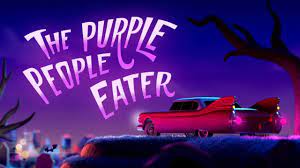
Parents might remember this one – or their grandparents! No one else has captured a monster quite so groovy as the one-eyed, one-horned, flying purple people eater. This is available for students to play in the Halloween Songbook (Easy Piano).


 ‘
‘
 Grammy winner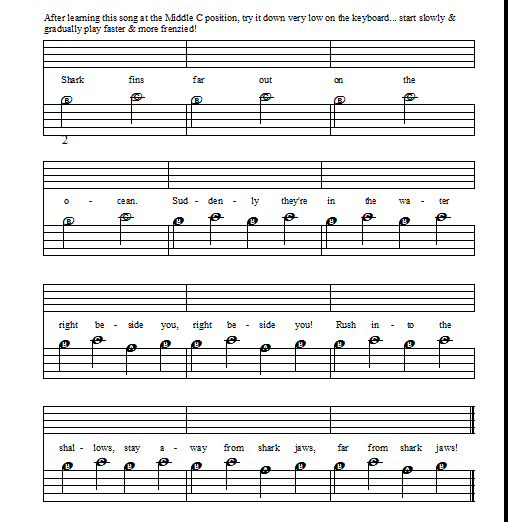

 MaryO'Studio