Daily Listening Assignments ~ July 13

Will you be going to the Circus this Summer?

Here’s some information about circus music.

WINDJAMMERS

Circus marches are called “screamers” because they are traditionally so high, loud & fast!! Circus Band members are often called “windjammers” because they jam so much wind into their instruments in the process of playing these screamers. Playing the circus requires incredible endurance & skills on your instrument. The windjammers play almost none stop and much of the music is really difficult!

The greatest circus bands were about 100 years ago in the heyday of the circus. At that time the big top band could be 25 or so, plus there were often sideshow musicians as well. Cowboy bands, women’s bands and bands of Blacks were often part of the sideshows.

Contemporary circuses are much smaller all the way around, and some don’t use live musicians at all, just “canned” music (recordings). Others carry 3 musicians, a drummer, a trumpet player and a keyboard (synthesizer) player. A few, like the Big Apple Circus, still have bands. The Big Apple Circus has 8 musicians on its bandstand: a conductor/trumpet, a person who plays alto sax and clarinet, one who plays tenor sax and flute, a violin, a trombone, a bass player, a keyboard player and a drummer.

In the “old days,” being a circus musician was one of the most strenuous jobs a musician could have. In the days before musicians’ unions, the windjammer would be expected to play for the circus parade, play a pre-show free concert for the townspeople, ballyhoo around the grounds before the big top show, play the show itself (nonstop for two or three hours!), play post-show concerts on the grounds or play sideshows. Then after everyone left, they helped take down the tents or do other chores around the grounds. It was a busy day and the pay was not very good, but it was an exciting life with lots of great music, and many musicians loved it!

THE MUSIC

Entry of the Gladiators (Thunder and Blazes) was written in 1897 by, the Czechoslovakian composer, Julius Fucik (1872-1916). This march is a classic circus march & one that just about everyone will think, “Ah, circus!” when they hear it. Thunder and Blazes (as it is most frequently called) and Fucik’s Florentiner March are probably his most well-known marches.

Most circus marches follow the standard American military march form, but often abbreviated (no repeats in the second half):

  • Introduction (a bit longer than military marches)
  • First strain (repeated)
  • Second strain (repeated)
  • Trio (more mellow and the key changes)
  • Breakup strain (often called the dogfight in military marches)
  • Last strain

In a circus march, the last strain is often the same as the trio, but louder, and often the trio, breakup strain and last strain are not repeated like they are in a military march (in military marches, the trio and breakup strain are often reversed & the way they repeat may vary).

The music sets the scene for the performer’s act. Different music is needed for different kinds of acts: the bareback riders galloping around the hippodrome need a lively tune, the trapeze artists want something more peaceful, and of course the clowns need music that sounds humorous (like trombone smears!).

In the early days of the circus, the band masters would take some of the European classical music and arrange it for the circus band. “The most obvious example would be the beautiful, flowing waltz music that is essential to the trapeze artists (‘flyers’ and ‘catchers’). The bandmaster and musicians must be precise in coordinating the music and the timing of the artists, requiring rehearsal with the artists and the musicians.  Similarly, it may be interesting to note that the bareback riders perform in a smaller ring because of the gait of the horses. The centrifugal effect requires a ring of a certain diameter for timing. Thus, the conductor must follow the gait of the horses, whereas the aerialists depend on the tempo of the music for timing their act.”

Modern circuses also play a lot of popular tunes, jazz and other songs that people will recognize. You will likely hear fewer of the standard circus marches at a circus today.

The drummer has a particularly challenging and important role in the circus music. He/she must “play the tricks.” Usually the drummer is situated so that he can see the ring because it is his job to accent and intensify what is happening in the ring. This was true 100 years ago, and it is true today. If the act is getting tense, the drummer will get intense. If someone slides down a rope or vaults off the trampoline, there will be a cymbal crash or drum hit when the performer reaches the floor. Sometimes the cues come from the conductor or from the ringmaster, but sometimes it is the drummer who is really in charge!

Circus bands occasionally play a John Philip Sousa composition during the traditional Center Ring Concert, but his melodic marches are not the right structure for most circus acts.

Sousa’s Stars and Stripes Forever is never part of the regular program. It is reserved for emergency use – sometimes called the “Disaster March”. If a major problem happens — an animal gets loose, a high wind threatens the tent, or a fire breaks out — the band plays the march as a warning signal to every worker on the circus lot that something is wrong.

(Click here for information on the Hartford fire of 1944)

Charles Nelson Reilly – who grew up to be a famous actor, comedian, director and drama teacher – was attending the Ringling Bros. circus, in Hartford, on the day the big top burned to the ground.  Listen as he recalled his memories of the fire.

For lesser problems, the 12th Street Rag was played to alert the clowns to come out and divert attention during the more common mishaps.

Edward F. Shevlin describes what goes on in the circus band as follows:

“Our music is usually by Karl King,  Alexander, Fred Jewell, C. E. Duble and other old time circus bandmasters and musicians.  Much of the music by these circus musician-composers is amenable to quick cut-offs and tempo changes as necessary to fit particular acts. Hence, Windjammers usually play two musicians to a stand so that when the conductor cuts to a new piece and tempo, one musician can quickly move the music to expose the next piece while the other continues without skipping a beat! We might quickly go from a march to a Samba or rhumba or galop; or from a waltz to an up-tempo march or galop for the “come down” when the aerialists quickly descend into the net or slide down a rope at the conclusion of their act . . .followed by that ubiquitous B-flat chord! The old circus bands would play anything from Ragtime to a Polonaise or a tone poem!”

*Information from an email from Edward F. Shevlin, a Windjammer who happened upon this page! Many thanks, Mr. Shevlin!

THE BANDWAGON

ParadeWagon

When the circus came to town, there was always a circus parade — the parade served to get the wagons filled with people, equipment, baggage, tents and animals to the location of the circus, but it also provided some free advertisement. The wagons were very elaborate & were intended to get people interested in the circus so they would come and see the acts. The band road on top of a bandwagon and inside the bandwagon was luggage, tents and other necessities.

Hey, have you ever heard the term, “jump on the bandwagon”? Here’s the story. In 1848, when Zachary Taylor won the Whig party nomination for president, Dan Rice, a famous clown whose attire inspired the image of Uncle Sam, invited Mr. Taylor to ride on the bandwagon that Dan Rice had. When the bandwagon arrived at the center of town, Dan Rice stopped his parade and made a very emotional speech supporting Zachary Taylor’s candidacy. Someone noted that Dan Rice was on Mr. Taylor’s bandwagon and the term stuck, so that to jump on the bandwagon means to get involved with whatever the issue is. “He jumped on the ecology bandwagon.” “She is definitely on the civil rights bandwagon.”

Below you will find some links to pictures of bandwagons.

PT Barnum’s Bandwagon http://www.vintageviews.org/vv-3/t_land/pages/trl02_002.html

Windjammers in a Bandwagon http://www.circusparade.com/album/albmusic.htm

Pawnee Bill Bandwagon No. 80 http://www.circusparade.com/wagons/w_pawnee.htm

The Columbia Bandwagon– purchased by James Bailey for the Barnum & Bailey Circus — and see this wagon hitched to FORTY horses!!! The picture including the wagon & the band is at the bottom of the page.

The Mirror Bandwagon http://www.circusmodelbuilders.org/twohemis.htm

A clown marching band (Baraboo, WI High School) http://www.circusparade.com/album/albpic22.htm

THE CALLIOPE

Most people pronounce this instrument “cal eye’ o pee”. Circus people pronounce it “cal’ ee ope” (last syllable like “rope”). What is a calliope?? It is a huge instrument made of whistles with a steam engine that blows steam through the whistles when you press the key. Most calliopes are played with a keyboard like a piano keyboard & each key controls one whistle. It is LOUD!!!! Some can be heard up to 3 – 5 miles! Don’t stand too close to one!

The calliope traditionally brought up the rear in a circus parade.

Here is a picture of an early calliope – this one is not on wheels like a circus instrument would be. http://mmd.foxtail.com/Calliope/index.html

Go to this site to see an instrument built recently and see how it works. http://mmd.foxtail.com/Calliope/davis.html

SUPERSTITIONS!

Most performing entities have some superstitions. One of the superstitions in circus bands is that you can not play Franz von Suppe’s Light Cavalry March. Quoting from Mr. Beal’s book:

“To play it on the circus lot means disaster and sudden death.”You may not believe this but most circus folks do, at least those who know the facts. Played once in Oklahoma, a train wreck followed and sixteen were killed. Played again, this time while [Merle] Evans was on tour with Miller Bros. 101 Ranch Wild West, a blowdown followed and 38 fatalities resulted. [A blow down is a wind that destroys all or part of the tents.]

“And the last time Merle played it a cornet player died immediately after the performance. That was enough for Evans. He collected the parts, tied them up in a neat bundle, and dropped them over the nearest bridge…

“From that day to this the music of Suppe’s Light Cavalry march is taboo. Even its presence in the music trunk would be considered a serious menace to the life and safety of the circus musicians.”

A second superstition about the music played is that the only time you can play Home Sweet Home is during the very last performance of the season, the very last song. Otherwise, it could mean the immediate closing of the show.

Information from:
Beal, George Brinton. Through the Back Door of the Circus with George Brinton Beal. Springfield, Massachusetts: McLoughlin Bros., Inc., 1938. p. 1-20.

Some important Windjammers and composers of circus music

Links to other Circus Band Websites

Definitions & Explanations

Screamers – Circus marches are called screamers because they are so loud, fast & often very high!

Windjammers – Circus musicians are often called windjammers because they jam so much wind into their instruments in the process of playing these screamers.

Ballyhooing – The dictionary defines the verb “ballyhoo” as a vigorous attempt to win customers. When not playing, the musicians went around the grounds & the town shouting about the circus & trying to get people to come to see it. Ex: “Come to the circus tonight! See flying trapeze artists and the ….”

Hippodrome – The hippodrome is the track around the inside of the ring where the horses were run.

Trombone Smears – Smear refers both to a trombone technique and to a type of music. The technique (officially called a glissando) where the trombonist pulls the slide in or out without tonguing and you get a smearing sound as the notes move up or down, rather than a distinct set of individual notes. Smear also refers to a type of music that includes and features these smear techniques. These pieces are often used as clown music. Henry Fillmore wrote many trombone smears and they had an African-American minstrel sound to them.

Adapted from http://bandnotes.info/tidbits/circus.htm

July 12: Today’s Music History

today

Be sure your student reads and listens to Today’s Daily Listening Assignment

• 1633 ~ Simon Besler, Composer, died at the age of 49

• 1757 ~ Christian Danner, Composer

• 1773 ~ Johann Joachim Quantz, German royal flautist and composer, died at the age of 76

• 1801 ~ John Hill Hewitt, Composer

• 1802 ~ Charles-Louis Hanssens, Composer

• 1821 ~ Cesare Dominiceti, Composer

• 1839 ~ Christian Traugott Tag, Composer, died at the age of 62

• 1882 ~ Alfred Humphreys Pease, Composer, died at the age of 44

• 1883 ~ Hermann Zopff, Composer, died at the age of 57

• 1885 ~ George Sainton Kaye Butterworth, Composer

• 1895 ~ Kirsten Flagstad, Norwegian soprano, famed for her performances of Wagner and noted for her noble and easy delivery

• 1895 ~ Oscar (Greeley Clendenning) Hammerstein II, American lyricist for the musical theater
More information about Hammerstein

• 1897 ~ Felix Godefroid, Composer, died at the age of 78

• 1906 ~ Henrique Alves de Mesquita, Composer, died at the age of 70

• 1908 ~ Johan Franco, Composer

• 1920 ~ Paul Foster, Singer

• 1926 ~ Charles Wood, Composer, died at the age of 40

• 1927 ~ Conte (Secondo) Candoli, Trumpeter, bandleader; toured with Stan Kenton

• 1934 ~ Van Cliburn (Harvey Lavan), American piano virtuoso, won the Tchaikovsky Competition in 1958

• 1942 ~ Richard Stolzman, clarinet soloist

• 1943 ~ Christine (Perfect) McVie, Singer with Fleetwood Mac

• 1946 ~ Benjamin Britten’s “Rape of Lucretia,” premiered at Glyndebourne

• 1947 ~ James Melvin Lunceford, American jazz dance-band leader, passed away
More information about Lunceford

• 1949 ~ John Wetton, Bassist, singer with Asia

• 1952 ~ Liz Mitchell, Singer

• 1953 ~ Marie-Alphonse-Nicolas-Joseph Jongen, Belgian composer, died at the age of 79

• 1956 ~ Sandi Patti, Gospel Singer

• 1958 ~ “Li’l Abner” closed at St James Theater New York City after 693 performances

• 1958 ~ Yakety Yak, by The Coasters, became the number one song in America according to Billboard magazine. It was the first stereo record to reach the top of the chart.

• 1962 ~ The Rolling Stones first performance, at the Marquee Club, London. The lineup featured Mick Jagger, Keith Richards, Brian Jones, bass player Dick Taylor and drummer Mick Avory. Taylor and Avory were soon replaced.

• 1970 ~ Blues-Rock singer Janis Joplin’s debut, in Kentucky

• 1979 ~ Kalervo Tuukkanen, Composer, died at the age of 69

• 1979 ~ Minnie Ripperton (Andrea Davis) Singer, died at the age of 30

• 1985 ~ “Singin’ in the Rain” opened at Gershwin Theater New York City for 367 performances

• 1990 ~ Les Miserables opened at National Theatre, Washington

• 1993 ~ Andrew Lloyd Webber’s musical “Sunset Promenade” opened in London

• 1995 ~ Alan David Marks, Pianist and composer, died at the age of 49

• 1995 ~ Earl Coleman, Singer, died at the age of 69

• 1995 ~ Ernie Furtado, Bassist, died at the age of 72

• 1996 ~ Gottfried von Einem, Composer, died at the age of 78

• 1996 ~ Jonathan Melvoin, Keyboardist with Smashing Pumpkins, died

• 2000 ~ Ras Shorty I, who fused calypso with an up-tempo beat that he said represented the true soul of calypso, died of bone cancer. He was 59. He was born Garfield Blackman and started singing calypso as Lord Shorty. Dozens of musicians later adopted his up-tempo “soca” beat, which he called the “Indianization of calypso,” bringing together the music of his Caribbean nation’s two major ethnic groups, descendants of African slaves and of indentured laborers from India.

• 2001 ~ James Bernard, who composed the eerie musical scores for some of Britain’s most famous horror films, died at the age of 75. The British composer was best known for his work with Hammer Film studios, which made low-budget gothic horror films featuring actors Peter Cushing and Christopher Lee. During his nearly 40-year career, Bernard composed scores for “The Curse of Frankenstein” (1957), “Dracula” (1958) and “The Devil Rides Out” (1968). He won an Academy Award, but not for his music. Bernard shared an Oscar in 1951 with Paul Dehn for best motion picture story for “Seven Days to Noon.” His last work was the score for “Universal Horror” in 1998, a documentary of Universal Studios’ horror films of the 1930s and 1940s.

July 11: Today’s Music History

today

Be sure your student reads and listens to Today’s Daily Listening Assignment

• 1768 ~ Jose Melchior de Nebra Blascu, Composer, died at the age of 66

• 1781 ~ Adolph Carl Kunzen, Composer, died at the age of 60

• 1824 ~ Adolphe-Abraham Samuel, Composer

• 1826 ~ Carl Bernhard Wessely, Composer, died at the age of 57

• 1836 ~ Carlos Gomez, Composer

• 1837 ~ Paul Lacombe, Composer

• 1857 ~ Iacob Moresianu, Composer

• 1861 ~ Anton Stepanovich Arensky, Russian composer of Romantic classical music, a pianist and a professor of music.

• 1862 ~ Liza Nina Mary Frederica Lehmann, Composer

• 1892 ~ Giorgio Federico Ghedini, Composer

• 1897 ~ Blind Lemon Jefferson, Singer

• 1914 ~ Ahti Sonninen, Composer

• 1916 ~ Howard Brubeck, Composer

• 1918 ~ Enrico Caruso bypassed opera for a short time to join the war (WWI) effort. Caruso recorded Over There, the patriotic song written by George M. Cohan.

• 1920 ~ Yul Brynner (Taidje Khan), Academy & Tony Award-winning actor in The King and I

• 1925 ~ Mattiwilda Dobbs, American soprano

• 1925 ~ Nicolai Gedda, Swedish tenor

• 1926 ~ Rodolfo Arizaga, Composer

• 1927 ~ Herbert Blomstedt, American-born Swedish conductor of the Oslo Philharmonic from 1954 until 1961

• 1928 ~ Robert Washburn, Composer

• 1929 ~ Hermann Prey, German baritone

• 1931 ~ Thurston Harris, American vocalist

• 1931 ~ Tab Hunter (Arthur Gelien), Singer

• 1932 ~ Alex Hassilev, American vocalist with the Limeliters

• 1937 ~ George Gershwin, Composer of An American Paris, died at the age of 38.

• 1938 ~ Terry Garthwaite, American guitarist and singer

• 1944 ~ Bobby Rice, Singer

• 1945 ~ Debbie Harry, Singer

• 1947 ~ Jeff Hanna, Singer, guitarist with Nitty Gritty Dirt Band

• 1950 ~ Patty Pointer, Singer with Pointer Sisters

• 1950 ~ Timotei Popovici, Composer, died at the age of 79

• 1951 ~ Bonnie Pointer, Singer with Pointer Sisters

• 1957 ~ Peter Murphy, Singer with Bauhaus

• 1959 ~ Richie Sambora, Guitarist

• 1964 ~ 18-year-old Millie Small was riding high on the pop music charts with My Boy Lollipop. Rod Stewart played the harmonica. Millie Small was known as the ’Blue Beat Girl’ in Jamaica, her homeland.

• 1967 ~ Kenny Rogers formed The First Edition just one day after he and members Thelma Camacho, Mike Settle and Terry Williams left The New Christy Minstrels. The First Edition hosted a syndicated TV variety show in 1972.

• 1969 ~ David Bowie released Space Oddity in the UK for the first time. It was timed to coincide with the Apollo moon landing but had to be re-released before it became a hit, later in the year in the UK (but not until 1973 in the US).

• 1969 ~ Rolling Stones released Honky Tonk Woman

• 1973 ~ Alexander Vasilyevich Mosolov, Russian Composer, died at the age of 72

• 1980 ~ Boleslaw Woytowicz, Composer, died at the age of 80

• 1984 ~ Karel Mengelberg, Composer, died at the age of 81

• 1993 ~ Mario Bauza, Cuban/American jazz musician ~ died at the age of 82

• 1994 ~ Charles “Lefty” Edwards, Saxophonist, died at the age of 67

• 1994 ~ Lex P Humphries, Drummer, died at the age of 57

• 1996 ~ Louis Gottlieb, Musician, died at the age of 72

• 1999 ~ Big band jazz singer Helen Forrest died

• 2001 ~ Herman Brood, an artist and musician in the Dutch rock scene for 30 years, died at the age of 55. Brood became a sensation with his 1978 hit single Saturday Night, which he wrote as leader of the band Wild Romance. Over 25 years, he recorded nearly 20 albums. He also appeared in Dutch movies.

• 2002 ~ Blues singer Rosco Gordon died of a heart attack. He was 74. Rosco was known for 1950s hits including Booted, No More Doggin’, Do the Chicken and Just a Little Bit, which sold more than 4 million copies in covers by Etta James, Elvis Presley, the Beatles and Jerry Butler. His offbeat, rhythmic style influenced the early sounds of ska and reggae after he toured the Caribbean in the late ’50s. Gordon quit the music business in the 1960s and invested his winnings from a poker game in a dry cleaning business. He started his own record label in 1969 and returned to concert performances in 1981.

Daily Listening Assignments ~ July 11

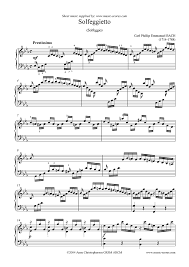
Solfeggietto is a short solo keyboard piece in c minor composed in 1766 by Carl Philipp Emanuel Bach. Carl Philipp Emanuel Bach was a German composer and the son of J.S. Bach.

Solfeggietto” is an Italian word meaning “little study” or exercise.

The work is unusual for a keyboard piece in that the main theme is only one note being played at a time. The piece is commonly assigned to piano students and appears in many anthologies.

This piece is easily Bach’s best-known and is often performed by left-hand alone.

See if you can follow along.  The notes with the stems down (even in the treble clef) are normally played with the left hand.

With just the left hand:

Electric Guitar

Bass Clarinet

Clarinet sextet

Harp

Are you any of these?  This is the first annoying pianist. Too Humble – Solfeggietto in C minor by C.P.E. Bach

July 10: Today’s Music History

today


Be sure your student reads and listens to Today’s Daily Listening Assignment


• 1594 ~ Paulo Bellasio, Composer, died at the age of 40

• 1668 ~ Adam-Nicolas Gascon, Composer, died at the age of 45

• 1690 ~ Domenico Gabrielli, Composer, died at the age of 39

• 1697 ~ François Hanot, Composer

• 1759 ~ Eleanore Sophia Maria Westenholz, Composer

• 1778 ~ Sigismund Ritter von Neukomm, Austrian Composer and royal chapelmaster

• 1779 ~ Alois Basil Nikolaus Tomasini, Composer

• 1826 ~ Theodore Edouard Dufaure de Lajarte, Composer

• 1835 ~ Henryk Wieniawski, Polish violinist and composer
More information about Wieniawski

• 1839 ~ Fernando Joseph Maria Sor, Composer, died at the age of 61.

• 1858 ~ Karl Flodin, Composer

• 1863 ~ Clement Clarke Moore passed away

• 1868 ~ Carlo Conti, Composer, died at the age of 71

• 1882 ~ Ima Hogg, Texas art patron and founder of Houston Symphony

• 1882 ~ Riccadro Pick-Mangiagalli, Composer

• 1887 ~ Alfred Ernest Whitehead, Composer

• 1888 ~ Rafael Hernando, Composer, died at the age of 66

• 1890 ~ Andre Souris, Composer

• 1894 ~ Jimmy Francis McHugh, Composer

• 1895 ~ Carl Orff, German composer
More information about Orff

Didn’t quite understand those words?

• 1900 ~ Elsie Evelyn Laye, English singer and actress

• 1900 ~ One of the most famous trademarks in the world, ‘His Master’s Voice’, was registered with the U.S. Patent Office. The logo of the Victor Recording Company, and later, RCA Victor, shows the dog, Nipper, looking into the horn of a gramophone machine.

• 1904 ~ Isa Krejci, Composer

• 1913 ~ Ljuba Welitsch, Bulgarian opera soprano

• 1915 ~ Milt Buckner, Musician, piano, organ, composer

• 1916 ~ Dick Cary, Jazz musician: trumpet, arranger, first pianist in Louis Armstrong’s All-Stars, 1947 to 1948

• 1919 ~ Rusty Gill, American singer

• 1930 ~ Jacques Klein, Brazilian pianist

• 1933 ~ Jerry Herman, Composer, lyricist for such shows as Hello, Dolly!, La Cage aux Folles, Mame, Dear World, Mack and Mabel

• 1936 ~ Jan Wincenty Hawel, Composer

• 1936 ~ Billie Holiday recorded Billie’s Blues for Okeh Records in New York. Bunny Berigan, Artie Shaw and Cozy Cole supported Holiday, instrumentally, on the track.

• 1937 ~ Sandy Stewart (Galitz), Singer

• 1937 ~ Attilio Brugnoli, Composer, died at the age of 56

• 1941 ~ Ian Whitcomb, Singer

• 1941 ~ Ferdinand “Jelly Roll” Morton, pioneer jazz pianist, died in Los Angeles at 56.

• 1943 ~ Jerry Miller, Musician, guitarist with Moby Grape

• 1943 ~ Arthur Finlay Nevin, Composer, died at the age of 72

• 1947 ~ Arlo Guthrie, American folk singer and songwriter, son of legendary folk singer, Woody Guthrie

• 1948 ~ “Allegro” closed at Majestic Theater New York City after 318 performances

• 1948 ~ “Ballet Ballads” closed at Music Box Theater New York City after 62 performances

• 1948 ~ “Look Ma, I’m Dancin'” closed at Adelphi Theater New York City after 188 performances

• 1949 ~ Ronnie James Dio (Padavona), Singer, songwriter

• 1950 ~ “Your Hit Parade” premiered on NBC (later CBS) TV

• 1952 ~ Rued Immanuel Langgaard, Composer, died at the age of 58

• 1953 ~ Sidney Homer, Composer, died at the age of 88

• 1954 ~ Neil Tennant, Singer

• 1965 ~ The Beatles’ “Beatles’ “VI,” album went #1 and stayed #1 for 6 weeks

• 1965 ~ Rolling Stones scored their first #1, I Can’t Get No Satisfaction

• 1967 ~ Bobbie Gentry recorded Ode to Billie Joe

• 1975 ~ Gladys Knight and the Pips Summer Series premiered on NBC-TV

• 1977 ~ Norman Paris, Orchestra leader, died at the age of 41

• 1977 ~ “Happy End” closed at MartBeck Theater New York City after 75 performances

• 1978 ~ Michel Gusikoff, Composer, died at the age of 85

• 1979 ~ Arthur Fiedler, Orchestra leader of the Boston Pops Orchestra, died at the age of 84.

• 1980 ~ Jessica Simpson, Pop singer who released her debut hit album “Sweet Kisses” in 1999 in Texas.

• 1982 ~ Maria Jeritza (Jedlicka) Austrian and American singer at the Metropolitan Opera, died

• 1983 ~ Werner Egk, German composer, died at the age of 82

• 2001 ~ James “Chuck” Cuminale, a musician whose quirky rock band Colorblind James Experience won acclaim in England in the late 1980s, was died at the age of 49. Although Cuminale’s band never achieved commercial success, it picked up a cult following in parts of Europe after John Peel, an influential radio personality in London, began playing its music in 1987.

• 2002 ~ Alan Shulman, a professional cellist who composed scores for orchestras and chamber groups, died at the age of 86. Shulman composed A Laurentian Overture, which premiered with the New York Philharmonic in 1952, as well as Cello Concerto and Neo-Classical Theme and Variations for Viola and Piano. Born in Baltimore, Shulman studied at the Peabody Conservatory and trained at the Juilliard School with cellist Felix Salmond and composer Bernard Wagenaar. He was a founding member of the NBC Symphony Orchestra, which was formed in 1937. Shulman performed with the orchestra until 1942, when he joined the United States Maritime Service. He returned to the NBC Symphony in 1948, and continued to perform with the orchestra and its successor until 1957. Shulman formed the Stuyvesant String Quartet with his brother, violist Slyvan Shulman, in 1938, and played with several other chamber ensembles.

July 9: Today’s Music History

today

Be sure your student reads and listens to Today’s Daily Listening Assignment
• 1607 ~ God Save the King was first sung

• 1656 ~ Michelangelo Rossi, Italian opera Composer, buried. He was about 55

• 1713 ~ First performance of George Frederic Handel’s “To Deum” & “Jubilate”.

• 1747 ~ Giovanni Battista Bononcini, Italian opera composer, died at the age of 76

• 1755 ~ Gottlob Harrer, Composer, died at the age of 52

• 1774 ~ Giuseppi Maria Carretti, Composer, died at the age of 83

• 1791 ~ Nicolas Ledesma, Composer

• 1794 ~ Pascal Boyer, Composer, died at the age of 51

• 1805 ~ Henry John Gauntlett, Composer

• 1821 ~ Tommaso Sogner, Composer, died at the age of 58

• 1826 ~ Friedrich Ludwig Dulon, Flautist and composer, died at the age of 56

• 1839 ~ Carl Baermann, Composer

• 1841 ~ Carl Christian Lumbye, Composer

• 1855 ~ Johann P Zilcher, German composer

• 1879 ~ Ottorino Respighi, Italian composer, viola-player, pianist and conductor. Respighi’s Pines of Rome is featured in Fantasia 2000.
More information about Respighi

• 1882 ~ Richard Hageman, Dutch and American pianist, composer and conductor

• 1883 ~ Adrien Louis Victor Boieldieu, Composer, died at the age of 67

• 1898 ~ Marcel Delannoy, Composer

• 1900 ~ Robert Oboussier, Composer

• 1910 ~ Harold C Fox, Fashion designer and musician

• 1915 ~ David Diamond, American composer, winner of the Paderewski Prize in 1943

• 1916 ~ Joe Liggins, American Composer

• 1918 ~ Herbert Brun, Composer

• 1924 ~ Leonard Pennario, Concert pianist and composer

• 1924 ~ Pierre Cochereau, Composer

• 1925 ~ Alan Dale, American singer

• 1927 ~ Ed Ames, Singer with The Ames Brothers

• 1927 ~ Jim McReynolds, Folk singer with his brother Jesse

• 1929 ~ Lee Hazlewood, Songwriter of The Fool, These Boots are Made for Walkin’; singer with Nancy Sinatra

• 1930 ~ Buddy Bregman, American orchestra leader of the Eddie Fisher Show

• 1933 ~ Nodar Kalistratovich Gabuniya, Composer

• 1934 ~ Otakar Zich, Composer, died at the age of 55

• 1935 ~ Mercedes Sosa, Argentinian singer

• 1936 ~ David Joel Zinman, American composer and conductor

• 1946 ~ Bon (Ronald) Scott, Singer with AC/DC

• 1947 ~ Jerney Kaagman, Dutch singer

• 1949 ~ Fritz Bennicke Hart, Composer, died at the age of 75

• 1949 ~ Benjamin Britten’s Jump Symphony premiered

• 1949 ~ “Cabatgata (A Night Spain)” opened at Broadway New York City for 76 performances

• 1951 ~ Jorgen Bentzon, Composer, died at the age of 54

• 1952 ~ John Tesh, Emmy Award-winning composer and pianist

• 1954 ~ Debbie Sledge, Rhythm and Blues Singer with Sister Sledge

• 1955 ~ Bill Haley & Comets’ Rock Around the Clock hit #1 on Top 100 chart

• 1956 ~ Douglas Moore and John Latouche opera “Ballad of Baby Doe” premiered

• 1956 ~ Dick Clark’s first appearance as host of American Bandstand

• 1957 ~ Alexander Fyodorovich Gedike, Composer, died at the age of 80

• 1959 ~ Marc (Peter) Almond, Singer

• 1959 ~ Jim Kerr, Singer with Simple Minds

• 1960 ~ Edward Burlingame Hill, Composer, died at the age of 86

.1962 ~ Bob Dylan recorded “Blowin’ in the Wind”

• 1964 ~ Courtney Love, Rock Singer

• 1965 ~ Frank Bello, Musician, bass with Anthrax

• 1965 ~ Otis Redding recorded Respect

• 1967 ~ The Beatles’ All You Need is Love was released

• 1967 ~ Doors’ Light My Fire hit #1

• 1968 ~ Rock group “Yardbirds” disbanded

• 1972 ~ Paul McCartney appeared on stage for the first time since 1966 as his group, Wings, opened at Chateauvillon in the south of France.

• 1977 ~ Undercover Angel, by songwriter (turned pop singer) Alan O’Day, reached the top spot on the Billboard chart. It was not the first visit to the top of the pop music world for O’Day, though the million-seller would be his last as a singer. He wrote Angie Baby, a number one hit for Helen Reddy and the #3 hit, Rock And Roll Heaven, for The Righteous Brothers.

• 1978 ~ Aladar Zoltan, Composer, died at the age of 49

• 1978 ~ “Hello, Dolly!” closed at Lunt-Fontanne Theater New York City after 152 performances

• 1981 ~ Oscar van Hemel, Composer, died at the age of 88

• 1984 ~ Randall Thompson, American composer, died at the age of 85

• 1986 ~ A new Broadway showplace opened. It was the first new theater on Broadway in 13 years. The Marquis Theatre, located at the corner of 46th Street and Broadway, seated 1,600 theatergoers.

• 1994 ~ Cornelius Boyson, Bassist, died at the age of 57

• 1994 ~ William “Sabby” Lewis, Jazz Pianist and Arranger, died at the age of 79

• 1994 ~ “Les Miserables” opened at Imperial Theatre, Tokyo

Daily Listening Assignments ~ July 9

Today’s piece is based on a collection of tales known as the One Thousand and One Nights or Arabian Nights.

The story, which was written many hundreds of years ago, tells of a Persian king who married a young girl every night. Every morning he would send his new wife to have her head chopped off. He had already killed 3000 women in this way.

When Scheherazade heard about this, she wanted to spend the night with him. She spent all night telling him a story. At the end of the night, she stopped the story at an exciting moment, like a modern-day soap opera.

The next night she finished the story and began another one, which she again stopped when it was dawn. The king had to wait another night to hear the rest of the story. Scheherazade kept this up for 1001 nights. By then, the king had fallen in love with Scheherazade and he let her live.

Rimsky-Korsakov’s best-known work is Scheherazade, an orchestral piece that describes in music the stories told by Scheherazade.

The work consists of four movements:

The Sea and Sinbad’s Ship

The Kalandar Prince

The Young Prince and The Young Princess

Festival at Baghdad. The Sea. The Ship Breaks against a Cliff Surmounted by a Bronze Horseman

Today, we’re focusing on The Young Prince and The Young Princess which can be found in Piano Pronto Movement 4

Piano duet

Orchestra

Flute ensemble

Gene Kelly dancing with a cartoon partner

The entire work

July 8: Today’s Music History

today

Be sure your student reads and listens to Today’s Daily Listening Assignment

• 1574 ~ Giovanni Battista Stefanini, Composer

• 1637 ~ Johann Georg Ebeling, Composer

• 1638 ~ Matteo Coferati, Composer

• 1681 ~ Georg Neumark, Composer, died at the age of 60

• 1757 ~ Richard Wainwright, Composer

• 1819 ~ Vatroslav Lisinski, Composer

• 1857 ~ Rudolf Dellinger, Composer

• 1871 ~ Clement Harris, Composer

• 1878 ~ Harry Von Tilzer, Composer.

• 1876 ~ Josef Dessauer, Composer, died at the age of 78

• 1882 ~ Percy Aldridge Grainger, Australian-born American pianist and composer. He is famed for his use of folk-song melodies and is best remembered for his Country Gardens and Molly on the Shore.

• 1885 ~ Hendrick Waelput, Flemish Composer and conductor (Blessing of Arms), died at the age of 39

• 1894 ~ Vladimir Nikitich Kashperov, Composer, died

• 1900 ~ George Antheil, American composer

• 1904 ~ Bill Challis, Arranger and pianist

• 1907 ~ Kishio Hirao, Composer

• 1907 ~ Florenz Ziegfeld staged the first Ziegfeld Follies at the roof garden of the New York Theatre.

• 1908 ~ Louis (Thomas) Jordan, Musician, alto sax, singer

• 1912 ~ Jacques Stehman, Composer

• 1907 ~ Billy Eckstine (William Clarence Eckstein), Pop Singer, band leader, bass-baritone singer

• 1927 ~ Carlo Franci, Composer

• 1928 ~ Norma Donaldson, Singer and actress

• 1931 ~ Louis W. Ballard, American composer

• 1931 ~ Jerry Vale (Genaro Vitaliano), Pop Singer

• 1935 ~ Steve Lawrence (Sidney Leibowitz), Pop Singer, married to singer Eydie Gorme

• 1941 ~ Philippe Gaubert, Composer, died at the age of 62

• 1942 ~ Catherinus Elling, Composer, died at the age of 83

• 1946 ~ Aleksander V Aleksandrov, Russian composer and conductor, died at the age of 63

• 1948 ~ Raffi Cavoukian, Singer, songwriter: children’s songs

• 1949 ~ Riccadro Pick-Mangiagalli, Composer, died at the age of 66

• 1951 ~ Pleas Ned Sublette, Composer

• 1957 ~ Henry Fevrier, Composer, died at the age of 81

• 1958 ~ The first gold record album presented by the Recording Industry Association of America (RIAA) was awarded. It went to the soundtrack LP, Oklahoma!. The honor signified that the album had reached one million dollars in sales. The first gold single issued by the RIAA was Catch a Falling Star, by Perry Como, in March of 1958. A gold single also represents sales of one million records.

• 1961 ~ Andy Fletcher, Musician with Depeche Mode

• 1961 ~ Graham Jones, Musician, guitarist with Haircut 100

• 1961 ~ Julian Bautista, Composer, died at the age of 60

• 1969 ~ Gladys Swarthout, Opera singer and actress (Ambush), died at the age of 64

• 1994 ~ Dominic Lucero, Dancer and singer, died

• 1996 ~ James Woodie Alexander, Songwriter and vocalist, died at the age of 80

• 2002 ~ Lore Noto, producer of “The Fantasticks,” the world’s longest-running musical, died after a long battle with cancer. He was 79. It was Noto, a former actor and artists’ agent, who saw the possibilities in a small one-act musical written by Tom Jones and Harvey Schmidt when it was first produced in 1959 at Barnard College in New York. He commissioned the authors to expand the show, which eventually opened at the tiny Sullivan Street Playhouse in Greenwich Village on May 3, 1960. It ran for 17,162 performances, closing Jan. 13 after a more than 40-year run. The musical, with book and lyrics by Jones and music by Schmidt, told an affecting tale of first love. A girl and boy are secretly brought together by their fathers and an assortment of odd characters including a rakish narrator, an old actor, an Indian named Mortimer and a Mute. Over the years, scores of performers appeared in the New York production. Among the musical’s better-known alums are its original El Gallo, Jerry Orbach, and such soap-opera stars as Eileen Fulton and David Canary. F. Murray Abraham, long before his Academy Award for “Amadeus”, played the Old Actor in the ’60s. Early in the show’s run, Noto went on in the role of the boy’s father and played the part, off and on, for 17 years.

• 2018 ~ Tab Hunter [Arthur Andrew Kelm], American actor (Tab Hunter Show, Lust in the Dust) and singer (Young Love), died of complications of deep vein thrombosis at the age of 86

• 2018 ~ Oliver Knussen, British composer (Where the Wild Things Are, Chicara), died at the age of 66

• 2018 ~ Alan Johnson, American 3-time Emmy Award-winning choreographer (Springtime for Hitler, West Side Story), died at the age of 81