Composed in 1741 by the renowned George Frideric Handel, “Messiah” (HWV 56) is an oratorio performed in English. Its scriptural narrative, artfully assembled by Charles Jennens, is derived from the King James Bible and the Psalms.
The oratorio made its debut in Dublin on April 13, 1742, followed by its London premiere almost a year later. Although it initially received a lukewarm reception from the public, “Messiah” gradually ascended in acclaim.
Today, it stands as one of the most celebrated and frequently performed choral pieces in the realm of Western music.
Part II of the Messiah covers the Passion, death, resurrection, ascension, and the later spreading of the Gospel, concluded by the “Hallelujah Chorus”.
The Mormon Tabernacle Choir sings the classical and beloved Hallelujah Chorus from Handel’s Messiah.
And also on Nov.13 2010 unsuspecting shoppers got a big surprise while enjoying their lunch. Over 100 participants in this awesome Christmas Flash Mob.
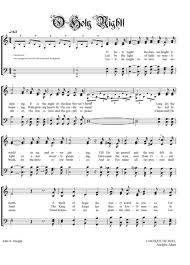
“O Holy Night” (“Cantique de Noël”) is a well-known Christmas carol composed by Adolphe Adam in 1847 to the French poem “Minuit, chrétiens” (Midnight, Christians) by Placide Cappeau (1808–1877).
Cappeau, a wine merchant and poet, had been asked by a parish priest to write a Christmas poem. Unitarian minister John Sullivan Dwight, editor of Dwight’s Journal of Music, created a singing edition based on Cappeau’s French text in 1855.
In both the French original and in the two familiar English versions of the carol, the text reflects on the birth of Jesus and of mankind’s redemption.
O Holy Night sung by the Mormon Tabernacle Choir and the King’s Singers
• 1719 ~ Johann Christoph Altnikol, German organist, bass singer, and composer. He was a son-in-law and copyist of Johann Sebastian Bach
• 1818 ~ Franz Gruber of Oberndorf, Germany, composed the music for “Silent Night” to words written by Josef Mohr. The traditional song was sung for the first time during Midnight Mass on this night.
• 1824 ~ Peter Cornelius, German composer and writer
• 1871 ~ Opera-goers in Cairo, Egypt were treated to Verdi’sAida in its world premiere. The composer was commissioned to write the opera for festivities celebrating the opening of the Suez Canal
• 1887 ~ Lucrezia Bori, Spanish lyric composer
• 1893 ~ Harry Warren (Salvatore Guaragna), Composer, Song Writer’s Hall of Famer: Best Song Oscar
• 1906 ~ Professor Reginald A. Fessenden sent his first radio broadcast from Brant Rock, MA. The program included a little verse, some violin and a speech.
• 1918 ~ Zara Nelsova, Canadian-born American cellist
• 1914 ~ Ralph Marterie, ‘Caruso of the trumpet’: musician, bandleader
• 1924 ~ Carol Haney, Dancer, member of Jack Cole dance company, worked with Bob Fosse, in films
• 1928 ~ The first broadcast of The Voice of Firestone was heard. The program aired each Monday evening at 8:00. The Voice of Firestone became a hallmark in radio broadcasting. It kept its same night, time (in 1931 the start time changed to 8:30) and sponsor for its entire run. Beginning on September 5, 1949, the program of classical and semiclassical music was also seen on television.
• 1930 ~ Robert Joffrey (Khan), Choreographer with The Joffrey Ballet; died in 1988
• 1931 ~ Ray Bryant, Pianist, composer
• 1944 ~ Mike Curb, Music executive, producer, Oscar-winner
• 1944 ~ The Andrews Sisters starred in the debut of The Andrews Sisters’ Eight-To- The-Bar-Ranch on ABC radio. Patti, Maxine and LaVerne ran a fictional dude ranch. George ‘Gabby’ Hayes was a regular guest along with Vic Schoen’s orchestra. The ranch stayed in operation until 1946.
• 1945 ~ Lemmy (Ian Kilmister), Bass, singer with Motorhead
• 1946 ~ Jan Akkerman, Guitar, lute with bands: Friendship Sextet, Johnny and the Cellar Rockers
• 1951 ~ Menotti’s “Amahl and the Night Visitors”, the first opera composed for television, made its debut on NBC-TV. Amal and the Night Visitors became a Christmas classic.
• 1955 ~ The lovely Lennon Sisters debuted as featured vocalists on The Lawrence Welk Show on ABC-TV. They became regulars with Welk within a month and stayed on the show until 1968.
• 1957 ~ Ian Burden, Keyboards with Human League
• 1977 ~ The Bee Gees spent Christmas and New Year’s Eve at the top of the music charts. How Deep is Your Love became #1 this day and stayed that way for three weeks.
• 2000 ~ Felix Popper, a conductor and music administrator at the New York City Opera, died at the age of 92. Popper joined the New York City Opera in 1949 as an assistant conductor and vocal coach. By 1958 he was named music administrator, and he played an important role in guiding the opera through a period in which the house truly established itself. During this time, the company is credited with discovering important American singers such as Johanna Meier, Tatiana Troyanos, Gianna Rolandi, Faith Esham and Jane Shaulis. Popper retired from the opera in 1980 but continued to work as a consultant and vocal coach.
• 2000 ~ Longtime Detroit blues radio personality and promoter Famous Coachman died of an apparent heart attack. He was 75. Coachman was host of the weekend blues and gospel show on Detroit’s WDET for 21 years until 1997 and remained busy in the city’s music world until his death. “Everybody knew Coachman,” said JoAnn Korczynska, blues music director for WHFR at Henry Ford Community College in Dearborn. “He really did know B.B. King and John Lee Hooker. When I met John Lee Hooker, one of the first things he said to me was `How is Coachman doing?'” Coachman said he was named “Famous” because “my mother knew I would be.”
• 2000 ~ Nick Massi, an original member of the Four Seasons who handled bass vocals and vocal arrangements throughout the band’s glory days, died of cancer at the age of 73. Massi was born in Newark as Nicholas Macioci. The longtime West Orange resident performed with several bands before joining Frankie Valli in a group called the Four Lovers. By 1961, the group had evolved into the Four Seasons. Massi remained with the group until 1965, when he grew tired of touring, Valli said. Massi performed on hits such as Sherry, Big Girls Don’t Cry, Walk Like a Man and Rag Doll, which friends said was his favorite. During his tenure, the group made the Billboard Top 40 chart 17 times and toured throughout the United States and overseas, melding doo-wop vocals with a contemporary beat. They were inducted into the Rock and Roll Hall of Fame in 1990. Valli’s falsetto was the band’s trademark, but he said Massi was his musical mentor. “He could do four-part modern harmonies that would amaze musicians who had studied for years. And he did it all in his head without writing it down,” Valli said.
• 1689 ~ Joseph Bodin De Boismortier, French baroque composer of instrumental music, cantatas, opéra-ballets, and vocal music.
• 1893 ~ Humperdinck’s Hänsel und Gretel premiered on this day in Weimar in 1893, with Richard Strauss conducting. Is there any better opera for Christmas time?
• 1907 ~ Don McNeill, Radio host
• 1918 ~ José Greco, Italian flamenco dancer
• 1929 ~ Chet Baker, American jazz trumpeter and singer
• 1934 ~ Claudio Scimone, Italian conductor and musicologist
• 1935 ~ ‘Little’ Esther Phillips (Esther Mae Jones), Pianist, singer, Grammy nomination for Best female R & B vocalist in 1973. Aretha Franklin won but she gave the award to Esther
• 1939 ~ Johnny Kidd (Frederick Heath), Singer, songwriter with Johnny Kidd & The Pirates
• 1940 ~ Tim Hardin, Singer, composer
• 1940 ~ Jorma Kaukonen, Guitarist with Jefferson Airplane and also Hot Tuna
• 1940 ~ Eugene Record, Singer with Chi-Lites
• 1942 ~ Bob Hope agreed to entertain U.S. airmen in Alaska. It was the first of his many famous Christmas shows for American armed forces around the world. The tradition continued for more than three decades.
• 1943 ~ The first complete opera to be televised was aired on WRBG in Schenectady, NY. (WRGB was named after GE engineer Dr. W.R.G. Baker. It was not named, as many have thought over the years, for red, blue and green, the three primary colors of a TV picture tube.) Humperdinck’s “Hansel and Gretel” was the opera presented.
• 1945 ~ Ron Bushy, Drummer with Iron Butterfly
• 1951 ~ Johnny Contardo, Singer with Sha-Na-Na, formerly Eddie and The Evergreens
• 1964 ~ Eddie Vedder (Mueller), Songwriter, singer with Pearl Jam
• 1964 ~ Rock ’n’ roll radio, in the guise of Pirate Radio, went to the U.K. Radio London began its regular broadcasts. It was joined, at sea, by other pirates like Radio Caroline and Radio Luxembourg. It was a gallant effort to broadcast commercial radio, which was illegal in Great Britain. On England’s mainland, one had to listen to ‘Auntie Beeb’ (the BBC) or nothing at all. It was generally like a battle. Government agents would attempt to board a floating radio station, take it over, and shut it down. Many times the ships would broadcast from different locales to foil the governmental crackdown on the high seas. Later, the BBC split into four different radio networks, Radio 1, 2, 3 and 4, to stem the tide of the pirates who gained huge audiences by playing popular music. Eventually, limited commercial broadcasting came to Great Britain.
• 1969 ~ B.J. Thomas received a gold record for the single, Raindrops Keep Fallin’ on My Head from the motion picture, Butch Cassidy and the Sundance Kid. Raindrops hit number one on the pop charts on January 3, 1970 and stayed there for 4 weeks.
• 1969 ~ Elton John met with arranger Paul Buckmaster, writer Bernie Taupin and producer Gus Dudgeon. The collaboration marked the start of one of the most successful milestones of music in the 1970s. Together, they created Your Song, Friends, Levon, Tiny Dancer, Rocket Man and many more.
• 2001 ~ Anthony Charles Chavis, Zydeco musician and son of the late Zydeco pioneer Boozoo Chavis, died after suffering a heart attack He was 45. His death came just eight months after his father’s. Charles Chavis, in addition to playing the washboard, was lead vocalist on numerous recordings with Boozoo, including his 1996 hit What You Gonna Do? After Boozoo Chavis’ death, his sons had agreed to continue the Magic Sounds Band. It was not clear how Charles Chavis’s death would affect the group. In addition to his music, Charles Chavis had worked with his father as a jockey and trainer at Chavis stables.
• 2018 ~ Liza Redfield, who broke a barrier on July 4, 1960, when she raised her baton at the Majestic Theater to start a performance of “The Music Man,” becoming the first woman to be the full-time conductor of a Broadway pit orchestra, died at the age of 94.
Music theory has never sounded so catchy with this witty remake of the holiday classic The Christmas Song (with apologies to Mel Torme) Try not to laugh at the ending.
Though it is a bit humorous, this version titled ‘Intervals Roasting’, with lyrics by David Rakowski, attempts to encapsulate the fundamentals of music theory in just over two minutes.
It does a good job of explaining the intervals and harmonic structure of the song and also gives you an idea of how to use music theory to analyze or compose music.
The O’Connor Music Studio has a copy if anyone wants to learn this 🙂





 MaryO'Studio