Vivaldi, one of the greatest baroque composers, has a very interesting story. He ran an orphanage in the 18th century in Italy that became famous all over the western world for its musically talented children. A lot of his pieces were written for specific children in his school. Vivaldi learned the violin from his father, and was trained as a priest. He was nicknamed “the red priest” for his red hair and was apparently somewhat sure of himself, having claimed once he can compose a concerto faster than it can be copied.
Vivaldi wrote over 500 pieces, most of which are lost today. He is considered one of the greatest musical landmarks in history, having inspired many composers that followed him, including J.S.Bach and others.
1583 ~ Girolamo Frescobaldi, Italian organist and composer
More information about Frescobaldi
• 1846 ~ This was the day when Richard Wagner began work on his opera Lohengrin. It remains an opera hit and “Here Comes the Bride”, based on the “Wedding March” from this opera.
• 1942 ~ Luther Simmons, Singer with Main Ingredient
• 1945 ~ Dee Dee Sharp (Dione LaRue), Singer with Chubby Checker
• 1946 ~ Billy Preston, Musician, songwriter, singer with The Beatles, Syreeta, played with Little Richard’s Band
• 1947 ~ Freddy Weller, Musician, guitar with Paul Revere and The Raiders (1969), solo, songwriter
• 1952 ~ David Stewart, Guitarist, keyboard with Eurythmics
• 1956 ~ On this Sunday night, 54,000,000 viewers (82.6 percent of the U.S. television audience) turned their TV dials to CBS as Ed Sullivan introduced 21-year-old singer Elvis ‘The Pelvis’ Presley. Elvis sang Hound Dog and Love Me Tender. Ed Sullivan, watching out for the moral safety of the viewing public (plus a live audience of screaming Elvis fans in the show’s New York theatre) demanded that the CBS cameras not venture lower than Elvis’ waist! Sullivan felt that Presley’s wild gyrations of his pelvis would lead the nation’s females into a frenzy of untold proportions. One female Elvis fan described him as, “One big hunk of forbidden fruit.” Elvis got the largest fee to that date for appearing on Ed Sullivan’s Toast of the Town: $50,000.
• 1993 ~ Helen O’Connell passed away. She was an American singer, actress, and hostess, sometimes described as “the quintessential big band singer of the 1940s”.
• 1996 ~ Bill Monroe passed away. He was an American mandolinist, singer, and songwriter who created the style of music known as bluegrass. The genre takes its name from his band, the Blue Grass Boys, named for Monroe’s home state of Kentucky.
• 2003 ~ Warren Zevon, who wrote and sang the rock hit “Werewolves of London” and was among the wittiest and most original of a broad circle of singer-songwriters to emerge from Los Angeles in the 1970s, died at the age of 56. Zevon moved to Los Angeles in the 1960s, making a living writing jingles for television commercials. He also composed the song “She Quit Me Man” for the movie “Midnight Cowboy.” He was just out of his teens when he went to work for the Everly Brothers, first as a pianist and later as their band leader.
Richard Strauss was born June 11, 1864 in Munich, Germany. He died on September 8, 1949 in Garmisch-Partenkirchen, Germany. He was a German composer and conductor known for his intense emotionalism in his symphonic poems. He characterized himself as ‘composer of expression’ which is born out in his colorful orchestration. In his operas he employed Wagnerian principles of music drama, but in a more compact form.
Strauss was composing by the age of six, having received basic instruction from his father, a virtuoso horn player. This was, however, his only formal training. The elder Strauss instilled in his son a love of the classical composers, and his early works follow in their path. Strauss’ first symphony premiered when he was seventeen, his second (in New York) when he was twenty. By that time, Strauss had directed his energies toward conducting, and in 1885 he succeeded Hans von Bülow as conductor of the orchestra in Meiningen. For the next forty years, he conducted orchestras in Munich, Weimar, Berlin and Vienna.
As a conductor, Strauss had a unique vantage point from which to study the workings of the orchestra. From this vantage point he developed a sense for orchestration that was unrivaled. He immediately put this sense to use in a series of orchestral pieces that he called “tone poems”, including Macbeth, Don Juan, Tod und Verklärung, Till Eulenspeigels lustige Streiche and Don Quixote. These works are intensely programmatic, and in the last two, Strauss elevated descriptive music to a level not approached since the techniques of text painting during the Renaissance. He also used his knowledge of orchestral techniques to produce a revised version of Hector Berlioz’s important orchestration treatise; this edition remains a standard to this day.
After the turn of the century, Strauss began to shift his focus to opera. With his principal librettist Hugo von Hofmannsthal, he created two forward-looking and shocking works: Salome, based on Oscar Wilde’s controversial play, andElektra, Hoffmannsthal’s version of the classical Greek tragedy. In these works, the intense emotions and often lurid narrative elicited a more daring and demanding musical language full of extreme chromaticism and harsh timbres. But with his next opera, Der Rosenkavalier, Strauss seems to have left this aside, turning to a more focused, almost neoclassical approach in his later works. With this, Strauss settled into a comfortable place in German musical society, perhaps too comfortable, given his willingness to acquiesce to the artistic maneuverings of the rising Nazi regime. In the end, he broke with the Nazis on moral grounds, and died virtually penniless in the aftermath of the Second World War.
Musical Examples:
Don Quixote
Suite from Le Bourgoise gentilhomme, Op.60, Prelude
Also Sprach Zarathustrahttps://youtu.be/3rzDXNQxjHs
One of Richard Strauss’ most popular works is Also Sprach Zarathustra since it was made popular in the 1968 Stanley Kubrick science-fiction movie 2001: A Space Odyssey.
Also sprach Zarathustra, Op. 30 (Thus Spoke Zarathustra or Thus Spake Zarathustra) is a tone poem by Richard Strauss, composed in 1896 and inspired by Friedrich Nietzsche’s philosophical treatise of the same name. The composer conducted its first performance on 27 November 1896 in Frankfurt. A typical performance lasts half an hour.
The work has been part of the classical repertoire since its first performance in 1896. The initial fanfare — entitled “Sunrise” in the composer’s program notes — became particularly well known to the general public due to its use in Stanley Kubrick’s 1968 film 2001: A Space Odyssey, and as the theme music of the Apollo program. The fanfare has also been used in many other productions.
The piece starts with a sustained double low C on the double basses, contrabassoon and organ. This transforms into the brass fanfare of the Introduction and introduces the “dawn” motif (from “Zarathustra’s Prologue”, the text of which is included in the printed score) that is common throughout the work: the motif includes three notes, in intervals of a fifth and octave, as C–G–C (known also as the Nature-motif). On its first appearance, the motif is a part of the first five notes of the natural overtone series: octave, octave and fifth, two octaves, two octaves and major third (played as part of a C major chord with the third doubled). The major third is immediately changed to a minor third, which is the first note played in the work (E flat) that is not part of the overtone series.
“Of Those in Backwaters” (or “Of the Forest Dwellers”) begins with cellos, double-basses and organ pedal before changing into a lyrical passage for the entire section. The next two sections, “Of the Great Yearning” and “Of Joys and Passions”, both introduce motifs that are more chromatic in nature.
“Of Science” features an unusual fugue beginning in the double-basses and cellos, which consists of all twelve notes of the chromatic scale. It is one of the very few sections in the orchestral literature where the basses must play a contra-b (lowest b on a piano). “The Convalescent” acts as a reprise of the original motif, and ends with the entire orchestra climaxing on a massive chord. “The Dance Song” features a very prominent violin solo throughout the section. The end of the “Song of the Night Wanderer” leaves the piece half resolved, with high flutes, piccolos and violins playing a B major chord, while the lower strings pluck a C.
One of the major compositional themes of the piece is the contrast between the keys of B major, representing humanity, and C major, representing the universe. Because B and C are adjacent notes, these keys are tonally dissimilar: B major uses five sharps, while C major has none.
Works:
Orchestral music, including symphonic poems: Macbeth (1888), Don Juan (1888-1889), Tod und Verklärung (Death and Transfiguration, 1889), Till Eulenspiegels lustige Streiche (Till Eulenspiegel’s Merry Pranks, 1895), Also sprach Zarathustra (Thus Spake Zarathustra, 1896), Don Quixote (1897) and Ein Heldenleben (A Hero’s Life, 1898); 2 symphonies (Domestic, 1903 and Alpine, 1915); 3 concertos (2 for horn, 1 for oboe)
15 operas, including Salome (1905), Elektra (1909), Der Rosenkavalier (The Cavalier of the Rose, 1911), Ariadne auf Naxos (1912) and Die schweigsame Frau (The Silent Woman, 1935)
Choral works (with and without orchestra), chamber works
1841 ~ Antonin Dvorák, Czech composer
More information about Dvorák
• 1849 ~ Richard Strauss, German composer and conductor, died. Strauss wrote in nearly every genre, but is best known for his tone poems and operas.
More information about Strauss
• 1897 ~ Jimmie (James Charles) Rodgers,‘The Blue Yodeler’, Country Music Hall of Famer, First country singer to be in a film
• 1935 ~ The Hoboken Four, featuring Frank Sinatra as lead singer, appeared on Major Bowes Amateur Hour on WOR radio. The group won the competition held at the Capitol Theatre in New York City.
• 1941 ~ Dante Drowty, Singer with Dante and The Evergreens
• 1941 ~ Harry James and his orchestra recorded Misirlou for Columbia Records.
• 1942 ~ Brian Cole, Bass, singer with The Association
Labor Day is a United States federal holiday observed on the first Monday in September celebrating the economic and social contributions of workers.
The first Labor Day holiday was celebrated on Tuesday, September 5, 1882, in New York City, in accordance with the plans of the Central Labor Union. The Central Labor Union held its second Labor Day holiday just a year later, on September 5, 1883.
In 1884 the first Monday in September was selected as the holiday, as originally proposed, and the Central Labor Union urged similar organizations in other cities to follow the example of New York and celebrate a “workingmen’s holiday” on that date. The idea spread with the growth of labor organizations, and in 1885 Labor Day was celebrated in many industrial centers of the country.
It was first nationally recognized in 1894 to placate unionists following the Pullman Strike. With the decline in union membership, the holiday is generally viewed as a time for barbecues and the end of summer vacations – and time to go back to school in Fairfax County – and piano lessons!
• 1940 ~ Artie Shaw and his orchestra recorded Temptation on the Victor label.
• 1951 ~ Chrissie Hynde, Guitarist, singer, songwriter with The Pretenders
• 1972 ~ Curtis Mayfield earned a gold record for his Superfly album, from the movie of the same name. The LP contained the hits, Freddie’s Dead and Superfly. Both songs were also million sellers.
• 1975 ~ Steve Anderson set a record for picking a guitar. Anderson, 22, picked for 114 hours, 7 minutes, breaking the old record by over four hours.
• 2001 ~ Igor Buketoff, an American conductor who specialized in Russian music and contemporary opera, died at the age of 87. Buketoff was best known for his orchestration of the first act of Rachmaninoff’s unfinished opera, Monna Vanna. Buketoff led the Philadelphia Orchestra in the world premiere in 1984. Buketoff also was recognized for restoring folk texts to Tchaikovsky’s1812 Overture. Buketoff earned bachelor’s and master’s degrees at the Juilliard School, and later directed the choral departments there and at Adelphi College and Columbia University. He won the first Alice Ditson Award for outstanding American conductors in 1941. He won it again in 1967. In 1959, Buketoff established the World Music Bank – now called the International Contemporary Music Exchange – to promote modern orchestral music.
• 2001 ~ Stelios Kazantzidis, a legendary Greek folk singer with a career spanning more than half
a century, died at the age of 70. His popularity crossed generations and his music reflected the joys, sorrows and battles of Greece, according to MBI, his recording company. Kazantzidis’ popularity was carried beyond Greek borders by immigrants to such countries as the United States, Canada and Australia, which he often visited. He abandoned the night club scene in 1965 and would only have contact with the public through recordings after that. During his prolific career, he released more than 120 albums. In a letter to the singer shortly before his death, Culture Minister Evangelos Venizelos said Kazantzidis occupied an “unrivaled” chapter in the history of Greek music.
The manuscript of Mozart’s A major piano sonata K331 has recently been discovered in Budapest. Having spent the majority of its life in the Budapest’s National Széchényi Library for decades, the coveted manuscript was rediscovered by Haydn scholar Balazs Mikusi.
The piece was composed in 1783 and contains Mozart’s most popular jam, “Turkish March,” which has become a piano lesson staple all over the world.
Although, unfortunately, Mikusi can’t say how or when these pages found their way to Hungary; they reveal subtle differences from the published editions of the sonata. The key variances are seen in the phrasing, dynamics and occasionally the notes themselves.
“It is very rare that a Mozart manuscript pops up. Moreover the A Major Sonata had no known manuscript, so it is a really big discovery,” he said.
The library has only released teasing images of the manuscript, nothing more.
• 1937 ~ Benny Goodman and his orchestra recorded “Sugar Foot Stomp” on Victor Records. The tune was a Fletcher Henderson arrangement.
• 1944 ~ Roger Waters, Musician: bass, songwriter with Pink Floyd
• 1948 ~ Claydes (Charles) Smith, Guitarist with Kool & The Gang
• 1954 ~ Banner Thomas, Bass with Molly Hatchet
• 1958 ~ Georgia Gibbs sang “The Hula-Hoop Song” on “The Ed Sullivan Show”. It was the first national exposure for the Hula-Hoop craze. Many people recorded the song to capitalize on the fad, including Teresa Brewer and Betty Johnson. Like sometimes happens with fads, these songs didn’t become very popular. The Hula-Hoop craze lasted a bit longer…
• 1961 ~ Paul Waaktaar, Guitarist, singer with a-ha
• 1975 ~ Glen Campbell hit #1 on the “Billboard” pop music chart with “Rhinestone Cowboy”. It had reached the top position on the country chart on August 23rd.
• 1976 ~ Dean Martin and Jerry Lewis were reunited by Frank Sinatra – after 20 years of going their separate ways. The former comedy team warmly met each other again during a surprise visit by Martin to Lewis’s annual “Labor Day Telethon” for Muscular Dystrophy.
• 1984 ~ Country-music star Ernest Tubb died this day, at the age of 70. Tubb was from Crisp, Texas and was known as the ‘Texas Troubadour’. He patterned his unique style after Jimmie Rodgers. Tubb recorded “I’m Walking the Floor Over You” and sold more than three million copies of the tune. “Blue Christmas”, “I Love You Because”, “Missing In Action” and “Thanks a Lot” were also classics made famous by Tubb. Other recording artists as diverse as The Andrews Sisters, Loretta Lynn and Red Foley recorded with Tubb. His 1979 album, “The Legend and the Legacy”, was a top-ten hit. Tubb was a member of the Grand Ole Opry since 1943 and was elected to the Country Music Hall of Fame in 1965.
• 1984 ~ Ginger Rogers was in Buffalo, NY for a homecoming at Shea’s Theatre. The star of so many great motion pictures, Rogers had played the Shea 55 years earlier.
• 1986 ~ Bananarama hit the top spot on the pop music charts with “Venus”. The tune had also been a number one hit for the Dutch group, The Shocking Blue (2/07/70).
• 1997 ~ The Westminster Abbey funeral for Diana, Princess of Wales, was an extraordinary event, marked by numerous poignant moments: The people sobbing and throwing flowers at the funeral cortege winding through the streets of London. Her sons, walking behind her casket with their heads bowed. And Diana’s brother, who during his funeral oration took aim at the media, who he said made the princess “the most hunted person of the modern age.” Elton John sang a rewritten version of “Candle in the Wind” to “England’s rose”. The song was originally a tribute to film legend Marilyn Monroe, whose own tragic life, like Diana’s, ended at the age of just 36.
• 2002 ~ Rafael Druian, a violinist and conductor who served as concertmaster of four American orchestras, died at the age of 80. Druian’s lengthy career spanned many roles – performer, conductor and teacher. He was the concertmaster of the Dallas Symphony, the Minnesota Orchestra, the Cleveland Orchestra and the New York Philharmonic. Born in Vologda, Russia, Druian grew up in Havana, Cuba and began his musical training at an early age. He came to Philadelphia when he was 10 to audition for Leopold Stokowski, who recommended him for a scholarship at the Curtis School of Music. He graduated from Curtis in 1942 and served in the United States Army for four years and played in the army band. During his career, Druian appeared on some groundbreaking recordings of lesser-known violin works. In the 1950s he made recordings of Block, Janácek and Enesco. After working with orchestras around the country, his final concertmaster position was at the Philharmonic from 1971 to 1974. When he finished there he taught at Boston University and the Curtis Institute of Music.
1735 ~ Johann Christian Bach, German composer
J.C. Bach was one of Johann Sebastian Bach’s sons. After he moved to London, he became known as the London Bach.
More information about J.C. Bach
1791 ~ Giacomo Meyerbeer, German Composer
More information about Meyerbeer
1912 ~ John Cage, American avant-guarde composer, pianist and writer
Read quotes by and about Cage
More information about Cage
• 1934 ~ Carol Lawrence (Laraia), Singer, actress
• 1939 ~ John Stewart, Singer with The Kingston Trio; songwriter
• 1945 ~ Al Stewart, Singer, guitarist with Time Passages
• 1946 ~ Freddie Mercury (Bulsara), singer, Queen, (1975 UK No.1 single ‘Bohemian Rhapsody’ also UK No.1 in 1991, plus over 40 other UK Top 40 singles. 1980 US No.1 single ‘Crazy Little Thing Called Love’). Solo, (1987 UK No. 4 single ‘The Great Pretender’). Mercury died of bronchio-pneumonia on November 24th 1991 aged 45, just one day after he publicly announced he was HIV positive.
• 1946 ~ Loudon Wainwright III, Songwriter, singer
• 1956 ~ Johnny Cash hit the record running with I Walk the Line. Cash’s debut hit song climbed to #17 on the pop music charts.
• 1969 ~ Dweezil Zappa, Musician: guitar: MTV; son of musician Frank Zappa, brother of singer Moon Unit Zappa
• 1972 ~ Roberta Flack and Donny Hathaway won a gold record for their duet, Where is the Love. The song got to number five on the pop music charts and was one of two songs that earned gold for the duo. The other was The Closer I Get To You in 1978.
• 2002 ~ Florence Lessing, a dancer who performed in films, nightclubs and Broadway musicals died. She was 86. Lessing worked with the famous jazz-dance choreographer Jack Cole, who spotted her as a teenager in an East Indian dance class. Lessing, Cole, and the teacher of the class, Anna Austin, formed a trio that performed at the Rainbow Room in 1938 and in the musical “Moon Over Miami” in 1939. Lessing went on to perform in many Broadway shows, including “Windy City,” choreographed by Katherine Dunham, and “Sailor Beware” and “Kismet,” both choreographed by Cole. She appeared in the 1952 film musical “Just for You,” which was choreographed by Helen Tamiris and starred Bing Crosby and Jane Wyman. Lessing, who studied a wide variety of dance forms, choreographed two of her own nightclub acts in the mid-1940s and taught dance at several schools.
• 2003 ~ Gisele MacKenzie, a singer-actress who became one of early television’s biggest stars through her appearances on “Your Hit Parade,” died. She was 76. Once known as Canada’s first lady of song, MacKenzie moved to Los Angeles with her family in 1951. In 1952 and 1953 she toured with Jack Benny, who recommended her for a spot on “Your Hit Parade.” In 1957, she left the show to headline her own musical variety program, “The Gisele MacKenzie Show.” It lasted half a year. She returned to weekly television in 1963 as a regular on “The Sid Caesar Show.” She also appeared on radio in Los Angeles with Edgar Bergen and Morton Downey. She was a regular on Bob Crosby’s Club 15 show and a featured performer on radio’s “The Mario Lanza Show.” She continued to appear regularly on television into the 1990s, on such shows as “Studio One,” “The Hollywood Squares,” “Murder, She Wrote,” “MacGyver” and “Boy Meets World.”
• 1928 ~ Wingy Manone recorded Downright Disgusted for Vocalion Records. Playing drums for Wingy was a young sideman named Gene Krupa.
• 1930 ~ Mitzi Gaynor (Franchesca Mitzi Marlene de Charney von Gerber), Singer, dancer, actress
• 1942 ~ Merald ‘Bubba’ Knight, Singer with Gladys Night and the Pips
• 1944 ~ Gene Parsons, Drummer with The Byrds
• 1946 ~ Gary Duncan (Grubb), Musician, guitar with Quicksilver Messenger Service
• 1946 ~ Greg Elmore, Musician, drums with Quicksilver Messenger Service
• 1950 ~ Ronald LaPread, Bass with Commodores
• 1951 ~ Martin Chambers, Drummer with The Pretenders
• 1959 ~ Mack the Knife was banned from radio – at least from WCBS Radio in New York
City. Teenage stabbings in the city had people pretty uptight; therefore, the ban.
• 1971 ~ The Lawrence Welk Show was seen for the last time on ABC~TV. ABC felt the show attracted “too old an audience … not good for attracting advertisers.” Syndication allowed the champagne music to continue until 1982 as a weekly favorite for millions of people. Welk charted a half-dozen tunes on the pop music charts between 1956 and 1961, including the number one song, Calcutta, in 1960.
More information about Welk
• 1982 ~ After six weeks, Eye of the Tiger, by Survivor, dropped out of the top spot on the music charts. The song, from the movie, Rocky III, dropped all the way to number 2 (for two weeks), then to number 3 for one week and to number 4 for two weeks before starting to fade. That’s what we call a hit, folks! It was the group’s biggest, earning them a platinum record.
• 2001 ~ Robert Pagent, a dancer and choreographer who appeared in the original productions of Oklahoma! and Carousel died at the age of 87. Born Robert Weisser in Pittsburgh, Pagent began his career in European classical ballet troupes in the 1930s. In 1942 he adopted the stage name Robert Pagent and was square-dance caller in the premier of Agnes de Mille’s cowboy-themed ballet, Rodeo. It was the start of a long friendship and collaboration with DeMille and choreographer Jerome Robbins. The following year he replaced an injured dancer in the original cast of Oklahoma! a night after its opening. Two years later he appeared in the premiere of Carousel. Pagent was a choreographer for television in the 1950s and 60s, including the Miss America Pageant. He staged Rudolph Nureyev’s first U.S. television appearance.
• 2003 ~ Susan Chilcott, one of Britain’s leading opera singers, died. She was 40. Chilcott, a soprano, had performed across Europe and with the Metropolitan Opera in New York City. Chilcott made her Royal Opera House debut in Covent Garden June 2003 to glowing reviews, playing Lisa in Tchaikovsky’s “Queen Of Spades” oppositePlacido Domingo.
• 2003 ~ Tibor Varga, a conductor and violinist known for his teaching and for his performances of Béla Bartók and other modern masters, died. He was 82. Varga was born in Hungary and made his public debut with Mendelssohn’s E minor concerto when he was 10. He began touring in Europe while a teenager and studied in Budapest and in Berlin. After World War II he performed widely as a violin virtuoso. In 1947 he moved to England, where he obtained British citizenship. He founded the Tibor Varga Chamber Orchestra in Detmold, Germany, in 1954, then moved to Switzerland, where he was based the rest of his life. He continued to conduct the Detmold-based orchestra until 1988. His repertoire covered baroque, classical and romantic works, but he was best known for his performances of modern composers including Stravinsky, Schoenberg and Berg.


 1583 ~ Girolamo Frescobaldi, Italian organist and composer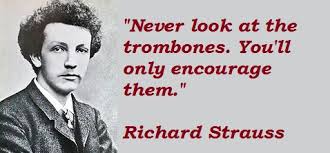


 Fairfax County First Day of School

 MaryO'Studio