Happy Birthday to… US! | Barbershop HQ

BarbershopQuartet

It was 77 years ago this weekend that 26 men showed up at the Tulsa Club for a night of singing. They’d been invited by “Rupert Hall, Royal Keeper of the Minor Keys” and “O.C. Cash, Third Assistant Temporary Vice Chairman” of the Society for the Preservation and Propagation of Barber Shop Quartet Singing in the United States (sic), who noted:

In this age of Dictators and Government control of everything, about the only privilege guaranteed by the Bill of Rights not in some way supervised and directed, is the art of Barber Shop Quartet singing. Without doubt we still have the right of “peaceable assembly” which I am advised by competent legal authority includes quartet singing. The writers of this letter have for a long time thought that something should be done to encourage the enjoyment of this last remaining vestige of human liberty. Therefore, we have decided to hold a songfest on the Roof Garden of the Tulsa Club on Monday, April 11, at six-thirty p.m.

Read more:  Happy Birthday to… US! | Barbershop HQ.

April 11 ~ Today in Music History

today


1819 ~ Sir Charles Halle, German-born British pianist and conductor He settled in Manchester after being driven to England by the 1848 Revolution and in 1858 founded the famous Halle Orchestra.

. 1916 ~ Alberto Ginastera, Argentinian composer

. 1932 ~ Joel Grey, Entertainer

. 1938 ~ Kurt Moll, German bass

. 1938 ~ O.C. Cash founded SPEBSQS (The Society for the Preservation of Barbershop-Quartet Singing)

. 1956 ~ Elvis Presley reached the top spot on the Billboard music chart with his first double-sided hit. The disk featured Heartbreak Hotel and I Was the One. The RCA Victor record stayed at number one for eight weeks. Elvis also made the country and R&B charts, as well.

. 1961 ~ Bob Dylan made his professional singing debut in Greenwich Village’s Gerde’s Folk City. He sang Blowin’ in the Wind.

Piano Stores, Teachers Adapt to Decline in Interest in the Instrument

SALISBURY, Md. – Mozart, Beethoven and Chopin wouldn’t be thrilled to hear that fewer people are choosing to learn to play the piano than ever before.

At B&B Music in Salisbury, people have been shopping for pianos since they opened 60 years ago. One think you won’t see on the display floor in 2015 is a grand piano.

“We used to have actual string pianos at one time,” said store manager Mike Jarrell. “The way the economy was, it wasn’t very feasible for a lot of people. They can cost up to several thousands of dollars.”

The best year for new piano sales in the United States was 1909, when more than 364,500 were sold. Now that number has plunged to between 30,000 and 40,000 each year.

Denise Crothers is on her 36th year of teaching people young and old how to play piano. She averages about 60 students per week.

“I teach for half an hour, usually for each lesson and half of I teach them in the note because I think it’s important to still know how to read. Half of it would be like the praise and worship and learning how to chord and how to play by ear,” said Crothers. “They can play what they hear on the radio. Some of them don’t even need me anymore.”

Nationally, increased interest in sports or electronics is blamed for declining interest in learning to play the piano. Denise says lessons have evolved over the years in order to keep it fresh.

“I think it’s important for teachers to be able to apply the real world into their teaching. Not maybe strictly Classical. Classical is wonderful, you know, don’t get me wrong. I absolutely love it, but I think it’s important for them to do fun songs and stuff like that,” said Crothers.

Rather than smashing old pianos on the curb, B&B Music is adapting to suit a more tech-savvy generation.

“Our more common models are the digital style models with weighted keys so it’s more like playing a real string piano. Then you start getting into more production type keyboards which are more for making your own scores and hip-hop beats and that kind of thing. It’s more of a production opposed to performance,” said Jarrell.

Despite a national downward trend in piano purchases and lessons, those in the biz can’t stress enough how important it is.

“In the music business, you’re constantly learning. It’s a never-ending thing,” said Jarrell.

“Once you commit to something, really having the work ethic to keep going and keep learning, it’s really rewarding and that’s something I think our culture lacks sometimes, you know the ‘stick-to-it-ness’,” said Crothers.

via Piano Stores, Teachers Adapt to Decline in Interest in the Instr – WBOC-TV 16, Delmarvas News Leader, FOX 21 –.

April 10 ~ Today in Music History

today


. 1864 ~ Eugen d’Albert, British-born German pianist and composer

. 1885 ~ Sigmund Spaeth, American music scholar

. 1921 ~ Martin Denny, Composer, arranger, pianist

OCMS 1930 ~ Claude Bolling, French jazz pianist and composer
More information about Bolling

. 1927 ~ Ballet Macanique was presented for the first time at Carnegie Hall in New York City. This was the first symphonic work that called for an airplane propeller and other mechanical contraptions not normally associated with the ballet.

. 1953 ~ Eddie Fisher was discharged from the Army and arrived home to a nice paycheck of $330,000 in record royalties. Fisher sold 7 million records for RCA Victor while on furloughs. Anytime was just one of several hits recorded during his stint in the Army.

. 1970 ~ Officially resigning from The Beatles, Paul McCartney disbanded the most influential rock group in history at a public news conference. The Beatles hit, Let It Be, was riding high on the pop charts. The last recording for the group, The Long and Winding Road (also from the documentary film Let It Be), would be number one for two weeks beginning on June 13, bringing to a close one of contemporary music’s greatest dynasties.

Recital Etiquette

recital


Student recitals can be lots of fun and create valuable experiences for pianists. Unfortunately, they can also be a source of anxiety or stress if students aren’t ready and/or guidelines aren’t followed.

There are guidelines and rules of behavior all performers and audience members should follow during recitals, concerts or other performances.

Audience members must remember the reason for their visit to the recital hall – to listen quietly, actively and appreciatively to the music being offered by the performers.


For the performer:

1.  Dress appropriately. Performers being nicely dressed (or following the recital theme) shows respect for the audience, the teacher and themselves!

Girls in knee-length or longer skirts/dresses or slacks.  No spaghetti straps, no platform shoes, flip-flops, bedroom slippers or athletic footwear.

Do not wear dangling, jingling jewelry – especially bracelets.  You may need to remove rings if they twist around easily.

Boys in dress pants and buttoned dress shirts with ties preferred, or suits.

IMPORTANT: Remember to practice several times in your outfit, shoes included.  You don’t want to get to the recital and find that you can’t use the pedal properly because of your shoes.

2. Clean hands!  Dirty, sticky, or oily fingers can hurt your performance and bother the next pianist. If you complete a long piece and notice some keys are slippery with sweat (a very common issue), notify your instructor so they can clean the keyboard before the next performer.

2. When it is your turn, stand quickly and walk up to the stage. Do not run!

Bow before you perform to acknowledge the applause. Audiences used to know that it was appropriate to clap for the musician who was entering the stage to perform. This now isn’t always the case (I will start clapping if it doesn’t happen automatically). Students should bow to their applauding audience before they sit down at the bench (not acknowledging applause is generally considered to be rude).

2.  Enter the bench from the side furthest from your audience. This was a biggie for my former piano teacher and I’m reminded of it every time I see a student slink in from the “front side”… or climb over the top. I used to think this was awfully stuffy – but when you see a student do it, it just looks right.

3.  Hands in your lap before you begin. I use this with my students to give them a moment to hear the first few measures in their mind before they begin.  Once fingers are on the keys it means you’re  ready to play. If the bench needs adjusting it should be done first… and then  hands should be placed in your lap before beginning to play.

Play the scale of the piece in your head and think over tempo, markings, etc. Then  arch your hands onto the piano and position  feet on the pedals or flat on the floor–NEVER under the stool. Proceed to play!

3. Should you make a mistake while performing, you should try to continue playing without starting over or repeating. This makes sufficient practice before the recital very Very VERY important!

If playing more than one piece, you should acknowledge applause in between with a nod or smile.

4.  Hands in lap after you finish. So many piano students are already lifting themselves off the bench as they play the final note (perhaps really eager to return to their seat in the audience!?) Learning to place your hands in your lap after finishing gives the audience a moment to truly relish what they just heard.

5.  Rise and stand at the edge of the piano (with left hand on the wood). Bow from the hips,  don’t curtsey. Bowing nicely takes practice!  In handbells, we bow towards the table and say silently “I love handbells”.  The same can be said in piano recitals – “I LOVE Piano”.

6.  Walk calmly off the stage or away from the piano.  No running… no matter how badly you want to get back to your seat!

For the audience:

Recitals are a special occasion and so it is customary to dress nicely.

• Please arrive a little early in order to find a comfortable place to sit.

• Make sure all your invited guests understand the importance of arriving on time. If they arrive late, it makes it difficult for those performing.

• Please invite as many friends and family members as you’d like. Our recital hall has lots of room, and can accomodate likely as many as you’d like to invite. And if not, then a standing room only crowd would be a fantastic crowd to have, and a wonderful problem to deal with!

• Turn off all cell phones and any electrical devices that may produce sound.

• Once the recital begins, please listen and be quiet. Crying babies should be taken out. They are not happy, and neither is the audience or the performer!

• If you arrive late, please wait to enter between pieces when you hear applause. Do not enter the recital hall or switch seats while someone is performing.

• The soloist will bow and your response is to applaud politely!

• No whistling, yelling, or other loud methods of congratulation. While boisterous congratulations are meant to show support for the performer, it may actually cause unintended problems instead. The best way to show appreciation for the performance is with thunderous applause, and an occasional “bravo” at the end of an especially great performance.

• Compositions that have movements or suites are, in general, performed without applause in the middle.

• Respect the performers. Unnecessary noise from whispering, talking, candy wrappers, etc. during a program is not acceptable. Reading, studying, and writing letters during a program are also inappropriate.

• Please stay until the performance or event is completely over. Attending a recital so that other families will serve as audience to your student, and then leaving before the other performers have finished is rude, inconsiderate and unacceptable. If you have other obligations or matters to attend to before the recital is over, please do not attend.

• Flash photography is not appropriate during a performance. The flash can disrupt the performer’s concentration.

• Enjoy! Your presence is the greatest affirmation!

For Everyone:

No Perfume!  Your perfume or cologne will linger around the piano after you leave the stage (especially under hot lights), and it might give the next pianist some sinus or eye irritation; or, at the very least, create a distraction that can prevent them from getting “in the zone.”

Parts of this article adapted from It’s The Little Things That Count… Piano Etiquette and Your Piano Students | Teach Piano Today

April 9 ~ Today in Music History

today

. 1886 ~ Enrique Granados, Spanish pianist and composer, performed his debut piano concert in Barcelona.

. 1888 ~ Sol Hurok, Impresario

OCMS 1890 ~ Efram Zimbalist, Russian-born American violinist and composer
More information about Zimbalist

. 1898 ~ Paul Robeson, American bass. Known for his sympathy for Russia he had his passport revoked for many years. The song Ole Man River, whose words he changed to fit his views, became his signature song.

. 1906 ~ Antal Dorati, Hungarian-born American conductor and composer. He was the first conductor to record all of Haydn’s symphonies.

. 1916 ~ Julian Dash, Jazz musician, tenor sax

. 1928 ~ Tom Lehrer, Songwriter

. 1932 ~ Carl Perkins, early American rock ‘n’ roll figure who originally recorded Blue Suede Shoes. Inducted into the Rock and Roll Hall of Fame in 1987

. 1940 ~ Jimmy Dorsey and his orchestra, along with singer Helen O’Connell, recorded Six Lessons from Madame La Zonga for Decca Records.

. 1950 ~ Bob Hope hosted a Star-Spangled Review on NBC-TV. Hope became the highest- paid performer for a single show on TV. The Star-Spangled Review was a musical special.

. 1970 ~ Paul McCartney sought a High Court writ to wind up the Beatles business partnership, effectively ending the group’s career.

. 1977 ~ The Swedish pop group Abba made its debut at number one on the American pop charts, as Dancing Queen became the most popular record in the U.S.

. 1988 ~ Brook Benton passed away.  He was an American singer and songwriter who was popular with rock and roll, rhythm and blues, and pop music audiences.

. 2001 ~ Graziella Sciutti, an Italian soprano and opera director best known for her interpretations of Mozart, died at the age of 68. Born in Turin, northern Italy, in 1932, Sciutti made her first operatic appearance at the Aix-en-Provence Festival in France in 1951. She went on to perform under Herbert von Karajan at Milan’s La Scala. She was lead soprano at a smaller theatre at La Scala called La Piccola Scala for eight years from its inception in 1955. She became a member of the Vienna State Opera in 1960 and the following year made her debut in San Francisco in one of her most celebrated roles, as Susanna in The Marriage of Figaro. She began her directing career at Covent Garden in London and at the Glyndebourne Festival in England, where she directed and performed in Poulenc’s La Voix Humaine in 1977. She then went on to direct in Canada and for the opera companies in San Francisco, Chicago, New York, Dallas and Miami, as well as in Britain, Germany and Italy. She joined London’s Royal College of Music in the mid 1980s and continued to teach there until shortly before her death.

Handmade instrument donated to Black Hills State

steinway-new

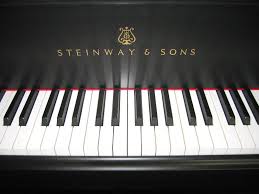
A Steinway Model-B is the new addition to Black Hills State’s Meier Recital Hall.

The nearly $100,000 piano was fully funded by donations, including Rachel Headley, the Science, Technology, Engineering & Mathematics liaison to Academic Affairs at BHSU.

The university donors purchased the 7-foot handmade instrument from Black Hills Piano Gallery in Rapid City.

Gallery owner Tony Thomas believes the Meier Recital Hall is the perfect home for a Steinway.

“That hall cries for the best possible sound,” he said. “The Meier Hall is just a wonderful hall and they have a great faculty to provide good instruction to the students there.”

Thomas, a musician himself, understands the decision of purchasing a top-of-the-line instrument.

“Anytime you have a good hall that provides that kind of acoustics, Steinway is the choice of 98 percent of concert artists on stage. That’s the sound that they want to hear. You can head all of the textures of tunes, it’s beautiful.”

Black hills state received the handcrafted piano Monday afternoon, with an unveiling ceremony planned for that evening.

via Handmade instrument donated to Black Hills State | KOTATV.com Rapid City, Black Hills, So Dak. Gillette Sheridan KOTA Territory News.

April 8 ~ Today in Music History

today


Buddha’s Birthday

. 1848 ~ Gaetano Donizetti (born in 1797), died in Bergamo. He was an Italian composer.

. 1889 ~ Sir Adrian Boult, British conductor. In 1918 Gustav Holst asked him to conduct the first performance of “The Planets.”

. 1922 ~ Carmen McRae, Singer

. 1923 ~ Franco Corelli, Italian tenor, debut: Spoleto (Italy) as Don Jose in Bizet’s Carmen in 1951; in films: Great Moments in Opera, Franco Corelli in Tosca, The Great Tenors – Voice of Firestone Classic Performances

. 1929 ~ Jacques Brel, Belgian-born French singer and songwriter

. 1941 ~ Peggy Lennon, Singer with The Lennon Sisters

. 1950 ~ Vaslav Nijinsky, legendary Russian ballet dancer, died. He is generally regarded as the 20th century’s greatest male dancer.

. 1963 ~ Julian Lennon, Singer, son of John and Cynthia Lennon

. 1968 ~ The Beatles went gold again, receiving a gold record for the single, Lady Madonna.

. 1971 ~ Chicago became the first rock group to play Carnegie Hall in New York City.

. 1986 ~ It took 18 years of singing the U.S. national anthem, but on this day, at long last, baritone Robert Merrill of the Metropolitan Opera became the first person to both sing the anthem and throw out the first ball at Yankee Stadium for the Yanks home opener.

. 2001 ~ Van Stephenson, a hit Nashville songwriter who also earned onstage success as a member of the trio BlackHawk, died after suffering from cancer at the age of 47. Stephenson released two albums as a solo pop artist in the 1980s, and scored the hit Modern Day Delilah in 1984. Moving back to Nashville from Los Angeles, Stephenson partnered with songwriter Dave Robbins to write a string of hits for Restless Heart, Dan Seals, and others. Stephenson and Robbins teamed up with former Outlaws singer Henry Paul at the suggestion of record executive Tim DuBois. The trio has had a string of hits since 1993, including Goodbye Says it All and Down in Flames.

The Life and Hymns of Charles Wesley

charles-wesley

Charles Wesley lived from December 18, 1707 until March 29, 1788.  He was an English leader of the Methodist movement, son of Anglican clergyman and poet Samuel Wesley, the younger brother of Methodist founder John Wesley and Anglican clergyman Samuel Wesley the Younger. Charles Wesley is mostly remembered for the over 6,000 hymns he wrote.

In the course of his career, Charles Wesley published the words of over six thousand hymns, many of which are still popular. These include:

  • “Arise my soul arise”
  • “And Can It Be That I Should Gain?”
  • “Christ the Lord Is Risen Today”
  • “Christ, Whose Glory Fills the Skies”
  • “Come, O Thou Traveler Unknown”
  • “Come Thou Long Expected Jesus”
  • “Depth of Mercy, Can it Be”
  • “Father, I Stretch My Hands to Thee”
  • “Hail the Day that Sees Him Rise”
  • “Hark! the Herald Angels Sing”
  • “Jesus, Lover of My Soul”
  • “Jesus, The Name High Over All”
  • “Lo! He Comes with Clouds Descending”
  • “Love Divine, All Loves Excelling”
  • “O for a Heart to Praise My God”
  • “O for a Thousand Tongues to Sing”
  • “Rejoice, the Lord is King”
  • “Soldiers of Christ, Arise”
  • “Thou Hidden Source of Calm Repose”
  • “Ye Servants of God”


April 7 ~ Today in Music History

today


. 1899 ~ Robert Casadesus, French pianist and composer

. 1908 ~ Percy Faith, Grammy Award-winning orchestra leader, composer

. 1915 ~ Billie Holiday, American jazz singer, born as Eleanora Fagan. She sang with all the American big band leaders of her day while developing her own intimate style.

. 1919 ~ Ralph Flanagan, Bandleader

. 1920 ~ Ravi Shankar, Indian sitarist and composer

. 1925 ~ David Carr Glover, Piano Educator

. 1949 ~ Opening day of Rogers and Hammerstein’s Pulitzer Prize-winning musical “South Pacific”. It was a musical classic of love and war, and it unfolded on a lush tropical island swarming with Seabees, nurses, natives and coconut trees on this night in 1949. Actually, it was not a tropical island, but the stage of the Majestic Theatre in New York City. Ezio Pinza starred as the suave French plantation owner with a shady past and Mary Martin portrayed the bubbly, pretty, but naive Navy nurse. Mary Martin washed her hair a zillion times as she sang, I’m Gonna Wash that Man Right Out of My Hair in 1,925 performances.

. 1950 Tony Awards went to the show and its producers, performers, director (Joshua Logan) and composers nine statuettes. It also earned a Pulitzer Prize in the same year and in 1958 was made into a movie.
More about Mary Martin

. 1951 ~ Janis Ian, Singer-songwriter

. 1954 ~ Gee, by The Crows, became the first rhythm and blues single to gain attention on pop music charts.

. 1973 ~ Vicki Lawrence got her number one single as The Night the Lights Went Out in Georgia made it to the top of the pop charts on this day.

. 1987 ~ Maxine Sullivan (Marietta Williams) passed away