. 1824 ~ “I am convinced that the soul and spirit of Mozart have passed into the body of young Liszt” ~ Review of a concert given on this day by Franz List in Paris.
. 1875 ~ Maurice Ravel, French composer
More information on Ravel
. 1917 ~ In the United States, RCA released the first jazz record ever: The Dixie Jazz Band One Step by Nick LaRocca’s Original Dixieland Jazz Band.
. 1917 ~ Robert Erickson, American composer
. 1939 ~ Guy Lombardo and his Royal Canadians recorded one of the most popular songs of the century. The standard, “Auld Lang Syne”, was recorded for Decca Records.
. 1955 ~ “Peter Pan”, with Mary Martin as Peter and Cyril Richard as Captain Hook, was presented as a television special for the first time.
More about Mary Martin
. 1969 ~ The Apollo astronauts began this day of their space voyage by singing Happy Birthday.
. 1985 ~ The song We Are the World, from the album of the same name, was played on the radio for the first time. Forty-five of pop music’s top stars gathered together to combine their talents to record the music of LionelRichie and Michael Jackson. Richie and Jackson sang, too, while Quincy Jones did the producing of the USA for Africa record. The proceeds of the multimillion-selling recording went to aid African famine victims. The project, coordinated by Ken Kragen, was deemed a huge success.
. 2001 ~ Frankie Carle, a big-band leader best known for Sunrise Serenade, at the age of 97. Carle, who died in Mesa, Ariz., reached the high point of his popularity during World War II, when he was the focus of a bidding war among bands. His repertory was wide, ranging from classics like a revival of StephenFoster’sSwanee River, to a World War II release that anticipated the Allied victory called I’m Going to See My Baby. Although Carle’s music did not rank high on record industry charts after the 1940s, he still toured and played concerts into the 1980s, some 70 years after he began his musical career.
. 2015 ~ Steve Zegree died. He was a legendary jazz educator and former Western Michigan University Gold Company director.
. 1766 ~ Samuel Wesley, English organist and composer in the late Georgian period. Wesley was a contemporary of Mozart (1756–1791) and was called by some “the English Mozart.”
. 1771 ~ Johann Baptist Cramer, English musician of German origin. He was the son of Wilhelm Cramer, a famous London violinist and musical conductor, one of a numerous family who were identified with the progress of music during the 18th and 19th centuries.
. 1832 ~ Frederic Chopin’s first Paris concert. The musicologist Arthur Hedley has observed that “As a pianist Chopin was unique in acquiring a reputation of the highest order on the basis of a minimum of public appearances—few more than thirty in the course of his lifetime.”
. 1842 ~ Arrigo Boito, Italian composer, librettist and poet
. 1858 ~ Arnold Dolmetsch, British music antiquarian and musician
. 1932 ~ Michel Legrand, Academy Award-Winning composer for Best Original Score: Yentl in 1983, Brian’s Song, Ice Station Zebra
. 1934 ~ Renata Scotto, Italian soprano. She made her operatic debut at age 18 and is best known for performances as Violetta in La Traviata, Cio-Cio- San in Madama Butterfly, Mimi (and the occasional Musetta) in La Bohème, Lucia in Lucia di Lammermoor, Lady Macbeth in Macbeth and Francesca in Francesca da Rimini. She is also an opera director.
. 1940 ~ Frances Langford recorded one of the classic songs of all time — and one that would become a Walt Disney trademark. When You Wish Upon a Star was recorded on Decca Records during a session in Los Angeles. Many artists have recorded the song, including pop diva Linda Ronstadt (with the Nelson Riddle Orchestra in the early 1980s). One can hear the song not only on record, but as the theme in the opening credits of any Disney movie, video and TV program and those “I’m going to Disneyland/World!” commercials, too.
. 1942 ~ Paul Jones, Harmonica, singer with Manfred Mann
. 1947 ~ Lonnie Turner, Bass, singer with The Steve Miller Band
. 1964 ~ The musical, “What Makes Sammy Run”, opened in New York at the 54th Street Theatre. Making his Broadway debut in the show was Steve Lawrence. The production ran for 540 performances.
. 1985 ~ Yul Brynner reprised his role in “The King and I” setting a box office record for weekly receipts. The show took in $520,920.
. 1990 ~ Johnnie Ray died. He was an American singer, songwriter, and pianist.
. 1991 ~ Webb Pierce passed away. He was one of the most popular American honky tonk, rockabilly vocalists, guitarists of the 1950s
mu. 1857 ~ Robert Baden-Powell, founder of the Boy Scouts
. 1923 ~ Frederick A. Julliard set up a million-dollar fund to establish a music school. Today, Juilliard is one of the world’s leading music and dance schools.
. 1927 ~ David Ahlstrom, American composer
. 1931 ~ Maurice Chevalier recorded Walkin’ My Baby Back Home for Victor Records in New York City. The same tune was recorded 21 years later by Nat ‘King’ Cole and Johnny Ray. It became a major hit for both artists.
. 1945 ~ Oliver (Swofford), Singer
. 1956 ~ Elvis Presley entered the music charts for the first time. Heartbreak Hotel began its climb to the number one spot on the pop listing, reaching the top on April 11, 1956. It stayed at the top for eight weeks.
. 1958 ~ Roy Hamilton’s record, Don’t Let Go, became #13 in its first week on the record charts. The song was the first stereo record to make the pop music charts. 1958 was the year for several stereo recordings, including Hang Up My Rock and Roll Shoes by Chuck Willis, Yakety Yak by the Coasters, Born Too Late by The Poni-Tails,It’s All in the Game by Tommy Edwards and What Am I Living For by Chuck Willis.
. 1965 ~ Filming began for The Beatles’ second movie, “HELP!”, in the Bahamas.
. 1976 ~ Florence Ballard passed away. She was an American vocalist, one of the founding members of the popular Motown vocal group the Supremes. Ballard sang on sixteen top forty singles with the group, including ten number-one hits.
. 2001 ~ Ray Hendricks, a singer of the Big Band era who performed with BennyGoodman and Betty Grable, died at the age of 88. His career took him to Hollywood and across the country with stars including Goodman, Grable, Hoagy Carmichael, Ben Bernie, Ray Noble and Sid Lippman. His earliest performances were on Spokane radio station KFPY. He soon set out for California with Bob Crosby, brother of Bing Crosby. After serving as a flying instructor in the Air Force during World War II, he returned to Spokane and formed his own orchestra. He continued playing local venues for several decades, but said he regretted not pushing his career after the war.
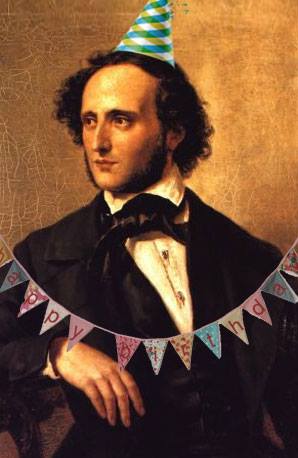
Felix Bartholdy Mendelssohn lived between 1809 and 1847. He is considered to be a romantic composer and pianist best known for his symphonies and concert overtures. Mendelssohn played the piano in public by the age of nine, so he was often compared to Mozart.
He composed works for solo instruments and orchestra, and German songs. Some of his better known works are the Wedding March, Elijah and Fingal’s Cave. Felix Mendelssohn, along with Hector Berlioz was one of the first conductors of a large orchestra.
Mendelssohn harmonized the works of other composers, including Johann Crüger. Listen to Mendelssohn’s harmonization of Now Thank We All our God:
One of my favorites,Mendelssohn’s Piano Concerto No. 1 in g minor, op. 25:
. 1809 ~ (Jacob Ludwig) Felix Bartholdy Mendelssohn, German composer
More information about Mendelssohn
. 1900 ~ Mabel Mercer, British-born American cabaret singer
. 1904 ~ Luigi Dallapiccola, Italian composer
More information about Dallapiccola
. 1911 ~ Jehan Alain, French organist and composer
. 1928 ~ Frankie Vaughn (Abelson), Singer
. 1929 ~ Russell Arms, Singer
. 1940 ~ Angelo D’Aleo, Singer with Dion and The Belmonts
. 1941 ~ Jimmy Dorsey and his orchestra recorded the classic, Amapola, on Decca Records. Helen O’Connell and Bob Eberly joined in a vocal duet on this very famous and popular song of the Big Band era.
. 1943 ~ Eric Haydock, Bass with The Hollies
. 1947 ~ Melanie (Safka), Singer
. 1947 ~ Dave Davies, Singer, guitarist with The Kinks
. 1950 ~ Ed, Gene, Joe and Vic, The Ames Brothers, reached the #1 spot on the pop music charts for the first time, as Rag Mop became the most favorite song in the U.S. The brothers enjoyed many successes with their recording efforts.
. 1959 ~ 22-year-old Buddy Holly, 28-year-old J.P. Richardson (The Big Bopper) and 17-year-old Ritchie Valens died in an airplane crash near Mason City, Iowa. February 3rd has been remembered as ‘The Day the Music Died’ since DonMcLean made the line popular in his 1972 hit, “American Pie”. Buddy Holly, born Charles Hardin Holly in Lubbock, Texas, recorded That’ll Bethe Day, Peggy Sue, Oh, Boy,Maybe Baby, and others, including It Doesn’tMatter Anymore (recorded just before his death, a smash in the U.K., non top-10 in the U.S.). Buddy was inducted into the Rock and Roll Hall of Fame in 1986. A convincing portrait of the singer was portrayed by Gary Busey in The Buddy Holly Story, a made for TV movie. J.P. (Jiles Perry) Richardson was from Sabine Pass, TX. He held the record for longest, continuous broadcasting as a DJ at KTRM Radio in Beaumont, TX in 1956. He was on the air for 122 hours and eight minutes. In addition to his smash hit, Chantilly Lace, Richardson also penned Running Bear (a hit for Johnny Preston) plus White Lightning (a hit for country star, George Jones). Richard Valenzuela lived in Pacoima, CA (near LA) and had a role in the 1959 film, Go Johnny Go. Ritchie Valens’ two big hits were Donna and La Bamba … the last, the title of a 1987 film depiction of his life. La Bamba also represented the first fusion of Latin music and American rock. Of the three young stars who died in that plane crash, the loss of Buddy Holly reverberated the loudest over the years. But, fans of 1950s rock ‘n’ roll will agree, all three have been sorely missed.
. 1959 ~ Lol (Laurence) Tolhurst, Drummer, keyboard with The Cure
. 1964 ~ The British group, The Beatles, received its first gold record award for the single, I Want To Hold Your Hand. The group also won a gold LP award for “Meet The Beatles”. The album had been released in the United States only 14 days earlier.
. 1971 ~ Lynn Anderson received a gold record for the single, Rose Garden. The Grand Forks, ND country singer was raised in Sacramento, CA. In addition to being a singer, she was an accomplished equestrian and California Horse Show Queen in 1966.
. 2002 ~ Remo Palmier, a self-trained guitarist who was a fixture in the New York jazz scene in the 1940s, died at the age of 78, and had been suffering from leukemia and lymphoma, his wife said. Over the course of his career, Palmier played with jazz legends Charlie Parker, Billie Holiday and Dizzy Gillespie, among others. Born Remo Palmieri in the Bronx, Palmier achieved his greatest fame performing with broadcaster Arthur Godfrey on CBS, and taught Godfrey how to play the ukulele. After Godfrey retired, Palmier released his own albums, “Windflower and “Remo Palmier”. 1893 ~ Bernard Rogers, American composer
. 1912 ~ Erich Leinsdorf, Austrian-born American conductor
. 1937 ~ Glen Gray and his Casa Loma Orchestra recorded A Study in Brown, on Decca Records.
. 1941 ~ John Steel, Singer, drummer with The Animals
. 1944 ~ Florence LaRue (Gordon), Singer with The Fifth Dimension
. 1987 ~ The show-biz world was saddened when Liberace died at his Palm Springs, CA estate. He was 67. Lee, as he was known, was the master of Las Vegas. Hundreds of thousands flock to his museum there (operated by his brother, George) to see Liberace’s garish suits, trademark candelabra, and learn of the myths behind this hugely successful star of television, stage and concerts the world over.
More information about Liberace
. 2001 ~ James Louis “J.J.” Johnson, an influential jazz trombonist who later forged a career arranging and recording scores for motion pictures and television, died at the age of 77. The Indianapolis native, who began playing piano at age 11, was a perennial winner of “Down Beat” magazine’s reader’s poll as best trombonist. While he was praised by jazz aficionados, Johnson also made his mark in popular culture, writing and arranging music for such television shows as “Starsky and Hutch”, “Mayberry, R.F.D.” and “That Girl”. His film music credits included “Cleopatra Jones” and “Shaft.” During his long career, he performed with such jazz greats as Count Basie and Dizzy Gillespie. While touring with jazz bands during the heyday of those ensembles, he played with the Clarence Love and Snookum Russell bands. He got his first big break with the Benny Carter band in 1942.
. 2002 ~ Blues and jazz pianist Abie “Boogaloo” Ames died at the age of 83. Ames was born on Big Egypt Plantation in Cruger, Miss., on May 23, 1918. He began playing piano at the age of 5 and his style earned him the nickname “Boogaloo” in the 1940’s. Ames moved to Detroit as a teen-ager and started a band, touring Europe with Louis Armstrong in 1936. Ames worked at Motown Studio and befriended other great musicians like Nat King Cole and Erroll Garner. In 1980, Ames moved to Greenville, where he became a regular performer at local clubs and festivals. Cassandra Wilson’s forthcoming Blue Note CD tentatively titled “Belly of the Sun” is set to include Darkness in the Delta, a song written by Ames for the CD. Ames was named the 2001 winner of the Artist’s Achievement Award of the Governor’s Awards for Excellence in the Arts in the state of Mississippi. With his protege and 1990s musical partner Eden Brent, Ames performed at the Kennedy Center for Performing Arts in Washington, D.C., in 2000. Ames’ last public performance was in October 2001 at the E.E. Bass Cultural Center in Greenville with another former student, Mulgrew Miller.
. 2002 ~ David Stetler, a big band swing drummer who played with Benny Goodman and Spike Jones , died of pneumonia. He was 79. A Seattle native, Stetler was discovered in high school by Lunceford. With a style close to that of Gene Krupa and Jo Jones, Stetler toured the country in the 1940s but returned to Seattle after his first son was born. He backed up national acts in local performances, including many during the world’s fair in 1962.
. 2003 ~ Charlie Biddle, a leader of Montreal’s jazz scene in the 1950s and ’60s who played bass with Thelonious Monk and Charlie Parker, died after a battle with cancer. He was 76. Biddle was a native of Philadelphia who moved to Canada in 1948. Over the next five decades, the World War II veteran and former car salesman became synonymous with jazz in Montreal. Biddle opened his own club, Uncle Charlie’s Jazz Joint, in suburban Ste- Therese in 1958. He later performed in such legendary Montreal nightspots as The Black Bottom and the Penthouse, where he worked with the likes of Oscar Peterson, Art Tatum, Charlie Parker and Lionel Hampton. When there were no jobs in Montreal, Biddle played smaller Quebec cities with a group called Three Jacks and a Jill. Until recently, Biddle played four nights a week at Biddle’s Jazz and Ribs, a Montreal landmark for nearly 25 years. Coincidentally, the club closed Tuesday for planned renovations, which included erecting a wall of fame to honor Biddle and others who have played at the club. In 1979, he organized the three-day festival that some say paved the way for the renowned Montreal International Jazz Festival. News Item about Charlie Biddle
. 2003 ~ Jerome Hines, a bass vocalist who performed regularly at the Metropolitan Opera during a career that spanned more than six decades, died. He was 81. Hines spent 41 years performing at the Met, more than any other principal singer in its history. He was known for his timbral richness, as well as the research he conducted into the historical and psychological background of the roles he portrayed. During his career at the Met, he portrayed 45 characters in 39 works, including title roles in Mussorgsky’s “Boris Godunov” and Mozart’s “Don Giovanni,” and Colline in Puccini’s “La Boheme.” He gave a total of 868 performances at the Met, retiring in 1987. He went on to perform with regional opera companies and at benefits. Hines, who became a born-again Christian in the 1950s, composed his own opera, “I Am the Way,” about the life of Jesus. He sang the title role at the Met in 1968 and 93 times around the world.
. 2003 ~ Saxophonist Cornelius Bumpus, a former member of the Doobie Brothers who had performed with Steely Dan since 1993, died en route to a series of performances in California. He was 58. Bumpus began his career at age 10, playing alto saxophone in the school band in Santa Cruz, Calif. In 1966, he spent six months performing with BobbyFreeman, and joined Moby Grape in 1977, writing one tune for the “Live Grape” album. Bumpus also recorded two solo albums and toured with his own band. Since performing with The Doobie Brothers in the early 1980s, Bumpus played with a number of bands, most recently with Steely Dan, which won the “Album of the Year” Grammy for its 2000 “Two Against Nature” release. His relations with his former Doobies bandmates turned contentious in the late 1990s, when they sued him and several other musicians over their use of the Doobies name. A federal judge in 1999 ruled against Bumpus and the other musicians, ordering them not to use the name.
Franz Peter Schubert lived between 1797 and 1828. He is considered to be a romantic composer. He was an Austrian composer who was one of the greatest creators of melody and foremost writer of ‘lieder’ (German songs).
Although he only lived for 31 years, Schubert composed more than 600 songs, 22 piano sonatas and many short piano pieces. This melodic output has never been equaled either in quantity of quality. He was one of the first musicians to earn a living from the sale of his music.
Schubert’s Ave Maria was featured in the Walt Disney movie Fantasia.
Schubert’s musical genius went well beyond his incomparable gift for melody
During Beethoven’s funeral in 1827, one of the torchbearers was a young composer who would himself die the following year. There’s a poignant irony in this image of Franz Schubert (1797-1828) paying homage to the master, for the extent of Schubert’s own accomplishment was to remain one of music’s best-kept secrets for decades after his death. He had indeed struck out on a uniquely personal creative path, however intense his hero worship of Beethoven was. As often happens in such periods of transition–in this case, the evolution in style and attitude from classical balance toward romantic experimentation–Schubert simply slipped through the cracks, not easily fitting into his contemporaries’ sense of the direction music was taking.
Yet the fact that the only recognition that came his way was mostly confined to a tight-knit circle of musical friends didn’t deter Schubert from pursuing his inspiration. Even though an astonishing number of compositions were never performed during his short lifetime, the prolific composer produced a wide body of material, all with a seemingly effortless swiftness reminiscent of Mozart (another of the composer’s idols). His style is most frequently associated with an uncanny gift for melody, but that’s a shortsighted view of the true nature of Schubert’s genius.
The selections on our featured disc represent two key but divergent aspects of his music: the gemlike miniaturism of his songwriting and his preoccupation with large-scale forms from the classical period. “Die Forelle” (“The Trout”)–sung here with a silvery, seductive grace by Barbara Bonney–is an example of how Schubert elevated the art of song to an opera in miniature, rich in evocative scene-painting. Pay attention not just to the beguiling melody but to how perfectly Schubert mirrors the text’s images in the details of the burbling piano accompaniment.
The cheerful quintet that takes its name from the song makes an excellent introduction to the composer’s longer works. Most of these belong to the realm of “chamber music”; that is, pieces written for small groups of musicians to be performed in people’s homes. From the high-spirited interplay of the ensemble gathered here–all virtuosos on their respective instruments but clearly merging their voices into a common goal–it’s easy to imagine a typical evening of Schubert making music with his friends. There’s a flowing sense of conversation in the music, and just as you think you’ve heard one untoppable melody, Schubert obliges with another, taking it down an unexpected course with a sudden harmonic surprise–another of the composer’s trademarks–and spinning it out as it suits his fancy. Schumann once characterized the composer’s tendency to make us want the music to last, following its multiple digressions, as Schubert’s “heavenly lengths.”
Much of the pleasure here can also be heard in the way Schubert plays sonorities off each other, above all in the fourth movement. It offers a set of variations on the melody from the “Trout” song, presaging how Mahler would later incorporate material from his own songs into vast symphonic structures. You can notice this both in the interwoven yet contrasting timbres from the keyboard against four strings and in the opposition between double bass and sparkling passages high in the register. And within the spontaneity of the moment, there’s something else: emerging within all the joie de vivre are ambivalent shadows hinting at Schubert’s darker side, particularly in the intensity of the slow movement’s middle core. This is also apparent in the opening of the “Arpeggione” Sonata (nicknamed after a short-lived invention that was a sort of cross between a guitar and a cello), which unfolds a kind of aching, spun-out lyricism that could belong to no one but Schubert.
In his final decade, when intense poverty and a debilitating case of syphilis began to take their toll, Schubert would mine this vein of profound self-expression. His last quartets and piano sonatas, the String Quintet, and his despairing song cycle Winterreise, he touches in his own way on the inwardness probed by Beethoven’s late-period creations. Thomas May, Classical Editor
00:00 Sinfonia N.40 in sol minore – I. Molto allegro 05:58 Sinfonia N.40 in sol minore – II. Andante 13:55 Sinfonia N.40 in sol minore – III. Minuetto allegretto 18:08 Sinfonia N.40 in sol minore – IV. Finale Allegro assai 22:42 Symphony No. 38 in D ‘Prague’, K. 504 – I. Adagio-Allegro 36:28 Symphony No. 38 in D ‘Prague’, K. 504 – III. Finale (Presto) 44:29 Symphony no. 36 in C ‘Linz’, K. 425 – I. Adagio – Allegro spiritoso 55:01 Symphony no. 36 in C ‘Linz’, K. 425 – III. Menuetto 1:05:34 Symphony no. 17 in G, K. 129 1:18:55 Overture to The Magic Flute, K. 620 1:25:36 Flute Concerto in D, K. 314 1:44:17 String Quartet No. 15 In D Minor, K 421 – I. Allegro Moderato 1:51:58 String Quartet No. 15 In D Minor, K 421 – II. Andante 1:57:13 String Quartet No. 15 In D Minor, K 421 – III. Minuetto 2:01:26 String Quartet No. 15 In D Minor, K 421 – IV. Allegro Ma Non Troppo 2:08:04 Quintet in Eb, K.452 2:44:27 Piano Quartet in Gm, K. 478
. 1885 ~ Jerome Kern, American songwriter and composer of musical comedies He was known as the father of the American musical, composing Show Boat, Ol’ Man River, Smoke Gets in Your Eyes, Lovely to Look At, The Way YouLook Tonight and The Last Time I Saw Paris
. 1895 ~ Harry Ruby (Rubinstein), Musician and composer
. 1905 ~ John Schaum, Pianist, composer and music educator. Schaum began his career as a piano teacher in the late 1920s. In 1933 he founded the Schaum Piano School in Milwaukee. About the same time he began to compose piano music for teaching purposes. He also founded the first company to produce award stickers specifically for music students. Always on the lookout for better materials for his students, Schaum eventually decided to create his own books, beginning in 1941 with Piano Fun for Boys and Girls, which he later revised as the first in a series of nine piano method books that became the Schaum Piano Course, completed in 1945. These books are still widely used today.
. 1918 ~ Skitch Henderson, Conductor of the Tulsa Symphony Orchestra, bandleader, musical director of NBC-TV’s The Tonight Show with Steve Allen and JohnnyCarson
. 1961 ~ Leontyne Price made her debut at the Metropolitan Opera House in New York City. She sang in the role of Leonora in “Il Trovatore”. Price was only the seventh black singer to make a debut at the Met. Marian Anderson was the first (1955).
. 1968 ~ The Bee Gees played their first American concert, as a group. They earned $50,000 to entertain at the Anaheim Convention Center in California. This is identical to what The Beatles were paid to perform at the Hollywood Bowl a few years earlier.
. 1968 ~ Otis Redding’s(Sittin’ On) The Dock of the Bay was released on this day, seven weeks after the singer’s death. It became #1 on March 16, 1968 and remained at the top spot for a month. Redding began his recording career in 1960 with Johnny Jenkins and The Pinetoppers (on Confederate Records). He sang duet with Carla Thomas and had 11 chart hits. Redding of Dawson, GA was killed in a plane crash at Lake Monona near Madison, WI. Four members of the Bar-Kays were also killed in the crash. The Dock of the Bay, his only number one song, was recorded just three days before his death.
. 1984 ~ Michael Jackson’s hair caught on fire during the filming of a Pepsi commercial in Los Angeles. Pyrotechnics did not operate on cue, injuring the singer. Jackson was hospitalized for a few days and fans from around the world sent messages of concern.
Statistically, people who’ve ‘liked’ Mozart on Facebook have a higher IQ. It got us thinking… what would Mozart ‘like’ on Facebook? And what would his profile look like?! On the tenth anniversary of the social network’s launch, we’ve imagined what the composer might have posted online throughout his life.
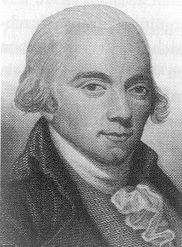
Today, in 1752, Muzio Clementi Italian pianist and composer was born.
More information about Clementi
Clementi was an Italian-born English composer, pianist, pedagogue, conductor, music publisher, editor, and piano manufacturer. Born in Rome, he spent most of his life in England.
Encouraged to study music by his father, he was sponsored as a young composer by Sir Peter Beckford who took him to England to advance his studies. Later, he toured Europe numerous times from his long-time base in London. It was on one of these occasions in 1781 that he engaged in a piano competition with Wolfgang Amadeus Mozart.
His student John Field would become a major influence on Frédéric Chopin
In 1802, Clementi and Field embarked on a European tour together. They went to Paris, Vienna and St. Petersburg.
John Field adopted the French word nocturne, meaning “of the night” and became the first composer to use this term in music. He wrote a series of short studies for solo piano which had a gently romantic late-night feeling about them.
Chopin soon took up this idea and wrote 21 nocturnes.
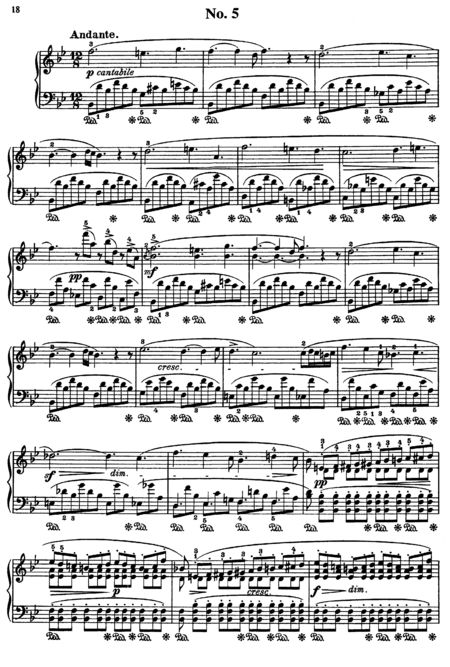
Compare: Field’s Nocturne No. 5 in B flat major
Chopin’s Nocturne E Flat Major Op.9 No.2 played by Valentina Lisitsa
Today, in 1837, Clementi’s student John Field died. Field was an Irish pianist, composer, and teacher. He was very highly regarded by his contemporaries and his playing and compositions influenced many major composers, including Frédéric Chopin, Johannes Brahms, Robert Schumann, and Franz Liszt.




 Franz Peter Schubert lived between 1797 and 1828. He is considered to be a romantic composer. He was an Austrian composer who was one of the greatest creators of melody and foremost writer of ‘lieder’ (German songs).




 MaryO'Studio