. 1709 ~ Giuseppe Torelli, Italian composer, died at the age of 50
. 1741 ~ Andre-Ernest-Modeste Gretry, composer
. 1932 ~ John Williams, American Academy Award-winning composer and conductor
More information about Williams
. 1934 ~ Elly Ameling, Dutch Soprano
. 1936 ~ Larry Verne, Singer
. 1938 ~ Ray Sharpe, Singer
. 1941 ~ Tom Rush, American folk singer, songwriter and guitarist
. 1943 – Creed Bratton, Guitarist, banjo, sitar with The Grass Roots
. 1963 ~ Joshua Kadison, American pianist and songwriter
. 2001 ~ Leslie Edwards, a dancer and director at the Royal Ballet, died of cancer at the age of 84. Edwards made his debut in 1933 with the Vic-Wells Ballet. Except for a stint with the Ballet Rambert from 1935 to 1937, Edwards spent his entire career with Sadler’s Wells Ballet, which became the Royal Ballet Company in 1956. He appeared in more than 70 roles at the Royal Ballet and was a key figure in its choreographic group, as well as working as ballet master to the Royal Opera for 20 years. Edwards was awarded the Order of the British Empire in 1975, and a studio at the rebuilt Sadler’s Wells Theatre was named for him.
. 2017 ~ Nicolai Gedda, Swedish opera tenor (Opera Two to Six), died at the age of 91
Practice slowly in the beginning (metronome on 60 or less). If you played it easily, and precisely with the metronome, move the tempo up one notch. Continue to practice in this way until you reach your goal speed.
Practice with various dynamics. Practice soft, loud and everything in between.
As you practice, vary the touch. Play staccato, play legato, and play two-note slurs.
Practice in different rhythms.
Try to practice Hanon Exercises in other keys, starting with the white keys (C, D, E, F, G, A, and B) and then going to the black keys (D-flat, E-flat, G-flat, A-flat, and B-flat).
And as Charles-Louis Hanon recommends it, practice his exercises by lifting the fingers high and with precision, playing each note very distinctly.
. 1710 ~ William Boyce, English organist/composer (Cathedral Music), born in London (d. 1779)
. 1818 ~ Henry Charles Litolff, piano virtuoso, composer of Romantic music and music publisher
. 1871 ~ Wilhelm Stenhammar [Carl Wilhelm Eugen Stenhammar], Swedish composer considered the finest Swedish pianist of his time, born in Stockholm, Sweden (d. 1927)
. 1883 ~ Herbert “Eubie” Blake, American jazz pianist, vaudevillian, songwriter and composer
More information about Blake
. 1920 ~ Oscar Brand, Folk singer, composer, music director of NBC-TV Sunday, host of Let’s Sing Out
. 1921 ~ Wilma Lee Cooper (Leary), Country singer with husband, Stoney and the group, Clinch Mountain Clan with her daughter, Carol Lee
. 1931 ~ The American opera, “Peter Ibbetson”, by Deems Taylor premiered at the Metropolitan Opera House in New York City.
. 1941 ~ The Tommy Dorsey Orchestra and Frank Sinatra teamed to record Everything Happens to Me for Victor Records in New York City.
. 1948 ~ Jimmy Greenspoon, Organist with Three Dog Night
. 1949 ~ Alan Lancaster, Bass with Status Quo
. 1959 ~ Brian Travers, Saxophone with UB40
. 1962 ~ (Troyal) Garth Brooks, American Grammy Award-winning singer: In Another’s Eyes (1998 with Trisha Yearwood), Friends in Low Places and The Thunder Rolls. His LP Ropin’ the Wind was the first LP in history to debut at #1 on Billboard’s pop and country charts, The Chase, In Pieces, Fresh Horses, Sevens, Double Live has sold over 80 million albums — second only to The Beatles.
. 1962 ~ David Bryan, Keyboards with Bon Jovi
. 1964 ~ 3,000+ fans crowded the JFK airport in New York to receive the four stars of the music sensation, The Beatles. One word summarizes the reaction to The Beatles on their first US tour: hysteria.
. 1969 ~ Tom Jones, ‘The Prince of Wales’, premiered on ABC-TV after the network acquired the rights to the singing sensation’s popular United Kingdom show. The network paid a British production company an estimated $20 million for those rights. And they cried in one of Tom’s hankies all the way to the bank.
. 1974 ~ Barry White’s Love Unlimited Orchestra received a gold record for the disco hit Love’s Theme.
. 1985 ~ New York, New York became the official anthem of the Big Apple. The announcement was made by then New York mayor, Ed “How’m I Doin’?” Koch. Frank Sinatra fans rejoiced at the honor.
. 2001 ~ Dale Evans died at the age of 88. She was an actress-singer who became “Queen of the West” by starring with husband Roy Rogers in 27 cowboy films and writing their theme song, Happy Trails.
. 2002 ~ Bert Conway, an actor and director whose 60-year career included theater, movies and television, died of heart failure. He was 87. The son of vaudeville performers, Conway was born in Orange, N.J. He had a walk- on part in the original 1937 Group Theater staging of Clifford Odets’ “Golden Boy” and later had the lead as a reform school youth in Lee Strasberg’s production of “Dance Night.” After serving in the Army in World War II, Conway went to Hollywood. He began directing plays in 1947. His work included the first interracial production of “Golden Boy” for the Negro Art Theater in Los Angeles. In 1950, he returned to New York to act in and direct plays. His work included an off-Broadway revival of “Deep Are the Roots” and appearances with Joseph Papp’s New York Shakespeare Festival. He also appeared in several road company productions, had small roles in the movies “The Three Musketeers,” “Little Big Man” and “The Arrangement,” and on TV’s “St. Elsewhere.”
. 1917 ~ Arthur Gold, pianist, born in Toronto, Ontario
. 1929 ~ Rudy Vallee and his orchestra recorded Deep Night. It says in the fine print, under the artist’s name, that the tune was written by Vallee, himself.
. 1943 ~ Fabian (Fabian Forte), Singer
. 1943 ~ Frank Sinatra made his debut as vocalist on radio’s “Your Hit Parade” this night. Frankie had left the Tommy Dorsey Band just four months prior to beginning the radio program. He was described as, “…the biggest name in the business.”
. 1945 ~ Bob Marley, Jamaican reggae singer and songwriter
. 1947 ~ Alan Jones, Saxophone with Amen Corner
. 1950 ~ Natalie Cole, Grammy Award-winning singer, Best New Artist in 1975 with This Will Be, I’ve Got Love on My Mind. She is the daughter of Nat ‘King’ Cole
. 1966 ~ Rick Astley, Singer, songwriter
. 1976 ~ Vince Guaraldi, jazz pianist and composer (Peanuts TV specials), died at the age of 43
. 1981 ~ Former Beatle, Paul McCartney, Ringo Starr and George Harrison teamed up once again to record a musical tribute to John Lennon. The result of that session became All Those Years Ago. The song went to #2 on the pop music charts for three weeks. It was recorded on Harrison’s own Dark Horse label.
. 2005 ~ Lazar Berman, Soviet Russian classical pianist. He was hailed for a huge, thunderous technique that made him a thrilling interpreter of Liszt and Rachmaninoff and a late representative of the grand school of Russian Romantic pianism.
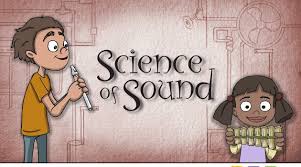
A quirky animated film for children showing the principles and inner workings of the mighty pipe organ, taking as its example the unique Klais organ resident in Birmingham’s Symphony Hall. Commissioned by Town Hall Symphony Hall as part of their ‘Science of Sound’ educational program.
. 1748 ~ Christian Gottlob Neefe, German composer/conductor/tutor of Beethoven
. 1916 ~ Enrico Caruso recorded O Solo Mio for the Victor Talking Machine Company, which eventually became Victor Records, then RCA Victor.
. 1921 ~ Sir John Pritchard, British conductor
. 1928 ~ Singer Jessica Dragonette was seen on one of the first television shows. She was used only to test the new medium. She didn’t even get to sing.
. 1930 ~ Don Goldie, Trumpeter on Basin Street Blues with vocals by Jack Teagarden
. 1931 ~ Eddie Cantor’s long radio career got underway as he appeared on Rudy Vallee’s “The Fleischmann Hour”.
. 1933 ~ Claude King, Singer
. 1940 ~ One of the great classic songs of the Big Band era was recorded. Glenn Miller and his band played Tuxedo Junction at the RCA Victor studios in Manhattan. The flip side of the record (released on the Bluebird label) was Danny Boy.
. 1941 ~ Barrett Strong, Singer, songwriter
. 1942 ~ Cory Wells, Singer with Three Dog Night
. 1943 ~ Charles Winfield, Musician with Blood, Sweat and Tears
. 1958 ~ A year after its founding, the National Academy of Recording Arts and Sciences (NARAS) formed a New York chapter. NARAS is better known as the Grammy Awards organization.
. 1961 ~ The Shirelles were winding up their first week at #1 on the music charts with Will You Love Me Tomorrow. The song was at the top for two weeks. It was the group’s first #1 tune and the first #1 tune from the pen of a New York Brill Building songwriter who worked right down the hall from Neil Sedaka. She became a huge star in her own right with several #1 singles and albums in the 1970s. Her name: Carole King.
. 2003 ~ Clyde Douglas Dickerson, 80, a saxophone player who played for four decades at Washington area jazz clubs and held down a day job for 20 years as doorman at the Watergate Hotel, died after a stroke. Mr. Dickerson, known as “Watergate Clyde,” appeared at such spots as Blues Alley, Pigfoot and One Step Down and at jazz joints along 14th Street NW. He freelanced for a number of decades as far away as Upstate New York and Ohio. He collaborated with pianist and trumpet player Jimmy Burrell at the old Crow’s Toe at 10th and K streets NW, the Chaconia Lounge on upper Georgia Avenue NW and Today’s in Rockville. Mr. Dickerson also played with performers who included Oran “Hot Lips” Page, the Mangione brothers, ex-Temptation David Ruffin and Rick James. He also appeared in a Lester Young tribute with Shirley Horn and saxmen Byron Morris and Ron Holloway.
His last performance was on Capitol Hill, at Ellington’s at Eighth, shortly before his death. Washington Post staff writer Eve Zibart wrote of Mr. Dickerson that he might once have thought of himself as a musician who worked hotels on the side, but over the years the occupations began to blur. “You take Rostropovich,” Mr. Dickerson said of the National Symphony Orchestra conductor. “Slava gets up there, and whatever composer it is, he can read the score and tell what the composer felt, and he can get that out to the musicians. “It’s the same with being a doorman: If you really know the general manager, you know how he feels about the hotel — it’s like his home, and the people coming in are like his personal guests. I’m the substitute for the general manager . . . playing the overture to the hospitality.” Zibart interviewed him in 1988, his 16th year at the hotel, shortly after the Watergate management threw him a birthday party.
It featured Gerard Schwarz, guest conductor of the Washington Opera and a trumpet virtuoso; pianist Christopher Norton; Rep. John Conyers Jr. (D-Mich.), sponsor of a bill recognizing jazz as a national treasure — and a birthday cake topped by a saxophone. Mr. Dickerson was born in Bristol, Tenn. He attended the Berklee College of Music in Boston.
. 1983 ~ Karen Carpenter died at 32 of cardiac arrest at her parent’s house in Downey, California; the coroner’s report gave the cause of death of imbalances associated with anorexia nervosa. The Carpenters 1970 album Close to You, featured two hit singles: “(They Long to Be) Close to You” and “We’ve Only Just Begun.” They peaked at No.1 and No.2, on the US chart. In 1975 – In Playboy’s annual opinion poll; its readers voted Karen Carpenter the Best Rock Drummer of the year.
. 1987 ~ The show-biz world was saddened when Liberace died at his Palm Springs, CA estate. He was 67. Lee, as he was known, was the master of Las Vegas. Hundreds of thousands flock to his museum there (operated by his brother, George) to see Liberace’s garish suits, trademark candelabra, and learn of the myths behind this hugely successful star of television, stage and concerts the world over.
More information about Liberace
. 2001 ~ James Louis “J.J.” Johnson, an influential jazz trombonist who later forged a career arranging and recording scores for motion pictures and television, died at the age of 77. The Indianapolis native, who began playing piano at age 11, was a perennial winner of “Down Beat” magazine’s reader’s poll as best trombonist. While he was praised by jazz aficionados, Johnson also made his mark in popular culture, writing and arranging music for such television shows as “Starsky and Hutch”, “Mayberry, R.F.D.” and “That Girl”. His film music credits included “Cleopatra Jones” and “Shaft.” During his long career, he performed with such jazz greats as Count Basie and Dizzy Gillespie. While touring with jazz bands during the heyday of those ensembles, he played with the Clarence Love and Snookum Russell bands. He got his first big break with the Benny Carter band in 1942.
. 2016 ~ Leslie Bassett, American classical composer (Variations for Orchestra – Pulitzer Prize 1966), died at the age of 93
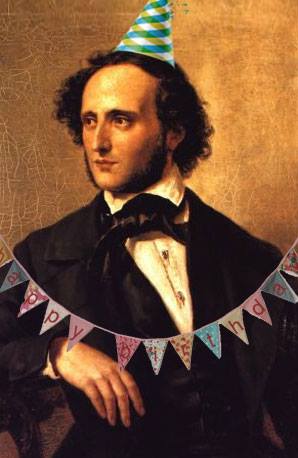
Felix Bartholdy Mendelssohn lived between 1809 and 1847. He is considered to be a romantic composer and pianist best known for his symphonies and concert overtures. Mendelssohn played the piano in public by the age of nine, so he was often compared to Mozart.
He composed works for solo instruments and orchestra, and German songs. Some of his better known works are the Wedding March, Elijah and Fingal’s Cave. Felix Mendelssohn, along with Hector Berlioz was one of the first conductors of a large orchestra.
Mendelssohn harmonized the works of other composers, including Johann Crüger. Listen to Mendelssohn’s harmonization of Now Thank We All our God:
One of my favorites, Mendelssohn’s Piano Concerto No. 1 in g minor, op. 25:
I think the first time I ever came across anything related to Calloway was in the late 1960s when I was watching That Girl on TV – Ann’s father (Lew Parker) sang Minnie the Moocher for a talent show. The song stuck in my head. I wish I could find a video of that performance.
“Minnie the Moocher” is a jazz song first recorded in 1931 by Cab Calloway and His Orchestra, selling over a million copies. “Minnie the Moocher” is most famous for its nonsensical ad-libbed (“scat”) lyrics (for example, “Hi De Hi De Hi De Hi”).
In performances, Calloway would have the audience participate by repeating each scat phrase in a form of call and response. Eventually, Calloway’s phrases would become so long and complex that the audience would laugh at their own failed attempts to repeat them.
“Minnie the Moocher” was inducted into the Grammy Hall of Fame in 1999.
Lots of others have sung this song, as well including Stephen Fry and Hugh Laurie in “Jeeves and Wooster”.
and the Three Mo’ Tenors performed it in 2001
Calloway appeared in the 1980 film The Blues Brothers and sang a shortened version “Minnie The Moocher” in the film, in the original style of big band.
Cabell “Cab” Calloway III (December 25, 1907 – November 18, 1994) was an American jazz singer and bandleader. He was strongly associated with the Cotton Club in Harlem, New York City, where he was a regular performer.
Calloway was a master of energetic scat singing and led one of the United States’ most popular big bands from the start of the 1930s through to the late 1940s. Calloway’s band featured performers including trumpeters Dizzy Gillespie and Adolphus “Doc” Cheatham, saxophonists Ben Webster and Leon “Chu” Berry, New Orleans guitar ace Danny Barker, and bassist Milt Hinton. Calloway continued to perform until his death in 1994 at the age of 86.
An old Paramount short film of Cab Calloway singing many of his hits.
“The Old Man of The Mountain” is non-stop Cab from beginning to end. He appears first as an owl, singing the title song. The words have been changed for the cartoon, in which the Old Man is a villain. In the original song, the Old Man is a benevolent character. Next we see Cab as the Old Man himself, rotoscoped and singing, “You Gotta Hi-De-Hi,” followed by “The Scat Song.”
The cartoon begins with live footage of Cab and his Orchestra playing around with the tune of Minnie the Moocher while Cab scats mildly and grins at the camera. Whereas Cab may have been caught by surprise when they used live footage of him in the earlier cartoon, “Minnie the Moocher”, this time he is ready. He and his band are in dress white uniforms, Cab’s hair is slicked back, and he pays attention to the camera. (The drummer, Leroy Maxey, is still playing with his drumsticks, though!)
Of the three cartoons starring Cab Calloway, this one has the least interesting and least surreal plot, and the animation is the crudest. Never-the-less, the very early live footage of Cab is a treasure, and this cartoon showcases his music from beginning to end, featuring three of his songs. He does some of his most remarkable ever scat singing in this version of The Scat Song.
In all of the Fleisher cartoons, Cab’s characters are set in caves with menacing and ominous background illustrations: skeletons, skulls, ghosts, leering faces, and gambling, alcohol and drug paraphernalia. People have claimed that the Fleischers were unaware of the drug references in Cab’s songs (for example, “kicking the gong around” meaning “smoking opium”), but the imagery in the animations suggests otherwise.
Cab’s scat singing, dancing, comedic personality and flashy elegance had made him a star and a million-selling recording artist. He continued to perform right up until his death in 1994 at the age of 88.
Gunther Schuller sums up Calloway’s brilliance as an entertainer: “People still remember Cab Calloway as a dancer and vaudevillian with his wonderful white tuxedos and all of that — and, as a great, great showman.”
. 1789 ~ Armand-Louis Couperin, French composer, organist, and harpsichordist died at the age of 63
. 1875 ~ Fritz Kreisler, Austrian-born American violinist and virtuoso/composer Some of his best-known works are Caprice Viennois, Tambourin Chinois, Liebesfreud and La Gitana
. 1901 ~ Jascha Heifetz, Russian-born American violinist
Read quotes by and about Heifetz
More information about Heifetz
. 1911 ~ Jussi Björling, Swedish tenor
. 1912 ~ Burton Lane (Levy), Composer of How Are Things in Glocca Morra, That Old Devil Moon, Look to the Rainbow, How About You, I Hear Music, Come Back to Me, On a Clear Day You Can See Forever, How Could You Believe Me?; His Broadway musicals were Finian’s Rainbow (collaboration with Yip Harburg), On a Clear Day You Can See Forever (collaboration with Alan Jay Lerner). He contributed songs to over 30 films: Babes on Broadway, Royal Wedding, Ship Ahoy, St. Louis Blues and credited with discovering Judy Garland
. 1937 ~ Tom Smothers, Entertainer, The Smothers Brothers Comedy Hour, The Smothers Brothers Show, The Steve Allen Show, Dick’s Brother
. 1937 ~ Guy Lombardo and his orchestra recorded one of Guy’s most famous tunes. Boo Hoo was waxed on Victor Records and became one of the group’s all-time great hits.
. 1942 ~ Graham Nash, Singer with Crosby, Stills, Nash and Young
. 1947 ~ Peter Lucia, Drummer with Tommy James and The Shondells
. 1949 ~ Ross Valory, Bass with Journey
. 1959 ~ The Coasters tune, Charlie Brown, was released. The tune went to #2 and stayed there for three weeks, but didn’t make it to the top spot of the charts. A catchy song (“Fee fee fi fi fo fo fum. I smell smoke in the auditorium…”), it was on the charts for a total of 12 weeks. The song at number one, preventing Charlie Brown from reaching the top, was Venus, by Frankie Avalon.
. 1996 ~ Gene Kelly, American actor and dancer (Singin’ in the Rain), died at the age of 83
. 2001 ~ French pianist Nicole Henriot, who entered the Paris Conservatory at age 7 and went on to perform around the globe with conductor Charles Munch, died at the age of 75. Emerging on the world music scene after World War II, Henriot built her reputation on interpretations of works from Liszt to Prokofiev, and especially French composers such as Ravel, Fauré and Milhaud. She was most famous for her performances with Munch, music director of the Boston Symphony from 1949 to 1962. Munch, who died in 1968, was the uncle of Henriot’s husband. Born in 1925, Henriot won the Paris Conservatory’s first prize at age 13. During the war, Henriot gave aid to her brother, a member of the French Resistance. When Gestapo agents searched her home in 1944, she managed to destroy her brother’s secret documents but was badly beaten. After the war, Henriot became the first French pianist to appear in Britain and began an international tour that took her from Scandinavia to Egypt. She made her American debut in 1948 as a soloist with the New York Philharmonic under Munch’s direction. When Munch formed the Orchestra of Paris in 1967, Henriot was one of the fledgling orchestra’s first soloists. In the 1970s and 1980s, Henriot devoted herself to teaching, and worked at the Conservatory of Liege, Belgium, and at the Walloon Conservatory of Brussels.
. 2001 ~ Victor Norman, who founded the Eastern Connecticut Symphony Orchestra and conducted the group for three decades, died at the age of 95. Colleagues said Norman was a visionary who needed to be as skilled in politics as he was in music to keep the symphony together. “He had this idea that a symphony orchestra could be created around here, when really it had been tried several times before, never with any kind of significant success,” said Charles Frink, a New London composer who studied with Norman. Norman founded the New London Civic Orchestra in 1946. It merged with the Willimantic Orchestra in 1952 to become the Eastern Connecticut Symphony Orchestra. He stepped down from the podium in 1980. In his retirement, Norman composed music. Two of his orchestral pieces were performed by the New Britain Symphony Orchestra and the Westminster Community Orchestra in Princeton, N.J. His memoirs, “Victor Norman: A Life in Music, a Lifetime of Learning,” were published in 1999.
. 2015 ~ French piano virtuoso Aldo Ciccolini died at age 89. Born on August 15, 1925, into a musical family in Naples, Aldo Ciccolini was a child prodigy, beginning composition classes in the city’s conservatory at age nine.
. 2018 ~ Dennis Edwards, who joined the Temptations in 1968 and sang on a string of the group’s hits including “I Can’t Get Next to You,” “Ball of Confusion” and “Papa Was a Rollin’ Stone” in an initial tenure that stretched to 1977, died at the age of 74