• 1882 ~ Zoltán Kodály, Hungarian composer and collector of folk songs
More information on Kodály
• 1893 ~ Antonin Dvorák attended the first performance of his New World Symphony at Carnegie Hall in New York City.
• 1899 ~ Sir Noel Coward, British composer of musical comedies, actor and producer
• 1905 ~ Sime Silverman published the first issue of Variety, the weekly showbiz magazine. The first issue was 16 pages in length and sold for a nickel. Variety and Daily Variety are still going strong.
• 1907 ~ Eugene H. Farrar became the first singer to broadcast on radio. He sang from the Brooklyn Navy Yard in New York. The song was Do You Really Want to Hurt Me?
• 1940 ~ Bob Crosby and his Bobcats backed up brother Bing as San Antonio Rose was recorded on Decca Records.
• 1960 ~ Lucille Ball took a respite from her weekly TV series to star in the Broadway production of Wildcat, which opened at the Alvin Theatre in New York City. The show ran for 171 performances.
• 1967 ~ The Lemon Pipers released Green Tambourine on an unsuspecting psychedelic world this day. The tune made #1 on February 3, 1968.
• 1971 ~ Melanie (Safka) received a gold record for the single, Brand New Key, about roller skates and love and stuff like that. This one made it to #1 on Christmas Day, 1971.
• 1971 ~ Don McLean’s eight-minute-plus (8:32) version of American Pie was released. It became one of the longest songs with some of the most confusing (pick your favorite interpretation) lyrics to ever hit the pop charts. American Pie hit #1 on January 15, 1972.
• 1972 ~ Paul McCartney’s single, Hi, Hi, Hi, was released. It peaked at #10 on the top tune tabulation (February 3, 1973).
• 2003 ~ Singer and guitarist Gary Stewart, who had a No. 1 country hit in 1975 with She’s Actin’ Single (I’m Drinkin’ Doubles), died of an apparently self-inflicted gunshot wound. He was 58. A native of Letcher County, Ky., Stewart was a compelling songwriter and performer of guitar-driven, honky-tonk country. His last album, Live at Billy Bob’s Texas, was released in 2003. Besides the 1975 chart-topper, his hits included Drinkin’ Thing and Out of Hand. He worked with Southern rock greats Dickie Betts and Gregg Allman of The Allman Brothers Band on the 1980 album Cactus and a Rose.
• 2017 ~ Z’ev, a percussionist, performer, composer, instrument builder, visual artist, poet and theorist who explored visceral and mystical dimensions of sound — becoming a pioneer of industrial music along the way — died in Chicago, where he lived. He was 66.
• 2017 ~ Keely Smith, American jazz and popular music singer (Mrs. Louis Prima), died from heart failure at the age of 89
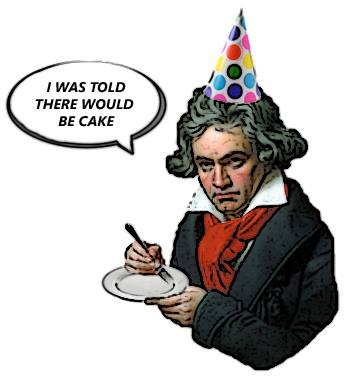
He used the # in unusual places before Twitter… but how would Beethoven have used Facebook? And what would his profile look like? From his likes and dislikes to his friends and love interests, we’ve imagined what the composer might have posted online throughout his life.
• 1637 ~ Bernardo Pasquini, Italian composer of operas, oratorios, cantatas and keyboard music.
• 1840 ~ Hermann Goetz, German Composer
• 1842 ~ The Philharmonic Society of New York, the first permanent orchestra in the U.S., held its first concert. Despite uncomfortable seating, the event was a huge success. They performed works of Beethoven.
• 1863 ~ Pietro Mascagni, Italian composer and conductor More information about Mascagni
• 1879 ~ Rudolf Friml, Musician, composer
• 1887 ~ Ernst Toch, Austrian-born American composer
• 1899 ~ Antoni de Kontski, Polish pianist and composer, died at the age of 82
• 1911 ~ Louis Prima, Trumpeter, bandleader with Louis Prima and His New Orleans Gang, Gleeby Rhythm Orchestra; songwriter, singer, married to Keely Smith
• 1931 ~ Bobby Osborne, Musician, mandolin, singer with the duo – Osborne Brothers
• 1942 ~ Harry Chapin, American folk-rock singer and songwriter, Recipient of Special Congressional Gold Medal, Worldwide Humanitarian for the Hungry, Needy and Homeless
• 1948 ~ NBC presented Horace Heidt’s Youth Opportunity Program for the first time. The talent show earned Dick Contino, an accordionist, the $5,000 prize as the program’s first national winner.
• 1949 ~ Tom Waits, Singer, songwriter, playwright, married to Kathleen Brennan
• 1954 ~ Mike Nolan, Singer with Bucks Fizz
• 1957 ~ Pat Boone was at the top of the pop charts for the first of six weeks with April Love. His other number one hits included Ain’t That a Shame, I Almost Lost My Mind, Don’t Forbid Me and Love Letters in the Sand.
• 1980, Leonard Bernstein received the Kennedy Center Honors for lifetime contributions to American culture through the performing arts. His co-recipients were James Cagney, Leontyne Price, Lynn Fontanne, and Agnes de Mille.
At the White House reception for the honorees, President Jimmy Carter said:
“Leonard Bernstein single-handedly, or I might say, with both hands and his entire body, as a matter of fact— [laughter] —has brought great music as a vital part of the personal lives of literally millions of Americans and people throughout the world with his deep commitment, his knowledge of communication, his ability as a teacher, and the inner commitment that makes his words and his attitudes a kind of a burning inspiration to those who have admired his own works and the way he interprets and explains the fine works of others. In motion pictures, on Broadway, in the concert hall, and, I am thankful to say, here in The White House, he’s been a favorite of us and of millions of his fellow Americans.”
• 1984 ~ Michael Jackson was in Chicago to testify that the song, The Girl is Mine, was exclusively his and he didn’t swipe the song, Please Love Me Now. It was a copyright infringement case worth five million dollars. He won.
• 1990 ~ Dee (Delectus) Clark passed away
• 2016 ~ Greg Lake, English rock vocalist and bassist (King Crimson, Emerson, Lake & Palmer), died of cancer at the age of 69
• 1724 ~ First Performance of J. S. Bach’s Sacred Cantata No. 26 Ach wie flüchtig, ach wie nichtig performed on the 24th Sunday following Trinity. A portion of Bach’s second annual Sacred Cantata cycle in Leipzig, 1724-25.
• 1736 ~ J. S. Bach named court composer by Poland’s King Agustus III.
• 1826 ~ Composer Felix Mendelssohn and his sister Fanny performed his overture to “A Midsummer Night’s Dream” for the first time.
• 1828 ~ Death of Austrian composer Franz Schubert in Vienna, at the age of 31 from typhus. He is buried near Beethoven.
• 1859 ~ Mikhail Ippolitov-Ivanov, Russian composer and conductor
More information about Ippolitov-Ivanov
• 1874 ~ Birth of composer Karl Adrian Wohlfahrt.
• 1875 ~ First Performance of Tchaikovsky‘s Third Symphony, in Moscow.
• 1888 ~ Piano Debut in Boston of composer Edward MacDowell with the Kneisel Quartet.
• 1905 ~ Tommy Dorsey, American trombonist and bandleader
• 1923 ~ First Performances of Béla Bartók‘sFive Dances and Zoltán Kodály‘sPsalums Hungaricus in Budapest, marking the 50th anniversary of the union of cities Buda and Pest.
• 1936 ~ Birth of classical music commentator (Detroit Symphony broadcasts) Dick Cavett, in Kearney, Nebraska. ABC-TV talk show host (Dick Cavett Show).
• 1936 ~ First concert recorded on magnetic tape with the London Philharmonic orchestra conducted by Sir Thomas Beecham at BASF’s own concert hall in Ludwigshaven, Germany.
• 1937 ~ Ray Collins, Songwriter
• 1938 ~ Hank Medress, Singer with The Tokens, record producer
• 1943 ~ Fred Lipsius, Piano, sax with Blood Sweat & Tears
• 1943 ~ Stan Kenton and his orchestra recorded Artistry in Rhythm, the song that later become the Kenton theme. It was Capitol record number 159. The other side of the disk was titled, Eager Beaver.
• 1944 ~ Agnes Baltsa, Greek mezzo-soprano
• 1954 ~ Sammy Davis, Jr. was involved in a serious auto accident in San Bernardino, CA. Three days later, Davis lost the sight in his left eye. He later referred to the accident as the turning point of his career.
• 1957 ~ American conductor Leonard Bernstein named Music Director of the New York Philharmonic. First American-born and educated conductor named to head an important American Orchestra.
• 1961 ~ A year after Chubby Checker reached the #1 spot with The Twist, the singer appeared on The Ed Sullivan Show to sing the song again. The Twist became the first record to reach #1 a second time around, on January 13, 1962.
• 1962 ~ For the first time, a jazz concert was presented at the White House. Jazz had previously been served as background music only.
• 2000 ~ First Performance of Philip Glass‘ Double Concerto for Timpani and Orchestra, by the American Composers Orchestra. Lincoln Center in New York.
• 2017 ~ Della Reese [Delloreese Patricia Early], American singer and actress (Della Reese Show, Royal Family), died at the age of 86
• 2017 ~ Mel Tillis [Lonnie Melvin Tillis], American country singer (Who’s Julie, M-M-Mel), died of respiratory failure at the age of 85
World Pianist Day, celebrated on November 8, is a symphony of joy for pianists and music lovers alike. It’s a day dedicated to tickling the ivories, embracing the melodies, and having a grand ol’ time celebrating the magic of the piano and the talented souls who make it sing.
In the world of piano, we’re transported on a musical journey, where the notes and chords create a tapestry of emotions that tug at our heartstrings. Pianists, those maestros of the keys, have the power to move us to the rhythm of ultimate joy. And how do we revel in this melodious merriment? Well, we throw a piano party, of course! From dazzling classical compositions to the jazzy, bluesy tunes, pianists have a treasure trove of styles to choose from, and they’re ready to share their musical gifts with the world. And guess what? You don’t have to be a seasoned pianist to join in the fun – it’s the perfect day to tinkle those ivories if you’ve never tried before!
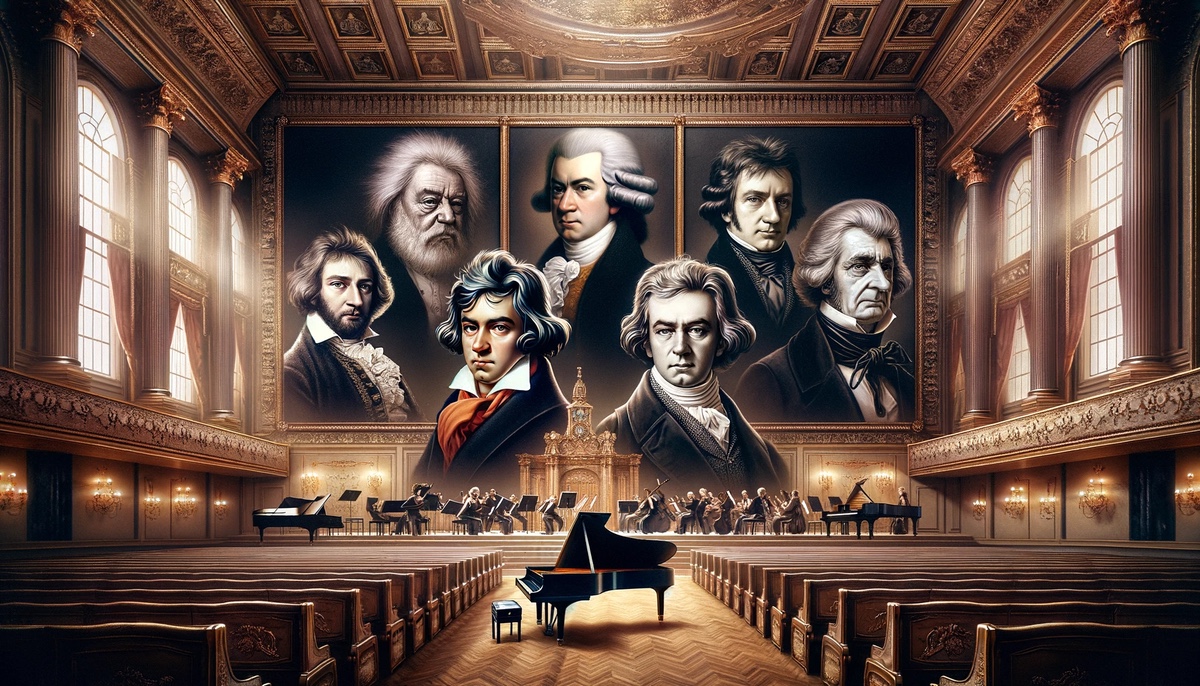
Now, let’s take a little trip down the history of World Pianist Day. Picture the greats like Mozart, Beethoven, Clementi, Liszt, Brahms, Chopin, Mendelssohn, Rachmaninoff, and Schumann. They’re like the rockstars of classical piano, setting stages ablaze with their virtuosity. These ivory-ticklers aren’t just known for their compositions; they were the original piano showstoppers, dazzling audiences far and wide.
And then there’s the fabulous world of jazz pianists, where spontaneity reigns supreme. It’s like a jam session where they dance to the rhythm of their own tune, improvising and weaving musical stories on the spot. Names like Bill Evans, Art Tatum, Duke Ellington, Thelonious Monk, Oscar Peterson, and Baden Powell are the jazz legends who’ve made the keys sing with swing.
So, how can you join the grand celebration of World Pianist Day? Here are some jazzy suggestions:
1. **Concert Time:** Hit up a piano concert and let the melodies sweep you off your feet. It’s like a musical rollercoaster that you won’t want to end.
2. **Movie Magic:** Watch “The Pianist” movie, a deep dive into the intricate and fulfilling life of a pianist and composer. You’ll be mesmerized by the world of music.
3. **Tickle the Ivories:** If you’ve always wanted to try your hand at piano, seize the moment on World Pianist Day. Grab an instrument, play your favorite tune, and let the music flow through your fingertips.
So, here’s to a day of musical wonder, where the piano takes center stage, and joyous melodies fill the air. Whether you’re a seasoned pianist or a newbie, let the piano keys be your guide to an enchanting musical journey.
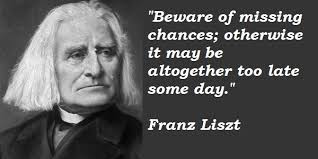
Franz Liszt was born in Raiding, near Ödenburg, October 22, 1811 and died in Bayreuth, July 31, 1886. He was a Hungarian composer and pianist who was a major influence during the romantic period. Liszt was an outstanding pianist at seven, composed at eight and made concert appearances at nine. In addition to being a piano virtuoso, he was also a critic, conductor, city music director, literary writer and transcriber of the works of other composers. He transcribed Beethoven’s Symphonies for the piano.
Franz Liszt began his career as the outstanding concert pianist of the century, who, along with the prodigious violinist Niccoló Paganini (1782-1840), created the cult of the modern instrumental virtuoso. To show off his phenomenal and unprecedented technique, Liszt composed a great deal of music designed specifically for this purpose, resulting in a vast amount of piano literature laden with dazzling, and other technical marvels. In this vein, Liszt composed a series of virtuosic rhapsodies on Hungarian gypsy melodies, the best-known being the all too familiar Hungarian Rhapsody no. 2. Liszt developed the rhapsody as a form of serious music. This kind of music is worlds apart from the generally more introspective, poetic music of pianist-composer Frédéric Chopin.
Liszt was wildly handsome and hugely talented. He was extremely popular in Paris during the 1830’s. It is said that women actually fainted at his piano recitals. He was the first to position the piano so that its lid reflected the sound and the audience could see his profile as he performed.
Liszt was the first to write a tone poem, which is an extended, single-movement work for orchestra, inspired by paintings, plays, poems or other literary or visual works, and attempting to convey the ideas expressed in those media through music. Such a work is Les Préludes, based on a poem in which life is expressed as a series of struggles, passions, and mysteries, all serving as a mere prelude to . . .what? The Romantic genre of the symphonic poem, as well as its cousin the concert overture, became very attractive to many later composers, including Saint-Saëns, Tchaikovsky, Dvorák, Sibelius, and Richard Strauss.
Listen to Liszt’s transcription of Meyerbeer’s Hellish Waltz from Robert du Diable, which probably caused more public commotion than any other piano piece in history.
• 1813 ~ Giuseppe Verdi, Italian composer
Read quotes by and about Verdi
More information about Verdi
• 1835 ~ Camille Saint-Saëns, French composer, organist and conductor Saint-Saëns’ Carnival of the Animals is featured in Disney’s Fantasia and Fantasia 2000.
Read quotes by and about Saint-Saëns
More information about Saint-Saëns
• 1863 ~ Alexander Siloti, Russian pianist and composer, born in Kharkiv, Ukraine
• 1931 ~ Russ Columbo’s Prisoner of Love was recorded on Victor Records.
• 1940 ~ John Lennon, British rock singer, songwriter and guitarist
More information about Lennon
• 1935 ~ Cavalcade of America was first broadcast on radio this very day. The CBS show featured some of Hollywood and Broadway’s most famous stars in leading roles in the half-hour radio dramas. Thomas Chalmers narrated the stories about obscure incidents and people in American history. The orchestra (yes, radio shows had live orchestras back then) was led by Donald Voorhees. The show aired from 1935 to 1953, changing from CBS to NBC in 1939; with one sponsor for its entire duration. The DuPont Company introduced its slogan on Cavalcade of America …”Better things for better living through chemistry…”
• 1941 ~ Helen Morgan passed away
• 1944 ~ John Entwistle, Bass, French horn with The Who
• 1947 ~ “High Button Shoes”, opened on Broadway in New York City with an entertainer named Phil Silvers in the lead. The popular show ran for 727 performances.
• 1948 ~ Jackson Browne, Songwriter, singer
• 1967 ~ “And now…heeeeeeeeerrrree’s the Doctor!” Coming out of the NBC Tonight Show Orchestra to become musical director of The Tonight Show Starring Johnny Carson, Doc Severinsen replaced Skitch Henderson on this night. Doc became famous for an eccentric wardrobe, quick wit, great trumpet solos and fabulous charts. Tommy Newsome became Doc’s backup arranger for many of the tunes the band played. Later, Doc and the band would move to solo albums, group CDs and incredibly successful concert tours. Doc went on to play with various symphony orchestras and even became the owner of a custom trumpet company in the San Francisco Bay Area.
• 1973 ~ Priscilla Presley, was divorced from Elvis in Santa Monica, CA. Ms. Presley got $1.5 million in cash, $4,200 per month in alimony, half interest in a $750,000 home plus about 5% interest in two of Elvis’ publishing companies.
• 1973 ~ Paul Simon got a gold record this day for his hit, Loves Me like a Rock.
• 1975 ~ John Lennon turned 35. To celebrate, Yoko Ono Ono presented John with a newborn son, Sean Ono Lennon.
• 1976 ~ Ludwig van Beethoven’s “Symphony Number 5 in c minor” landed for a twenty-two-week stop in the first spot on the Top 5. Beethoven is dead and this isn’t a ghost story. It’s simply a case of Beethoven being updated with a disco-rock beat and a catchy new title: A Fifth of Beethoven.
• 1985 ~ A 2½ acre garden memorial was dedicated to John Lennon by his widow, Yoko Ono, this day. The memorial in New York City’s Central Park is named Strawberry Fields.
• 2001 ~ Herbert Ross died at the age of 76. He was a director and choreographer whose credits include the hit movies “The Goodbye Girl,” “The Sunshine Boys” and “The Turning Point.”
• 2003 ~ Don Lanphere, a saxophone player who came on strong at the dawn of bebop, nearly succumbed to drugs and drinking, then recovered to become the city’s jazz “grandpop,” died of hepatitis C. He was 75. As lead tenor in the Seattle Repertory Jazz Orchestra and in smaller groups, Lanphere’s versatility and virtuosity ranged from blazing riffs on the tenor to a solo jazz rendition of the Lord’s Prayer on the soprano sax. Many who were born long after Lanphere’s boyhood gigs with such legends as Charlie Parker, Fats Navarro and Max Roach hailed him as a jazz patriarch or, as his Web site proclaimed, “Seattle jazz grandpop.” Born in the apple country of central Washington about 95 miles east of Seattle, Lanphere played as a teenager with touring bands in Seattle, then studied music briefly at Northwestern University in Evanston, Ill. By the time he got to New York, captivated by the post-World War II bebop revolution, he was hooked on heroin. By his early 20s he had recorded with Navarro and Roach and played gigs with Parker, Woody Herman and top big bands, including one led by Artie Shaw. He could write a chart, the chord arrangement on which jazz improvisation is based, from the sound of water dripping in a tub. Battling alcohol and narcotics addictions that resulted in at least one arrest, he was back at his father’s store in Wenatchee – “from the Big Apple to the little apple,” he once said – by 1960. Only after he and his wife Midge became born-again Christians in 1969 did he dust off his horn. In an interview in 1998, he said that without the conversion, “I would be dead by now.”
• 2018 ~ Montserrat Caballé died at the age of 85. She was a was a Spanish operatic soprano.
Joseph Lamb (1887 to 1960) was an extraordinarily gifted ragtime pianist and composer along with Scott Joplin and James Scott. He differed from them, though, because the art of improvisation completely baffled him. In response to this, Lamb viewed ragtime as an art form written on paper, instead of a spontaneous one. Though his style and approach were markedly different from his peers, he still left behind a rich legacy and remained one of the most influential ragtime composers.
Lehar
Franz Lehar, 1870 to 1948 was the son of a bandmaster serving principally in Hungary. He followed his father’s profession, before winning, in 1902, success in the theatre in Vienna, where he succeeded in the following years in reviving the operetta, providing music of greater distinction, with tenor arias written specifically for Richard Tauber.
The reputation of Franz Lehar as a composer of operetta is assured as he wrote nearly forty of them. Of these by the far the best known is Die lustige Witwe (The Merry Widow), first staged in Vienna in 1905, the favourite operetta of Adolf Hitler.
Lennon
John Lennon, 1940 to 1980,was a pop star, composer, songwriter, and recording artist. He was born in Liverpool, Merseyside, NW England, UK. and was The Beatles rhythm guitarist, keyboard player, and vocalist, and a partner in the Lennon–McCartney song-writing team. He married Japanese artist Yoko Ono in 1969. On the birth of his son, Sean (born in 1975), he retired from music to become a house-husband. Five years later he recorded (Just Like) Starting Over, but he was shot and killed by a deranged fan just before its release. His death affected millions of people, record sales soared, and he continues to be admired by new generations of fans.
Lerner and Lowe
Alan Jay Lerner,
Playwright, born August 31, 1918, New York, New York; died June 14, 1986
Frederick Loewe,
Composer, born June 10, 1904, Vienna, Austria; died February 14, 1988
Frederick Loewe, an unheralded Vienna-born composer, and Alan Jay Lerner, the lyricist-playwright son of the proprietors of an American chain of women’s clothing shops, with sketches and lyrics for two Harvard Hasty Pudding shows among his major credits, met by chance at New York’s Lambs Club in 1942. Had they not, Brigadoon would never have emerged from the mists of the Scottish Highlands to make the world feel “Almost Like Being in Love” . . . no one would have been there to “Paint Your Wagon” . . . My Fair Lady would still be a less than lyrical English girl from George Bernard Shaw’s Pygmalion who couldn’t sing a note. . . we might never have thought to “Thank Heaven for Little Girls” like “Gigi” . . . and Camelot would most likely have stayed within the pages of Arthurian legend.
When the two, who were destined to enrich the American musical theater with some of its most poignant, rousing, and memorable lyrics, engaging books and powerful musical scores, had that chance meeting more than 50 years ago, neither was widely known. Loewe’s Great Lady had had a brief run on Broadway in 1938. Lerner had added radio scripts to his Hasty Pudding Club show credits. But later collaborations after one brief failure, What’s Up? (1943), and the moderately successful The Day Before Spring (1945), which ran five months on Broadway, made musical history.
Alan Jay Lerner was one of three sons of Joseph J. Lerner, who founded Lerner Stores, Inc. He was educated in England and at the Choate School in Wallingford, Connecticut, before entering Harvard. He studied at the Juilliard School of Music during vacations from Harvard. After graduating in 1940 with a B.S. degree, he wrote advertising copy and radio scripts for such programs as the “Philco Hall of Fame.”
Frederick “Fritz” Loewe was the son of Edmund Loewe, an eminent operetta tenor. When he was two, Frederick accompanied his father on a tour of the United States. The youngster played piano at four and, at nine, composed the tunes for a music hall sketch in which his father toured Europe. At 15, he wrote “Katrina,” a popular song that sold 3,000,000 copies in Europe. He had begun his own concert career as soloist with some of Europe’s leading symphony orchestras at the age of 13 after having studied with the noted European musician Ferruccio Busoni and Eugene d’Albert. In 1923, young Loewe was awarded the Hollander Medal in Berlin and studied composition and orchestration with Nickolaus von Reznicek.
The following year, the younger Loewe accompanied his father to America. Since neither a concert he gave at New York’s Town Hall, nor a subsequent week’s engagement at the Rivoli Theater led to further concert engagements, he tried teaching music and playing at Greenwich Village night clubs. When music failed to earn him a living, he worked as a busboy in a cafeteria and as a riding instructor at a New Hampshire resort. He took up flyweight boxing and failed, then went West, cowpunching, gold mining, and carrying mail on horseback over the Montana mountains before returning to New York where he found work as a piano player. In 1935, Loewe’s song “Love tiptoes Through My Heart” was accepted for the musical Petticoat Fever. His own musical, Salute to Spring, was presented in St. Louis in 1937. The next year, his Great Lady reached Broadway, but ran for only 20 performances.
The first Lerner-Loewe collaboration was a musical adaptation of Barry Connor’s farce The Patsy for a Detroit stock company in 1942. They called it Life of the Party and it enjoyed a nine-week hit that encouraged them to continue with the musical comedy What’s Up? which opened on Broadway in 1943. Lerner wrote the book and lyrics with Arthur Pierson, and Loewe composed the music. It ran for 63 performances and was followed in 1945 by their The Day Before Spring.
It was when the curtain went up to the haunted strains of bagpipes on the night of March 13, 1947, and the mist-shrouded Scottish Highland village of Brigadoon first appeared, that the team of Lerner and Loewe also emerged as potentially legendary. The musical, which after its original 581 performances on Broadway, toured extensively and has been revived frequently, won the “best musical”award from the New York Drama Critics Circle the year it opened and was hailed as having “evoked magic on Broadway.”
Between Brigadoon and Paint Your Wagon, the next team effort by Lerner and Loewe, Lerner wrote Love Life, with music by Kurt Weill, which was selected as one of the best plays of the 1948-49 Broadway season, plus the story, screenplay and lyrics for the films Royal Wedding and Brigadoon and the story and screenplay for An American in Paris, for which he won an Oscar in 1951.
Paint Your Wagon rolled in in 1951, and then, five years later, on March 15, 1956, My Fair Lady opened and became one of the most spectacular successes–artistic and financial–in the history of the American theater. Playing a record 2,717 performances on Broadway alone, it went on to break all other existing world records. This musicalization of Shaw’s classic Pygmalion was named “outstanding musical of the year” by the New York Drama Critics Circle–and by millions of theater goers.
Lerner and Loewe’s next collaboration was on the film adaptation of the Colette novel Gigi, another success filled with songs destined to become standard.
There was more collaborating to come–the film version of the Antoine de Saint-Exupery fable The Little Prince in 1972, but the 1960 Broadway hit Camelot which brought Arthurian England to life for its most shining hour, rang the curtain down on the phenomenon of Lerner and Loewe. Loewe, who had suffered a heart attack in 1958, went into retirement.
In tribute to his long time former partner, Lerner wrote, “There will never be another Fritz. . . . Writing will never again be as much fun . A collaboration as intense as ours inescapably had to be complex. But I loved him more than I understood or misunderstood him, and I know he loved me more than he understood or misunderstood me.”
Lewis
Jerry Lee Lewis (September 29, 1935 – October 28, 2022) was an American pianist, singer and songwriter. Nicknamed “The Killer”, he was described as “rock ‘n’ roll’s first great wild man”.
Liadov
Anatol Konstantinovich Liadov lived from 1855 until 1914. He was the son of a conductor at the Mariinsky Theatre in St Petersburg, and was trained at the Conservatory, where he was briefly a pupil of Rimsky-Korsakov and later a member of the teaching staff. He was associated with Balakirev and subsequently became a member of Belyayev’s circle, helping, in particular, in the establishment of the publishing-house that Belyayev established for Russian composers.
He was a thoroughly competent musician, conductor and composer, but did not apply himself constantly to work. His failure to supply music for the Dyagilev ballet in Paris in 1910 allowed Stravinsky his first chance with the Ballets russes. His compositions are characteristic of the period in Russian nationalism, when nationalism was joined with technical competence inculcated at the Conservatories.
The best known orchestral compositions by Liadov are the descriptive Russian fairy-tale pieces Kikimora, Baba-Yaga and Volshebnoye ozero (The Enchanted Lake). His last orchestral work was the symphonic poem Skorbnaya pesn. All are very much in the nationalist tradition exemplified by Rimsky-Korsakov.
Liadov wrote a number of shorter piano pieces, including Fugues and a set of Canons, testimony to his contrapuntal ability. Other pieces have characteristic titles, examples of pleasing and well crafted compositions for which there was a ready market.
Liadov wrote a setting of the final scene of Schiller’s Die Braut von Messina (The Bride from Messina) for his Conservatory graduation. Of some 26 songs, eighteen are Children’s Songs.
Liberace
(Walter) (Wladziu Valentino) Liberace, American pianist and showman. Lee, as he was known, was the master of Las Vegas. Hundreds of thousands flock to his museum there (operated by his brother, George) to see Liberace’s garish suits, trademark candelabra, and learn of the myths behind this hugely successful star of television, stage and concerts the world over.
Ligeti
György Ligeti, a composer, was born in 1923 in Transylvania. He studied and later taught at the Budapest Academy of Music. After leaving Hungary in 1956, he worked at the electronics studio in Cologne, then settled in Vienna, where he developed an experimental approach to composition. His first large orchestral work, Apparitions (1958–9), made his name widely known. In Aventures (1962) he uses his own invented language of speech sounds. He has also written a choral requiem, a cello concerto, and music for harpsichord, organ, and wind and string ensembles.
Lipatti
Dinu Lipatti was born in Bucharest and lived from 1917 until 1950. He was a pianist and composer who studied in Paris with Cortot and Boulanger, and after World War 2 established an international reputation as a gifted pianist, especially in the works of Chopin. His compositions include a Symphonie concertante for two pianos and strings, and a concertino for piano and orchestra. His career was cut short when he died of a rare form of cancer.
Liszt
Franz Liszt was born in Raiding, near Doborján, October 22, 1811 and died in Bayreuth, July 31, 1886. He was a Hungarian composer and pianist who was a major influence during the romantic period. Liszt was an outstanding pianist at seven, composed at eight and made concert appearances at nine. In addition to being a piano virtuoso, he was also a critic, conductor, city music director, literary writer and transcriber of the works of other composers. He transcribed Beethoven’s Symphonies for the piano.
Franz Liszt began his career as the outstanding concert pianist of the century, who, along with the prodigious violinist Niccolò Paganini (1782-1840), created the cult of the modern instrumental virtuoso. To show off his phenomenal and unprecedented technique, Liszt composed a great deal of music designed specifically for this purpose, resulting in a vast amount of piano literature laden with dazzling scales, trills, arpeggios, leaps, and other technical marvels. In this vein, Liszt composed a series of virtuosic rhapsodies on Hungarian gypsy melodies, the best-known being the all too familiar Hungarian Rhapsody no. 2. Liszt developed the rhapsody as a form of serious music. This kind of music is worlds apart from the generally more introspective, poetic music of pianist-composer Frédéric Chopin.
Liszt was wildly handsome and hugely talented. He was extremely popular in Paris during the 1830’s. It is said that women actually fainted at his piano recitals. He was the first to position the piano so that its lid reflected the sound and the audience could see his profile as he performed.
Liszt was the first to write a tone poem, which is an extended, single-movement work for orchestra, inspired by paintings, plays, poems or other literary or visual works, and attempting to convey the ideas expressed in those media through music. Such a work is Les Pruludes, based on a poem in which life is expressed as a series of struggles, passions, and mysteries, all serving as a mere prelude to . . .what? The Romantic genre of the symphonic poem, as well as its cousin the concert overture, became very attractive to many later composers, including Saint-Saëns, Tchaikovsky, Dvořák, Sibelius, and Richard Strauss.
Lloyd Webber
British composer Andrew Lloyd Webber is one of the most successful composers of this era with hugely successful commercial hits such as Jesus Christ Superstar, Sunset Boulevard, Cats, Phantom of the Opera and Evita. Cats, the longest-running production in Broadway history, closed after 7,397 performances on June 25, 2000.
Locatelli
Pietro Antonio Locatelli lived from 1695 until 1764. He was born in Bergamo, later moving to Rome, where he might have studied with Corelli, but more probably was a pupil of Valentini. He was an Italian composer of sonatas and concerti, but he was best known as a virtuoso violinist playing mostly in Amsterdam where he settled in 1721. He won a reputation as a virtuoso, performing in Italy, in Bavaria and in Berlin. In 1729 he settled in Amsterdam, where he taught and conducted an amateur orchestra and was able to pursue his wider cultural interests.
Locatelli wrote a number of concerti grossi, following the example of Corelli. The first set, published in Amsterdam in 1720, include twelve fugues. L’arte del violino (The Art of the Violin), published in 1733, contains twelve violin concertos and 24 Caprices, precursors of Paganini’s famous set for unaccompanied violin. A further set of six concertos was published two years later and a set of six, published in 1744, is scored for four violins, two violas and basso continuo. Locatelli combines the Roman style of Corelli with, in his solo concertos, the virtuosity of Vivaldi in Venice.
In his Concerti grossi, works for string orchestra with a smaller group of soloists, Locatelli at first follows the pattern of Corelli, with one or two violas added to Corelli’s solo group of two violins, cello and harpsichord. There is also a Concerto grosso that includes a group of solo wind instruments, in addition to solo violin concertos. Some of these works have programmatic titles. His L’arte del violino (The Art of the Violin) includes 24 Caprices for unaccompanied violin, challenging works that have been regarded by some as foreshadowing the Caprices of Paganini in the following century. Locatelli also published sets of trio sonatas and solo sonatas, including a set of the latter for flute and basso continuo.
Loewe
Frederick “Fritz” Loewe lived from 1904 until 1988. He was a composer, born in Vienna, Austria and at age 13 he was the youngest pianist to solo with the Berlin Symphony. At age 15 he composed Katrina (1919), which sold two million copies of sheet music in Europe. Although he had studied with great European masters of the piano, when he came to the U.S.A. in 1924 he failed as a piano virtuoso. He took up a series of odd jobs–prospecting for gold, professional boxing–but by the mid-1930s he had launched his career as a composer for the musical theater. Not until he teamed up with lyricist Alan Jay Lerner in 1942, however, did he find his true talent; their first big success was Brigadoon (1947) and this was followed by such classic stage and film musical scores as My Fair Lady (1956), Gigi (1958), and Camelot (1960). This last led to their falling-out and they did not collaborate again until in 1973 when they made a stage version of their film musical, Gigi. Their last collaboration was The Little Prince (1974), after which Loewe retired.
If ever I would leave you from Camelot won him a Grammy Award.
Lully
Jean Baptiste Lully lived from about 1632 until 1687 and was considered to be a baroque composer. He was an Italian-born French court composer who molded Italian opera music to suit the French text. He was the first to compose French overtures, which served as model for subsequent composers, especially J. S. Bach. He changed his name from the Italian Giovanni Battista Lulli when he became a French citizen.
Lully was conducting a Te Deum to celebrate Louis XIV’s recovery from illness. He was banging loudly on the floor with a staff when he struck his foot with such force that it developed an abscess, from which the unfortunate Lully died shortly after.
Lunceford
James Melvin Lunceford was born. June 6, 1902, Fulton, Miss., U.S. and died on July 12, 1947, Seaside, Ore. He was an American jazz dance-band leader whose rhythmically appealing, well-disciplined orchestra performed arrangements by trumpeter Sy Oliver and others to popular acclaim from 1934 to 1945 and influenced both swing and post-World War II dance bands.
Lunceford, during his youth, acquired proficiency on all reed instruments, but he seldom played with his band because he preferred to conduct. He taught and organized a student orchestra in a Memphis, Tenn., high school before beginning his professional career as a bandleader in 1929. Practiced showmanship, precise ensembles, and a medium two-beat swing tempo rather than exciting soloists were the Lunceford band’s trademarks. The band’s most popular songs included Organ Grinder’s Swing (1936) and For Dancers Only (1937). The Lunceford band was considered to be on a par with bands led by Duke Ellington, Count Basie, and Benny Goodman during the 1930s, and in 1940 the ensemble won a celebrated “battle of the bands” from a field of 28 groups, among them Basie’s, Goodman’s, and Glenn Miller‘s. Arranger Oliver left Lunceford in 1939, and by 1942 the band’s popularity had declined. Following Lunceford’s death while on tour, pianist Edwin Wilcox and saxophonist Joe Thomas led the band for several years.
Lutoslawski
Witold Lutoslawski lived from 1913 until 1994. He was born and studied in Warsaw, winning a distinguished international reputation particularly from the 1950s onwards, a leading composer among a group of creative artists of outstanding ability, remarkable in his handling of forms and textures of great originality.
The genius of Lutoslawski was early evident in his 1938 Symphonic Variations. The years after the war brought a return to more conventional national modes of composition, heard in his Little Suite and Concerto for Orchestra. Later works have allowed a more experimental approach on a broader palette, to be heard in his Funeral Music of 1958, his Second Symphony and the Prelude and Fugue for thirteen string instruments.
Characteristic works for voice and orchestra include Paroles tissées for tenor and chamber orchestra, and Three Poems by Henri Michaux for twenty voices and orchestra.
Liz Sellers, Pianist/Organist at Pender UMC in Fairfax, VA, and violinist Anthony Shieldsperformed Violin Sonata No. 5 in F major, Op. 24 by Ludwig van Beethoven during Pender’s new Concert Series which began on April 23, 2022.
The Violin Sonata No. 5 in F major, Op. 24, is a four movement work for violin and piano by Ludwig van Beethoven. It was first published in 1801. The work is commonly known as the Spring Sonata (Frühlingssonate), although the name “Spring” was apparently given to it after Beethoven’s death.
Liz and Anthony played the first movement.
The Pender Concert Supporting Ukraine on April 23 featured Liz Sellers on piano, Brian on harp, and local professional musicians, including woodwind quintet, drums, organ, guitar, flute, penny whistle, singing and violin.
Concert repertoire included: Harp arrangements by Debussy, Piano trio of Jazz/Baroque, Flute Concertino by Chaminade, Woodwind Quintet with music of Duke Ellington, The Widor Toccata Organ Symphony Movement V and an Irish session!
There was no charge for this concert but there was a free will offering taken to support Ukraine through Advance #982450, UMCOR International Disaster Response and Recovery. This fund provides direct assistance to those in Ukraine as well as assistance to Ukrainians fleeing to neighboring countries.
One hundred percent of all Advance contributions go to the designated cause. (The independent charity watchdog, “Charity Watch,” gives UMCOR an “A+” ranking, and includes the UM organization on a highly selective list of charities it recommends when considering how to support the Ukrainian people. Read more)
The United Methodist community in Ukraine, though quite small, is actively engaged in assisting neighbors in need. Global Ministries is in touch with the church’s leadership as well as with church leaders in countries welcoming those who are fleeing from violence in Ukraine.
Click this link and choose UMCOR to send direct aid. In the memo line, put Advance #982450, UMCOR International Disaster Response and Recovery.
The Piano Puzzlers book is available in the O’Connor Music Studio library if you’d like to give any a try. Piano Puzzlers as heard on American Public Media’s “Performance Today.” Includes 32 tunes with songs by Gershwin, Berlin, Arlen, Porter, Rodgers, Fats Waller, Lennon & McCartney, and others disguised in the styles of Bach, Handel, Haydn, Mozart, Beethoven, Brahms, Schubert, Schumann, Chopin, Janacek, Debussy, Ravel, Rachmaninoff, Stravinsky, Prokofiev, Bartok, and Copland.
Includes an introduction by Fred Child, host of “Performance Today” as well as background info by Bruce Adolphe. “Bruce Adolphe has taken a common musician’s party game and elevated it to high art and truly funny musical slapsticks. The Piano Puzzlers are a unique combination of extraordinary insight into the styles of many composers subtle, expert workmanship and great, great fun!”
If you’re a music geek (like me), I have a program for you. Now, let me be clear, to fully qualify as a music geek…you must have a fond appreciation for classical music (no, Poison, Quiet Riot, and Zepplin do not count as classical music). So, if you’re a “music geek” without an appreciation for classical music…well, I hate to burst your bubble…but, you’re not truly a music geek. Instead, you’re a music appreciator, but not a geek. So, if you just listen to indie music and scowl at anything on a label larger than Matador…don’t bother following the link I’ll provide…the fun will be lost on you…And, you probably won’t have a chance.
Every Wednesday night, on my way home from WNL, I turn on my local NPR station to listen to Piano Puzzlers on Performance Today. It’s absolutely incredible. A pianist/composer (Bruce Adolphe) takes a familiar folk or pop tune and sets it inside a classical masterpiece (or in the style of a particular composer). Sometimes it’s easy…sometimes it’s ridiculously difficult. There are days when I say, “got it” on the first pass. Then there are days when I say, “what the heck?” And, more often than not, I’m able to get either the popular/folk tune or the composer.
This is sad to admit, but there are nights when I’ll slow down on the drive home or sit in the car in the driveway to finish an episode. In fact, I get a little worked up if someone stops me after WNL…as I might miss the beginning of Piano Puzzlers (it usually hits around 8:20pm on our local station).
Take a listen to some of the archives and see if you can figure it out! It’s really cool…but probably only appreciated by music geeks (the kind of people that listen to NPR for their musical programs and not just the snipets of cool indie rock between segments on All Things Considered…which is a great show too).

 Grammy winner