. 1962 ~ Fritz Kreisler died. He was an Austrian-born violinist and composer
. 1966 ~ “Sweet Charity”, with Gwen Verdon, opened at the Palace Theatre in New York City. The musical, by Neil Simon, was an adaptation of the FedericoFellini film, “Notti di Cabiria”. The play ran for 608 performances. In 1969, Hollywood produced a big-budget version of the Broadway musical starring Shirley MacLaine.
. 1973 ~ Johnny Rivers received a gold record for the hit single, Rockin’Pneumonia and the Boogie Woogie Flu. As is tradition, Rivers removed the fragile gold disk from the wooden frame and, as he was putting it on his stereo, had a ferocious sneezing fit and never did find out how his song sounded in solid gold.
. 1977 ~ From the One-Hit Wonder File, this note: Rose Royce earned the #1 spot on the music charts with Car Wash, from the movie of the same name. The song stayed at the peak of the pop charts for one week, then faded away.
. 2001 ~ Suzanne Bloch, a concert chamber musician and teacher at the Juilliard School, died at her home. She was 94. Bloch played and taught ancient instruments, in particular the lute, a guitar- like instrument common in 18th-century Europe. Mostly self-taught, she also played the recorder and the virginal, a tiny relative of the harpsichord. Beginning in the late 1930s, she performed frequently in concert, often dressed in Renaissance costume. She taught classes at Juilliard from 1942 to 1985. After marrying Paul Smith, a mathematician who became chairman of Columbia University’s mathematics department, Bloch played chamber music with well-known scientists, including Albert Einstein. Born in Geneva, Bloch moved to New York with her family in 1916, when her musician father, Ernest Bloch, began teaching and conducting in the United States. Bloch promoted her father’s music throughout her life, collecting clippings, writing program notes and founding the Ernest Bloch Society in 1967.
My son was at this Opening Concert and found it very interesting.
Math and music join forces for the Harmonic Series, an exciting quarterly program presented by MoMath, hosted by public radio’s “Piano Puzzler” Bruce Adolphe, each event will bring together different musicians, composers, and mathematicians — and some who are all three at once — in conversation and performance. Enjoy the best of both worlds as these talented minds play live music and participate in an ongoing discussion about the artistic and logical intersections of these two disciplines.
Opening Concert – December 16, 2015 7:00 PM “All Things Equal: Music and Math at the Piano”
Featuring performances by Noam Elkies & Orli Shaham
Noam Elkies is a mathematician, composer, and the youngest ever tenured professor at Harvard. Orli Shaham is an acclaimed pianist and the host of “Dial-A-Musician.” Celebrate Beethoven’s birthday on December 16 with this eagerly anticipated debut! Noam and Orli will display their performance talents and discuss with host Bruce Adolphe the subtle and splendid ways that mathematics weaves into their artistry.
The National Museum of Mathematics (MoMath) is located at 11 East 26th Street in Manhattan and is open from 10:00 am to 5:00 pm, seven days a week, 364 days a year (MoMath is closed on Thanksgiving Day). Special note: MoMath closes early the first Wednesday of every month, at 2:30 PM.
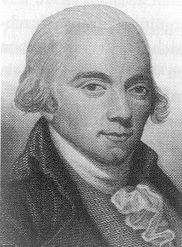
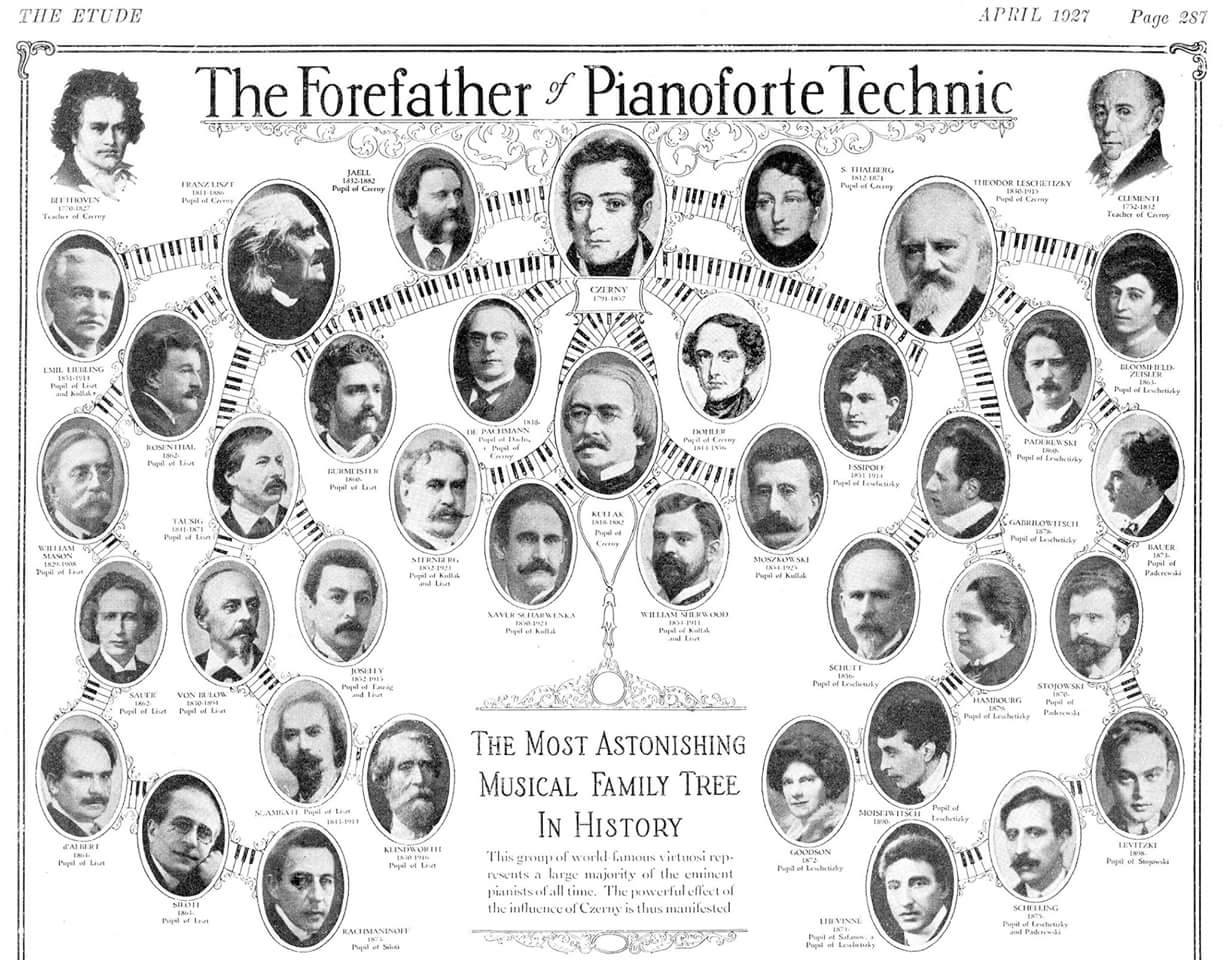
Today, in 1752, Muzio Clementi Italian pianist and composer was born.
More information about Clementi
Clementi was an Italian-born English composer, pianist, pedagogue, conductor, music publisher, editor, and piano manufacturer. Born in Rome, he spent most of his life in England.
Encouraged to study music by his father, he was sponsored as a young composer by Sir Peter Beckford who took him to England to advance his studies. Later, he toured Europe numerous times from his long-time base in London. It was on one of these occasions in 1781 that he engaged in a piano competition with Wolfgang Amadeus Mozart.
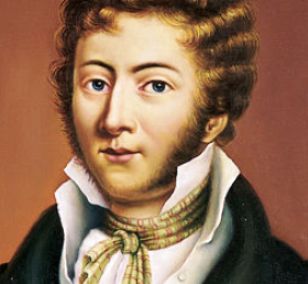
His student John Field would become a major influence on Frédéric Chopin
In 1802, Clementi and Field embarked on a European tour together. They went to Paris, Vienna and St. Petersburg.
John Field adopted the French word nocturne, meaning “of the night” and became the first composer to use this term in music. He wrote a series of short studies for solo piano which had a gently romantic late-night feeling about them.
Chopin soon took up this idea and wrote 21 nocturnes.
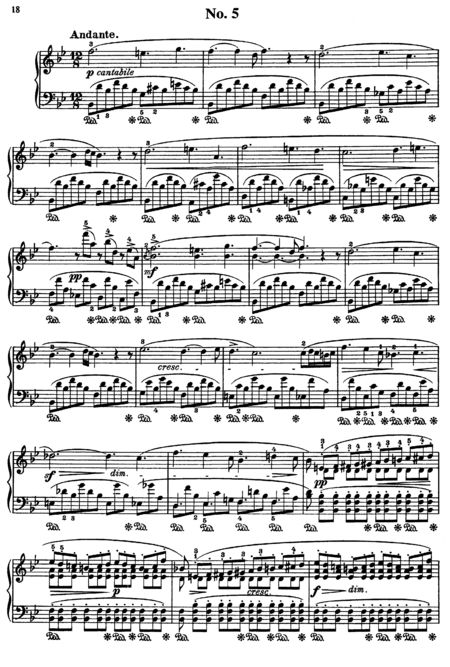
Compare: Field’s Nocturne No. 5 in B flat major
Chopin’s Nocturne E Flat Major Op.9 No.2 played by Valentina Lisitsa
Today, in 1837, Clementi’s student John Field died. Field was an Irish pianist, composer, and teacher. He was very highly regarded by his contemporaries and his playing and compositions influenced many major composers, including Frédéric Chopin, Johannes Brahms, Robert Schumann, and Franz Liszt.
January 18, 1958 ~ Leonard Bernstein began presenting his television series What does music mean? The series ran for 53 programs. Some of the episodes can be found below:
Part 1 What is Classical Music?
Plot: Bernstein conducts Handel’s Water Music and cites it as an indisputable example of classical music. “Exact” is the word that best defines classical music, Bernstein says and he demonstrates with musical illustrations from Bach’s Fourth Brandenburg Concerto, Mozart’s Concerto No. 21 in C Major and The Marriage of Figaro, and Haydn’s Symphony No. 102.
The decline of classical music at the end of the eighteenth century is tied to Beethoven’s innovations and the Romantic movement, and Bernstein conducts Beethoven’s Egmont Overture.
Part 2 What is Melody?
Plot: Bernstein discusses the different forms melody can take, including tune, theme, motive, melodic line and musical phrase. He illustrates by conducting the orchestra in excerpts from Tchaikovsky, Wagner, Hindemith, and Brahms.
Part 3 What is a Mode?
Plot: Bernstein discusses scales, intervals, and tones, and analyzes several pieces, including Debussy’s Fêtes, Rimsky-Korsakov’s Scheherazade, and music from the Kinks and the Beatles, to illustrate different modes.
An excerpt from Bernstein’s ballet Fancy Free is also performed.
Alfred Brendel was born in 1931 in Wiesenberg, Czech Republic.
After World War II, Brendel composed music, as well as continuing to play the piano, to write and to paint. However, he never had more formal piano lessons and, although he attended master classes with Edwin Fischer and Eduard Steuermann, he was largely self-taught after the age of six.
He made his debut in Graz (1948), and has since performed widely throughout Austria, where he lives.
He is known for his interpretations of Mozart, Beethoven, Schubert, Liszt, and Schoenberg. He tours internationally, and has written many essays on music.
A short insight from Alfred Brendel on his recording career:
Victor Borge was born in 1909 in Copenhagen, Denmark. He wass an entertainer and pianist – a deliciously funny performer. He studied at the Royal Danish Academy of Music, Copenhagen, and in Vienna and Berlin.
He made his debut as a pianist in 1926, and as a revue actor in 1933. From 1940 until his death in 2000 he worked in the USA for radio, television, and theatre, and has performed with leading symphony orchestras on worldwide tours since 1956. He was best known for his comedy sketches combining music and narrative. He used his classical training to skew serious music and performers.
From his obituitary:
Pianist Victor Borge, died in his sleep Dec 23, 2000 at his Greenwich, Connecticut home, was known as the unmelancholy Dane of international show business. He would have turned 92 on Jan. 3, 2001.
“The cause of death was heart failure,” his daughter, Sanna Feirstein, told Reuters.
“He had just returned from a wonderfully successful trip to Copenhagen … and it was really heartwarming to see the love he experienced in his home country,” she said.
Borge was one of five performers selected for the Kennedy Center Honors in 1999.
“He went to sleep, and they went to wake him up this morning, and he was gone,” said his agent, Bernard Gurtman.
“He had so much on the table, and to the day he died he was creative, and practicing piano several hours a day,” Gurtman told Reuters. “He was just a great inspiration.”
Funeral services will be private, his daughter said.
Borge made a career of falling off piano stools, missing the keys with his hands and getting tangled up in the sheet music.
One of his inspirations was a pianist who played the first notes of the GriegA Minor Concerto and then fell on the keys dead.
He said that the only time he got nervous on stage was when he had to play seriously and adds that if it had not been for Adolf Hitler he probably would never have pursued a career as a concert-hall comedian.
Until he was forced to flee Denmark in 1940 he was a stage and screen idol in his native country.
Lampooned Hitler
But as a Jew who had lampooned Hitler, Borge — his real name was Boerge Rosenbaum — was in danger and fled first to Sweden and then to the United States, where he arrived penniless and unknown and by a fluke got booked on the Bing Crosby radio show. He was an instant success.
He became an American citizen in 1948, but thought of himself as Danish. It was obvious from the numerous affectionate tributes and standing ovations at his 80th birthday concert in Copenhagen in 1989 that Danes felt the same way.
In the concert at Copenhagen’s Tivoli gardens, Borge played variations on the theme of “Happy Birthday to You in the styles of Mozart, Brahms, Wagner and Beethoven — all executed with such wit that the orchestra was convulsed with laughter that a woman performing a piccolo solo was unable to draw breath to play.
“Playing music and making jokes are as natural to me as breathing,” Borge told Reuters in an interview after that concert.
“That’s why I’ve never thought of retiring because I do it all the time whether on the stage or off. I found that in a precarious situation, a smile is the shortest distance between people. When one needs to reach out for sympathy or a link with people, what better way is there?
“If I have to play something straight, without deviation in any respect, I still get very nervous. It’s the fact that you want to do your best, but you are not at your best because you are nervous and knowing that makes you even more nervous.”
His varied career included acting, composing for films and plays and writing but he was best known for his comic sketches based on musical quirks and oddities.
Unpredictable Routine
His routines were unpredictable, often improvised on stage as his quick wit responded to an unplanned event — a noise, a latecomer in the audience — or fixed on an unlikely prop — a fly, a shaky piano stool.
Borge was born in Denmark on January 3, 1909, son of a violinist in the Danish Royal Orchestra.
His parents encouraged him to become a concert pianist, arranging his first public recital when he was 10. In 1927 he made his official debut at the Tivoli Gardens.
Borge’s mischievous sense of humor was manifest from an early age. Asked as a child to play for his parent’s friends he would announce “a piece by the 85-year-old Mozart” and improvise something himself.
When his mother was dying in Denmark during the occupation, Borge visited her, disguised as a sailor.
“Churchill and I were the only ones who saw what was happening,” he said in later years. “He saved Europe and I saved myself.”
From 1953 to 1956, he appeared in New York in his own production “Comedy in Music,” a prelude to world tours that often took him to his native Scandinavia.
On radio and television, Borge developed the comedy techniques of the bungling pianist that won him worldwide fame.
Many of his skits were based on real-life events. One of his classics evolved from seeing a pianist playing a Tchaikovsky concerto fall off his seat.
Borge’s dog joined the show after it wandered on stage while he was at the keyboard — an entrance nobody would believe had been unplanned.
One incident could not be repeated. A large fly flew on to Borge’s nose while he was playing. “How did you get that fly to come on at the right time?” people asked. “Well, we train them,” Borge explained.
Borge’s book, “My Favorite Intervals”, published in 1974, detailed little-known facts of the private lives of composers describing Wagner’s pink underwear and the time Borodin left home in full military regalia but forgot his trousers.
In 1975, Borge was honored in recognition of the 35th anniversary of his arrival in the United States and his work as unofficial goodwill ambassador from Denmark to the United States. He celebrated his 75th birthday in 1984 with a series of concerts at Carnegie Hall and in Copenhagen.
Borge received a host of honors from all four Scandinavian countries for his contributions to music, humor and worthy causes.
Borge, who had lived in Greenwich since 1964, is survived by five children, nine grandchildren, and one great grandchild. His wife of many years, Sanna, died earlier this year. Borge’s birthday
1882 ~ Zoltán Kodály, Hungarian composer and collector of folk songs
More information on Kodály
• 1893 ~ Antonin Dvorák attended the first performance of his New World Symphony at Carnegie Hall in New York City.
• 1899 ~ Sir Noel Coward, British composer of musical comedies, actor and producer
• 1905 ~ Sime Silverman published the first issue of Variety, the weekly show biz magazine. The first issue was 16 pages in length and sold for a nickel. Variety and Daily Variety are still going strong.
• 1907 ~ Eugene H. Farrar became the first singer to broadcast on radio. He sang from the Brooklyn Navy Yard in New York. The song was Do You Really Want to Hurt Me?
• 1940 ~ Bob Crosby and his Bobcats backed up brother Bing as San Antonio Rose was recorded on Decca Records.
• 1960 ~ Lucille Ball took a respite from her weekly TV series to star in the Broadway production of Wildcat, which opened at the Alvin Theatre in New York City. The show ran for 171 performances.
• 1967 ~ The Lemon Pipers released Green Tambourine on an unsuspecting psychedelic world this day. The tune made #1 on February 3, 1968.
• 1971 ~ Melanie (Safka) received a gold record for the single, Brand New Key, about roller skates and love and stuff like that. This one made it to #1 on Christmas Day, 1971.
• 1971 ~ Don McLean’s eight-minute-plus (8:32) version of American Pie was released. It became one of the longest songs with some of the most confusing (pick your favorite interpretation) lyrics to ever hit the pop charts. American Pie hit #1 on January 15, 1972.
• 1972 ~ Paul McCartney’s single, Hi, Hi, Hi, was released. It peaked at #10 on the top tune tabulation (February 3, 1973).
• 2003 ~ Singer and guitarist Gary Stewart, who had a No. 1 country hit in 1975 with She’s Actin’ Single (I’m Drinkin’ Doubles), died of an apparently self-inflicted gunshot wound. He was 58. A native of Letcher County, Ky., Stewart was a compelling songwriter and performer of guitar-driven, honky tonk country. His last album, Live at Billy Bob’s Texas, was released in 2003. Besides the 1975 chart-topper, his hits included Drinkin’ Thing and Out of Hand. He worked with Southern rock greats Dickie Betts and Gregg Allman of The Allman Brothers Band on the 1980 album Cactus and a Rose.
He used the # in unusual places before Twitter… but how would Beethoven have used Facebook? And what would his profile look like? From his likes and dislikes to his friends and love interests, we’ve imagined what the composer might have posted online throughout his life.
• 1842 ~ The Philharmonic Society of New York, the first permanent orchestra in the U.S., held its first concert. Despite uncomfortable seating, the event was a huge success. They performed works of Beethoven.
1863 ~ Pietro Mascagni, Italian composer and conductor
More information about Mascagni
• 1887 ~ Ernst Toch, Austrian-born American composer
• 1911 ~ Louis Prima, Trumpeter, bandleader with Louis Prima and His New Orleans Gang, Gleeby Rhythm Orchestra; songwriter, singer, married to Keely Smith
• 1931 ~ Bobby Osborne, Musician, mandolin, singer with the duo – Osborne Brothers
• 1942 ~ Harry Chapin, American folk-rock singer and songwriter, Recipient of Special Congressional Gold Medal, Worldwide Humanitarian for the Hungry, Needy and Homeless
• 1948 ~ NBC presented Horace Heidt’s Youth Opportunity Program for the first time. The talent show earned Dick Contino, an accordionist, the $5,000 prize as the program’s first national winner.
• 1949 ~ Tom Waits, Singer, songwriter, playwright, married to Kathleen Brennan
• 1954 ~ Mike Nolan, Singer with Bucks Fizz
• 1957 ~ Pat Boone was at the top of the pop charts for the first of six weeks withApril Love. His other number one hits included Ain’t That a Shame, I Almost Lost My Mind, Don’t Forbid Me and Love Letters in the Sand.
• 1984 ~ Michael Jackson was in Chicago to testify that the song, The Girl is Mine, was exclusively his and he didn’t swipe the song, Please Love Me Now. It was a copyright infringement case worth five million dollars. He won.
• 1724 ~ First Performance of J. S. Bach’s Sacred Cantata No. 26 Ach wie flüchtig, ach wie nichtig performed on the 24th Sunday following Trinity. A portion of Bach’s second annual Sacred Cantata cycle in Leipzig, 1724-25.
• 1736 ~ J. S. Bach named court composer by Poland’s King Agustus III.
• 1739 ~ First Performance of Jean-Philippe Rameau‘s opera Dardanus in Paris.
• 1826 ~ Composer Felix Mendelssohn and his sister Fanny performed his overture to “A Midsummer Night’s Dream” for the first time.
• 1828 ~ Death of Austrian composer Franz Schubert in Vienna, at the age of 31 from typhus. He is buried near Beethoven.
• 1859 ~ Mikhail Ippolitov-Ivanov, Russian composer and conductor
More information about Ippolitov-Ivanov
• 1874 ~ Birth of composer Karl Adrian Wohlfahrt.
• 1875 ~ First Performance of Tchaikovsky‘s Third Symphony, in Moscow.
• 1888 ~ Piano Debut in Boston of composer Edward MacDowell with the Kneisel Quartet.
• 1905 ~ Tommy Dorsey, American trombonist and bandleader
• 1923 ~ First Performances of Béla Bartók‘sFive Dances and Zoltán Kodály‘sPsalums Hungaricus in Budapest, marking the 50th anniversary of the union of cities Buda and Pest.
• 1936 ~ Birth of classical music commentator (Detroit Symphony broadcasts) Dick Cavett, in Kearney, Nebraska. ABC-TV talk show host (Dick Cavett Show).
• 1936 ~ First concert recorded on magnetic tape with the London Philharmonic orchestra conducted by Sir Thomas Beecham at BASF’s own concert hall in Ludwigshaven, Germany.
• 1937 ~ Ray Collins, Songwriter
• 1938 ~ Hank Medress, Singer with The Tokens, record producer
• 1943 ~ Fred Lipsius, Piano, sax with Blood Sweat & Tears
• 1943 ~ Stan Kenton and his orchestra recorded Artistry in Rhythm, the song that later become the Kenton theme. It was Capitol record number 159. The other side of the disk was titled, Eager Beaver.
• 1944 ~ Agnes Baltsa, Greek mezzo-soprano
• 1954 ~ Sammy Davis, Jr. was involved in a serious auto accident in San Bernardino, CA. Three days later, Davis lost the sight in his left eye. He later referred to the accident as the turning point of his career.
• 1957 ~ American conductor Leonard Bernstein named Music Director of the New York Philharmonic. First American-born and educated conductor named to head an important American Orchestra.
• 1961 ~ A year after Chubby Checker reached the #1 spot with The Twist, the singer appeared on The Ed Sullivan Show to sing the song again. The Twist became the first record to reach #1 a second time around, on January 13, 1962.
• 1962 ~ For the first time, a jazz concert was presented at the White House. Jazz had previously been served as background music only.
• 2000 ~ First Performance of Philip Glass‘ Double Concerto for Timpani and Orchestra, by the American Composers Orchestra. Lincoln Center in New York.
2004 ~ Composer Cy Coleman, who wrote the musical “Sweet Charity” and whose songs included such Frank Sinatra classics as Witchcraft, Big Spender and The Best is Yet to Come, died at the age 75
More information about Cy Coleman





 Victor Borge was born in 1909 in Copenhagen, Denmark. He wass an entertainer and pianist – a deliciously funny performer. He studied at the Royal Danish Academy of Music, Copenhagen, and in Vienna and Berlin.
 1770 ~ Ludwig van Beethoven, Composer Beethoven’s Pastoral Symphony was featured in the Walt Disney movie Fantasia and his Symphony Number 5 in
  Grammy winner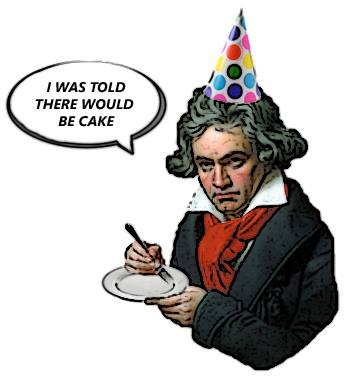

 Hanukkah
  MaryO'Studio