Listening to music can help you while you’re studying for your exams.
This is 3.5 Hours of the Best Classical Music – Mozart, Beethoven, Bach, Chopin – Beautiful Piano, Violin & Orchestral Masterpieces by the greatest composers of all time.

Listening to music can help you while you’re studying for your exams.
This is 3.5 Hours of the Best Classical Music – Mozart, Beethoven, Bach, Chopin – Beautiful Piano, Violin & Orchestral Masterpieces by the greatest composers of all time.

• 1722 ~ Johannes Schmidlin, Composer
• 1759 ~ Gervais-François Couperin, Composer
• 1780 ~ Jan Emmanuel Dulezalek, Composer
• 1783 ~ Thomas Forbes Walmisley, Composer
• 1813 ~ (Wilhelm) Richard Wagner, German composer
Read quotes by and about Wagner
More information about Wagner
Happy Birthday Wagner-Style
• 1820 ~ Alexander Ernst Fesca, Composer
• 1850 ~ Johann Schrammel, Composer
• 1852 ~ Emile Sauret, Composer
• 1865 ~ Enrique Morera, Composer
• 1879 ~ Eastwood Lane, Composer
• 1879 ~ Jean Emile Paul Cras, Composer
• 1884 ~ Alceo Toni, Composer
• 1885 ~ Julio Fonseca, Composer
• 1900 ~ Edwin S. Votey of Detroit, MI patented his pianola, a pneumatic piano player. The device could be attached to any piano. Batteries not included.
• 1914 ~ Sun Ra (Herman Blount), American jazz composer and keyboard player who led a free jazz big band known for its innovative instrumentation and the theatricality of its performances. He passed away in 1993.
• 1916 ~ Gordon Binkerd, Composer
• 1924 ~ Charles Aznavour, French chanteur and composer
• 1924 ~ Claude Andre Francois Ballif, French composer
• 1926 ~ Elaine Leighton, Drummer, played with Billie Holiday
• 1928 ~ Jackie (Jacqueline) Cain, Singer
• 1930 ~ Kenny Ball, Musician, trumpeter, bandleader
• 1933 ~ John Browning, American pianist
More information about Browning
• 1934 ~ Peter Nero (Nierow), Pianist
• 1950 ~ Bernie Taupin, Elton John’s lyricist
• 1966 ~ Iva Davies (1955) Guitarist, singer with Icehouse
• 1958 ~ Wedding vows were taken by rock ’n’ roll star, Jerry Lee Lewis and his thirteen- year-old cousin, Myra.
• 1965 ~ The Beatles got their eighth consecutive number one hit as Ticket to Ride rode to the top of the singles list. The song topped the charts for one week and became their eighth consecutive number one hit.
• 1966 ~ Bruce Springsteen recorded his very first song at the age of 16, along with his band, The Castilles. It was titled, That’s What You’ll Get. The song was never released.
• 2003 ~ The final manuscript of Beethoven’s Ninth Symphony, which was annotated by the composer, sold at auction for $3.47 million.
Last year, Google’s homepage ran a picture to celebrate the 360th birthday of Bartolomeo Cristofori, inventor of the piano and keeper of instruments for the Medicis in Florence. The instrument Cristofori invented was originally called a “harpsichord with soft and loud” even though the distinction between the two is large (the harpsichord produces sound by plucking strings, the piano by striking them with a hammer). Only three of the newfangled instruments he made – all of them dating from the 1720s – survive.
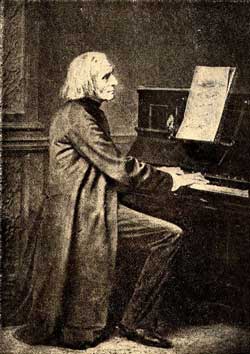 More than a century later the piano recital was devised. It was Liszt who first decided to have the whole stage to himself, and set the fashion for dispensing with the mixture of celebrities and supporting acts that had prevailed up to that time. As he wrote about his audacity to a friend: “Le concert, c’est moi!” And he called his appearance at the Hanover Square Rooms in London in June 1840 not a concert but a recital.
The composer-pianists of the day concentrated on their own works. Liszt set a marker in this regard, too, choosing music that ranged from Bach through Beethoven and up to Chopin. He set the pattern for playing from memory, and cemented the platform layout we know today by turning the then-conventional position of the instrument on the stage through 90 degrees. He was what we would now call a sex symbol as well as a star musician, and the new arrangement allowed the audience to see his impressive profile as well as to hear the instrument more clearly. The standards he set have survived without significant alteration right up to the present.

 1829 ~ Louis Moreau Gottschalk, American pianist and composer
Listen to Gottschalk’s music
More information on Gottschalk
• 1948 ~ Oscar Hammerstein I, Playwright, producer
• 1910 ~ Mary Lou Williams, American jazz pianist, composer and arranger
• 1911 ~ Robert Johnson, Blues Hall of Fame, singer, songwriter, guitarist, inducted into Rock and Roll Hall of Fame in 1986
• 1941 ~ Anita O’Day recorded Let Me Off Uptown on Okeh Records with Gene Krupa and his band.
• 1943 ~ Toni Tennille, Singer
• 1944 ~ Gary Glitter (Paul Gadd), Singer
• 1945 ~ Keith Jarrett, American jazz pianist and composer
• 1833 ~ Johannes Brahms, German composer
More information about Brahms
• 1840 ~ Piotr Ilyich Tchaikovsky, Russian composer
Listen to Tchaikovsky’s music
Read about Tchaikovsky
Read quotes by and about Tchaikovsky
More information about Tchaikovsky
• 1919 ~ Eva (Evita) Peron, Argentina’s spiritual leader and wife of Argentina’s President, Juan Peron; actress on stage, film and radio; subject of the Broadway musical and film Evita
• 1927 ~ Elisabeth Söderström, Swedish soprano
• 1931 ~ Teresa Brewer (Breuer), Singer
• 1941 ~ Glenn Miller and his Orchestra recorded one of the great American music standards, Chattanooga Choo Choo
More information about Chattanooga Choo Choo
• 1942 ~ Felix Weingartner, Austrian conductor and composer, died; best known for his interpretations of Wagner and Beethoven.
• 1958 ~ Pianist Van Cliburn signed an artist’s contract with RCA Victor Records.
• 1966 ~ The Mamas & The Papas made the climb to the top of the Billboard pop music chart with Monday, Monday.
• 1977 ~ The Eagles went to No.1 on the US singles chart with ‘Hotel California’, the group’s fourth US No.1, a No.8 hit in the UK. The Eagles also won the 1977 Grammy Award for Record of the Year for ‘Hotel California’ at the 20th Annual Grammy Awards in 1978. The song’s guitar solo is ranked 8th on Guitar Magazine’s Top 100 Guitar Solos and was voted the best solo of all time by readers of Guitarist magazine.
• 1995 ~ Ray McKinley passed away. He was an American jazz drummer, singer, and bandleader.
• 2002 ~ Buster Brown, a tap star and choreographer who danced on stage, in films and on television, died. He was 88. Brown was one of the last surviving members of the Copasetics, a legendary group of veteran dancers who performed together. Known for his quick rhythms and charm, Brown was a mentor and teacher for a younger generation of dancers. Brown, who was born James Brown in Baltimore, began his dancing career with a trio called the Three Aces and Speed Kings. He eventually began a solo career, appearing in the Hollywood musical “Something to Shout About” in 1943. Brown toured with the bands of Count Basie, Dizzy Gillespie and Duke Ellington, and was a featured dancer in Ellington’s concerts in the 1960s. He danced in the films “The Cotton Club” and “Tap” and on two public television specials. He also performed with the original casts of the Broadway musicals “Bubbling Brown Sugar” and “Black and Blue.” Brown toured South America with the Cab Calloway Orchestra and was commissioned by the State Department to perform in several African countries. He also taught master classes throughout Europe. Beginning in 1997, Brown was master of ceremonies at a weekly Sunday tap jam at the Manhattan club Swing 46, where young and old dancers stopped by to perform. He recently received an honorary doctorate from Oklahoma City University.
. 1867 ~ Charles Gounod’s opera “Romeo et Juliette” was first performed, in Paris.
. 1894 ~ Nicholas Slonimsky, Russian-born American musicologist, musical lexicographer and composer
. 1871 ~ Sigismond Thalberg died. He was a composer and one of the most famous virtuoso pianists of the 19th century.
. 1931 ~ Igor Oistrakh, Violinist
. 1932 ~ Maxine (Ella) Brown, Singer
. 1933 ~ Calvin Newborn, Jazz/blues guitarist, brother of piano wizard Phineas Newborn Jr.
. 1938 ~ Tommy Dorsey and his orchestra recorded I Hadn’t Anyone ’til You for Victor Records. Jack Leonard was featured as vocalist.
. 1941 ~ Judith Blegan, American soprano
. 1944 ~ Cuba Gooding, Singer
. 1947 ~ Pete Ham, Musician, guitar, piano, singer
. 1948 ~ Kate Pierson, Musician, organ, singer with the B-52s
. 1959 ~ Sheena Easton, Singer
. 1959 ~ Lloyd Price’s song, Personality, was released. Price had 10 songs that made it on the nation’s pop music charts in the 1950s through early 1960s.
. 1970 ~ Mariah Carey, Singer
. 1976 ~ Maxine Nightingale received a gold record for the single, Right Back Where We Started From. Nightingale was in the productions of Hair, Jesus Christ Superstar, Godspell and Savages in the early ’70s. Right Back Where We Started From was a number two hit for two weeks in 1976.
. 1981 ~ Former Beatle Ringo Starr married Barbara Bach at the Marylebone Registry Office in London. Paul McCartney and wife Linda, George Harrison and Harry Nilsson were in attendance.
. 1999 ~ Jazz trumpet great Al Hirt died
. 2002 ~ Classical violinist Guila Bustabo died at the age of 86. Bustabo, born in Manitowoc, Wis., in 1916, toured Europe and Asia, performing under such conductors as Herbert von Karajan and Wilhelm Furtwangler. Bustabo studied at the Juilliard School in New York before moving to Paris. During her career, she recorded concertos by Beethoven and Bruch with the Concertgebouw Orchestra in Amsterdam. Bustabo was arrested in Paris after World War II, accused of being a Nazi sympathizer because she played under conductor Willem Mengelberg. Mengelberg had been affiliated with musical associations sanctioned by the Nazi Party. The accusation against Bustabo was eventually dropped.
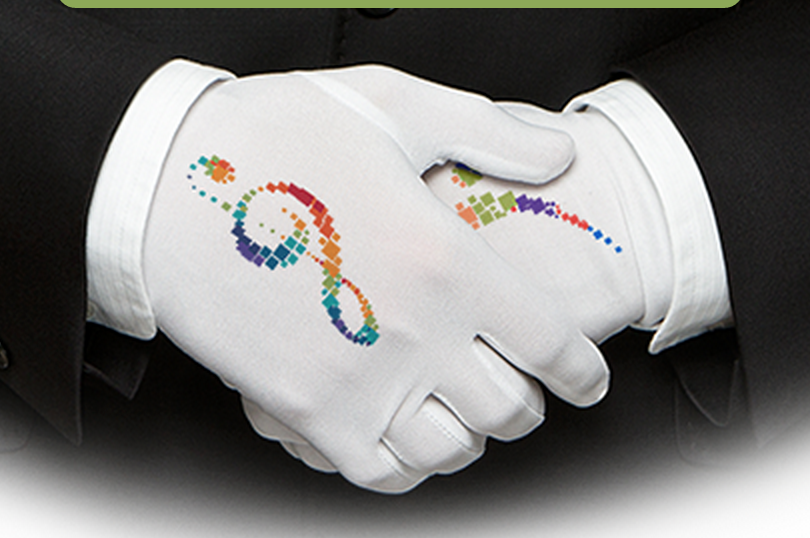
JoyTunes Piano Gloves
I thought this would surely interest all piano teachers and lovers out there – JoyTunes’ just came out with new piano teaching GLOVES!
Take a look in the clip and share it to all piano lovers everywhere.
The JoyTunes gloves, still in beta version, will turn you into Mozart in the blink of an eye! Don’t know how to play piano? These gloves will take you from 1 note to Beethoven in a flash. Our gloves allow your hands to auto magically bend and move to play any song your heart desires! Check out the video for more info.
Want to get your own pair of gloves? Purchase them here: http://www.joytunes.com/gloves
. 1827 ~ German composer Ludwig van Beethoven died in Vienna. Beethoven is considered one of the greatest western composers ever. He composed many of his finest works after he had become totally deaf.
. 1828 ~ Franz Schubert, Austrian composer, performed his one and only public concert in the capital city of Vienna.
. 1871 ~ François-Joseph Fetis died. He was a Belgian musicologist, composer, teacher, and influential music critic.
. 1918 ~ Cesar Cui, Russian composer, died
More information about Cui
. 1921 ~ Joe Loco (Jose Esteves, Jr.), Jazz musician, arranger, credited with introducing the mambo (1951) and cha-cha-cha (1953) to the US
. 1925 ~ Pierre Boulez, French composer and conductor. His later work, notably “Le Marteau sans maitre,” gained him a worldwide reputation.
More information on Boulez
 Grammy winner
. 1929 ~ Maurice Simon, Jazz musician, tenor sax
. 1940 ~ Rod Lauren, Singer
. 1941 ~ Jimmy Lunceford and his orchestra recorded the tune, Battle Axe, for Decca Records. Lunceford began with the Chickasaw Syncopaters, a 10-piece band, in the late 1920s. By 1934, he would add names like Sy Oliver, Willie Smith, Earl Caruthers, Joe Thomas, Al Norris, Moses Allen, and James Crawford to form orchestras that would entertain through the mid-1940s.
. 1944 ~ Diana Ross (Diane Earle), American pop soul singer with The Supremes
. 1948 ~ Richard Tandy, Bass with Electric Light Orchestra
. 1948 ~ Steven Tyler (Tallarico), Singer with Aerosmith
. 1949 ~ Vicki Lawrence, Emmy Award-winning actress, singer
. 1949 ~ Fran Sheehan, Bass with Boston
. 1950 ~ Teddy Pendergrass, American soul singer, songwriter and drummer
. 1974 ~ David Essex received a gold record for the hit, Rock On. Though a million seller, Rock On never made it to number one on the pop-rock charts – stalling at number five. It was on the charts for a total of 14 weeks. Essex portrayed the role of Christ in the London production of Godspell. He starred in several British films in 1970. 1975 ~ Tommy, the film based on the rock opera by the group, The Who, premiered in London.
. 2000 ~ John Corigliano won an Oscar for the score to the movie The Red Violin
. 2015 ~ Joseph Smith died. He was a well-liked, modest and warmly adventurous New York pianist.
Benita Meshulam, a close friend, wrote: “Joe was the most curious musician I have ever known, always looking for forgotten works, studying them thoroughly. He was interested not only in the works but the composers and investigated everything. He was a pianist who didn’t care about the condition of the pianos he performed on. It was his message that he wanted to get across–a real musician’s musician who lived and breathed his art. He was also the kindest and most generous colleague.”
.1897 ~ First performance of Ludwig van Beethoven‘s Symphony No. 4 in B-flat major, Op. 60. It is a symphony in four movements.
. 1835 ~ Eduard Strauss, Austrian composer who, together with brothers Johann Strauss II and Josef Strauss made up the Strauss musical dynasty. He was the son of Johann Strauss I and Maria Anna Streim.
. 1873 ~ Lee Shubert, Broadway producer. Theaters in NY and LA named after him. He died in 1953
. 1907 ~ Jimmy McPartland, Jazz musician: cornetist; played for the Wolverine Orchestra, Embassy Four; bandleader; played at Newport Jazz Festival with wife, Marian
. 1916 ~ Harry James, American jazz trumpeter and bandleader, married to Betty Grable (second of four wives)
. 1933 ~ Cecil Taylor, American jazz pianist and composer
. 1944 ~ Sly Stone, American soul-rock singer and instrumentalist
. 1959 ~ The musical, No Strings, opened on Broadway at the 54th Street Theatre. Richard Kiley and Diahann Carroll starred in the show. Also featured was the show’s composer in an acting role, singing his own lyrics. The composer was Richard Rodgers.
. 1968 ~ LIFE magazine called Jimi Hendrix, “the most spectacular guitarist in the world.”
. 1987 ~ Andrew Lloyd Webber’s “Starlight Express” opened on Broadway. This was the first ever roller-skating musical.
. 1964 ~ My Fair Lady, by Lerner and Loewe, opened on Broadway. It ran for 6-1/2 years before 2,717 audiences. It became, thanks to Rex Harrison and an outstanding cast, the longest-running musical to that time.
. 1970 ~ The musical, Purlie, opened a run of 680 continuous performances on Broadway.
. 2001 ~ Ann Sothern died at the age of 92. She was an actress who starred as the saucy, liberated showgirl in MGM’s “Masie” movies during the 1940s and played single working women on TV in “Private Secretary” and “The Ann Southern Show.”
 Franz Peter Schubert lived between 1797 and 1828. He is considered to be a romantic composer. He was an Austrian composer who was one of the greatest creators of melody and foremost writer of ‘lieder’ (German songs).
Although he only lived for 31 years, Schubert composed more than 600 songs, 22 piano sonatas and many short piano pieces. This melodic output has never been equaled either in quantity of quality. He was one of the first musicians to earn a living from the sale of his music.
Schubert’s Ave Maria was featured in the Walt Disney movie Fantasia.
This is from Amazon.com’s Get Started in Classical.
Schubert’s musical genius went well beyond his incomparable gift for melody
During Beethoven’s funeral in 1827, one of the torchbearers was a young composer who would himself die the following year. There’s a poignant irony in this image of Franz Schubert (1797-1828) paying homage to the master, for the extent of Schubert’s own accomplishment was to remain one of music’s best-kept secrets for decades after his death. He had indeed struck out on a uniquely personal creative path, however intense his hero worship of Beethoven was. As often happens in such periods of transition–in this case, the evolution in style and attitude from classical balance toward romantic experimentation–Schubert simply slipped through the cracks, not easily fitting into his contemporaries’ sense of the direction music was taking.
Yet the fact that the only recognition that came his way was mostly confined to a tight-knit circle of musical friends didn’t deter Schubert from pursuing his inspiration. Even though an astonishing number of compositions were never performed during his short lifetime, the prolific composer produced a wide body of material, all with a seemingly effortless swiftness reminiscent of Mozart (another of the composer’s idols). His style is most frequently associated with an uncanny gift for melody, but that’s a shortsighted view of the true nature of Schubert’s genius.
The selections on our featured disc represent two key but divergent aspects of his music: the gemlike miniaturism of his songwriting and his preoccupation with large-scale forms from the classical period. “Die Forelle” (“The Trout”)–sung here with a silvery, seductive grace by Barbara Bonney–is an example of how Schubert elevated the art of song to an opera in miniature, rich in evocative scene-painting. Pay attention not just to the beguiling melody but to how perfectly Schubert mirrors the text’s images in the details of the burbling piano accompaniment.
The cheerful quintet that takes its name from the song makes an excellent introduction to the composer’s longer works. Most of these belong to the realm of “chamber music”; that is, pieces written for small groups of musicians to be performed in people’s homes. From the high-spirited interplay of the ensemble gathered here–all virtuosos on their respective instruments but clearly merging their voices into a common goal–it’s easy to imagine a typical evening of Schubert making music with his friends. There’s a flowing sense of conversation in the music, and just as you think you’ve heard one untoppable melody, Schubert obliges with another, taking it down an unexpected course with a sudden harmonic surprise–another of the composer’s trademarks–and spinning it out as it suits his fancy. Schumann once characterized the composer’s tendency to make us want the music to last, following its multiple digressions, as Schubert’s “heavenly lengths.”
Much of the pleasure here can also be heard in the way Schubert plays sonorities off each other, above all in the fourth movement. It offers a set of variations on the melody from the “Trout” song, presaging how Mahler would later incorporate material from his own songs into vast symphonic structures. You can notice this both in the interwoven yet contrasting timbres from the keyboard against four strings and in the opposition between double bass and sparkling passages high in the register. And within the spontaneity of the moment, there’s something else: emerging within all the joie de vivre are ambivalent shadows hinting at Schubert’s darker side, particularly in the intensity of the slow movement’s middle core. This is also apparent in the opening of the “Arpeggione” Sonata (nicknamed after a short-lived invention that was a sort of cross between a guitar and a cello), which unfolds a kind of aching, spun-out lyricism that could belong to no one but Schubert.
In his final decade, when intense poverty and a debilitating case of syphilis began to take their toll, Schubert would mine this vein of profound self-expression. His last quartets and piano sonatas, the String Quintet, and his despairing song cycle Winterreise, he touches in his own way on the inwardness probed by Beethoven’s late-period creations. Thomas May, Classical Editor
More Schubert can be found in Musical Information and Recommendations for Adults.

Schubert’s birthday
Schubert’s works were played in an Grammy Winning performance, Forty-Second Annual Awards

 Read quotes by and about Schubert
 Guess what my li’l Chopin played today


 MaryO'Studio