Rachmaninoff Piano Music

Pianist/composer Sergei Rachmaninov was possessed of both unusually large hands and a staggering lack of empathy when it came to writing piano music for other people.  Hyung-ki Joo is by no means the first pianist to have been confounded by the mammoth chords of his Prelude in C sharp minor (Op.3, No.2).

He probably is the first to have come up with this particular solution helped by his partner in crime, violinist Alek­sey Igudes­man.


Beethoven as Played by Dudley Moore

This video was also posted on Dudley Moore’s birthday.

In this clip from the 1950’s-60s British comedy group “Beyond the Fringe,” Dudley Moore plays a very funny but also very musically well-done parody of a Beethoven Piano Sonata, using the famous whistling tune from “Bridge Over the River Kwai” as a thematic subject.

The ‘ending’ here is dragged out for a good minute and a half with Dudley showing every sign of wanting to escape from 3’42 onwards.


Some Music Humor :)

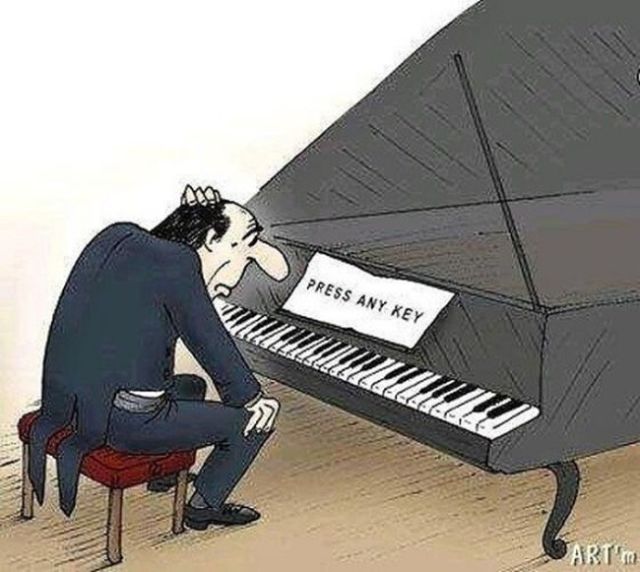
any-key


So a C, an E-flat and a G walk into a bar. The bartender says, “sorry, but we don’t serve minors.” So E-flat leaves, and C and G have an open fifth between them. After a few drinks, the fifth is diminished and G is out flat. F comes in and tries to augment the situation, but is not sharp enough.

A D comes in and heads for the bathroom saying, “Excuse me. I’ll just be a second.” Then A comes in, but the bartender is not convinced that this relative of C is not a minor. Then the bartender notices B-flat hiding at the end of the bar and says, “Get out! You’re the seventh minor I’ve found in this bar tonight.”

E-Flat comes back the next night in a three-piece suit with nicely shined shoes. The bartender says, “you’re looking sharp tonight. Come on in, this could be a major development.” Sure enough, E-flat soon takes off his suit and everything else, and is au natural. Eventually, C, who had passed out under the bar the night before, begins to sober up and realizes in horror that he’s under a rest.

So, C goes to trial, is convicted of contributing to the diminution of a minor and sentenced to 10 years of DS without Coda at an up scale correctional facility. The conviction is overturned on appeal, however, and C is found innocent of any wrongdoing, even accidental, and that all accusations to the contrary are bassless.

The bartender decides, however, that since he’s only had tenor so patrons, the soprano out in the bathroom and everything has become alto much treble, he needs a rest and closes the bar.

 

Finding The Right Teacher

NOT Mrs. O'Connor!

NOT Mrs. O’Connor!

See if a prospective teacher allows a trial lesson to test how the personalities mesh. And be sure to ask lots of questions. What’s the teacher’s background as a musician and as an instructor? What kinds of teaching materials and music does she use? How much practice time is expected for students, and does that vary by the student’s age? Does the teacher have access to student ensembles? What kinds of performance opportunities will he provide? Will the teacher allow the student to record the lesson? This can be a terrific practice aid, especially when it comes to remembering how something is supposed to sound. Does she teach any music theory or composition? What are the expectations for students and for their parents?

A good teacher can be a friendly, encouraging and inspiring presence — even when a student hits rough patches. He will point out the student’s weaknesses without being harsh or dismissive, suggest innovative ways to overcome challenges, and create engaging ways to tackle even rote activities like playing scales or honing fine motor skills. The instructor’s age and experience might or might not be a deciding factor; for example, I’m consistently impressed by the range of tricks my own child’s very youthful private teacher has up her sleeve to turn what could easily be drudgery into fun. Not to mention the huge helpings of good humor and patience she brings to her tiny charges!

Read more at Finding The Right Teacher For Your Music-Loving Kid : Deceptive Cadence : NPR.

Tartarov plays in the style of Mozart

Antonei Sergejvitch Tartarov  was a fictional Russian pianist whose real name was Jean-Jacques Hauser.

He had an exceptional gift for improvisation.

On April 16, 1968 Hauser fooled an audience of 2,000 people in Zurich into thinking not only that he was a little-known Russian virtuoso (Tartarov), but that much of the improvised material in his program was composed by Beethoven, Mozart, Prokofiev, and Liszt.

Imagine when it was announced that the music the audience had just applauded as works of genius had actually been improvised on the spot by a home-grown Swiss pianist.


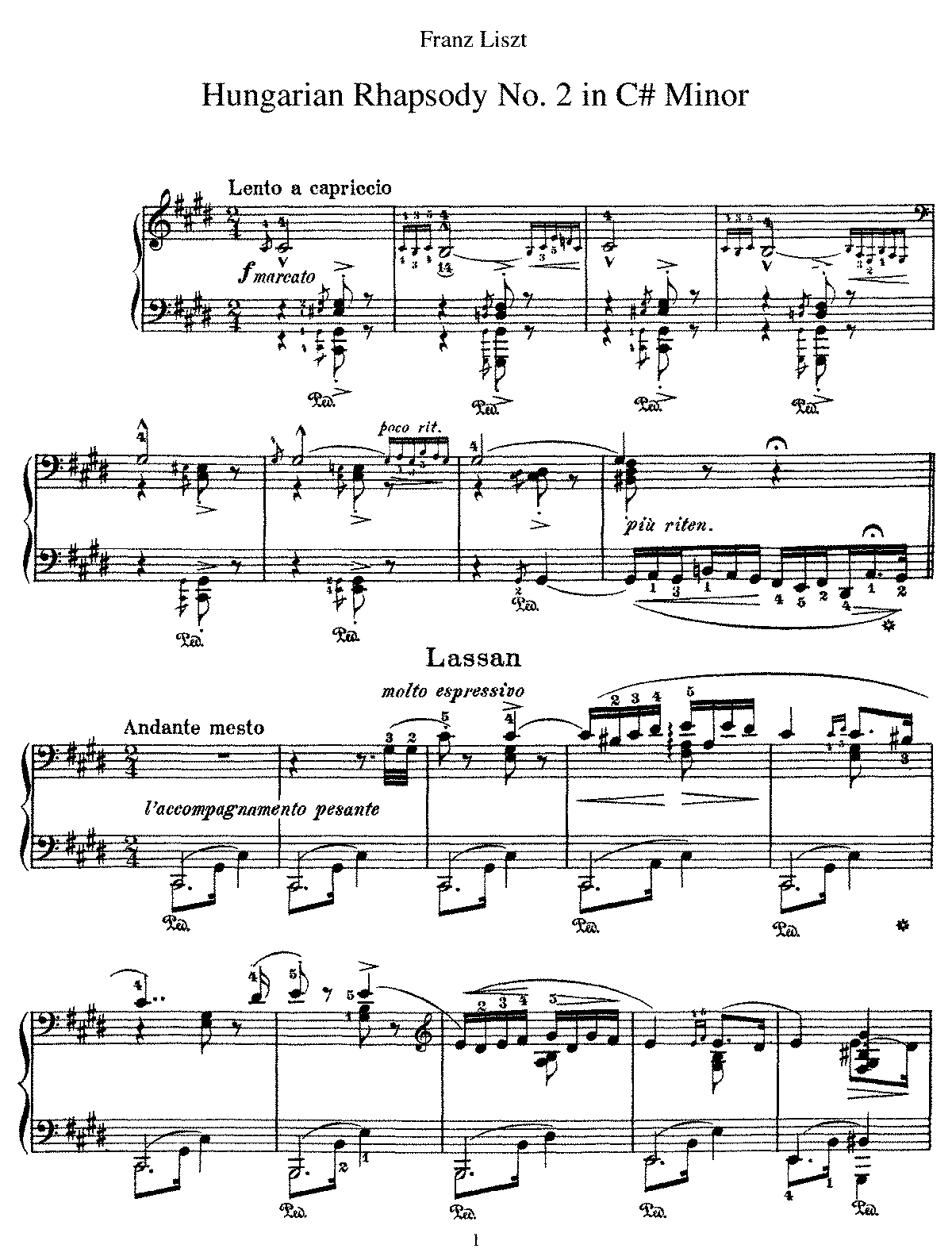
Liszt’s Hungarian Rhapsody No. 2

liszt-hungarian


Danish comedian and pianist Victor Borge gives every impression of having been asked to play a duet with someone whom he not only doesn’t know, but doesn’t particularly like. Forced to come up with a mutually agreeable way of sharing the musical workload, he settles on the most difficult route possible.

It’s not clear why two pianists were needed for this performance of Liszt’s Hungarian Rhapsody No.2, S.244/2.  I think that they did it just for the fun of it.  The result is hilarious.

They’re not the only ones to tackle Liszt’s Hungarian Rhapsody No.2 as a piano duo.  We also have these guys:


Finally, for real:


Igudesman & Joo – Rachmaninov Had Big Hands

Pianist/composer Sergei Rachmaninov was possessed of both unusually large hands and a staggering lack of empathy when it came to writing piano music for other people.  Hyung-ki Joo is by no means the first pianist to have been confounded by the mammoth chords of his Prelude in C sharp minor (Op.3, No.2).

He probably is the first to have come up with this particular solution helped by his partner in crime, violinist Alek­sey Igudes­man.

Dudley Moore’s Beethoven parody

This video was also posted on Dudley Moore’s birthday.

In this clip from the 1950’s-60s British comedy group “Beyond the Fringe,” Dudley Moore plays a very funny but also very musically well-done parody of a Beethoven Piano Sonata, using the famous whistling tune from “Bridge Over the River Kwai” as a thematic subject.

The ‘ending’ here is dragged out for a good minute and a half with Dudley showing every sign of wanting to escape from 3’42 onwards.


Finding The Right Teacher For Your Music-Loving Kid: Deceptive Cadence

NOT Mrs. O'Connor!

NOT Mrs. O’Connor!

See if a prospective teacher allows a trial lesson to test how the personalities mesh. And be sure to ask lots of questions. What’s the teacher’s background as a musician and as an instructor? What kinds of teaching materials and music does she use? How much practice time is expected for students, and does that vary by the student’s age? Does the teacher have access to student ensembles? What kinds of performance opportunities will he provide? Will the teacher allow the student to record the lesson? This can be a terrific practice aid, especially when it comes to remembering how something is supposed to sound. Does she teach any music theory or composition? What are the expectations for students and for their parents?

A good teacher can be a friendly, encouraging and inspiring presence — even when a student hits rough patches. He will point out the student’s weaknesses without being harsh or dismissive, suggest innovative ways to overcome challenges, and create engaging ways to tackle even rote activities like playing scales or honing fine motor skills. The instructor’s age and experience might or might not be a deciding factor; for example, I’m consistently impressed by the range of tricks my own child’s very youthful private teacher has up her sleeve to turn what could easily be drudgery into fun. Not to mention the huge helpings of good humor and patience she brings to her tiny charges!

Read more at Finding The Right Teacher For Your Music-Loving Kid : Deceptive Cadence : NPR.