February 2 ~ This Day in Music History


. 1714 ~ Gottfried August Homilius, German composer, cantor and organist

. 1789 ~ Armand-Louis Couperin, French composer, organist, and harpsichordist

. 1875 ~ Fritz Kreisler, Austrian-born American violinist and virtuoso/composer Some of his best known works are Caprice Viennois, Tambourin Chinois, Liebesfreud and La Gitana

. 1901 ~ Jascha Heifetz, Russian-born American violinist
Read quotes by and about Heifetz
More information about Heifetz

. 1911 ~ Jussi Björling, Swedish tenor

. 1912 ~ Burton Lane (Levy), Composer of How Are Things in Glocca Morra, That Old Devil Moon, Look to the Rainbow, How About You, I Hear Music, Come Back to Me,On a Clear Day You Can See Forever, How Could You Believe Me?; His Broadway musicals were Finian’s Rainbow (collaboration with Yip Harburg), On a Clear Day You Can See Forever (collaboration with Alan Jay Lerner). He contributed songs to over 30 films: Babes on Broadway, Royal Wedding, Ship Ahoy, St. Louis Blues and credited with discovering Judy Garland

. 1927 ~ Stan Getz (Stanley Gayetzby), American jazz tenor saxophonist

. 1937 ~ Tom Smothers, Entertainer, The Smothers Brothers Comedy Hour, The Smothers Brothers Show, The Steve Allen Show, Dick’s Brother

. 1937 ~ Guy Lombardo and his orchestra recorded one of Guy’s most famous tunes. Boo Hoo was waxed on Victor Records and became one of the group’s all-time great hits.

. 1940 ~ target=”_blank”Alan Caddy, Guitarist with The Tornados

. 1942 ~ Graham Nash, Singer with Crosby, Stills, Nash and Young

. 1947 ~ Peter Lucia, Drummer with Tommy James and The Shondells

. 1949 ~ Ross Valory, Bass with Journey

. 1959 ~ The Coasters tune, Charlie Brown, was released. The tune went to #2 and stayed there for three weeks, but didn’t make it to the top spot of the charts. A catchy song (“Fee fee fi fi fo fo fum. I smell smoke in the auditorium…”), it was on the charts for a total of 12 weeks. The song at number one, preventing Charlie Brown from reaching the top, was Venus, by Frankie Avalon.

. 1996 ~ Gene Kelly passed away

. 2001 ~ French pianist Nicole Henriot, who entered the Paris Conservatory at age 7 and went on to perform around the globe with conductor Charles Munch, died at the age of 75. Emerging on the world music scene after World War II, Henriot built her reputation on interpretations of works from Liszt to Prokofiev, and especially French composers such as RavelFauré and Milhaud. She was most famous for her performances with Munch, music director of the target=”_blank”Boston Symphony from 1949 to 1962. Munch, who died in 1968, was the uncle of Henriot’s husband. Born in 1925, Henriot won the Paris Conservatory’s first prize at age 13. During the war, Henriot gave aid to her brother, a member of the French Resistance. When Gestapo agents searched her home in 1944, she managed to destroy her brother’s secret documents but was badly beaten. After the war, Henriot became the first French pianist to appear in Britain and began an international tour that took her from Scandinavia to Egypt. She made her American debut in 1948 as a soloist with the New York Philharmonic under Munch’s direction. When Munch formed the Orchestra of Paris in 1967, Henriot was one of the fledgling orchestra’s first soloists. In the 1970s and 1980s, Henriot devoted herself to teaching, and worked at the Conservatory of Liege, Belgium, and at the Walloon Conservatory of Brussels.

. 2001 ~ Victor Norman, who founded the Eastern Connecticut Symphony Orchestra and conducted the group for three decades, died at the age of 95. Colleagues said Norman was a visionary who needed to be as skilled in politics as he was in music to keep the symphony together. “He had this idea that a symphony orchestra could be created around here, when really it had been tried several times before, never with any kind of significant success,” said Charles Frink, a New London composer who studied with Norman. Norman founded the New London Civic Orchestra in 1946. It merged with the Willimantic Orchestra in 1952 to become the Eastern Connecticut Symphony Orchestra. He stepped down from the podium in 1980. In his retirement, Norman composed music. Two of his orchestral pieces were performed by the New Britain Symphony Orchestra and the Westminster Community Orchestra in Princeton, N.J. His memoirs, “Victor Norman: A Life in Music, a Lifetime of Learning,” were published in 1999.

. 2015 ~ French piano virtuoso Aldo Ciccolini died at age 89. Born on August 15, 1925, into a musical family in Naples, Aldo Ciccolini was a child prodigy, beginning composition classes in the city’s conservatory at age nine.

December 3, 2016 ~ Today in Music History

today

Christmas Music, Part 3 – Angels We Have Heard On High

• 1596 ~ Nicola Amati, Italian violin maker, teacher of Guarneri and Stradivari

• 1729 ~ Padre Antonio Francisco Javier Jose Soler, Spanish composer whose works span the late Baroque and early Classical music eras. He is best known for his keyboard sonatas, an important contribution to the harpsichord, fortepiano and organ repertoire.

• 1876 ~ Hermann Goetz died.  He was a German composer.

OCMS 1883 ~ Anton Webern, Austrian composer and conductor
Read quotes by and about Webern
More information about Webern

• 1907 ~ Connie (Connee) Boswell, Singer Connie or Connee (a spelling she preferred later in life), who also played several musical instruments, arranged vocals for herself and her two sisters. Although she was stricken with polio and worked from her wheelchair, she never let this get in the way of being part of her jazz-singing trio. The Boswell Sisters’ talent was quickly recognized and by the time Connee was 24 years old, the sisters were doing vaudeville, radio, playing New York’s Paramount Theatre, recording with the Dorsey Brothers: You Oughta Be in Pictures; making films and appearing on the U.S.A.’s first public TV broadcast. One thing led to another and Connie went solo, entertaining World War II troops, making films, appearing on Broadway and recording with big names like Woody Herman’s; even a duet classic with Bing Crosby: Basin Street Blues. Her musical influence spanned many generations and music styles. If you’d have asked Ella Fitzgerald, she would have told you, “They just don’t make ’em like Connee Boswell anymore.”

OCMS 1923 ~ Maria Callas (Calogeropoulous), American soprano
More information about Callas Read quotes by and about Callas

• 1925 ~ The first jazz concerto for piano and orchestra was presented at Carnegie Hall in NYC. Commissioned by Walter Damrosch, American composer George Gershwin presented Concerto In F, and was also the featured soloist playing a flugelhorn in a slow, bluesy style as one of his numbers.

• 1927 ~ Phyllis Curtin, Singer: soprano with the New York City OperaMetropolitan Opera, Vienna Staatsoper, La Scala, Teatro Colon; coordinator of Voice Dept and Opera at Yale School of Music, Dean Emerita of Boston Univ School for the Arts

• 1927 ~ Ferlin Husky (aka: Simon Crum, Terry Preston), Singer

• 1930 ~ Andy (Howard Andrew) Williams, American Emmy Award-winning entertainer, singer

• 1931 ~ Jaye P. (Mary Margaret) Morgan, Singer, performer

• 1941 ~ Johann Christian Sinding, Norwegian composer

• 1944 ~ Frank Sinatra was in the Columbia Records studio recording Old Man River.

• 1948 ~ Ozzy (John) Osbourne, Songwriter, singer

• 1949 ~ Mickey Thomas, Singer with Jefferson Starship

• 1953 ~ Kismet opened on Broadway in New York. The show ran for 583 performances.

• 1955 ~ Elvis Presley’s first release on RCA Victor Records was announced. No, it wasn’t Hound Dog or Heartbreak Hotel. The first two sides were actually purchased from Sam Phillips of Sun Records: Mystery Train and I Forgot to Remember to Forget. Elvis was described by his new record company as “The most talked about personality in recorded music in the last 10 years.”

• 1960 ~ Camelot opened at the Majestic Theatre in New York City. Richard Burton and Julie Andrews played the leading roles in the musical written by Lerner and Loewe. Robert Goulet got rave reviews for his songs, If Ever I Would Leave You, Then You May Take Me to the Fair and How to Handle a Woman, among others. Camelot had a run of 873 performances. Broadway went Hollywood in the 1967 film version of Camelot. Its run was not quite as successful.

https://youtu.be/SjIVSVGMWEk

• 1968 ~ The O’Kaysions received a gold record for Girl Watcher. The song had a promotional reprise in the 1990s as a theme for Merv Griffin’s Wheel of Fortune, with the revamped lyrics, I’m a Wheel Watcher…

• 1977 ~ After 29 weeks in the #1 position on the album charts (a record, literally…), Rumours, by Fleetwood Mac, was replaced at the top spot by the album Simple Dreams, sung by Linda Ronstadt.

• 1999 ~ Handel’s Messiah Gets Modern Makeover in Ireland

• 2000 ~ Kevin Mills, a member of the Christian rock groups Newsboys and White Heart, died after a motorcycle accident in Hollywood. He was 32. Mills, of Louisville, Ky., was a singer and bass player, his family said. He also was a member of the Screen Actors Guild and appeared on TV in “An Inconvenient Woman” in 1991. White Heart started in 1982. Newsboys, an Australian band now based near Nashville, was formed four years later. Newsboys have sold nearly 3 million records and earned three Grammy nominations on the religious rock circuit.

• 2000 ~ Washington Honored Eastwood, Baryshnikov, Others

• 2002 ~ Rich Dangel, credited with creating the opening guitar chords of garage band staple Louie Louie, died of an aneurysm at his home. He was 60. Dangel was a member of the seminal Northwest rock band the Wailers, who introduced the nation to the Northwest sound – raw, unpolished and catchy. He may be best known for coming up with the power chords that opened the Wailers’ 1961 regional hit, Louie, Louie, written by rhythm-and-blues singer Richard Berry and taken to the top of the national charts by another Northwest band, the Kingsmen from Portland, Ore. Dangel co-wrote his first chart hit, “Tall Cool One” with fellow Wailer John Greek when he was still in high school. The song resulted in the group’s first album, “The Fabulous Wailers,” a cross-country tour and a 1959 appearance on Dick Clark’s “American Bandstand.”

Piano Recitals, Thanks to Liszt!

Last year, Google’s homepage ran a picture to celebrate the 360th birthday of Bartolomeo Cristofori, inventor of the piano and keeper of instruments for the Medicis in Florence. The instrument Cristofori invented was originally called a “harpsichord with soft and loud” even though the distinction between the two is large (the harpsichord produces sound by plucking strings, the piano by striking them with a hammer). Only three of the newfangled instruments he made – all of them dating from the 1720s – survive.

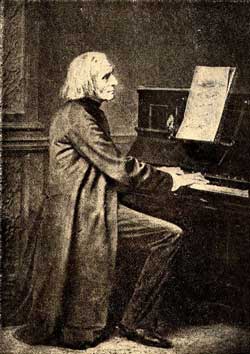
liszt-recitalMore than a century later the piano recital was devised. It was Liszt who first decided to have the whole stage to himself, and set the fashion for dispensing with the mixture of celebrities and supporting acts that had prevailed up to that time. As he wrote about his audacity to a friend: “Le concert, c’est moi!” And he called his appearance at the Hanover Square Rooms in London in June 1840 not a concert but a recital.

The composer-pianists of the day concentrated on their own works. Liszt set a marker in this regard, too, choosing music that ranged from Bach through Beethoven and up to Chopin. He set the pattern for playing from memory, and cemented the platform layout we know today by turning the then-conventional position of the instrument on the stage through 90 degrees. He was what we would now call a sex symbol as well as a star musician, and the new arrangement allowed the audience to see his impressive profile as well as to hear the instrument more clearly. The standards he set have survived without significant alteration right up to the present.

via Liszt is dead, long live the piano recital.

May 8 in Music History

mothers-day-38


OCMS  1829 ~ Louis Moreau Gottschalk, American pianist and composer
Listen to Gottschalk’s music
More information on Gottschalk

• 1948 ~ Oscar Hammerstein I, Playwright, producer

• 1910 ~ Mary Lou Williams, American jazz pianist, composer and arranger

• 1911 ~ Robert Johnson, Blues Hall of Fame, singer, songwriter, guitarist, inducted into Rock and Roll Hall of Fame in 1986

• 1941 ~ Anita O’Day recorded Let Me Off Uptown on Okeh Records with Gene Krupa and his band.

• 1943 ~ Toni Tennille, Singer

• 1944 ~ Gary Glitter (Paul Gadd), Singer

• 1945 ~ Keith Jarrett, American jazz pianist and composer


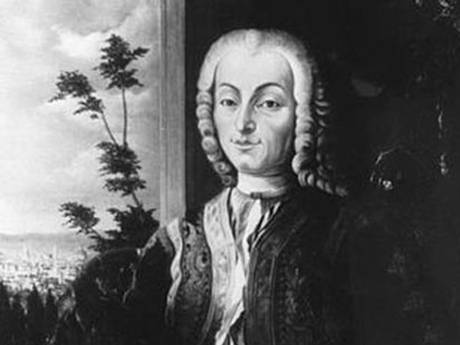
Happy Birthday Bartolomeo Cristofori!

The inventor of the piano, Bartolomeo Cristofori, is celebrated in last year’s Google Doodle.

Born on 4 May, 1655 in Padua, northern Italy, Cristofori initially worked making harpsichords and clavichords and was employed by Prince Ferdinando de Medici, son of the duke of Tuscany.

He is believed to have started work on what would become a piano in the 1690s and the first one is thought to have been made in 1709.

In a harpsichord the strings are plucked, so it is not possible to play the notes softer or louder. Cristofori managed to design a mechanism that transferred the pressure placed on the keys to the hammers that hit the strings.

He called his invention a “gravecembalo col piano e forte” – a clavichord with soft and loud. The name was shortened to pianoforte and then simply piano.

Francesco Mannucci, a musician at the Medici court, described one early version as “a large ‘Arpicembalo’ [the name of a type of harpsichord] by Bartolomeo Cristofori, of new invention that produces soft and loud, with two sets of strings at unison pitch, with soundboard of cypress without rose”.

Bartolomeo Cristofori

Bartolomeo Cristofori di Francesco was an Italian maker of musical instruments, generally regarded as the inventor of the piano.

While other musical instrument makers had attempted to solve the same problem with the harpsichord, Cristofori’s invention is generally regarded as the first real piano.

However, the piano was not popular at first and many felt it was too difficult to play. Cristofori died largely uncelebrated for an invention that would later change the musical world in 1731 – a year before the first sheet music for the piano appeared.

via Who invented the piano? Bartolomeo Cristofori’s birthday celebrated in today’s Google doodle – News – Gadgets and Tech – The Independent.

February 25 ~ Today in Music History

today

. 1727 ~ Armand-Louis Couperin,  French composer, organist, and harpsichordist of the late Baroque and early Classical periods.

. 1890 ~ Dame Myra Hess, British pianist

http://youtu.be/UNlyxn2Y4_E

. 1929 ~ Tommy Newsom, Musician: tenor sax, arranger, composer, back-up conductor for NBC’s Tonight Show Band

. 1943 ~  George Harrison, British rock singer, guitarist and songwriter and former member of  The Beatles group

. 1952 ~ The complete choreographic score of Cole Porter’s “Kiss Me Kate” became the first musical choreography score given a copyright. The work was the effort of Hanya Holm.

. 1953 ~ The musical, “Wonderful Town”, opened at the Winter Garden Theatre in New York City. The show was based on the book, “My Sister Eileen”, and the ran for 559 performances.

. 1957 ~ Buddy Holly and The Crickets traveled to Clovis, NM, to record That’ll Be the Day (one of the classics of rock ‘n’ roll) and I’m Looking for Someone to Love. Both songs were released on Brunswick Records in May of that year.

. 1963 ~ Please Please Me was the second record released in the U.S. by The Beatles. Some labels carried a famous misprint, making it an instant, and valuable, collector’s item. The label listed the group as The Beattles.

. 1966 ~ Nancy Sinatra was high-stepping with a gold record award for the hit, These Boots are Made for Walkin’.

. 1986 ~ We are the World captured four Grammy Awards. The song, featuring  more than 40 superstar artists gathered at one time, was awarded the Top Song, Record of the Year, Best Pop Performance and Best Short Video Awards.

http://youtu.be/M9BNoNFKCBI

. 2001 ~ Ann Colbert, a manager of classical musicians, died at the age of 95. Colbert founded Colbert Artists Management Inc. Her clientele included the Juilliard String Quartet; conductors Sir Georg Solti, Christoph von Dohnanyi and Richard Bonynge; singers Dame Joan Sutherland, Elizabeth Schwarzkopf, Christa Ludwig and Dietrich Fischer-Dieskau; and musicians Alfred Brendel and the late Jean-Pierre Rampal. Colbert moved to the United States from Berlin in 1936 and started the management company with her husband, Henry Colbert, in 1948. She retired in 1991, leaving the company to her longtime associate, Agnes Eisenberger. The company has retained Colbert’s name.

. 2003 ~ Walter Scharf, 92, a composer who earned 10 Academy Award nominations and worked on more than 200 movies and television programs, including “Funny Girl,” “Mission: Impossible” and “White Christmas,” died in Los Angeles. He received Oscar nominations for the scores for such films as “Mercy Island” (1941), “Hans Christian Andersen” (1952), “Funny Girl” (1968), “Willy Wonka and the Chocolate Factory” (1971) and “Ben” (1972). He won an Emmy for his work on a National Geographic television special and a Golden Globe for “Ben,” whose theme song helped launch singer Michael Jackson’s solo career.

February 2 in Music History


. 1714 ~ Gottfried August Homilius, German composer, cantor and organist

. 1789 ~ Armand-Louis Couperin, French composer, organist, and harpsichordist

. 1875 ~ Fritz Kreisler, Austrian-born American violinist and virtuoso/composer Some of his best known works are Caprice Viennois, Tambourin Chinois, Liebesfreud and La Gitana

. 1901 ~ Jascha Heifetz, Russian-born American violinist
Read quotes by and about Heifetz
More information about Heifetz

. 1911 ~ Jussi Björling, Swedish tenor

. 1912 ~ Burton Lane (Levy), Composer of How Are Things in Glocca Morra, That Old Devil Moon, Look to the Rainbow, How About You, I Hear Music, Come Back to Me,On a Clear Day You Can See Forever, How Could You Believe Me?; His Broadway musicals were Finian’s Rainbow (collaboration with Yip Harburg), On a Clear Day You Can See Forever (collaboration with Alan Jay Lerner). He contributed songs to over 30 films: Babes on Broadway, Royal Wedding, Ship Ahoy, St. Louis Blues and credited with discovering Judy Garland

. 1927 ~ Stan Getz (Stanley Gayetzby), American jazz tenor saxophonist

. 1937 ~ Tom Smothers, Entertainer, The Smothers Brothers Comedy Hour, The Smothers Brothers Show, The Steve Allen Show, Dick’s Brother

. 1937 ~ Guy Lombardo and his orchestra recorded one of Guy’s most famous tunes. Boo Hoo was waxed on Victor Records and became one of the group’s all-time great hits.

. 1940 ~ Alan Caddy, Guitarist with The Tornados

. 1942 ~ Graham Nash, Singer with Crosby, Stills, Nash and Young

. 1947 ~ Peter Lucia, Drummer with Tommy James and The Shondells

. 1949 ~ Ross Valory, Bass with Journey

. 1959 ~ The Coasters tune, Charlie Brown, was released. The tune went to #2 and stayed there for three weeks, but didn’t make it to the top spot of the charts. A catchy song (“Fee fee fi fi fo fo fum. I smell smoke in the auditorium…”), it was on the charts for a total of 12 weeks. The song at number one, preventing Charlie Brown from reaching the top, was Venus, by Frankie Avalon.

. 1996 ~ Gene Kelly passed away

. 2001 ~ French pianist Nicole Henriot, who entered the Paris Conservatory at age 7 and went on to perform around the globe with conductor Charles Munch, died at the age of 75. Emerging on the world music scene after World War II, Henriot built her reputation on interpretations of works from Liszt to Prokofiev, and especially French composers such as RavelFauré and Milhaud. She was most famous for her performances with Munch, music director of the Boston Symphony from 1949 to 1962. Munch, who died in 1968, was the uncle of Henriot’s husband. Born in 1925, Henriot won the Paris Conservatory’s first prize at age 13. During the war, Henriot gave aid to her brother, a member of the French Resistance. When Gestapo agents searched her home in 1944, she managed to destroy her brother’s secret documents but was badly beaten. After the war, Henriot became the first French pianist to appear in Britain and began an international tour that took her from Scandinavia to Egypt. She made her American debut in 1948 as a soloist with the New York Philharmonic under Munch’s direction. When Munch formed the Orchestra of Paris in 1967, Henriot was one of the fledgling orchestra’s first soloists. In the 1970s and 1980s, Henriot devoted herself to teaching, and worked at the Conservatory of Liege, Belgium, and at the Walloon Conservatory of Brussels.

. 2001 ~ Victor Norman, who founded the Eastern Connecticut Symphony Orchestra and conducted the group for three decades, died at the age of 95. Colleagues said Norman was a visionary who needed to be as skilled in politics as he was in music to keep the symphony together. “He had this idea that a symphony orchestra could be created around here, when really it had been tried several times before, never with any kind of significant success,” said Charles Frink, a New London composer who studied with Norman. Norman founded the New London Civic Orchestra in 1946. It merged with the Willimantic Orchestra in 1952 to become the Eastern Connecticut Symphony Orchestra. He stepped down from the podium in 1980. In his retirement, Norman composed music. Two of his orchestral pieces were performed by the New Britain Symphony Orchestra and the Westminster Community Orchestra in Princeton, N.J. His memoirs, “Victor Norman: A Life in Music, a Lifetime of Learning,” were published in 1999.

. 2015 ~ French piano virtuoso Aldo Ciccolini died at age 89. Born on August 15, 1925, into a musical family in Naples, Aldo Ciccolini was a child prodigy, beginning composition classes in the city’s conservatory at age nine.

Clementi and Field, Touring Duo

Muzio_Clementi


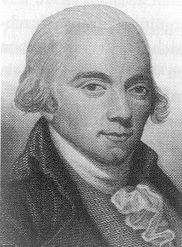
Today, in 1752, Muzio Clementi Italian pianist and composer was born.
More information about Clementi

http://youtu.be/3qq-1gCiB7g

Clementi was an Italian-born English composer, pianist, pedagogue, conductor, music publisher, editor, and piano manufacturer. Born in Rome, he spent most of his life in England.

Encouraged to study music by his father, he was sponsored as a young composer by Sir Peter Beckford who took him to England to advance his studies. Later, he toured Europe numerous times from his long-time base in London. It was on one of these occasions in 1781 that he engaged in a piano competition with Wolfgang Amadeus Mozart.

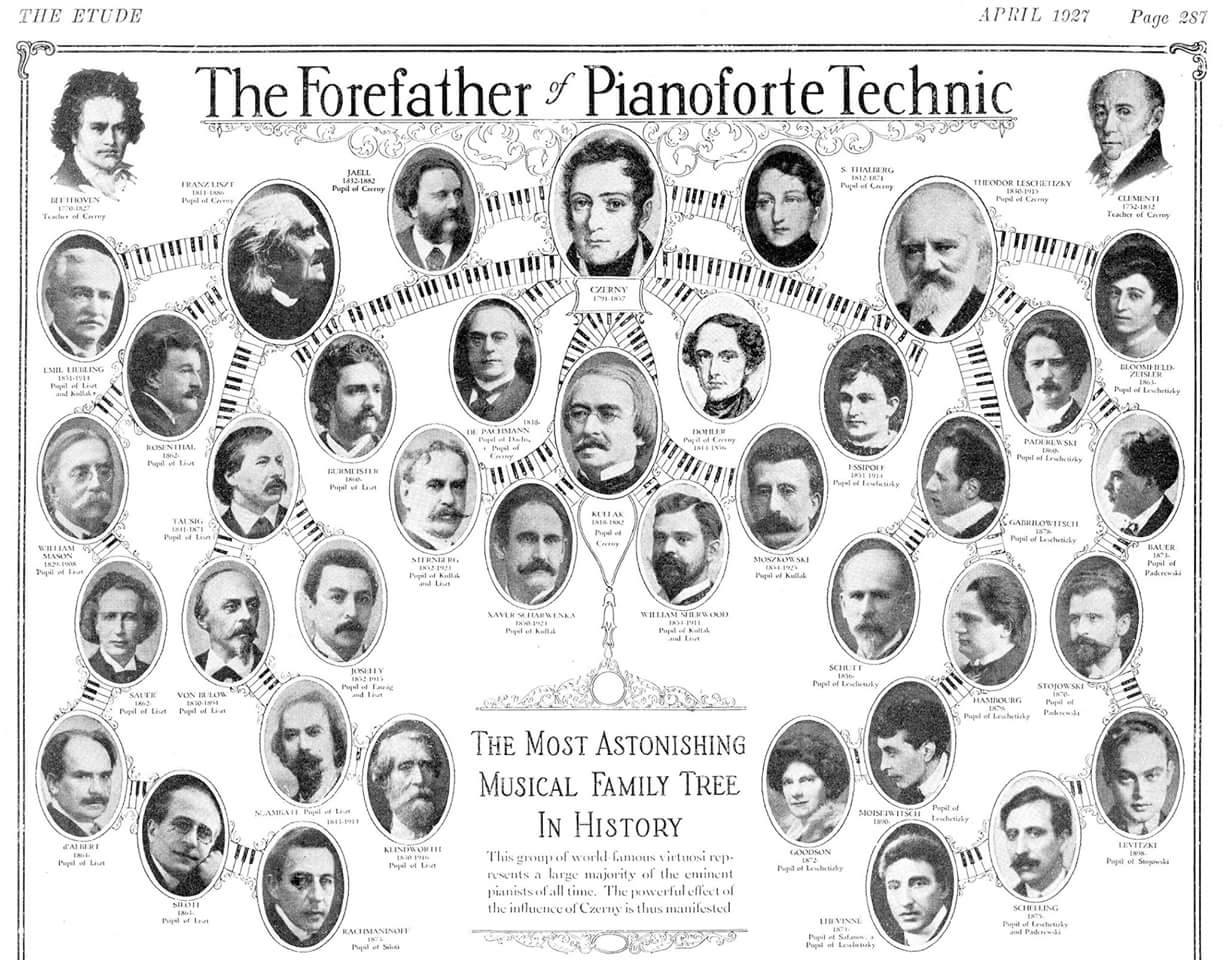
Influenced by Domenico Scarlatti’s harpsichord school and Haydn’s classical school and by the stile galante of Johann Christian Bach and Ignazio Cirri, Clementi developed a fluent and technical legato style, which he passed on to a generation of pianists, including John Field, Johann Baptist Cramer, Ignaz Moscheles, Giacomo Meyerbeer, Friedrich Kalkbrenner, Johann Nepomuk Hummel and Carl Czerny. He was a notable influence on Ludwig van Beethoven.

His student John Field  would become a major influence on Frédéric Chopin

piano-teachers


In 1802, Clementi and Field embarked on a European tour together.  They went to Paris, Vienna and St. Petersburg.

John Field adopted the French word nocturne, meaning “of the night” and became the first composer to use this term in music. He wrote a series of short studies for solo piano which had a gently romantic late-night feeling about them.

Chopin soon took up this idea and wrote 21 nocturnes.

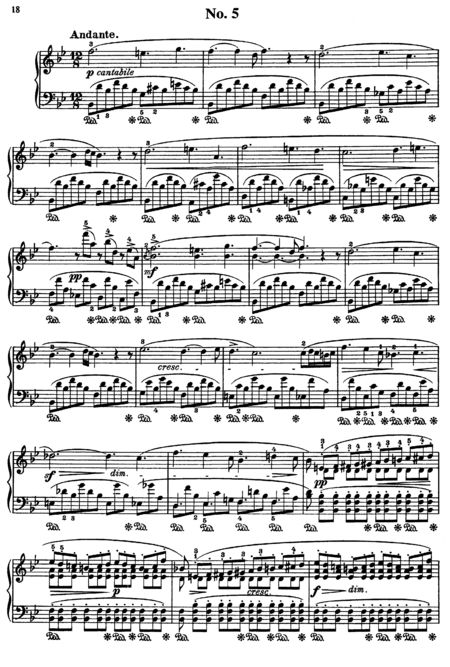
Compare: Field’s Nocturne No. 5 in B flat major

field-nocturne

Chopin’s Nocturne E Flat Major Op.9 No.2 played by Valentina Lisitsa

chopin nocturne


John-Field


Today, in 1837, Clementi’s student John Field died.  Field was an Irish pianist, composer, and teacher.  He was very highly regarded by his contemporaries and his playing and compositions influenced many major composers, including Frédéric Chopin, Johannes Brahms, Robert Schumann, and Franz Liszt.

December 3 ~ Today in Music History

today


Christmas Music, Part 3 – Angels We Have Heard On High

• 1596 ~ Nicola Amati, Italian violin maker, teacher of Guarneri and Stradivari

• 1729 ~ Padre Antonio Francisco Javier Jose Soler, Spanish composer whose works span the late Baroque and early Classical music eras. He is best known for his keyboard sonatas, an important contribution to the harpsichord, fortepiano and organ repertoire.

• 1876 ~ Hermann Goetz died.  He was a German composer.

OCMS 1883 ~ Anton Webern, Austrian composer and conductor
Read quotes by and about Webern
More information about Webern

• 1907 ~ Connie (Connee) Boswell, Singer Connie or Connee (a spelling she preferred later in life), who also played several musical instruments, arranged vocals for herself and her two sisters. Although she was stricken with polio and worked from her wheelchair, she never let this get in the way of being part of her jazz-singing trio. The Boswell Sisters’ talent was quickly recognized and by the time Connee was 24 years old, the sisters were doing vaudeville, radio, playing New York’s Paramount Theatre, recording with the Dorsey Brothers: You Oughta Be in Pictures; making films and appearing on the U.S.A.’s first public TV broadcast. One thing led to another and Connie went solo, entertaining World War II troops, making films, appearing on Broadway and recording with big names like Woody Herman’s; even a duet classic with Bing Crosby: Basin Street Blues. Her musical influence spanned many generations and music styles. If you’d have asked Ella Fitzgerald, she would have told you, “They just don’t make ’em like Connee Boswell anymore.”

OCMS 1923 ~ Maria Callas (Calogeropoulous), American soprano
More information about Callas Read quotes by and about Callas

• 1925 ~ The first jazz concerto for piano and orchestra was presented at CarnegieHall in NYC. Commissioned by Walter Damrosch, American composer GeorgeGershwin presented Concerto In F, and was also the featured soloist playing a flugelhorn in a slow, bluesy style as one of his numbers.

• 1927 ~ Phyllis Curtin, Singer: soprano with the New York City OperaMetropolitan Opera, Vienna Staatsoper, La Scala, Teatro Colon; coordinator of Voice Dept and Opera at Yale School of Music, Dean Emerita of Boston Univ School for the Arts

• 1927 ~ Ferlin Husky (aka: Simon Crum, Terry Preston), Singer

• 1930 ~ Andy (Howard Andrew) Williams, American Emmy Award-winning entertainer, singer

• 1931 ~ Jaye P. (Mary Margaret) Morgan, Singer, performer

• 1941 ~ Johann Christian Sinding, Norwegian composer

• 1944 ~ Frank Sinatra was in the Columbia Records studio recording Old Man River.

• 1948 ~ Ozzy (John) Osbourne, Songwriter, singer

• 1949 ~ Mickey Thomas, Singer with Jefferson Starship

• 1953 ~ Kismet opened on Broadway in New York. The show ran for 583 performances.

• 1955 ~ Elvis Presley’s first release on RCA Victor Records was announced. No, it wasn’t Hound Dog or Heartbreak Hotel. The first two sides were actually purchased from Sam Phillips of Sun Records: Mystery Train and I Forgot to Remember to Forget. Elvis was described by his new record company as “The most talked about personality in recorded music in the last 10 years.”

• 1960 ~ Camelot opened at the Majestic Theatre in New York City. Richard Burton and Julie Andrews played the leading roles in the musical written by Lerner and Loewe. Robert Goulet got rave reviews for his songs, If Ever I Would Leave You,Then You May Take Me to the Fair and How to Handle a Woman, among others. Camelot had a run of 873 performances. Broadway went Hollywood in the 1967 film version of Camelot. Its run was not quite as successful.

• 1968 ~ The O’Kaysions received a gold record for Girl Watcher. The song had a promotional reprise in the 1990s as a theme for Merv Griffin’s Wheel of Fortune, with the revamped lyrics, I’m a Wheel Watcher…

• 1977 ~ After 29 weeks in the #1 position on the album charts (a record, literally…), Rumours, by Fleetwood Mac, was replaced at the top spot by the album Simple Dreams, sung by Linda Ronstadt.

• 1999 ~ Handel’s Messiah Gets Modern Makeover in Ireland

• 2000 ~ Kevin Mills, a member of the Christian rock groups Newsboys and White Heart, died after a motorcycle accident in Hollywood. He was 32. Mills, of Louisville, Ky., was a singer and bass player, his family said. He also was a member of the Screen Actors Guild and appeared on TV in “An Inconvenient Woman” in 1991. White Heart started in 1982. Newsboys, an Australian band now based near Nashville, was formed four years later. Newsboys have sold nearly 3 million records and earned three Grammy nominations on the religious rock circuit.

• 2000 ~ Washington Honored Eastwood, Baryshnikov, Others

• 2002 ~ Rich Dangel, credited with creating the opening guitar chords of garage band staple Louie Louie, died of an aneurysm at his home. He was 60. Dangel was a member of the seminal Northwest rock band the Wailers, who introduced the nation to the Northwest sound – raw, unpolished and catchy. He may be best known for coming up with the power chords that opened the Wailers’ 1961 regional hit, Louie, Louie, written by rhythm-and-blues singer Richard Berry and taken to the top of the national charts by another Northwest band, the Kingsmen from Portland, Ore. Dangel co-wrote his first chart hit, “Tall Cool One” with fellow Wailer John Greek when he was still in high school. The song resulted in the group’s first album, “The Fabulous Wailers,” a cross-country tour and a 1959 appearance on Dick Clark’s “American Bandstand.”

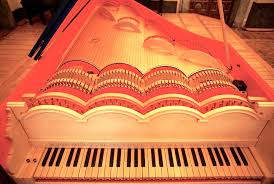
Listen to the instrument da Vinci invented but never got to hear

viola-organista

It’s startling to think of the multitude of objects Leonardo da Vinci conceptualized, and it’s a tad heartbreaking to realize he saw so few of them actualized.

But nearly 500 years after da Vinci sketched his plans for a musical instrument he dubbed the Viola Organista, Polish concert pianist Slawomir Zubrzycki spent more than 5,000 hours making da Vinci’s idea a reality.

In 2013, Zubryzcki debuted the instrument at the Academy of Music in the southern Polish city of Krakow. As reported in the Sydney Morning Herald, Zubryzcki said, “This instrument has the characteristics of three we know: the harpsichord, the organ and the viola da gamba.”

Watch the performance in the YouTube video below; you’ll recognize the pieces. And if you listen to the audio without watching Zubryzcki at the keyboard, you may think you’re hearing a small chamber ensemble rather than one person playing a single instrument.

via Listen to the instrument da Vinci invented but never got to hear | Classical MPR.