February 2 ~ This Day in Music History


. 1714 ~ Gottfried August Homilius, German composer, cantor and organist

. 1789 ~ Armand-Louis Couperin, French composer, organist, and harpsichordist

. 1875 ~ Fritz Kreisler, Austrian-born American violinist and virtuoso/composer Some of his best known works are Caprice Viennois, Tambourin Chinois, Liebesfreud and La Gitana

. 1901 ~ Jascha Heifetz, Russian-born American violinist
Read quotes by and about Heifetz
More information about Heifetz

. 1911 ~ Jussi Björling, Swedish tenor

. 1912 ~ Burton Lane (Levy), Composer of How Are Things in Glocca Morra, That Old Devil Moon, Look to the Rainbow, How About You, I Hear Music, Come Back to Me,On a Clear Day You Can See Forever, How Could You Believe Me?; His Broadway musicals were Finian’s Rainbow (collaboration with Yip Harburg), On a Clear Day You Can See Forever (collaboration with Alan Jay Lerner). He contributed songs to over 30 films: Babes on Broadway, Royal Wedding, Ship Ahoy, St. Louis Blues and credited with discovering Judy Garland

. 1927 ~ Stan Getz (Stanley Gayetzby), American jazz tenor saxophonist

. 1937 ~ Tom Smothers, Entertainer, The Smothers Brothers Comedy Hour, The Smothers Brothers Show, The Steve Allen Show, Dick’s Brother

. 1937 ~ Guy Lombardo and his orchestra recorded one of Guy’s most famous tunes. Boo Hoo was waxed on Victor Records and became one of the group’s all-time great hits.

. 1940 ~ target=”_blank”Alan Caddy, Guitarist with The Tornados

. 1942 ~ Graham Nash, Singer with Crosby, Stills, Nash and Young

. 1947 ~ Peter Lucia, Drummer with Tommy James and The Shondells

. 1949 ~ Ross Valory, Bass with Journey

. 1959 ~ The Coasters tune, Charlie Brown, was released. The tune went to #2 and stayed there for three weeks, but didn’t make it to the top spot of the charts. A catchy song (“Fee fee fi fi fo fo fum. I smell smoke in the auditorium…”), it was on the charts for a total of 12 weeks. The song at number one, preventing Charlie Brown from reaching the top, was Venus, by Frankie Avalon.

. 1996 ~ Gene Kelly passed away

. 2001 ~ French pianist Nicole Henriot, who entered the Paris Conservatory at age 7 and went on to perform around the globe with conductor Charles Munch, died at the age of 75. Emerging on the world music scene after World War II, Henriot built her reputation on interpretations of works from Liszt to Prokofiev, and especially French composers such as RavelFauré and Milhaud. She was most famous for her performances with Munch, music director of the target=”_blank”Boston Symphony from 1949 to 1962. Munch, who died in 1968, was the uncle of Henriot’s husband. Born in 1925, Henriot won the Paris Conservatory’s first prize at age 13. During the war, Henriot gave aid to her brother, a member of the French Resistance. When Gestapo agents searched her home in 1944, she managed to destroy her brother’s secret documents but was badly beaten. After the war, Henriot became the first French pianist to appear in Britain and began an international tour that took her from Scandinavia to Egypt. She made her American debut in 1948 as a soloist with the New York Philharmonic under Munch’s direction. When Munch formed the Orchestra of Paris in 1967, Henriot was one of the fledgling orchestra’s first soloists. In the 1970s and 1980s, Henriot devoted herself to teaching, and worked at the Conservatory of Liege, Belgium, and at the Walloon Conservatory of Brussels.

. 2001 ~ Victor Norman, who founded the Eastern Connecticut Symphony Orchestra and conducted the group for three decades, died at the age of 95. Colleagues said Norman was a visionary who needed to be as skilled in politics as he was in music to keep the symphony together. “He had this idea that a symphony orchestra could be created around here, when really it had been tried several times before, never with any kind of significant success,” said Charles Frink, a New London composer who studied with Norman. Norman founded the New London Civic Orchestra in 1946. It merged with the Willimantic Orchestra in 1952 to become the Eastern Connecticut Symphony Orchestra. He stepped down from the podium in 1980. In his retirement, Norman composed music. Two of his orchestral pieces were performed by the New Britain Symphony Orchestra and the Westminster Community Orchestra in Princeton, N.J. His memoirs, “Victor Norman: A Life in Music, a Lifetime of Learning,” were published in 1999.

. 2015 ~ French piano virtuoso Aldo Ciccolini died at age 89. Born on August 15, 1925, into a musical family in Naples, Aldo Ciccolini was a child prodigy, beginning composition classes in the city’s conservatory at age nine.

January 7 ~ This Day in Music History

today

. 1762 ~ The first public concert by Wolfgang Amadeus Mozart, age 6 and his sister Nannerl, age 12 was on this day.

. 1857  ~ First performance of Franz Liszt‘s Piano Concerto No. 2 in A, in Weimar. Liszt conducted  and the soloist was his pupil, Hans von Bronsart.

. 1876 ~ William Yeates Hurlstone

. 1899 ~ Francis Poulenc, French composer
More information about Poulenc

. 1922 ~ Jean-Pierre Rampal, French flutist
More information about Rampal

. 1924 ~ George Gershwin completed the incomparable score of Rhapsody in Blue. Incidentally, George was only 26 years old at the time. George didn’t even have an interest in music until his family got him a piano when he was twelve. Nine years later he had his first hit, Swanee, with lyrics written by Irving Caesar. Rhapsody in Blue was commissioned in 1924 by Paul Whiteman and then orchestrated by Ferde Grofe of Grand Canyon Suite fame. This first orchestration of Gershwin’s score was never quite right. Grofe’s style didn’t gel with Gershwin’s. Several other artists attempted to do justice to Rhapsody in Blue, never quite making the grade. Some thirty years later, orchestra leader Hugo Winterhalter with Byron Janis at the piano did a jazzed up version; pretty close to the way Gershwin had described his piece. However, it wasn’t until Gershwin’s original solo piano was accompanied by a jazz band led by Michael Tilson Thomas, that the true arrangement of Rhapsody in Blue was heard. No matter how you hear it, Rhapsody in Blue will remain the signature of one of the most influential of composers, songwriters and pianists in American music history.

. 1926 ~ A famous marriage that endured for many years is remembered this day. It’s the wedding anniversary of George Burns and Gracie Allen who were married by a Justice of the Peace in Cleveland, Ohio.

. 1930 ~ Jack Greene, The Green Giant, CMA Male Vocalist, Album, Single and Song of the Year

. 1940 ~ The gate to Gene Autry’s Melody Ranch opened. The ‘singing cowboy’ would entertain on CBS radio for the next 16 years.

. 1941 ~ Good-for-Nothin’-Joe was recorded by the sultry Lena Horne. She sang the classic song with Charlie Barnet and his orchestra on Bluebird Records.

. 1942 ~ Paul Revere, Singer, keyboards with Paul Revere and The Raiders

. 1946 ~ Jann Wenner, Publisher of Rolling Stone Magazine

. 1948 ~ Kenny Loggins, American pop-rock singer, Grammy Award-winning songwriter and guitarist

. 1950 ~ Ernest Tubb made his first appearance at The Grand Ole Opry in Nashville, TN. Ernest also did a 15-minute radio program each day that became very popular in West Texas. So popular, in fact, that he bought the radio station that had aired the program for years and years: KGKL in San Angelo, Texas.

. 1955 ~ The first black singer at the Metropolitan Opera was Marian Anderson, who appeared as Ulrica in Verdi’s “The Masked Ball”.

. 1958 ~ The Flying V guitar, which is a favorite of rock musicians, was patented this day by the Gibson Guitar Company.

. 1985 ~ Yul Brynner returned to the Broadway stage this night as “The King and I” returned to where Yul first began his reign, 33 years before. Through his career to that date, Brynner appeared in 4,434 shows without missing a single performance.

. 2002 ~ Jon Lee, drummer for the Welsh rock band Feeder, died at the age of 33. The trio’s biggest hit single was the 2001 single Buck Rogers, which reached No. 5 on the British charts. Feeder released its first full-length album, “Polythene,” in England in 1997; it was released in the United States in early 1998. The band released its third album, “Echo Park,” last year, which debuted at No. 5 in Britain and swiftly sold more than 100,000 copies.

. 2002 ~ Nauman Steele Scott III, co-owner of Black Top Records which gained an international reputation for its blues, rhythm-and-blues and zydeco recordings, died. Scott suffered from heart disease. He was 56. Scott owned Black Top Records with his brother, Hammond. The label featured such artists as Earl King, Snooks Eaglin and the Neville Brothers. Black Top releases picked up two Grammy nominations and have won more than 30 W.C. Handy Blues Awards.

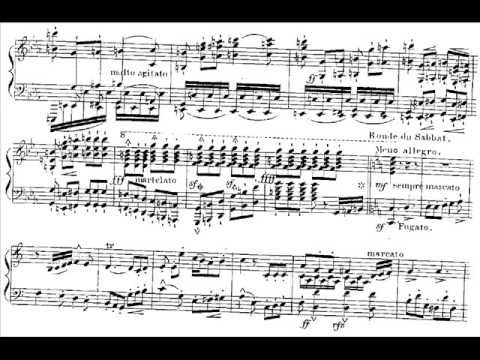
Getting Ready for Halloween: Danse Macabre by Camille Saint-Saëns

danse-macabre

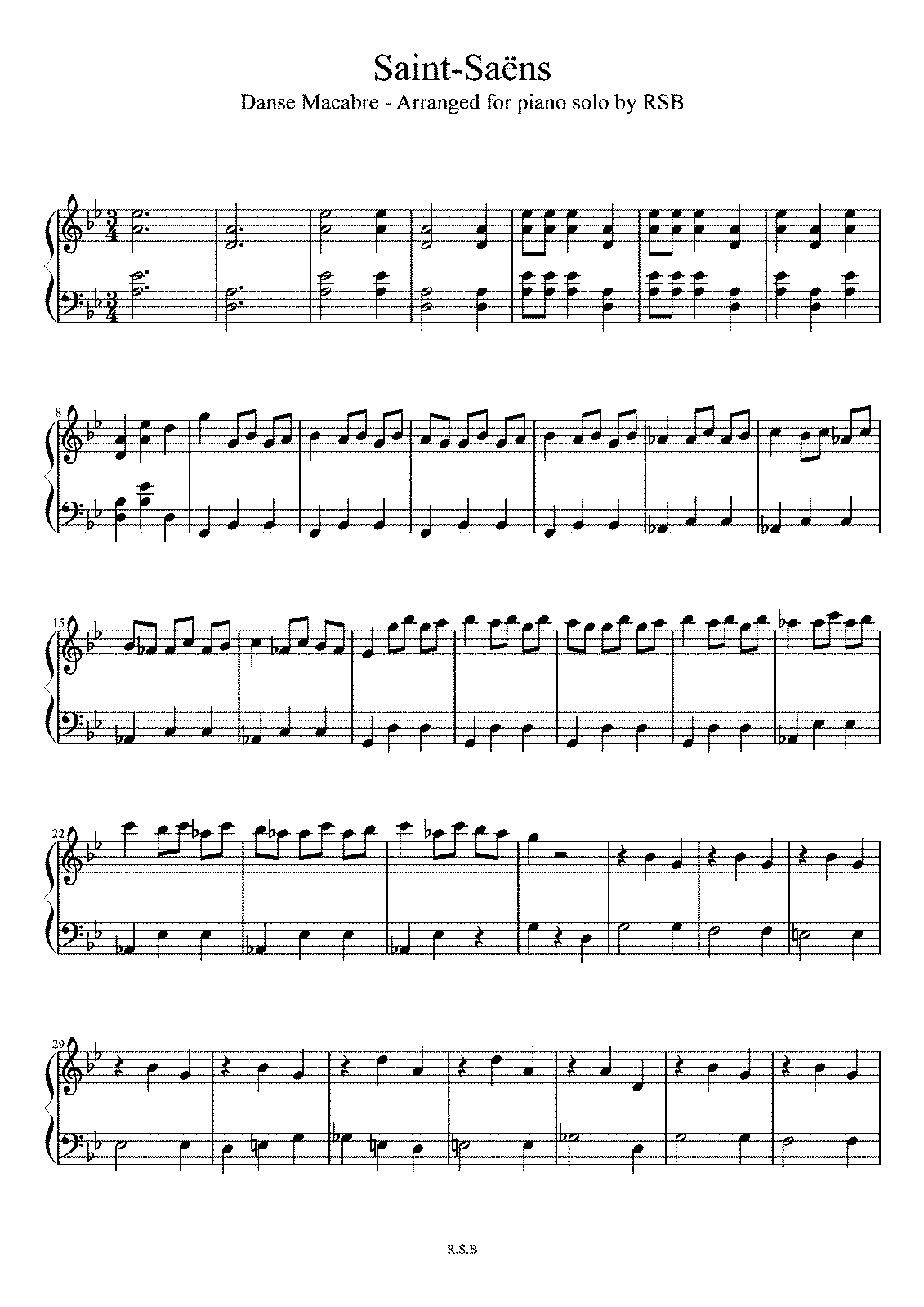
Danse macabre, Op. 40, is a tone poem for orchestra, written in 1874 by French composer Camille Saint-Saëns. It started out in 1872 as an art song for voice and piano with a French text by the poet Henri Cazalis, which is based on an old French superstition. In 1874, the composer expanded and reworked the piece into a tone poem, replacing the vocal line with a solo violin.

Get a free copy of the sheet music at IMSLP (Look for Arrangements and Transcriptions) or borrow a copy from the O’Connor Music Studio.  I have this arranged for organ, piano, duet, simplified…

Amazon has a great Dover edition for solo piano.  This splendid compilation features a variety of the composer’s best piano works, all reproduced from authoritative sources. Taking its title from the popular orchestral work “Danse Macabre” (presented here in the brilliant arrangement by Liszt), this collection also includes “Allegro appassionato,” “Album” (consisting of six pieces), “Rhapsodie d’Auvergne,” “Theme and Variations,” plus six etudes, three waltzes, and six etudes for left hand alone.

This video originally aired on PBS in the 1980s:


For two pianos:


Piano Tutorial:


Orchestra:

Getting Ready for Halloween: Dreams of a Witches’ Sabbath from Symphonie fantastique by Hector Berlioz

berlioz-symphony-fantastique
The final movement is the best known part of the symphony, thanks to its use in the Julia Roberts movie, Sleeping With The Enemy. It features a four-part structure, which Berlioz described in his own program notes from 1845 as follows:

“He sees himself at a witches’ Sabbath, in the midst of a hideous gathering of shades, sorcerers and monsters of every kind who have come together for his funeral. Strange sounds, groans, outbursts of laughter; distant shouts which seem to be answered by more shouts. The beloved melody appears once more, but has now lost its noble and shy character; it is now no more than a vulgar dance tune, trivial and grotesque: it is she who is coming to the Sabbath… Roar of delight at her arrival… She joins the diabolical orgy… The funeral knell tolls, burlesque parody of the Dies irae, the dance of the witches. The dance of the witches combined with the Dies irae.”

The Dies irae melody is one of the most-quoted in musical literature, appearing in the works of many diverse composers.

The traditional Gregorian melody has also been used as a theme or musical quotation in a number of  classical compositions, notable among them:

Free sheet music from IMSLP for the basic Dies irae

Free sheet music from IMSLP for the basic Symphonie fantastique (look under Arrangements and Transcriptions)

The basic Gregorian Chant

An animated version of the  Dreams of a Witches’ Sabbath from Symphonie fantastique.  Can you hear the Dies irae in this?  It starts around 3:18.

Leonard Bernstein conducts the “Orchestre National de France” in Berlioz’s Symphonie Fantastique
5th Movement

Happy Birthday to Franz Liszt!

liszt-quote

Franz Liszt was born in Raiding, near Ödenburg, October 22, 1811 and died in Bayreuth, July 31, 1886. He was a Hungarian composer and pianist who was a major influence during the romantic period. Liszt was an outstanding pianist at seven, composed at eight and made concert appearances at nine. In addition to being a piano virtuoso, he was also a critic, conductor, city music director, literary writer and transcriber of the works of other composers. He transcribed Beethoven’s Symphonies for the piano.

Franz Liszt began his career as the outstanding concert pianist of the century, who, along with the prodigious violinist Niccoló Paganini (1782-1840), created the cult of the modern instrumental virtuoso. To show off his phenomenal and unprecedented technique, Liszt composed a great deal of music designed specifically for this purpose, resulting in a vast amount of piano literature laden with dazzling, and other technical marvels. In this vein, Liszt composed a series of virtuosic rhapsodies on Hungarian gypsy melodies, the best-known being the all too familiar Hungarian Rhapsody no. 2. Liszt developed the rhapsody as a form of serious music. This kind of music is worlds apart from the generally more introspective, poetic music of pianist-composer Frédéric Chopin.

Liszt was wildly handsome and hugely talented. He was extremely popular in Paris during the 1830’s. It is said that women actually fainted at his piano recitals. He was the first to position the piano so that its lid reflected the sound and the audience could see his profile as he performed.

Liszt was the first to write a tone poem, which is an extended, single-movement work for orchestra, inspired by paintings, plays, poems or other literary or visual works, and attempting to convey the ideas expressed in those media through music. Such a work is Les Préludes, based on a poem in which life is expressed as a series of struggles, passions, and mysteries, all serving as a mere prelude to . . .what? The Romantic genre of the symphonic poem, as well as its cousin the concert overture, became very attractive to many later composers, including Saint-Saëns, TchaikovskyDvorák, Sibelius, and Richard Strauss.


     Liszt’s birthday

     anniversary of Liszt’s death

    Listen to Liszt’s transcription of Meyerbeer’s Hellish Waltz from Robert du Diable, which probably caused more public commotion than any other piano piece in history.


     Read quotes by and about Liszt

     Liszt was the first recitalist

     In Praise of Pianos and the Artists Who Play Them

     History of the Piano

     Franz Liszt

October 22, 2016 ~ Today in Music History

today

OCMS 1811 ~ Franz Liszt, Hungarian composer and pianist
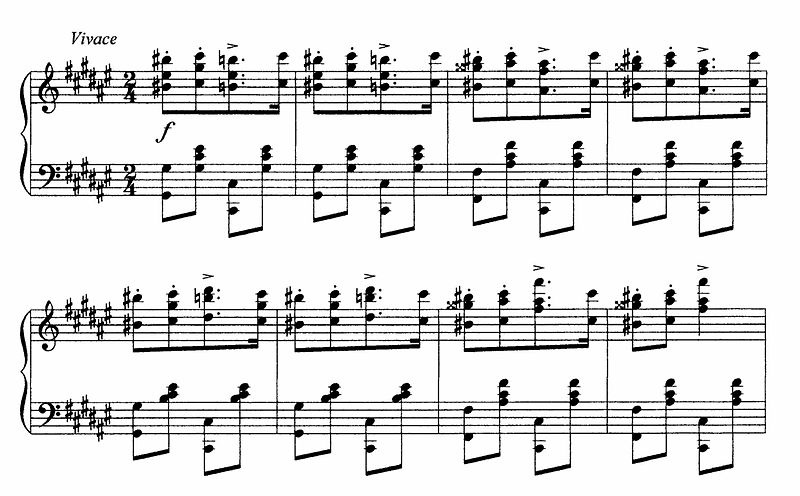
Read quotes by and about Franz Liszt
More information about Liszt

• 1885 ~ Giovanni Martinelli, Opera singer, tenor with Metropolitan Opera for 30 seasons

• 1904 ~ Paul Arma, Hungarian composer and theorist

• 1917 ~ Leopold Stokowski led the Philadelphia Orchestra in its first recording session, for Victor Records.

• 1930 ~ Dory Previn, Songwriter with André Previn

• 1939 ~ Ray Jones, Bass with Billy J. Kramer & The Dakotas

• 1943 ~ Paul Zukofsky, American violinist

• 1943 ~ Bobby Fuller, Singer, guitarist with Bobby Fuller Four

• 1945 ~ Leslie West (Weinstein), Singer, musician, guitarist with Mountain

• 1945 ~ Eddie Brigati, Singer, musician with The (Young) Rascals

• 1959 ~ “Take Me Along” opened on Broadway and quickly became an American classic. Walter Pidgeon starred along with Jackie Gleason.

• 1966 ~ The Supremes rocketed to the top of the pop album charts with “Supremes A’ Go-Go”. They were the first all-female vocal group to hit the top of the LP chart.

• 1969 ~ Giovanni Martinelli passed away

• 1969 ~ Michael Tilson Thomas, the 25-year-old assistant conductor of the Boston Symphony Orchestra, took over for ailing conductor William Steinberg in the symphony’s appearance in New York City.

• 1971 ~ Folk singer Joan Baez received a gold record for her hit, The Night They Drove Old Dixie Down. It turned out to be her biggest hit, peaking at #3 on the charts on October 2, 1971.

• 1983 ~ Celebrating its 100th anniversary, New York’s Metropolitan Opera featured a daylong concert with some of the world’s greatest opera stars. On stage at the Met were Dame Joan Sutherland, Placido Domingo and Luciano Pavarotti.

• 2001 ~ Tom Baker, one of Australia’s most respected jazz musicians, died of a heart attack while touring in the Netherlands. He was 49. Baker, a native of California, took up residence in Australia 30 years ago. He was a regular at Sydney’s famous jazz club, The Basement. Willie Qua, drummer and co-founder of one of Australia’s best-known jazz bands, Galapagos Duck, said Baker had often played as “a part-time member” of the band and was an icon of the Sydney jazz scene. Baker formed his first band, Tom Baker’s San Francisco Jazz Band, in 1975, earning himself a reputation as one of Australia’s very best jazz musicians. Recently he toured extensively through Europe and America.

The Life And Work Of Clara Schumann

cschumann


Clara Schumann (1819-96) was much more than the wife of composer Robert Schumann. She was, quite simply, one of the greatest pianists of all time. A child prodigy, her technique and musicianship as a mature artist led to her being regarded as the equal of giants of the keyboard such a Franz Liszt, Sigismond Thalberg and Anton Rubinstein.

And from her girlhood until the end of her marriage she composed wonderful music, mostly solo piano music, but other works as well, including a concerto, a large number of songs and a sublime piano trio.

In her later years she was an internationally famous teacher, and her performing career lasted more than six decades. She was, quite simply, a phenomenon.

Franz Liszt: “Hungarian Rhapsody no. 2 in c-sharp minor”

liszt

Hungarian Rhapsody No. 2, S.244/2, is the second in a set of 19 Hungarian Rhapsodies by composer Franz Liszt, and is by far the most famous of the set. Few other piano solos have achieved such widespread popularity, offering the pianist the opportunity to reveal exceptional skill as a virtuoso, while providing the listener with an immediate and irresistible musical appeal.

In both the original piano solo form and in the orchestrated version this composition has enjoyed widespread use in animated cartoons. Its themes have also served as the basis of several popular songs.

It is probable that you have heard this piece of music somewhere at one time or another because it is perhaps the most prominent piece of classical (romantic, actually) music featured in animated cartoons across the years.

Now, let the anvils fall and dynamite explode!

And, in real life, Valentina Lisitsa plays Liszt’s Hungarian Rhapsody No. 2

July 31, 2016 ~ Today in Music History

today

• 1828 ~ François Auguste Gevaert, Belgian composer, musicologist, conductor and organist

• 1845 ~ The French Army introduced the saxophone to its military band. The musical instrument was the invention of Adolphe Sax of Belgium.

• 1847 ~ Ignacio Cervantes, Pianist

• 1886 ~ Franz Liszt, Hungarian composer and pianist died. Originator of the symphonic poem, he was a prolific teacher and a huge influence on Richard Wagner and Richard Strauss.
More information about Liszt

• 1911 ~ George Liberace, Violinist, conductor; administrator of Liberace Museum; brother of pianist/entertainer Liberace

• 1918 ~ Jan La Rue, American musicologist

• 1918 ~ Hank Jones, Pianist. He accompanied Billy Eckstine and Ella Fitzgerald. He led the Hank Jones Trio

• 1919 ~ Mornam Del Mar, British conductor

• 1923 ~ Ahmet Ertegun, Recording Executive

• 1939 ~ John West, Musician, guitarist with Gary Lewis and the Playboys

• 1942 ~ Harry James and his band recorded the classic I’ve Heard that Song Before, for Columbia Records. Helen Forrest sang on the million-seller.

• 1943 ~ Lobo, Singer

• 1946 ~ Gary Lewis (Levitch), Singer with Gary Lewis and the Playboys, entertainer Jerry Lewis’ son

• 1946 ~ Bob Welch, Guitarist and singer with Fleetwood Mac

• 1947 ~ Karl Green, Musician, guitar and harmonica with Herman’s Hermits

• 1964 ~ Jim Reeves, popular U.S. country music singer, died in an air crash near Nashville.

• 1985 ~ Prince was big at the box office with the autobiographical story of the Minneapolis rock star, Purple Rain. The flick grossed $7.7 million in its first three days of release on 917 movie screens. The album of the same name was the top LP in the U.S., as well.

• 2016 ~Gloria DeHaven, a singer and actress known for starring in several MGM musicals, died at the age of 91.

Antonei Sergejvitch Tartarov plays Mozart

Antonei Sergejvitch Tartarov  was a fictional Russian pianist whose real name was Jean-Jacques Hauser.

He had an exceptional gift for improvisation.

On April 16, 1968 Hauser fooled an audience of 2,000 people in Zurich into thinking not only that he was a little-known Russian virtuoso (Tartarov), but that much of the improvised material in his program was composed by Beethoven, Mozart, Prokofiev, and Liszt.

Imagine when it was announced that the music the audience had just applauded as works of genius had actually been improvised on the spot by a home-grown Swiss pianist.