January 13 in Music History

today


. 1683 ~ Johann Christoph Graupner, German harpsichordist and composer of high Baroque music who was a contemporary of Johann Sebastian Bach, Georg Philipp Telemann and George Frideric Handel.

. 1690 ~ Gottfried Heinrich Stolzel, German Baroque composer.

. 1842 ~ Heinrich Hofmann, German pianist and composer

http://youtu.be/kFs9ljFJcng

. 1854 ~ The first patent for an accordion was issued to Anthony Fass, of Philadelphia, PA

. 1866 ~ Vasily Sergeyevich Kalinnikov, Russian composer

. 1884 ~ Sophie Tucker (Abuza), Russian-born American burlesque and vaudeville singer

. 1904 ~ Richard Addinsell was born
More information about Addinsell

. 1909 ~ Quentin ‘Butter’ Jackson, Trombonist, played with Duke Ellington

. 1910 ~ Enrico Caruso and Emmy Destinn were heard via a telephone transmitter; rigged by DeForest Radio-Telephone Company to broadcast from the Metropolitan Opera House in New York City.

. 1925 ~ Gwen Verdon (Gwyneth Evelyn Verdon), Dancer, Tony Award-winning Actress

. 1930 ~ Robert ‘Squirrel’ Lester, Singer with The Chi-Lites

. 1938 ~ Singer Allan Jones recorded The Donkey Serenade for Victor Records. The song became the one most often associated with the singer. Allan sang and acted in several Marx Brothers films: “A Night at the Opera”, “A Day at the Races”, but the film that catapulted him to stardom was the operetta, “Firefly”, with Jeanette MacDonald. SingerJack Jones Singer Jack Jones is the son of Allan and wife, actress Irene Hervey.

. 1941 ~ The four Modernaires joined to sing with the Glenn Miller Band on a permanent basis beginning this day. They had a ‘solo’ hit in 1946 with To Each His Own.

. 1957 ~ Elvis Presley recorded All Shook Up and That’s When Your Heartaches Begin for Victor Records in Hollywood. The former tune became Elvis’ ninth consecutive gold record.

. 1961 ~ Wayne Marshall, English pianist, organist and conductor

. 1962 ~ Singer Chubby Checker set a record, literally, with the hit, The Twist. The song reached the #1 position for an unprecedented second time – in two years. The Twist was also number one on September 26, 1960.

. 2001 ~ Kenneth Haas, the former general manager of the Boston Symphony Orchestra and the Cleveland Orchestra, died after a long illness at the age of 57. Haas was general manager of the Boston orchestra from 1987 to 1996 and was instrumental in appointing Keith Lockhart conductor of the Boston Pops Orchestra. Haas was general manager of the Cleveland Orchestra from 1976 to 1987 after performing the same job for the Cincinnati Symphony Orchestra in 1975. In Cleveland he established the orchestra’s chamber music and recital series.

. 2001 ~ Michael Cuccione, youngest of the five-member spoof boy band 2gether, died at age 16 from complications from Hodgkin’s disease. The teen played Jason “Q.T.” McKnight on the MTV show “2gether,” which poked fun at the boy band craze. His character had a fictional illness, “biliary thrombosis,” but Cuccione really had suffered from Hodgkin’s disease as a child and underwent five months of chemotherapy. The singer-actor set up a cancer research foundation, co-wrote a book with his grandmother and appeared on “Baywatch” as a cancer victim.

Vivaldi’s Spring ~ on Piano Maestro!

vivaldi


Vivaldi, one of the greatest baroque composers, has a very interesting story. He ran an orphanage in the 18th century in Italy that became famous all over the western world for its musically talented children. A lot of his pieces were written for specific children in his school. Vivaldi learned the violin from his father, and was trained as a priest. He was nicknamed “the red priest” for his red hair and was apparently somewhat sure of himself, having claimed once he can compose a concerto faster than it can be copied.

Vivaldi wrote over 500 pieces, most of which are lost today. He is considered one of the greatest musical landmarks in history, having inspired many composers that followed him, including J.S.Bach and others.

Other fun facts about Vivaldi can be found here.

Vivaldi’s Spring is available on Piano Maestro, which is available to my students free of charge.

Piano Ornaments ~ Trills

OLYMPUS DIGITAL CAMERA


WRONG – this post, and others in this category, isn’t about ornaments at Christmas but about those funny looking marks over your music and how to play them.

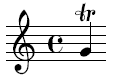
The trill (or shake, as it was known from the 16th until the 19th century) is a musical ornament consisting of a rapid alternation between two adjacent notes, usually a semitone or tone apart, which can be identified with the context of the trill.

A trill provides rhythmic interest, melodic interest, and harmonic interest. Sometimes it is expected that the trill will end with a turn or some other variation. Such variations are often marked in the music.

A trill in your music can look like this trill

Or like this tr~~~~~~~~~~~~~

Trills can be played differently, depending on the period in which the composer was living so it is important to know the time period of your piece.

Baroque trills (aka shakes in this time period) have several ways to be played as shown in this chart:

A table depicting how to perform different types of trills when playing music from the Baroque period (1600-1750).[4] Note the similarity between the symbol for trill and that of the mordent.

A table depicting how to perform different types of trills (or shakes) when playing music from the Baroque period (1600-1750). 

The Baroque trill continuing through Mozart’s time usually begins on the note above the main note.

In music after the time of Mozart, the trill usually begins on the principal note.

Often, your music will have suggestions about how they should be played written above the music.  If not, ASK!

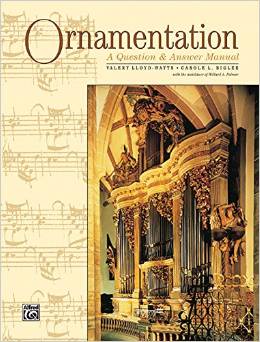
A really good book which explains about the trill and other ornaments is this one, available as a reference book in the O’Connor Music Studio:

ornamentation


Some trill exercises:

https://youtu.be/XXY5N27N3Uc

Questions?  Write them down and don’t forget to ask at your next lesson!

If composers had Facebook: Bach’s profile

He’s the master of harmony and counterpoint, he could effortlessly compose an amazing concerto or cantata, but what if Johann Sebastian Bach was on social media?
To celebrate the 330th anniversary of the great composer’s birth, we’ve imagined what his Facebook page might have looked like.
So sit back and enjoy the Baroque master’s status updates and life events in full Instagram, wall-post and emoticon glory.

Click the image below to take a closer look.

facebook-bach

Read more at http://www.classicfm.com/composers/bach/guides/bach-facebook-profile/#iKuZjLTM8Yzs2414.99

March 22 ~ Today in Music History

today

. 1687 ~ Jean-Baptiste Lully, French composer, died.  He was an Italian-born French composer, instrumentalist, and dancer who spent most of his life working in the court of Louis XIV of France. He is considered the chief master of the French baroque style.

https://youtu.be/5PKcNZYlH6k

. 1840 ~ Clara Wieck wrote a letter dated today to Robert Schumann.  Part of it said: “When I heard Liszt for the first time…I was overwhelmed and sobbed aloud, it so shook me.”

. 1842 ~ Carl August Nicolas Rosa, German violinist and composer. In 1873 he founded the Carl Rosa Opera Company.

. 1865 ~ Theophile Ysaye, Belgian composer and pianist

. 1868 ~ Hamish Maccunn, Scottish Romantic composer, conductor and teacher

. 1911 ~ Herman Jadlowker became the first opera singer to perform two major roles in the same day at the Metropolitan Opera House in New York City.

. 1920 ~ Fanny Waterman, DBE is a piano teacher, and the founder, Chairman and Artistic Director of the Leeds International Pianoforte Competition. She is also president of the Harrogate International Music Festival.

. 1925 ~ The first Japanese radio station, Tokyo Shibaura, began broadcasting.

. 1930 ~ Stephen Sondheim, American composer and lyricist of musicals
More information about Sondheim

https://youtu.be/Yxa4SR2alSE

. 1936 ~ Glen Campbell, Singer and studio guitarist

. 1937 ~ Johnny Ferguson, Singer

. 1943 ~ Keith Relf, Recording artist of The Yardbirds

. 1943 ~ George Benson, American jazz and pop guitarist and singer

. 1944 ~ Jeremy Clyde, Singer with Chad & Jeremy

. 1947 ~ Harry Vanda, Guitarist with The Easybeats

. 1948 ~ Andrew Lloyd Webber, British composer
More information about Lloyd Webber

. 1948 ~ Randy Hobbs, Bass with The McCoys

. 1948 ~ The Voice of Firestone was the first commercial radio program to be carried simultaneously on both AM and FM radio stations.

https://youtu.be/ofn_gLXsklw

. 1956 ~ Sammy Davis, Jr. starred in the play, Mr. Wonderful, in New York City. The critics were unkind, saying that they didn’t care for the production. Audiences, however, gave it ‘thumbs up’ and the show went on to be one of Broadway’s more popular musicals — catapulting Davis into the limelight. His father had already launched him into the vaudeville spotlight when Sammy was just three years old. By the time he was Mr. Wonderful, Sammy Davis, Jr. had played vaudeville and the nightclub circuit singing and dancing his way to the top over a twenty-eight-year period. He entertained us for sixty-two years! 1956 ~ Perry Como became the first major TV variety-show host to book a rock and roll act on his program. The ‘Incomparable Mr. C.’ booked Carl Perkins for the show and Perkins sang Blue Suede Shoes. 1962 ~ The play, I Can Get It For You Wholesale, opened on Broadway. It featured a 19-year-old named Barbra Streisand. She stopped the show at the famed Shubert Theatre in New York City. Streisand starred as Miss Marmelstein. Audiences kept coming back for more of Barbra for 300 performances.

. 1980 ~ The first CD (compact disc) was put on sale by RCA.  The first major artist to have his entire catalogue converted to CD was David Bowie, whose 15 studio albums were made available by RCA Records in February 1985, along with four greatest hits albums.

. 1980 ~ Pink Floyd started a 4-week run in the #1 slot on the pop charts with their smash, Another Brick in the Wall. When the boys popped open their gold record and threw it on the stereo, they heard Flowers on the Wall by the Statler Brothers.

. 2015 ~ Norman O. Scribner, founder and artistic director of the Choral Arts Society of Washington, one of the region’s preeminent symphonic choirs, died

March 14 ~ Today in Music History

today


. 1681 ~ Georg Philipp Telemann, German composer. One of the leading composers of the German Baroque, Georg Philipp Telemann was immensely prolific and highly influential. He wrote an opera at age 12, produced it at school, and sang the lead. His mother put all his instruments away and forbade further music. However, he continued to study and write in secret. He led a remarkably busy life in Hamburg, teaching, composing two cantatas for each Sunday, leading a collegium, and writing immense amounts of additional music. For two centuries musical scholars tended to look down on him by comparison with Bach, but from the midpoint of the twentieth century his reputation soared as musicologists began cataloging his immense output, uncovering masterpiece after masterpiece.
More information about Telemann

. 1727 ~ Johann Gottlieb Goldberg, German virtuoso harpsichordist, organist, and composer of the late Baroque and early Classical period

. 1804 ~ Johann Strauss, Sr., Austrian composer; “The Father of the Waltz”
Read quotes by and about Strauss
More information about Strauss

. 1864 ~ (John Luther) Casey Jones, railroad engineer, subject of The Ballad of Casey Jones, killed in train crash Apr 30, 1900

. 1879 ~ Albert Einstein, Mathematician and enthusiastic amateur violinist
Read quotes by and about Einstein

. 1885 ~ “The Mikado,’ the comic operetta by Gilbert and Sullivan, premiered at the Savoy Theater, London.

. 1912 ~ Les Brown, Bandleader, Les Brown and His Band of Renown

. 1922 ~ Les Baxter, Bandleader

. 1931 ~ Phil Phillips (Baptiste), Singer

. 1933 ~ Quincy Delight Jones, Jr., American jazz composer, trumpeter, band leader and pianist. He composed film scores, TV show themes; record producer; arranger; 25 Grammys, Grammy’s Trustees Award in 1989, Grammy’s Legends Award in 1990; Musical Director for Mercury Records, then VP; established Qwest Records

. 1934 ~ Shirley Scott, Swinging, blues-oriented organist, recorded mostly with former husband Stanley Turrentine

. 1941 ~ Years before Desi Arnaz would make the song Babalu popular on the I Love Lucy TV show, Xavier Cugat and his orchestra recorded it with Miguelito Valdes doing the vocal. The song was on Columbia Records, as was the Arnaz version years later.

. 1945 ~ Walter Parazaider, Reeds with Chicago

. 1955 ~ Boon Gould, Guitarist with Level 42

. 1958 ~ The Recording Industry Association of America (RIAA) certified the first gold record. It was Perry Como’s Catch A Falling Star on RCA Victor Records. The tune became the first to win million-seller certification, though other songs dating as far back as the 1920s may have sold a million records or more. Due to lack of a certification organization like the RIAA, they weren’t awarded the golden platter. The next three gold records that were certified after Perry Como’s million seller were the 45 rpm recordings of He’s Got the Whole World in His Hands by Laurie London, Patricia, an instrumental by the ‘Mambo King’, Perez Prado and Hard Headed Woman by Elvis Presley. The first gold-album certification went to the soundtrack of the motion picture, Oklahoma!, featuring Gordon MacRae. Is there really a gold record inside the wooden frame presented to winners? Those who know say, “No.” Its a gold-leaf veneer of maybe 18 kt. gold and/or it is a record painted gold. Yes, the song earning the award is supposed to be the one making up the gold record, but this is not always the case, according to several artists who have tried to play theirs.

https://youtu.be/Srt_V-pnw4U

. 1959 ~ Elvis Presley made the album charts, but no one would have known by the title of the disk. For LP Fans Only was the first LP ever issued without the artist’s name to be found anywhere on the cover — front or back.

. 1976 ~ Busby Berkeley, U.S. director and choreographer, died. He was best known for his lavish mass choreography in the films “42nd Street,” “Gold Diggers of 1933” and “Roman Scandals.”

. 1985 ~ Bill Cosby captured four People’s Choice Awards for The Cosby Show. The awards were earned from results of a nationwide Gallup Poll. Barbara Mandrell stunned the audience by announcing that she was pregnant while accepting her second award on the show. Bob Hope won the award as All-Time Entertainer beating Clint Eastwood and Frank Sinatra for the honor.

February 25 ~ Today in Music History

today

. 1727 ~ Armand-Louis Couperin,  French composer, organist, and harpsichordist of the late Baroque and early Classical periods.

. 1890 ~ Dame Myra Hess, British pianist

. 1929 ~ Tommy Newsom, Musician: tenor sax, arranger, composer, back-up conductor for NBC’s Tonight Show Band

. 1943 ~  George Harrison, British rock singer, guitarist and songwriter and former member of  The Beatles group

. 1952 ~ The complete choreographic score of Cole Porter’s “Kiss Me Kate” became the first musical choreography score given a copyright. The work was the effort of Hanya Holm.

. 1953 ~ The musical, “Wonderful Town”, opened at the Winter Garden Theatre in New York City. The show was based on the book, “My Sister Eileen”, and the ran for 559 performances.

. 1957 ~ Buddy Holly and The Crickets traveled to Clovis, NM, to record That’ll Be the Day (one of the classics of rock ‘n’ roll) and I’m Looking for Someone to Love. Both songs were released on Brunswick Records in May of that year.

. 1963 ~ Please Please Me was the second record released in the U.S. by The Beatles. Some labels carried a famous misprint, making it an instant, and valuable, collector’s item. The label listed the group as The Beattles.

. 1966 ~ Nancy Sinatra was high-stepping with a gold record award for the hit, These Boots are Made for Walkin’.

. 1986 ~ We are the World captured four Grammy Awards. The song, featuring  more than 40 superstar artists gathered at one time, was awarded the Top Song, Record of the Year, Best Pop Performance and Best Short Video Awards.

. 2001 ~ Ann Colbert, a manager of classical musicians, died at the age of 95. Colbert founded Colbert Artists Management Inc. Her clientele included the Juilliard String Quartet; conductors Sir Georg Solti, Christoph von Dohnanyi and Richard Bonynge; singers Dame Joan Sutherland, Elizabeth Schwarzkopf, Christa Ludwig and Dietrich Fischer-Dieskau; and musicians Alfred Brendel and the late Jean-Pierre Rampal. Colbert moved to the United States from Berlin in 1936 and started the management company with her husband, Henry Colbert, in 1948. She retired in 1991, leaving the company to her longtime associate, Agnes Eisenberger. The company has retained Colbert’s name.

. 2003 ~ Walter Scharf, 92, a composer who earned 10 Academy Award nominations and worked on more than 200 movies and television programs, including “Funny Girl,” “Mission: Impossible” and “White Christmas,” died in Los Angeles. He received Oscar nominations for the scores for such films as “Mercy Island” (1941), “Hans Christian Andersen” (1952), “Funny Girl” (1968), “Willy Wonka and the Chocolate Factory” (1971) and “Ben” (1972). He won an Emmy for his work on a National Geographic television special and a Golden Globe for “Ben,” whose theme song helped launch singer Michael Jackson’s solo career.

February 16 ~ Today in Music History

today

. 1709 ~ Charles Avison, English composer during the Baroque and Classical periods. He was a church organist at St John The Baptist Church in Newcastle and at St. Nicholas’s Church.

. 1878 ~ Selim Palmgren, Finnish composer, pianist, and conductor

. 1866 ~ David Mannes, American violinist and conductor; founder of the Mannes College of music

. 1896 ~ Alexander Brailowsky, Pianist

http://youtu.be/sHPbkj52hV0

. 1901 ~ Wayne King, ‘The Waltz King’, saxophonist and bandleader

. 1907 ~ Alec Wilder, American composer, arranger and songwriter

. 1910 ~ Albert Heinrich Zabel died.  He was a German composer and virtuoso harpist.

. 1916 ~ Bill Doggett, Musician

. 1918 ~ Patti Andrews (Patricia Marie Andrews), Lead singer with The Andrews Sisters

. 1935 ~ Sonny (Salvatore) Bono, Singer in the group Sonny and Cher. He later became mayor of Palm Springs, CA and a US Congressman

. 1938 ~ John Corigliano, American composer
More information about Corigliano

http://youtu.be/Mc_-OlC1JQs

. 1939 ~ Herbie & Harold Kalin, Singers, The Kalin Twins

. 1942 ~ Shep Fields and his orchestra recorded Jersey Bounce on Bluebird Records.

. 1956 ~ James Ingram, Singer

. 1963 ~ The Beatles moved to the top of the British rock charts with Please, Please Me exactly one month after the record was released. It was the start of the Beatles domination of the British music charts, as well as the beginning of the British Invasion in America and elsewhere around the world.

. 1968 ~ Elvis Presley received a gold record for his sacred album of hymns, How< Great Thou Art. Despite his popularity in the pop music world, Elvis won only 3 Grammy Awards — one for this album, the Lifetime Achievement Award in 1970; then for He Touched Me in 1972. He did, however, receive over a dozen Grammy nominations.

. 2015 ~ Leslie Gore died.  She was an American singer. At the age of 16, in 1963, she recorded the pop hit “It’s My Party”, and followed it up with other hits including “Judy’s Turn to Cry” and “You Don’t Own Me”.

Piano Maestro: Vivaldi’s Spring

vivaldi

Vivaldi, one of the greatest baroque composers, has a very interesting story. He ran an orphanage in the 18th century in Italy that became famous all over the western world for its musically talented children. A lot of his pieces were written for specific children in his school. Vivaldi learned the violin from his father, and was trained as a priest. He was nicknamed “the red priest” for his red hair and was apparently somewhat sure of himself, having claimed once he can compose a concerto faster than it can be copied.

Vivaldi wrote over 500 pieces, most of which are lost today. He is considered one of the greatest musical landmarks in history, having inspired many composers that followed him, including J.S.Bach and others.

Other fun facts about Vivaldi can be found here.

Vivaldi’s Spring is available on Piano Maestro, which is available to my students free of charge.