September 16: On This Day in Music

today

• 1685 ~ John Gay, English librettist

• 1887 ~ Nadia Boulanger, French composition teacher
More information about Boulanger

• 1915 ~ Cy Walter, pianist (3’s Company)

• 1920 ~ Enrico Caruso made his last recording for Victor Records in Camden, NJ.

• 1925 ~ Charlie Byrd, Guitarist, played with Stan Getz

• 1925 ~ “B. B.” (Riley B.) King, American blues singer and guitarist, Grammy Lifetime Achievement Award in 1987

• 1934 ~ George Chakiris, Academy Award-winning actor, dancer in West Side Story (1961)

• 1938 ~ Tommy Dorsey and his orchestra recorded the swing classic Boogie Woogie for Victor Records.

• 1941 ~ CBS radio debuted The Arkansas Traveler. The program was later renamed The Bob Burns Show. Burns played a very strange musical instrument called the ‘bazooka’. The U.S. Army chose the name to identify its rocket launcher because it looked so much like Burns’ bazooka.

• 1943 ~ Bernie Calvert, Bass with The Hollies and also The Dolphins

• 1944 ~ Betty Kelly, Singer with Martha and the Vandellas

• 1948 ~ Kenny Jones, Drummer with Small Faces, Faces and also The Who

• 1950 ~ David Bellamy, Singer with a duo called The Bellamy Brothers, songwriter

• 1963 – Richard Marx, Singer, songwriter

• 1963 ~ She Loves You was recorded by The Beatles the Swan label. It was the first record recorded by The Beatles; but the second single by the ‘Fab Four’ to hit #1. I Want to Hold Your Hand, was the group’s first #1 song and million seller (on Capitol). It beat She Loves You to the top spot by just a few weeks. Other Beatles hits were also recorded on Capitol (Capitol had rejected She Loves You) and Swan labels; but the Beatles liked variety, so add these record companies to the Beatles list of recording labels: Vee-Jay, MGM, Tollie, United Artists, Atco, E.M.I., Parlaphone and Apple.

• 1964 ~ Shindig premiered on ABC-TV. The program had go-go girls and the biggest rock bands of the day in a dance party environment. Regulars were Jimmie O’Neill and the Shindig Dancers. The first show featured Sam Cooke, The Everly Brothers, The Righteous Brothers, The Wellingtons, Bobby Sherman and comic Alan Sues.

• 1965 ~ San Francisco’s Grace Cathedral became the site of the first concert of sacred music presented by Duke Ellington.

• 1965 ~ The Dean Martin Show debuted on NBC~TV. It was a weekly variety show that continued on the network for nine years. Regulars over the years were The Goldiggers, Ken Lane, The Ding-a-Ling Sisters, Tom Bosley, Dom DeLuise, Nipsey Russell, Rodney Dangerfield and Les Brown and His Band. The theme song? Everybody Loves Somebody.

• 1977 ~ Celebrated soprano Maria Callas died in Paris at the age of 53.

• 1994 ~ Bernie Lazaroff Leighton, pianist, died at the age of 73

• 2000 ~ Israeli conductor David Shallon died in Tokyo after suffering an asthma attack at the age of 49. Shallon was born in Tel Aviv and studied violin, viola and horn.

• 2000 ~ Valeriu Stelian, a folk singer who inspired anti-communist protesters a decade ago, died of cancer at the age of 47. Shortly after the 1989 anti-communist uprising, Stelian began singing at University Square in downtown Bucharest for students who protesting the presence of former communists in government. Six weeks after the uprising, coal miners descended on Bucharest at the behest of the government and beat up the students. Six people died in the melee and the protest harmed Romania’s image to such a degree that many young Romanians emigrated, believing democracy would never come to the Balkan country. “Oh God, come here to see what has become of people”, went the lyrics of one of Stelian’s songs composed in 1973 and played to film footage of people who had died during the uprising. During his career, Stelian toured the former Soviet Union, Norway, Poland, Bulgaria, Hungary, France, England and the United States. He also set up some recording studios in Romania.

September 15: On This Day in Music

today

1876 ~ Bruno Walter, German-born American conductor

• 1903 ~ Roy Acuff, ‘The King of Country Music’, Country Music Hall of Famer, with the Smoky Mountain Boys, publisher with Acuff-Rose Publishing

• 1924 ~ Bobby Short, American pianist, singer of popular music, regular on first Playboy TV series. His autobiography is Black & White Baby

• 1928 ~ Julian ‘Cannonball’ Adderly, Musician, Alto/Soprano Saxophone

• 1930 ~ Hoagy Carmichael recorded Georgia on My Mind on the Victor label. Georgia on My Mind has been the official state song of Georgia since 1922. The song has been recorded by many artists over the years.

• 1934 ~ NBC radio presented The Gibson Family to American audiences. The program was the first musical comedy to be broadcast. The show originated from the studios of WEAF in New York City.

• 1940 ~ Jimmy Gilmer, Singer with Jimmy Gilmer and the Fireballs

• 1941 ~ Les (William) Braid, Bass, organ with The Swinging Blue Jeans

• 1945 ~ Jessye Norman, American soprano

• 1955 ~ Betty Robbins (Mrs. Sheldon Robbins) became the first woman cantor at services held at Temple Avodah in Oceanside, Long Island, New York.

• 1962 ~ The Four Seasons earned their first #1 hit with “Sherry”. In the next six months, the Four Seasons would earn two more #1 hits with “Big Girls Don’t Cry” and “Walk Like A Man,” making them the only American group ever to earn three consecutive #1 hits.

• 1980 ~ The Elephant Man made its debut on Broadway with rock singer David Bowie in his acting debut.

• 2001 ~ Billy Hilfiger, a musician and younger brother of fashion mogul Tommy Hilfiger, died after a lengthy battle with cancer. He was 45. Hilfiger worked as a landscape architect in New York City but was best known as an avid guitarist. He played with former members of the rock band Blue Oyster Cult and with another brother, Andy Hilfiger, among others.

A Really Neat Piano

What’s so neat about the Wing and Sons Piano? Check out the five (yes, 5!) pedals. Most pianos have 3, or sometimes 2 pedals.

Established in 1868, the Wing & Son Piano Company quickly became a masterclass in innovative marketing! Originally launched as Doan, Wing & Cushing, the company manufactured the usual square grand and upright pianos like many of its competitors. But in 1873, when Frank L. Wing took the reins and incorporated the business as Wing & Son Piano Company, things started to change – and fast!

Frank L. Wing believed that a piano should be more than just an instrument; it should bring the richness of an entire orchestra into the home. To fulfill this vision, Wing & Son introduced an exciting innovation: the 5-pedal mechanism. Unlike standard pianos, these pedals could imitate the sounds of various string instruments, including the mandolin, guitar, zither, harp, and banjo. This feature gave their pianos an edge, allowing players to explore new musical depths. The pedals, labeled Mandolin, Orchestra, Expression, Soft, and Forte, made these instruments a hit with musicians who wanted more than just a standard piano sound.

But it wasn’t just the piano’s features that made Wing & Son stand out—it was Frank Wing’s marketing genius. Rather than relying on expensive showrooms or high-pressure sales tactics, Wing & Son took a unique approach. They published beautifully illustrated catalogs titled “The Book of Complete Information About Pianos.” These catalogs were designed to educate the average person on how pianos were made, demystifying the manufacturing process. Once the reader felt like a piano expert, the catalogs skillfully highlighted why Wing & Son pianos were superior. This soft-sell strategy worked wonders!

By selling directly from these lavish catalogs, Wing & Son eliminated the need for showrooms, keeping their prices competitive. They also offered free trials and flexible financing, making their pianos accessible to a broader audience—especially in rural areas, where the nearest piano showroom was often miles away.

Unfortunately, like many businesses, Wing & Son couldn’t withstand the economic downturn of the Great Depression, and by 1931, the company seemed to have faded away. But for decades, Wing & Son was at the forefront of both piano innovation and clever marketing, proving that a little creativity can go a long way in making a business sing.

September 14: On This Day in Music

today

• 1741 ~ George Frederick Handel completed his The Messiah. It took the composer just 23 days to complete the timeless musical treasure which is still very popular during the Christmas holiday season.

• 1814 ~ Francis Scott Key, an attorney in Washington, DC, was aboard a warship that was bombarding Fort McHenry (an outpost protecting the city of Baltimore, MD). Key wrote some famous words to express his feelings. Those words became The Star-Spangled Banner, which officially became the U.S. national anthem by an act of Congress in 1931.

The poem, originally titled “The Defence of Fort M’Henry,” was written after Key witnessed the Maryland fort being bombarded by the British during the War of 1812. Key was inspired by the sight of a lone U.S. flag still flying over Fort McHenry at daybreak, as reflected in the now-famous words of the “Star-Spangled Banner”: “And the rocket’s red glare, the bombs bursting in air, Gave proof through the night that our flag was still there.”

• 1888 ~ Michael Haydn (1737) Austrian composer

• 1760 ~ Luigi Cherubini, Italian composer
More information about Cherubini

• 1910 ~ Lehman Engel, American composer, conductor and writer

• 1927 ~ Gene Austin waxed one of the first million sellers. He recorded his composition, My Blue Heaven, for Victor Records.

• 1941 ~ Priscilla Mitchell, Singer

• 1946 ~ Pete Agnew, Bass, singer with Nazareth

• 1947 ~ Jon ‘Bowzer’ Bauman, Singer with Sha Na Na

• 1950 ~ Paul Kossoff, Guitarist with Free

• 1954 ~ Barry Cowsill, Singer with The Cowsills

• 1959 ~ Morten Harket, Singer with a-ha

• 1964 ~ Mary Howe, American composer and pianist (Sand), died at the age of 82

• 1973 ~ Donny Osmond received a gold record for his hit single, The Twelfth of Never. The song, released in March of 1973, was one of five which turned gold for the young Osmond. His other solo successes were Sweet & Innocent, Go Away Little Girl, Hey Girl and Puppy Love.

• 1985 ~ The first MTV Video Music Awards were presented at Radio City Music Hall in New York City. The Cars won Best Video honors for You Might Think and Michael Jackson won Best Overall Performance and Choreography for his Thriller video.

• 2002 ~ Jazz saxophonist and bandleader Paul Williams, whose 1949 Rhythm and Blues hit, The Huckle-Buck, was covered by Frank Sinatra, died, at the age of 87. Williams scored one of the first big hits of the R&B era in 1949 with The Huckle-Buck, based on Charlie Parker’s “Now’s the Time.” It was the biggest-selling record in the Savoy label’s 60-year history, topping the R&B charts for 14 weeks, and spawned vocal versions by Sinatra and others. The Huckle-Buck was one of three Top 10 and five Top 20 R&B hits Williams scored for Savoy in 1948 and 1949. Other Top 10 hits were 35-30 in 1948 and Walkin’ Around in 1949. Williams was later part of Atlantic Records’ house band in the ’60s and directed the Lloyd Price and James Brown orchestras until 1964. After leaving the music business temporarily, he opened a booking agency in New York in 1968. Born July 13, 1915, in Birmingham, Alabama, Williams played with Clarence Dorsey in 1946, and then made his recording debut with King Porter in 1947 for Paradise before forming his own band later that year. Saxophonists Noble “Thin Man” Watts and Wild Bill Moore, trumpeter Phil Guilbeau, and vocalists Danny Cobb, Jimmy Brown, Joan Shaw, and Connie Allen were among Williams’ band members.

• 2009 ~ Patrick Swayze, American actor, dancer, and songwriter (Dirty Dancing), died at the age of 57

Musicophilia – Tales of Music and the Brain by Oliver Sacks

sacks-music

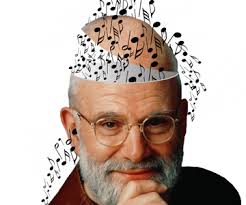
Writer and neurologist Oliver Sacks, who died on Sunday, August 30, 2015 at age 82, spent his life wondering on the myriad connections among biology, thought, emotion and perception.

For those of us who obsess over the how and why of music, Sacks’ work on sound and its effects on the brain – and vice versa – was particularly illuminating. His book on the subject, “Musicophilia: Tales of Music and the Brain,” remains essential reading for those who want to understand the mechanics of music.

Through bountiful research and mesmerizing case studies, Sacks addressed topics including music and amnesia, music therapy, musical prodigies and those who suffer from debilitating aural hallucinations.

Read more at Oliver Sacks & music: On brainworms, hallucinations and sonic overload – LA Times

The O’Connor Music Studio has a copy of Musicophilia: Tales of Music and the Brain if anyone would like to borrow it.

September 13: On This Day in Music

today

• 1819 ~ Clara Wieck Schumann, German pianist and composer
More information about Schumann

• 1874 ~ Arnold Schoenberg, Austrian-born American composer
Read quotes by and about Schoenberg
More information on Schoenberg

• 1894 ~ Alexis-Emmanuel Chabrier, Composer, died
More information on Chabrier

• 1911 ~ Bill Monroe, ‘Father of Bluegrass Music’, Country Music Hall of Fame, singer with The Bluegrass Band, songwriter

• 1916 ~ Dick (Richard Benjamin) Haymes, Singer

• 1917 ~ Robert Ward, American composer

• 1925 ~ Mel Torme,‘The Velvet Fog’, Grammy Award-winning singer and songwriter of  The Christmas Song

• 1931 ~ Vaudeville star Eddie Cantor was heard for the first time – on NBC radio.
The Chase and Sanborn Hour became one of the most popular radio shows of the 1930s.

• 1941 ~ David Clayton-Thomas, Singer with Blood Sweat and Tears

• 1944 ~ Peter Cetera, Bass guitar, singer with Chicago

• 1952 ~ Randy Jones, Singer with The Village People

• 1954 ~ The cover of LIFE magazine was adorned with Judy Garland’s picture, with the caption, “Judy Garland takes off after an Oscar.” Garland had been nominated for her role in A Star is Born.

• 1956 ~ Joni Sledge, Singer with Sister Sledge

• 1968 ~ Clarence Carter received a gold record for his million-selling hit Slip Away. Carter earned two other gold records for Too Weak to Fight and Patches. The singer from Montgomery, Alabama had been blind since age one and taught himself to play guitar by age 11.

• 1969 ~ John Lennon and his wife, Yoko Ono, presented the Plastic Ono Band in concert for the first time. The appearance at the Toronto Peace Festival was Lennon’s first in four years. The first hit by the new group, Give Peace a Chance, made it to number 14 on the charts.

• 1977 ~ Leopold Stokowski conductor of the Philadelphia Orchestra, passed away
More information about Stokowski

• 1986 ~ Captain EO, a 17-minute, three-dimensional, musical, science-fiction flick starring Michael Jackson, made its gala premiere at Disneyland in Anaheim, CA and at Disney’s Epcot Center in Orlando, FL this day. The innovative movie cost approximately $1,000,000 a minute to produce.

• 2001 ~ Barbara Matera, who made costumes for Broadway shows, the New York City Ballet and the Metropolitan Opera, died of a cerebral hemorrhage. She was 72. With her husband, Matera founded Barbara Matera Ltd. in 1968, which produced costumes seen in the current Broadway productions of The Lion King, Beauty and the Beast, Aida, Kiss Me, Kate and 42nd Street. As the costumer for the American Ballet Theater, Matera outfitted performers in productions including Swan Lake and Othello. Her film credits include The Great Gatsby, The Addams Family, Moonstruck, Indiana Jones and the Temple of Doom, The Age of Innocence and Death on the Nile. Matera also created the purple crystal-encrusted gown that Hillary Rodham Clinton wore at her husband’s first presidential inauguration.

Happy Birthday, Clara Schumann!

cschumann

Clara Schumann (1819-96) was much more than the wife of composer Robert Schumann. She was, quite simply, one of the greatest pianists of all time. A child prodigy, her technique and musicianship as a mature artist led to her being regarded as the equal of giants of the keyboard such a Franz Liszt, Sigismond Thalberg and Anton Rubinstein.

And from her girlhood until the end of her marriage she composed wonderful music, mostly solo piano music, but other works as well, including a concerto, a large number of songs and a sublime piano trio.

In her later years, she was an internationally famous teacher, and her performing career lasted more than six decades. She was, quite simply, a phenomenon.

September 12: On This Day in Music

today

1789 ~ Franz Xaver Richter died.  He was an Austro-Moravian singer, violinist, composer, conductor and music theoretician who spent most of his life first in Austria and later in Mannheim and in Strasbourg, where he was music director of the cathedral.

• 1888 ~ Maurice (Auguste) Chevalier, French chanteur and actor

• 1891 ~ Adolph Weiss, American composer and bassoonist

• 1924 ~ Ella Mae Morse, Singer, first artist to record for Capitol Records

• 1931 ~ George Jones, ‘The Possum’, singer

• 1940 ~ Tony Bellamy, Guitarist with The Tornados

• 1940 ~ Johnny Long’s orchestra recorded the classic A Shanty in Old Shanty Town for Decca Records.

• 1943 ~ Maria Muldaur (d’Amato), Singer

• 1944 ~ Booker T. Jones, American rock-and-roll musician

• 1944 ~ Barry White, Singer, played piano on Jesse Belvin’s Goodnight My Love in 1955

• 1952 ~ Gerry Beckley, Singer in the Grammy Award-winning (1972) group, America

• 1952 ~ Neil Peart, Drummer with Rush

• 1966 ~ “Hey, hey we’re the Monkees — and we don’t monkey around…” The theme song from the NBC-TV show, The Monkees, kicked off a fun-filled weekly series on this day in 1966. Some 400 aspiring actors had auditioned for the Columbia television series by producer Don Kirschner. Davy Jones, a former English horse racing jockey; Michael Nesmith, a session guitarist; Peter Tork of the Phoenix Singers; and Micky Dolenz, who had appeared in the TV series Circus Boy were picked to be America’s answer to The Beatles. The four were picked to become the fabricated music group – not because they could sing, act or play musical instruments – but because they looked the parts. Dolenz and Jones were actors, Tork and Nesmith had some musical experience. The Monkees were the first made-for-TV rock group. Ironically – or maybe not – The Monkees TV show won an Emmy for Outstanding Comedy Series of 1967.

• 1966 ~ The Beatles received a gold record this day for Yellow Submarine.

• 1970 ~ James Taylor’s first single, Fire and Rain, was released. Taylor scored 14 hits on the music charts in the 1970s and 1980s.

• 1980 ~ An in-depth report on the death of Elvis Presley aired on ABC-TV’s 20/20. It raised so many unanswered questions that the official case concerning Elvis’ death was reopened.

• 1993 ~ Herman Nieland, organist/pianist/composer, died at the age of 82

• 2000 ~ Stanley Turrentine, a jazz saxophonist whose hit “Sugar” established him in the popular mainstream and influenced musicians in many other genres, died after suffering a stroke. He was 66. Turrentine played tenor saxophone, and mixed jazz with blues, rock, pop and rhythm and blues. He lived in Fort Washington, Md., outside Washington, D.C. “His impact on jazz was just astonishing,” said his agent, Robin Burgess. “He had a large impact on fusion, electric jazz and organ trio music.” Turrentine grew up in Pittsburgh, surrounded by music. His brother Tommy played trumpet, and the two played together in Pittsburgh while they were still in high school. Turrentine started his professional career playing with Ray Charles and Max Roach. He went solo in the 1960s and scored his biggest hit in 1970 with “Sugar,” which became something of a jazz standard. His blues-influenced riffs brought him commercial success with albums including “Stan ‘The Man’ Turrentine,” “Up at Minton’s,” and “Never Let Me Go.”

• 2003 ~ Johnny Cash, “The Man in Black”, died at the age of 71.
More information about Cash

Parents! How to Help Your Students Practice ~ Day Three

We have established that regular practice routines will not happen without proactive piano parents. So, how can parents be proactive practice assistants even if they have never touched a piano?

Day 3. The Piano Piece Request Line: The most accomplished piano students always revisit pieces from their past to brush up on skills and to simply revisit some old favorites. During practice sessions, parents can get involved by requesting their children to perform some pieces that they have enjoyed hearing from past recitals, playing classes or just for fun.