Play Piano While Floating on a River Raft in Chichén Itzá?

Of course, The Piano Guys have done this.

They say:

The quest to serenade the Seven Wonders continues…

A few years back we set what seemed at the time an impossible goal: to film music videos on all Seven Wonders of the World. Now we are nearly half-way there. We started by scaling the Great Wall of China, performing in feng shui fashion “Kung Fu Panda” in harmony with Chopin:

Next we paid homage to the Christ Redeemer Statue in Rio, Brazil, dedicating “Gabriel’s Oboe” (from “The Mission” soundtrack) coupled with the beloved hymn “How Great Thou Art:”

And now we present the third Wonder, Chichén Itzá.

Thus far our tradition has been to mix timeless classical music with contemporary film scores. We also love infusing local and historical culture in our arrangements. For this Wonder we wanted to stay true to this tradition while simultaneously nailing “jungle harmony,” as a famous cartoon bear once coined in…Disney’s Jungle Book! But in this decision we were confronted with an entangling challenge — to effectively blend the cacophony of Disney Jazz, classical music, Mayan heritage, all while making it epic enough to be filmed in front of a massively-historic, world-renowned stone temple!

First, it was vital that we carefully, thoughtfully pay proper respect to the “wonder” of “El Castillo,” its surrounding artifacts, and the Mayan spirit that pervades Chichén Itzá. The Mayans were an incredible people — adept astronomers, unprecedented builders, and incomparable artisans. Their ability to use architecture in an acoustic way especially impresses us. For instance, you can stand upon a step at one end of the plaza and be heard clearly on a step at the opposite end. The Mayans also used instrumental music in…read more here: http://thepianoguys.com/portfolio/jun…

Filming it in just the right vein was just as challenging. We wish to sincerely express our deepest gratitude to the National Archeology and History Institute (http://www.inah.gob.mx) and Cultur Yucatan (http://www.culturyucatan.com) for allowing us the profound privilege of filming at Chichén Itzá. Were it not for them and their warm hospitality this video shoot would not have been possible.

When visiting Chichén Itzá, we recommend staying here: http://mayaland.com

We also wish to thank our second filming location, Xcaret (where we filmed the jungle river and stage scenes). Xcaret is a fun-filled family friendly park built right in the middle of the jungle that immerses you in cultural food, entertainment, and adventure. Check it out here:
Mexico’s Majestic Paradise: https://www.youtube.com/watch?v=7m80Q…
Facebook: https://www.facebook.com/enxcaretpark
Website: http://www.xcaret.com
https://twitter.com/xcaretpark

Steve is playing the most recent addition to his cello family, “Maya,” hand painted in Mayan hieroglyphic style by Juleez (Julie Borden) just for this video. Her uniquely creative masterpieces are only matched by her equally vibrant spirit and enthusiasm for musically influenced art. See more of her instrument artwork here: http://www.juleez.com. Thank you, Julie!
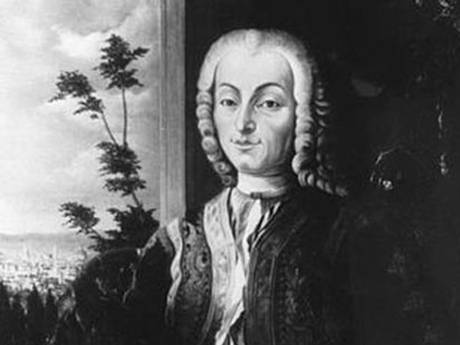
Happy Birthday Bartolomeo Cristofori!

The inventor of the piano, Bartolomeo Cristofori, is celebrated in last year’s Google Doodle.

Born on 4 May, 1655 in Padua, northern Italy, Cristofori initially worked making harpsichords and clavichords and was employed by Prince Ferdinando de Medici, son of the duke of Tuscany.

He is believed to have started work on what would become a piano in the 1690s and the first one is thought to have been made in 1709.

In a harpsichord the strings are plucked, so it is not possible to play the notes softer or louder. Cristofori managed to design a mechanism that transferred the pressure placed on the keys to the hammers that hit the strings.

He called his invention a “gravecembalo col piano e forte” – a clavichord with soft and loud. The name was shortened to pianoforte and then simply piano.

Francesco Mannucci, a musician at the Medici court, described one early version as “a large ‘Arpicembalo’ [the name of a type of harpsichord] by Bartolomeo Cristofori, of new invention that produces soft and loud, with two sets of strings at unison pitch, with soundboard of cypress without rose”.

Bartolomeo Cristofori

Bartolomeo Cristofori di Francesco was an Italian maker of musical instruments, generally regarded as the inventor of the piano.

While other musical instrument makers had attempted to solve the same problem with the harpsichord, Cristofori’s invention is generally regarded as the first real piano.

However, the piano was not popular at first and many felt it was too difficult to play. Cristofori died largely uncelebrated for an invention that would later change the musical world in 1731 – a year before the first sheet music for the piano appeared.

via Who invented the piano? Bartolomeo Cristofori’s birthday celebrated in today’s Google doodle – News – Gadgets and Tech – The Independent.

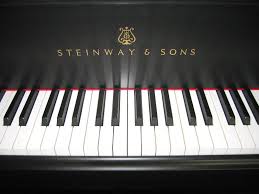
Steinway just released an iPad-controlled piano

steinway-new


Steinway was so adamant about getting the technology right that in 2014 it bought Live Performance, a company founded by music engineer Wayne Stahnke. Lauded as the creator of the first mass market computer-controlled player piano able to simulate the nuances of a human performer (the Bosendorfer 290 SE), the former NASA engineer opened Live Performance in 1992 to commercialize his four decade’s worth of experimentations in “high resolution” electronic reproducing pianos.
At its new Manhattan showroom, Steinway president Ron Losby showed Quartz how the Spirio can be played manually like a regular piano, but can also “accompany” a singer in the absence of a pianist. In theory, a sophisticated self-playing piano can work well in any number of live events such as a ballet recital, a church choir performance, a party—or perhaps just to give the pianist a break.

Read the entire article at http://qz.com/658430/steinway-just-released-an-ipad-controlled-piano/

A History of Piano Pedals

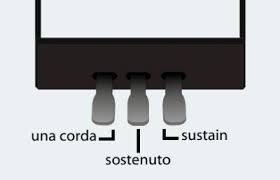
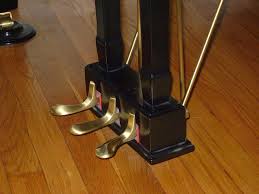
piano-pedal-diagrampiano-pedal


Piano pedals have existed for almost as long as the modern piano itself, but they had a rocky start. While the modern piano accepted most of its final touches, the evolution of the piano pedal continued.

In 1722, the piano’s first tone-modifying mechanism came in the form of a hand stop, and was created by Father Piano himself: Bartolomeo Cristifori. The device positioned the hammers to strike only one piano string per key, which created a soft, relaxed timbre. But it was far from ideal; a spare hand was required to use it, meaning the pianist either repeatedly removed one hand from the keys, or practiced alongside a hand-stop operator. Thankfully, the mechanism was later modified to be operated by the knee, and became the predecessor to today’s una corda, or “soft,” pedal.

The next modification arrived soon after. Gottfried Silbermann — renowned European constructor of keyboard instruments — created a mechanism that lifted the dampers off of the strings, causing a reverb effect. This early sustain pedal had an advantage over most modern sustains: treble and bass notes could be controlled separately from one another; however, like the una corda, the sustain did not start off as a foot pedal; an impracticality which may have justified its early unpopularity. Today, the sustain is the most frequently used, and possibly the most favored, piano pedal.

Which brings us to the underdog: the sostenuto pedal. Created in the mid 1800s by Boisselot & Sons, it is by far the most misunderstood piano pedal. The sostenuto is constantly being replaced — or removed entirely — from its position as the middle pedal, and is only standard on an American grand. It allows certain notes to be “sustained” while other notes are left unaffected, and even piano leader Steinway saw potential in the pedal, opting to patent the idea three years after its début in 1844. But, surprisingly, the impressive effects of the sostenuto never caught on.

Alternative middle pedals have included practice rails, which muffle the notes for quiet practice; and the faux-sostenuto, which allows only the bass notes to resonate. Most modern pianos now have only two pedals, leaving the sostenuto –- one of the most unique and inspiring pedals –- to fade into antiquity.

via Piano Pedals – History of Piano Pedals.

Keeping Your Piano in Tune

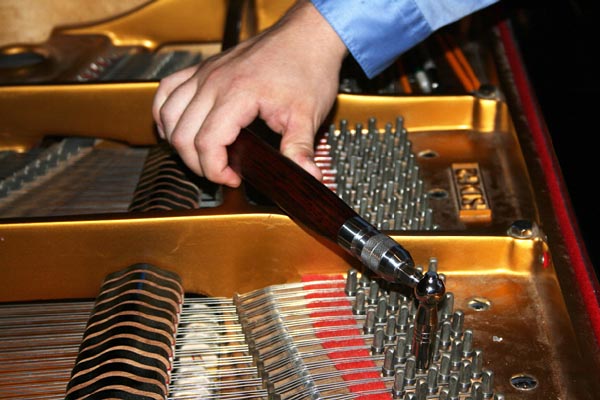
piano-tuning


When it comes to tuning, every piano is different, even two pianos of the same style and make are different, and the humidity of the room makes a big difference, he said.

High humidity causes the sound board to swell, stretching the strings and causing the pitch to go sharp, while low humidity has the opposite effect.

In Minnesota, humidity can easily range from 80 percent in the summertime to 10-15 percent in the winter, if the home doesn’t have a humidifier. Wood-heated homes tend to be especially dry, he said.

“Pianos like it between 40 and 50 percent humidity in the house,” he said.

Even places that are supposedly “climate-controlled,” aren’t always. The heat might get turned down substantially evenings and weekends, for example.

A new piano needs a few weeks to settle into its new home before tuning, Fry said.

“If they get a new piano, generally they call us the day before it gets in the house,” he said. “It should sit in the house a couple weeks just to acclimatize it to its new surroundings … brand new pianos stretch for a while. They go out of tune quicker. The wire stretches and they settle into themselves.”

Some people think they have to let a new, or recently moved older piano, sit six months or a year before it gets tuned. That’s not true, Fry said, but it does need a few weeks.

He recommends that pianos be tuned at least once a year (he tunes his own piano once a year, even though he no longer gives lessons) and the busiest time for him is before the holidays — September through December.

“Piano-tuning is something people can put off,” he said. “We noticed a real drop in tuning when gas got over $3 a gallon. I didn’t think it would make that much of a difference, but it did.”

Fry said he is looking for some kind of work to do in the summertime when his other businesses are slow.

He doesn’t give piano or guitar lessons anymore, but does enjoy tuning all types of pianos.

“It takes me a couple of hours. I have time,” Fry said. “I’m going to do the job that I like to do, and do it right.”

Read the entire article at Keeping pianos, life in tune | Detroit Lakes Online.

Simply Piano Update!

Simply-Piano
App Description:

Simply Piano is a fast and fun way to learn piano, no previous knowledge required. Works with any piano or keyboard. Chosen as one of the best iPhone apps for 2015.

– Tons of songs like Imagine, Timber, Counting Stars, Safe and Sound, also J.S.Bach
– Includes courses for different musical tastes and playing levels
– Learn the basics from reading sheet music to playing with both hands
– Daily workouts will help you practice what you learned while not at the piano
– Suitable for all ages, no previous knowledge required

No Piano? Try the Touch Course with 3D Touch!

How it works:
– Place your device (iPhone/iPad/iPod) on your acoustic/MIDI piano or keyboard and play; the app will immediately recognize what you are playing
– Receive instant feedback on your playing to quickly learn and improve your skills
– Discover fun songs and complete courses to really get you going

Simply Piano is developed by JoyTunes, creators of award-winning apps Piano Maestro and Piano Dust Buster. The apps are used by tens of thousands of piano teachers worldwide with over 1 million songs learned every week. JoyTunes are experts in creating educational and fun apps for learning piano quickly and easily.

Awards & Recognition –
– “EMI’s Innovation Challenge”
– “World Summit Award”, by the United Nations
– “Best Tools for Beginners”, NAMM
– “Best Tablet Game”, GameIS
– “Parents’ Choice Award”
– “Golden App”, Apps for Homeschooling


Edinburgh Piano Company collection sells for £375,000 (US $541,293.75)

auction-scotland

One of Scotland’s largest collections of pianos has sold at auction for almost £375,000.

More than 100 pianos went under the hammer as the Edinburgh Piano Company held its closing down sale.

The firm supplied pianos for famous musicians including Frank Sinatra, Van Morrison and Luciano Pavarotti over more than 30 years in business.

Retiring business owner James Cameron saw his stock sold off for prices ranging from £104 to £48,880.

The highest priced item was a Bösendorfer grand piano from Vienna, dubbed the “Rolls Royce” of the instrument.

Read more at http://www.bbc.com/news/uk-scotland-edinburgh-east-fife-35574421

February 9 in Music History

today

1885 ~ Alban Berg, Austrian composer
More information about Berg

. 1909 ~ Carmen Miranda (Maria do Carmo Miranda Da Cunha), ‘Brazilian Bombshell’, singer, dancer, actress

. 1914 ~ Gypsy Rose Lee (Rose Hovick), Actress, dancer, stripper, subject of Broadway show and film, Gypsy, sister of actress, June Havoc

. 1914 ~ Ernest Tubb, Country Music Hall of Famer, headlined 1st country music show at Carnegie Hall

. 1923 ~ Kathryn Grayson, Singer, actress in Kiss Me Kate, Show Boat, The Kissing Bandit, It Happened in Brooklyn, Anchors Aweigh

. 1937 ~ Hildgarde Beherns, German Soprano

. 1939 ~ Barry Mann, Songwriter, with Cynthia Weil on dozens of ’60s and ’70s ‘Brill Building’ hits, singer

. 1940 ~ Brian Bennett, Drummer with The Shadows

. 1940 ~ The old piano played for dances in the Tattersall house in High Forest for many year – as long ago as the Civil War period – will be played once more when the Olmsted County Historical association formally opens its museum in the basement of the Rochester, MN public library.

. 1941 ~ Carole King (Klein), American pop-rock singer and songwriter

. 1944 ~ Barbara Lewis, Singer

. 1963 ~ (James) Travis Tritt, Grammy Award-winning singer

. 1964 ~ Several days after their arrival in the U.S., The Beatles made the first of three record-breaking appearances on “The Ed Sullivan Show”. The audience viewing the Fab Four was estimated at 73,700,000 people in TV land. The Beatles sang She Loves You and I Want to Hold Your Hand. One could barely hear the songs above the screams of the girls in the audience.

. 1966 ~ Liza Minnelli brought her night club act to the Big Apple. She opened in grand style at the Persian Room of the Plaza Hotel in New York.

. 1969 ~ A young lady named Roslyn Kind made her quiet TV debut this night on“The Ed Sullivan Show”. Ed said she’s “…America’s teenager who wasn’t protesting or playing a guitar.” She only appeared once. Her sister appeared many times. Roslyn Kind is the sister of Barbra Streisand.

. 1970 ~ Sly and The Family Stone received a gold record for the single, Thank You (Falettinme Be Mice Elf Agin). Sly (Sylvester) Stewart was a DJ in Oakland, CA.

. 1981 ~ Bill Haley died on this day in Harlingen, TX. He was 55. Haley, with his Comets, recorded what became known as the anthem of rock and roll: Rock Around the Clock, from the movie, “Blackboard Jungle”. The song turned into a multimillion dollar hit and one of many hits Haley and the Comets had, including: Dim Dim the Lights, Razzle Dazzle, Crazy Man Crazy, Rock the Joint, See You Later Alligator andShake Rattle & Roll. Bill Haley was inducted into the Rock and Roll Hall of Fame in 1987.