February 2 ~ Today in Music History

. 1714 ~ Gottfried August Homilius, German composer, cantor and organist

. 1789 ~ Armand-Louis Couperin, French composer, organist, and harpsichordist

. 1875 ~ Fritz Kreisler, Austrian-born American violinist and virtuoso/composer Some of his best known works are Caprice Viennois, Tambourin Chinois, Liebesfreud and La Gitana

. 1901 ~ Jascha Heifetz, Russian-born American violinist
Read quotes by and about Heifetz
More information about Heifetz

. 1911 ~ Jussi Björling, Swedish tenor

. 1912 ~ Burton Lane (Levy), Composer of How Are Things in Glocca Morra, That Old Devil Moon, Look to the Rainbow, How About You, I Hear Music, Come Back to Me,On a Clear Day You Can See Forever, How Could You Believe Me?; His Broadway musicals were Finian’s Rainbow (collaboration with Yip Harburg), On a Clear Day You Can See Forever (collaboration with Alan Jay Lerner). He contributed songs to over 30 films: Babes on Broadway, Royal Wedding, Ship Ahoy, St. Louis Blues and credited with discovering Judy Garland

. 1927 ~ Stan Getz (Stanley Gayetzby), American jazz tenor saxophonist

. 1937 ~ Tom Smothers, Entertainer, The Smothers Brothers Comedy Hour, The Smothers Brothers Show, The Steve Allen Show, Dick’s Brother

. 1937 ~ Guy Lombardo and his orchestra recorded one of Guy’s most famous tunes. Boo Hoo was waxed on Victor Records and became one of the group’s all-time great hits.

. 1940 ~ Alan Caddy, Guitarist with The Tornados

. 1942 ~ Graham Nash, Singer with Crosby, Stills, Nash and Young

. 1947 ~ Peter Lucia, Drummer with Tommy James and The Shondells

. 1949 ~ Ross Valory, Bass with Journey

. 1959 ~ The Coasters tune, Charlie Brown, was released. The tune went to #2 and stayed there for three weeks, but didn’t make it to the top spot of the charts. A catchy song (“Fee fee fi fi fo fo fum. I smell smoke in the auditorium…”), it was on the charts for a total of 12 weeks. The song at number one, preventing Charlie Brown from reaching the top, was Venus, by Frankie Avalon.

. 1996 ~ Gene Kelly passed away

. 2001 ~ French pianist Nicole Henriot, who entered the Paris Conservatory at age 7 and went on to perform around the globe with conductor Charles Munch, died at the age of 75. Emerging on the world music scene after World War II, Henriot built her reputation on interpretations of works from Liszt to Prokofiev, and especially French composers such as Ravel, Fauré and Milhaud. She was most famous for her performances with Munch, music director of the Boston Symphony from 1949 to 1962. Munch, who died in 1968, was the uncle of Henriot’s husband. Born in 1925, Henriot won the Paris Conservatory’s first prize at age 13. During the war, Henriot gave aid to her brother, a member of the French Resistance. When Gestapo agents searched her home in 1944, she managed to destroy her brother’s secret documents but was badly beaten. After the war, Henriot became the first French pianist to appear in Britain and began an international tour that took her from Scandinavia to Egypt. She made her American debut in 1948 as a soloist with the New York Philharmonic under Munch’s direction. When Munch formed the Orchestra of Paris in 1967, Henriot was one of the fledgling orchestra’s first soloists. In the 1970s and 1980s, Henriot devoted herself to teaching, and worked at the Conservatory of Liege, Belgium, and at the Walloon Conservatory of Brussels.

. 2001 ~ Victor Norman, who founded the Eastern Connecticut Symphony Orchestra and conducted the group for three decades, died at the age of 95. Colleagues said Norman was a visionary who needed to be as skilled in politics as he was in music to keep the symphony together. “He had this idea that a symphony orchestra could be created around here, when really it had been tried several times before, never with any kind of significant success,” said Charles Frink, a New London composer who studied with Norman. Norman founded the New London Civic Orchestra in 1946. It merged with the Willimantic Orchestra in 1952 to become the Eastern Connecticut Symphony Orchestra. He stepped down from the podium in 1980. In his retirement, Norman composed music. Two of his orchestral pieces were performed by the New Britain Symphony Orchestra and the Westminster Community Orchestra in Princeton, N.J. His memoirs, “Victor Norman: A Life in Music, a Lifetime of Learning,” were published in 1999.

. 2015 ~ French piano virtuoso Aldo Ciccolini died at age 89. Born on August 15, 1925, into a musical family in Naples, Aldo Ciccolini was a child prodigy, beginning composition classes in the city’s conservatory at age nine.

January 31 ~ Today in Music History

today

. 1759 ~ François Devienne, French composer and professor of flute

. 1797 ~ Franz Peter Schubert, Austrian composer Read quotes by and about Schubert
More information about Schubert

. 1798 ~ Carl Gottlieb Reissiger, German Kapellmeister and composer

. 1882 ~ Anna Pavlova, Russian ballerina and choreographer

. 1892 ~ Eddie Cantor (Iskowitz), Entertainer, ‘banjo eyes’ Some of his hits were: If You Knew Susie like I Know Susie, Alabamy Bound, Dinah, Ida, Makin’ Whoopee and Ma He’s Makin’ Eyes at Me

. 1906 ~ Benjamin Frankel, British composer

. 1921 ~ Mario Lanza, Opera singer. Some of his non-operatic songs were Be My Love, The Loveliest Night of the Year and Because You’re Mine

. 1923 ~ Carol Channing, Broadway entertainer and Tony Award-winning actress in shows such as Hello, Dolly! (1964) and Thoroughly Modern Millie

. 1936 ~ “The Green Hornet” was introduced by its famous theme song, The Flight of the Bumble Bee, originally by Rachmaninoff. The radio show was first heard on WXYZ radio in Detroit, MI on this day. The show stayed on the air for 16 years. “The Green Hornet” originated from the same radio station where “The Lone Ranger” was performed.

. 1937 ~ Phillip Glass, American composer of minimalist music
More information about Glass

. 1946 ~ Terry Kath, Guitarist with Chicago

. 1951 ~ Harry Wayne Casey, Keyboards, singer with KC and the Sunshine Band

. 1951 ~ Phil Collins, British rock drummer, songwriter and singer

. 1951 ~ Phil Manzanera (Targett-Adams), Guitarist with Roxy Music

. 1955 ~ Electronics pioneer RCA demonstrated the first music synthesizer that could electronically play musical sounds.

. 1960 ~ Julie Andrews, Henry Fonda, Rex Harrison and Jackie Gleason, appeared in a two-hour TV special titled, The Fabulous ’50s. 1961 ~ Lloyd Cole, Guitarist, singer with Lloyd Cole and The Commotions Dial Records founder Ross Russell died. He released 78-rpm recordings of Charlie Parker on his small jazz label and wrote a biography of Parker in 1973 called “Bird Lives! The High Life and Hard Times of Charlie (Yardbird) Parker”.

. 1982 ~ Sandy Duncan of Tyler, Texas gave her final performance as Peter Pan in Los Angeles, CA. The actress completed 956 performances without missing a show. She flew a total of 261.5 miles while on stage.

. 1985 ~ John Fogerty, former leader of Creedence Clearwater Revival, returned to the A&M recording studios in Hollywood, CA to give his first ‘live’ performance in 14 years. Actually, Fogerty performed in a video called Rock and Roll Girls.

. 1987 ~ Madonna’s record, Open Your Heart, moved to the #2 spot on the pop charts (right behind At This Moment by Billy Vera and The Beaters). A week later,Open Your Heart became Madonna’s fifth #1 hit since 1983. She had 11 consecutive singles in the Top 10, the most for any female artist of the rock era.

. 1995 ~ George Abbott, Director passed away.

. 2002 ~ Evelyn Scott, the city’s first female disc jockey who later played a tough- talking tavern keeper on the television soap opera “Peyton Place,” died at the age of 86. Born in Brockton, Mass., Scott moved to Los Angeles and landed a job as a disc jockey on radio station KMPC. She later was hired as a singing DJ on KHJ’s “Rise and Shine” morning show. She began acting in theater companies and eventually landed small roles in films such as “Wicked Woman,” “The Green-Eyed Blonde” and “I Want to Live.” She may be best remembered as saloon keeper Ada Jacks in the soap “Peyton Place,” which showed the extramarital affairs and other dark secrets of the residents of a small New England town. Scott played the role from 1965 to 1969, and then reprised the role on “Return to Peyton Place” from 1972 to 1974. She also came back for the 1985 television movie “Peyton Place: The Next Generation.” Scott appeared in episodes of other TV shows including “Bonanza,” “Gunsmoke” and “Perry Mason.” After she retired from acting, she dedicated her time to helping the homeless and served as a board member of Portals House Inc., a center for mentally ill people.

. 2004 ~ Roberto Ocasio, a versatile musician and band leader of Latin Jazz Project, died in a car accident. He was 49. Ocasio performed more than 250 times last year, mostly in Cleveland. He has shared stages with such other Latino musicians as Eddie Palmieri and Nestor Torres. His band played venues from street festivals to Cleveland’s Severance Hall. Ocasio played the piano and six other instruments. He earned a degree in composition and arranging from the Berklee College of Music in Boston. He formed Latin Jazz Project in 1997. Ocasio composed and arranged the band’s music, a repertoire ranging from original pieces to rock tunes and American standards with his own twist. He performed songs in Spanish and English.

Happy Birthday, Franz Schubert!

Franz Peter SchubertFranz Peter Schubert lived between 1797 and 1828. He is considered to be a romantic composer. He was an Austrian composer who was one of the greatest creators of melody and foremost writer of ‘lieder’ (German songs).

Although he only lived for 31 years, Schubert composed more than 600 songs, 22 piano sonatas and many short piano pieces. This melodic output has never been equaled either in quantity of quality. He was one of the first musicians to earn a living from the sale of his music.

Schubert’s Ave Maria was featured in the Walt Disney movie Fantasia.


Schubert’s birthday

Schubert’s works were played in an Grammy Winning performance, Forty-Second Annual Awards

Listen to Schubert’s music.

     Read quotes by and about Schubert

     Guess what my li’l Chopin played today

     Information about Schubert’s Symphony in D

     Schubert MIDI Section

     Read Amazon.com’s Get Started in Classical feature


January 30 ~ Today in Music History

today


. 1566 ~ Alessandro Piccinini born. He was an Italian lutenist and composer who died sometime in 1638

. 1697 ~ Johann Joachim Quantz, German flutist, flute maker and composer

. 1861 ~ Charles Martin Tornow Loeffler, Alsatian-born American composer

. 1862 ~ Walter Johannes Damrosch, German conductor and composer

. 1911 ~ (David) Roy ‘Little Jazz’ Eldridge, Trumpeter and soloist with Gene Krupa’s Band, U.S. President Carter’s White House jazz party in 1978

. 1917 ~ The Original Dixieland Jazz Band recorded a classic for Columbia Records titled, The Darktown Strutters’ Ball. It was one of the first jazz compositions recorded.

. 1921 ~ Astor Piazzolla, Argentinian composer
More information about Piazzolla

. 1921 ~ Bernie Leighton, Jazz pianist

. 1928 ~ Ruth Brown, R&B and jazz singer

. 1928 ~ Harold Prince, Broadway producer and director of A Little Night Music and Sweeney Todd: The Demon Barber of Fleet Street

. 1936 ~ Horst Jankowski, Pianist, most famous work was A Walk In The Black Forest

. 1938 ~ Norma Jean (Beasler), Country singer

. 1941 ~ Joe Terranova, Singer with Danny and the Juniors

. 1943 ~ Marty Balin (Buchwald), Singer with Jefferson Airplane/Starship

. 1944 ~ Lynn Harrell, American cellist

. 1947 ~ Steve Marriott, Singer, songwriter, guitarist

. 1949 ~ William King, Trumpeter, keyboard with The Commodores

. 1951 ~ Phil Collins, Singer, drummer with Genesis

. 1959 ~ Jody Watley, Singer with Shalamar

. 1963 ~ Francis Poulenc died
More information about Poulenc

. 1969 ~ The Beatles made their last public appearance. It was at a free concert at their Apple corporate headquarters in London. The group recorded Get Back and also filmed the movie “Let It Be”.

. 2004 ~ Jazz bassist Malachi Favors, who played with such bandleaders as Dizzy Gillespie and Freddy Hubbard before beginning a 35-year association with the Art Ensemble of Chicago, died. After service in the Army during the Korean War, he studied with the bassists Wilbur Ware and Israel Crosby, and worked with the pianists Andrew Hill and King Fleming. After playing with Gillespie, Hubbard, and other members of the bebop revolution, Favors joined the band of Chicago saxophonist Roscoe Mitchell and played a major part on Mitchell’s influential free-jazz album, “Sound”, in 1966. Mitchell’s band soon evolved into the Art Ensemble of Chicago, which combined traditional elements of jazz and blues, West African music, chanting, ritual, abstract sound and silence. Although founded in Chicago, the group was based in Europe until 1971. In addition to his distinctive bass sound, Favors also added vocals and such folk instruments as banjo, zither and harmonica to group’s compositions. He also recorded a solo bass album, “Natural and the Spiritual”.

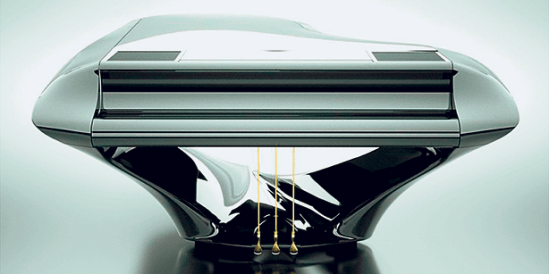
Revolutionary new piano invented in Budapest

A revolutionary new piano created in Budapest by internationally acclaimed pianist Gergely Bogányi and his design team was unveiled at a press event on Jan. 20 at the Budapest Music Center and at a concert on Jan. 21 at Budapest’s historic Franz Liszt Academy.

At the press event, Bogányi performed classical selections by Bach and Debussy to show the piano’s power and lyrical capabilities; the renowned Grammy-nominated jazz pianist Gerald Clayton improvised limpid and soulful variations on Cole Porter’s “You’d Be So Nice to Come Home To,” which showed the new instrument’s vast kaleidoscope of colors and the satisfyingly muscular bass notes.

Does the world need a new piano?

Most emphatically yes, Bogányi says. “The piano was invented 300 years ago,” Bogányi told Today’s Zaman. “Although there have been modifications, there have been no major developments in piano construction in over 100 years. So I spoke to many of my colleagues about the kinds of [mechanical and physical] problems and limitations we all have to deal with, and all agreed that we needed solutions.”

Read more at Revolutionary new piano invented in Budapest.

January 28 ~ Today in Music History

today


. 1722 ~ Johann Ernst Bach, German composer of the Bach family

. 1791 ~ Ferdinand Herold, French composer

. 1887 ~ Artur Rubinstein, Polish-born American pianist, played solo for the Berlin Symphony at the age of 12. Read quotes by and about Rubinstein
More information about Rubinstein

. 1904 ~ Enrico Caruso signed his first contract with Victor Records. He had debuted at the Metropolitan Opera just two months before.

. 1927 ~ Ronnie Scott (Schatt), Jazz musician: tenor sax, bandleader, jazz club owner in London

. 1927 ~ Twenty years before the famous record by Art Mooney was recorded, Jean Goldkette and his dancing orchestra recorded, I’m Looking Over a Four-Leaf Clover. Though the name of the bandleader may not be so famous, two of his sidemen on this Victor recording session certainly were: Big band fans know Bix Beiderbecke and Joe Venuti.

. 1929 ~ Acker (Bernard) Bilk, Clarinetist, composer

. 1938 ~ Bill Phillips, Country singer

. 1940 ~ “Beat the Band” made its debut on NBC radio. The band was that of TedWeems and his 14-piece orchestra, who were joined by Elmo ‘The Whistling Troubadour’ Tanner, Harry Soskind and Country Washington. One other star of the show was a barber from Pittsburgh, PA (nearby Canonsburg, actually), who would record many hits for RCA Victor from 1943 right through the dawn of the 1970s. His name was Perry Como. Beat the Band was a funky show where listeners’ questions were selected in the hopes of stumping the band. If a listener’s question was chosen, he or she received $10. The questions were posed as riddles: What song title tells you what Cinderella might have said if she awoke one morning and found that her foot had grown too large for her glass slipper? If the band played the correct musical answer,Where Oh Where Has My Little Dog Gone?, the listener lost.

. 1943 ~ Dick Taylor, Bass, guitar with The Pretty Things

. 1944 ~ John Tavener, British avant-garde composer
More information about Tavener

. 1944 ~ Brian Keenan, Drummer with groups Manfred Mann and The Chambers Brothers

. 1948 ~ Mikhail Nikolayavich Baryshnikov, Russian-born American ballet dancer Washington Honored Eastwood, Baryshnikov, Others

. 1959 ~ Dave Sharp, Guitarist with The Alarm

. 1956 ~ Elvis Presley made his first appearance on national television. No, he didn’t appear on some teenage dance show; but rather, “The Dorsey Brothers Show”, starring Tommy and Jimmy. Elvis sang Blue Suede Shoes and Heartbreak Hotel. He was backed by the instruments of the Dorsey band.

. 1968 ~ Sarah McLauchlan, Singer

. 1985 ~ 45 of the world’s top recording artists were invited to an all-night recording session at the A&M studios in Los Angeles. As each of the artists walked through the studio door, they were greeted by a hand-lettered sign — put there by Lionel Richie. It simply said, “Check your ego at the door.” The session started at 10 p.m. with producer Quincy Jones conducting. At 8 o’clock the following morning, the project, “USA for Africa”, spearheaded by promoter, Ken Kragen, was recorded and mixed. The resulting song, We Are the World, featuring Michael Jackson, Cyndi Lauper, Kenny Rogers, Dolly Parton, Sting, Harry Belafonte, Diana Ross, Paul Simon and many others became the top song in the U.S. on April 13, 1985.

. 2002 ~ Michael Hammond, who became chairman of the National Endowment for the Arts just a week earlier, died apparently of natural causes. He was 69. A native of Kenosha, Wis., the conductor and composer had been dean of the School of Music at Rice University in Houston when President Bush nominated him to lead the federal agency that decides grants for the arts. After being confirmed by the Senate on Dec. 20, 2001, Hammond had assumed the post Jan. 22, 2002, and was still in the process of moving to Washington. A student of music and medicine, Hammond’s interests included music from Southeast Asia, the Renaissance and medieval times and the intersection between music and neuroscience. He received a Rhodes scholarship to study philosophy, psychology and physiology at Oxford University. He also studied Indian philosophy and music at Dehli University in India. In 1968, he left his post as director of the Wisconsin Conservatory of Music in Milwaukee to become the founding dean of music at the State University of New York at Purchase. He later served as president of the school, until he left for Rice’s Shepherd School of Music in 1986. All the while, he retained his interest in medicine, teaching neuroanatomy and physiology at Marquette Medical School and at the University of Wisconsin. Hammond also served as the founding rector of the Prague Mozart Academy in the Czech Republic, now the European Mozart Academy, was on the board of the Houston Symphony, and was vice chairman of the board of Interlochen Center for the Arts in Michigan.

. 2002 ~ Steve Caldwell, who sang and played saxophone for the Swingin’ Medallions at the time of the band’s 1966 hit Double Shot (of My Baby’s Love), died of pancreatic cancer. He was 55. Caldwell was with the group from 1963 to 1969. After getting his master’s degree in chemistry at the University of South Carolina, he returned to his native Atlanta and ran the Norell temporary staffing agency until starting his own company in 1976. His wife, Lynn Caldwell, said he raised $1 million for charity through World Methodist Evangelism.

January 27 ~ Today in Music History

today


1756 ~ Wolfgang Amadeus Mozart, Austrian composer, pianist
Listen to Mozart’s music
Read quotes by and about Mozart
More information about Mozart
Happy Birthday, Mozart!


. 1823 ~ Edouard Lalo, French composer

. 1885 ~ Jerome Kern, American songwriter and composer of musical comedies He was known as the father of the American musical, composing Show Boat, Ol’ Man River, Smoke Gets in Your Eyes, Lovely to Look At, The Way You Look Tonight and The Last Time I Saw Paris

. 1895 ~ Harry Ruby (Rubinstein), Musician and composer

. 1905 ~ John Schaum, Music educator

. 1916 ~ Milt (Milton W.) Raskin, Pianist, composer and arranger

. 1918 ~ Skitch Henderson, Conductor of the Tulsa Symphony Orchestra, bandleader, musical director of NBC-TV’s The Tonight Show with Steve Allen and Johnny Carson

. 1948 ~ Mikhail Baryshnikov, Bolshoi ballet dancer, defected to U.S.

. 1961 ~ Leontyne Price made her debut at the Metropolitan Opera House in New York City. She sang in the role of Leonora in “Il Trovatore”. Price was only the seventh black singer to make a debut at the Met. Marian Anderson was the first (1955).

. 1968 ~ The Bee Gees played their first American concert, as a group. They earned $50,000 to entertain at the Anaheim Convention Center in California. This is identical to what The Beatles were paid to perform at the Hollywood Bowl a few years earlier.

. 1968 ~ Otis Redding’s (Sittin’ On) The Dock of the Bay was released on this day, seven weeks after the singer’s death. It became #1 on March 16, 1968 and remained at the top spot for a month. Redding began his recording career in 1960 with Johnny Jenkins and The Pinetoppers (on Confederate Records). He sang duet with Carla Thomas and had 11 chart hits. Redding of Dawson, GA was killed in a plane crash at Lake Monona near Madison, WI. Four members of the Bar-Kays were also killed in the crash. The Dock of the Bay, his only number one song, was recorded just three days before his death.

. 1984 ~ Michael Jackson’s hair caught on fire during the filming of a Pepsi commercial in Los Angeles. Pyrotechnics did not operate on cue, injuring the singer. Jackson was hospitalized for a few days and fans from around the world sent messages of concern.

Happy Birthday, Mozart!

mozart-birthday


Putting Mozart on the Map

What better way to get things started than with a party?

At Wolfie, that means the first worldwide event in honor of Mozart’s birthday – taking place this Tuesday, January 27th! Every musician – concert pianist or 2nd-grader – playing a score on the Wolfie app on January 27th will automatically appear on an interactive world map at www.wolfiepiano.com.

Share this special event with colleagues and inspire your students by enabling them to take part in a worldwide event that will connect them to piano players around the world! It all starts by joining the event, here.

Finally, we’d love to hear from you. You, Mozart’s ambassadors, are keeping his legacy alive and instilling the gift of music appreciation into young peoples’ lives every day.

See you on Tuesday – on the map!

~~~~~~~~
Wolfgang Amadeus MozartWolfgang Amadeus Theophilus Mozart lived between 1756 and 1791. He is considered to be a classical composer. Mozart, born in Salzburg, Austria, began composing before most children go to kindergarten. By the time he was six he had played the piano and violin in public.

A Wunderkind, a prodigy of the first rank before the age of five, Mozart astounded the musical world with compositions of unsurpassed brilliance. His father Leopold had recognized his talent at the age of three and immediately set out to teach him to play the harpsichord, violin, and organ. Mozart and his sister made their debut in Munich when he was just six and traveled about Europe together, performing at courts and before royalty, always with success. While still a little child Mozart was inventing symphonies, sonatas, and his first opera. Legends abound about how Mozart could hear an entire work in his head and write everything down without making even one change.

As a child performer he was often treated as a freak. People would cover his hands as he played the piano, make him compose tunes on the spot and perform all sorts of other musical tricks.

In 1787 Mozart became court composer to Joseph II. He played for royalty, received commissions from aristocrats and in his short lifetime composed nearly a thousand masterpieces, including symphonies, operas, serenades, sonatas, concertos, masses, vocal works, and church works.

Mozart was a prolific composer writing masterpieces using every form of music, including his operas “The Marriage of Figaro” (based on a play by Pierre Beaumarchais), “Don Giovanni”, “Cosi fan tutte” and “The Magic Flute”. His mastery of instrumental and vocal forms, from symphony to concerto and opera, was unrivalled in his own time and perhaps in any other.

Composing the Requiem Mass commissioned for Count Walsegg, he felt he was writing his own requiem and he died before it was finished.

Wolfgang Amadeus Mozart, composer, died in Vienna Austria at the age of 35, penniless, on December 5th, 1791, of malignant typhus. Mozart, the precocious child prodigy, composed several pieces that are deemed central to the classical era. Though he ranked as one of the greatest musical genius, he did not live a life of affluence as none of his compositions earned him a decent commission but the world is forever enriched by such works as Eine Kleine Nachtmusik, the Symphonies No. 38 through 41 and the Coronation Mass.

In the year 2000, there have were some new discoveries about Mozart’s death

     Mozart’s birthday

     Mozart’s son, Wolfgang Amadeus Franz Xavier Mozart

     Listen to Mozart’s music.

You might be surprised to hear what “Ah Vous Dirais-je Maman” is!


     Read quotes by and about Mozart

     In Praise of Pianos and the Artists Who Play Them

     Guess what my li’l Chopin played today

     History of the Piano

     Mozart’s first public concert with his sister

     Books and CD’s by Mozart

         Mozart for Children

     Read Amazon.com’s Get Started in Classical feature

University offers opera instead of traditional discipline


How Playing An Instrument Benefits Your Brain

When you listen to music, multiple areas of your brain become engaged and active. But when you actually play an instrument, that activity becomes more like a full-body brain workout.

What’s going on? Anita Collins explains the fireworks that go off in musicians’ brains when they play, and examines some of the long-term positive effects of this mental workout.


Read the entire article at http://ed.ted.com/lessons/how-playing-an-instrument-benefits-your-brain-anita-collins

January 25 ~ Today in Music History

today

. 1858 ~ Felix Mendelssohn’s overture to “A Midsummer Night’s Dream”was first used as a wedding march. The bride was Queen Victoria’s daughter, the groom was the Crown Prince of Prussia.

. 1886 ~ Wilhelm Furtwängler, German conductor and composer

1913 ~ Witold Lutoslawski, Polish composer
More information about Lutoslawski

. 1938 ~ Etta James, Singer
More about Etta James

. 1940 ~ Mary Martin recorded My Heart Belongs to Daddy — for Decca Records. The song was her signature song until she starred in “South Pacific” in 1949. Then, Larry Hagman’s mother had a new trademark: “I’m gonna wash that man right out of my hair…”
More about Mary Martin

. 1945 ~ Richard Tucker debuted at the Metropolitan Opera House in New York City in the production of “La Gioconda”.

. 1964 ~ The Beatles reached the #1 spot on the music charts, as their hit single, I Want to Hold Your Hand, grabbed the top position in “Cash Box” magazine, as well as on the list of hits on scores of radio stations. It was the first #1 hit for The Beatles. “Billboard” listed the song as #1 on February 1. The group’s second #1 hit song, She Loves You, was also released this day – but not on Capitol Records. It was on Swan Records. Other songs by The Beatles were released on Vee Jay (Please, Please Me), M-G-M (My Bonnie with Tony Sheridan), Tollie (Twist and Shout), Atco (Ain’t She Sweet) and the group’s own label, Apple Records, as well as Capitol.

. 1999 ~ Robert Shaw passed away.  Shaw was an American conductor most famous for his work with his namesake Chorale, with the Cleveland Orchestra and Chorus, and the Atlanta Symphony Orchestra and Chorus. Shaw received 14 Grammy awards, four ASCAP awards for service to contemporary music, the first Guggenheim Fellowship ever awarded to a conductor, the Alice M. Ditson Conductor’s Award for Service to American Music; the George Peabody Medal for outstanding contributions to music in America, the Gold Baton Award of the American Symphony Orchestra League for “distinguished service to music and the arts,” the American National Medal of Arts, France’s Officier des Arts et des Lettres, England’s Gramophone Award, and was a 1991 recipient of the Kennedy Center Honors.

. 2004 ~ Ronald Fredianelli, a co-founder of the 1950s pop vocal group the Gaylords, died in Las Vegas. He was 73. Fredianelli, who performed as Ronnie Gaylord teamed with Bonaldo Bonaldi and Don Rea in the early 1950s. Bonaldi performed as Burt Holiday. Their debut song, Tell Me You’re Mine, was a Top 10 hit in 1953. Other hits included From the Vine Came the Grape and The Little Shoemaker.Although the Gaylords formed in Detroit, Fredianelli and Bonaldi became a staple in Nevada showrooms, where they performed for decades as Gaylord and Holiday. Bonaldi and Rea live in Reno. One of Fredianelli’s sons, Anthony, is guitarist for the rock group Third Eye Blind.

2014 ~ Artemios “Demis” Ventouris Roussos (June 15 1946-January 25, 2015) was a Greek singer and performer who had international hit records as a solo performer in the 1970s after having been a member of Aphrodite’s Child, a progressive rock group that also included Vangelis. He has sold over 60 million albums worldwide.