April 11 ~ Today in Music History

today


1819 ~ Sir Charles Halle, German-born British pianist and conductor He settled in Manchester after being driven to England by the 1848 Revolution and in 1858 founded the famous Halle Orchestra.

. 1916 ~ Alberto Ginastera, Argentinian composer

. 1932 ~ Joel Grey, Entertainer

. 1938 ~ Kurt Moll, German bass

. 1938 ~ O.C. Cash founded SPEBSQS (The Society for the Preservation of Barbershop-Quartet Singing)

. 1956 ~ Elvis Presley reached the top spot on the Billboard music chart with his first double-sided hit. The disk featured Heartbreak Hotel and I Was the One. The RCA Victor record stayed at number one for eight weeks. Elvis also made the country and R&B charts, as well.

. 1961 ~ Bob Dylan made his professional singing debut in Greenwich Village’s Gerde’s Folk City. He sang Blowin’ in the Wind.

Piano Stores, Teachers Adapt to Decline in Interest in the Instrument

SALISBURY, Md. – Mozart, Beethoven and Chopin wouldn’t be thrilled to hear that fewer people are choosing to learn to play the piano than ever before.

At B&B Music in Salisbury, people have been shopping for pianos since they opened 60 years ago. One think you won’t see on the display floor in 2015 is a grand piano.

“We used to have actual string pianos at one time,” said store manager Mike Jarrell. “The way the economy was, it wasn’t very feasible for a lot of people. They can cost up to several thousands of dollars.”

The best year for new piano sales in the United States was 1909, when more than 364,500 were sold. Now that number has plunged to between 30,000 and 40,000 each year.

Denise Crothers is on her 36th year of teaching people young and old how to play piano. She averages about 60 students per week.

“I teach for half an hour, usually for each lesson and half of I teach them in the note because I think it’s important to still know how to read. Half of it would be like the praise and worship and learning how to chord and how to play by ear,” said Crothers. “They can play what they hear on the radio. Some of them don’t even need me anymore.”

Nationally, increased interest in sports or electronics is blamed for declining interest in learning to play the piano. Denise says lessons have evolved over the years in order to keep it fresh.

“I think it’s important for teachers to be able to apply the real world into their teaching. Not maybe strictly Classical. Classical is wonderful, you know, don’t get me wrong. I absolutely love it, but I think it’s important for them to do fun songs and stuff like that,” said Crothers.

Rather than smashing old pianos on the curb, B&B Music is adapting to suit a more tech-savvy generation.

“Our more common models are the digital style models with weighted keys so it’s more like playing a real string piano. Then you start getting into more production type keyboards which are more for making your own scores and hip-hop beats and that kind of thing. It’s more of a production opposed to performance,” said Jarrell.

Despite a national downward trend in piano purchases and lessons, those in the biz can’t stress enough how important it is.

“In the music business, you’re constantly learning. It’s a never-ending thing,” said Jarrell.

“Once you commit to something, really having the work ethic to keep going and keep learning, it’s really rewarding and that’s something I think our culture lacks sometimes, you know the ‘stick-to-it-ness’,” said Crothers.

via Piano Stores, Teachers Adapt to Decline in Interest in the Instr – WBOC-TV 16, Delmarvas News Leader, FOX 21 –.

April 10 ~ Today in Music History

today


. 1864 ~ Eugen d’Albert, British-born German pianist and composer

. 1885 ~ Sigmund Spaeth, American music scholar

. 1921 ~ Martin Denny, Composer, arranger, pianist

OCMS 1930 ~ Claude Bolling, French jazz pianist and composer
More information about Bolling

. 1927 ~ Ballet Macanique was presented for the first time at Carnegie Hall in New York City. This was the first symphonic work that called for an airplane propeller and other mechanical contraptions not normally associated with the ballet.

. 1953 ~ Eddie Fisher was discharged from the Army and arrived home to a nice paycheck of $330,000 in record royalties. Fisher sold 7 million records for RCA Victor while on furloughs. Anytime was just one of several hits recorded during his stint in the Army.

. 1970 ~ Officially resigning from The Beatles, Paul McCartney disbanded the most influential rock group in history at a public news conference. The Beatles hit, Let It Be, was riding high on the pop charts. The last recording for the group, The Long and Winding Road (also from the documentary film Let It Be), would be number one for two weeks beginning on June 13, bringing to a close one of contemporary music’s greatest dynasties.

Recital Etiquette

recital


Student recitals can be lots of fun and create valuable experiences for pianists. Unfortunately, they can also be a source of anxiety or stress if students aren’t ready and/or guidelines aren’t followed.

There are guidelines and rules of behavior all performers and audience members should follow during recitals, concerts or other performances.

Audience members must remember the reason for their visit to the recital hall – to listen quietly, actively and appreciatively to the music being offered by the performers.


For the performer:

1.  Dress appropriately. Performers being nicely dressed (or following the recital theme) shows respect for the audience, the teacher and themselves!

Girls in knee-length or longer skirts/dresses or slacks.  No spaghetti straps, no platform shoes, flip-flops, bedroom slippers or athletic footwear.

Do not wear dangling, jingling jewelry – especially bracelets.  You may need to remove rings if they twist around easily.

Boys in dress pants and buttoned dress shirts with ties preferred, or suits.

IMPORTANT: Remember to practice several times in your outfit, shoes included.  You don’t want to get to the recital and find that you can’t use the pedal properly because of your shoes.

2. Clean hands!  Dirty, sticky, or oily fingers can hurt your performance and bother the next pianist. If you complete a long piece and notice some keys are slippery with sweat (a very common issue), notify your instructor so they can clean the keyboard before the next performer.

2. When it is your turn, stand quickly and walk up to the stage. Do not run!

Bow before you perform to acknowledge the applause. Audiences used to know that it was appropriate to clap for the musician who was entering the stage to perform. This now isn’t always the case (I will start clapping if it doesn’t happen automatically). Students should bow to their applauding audience before they sit down at the bench (not acknowledging applause is generally considered to be rude).

2.  Enter the bench from the side furthest from your audience. This was a biggie for my former piano teacher and I’m reminded of it every time I see a student slink in from the “front side”… or climb over the top. I used to think this was awfully stuffy – but when you see a student do it, it just looks right.

3.  Hands in your lap before you begin. I use this with my students to give them a moment to hear the first few measures in their mind before they begin.  Once fingers are on the keys it means you’re  ready to play. If the bench needs adjusting it should be done first… and then  hands should be placed in your lap before beginning to play.

Play the scale of the piece in your head and think over tempo, markings, etc. Then  arch your hands onto the piano and position  feet on the pedals or flat on the floor–NEVER under the stool. Proceed to play!

3. Should you make a mistake while performing, you should try to continue playing without starting over or repeating. This makes sufficient practice before the recital very Very VERY important!

If playing more than one piece, you should acknowledge applause in between with a nod or smile.

4.  Hands in lap after you finish. So many piano students are already lifting themselves off the bench as they play the final note (perhaps really eager to return to their seat in the audience!?) Learning to place your hands in your lap after finishing gives the audience a moment to truly relish what they just heard.

5.  Rise and stand at the edge of the piano (with left hand on the wood). Bow from the hips,  don’t curtsey. Bowing nicely takes practice!  In handbells, we bow towards the table and say silently “I love handbells”.  The same can be said in piano recitals – “I LOVE Piano”.

6.  Walk calmly off the stage or away from the piano.  No running… no matter how badly you want to get back to your seat!

For the audience:

Recitals are a special occasion and so it is customary to dress nicely.

• Please arrive a little early in order to find a comfortable place to sit.

• Make sure all your invited guests understand the importance of arriving on time. If they arrive late, it makes it difficult for those performing.

• Please invite as many friends and family members as you’d like. Our recital hall has lots of room, and can accomodate likely as many as you’d like to invite. And if not, then a standing room only crowd would be a fantastic crowd to have, and a wonderful problem to deal with!

• Turn off all cell phones and any electrical devices that may produce sound.

• Once the recital begins, please listen and be quiet. Crying babies should be taken out. They are not happy, and neither is the audience or the performer!

• If you arrive late, please wait to enter between pieces when you hear applause. Do not enter the recital hall or switch seats while someone is performing.

• The soloist will bow and your response is to applaud politely!

• No whistling, yelling, or other loud methods of congratulation. While boisterous congratulations are meant to show support for the performer, it may actually cause unintended problems instead. The best way to show appreciation for the performance is with thunderous applause, and an occasional “bravo” at the end of an especially great performance.

• Compositions that have movements or suites are, in general, performed without applause in the middle.

• Respect the performers. Unnecessary noise from whispering, talking, candy wrappers, etc. during a program is not acceptable. Reading, studying, and writing letters during a program are also inappropriate.

• Please stay until the performance or event is completely over. Attending a recital so that other families will serve as audience to your student, and then leaving before the other performers have finished is rude, inconsiderate and unacceptable. If you have other obligations or matters to attend to before the recital is over, please do not attend.

• Flash photography is not appropriate during a performance. The flash can disrupt the performer’s concentration.

• Enjoy! Your presence is the greatest affirmation!

For Everyone:

No Perfume!  Your perfume or cologne will linger around the piano after you leave the stage (especially under hot lights), and it might give the next pianist some sinus or eye irritation; or, at the very least, create a distraction that can prevent them from getting “in the zone.”

Parts of this article adapted from It’s The Little Things That Count… Piano Etiquette and Your Piano Students | Teach Piano Today

April 9 ~ Today in Music History

today

. 1886 ~ Enrique Granados, Spanish pianist and composer, performed his debut piano concert in Barcelona.

. 1888 ~ Sol Hurok, Impresario

OCMS 1890 ~ Efram Zimbalist, Russian-born American violinist and composer
More information about Zimbalist

. 1898 ~ Paul Robeson, American bass. Known for his sympathy for Russia he had his passport revoked for many years. The song Ole Man River, whose words he changed to fit his views, became his signature song.

. 1906 ~ Antal Dorati, Hungarian-born American conductor and composer. He was the first conductor to record all of Haydn’s symphonies.

. 1916 ~ Julian Dash, Jazz musician, tenor sax

. 1928 ~ Tom Lehrer, Songwriter

. 1932 ~ Carl Perkins, early American rock ‘n’ roll figure who originally recorded Blue Suede Shoes. Inducted into the Rock and Roll Hall of Fame in 1987

. 1940 ~ Jimmy Dorsey and his orchestra, along with singer Helen O’Connell, recorded Six Lessons from Madame La Zonga for Decca Records.

. 1950 ~ Bob Hope hosted a Star-Spangled Review on NBC-TV. Hope became the highest- paid performer for a single show on TV. The Star-Spangled Review was a musical special.

. 1970 ~ Paul McCartney sought a High Court writ to wind up the Beatles business partnership, effectively ending the group’s career.

. 1977 ~ The Swedish pop group Abba made its debut at number one on the American pop charts, as Dancing Queen became the most popular record in the U.S.

. 1988 ~ Brook Benton passed away.  He was an American singer and songwriter who was popular with rock and roll, rhythm and blues, and pop music audiences.

. 2001 ~ Graziella Sciutti, an Italian soprano and opera director best known for her interpretations of Mozart, died at the age of 68. Born in Turin, northern Italy, in 1932, Sciutti made her first operatic appearance at the Aix-en-Provence Festival in France in 1951. She went on to perform under Herbert von Karajan at Milan’s La Scala. She was lead soprano at a smaller theatre at La Scala called La Piccola Scala for eight years from its inception in 1955. She became a member of the Vienna State Opera in 1960 and the following year made her debut in San Francisco in one of her most celebrated roles, as Susanna in The Marriage of Figaro. She began her directing career at Covent Garden in London and at the Glyndebourne Festival in England, where she directed and performed in Poulenc’s La Voix Humaine in 1977. She then went on to direct in Canada and for the opera companies in San Francisco, Chicago, New York, Dallas and Miami, as well as in Britain, Germany and Italy. She joined London’s Royal College of Music in the mid 1980s and continued to teach there until shortly before her death.

April 7 ~ Today in Music History

today


. 1899 ~ Robert Casadesus, French pianist and composer

. 1908 ~ Percy Faith, Grammy Award-winning orchestra leader, composer

. 1915 ~ Billie Holiday, American jazz singer, born as Eleanora Fagan. She sang with all the American big band leaders of her day while developing her own intimate style.

. 1919 ~ Ralph Flanagan, Bandleader

. 1920 ~ Ravi Shankar, Indian sitarist and composer

. 1925 ~ David Carr Glover, Piano Educator

. 1949 ~ Opening day of Rogers and Hammerstein’s Pulitzer Prize-winning musical “South Pacific”. It was a musical classic of love and war, and it unfolded on a lush tropical island swarming with Seabees, nurses, natives and coconut trees on this night in 1949. Actually, it was not a tropical island, but the stage of the Majestic Theatre in New York City. Ezio Pinza starred as the suave French plantation owner with a shady past and Mary Martin portrayed the bubbly, pretty, but naive Navy nurse. Mary Martin washed her hair a zillion times as she sang, I’m Gonna Wash that Man Right Out of My Hair in 1,925 performances.

. 1950 Tony Awards went to the show and its producers, performers, director (Joshua Logan) and composers nine statuettes. It also earned a Pulitzer Prize in the same year and in 1958 was made into a movie.
More about Mary Martin

. 1951 ~ Janis Ian, Singer-songwriter

. 1954 ~ Gee, by The Crows, became the first rhythm and blues single to gain attention on pop music charts.

. 1973 ~ Vicki Lawrence got her number one single as The Night the Lights Went Out in Georgia made it to the top of the pop charts on this day.

. 1987 ~ Maxine Sullivan (Marietta Williams) passed away

April 6 ~ Today in Music History

today


. 1895 ~ Waltzing Matilda, one of Australia’s best-known tunes written by bush poet Banjo Paterson, was first publicly performed at a hotel in the remote northern town of Winton.

. 1913 ~ ‘Pappy’ Wade Ray, Country entertainer/musician with the Grand Ole Opry

. 1917 ~ George M. Cohan wrote Over There, which became the chief marching song for World War I

. 1924 ~ Mimi (Miriam) Benzell, Opera singer, mezzo-soprano

. 1924 ~ Dorothy Donegan, Jazz pianist

. 1925 ~ Eddie Cantor recorded the standard, If You Knew Susie, for Columbia Records. There was none classier.

. 1927 ~ Gerry Mulligan, Jazz musician, composer

. 1929 ~ Edison Denisov, Soviet composer

OCMS 1929 ~ André Previn, German-born American pianist, composer and conductor, Known as a classical orchestral conductor, notably of Shostakovich, he also conducted and scored film music and arrangements, Oscar-winning film scores: Gigi, Porgy and Bess, Irma La Douce, My Fair Lady, Washington Honored Eastwood, Baryshnikov, Domingo, Berry, 2000
More information about Previn

. 1931 ~ Little Orphan Annie, the comic strip character developed by Harold Gray, came to life on the NBC Blue network. About 5 decades later, the comic strip inspired a Broadway play and a movie, both titled, Annie.

. 1937 ~ Merle Haggard, American country-music singer, songwriter, fiddler and guitarist, CMA Entertainer and Male Vocalist of the Year (1970)

. 1944 ~ Michelle Phillips (Holly Michelle Gilliam), Singer with The Mamas and the Papas

. 1956 ~ Capitol Tower, the home of Capitol Records in Hollywood, CA, was dedicated. The building was the first circular office tower designed in America. It is 13 stories tall and 92 feet in diameter. At night, a light at the tip of the tower blinks the letters “H-O-L-L-Y-W-O-O-D” in Morse Code.

. 1971 ~ Igor Stravinsky, Russian-born composer, died in New York. One of the 20th Century’s leading musical figures and most famous for his ballets “The Rite of Spring” and “Petrushka.”

. 1971 ~ Rolling Stone Records was formed to promote the hits of The Rolling Stones. The famous Stones trademark, the lips logo, became widely used. Brown Sugar was the first hit by the Rolling Stones on the new label, followed by Wild Horses, Tumbling Diceand Start Me Up.

. 1973 ~ The Stylistics received a gold record for their ballad hit, Break Up to Make Up. The Philadelphia soul group placed 10 hits on the pop charts in the 1970s. More of their gold record winners include: You Are Everything, Betcha By Golly Wow, I’m Stone in Love With You and You Make Me Feel Brand New.

. 1974 ~ The first concert film featuring a soundtrack in quadraphonic sound opened at the Ziegfeld Theatre.

. 1985 ~ The country group, Alabama, went five-for-five as the album 40 Hour Week grabbed the top spot on the Billboard country chart. The group had a number one album for each of the previous five years. The popularity of the quartet (three are cousins from Fort Payne, AL) continues today.

. 1994 ~ Dick Cary passed away.  He was an American jazz pianist, trumpet and alto horn player, and prolific arranger and composer.

. 1998 ~ Tammy Wynette, known as “The First Lady of Country Music” and world- renowned for her hit Stand by Your Man, died aged 55.

. 2001 ~ Daniel J. “Danny” Gaither, the original tenor voice of the former Bill Gaither Trio, died after a five-year battle with lymphoma. He was 62. He joined the Bill Gaither trio when he turned 18. His brother, Bill, led the group, and his younger sister, Mary Ann, was the group’s original female singer. Danny Gaither traveled with the family trio for about 10 years until the early 1980s, when he started doing solo work. Problems with his vocal chords forced him to give up his solo career about 10 years later. Danny Gaither won several Grammy and Dove awards for his work. He was inducted into the Gospel Music Hall of Fame in April 1999.

Historic Horowitz piano visits ONU – The Daily Journal: Local

steinway-new

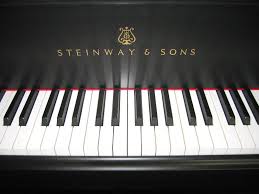
The concert piano, known in classical music circles as CD 503, was chosen specifically for Horowitz and presented in 1941. It was in his home until it was shipped to Russia when he made his triumphant return to the homeland he left in the 1920s.

Without Horowitz, the piano has traveled to from Fort Worth to Philadelphia and Florence, Ky. It’s made stops in London, Vancouver, Kansas City, Pensacola, Fla., Cleveland, Berlin and scores of other cities, large and small. There is no official estimate of how many individuals have played it, only a guess of “thousands.”

“It’s scheduled to be in our Chicago studios for just six weeks,” said Rhapsody Snyder, a Steinway employee and manager of this portion of the tour. “I’m not sure where it goes next, but don’t worry: It weighs between 700 and 800 pounds, but we move pianos every day.”

It is tuned for every performance, but there are standing orders that the piano’s “voice” will never be altered. It sounds today as it sounded when Horowitz played it.

via Historic Horowitz piano visits ONU – The Daily Journal: Local.

April 4 ~ Today in Music History

today

. 1843 ~ Hans Richter, Hungarian conductor

. 1859 ~ Daniel Emmett introduced I Wish I was in Dixie’s Land (later named Dixie) in New York City. Just two years later, the song became the Civil War song of the Confederacy.

. 1875 ~ Pierre Monteux, French conductor, famed for his interpretation of early 20th century music, he conducted the first performances of Stravinsky’s “Rite of Spring” and Ravel’s “Daphnis and Chloe.”

. 1891 ~ Distinguished American actor Edwin Booth made his final stage appearance in a production of Hamlet at the Brooklyn Academy of Music.

. 1895 ~ Arthur Murray Dancer

. 1915 ~ “Muddy” Waters, American blues singer and guitarist

. 1922 ~ Elmer Bernstein, Composer of Academy Award-winning film scores: Thoroughly Modern Millie (1967); Sudden Fear, The Man with the Golden Arm, Ten Commandments, Sweet Smell of Success, To Kill a Mocking Bird, Walk on the Wild Side and The Magnificent Seven

. 1938 ~ After seven years of singing on the radio, Kate Smith began a new noontime talk show.

. 1939 ~ Glenn Miller recorded his theme song, Moonlight Serenade, for Bluebird Records. Previously, the Miller theme had been Gone with the Dawn and, before then, Now I Lay Me Down to Sleep.

. 1939 ~ Hugh Masakela, Trumpeter

. 1946 ~ Serge Leiferkus, Russian baritone

. 1954 ~ Maestro Arturo Toscanini conducted his last concert with the NBC Symphony Orchestra at Carnegie Hall in New York City. Toscanini ended a 17-year association with the orchestra.

. 1964 ~ The Beatles set an all-time record on the Top 100 chart of Billboard magazine this day. All five of the top songs were by the British rock group. In addition, The Beatles also had the number one album as Meet the Beatles continued to lead all others. The LP was the top album from February 15 through May 2, when it was replaced by The Beatles Second Album. It was estimated at the time that The Beatles accounted for 60 percent of the entire singles record business during the first three months of 1964. The top five singles by The Beatles this day were:
1) Can’t Buy Me Love
2) Twist and Shout
3) She Loves You
4) I Want to Hold Your Hand
5) Please Please Me

. 1968 ~ Bobby Goldsboro received a gold record for the single, Honey. The poignantly sad song charted for 13 weeks, spending five weeks at number one. Goldsboro produced a total of 11 hits on the pop charts in the 1960s and 1970s. Honey was his only million seller and only number one hit.

. 1994 ~ Ginny Simms passed away.  She was an American popular singer and film actress.

. 2000 ~ Blues singer Mary Smith McClain, better known to fans as “Diamond Teeth Mary,” died in St. Petersburg, Fla. She was believed to have been 97 or 98. McClain was a teen-ager posing as a boy when she hopped a train in her native West Virginia to begin a new life as a traveling blues musician more than 80 years earlier. She went from singing at carnivals with the Rabbit Foot Minstrels to the Chicago Blues Festival, New York City’s Carnegie Hall and Europe. She sang with such music greats as B.B. King, Duke Ellington, Billie Holiday and Louis Armstrong. McClain, who once had diamonds set in her teeth, was considered the world’s oldest-performing true blues musician, appearing at local clubs until two weeks before her death.

April 3 ~ Today in Music History

today

. 1859 ~ Reginald De Koven, Composer

. 1895 ~ Mario Castelnuovo-Tedesco, Italian-born American composer

. 1897 ~ Johannes Brahms, German composer and pianist, died. He wrote four symphonies as well as concerti for piano and violin and highly-esteemed chamber works.

. 1924 ~ Doris Day, Singer

. 1942 ~ Wayne Newton, American singer of popular music

. 1944 ~ Tony Orlando, Singer, Tony Orlando and Dawn

. 1948 ~ Garrick Ohlsson, American pianist, winner of Poland’s Frederic Chopin piano competition in 1970. More about this competition.

. 1949 ~ Dean Martin and Jerry Lewis debuted on radio in an NBC program that ran until 1952.

. 1950 ~ Kurt Weil, German composer, died, best known for his “Threepenny Opera” and for his collaboration with actress and singer Lotte Lenya whom he married in 1926.

. 1952 ~ Harry Belafonte recorded his first songs for RCA Victor at Manhattan Center in New York City.

. 1952 ~ Hugo Winterhalter backed up the singer with an 18-piece orchestra. Among the sides recorded were Dogs A-Roving and Chimney Smoke.

. 1955 ~ Fred Astaire appeared on television for the first time on The Toast of the Town, with host, Ed Sullivan. Already an established dancer in films, Astaire was quick to become a TV sensation as well.

. 1965 ~ Bob Dylan appeared on the pop music charts for the first time. Subterranean Homesick Blues entered the Top 40 at number 39. The song stayed on the charts for eight weeks. Dylan would chart a total of 12 singles on the pop charts between 1965 and 1979. He appeared in the films Don’t Look Back, Eat the Document and Pat Garrett and Billy the Kid. He made the film Renaldo and Clara in 1978. Dylan co-starred in the film Hearts of Fire in 1987. He became a member of the Traveling Wilburys and was inducted into the Rock and Roll Hall of Fame in 1988. Dylan won the Grammy’s Lifetime Achievement Award in 1991.

. 1986 ~ For the first time in six years, major record companies decided to raise prices – between three and five percent.

. 1986 ~ Peter Pears, British operatic tenor, died. He was a collaborator with composer Benjamin Britten and first interpreter of many of Britten’s works, notably “Peter Grimes.”

. 1990 ~ Sarah Vaughan passed away

. 1999 ~ Lionel Bart, British composer of the musical “Oliver!,” died aged 68.

. 2001 ~ Lester “Big Daddy” Kinsey, a blues singer-guitarist known for his croaky voice, died of prostate cancer. He was 74. Kinsey and his sons, Kenneth, Donald and Ralph, became known as “Big Daddy” Kinsey and His Fabulous Sons. The sons now form the Gary-based Kinsey Report and record for Alligator Records, a Chicago blues label. The Kinsey Report has toured with the likes of the Allman Brothers Band. In the early ’90s, the elder Kinsey experienced one of his career highlights with I Am the Blues, a major-label release on Polygram. The album boasted a host of blues standouts backing up Kinsey, including Buddy Guy, James Cotton, Sugar Blue and Pinetop Perkins.

2015 ~ Andrew Porter died.  He was a renowned music critic and scholar and translator of opera.