January 2 ~ Today in Music History

today


• 1732 ~ Franz Xaver Brixi

• 1837 ~ Mily Balakirev, Russian Composer and collector of Russian Music
More information about Balakirev

• 1904 ~ James Melton, Singer in La Traviata

1905 ~ Sir Michael Tippett, British Composer and librettist
More information about Tippett

• 1917 ~ Vera Zorina (Eva Hartwig), Dancer, actress

1922 ~ Renata (Ersilia Clotilde) Tebaldi, Opera diva, lyric soprano. She debuted as Elena in Boito’s Mefistofele in 1944 and at the Metropolitan Opera in Verdi’s Otello in 1955
More information about Tebaldi
Anniversary of Tebaldi’s death

• 1930 ~ Julius LaRosa, Singer

• 1932 ~ Freddy Martin formed a new band and was hired to play the Roosevelt Grill in New York City. Martin became one of the big names in the music business. Merv Griffin later became Martin’s lead vocalist.

• 1936 ~ Roger Miller. American country-music singer, guitarist and songwriter, 11 Grammys in 1964-65

• 1941 ~ The Andrews Sisters recorded Boogie Woogie Bugle Boy on Decca Records. LaVerne, Maxine and Patti Andrews recorded in Los Angeles and the song was heard in the movie, “Buck Privates”, starring Bud Abbott and Lou Costello.

• 1949 ~ Chick Churchill, Keyboards with Ten Years After

• 1974 ~ Singing cowboy Tex Ritter died of a heart attack at the age of 67. His son, John, became a significant television star in “Three’s Company”, and in movies, including “Problem Child”.

• 1977 ~ Erroll Garner passed away

• 1980 ~ Officials of the Miss America Pageant announced that Bert Parks would not return as host of the annual beauty contest in Atlantic City, New Jersey. Parks sang There she is, Miss America for 25 years. He was replaced by Gary Collins.

• 1983 ~ The smash musical, “Annie”, closed on Broadway at the Uris Theatre after

• 2,377 performances: the sixth longest-running show on the Great White Way. The five longest-running shows at the time were: “Fiddler on the Roof”, “Life With Father”, “Tobacco Road”, “Hello Dolly”and “Music Man”.

• 2003 ~ Bluegrass music veteran James McReynolds, who with his mandolin-playing brother Jesse formed the legendary “Jim & Jesse” duo honored in the Country Music Hall of Fame, has died. Backed by their band, “The Virginia Boys,” their first single The Flame of Love, backed byGosh I Miss You All the Time, spent weeks on the national charts. Other songs regarded as Jim & Jesse classics are Cotton Mill Man, Diesel on My Tail, Are You Missing Me and Paradise. Jim’s enhanced high tenor and guitar playing combined with Jesse’s deep-voiced singing and unique mandolin style to produce their distinctive sound. Jesse developed a cross-picking technique and “split-string” style few could duplicate. The brothers’ performing career was interrupted by service in both World War II and the Korean War. They joined the Grand Ole Opry in Nashville in 1964, and their numerous honors included induction into the Country Music Hall of Fame’s “Walkway of Stars” and the International Bluegrass Music Association’s Hall of Honor.

• 2004 ~ Pioneering black actress and singer Etta Moten Barnett, who sang at the White House and appeared with Fred Astaire and Ginger Rogers in Flying Down to Rio, died. She was 102. Barnett was unique because of the romantic, sexy figures she portrayed – as opposed to the motherly nannies and maids that most black actresses were cast as in early Hollywood films. Barnett moved to New York City in her 30s and quickly landed a spot singing with the Eva Jessye Choir. The lead in the Broadway show Zombie followed. She later dubbed songs for actresses and was cast in the Busby Berkeley film Gold Diggers of 1933. In the 1933 film Flying Down to Rio, Barnett was cast as a Brazilian entertainer who sang The Carioca while Astaire and Rogers danced. The song was nominated for an Academy Award as best song. Her voice caught the attention of President Franklin D. Roosevelt, who invited her to sing at his White House birthday party. In 1942, she appeared as Bess in Porgy and Bess on Broadway and then toured with the show until 1945. Suffering from a strained voice, she gave her last formal concert in 1952

January 1 ~ Today in Music History

Happy-New-Year


Happy New Year!

• 1701 ~ Johann Joachim Agrell, Composer
More information about Agrell

• 1735 ~ Paul Revere, American patriot and music engraver

• 1764 ~ In a stunning demonstration of prodigious talent, the Royal Family at Versailles in France was treated to a brilliant recital by an eight year old musician. His name was Wolfgang Amadeus Mozart.

• 1878 ~ Edwin Franko Goldman, Composer

1900 ~ Xavier Cugat (Francisco de Asís Javier Cugat Mingall de Brue y Deulofeo). Spanish violinist, composer and band leader, married to Abbe Lane and Charo
More information about Cugat

• 1916 ~ Earl Wrightson, Actor, singer

• 1923 ~ Milt Jackson, Vibes with The Modern Jazz Quartet

• 1925 ~ Lucrezia Bori and John McCormack of the famous Metropolitan Opera in New York City made their singing debuts on radio this day. The broadcast over what was WEAF Radio (now WABC) encouraged others to sing on radio. Some of those were Hootie and the Blowfish, and Barry Manilow.

• 1928 ~ Frank Pourcel, Composer, violinist

• 1942 ~ Country Joe McDonald, Singer with Country Joe & the Fish

• 1953 ~ A sad day in country music, as the legendary Hank Williams died at the young age of 29. Undisputedly, the biggest star in the history of country music, Hank Williams’ legacy is being carried on by his son, Hank Williams, Jr.

• 1955 ~ Elvis Presley appeared at The Eagles Hall in Houston Texas. Presley went on to play over 250 shows in 1955.

• 1968 ~ A group known as The Blue Velvets decided to change its name this day and it’s a good thing they did. The new name soon became a national pop music favorite as Creedence Clearwater Revival climbed to stardom.

• 1972 ~ Maurice Chevalier passed away

• 1984 ~ Alexis Korner passed away

• 2000 ~ Ray Walston, who found commercial success playing a comical devil in the play “Damn Yankees” and an extraterrestrial on the sitcom “My Favorite Martian,” of natural causes at the age of 86. Walston caught the biggest break of his career when he won a Tony in 1955 for his performance in Broadway’s “Damn Yankees.” The smash musical told the story of a frustrated baseball fan who sells his soul. His screen debut came in the 1957 movie “Kiss Them For Me” with Cary Grant, and the next year he played the devil again in the film version of “Damn Yankees.” Walston snagged the role that would stick with him for a lifetime – that of a lovable alien on the TV show “My Favorite Martian” in 1963. The show was immensely popular, but Walston felt so typecast that he tried to highlight his dramatic abilities by returning to the stage when the TV comedy went off the air in 1966. He stayed in theater for several years before re-emerging with a succession of solid supporting roles in movies and television. Nearly 30 years after the end of the lighthearted “My Favorite Martian,” Walston’s role on “Picket Fences” as acerbic Judge Henry Bone earned Walston successive Emmys in 1995-96.


maryorhhappynewyear

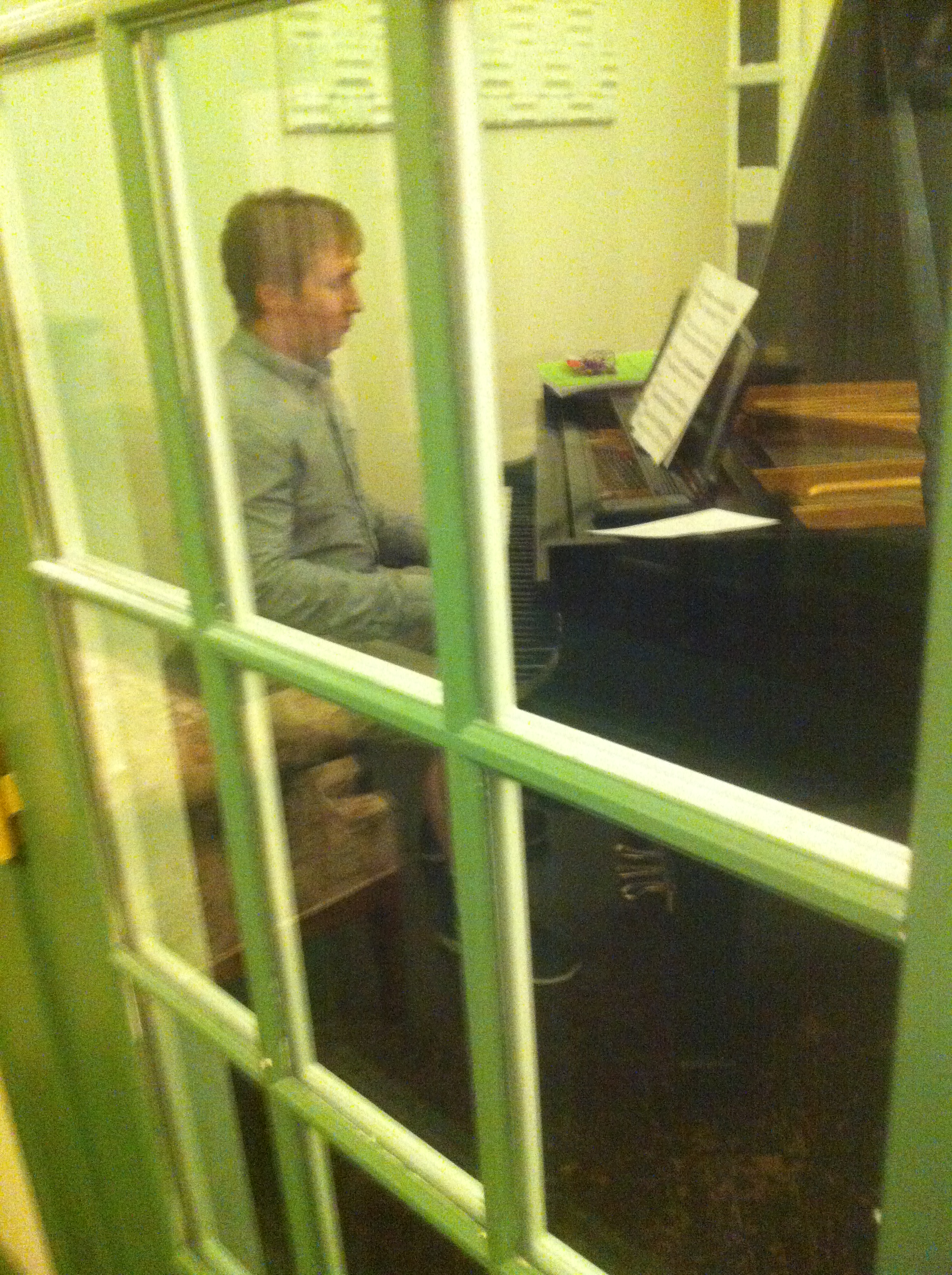
At a Manhattan Soup Kitchen, Food on the Table and Chops on the Piano – NYTimes.com

The church’s soup kitchen program fills quickly, bringing a din of chitchat and the scraping of chairs on floor tiles and the thud of trays being knocked against the inside of a trash can.

But above it all, each and every weekday, hovers another sound, wholly unexpected: the clear, clean notes of a concert grand piano, there in a far corner.

On a recent Wednesday, like every Wednesday, it is not so much being played as it is being worked over by a man who seems to be warming up for a gig at a candlelit downtown jazz club.


Read more and see a video At a Manhattan Soup Kitchen, Food on the Table and Chops on the Piano – NYTimes.com.

Local Musical Events this Sunday!

christmas-music

The Pender UMC Choir, Handbells, Orchestra and Liturgical Dancer will present Joel Raney’s Christmas Cantata, Celebrate the Season, at 8:15 and 11:00 am on Sunday, December 7.

Contemporary and upbeat, this superb cantata celebrates the excitement, joy and true meaning of the Christmas season. Joel Raney retells the Christmas story through a unique partnering of creative, original songs with traditional carols. Most of the originals incorporate strains from traditional carols, weaving a tapestry with just enough familiarity  to warm our hearts and with enough originality to surprise our ears and lift our spirits. The styles he uses range from traditional classical, to jazz and everything in between.


At Pender’s neighbor, Christ Presbyterian:

The Cathedral Brass will perform “A Cathedral Brass Christmas” at Christ Presbyterian Church, Fairfax, on Sunday, December 7th at 4:00 pm. The concert features beloved Christmas carols and other holiday favorites, including ‘Twas the Night Before Christmas, narrated by Alan Cole.

Other selections includeLeRoy Anderson’s Suite of Carols, Antonio DiLorenzo’s The Toymaker, and Alfred Reed’s Joyeux Noel. Jazz trumpeter Roger Rossi, former member of the Army Blues, will be featured. The concert is free; voluntary donations are gratefully accepted.

Cathedral Brass is a brass choir based at Vienna Presbyterian Church and performs under the direction of L. Thomas Vining.

November 19 ~ Today in Music History

today


• 1724 ~ First Performance of J. S. Bach’s Sacred Cantata No. 26 Ach wie flüchtig, ach wie nichtig performed on the 24th Sunday following Trinity. A portion of Bach’s second annual Sacred Cantata cycle in Leipzig, 1724-25.

• 1736 ~ J. S. Bach named court composer by Poland’s King Agustus III.

• 1739 ~ First Performance of Jean-Philippe Rameau‘s opera Dardanus in Paris.

• 1826 ~ Composer Felix Mendelssohn and his sister Fanny performed his overture to “A Midsummer Night’s Dream” for the first time.

• 1828 ~ Death of Austrian composer Franz Schubert in Vienna, at the age of 31 from typhus.   He is buried near Beethoven.

• 1859 ~ Mikhail Ippolitov-Ivanov, Russian composer and conductor
More information about Ippolitov-Ivanov

• 1874 ~ Birth of composer Karl Adrian Wohlfahrt.

• 1875 ~ First Performance of Tchaikovsky‘s Third Symphony, in Moscow.

• 1888 ~ Piano Debut in Boston of composer Edward MacDowell with the Kneisel Quartet.

• 1905 ~ Tommy Dorsey, American trombonist and bandleader

• 1923 ~ First Performances of Béla Bartók‘s Five Dances and Zoltán Kodály‘s Psalums Hungaricus in Budapest, marking the 50th anniversary of the union of cities Buda and Pest.

• 1936 ~ Birth of classical music commentator (Detroit Symphony broadcasts) Dick Cavett, in Kearney, Nebraska. ABC-TV talk show host (Dick Cavett Show).

• 1936 ~ First concert recorded on magnetic tape with the London Philharmonic orchestra conducted by Sir Thomas Beecham at BASF’s own concert hall in Ludwigshaven, Germany.

• 1937 ~ Ray Collins, Songwriter

• 1938 ~ Hank Medress, Singer with The Tokens, record producer

• 1943 ~ Fred Lipsius, Piano, sax with Blood Sweat & Tears

• 1943 ~ Stan Kenton and his orchestra recorded Artistry in Rhythm, the song that later become the Kenton theme. It was Capitol record number 159. The other side of the disk was titled, Eager Beaver.

• 1944 ~ Agnes Baltsa, Greek mezzo-soprano

• 1954 ~ Sammy Davis, Jr. was involved in a serious auto accident in San Bernardino, CA. Three days later, Davis lost the sight in his left eye. He later referred to the accident as the turning point of his career.

• 1957 ~ American conductor Leonard Bernstein named Music Director of the New York Philharmonic. First American-born and educated conductor named to head an important American Orchestra.

• 1961 ~ A year after Chubby Checker reached the #1 spot with The Twist, the singer appeared on The Ed Sullivan Show to sing the song again. The Twist became the first record to reach #1 a second time around, on January 13, 1962.

• 1962 ~ For the first time, a jazz concert was presented at the White House. Jazz had previously been served as background music only.

• 2000 ~ First Performance of Philip Glass‘ Double Concerto for Timpani and Orchestra, by the American Composers Orchestra. Lincoln Center in New York.

2004 ~ Composer Cy Coleman, who wrote the musical “Sweet Charity” and whose songs included such Frank Sinatra classics as WitchcraftBig Spender and The Best is Yet to Come, died at the age 75
More information about Cy Coleman

Adapted from http://www.oconnormusic.org/month-nov.htm

November 18 ~ Today in Music

today

• 1307 ~ The story of William Tell shooting the apple off of his young son’s head is said to have taken place on this day. Gioachino Rossini made this story into an opera.

• 1680 ~ Birth of French-Belgian composer and flutist Jean Baptiste Loeillet in Gent. d-London, 19 JUL 1730.

• 1736 ~ Birth of German composer Carl Friedrich Christian Fasch in Zerbst. d-Berlin, 3 AUG 1800.

• 1741  ~ George Frideric Handel arrived in Dublin at the invitation of the country of Ireland to attend current concert season. Presented numerous concerts in the Irish capital, including the first performance of his oratorio Messiah early in 1742.

• 1763 ~ Leopold Mozart and his two children, Wolfgang and Maria, arrive in Paris on their European concert tour.

• 1786 ~ Carl Maria von Weber, German composer, conductor and pianist, began the era of German romantic music
More information about von Weber

• 1838 ~ Sir William Schwenck Gilbert, British playright and librettist, best known for his comic operettas with Arthur Sullivan

• 1859 ~ Birth of Russian composer and pianist Sergei Mikhailovich Liapunov, in Yaroslavl. d-Paris, 1924.

• 1888 ~ First Performance of Peter Ilyich Tchaikovsky’s 5th Symphony, in St. Petersburg.

• 1889 ~ Amelita Galli-Curci, Opera soprano, “If not the greatest coloratura soprano of all time, she must surely be recognized as among the world’s finest examples of true operatic artistry.”

• 1891 ~ First Performance of Tchaikovsky‘s symphonic work The Voyevode in Moscow.

• 1892 ~ First concert at Carnegie Hall by the New York Philharmonic.

• 1899 ~ Eugene Ormandy (Jeno Blau), Hungarian-born American conductor of The Philadelphia Orchestra
More information about Ormandy

• 1909 ~ Johnny (John Herndon) Mercer, Academy Award-winning composer, lyricist, wrote or co-wrote over a thousand songs

• 1926 ~ Dorothy Collins (Marjorie Chandler), Singer on Your Hit Parade, sang with Benny Goodman band

• 1936 ~ Hank Ballard, Singer, songwriter with The Midniters, wrote and recorded The Twist
More about Hank Ballard

• 1950 ~ Graham Parker, Singer with Graham Parker and The Rumour

• 1953 ~ Herman Rarebell, Drummer with Scorpions

• 1960 ~ Kim Wilde, Singer

• 1967 ~ Lulu’s To Sir with Love, from the movie of the same name, started its fifth and final week at number one.

• 1974 ~ Frank Sinatra emerged from retirement to do a TV special with dancer Gene Kelly. The show was a smash hit and revived Sinatra’s career.

• 1975 ~ John Denver received a gold record for I’m Sorry.

• 1986 ~ The Roseland Ballroom reopened in New York City. The 67-year-old home for those wanting to dance cheek to cheek featured America’s dean of society music, Lester Lanin. He played for patrons who wanted to cut a rug on the 112-by-55-foot, maple wood dance floor.

• 1999 ~ Doug Sahm passed away

• 2003 ~ First Performance of John Corigliano‘s Snapshot: Circa 1909. Elements String Quartet at Merkin Concert Hall, NYC.

• 2003 ~ Oscar-nominated composer, conductor and arranger Michael Kamen, one of Hollywood’s most sought-after musicians, died at age 55 after suffering from multiple sclerosis for several years. The native New Yorker and Juilliard School of Music Graduate was one of Hollywood’s most successful composers who worked on music for the “Lethal Weapon” series and scored “Die Hard” among many other films. In the late 1960s, he helped found the New York Rock ‘n’ Roll Ensemble, a critically acclaimed group that fused classical with pop and recorded five albums before dissolving. In the 1970s, Kamen scored ballets, served as musical director for David Bowie’s “Diamond Dogs” tour and began writing scores for film. Although he began in Hollywood working on offbeat films like “Polyester” and “Brazil,” he turned more mainstream in the 1980s, working on the “Lethal Weapon” series, “Robin Hood: Prince of Thieves,” “Mr. Holland’s Opus” and “X-Men,” plus the HBO series “Band of Brothers.” In 1991, Kamen earned his first Academy Award nomination for “(Everything I Do) I Do It for You,” the Bryan Adams pop hit from the movie, “Robin Hood: Prince of Thieves.” Co-written with Adams and Robert John “Mutt” Lange, the song received two Grammys. The three united in 1993 for “All for Love.” In 1999, Kamen conducted the orchestra which backed Metallica on their S&M project.
Adapted from http://www.oconnormusic.org/month-nov.htm

November 17 ~ Today in Music

today

• 1726 ~ The first performance of J. S. Bach‘s Sacred Cantata No. 55 Ich armer Mensch, ich Sündenknecht on the 22nd Sunday following Trinity. Was part of Bach’s third annual Sacred Cantata cycle in Leipzig 1725-27

• 1876~ The first performance of Peter Ilyich Tchaikovsky‘s March Slav in Moscow.

• 1877 ~ The first production of Gilbert and Sullivan’s opera, The Sorcerer, was presented, in London.

• 1888~ The first production of Tchaikovsky‘s Fifth Symphony in St. Petersburg.

• 1891 ~ Poland’s premier and premier ivory tickler, Ignace Jan Paderewski, made his American debut at Carnegie Hall in New York City. In later years, Paderewski, who suffered from arthritis, settled in Paso Robles, CA. The hot mineral baths located there eased his pain. He played only Steinway grand pianos custom-built to his specifications. In fact, five were made just for his use.

• 1925 ~ Sir Charles Mackerras, Australian conductor

• 1930 ~ David Amram, American composer and French-horn player

• 1938 ~ Gordon Lightfoot, Canadian folk singer, songwriter and guitarist

• 1938 ~ Orchestra leader Kay Kyser, speaking to an audience at the College of the City of New York (CCNY) told of the “inner workings and artistic features of swing music.” It marked the first of a series of lectures on swing music presented by Kyser, who went on to presentThe Kollege of Musical Knowledge on radio.

• 1941 ~ Gene Clark, Singer, guitar with The Byrds

• 1942 ~ Bob Gaudio, Singer with The Royal Teens; The Four Seasons

• 1946 ~ Martin Barre, Guitarist with Jethro Tull

• 1950 ~ Roberta Peters filled in for the lead in Mozart’s Don Giovanni, making her debut at the Metropolitan Opera in New York City. She would become one of the Met’s most famous stars.

• 1962 ~ The 4 Seasons, with Frankie Valli as lead singer, began a five-week run at the top of the tunedex with Big Girls Don’t Cry.

• 1967 ~ Ronald DeVoe, Singer with New Edition

• 1970 ~ Elton John recorded an album live, on what was WABC-FM in New York City. It marked the first time that a concert was aired live and recorded for release as aired. The LP was titled, 11/17/70.

• 1981 ~ Bob Eberly died

• 2001 ~ Jerry Jerome, a tenor sax player who was a featured soloist with the bands of Glenn Miller and Benny Goodman, died of leukemia. He was 89. One of the big names in the Big Band era, Jerome was a featured soloist with the Glenn Miller, Benny Goodman, Red Norvo and Artie Shaw orchestras. He then became a successful musical director and conductor on radio and television. Jerome also established a music business, scoring and arranging commercial jingles. Three years ago, Arbors Records released Jerome’s “Something Old, Something New.” The sequel recording, “Something Borrowed, Something Blue,” will be released in December. Born in Brooklyn, N.Y., Jerome started playing the sax while in high school. He attended the University of Alabama and went on the medical school, playing gigs at jazz clubs to earn tuition money. He joined Goodman’s orchestra at the height of its popularity in 1938. When Goodman broke up his band in 1940, Jerome joined Shaw. While with Shaw, he appeared in the film “Second Chorus,” with Fred Astaire and Burgess Meredith.

• 2003 ~ Arthur Conley, a 1960s soul singer and protege of Otis Redding’s, died at his home in the town of Ruurlo, in the eastern Netherlands. He was 57. Conley was born in Atlanta and started his recording career in 1959 as leader of the group Arthur and the Corvets. He was best known for his 1967 hit, Sweet Soul Music, which he co-wrote with Redding based on a number by Sam Cooke. Conley had several minor hits in the following two years. He moved to Europe in the early 1970s after several tours of the continent, deciding that he was “fed up with the pressure” in the United States, said Giesen. In the Netherlands, Conley appeared on television and radio, and ran an independent record label. In the last five years he was an adviser to The Original Sixties R&B and Soul Show, which sought to reproduce the sound and look of the heyday of soul.


Adapted from http://www.oconnormusic.org/month-nov.htm

November 16 ~ Today in Music

today


• 1569 ~ Birth of German organist and composer Paul Sartorius in Nuremberg. d-28 February 1609, Innsbruck.

• 1615 ~ Birth of French violinist and composer Guillaume Dumanoir, II. He composed dance music enjoyed by Louis XIV

• 1667 ~ Death of composer Nathaniel Schnittelbach, at 34. b-1633.

• 1715 ~ Birth of composer Girolamo Abos on the island of Malta. Italian opera and church music.

• 1720 ~ Birth of Italian composer Carlo Antonio Campioni.

• 1757 ~ Birth of American composer Daniel Read, of the First New England School, and one of the primary figures in early American classical music. d-4 DEC 1836.

• 1766 ~ Birth of French violinist, teacher and composer Rodolphe Kreutzer in Versailles. In 1810 broken arm ended virtuoso career. Beethoven dedicated sonata op 47 to him. d-Geneva, 6 JAN 1831.

• 1775 ~ Death of German composer Karl Marian Paradeiser, at 28.

• 1780 ~ Birth of English composer Robert Archibald Smith.

• 1829 ~ Birth of Russian pianist, conductor and composer Anton Rubenstein.

• 1840 ~ Birth of composer Frederick Scotson Clark.

• 1848 ~ Frédéric Chopin played his final piano concert at a Polish benefit ball at Guildhall in London.

• 1850 ~ Giuseppe Verdi‘s opera Stifellio was first performed at the Teatro Grande in Trieste despite difficulties with the censors which resulted in cuts and changes.

• 1852 ~ Birth of American soprano Minnie Hauk in NYC. d-near Lucerne, 6 FEB 1929.

• 1854 ~ First Performance of Anton Rubinstein‘s Ocean Symphony in Leipzig.

• 1860 ~ Birth of Viennese harpist Edmund Scheucker.

• 1861 ~ Birth of composer Vaclav Suk.

• 1861 ~ First Performance of Johannes Brahms‘ Piano Quintet No. 1 in g, Op. 25, at a rehearsal in Hamburg, with pianist Clara Schumann.

• 1862 ~ The work noted above received its official premiere with members of the Hellmesberger Quartet; Brahms at the piano, in Vienna.

• 1870 ~ Birth of Australian composer Alfred Hill in Melbourne. d-Sydney, 30 OCT 1960.

• 1873 Birth of Swedish tenor David Karl Björling, in Harmånger parish of northern Sweden’s Hälsingland province. d. Aug. 16, 1926.

• 1873 ~ W.C. Handy, American blues composer and bandleader
More information about Handy

• 1889 ~ George S. (Simon) Kaufman, Playwright: The Cocoanuts, A Night at the Opera, with Moss Hart, The Man Who Came to Dinner, You Can’t Take It with You

• 1894 ~ Debut of opera star Enrico Caruso in Mario Morelli’s L’Amico Francesco at Naples Teatro Nuovo.

1895 ~ Paul Hindemith, German-born American composer and conductor Read quotes by and about Hindemith
More information about Hindemith

• 1896 ~ Lawrence Mervil Tibbett, American baritone

• 1905 ~ Eddie (Albert) Condon, Guitarist, bandleader, promoter of Dixieland Jazz

• 1908 ~ Conductor Arturo Toscanini made his debut in the United States this day. He appeared at the Metropolitan Opera House in New York, conducting Aida.

• 1931 ~ Bob Gibson, Singer, songwriter, leader of folk music movement in late ’50s, duo of Gibson and (Bob) Camp

• 1932 ~ The Palace in New York City closed its doors. It was the most famous vaudeville theatre in America. Later, it became a movie house with live performances preceding the flicks; most notably: the team of Dean Martin and Jerry Lewis in their heyday.

• 1935 ~ The Rodgers and Hart musical, Jumbo, opened in New York City for a run of 233 performances.

• 1937 ~ Bob Crosby and his orchestra recorded South Rampart Street Parade on Decca Records.

• 1945 ~ Martine Van Hammel, Ballet, American Ballet Theatre

• 1955 ~ ‘Tennessee’ Ernie Ford drove to the top spot on the record charts on this day. Sixteen Tons, where he owed his “soul to the company store…”, became the fastest-selling record in history, jumping to #1 in just 3 weeks. The tune, on Capitol Records, stayed at #1 for eight weeks.

• 1970 ~ Anne Murray received a gold record for Snowbird. She was the first Canadian recording artist to receive a gold record.

• 2000 ~ Russ Conway, a British pianist known as the “Prince Charming of Pop” who sold
More than 30 million records in the 1950s and ’60s, died at age 75. He had 17 consecutive hits in the late 1950s and early 1960s, and won a silver disc when his record Roulette topped 250,000 sales – a total rapidly equaled by three other hits, Sidesaddle, China Tea and Snow Coach. Conway’s formal piano education consisted of one lesson at age 4. He left school at 14 and got work in a lawyer’s office. But he was sent to juvenile detention for three years for taking money he found in a package. In a detention center, he found a piano to play. While doing a stint as a pianist in a club, he was discovered by choreographer Irving Davies. He went on to provide piano accompaniment to a string of singers. Soon he was composing the songs that made him famous and won him the nicknames “Prince Charming of Pop” and the “Sheik of the Keyboard.”

• 2001 ~ Blue guitarist and singer Isaac Scott, a major figure in the city’s music scene for more than a quarter century, died of complications from diabetes. He was 56. A stream of musicians paid their respects to Scott, said his ex-wife, Eloise DePoe. He was found in his apartment Nov. 4 and never regained consciousness. Scott recorded several albums, including “The Isaac Scott Band,” “Big Time Blues Man” and “High Class Woman.” He also appeared on the compilation albums “Live at the San Francisco Jazz Festival” and “Live at the Roadhouse.” Primarily a “cover artist,” Scott did not write his own songs, which hindered national recognition. But he received several local honors, including the Washington Blues Society’s Hall of Fame (1991) and lifetime-achievement (2000) awards. He also performed at last year’s opening of the Experience Music Project. Scott taught himself piano and guitar, and started out playing gospel music, once touring the West Coast with the Five Blind Boys of Mississippi. In 1974, he turned his attention to blues, with a sound flavored by his love of Seattle-born guitar legend Jimi Hendrix. Like Albert Collins, an early influence, Scott played electric guitar with his thumb instead of a pick, which contributed to his distinctive sound. He also was known for his stamina, often playing two- and three-hour sets.

• 2001 ~ Tommy Flanagan, a jazz pianist who worked with such artists as Ella Fitzgerald, died of an arterial aneurysm. He was 71. Flanagan, part of his own classic jazz trio, accompanied Fitzgerald for 20 years, also acting as her musical director. He also worked for Tony Bennett. He became a celebrated figure in jazz with such trio albums as “Jazz Poet” (1989) and “Let’s” (1993). Flanagan’s trio included bassists George Mraz and Peter Washington, and drummers Kenny Washington, Lewis Nash and Albert Heath. Flanagan won the distinguished Danish Jazzpar Prize in 1993. Born in Detroit, Flanagan was the youngest of six children. He recorded “Sunset and the Mockingbird: The Birthday Concert,” live at the Vanguard in 1998. He was to appear at Iridium this holiday season.

Adapted from http://www.oconnormusic.org/month-nov.htm

Today in Music History ~ November 15

today

• 1905 ~ Mantovani, Orchestra leader, (1953 UK No.1 single ‘Moulin Rouge’, 1957 US No. 12 single ‘Around The World In Eighty Days’) was born. He died on 30th March 1980.

• 1914 ~ Jorge Bolet, Cuban-born American pianist was born

• 1926 ~ NBC broadcast its first music program. It featured the New York Symphony Orchestra and many distinguished soloists. 24 stations carried the first broadcast. The program was a gala 4½-hour broadcast from the Waldorf-Astoria Hotel in New York City. Two remote pickups were also on the program. Opera star Mary Garden sang from Chicago and Will Rogers presented a humorous monologue from Independence, Kansas. Charles Lindbergh was among the luminaries who attended the broadcast.

• 1928 ~ C.W. McCall (William Fries), Singer, songwriter was born

• 1932 ~ Petula Clark, British pop singer (Downtown, My Love) was born

• 1933 ~ Clyde (Lensley) McPhatter, Singer with the Dominoes was born

• 1937 ~ Little Willie John (William Edward John), Singer, convicted of manslaughter

• 1942 ~ Daniel Barenboim, Argentine-born Israeli pianist and conductor of English Chamber Orchestra was born

• 1945 ~ Anni-Frid Lyngstad, Singer with Abba was born

• 1946 ~ Janet Lennon, Singer with The Lennon Sisters was born

• 1954 ~ Tony Thompson, Drummer with Chic; played with Led Zeppelin, Live Aid, drummer with Patti LaBelle was born
More about Thompson

• 1954 ~ Studio One on CBS-TV featured Joan Weber singing Let Me Go, Lover. The song had enjoyed limited popularity before the TV show, but skyrocketed to fame immediately after.

• 1956 ~ Love Me Tender, the first Elvis Presley film, premiered.

• 1967 ~ Mari Fernandez, Singer with Sweet Sensation was born

• 1969 ~ The first album featuring Karen and Richard Carpenter was released by A&M Records. Offering would not be a big seller, but a single from the disc, a remake of The Beatles’ Ticket to Ride, would gain national attention. Their next album, however, would establish them as major international stars (Close to You).

• 1974 ~ The most expensive 2-record album was released-on Casablanca Records. It was a comedy disc titled, Here’s Johnny – Magic Moments from the Tonight Show.

• 1974 ~ The group, Faces, released their tune with the longest title. You Can Make Me Dance, Sing or Anything (Even Take the Dog for a Walk, Mend a Fuse, Fold Away the Ironing Board, Or Any Other Domestic Shortcomings).

• 1980 ~ After years of success on the music charts with the New Christy Minstrels and the First Edition, Kenny Rogers got his first #1 song. Lady, written by Lionel Richie, stayed at the top for six weeks.

• 1986 ~ The first major operetta written by Gian Carlo Menotti in over 20 years was presented at the Kennedy Center in Washington, DC. Starring tenor Placido Domingo, Goya was said by critics to be only “intermittently good.”

• 2003 ~ David Holt, a former child actor once touted by Paramount Pictures as its answer to Shirley Temple, has died. He was 76. Holt, who later became a successful jazz musician and songwriter, died of congestive heart failure. Although his career never rivaled Temple’s, Holt had his share of success as a child actor, playing Elizabeth Taylor’solder brother in “Courage of Lassie” in 1946 and appearing as bratty Sidney Sawyer in “The Adventures of Tom Sawyer” in 1938. He also played the crippled boy for whom New York Yankee great Lou Gehrig hit a home run in “Pride of the Yankees” and appeared in “The Big Broadcast of 1936.” Paramount signed Holt to a long-term contract after his 1934 role as a boy whose mother dies in “You Belong To me.” Holt eventually segued into music. He co-wrote the song The Christmas Blues with Sammy Cahn and wrote the music for numerous jazz albums. He hosted the TV show “American Music Shop” in the 1990s.

Adapted from http://www.oconnormusic.org/month-nov.htm

Steinway Will Relocate in Midtown

I found this article from the New York Times very interesting about the Steinway Store moving.

The little room where Rachmaninoff practiced, the famous basement where up-and-coming virtuosos catnapped under the pianos, the palatial rotunda conceived by the architecture firm that designed Grand Central Terminal — Steinway & Sons is saying goodbye to all that and moving to a corner of a 1970s office building 14 blocks away.

Steinway sold its 1920s building on West 57th Street in 2012, with a deadline to leave by the end of December. Executives of the piano company are now close to signing a 15-year lease for 40,000 square feet of space at 1133 Avenue of the Americas, at West 43rd Street.

via Changing Keys, Steinway Piano Store Will Relocate in Midtown – NYTimes.com.


We didn’t know it at the time but when my son, Michael, and I practiced there in August, we were the last people to use their practice rooms.

When we play Eine Kleine Nachtmusik by Mozart arranged for 2 pianos November 30, we will be the last people to play in the old Steinway Hall.

2014-08-10 12.49.02 2014-08-09 12.20.39 2014-08-09 12.19.52 2014-08-09 12.16.45 2014-08-09 12.15.17