• 1918 ~ Milton DeLugg, Bandleader on The Tonight Show Starring Johnny Carson; Milton DeLugg and His Orchestra: Abe Burrows’ Almanac, The Chuck Barris Rah Rah Show, Dagmar’s Canteen, Doodles Weaver, The Gong Show, Judge for Yourself, Your Hit Parade; played accordion in The Milton DeLugg Quartet and songwriter
• 1928 ~ Jörg Demus, Austrian pianist
• 1934 ~ Billy Paul (Paul Williams), Singer
• 1941 ~ Tom McGuinness, Bass, guitar with Manfred Mann; McGuinness Flint; and Blues Band
• 1942 ~ Ted Bluechel, Jr., Singer, drummer with The Association
• 1944 ~ Eric Bloom, Singer, guitarist
• 1945 ~ John Densmore, Musician with The Doors
• 1952 ~ Michael McDonald, Singer, songwriter, keyboard with The Doobie Brothers
• 1960 ~ Rick Savage, Bass with Def Leppard
• 1972 ~ Motown’s Temptations reached the #1 spot on the top 40 charts with Papa Was a Rollin’ Stone. It was the fourth #1 hit for the Temptations, joining My Girl, I Can’t Get Next to You and Just My Imagination.
• 1709 ~ Franz Xaver Richter, Austro-Moravian singer, violinist, composer, conductor and music theoretician
• 1879 ~ Gilbert and Sullivan’s operetta, H.M.S. Pinafore, opened. Arthur Sullivan conducted the orchestra while William Gilbert played the role of a sailor in the chorus and in the Queen’s Nay-vee.
• 1913 ~ Mary Martin, American singer and actress, primarily for the musical theater, Tony and Emmy Award-winning actress, mother of actor Larry Hagman
More about Mary Martin
• 1924 ~ Lady Be Good opened in New York City. George Gershwin wrote the music while Fred and Adele Astaire were well-received by the show’s audience for their dancing talents.
• 1936 ~ Lou Rawls (Louis Allen), American Grammy Award-winning singer of popular music, TV regular on Dean Martin Presents
• 1938 ~ Sandy Nelson, Drummer
• 1939 ~ Diane Lennon, Singer with The Lennon Sisters on Lawrence Welk Show, Jimmy Durante Presents the Lennon Sisters
• 1940 ~ Glenn Miller got a call from ASCAP (American Society of Composers and Publishers). He was informed that he couldn’t use his Moonlight Serenade as his band’s theme song. He had to use Slumber Song instead because of an ASCAP ban.
• 1945 ~ Bette Midler, American Grammy Award-winning pop-rock singer and actress
• 1945 ~ Burl Ives made his concert debut. He appeared at New York’s Town Hall. We lovingly listen every year for the voice of this old-time radio personality as the narrator and banjo-pickin’ snowman in TV’s Rudolph the Red-Nosed Reindeer.
• 1968 ~ Promises, Promises opened on Broadway. The play ran for 1,281 performances, earning $35,000 in profits each week of 1969. Dionne Warwick had a hit version of the title song.
“Invitation to a Miracle: A Cantata for Christmas” by Joseph Martin
Presented by: The Pender UMC Sanctuary Choir and Orchestra
Sunday, December 4 at 8:15 am, 9:30 am and 11:00 am
Joyful sounds abound in this colorful Christmas gift for choirs. Through poetic narration, scripture passages and creatively arranged carols, the timeless story of the birth of Christ is presented. Gathered around the wonders that accompanied Jesus’ birth, this cantata journeys from the miracle of prophecy to the incarnation and proclamation of this most significant moment.
Pender is excited to once again host Christmas Vacation Bible School!
We’d love to lighten your load this holiday season and give you the gift of time to prepare for Christmas. Your children will have a wonderful time learning about the true meaning of Christmas while moving through different rotations of Christmas Story, craft, music and recreation. The children will be served lunch, so please note any allergies your child has on the registration form.
Children ages 3 through 6th grade are welcome. Please note that all children attending MUST be potty-trained.
Since it is Jesus’s Birthday we ask each participant to consider bringing a NEW toy / book as a gift for the “TOYS FOR TOTS” Campaign. The Marines will distribute all your donations to less fortunate children before Christmas. Please don’t bring any food or toy guns/weapons and also gift needs to be unwrapped.
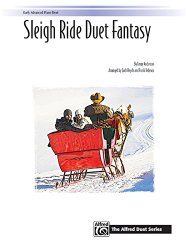
I have loved this version of Sleigh Ride since I first saw it on YouTube:
When I found out it was available in sheet music, I rushed to amazon to buy several copies for myself, my son, my friend, basically, everyone I thought could play it.
Leroy Anderson’s “Sleigh Ride” is a holiday favorite, and this setting for advanced piano duet gives it a fresh twist. It begins with Anderson’s jingling melody and some musical “banter” between the Primo and Secondo players, and then it launches into a series of variations which take the listener on a journey through a variety of styles—from gently swirling, impressionistic arpeggios to a triumphant coda with brilliant, virtuosic passagework. Audiences will enjoy a number of other musical surprises along the way.
If you want to borrow it, let me know early because someone at the studio may already be playing it!
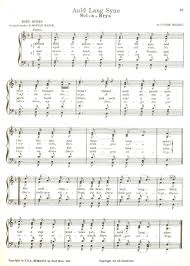
“Auld Lang Syne” is a Scots poem written by Robert Burns in 1788 and set to the tune of a traditional folk song. It is well known in many countries, especially in the English-speaking world; its traditional use being to celebrate the start of the New Year at the stroke of midnight. By extension, it is also sung at funerals, graduations and as a farewell or ending to other occasions. The international Boy Scout youth movement, in many countries, uses it as a close to jamborees and other functions.
The song’s Scots title may be translated into English literally as “old long since”, or more idiomatically, “long long ago”, “days gone by” or “old times”. Consequently “For auld lang syne”, as it appears in the first line of the chorus, might be loosely translated as “for (the sake of) old times”.
Auld Lang Syne is one of Scotland’s gifts to the world, recalling the love and kindness of days gone by, but in the communion of taking our neighbours’ hands, it also gives us a sense of belonging and fellowship to take into the future.
It is one of the many folk songs from the great Lowland Scots tradition collected and fashioned by the pen of one of the world’s greatest songwriters. Burns devoted the last years of his life to the song tradition, and often a mere fragment from some old ballad was transformed by his alchemy into a memorable love song or Scots poem. With Auld Lang Syne, though, the brilliance was already there; this is the Bard’s first mention of it in a letter to Mrs Dunlop in 1788:
“… Light be the turf on the breast of the heaven inspired Poet who composed this glorious fragment.”
One of the most interesting facts is that the Auld Lang Syne tune which is sung from Times Square to Tokyo, and has conquered the world, is not the one Robert Burns put the original words to. The older tune though is still sung by traditional singers. It has a more douce, gentle, nostalgic feel to it than the popular tune a mood evoked by the subtle use of the traditional air sung by Mairi Campbell in the first Sex and the City movie. However, whichever tune it is sung to, and wherever in the world it is sung, Auld Lang Syne retains the great emotional resonance of the original traditional song of the Scottish people of those days in the distant past. Lets leave the last word to Burns himself:
“… is not the Scots phrase, ‘Auld Lang Syne’, exceedingly expressive – there is an old song and tune which has often thrilled thro’ my soul”.
Fancy singing along yourself? Here are the verses of the words to Auld Lang Syne:
Should auld acquaintance be forgot,
And never brought to mind?
Should auld acquaintance be forgot,
And auld lang syne.
Chorus:
For auld lang syne, my jo,
For auld lang syne,
We’ll tak a cup o’ kindness yet,
For auld lang syne,
And surely ye’ll be your pint-stowp!
And surely I’ll be mine!
And we’ll tak a cup o’ kindness yet,
For auld lang syne.
Chorus
We twa hae run about the braes
And pu’d the gowans fine;
But we’ve wander’d mony a weary foot
Sin auld lang syne.
Chorus
We twa hae paidl’d i’ the burn,
Frae mornin’ sun till dine;
But seas between us braid hae roar’d
Sin auld lang syne.
Chorus
And there’s a hand, my trusty fiere!
And gie’s a hand o’ thine!
And we’ll tak a right guid willy waught,
For auld lang syne.
Chorus
Should old acquaintance be forgot,
And never brought to mind?
Should old acquaintance be forgot,
And long, long ago.
Chorus
And for long, long ago, my dear
For long, long ago,
We’ll take a cup of kindness yet,
For long, long ago
And surely youll buy your pint-jug!
And surely I’ll buy mine!
And we’ll take a cup of kindness yet,
For long, long ago.
Chorus
We two have run about the hills
And pulled the daisies fine;
But we’ve wandered manys the weary foot
Since long, long ago.
Chorus
We two have paddled in the stream,
From morning sun till dine;
But seas between us broad have roared
Since long, long ago.
Chorus
And there’s a hand, my trusty friend!
And give us a hand of yours!
And we’ll take a deep draught of good-will
For long, long ago.
Chorus
Here is an old kinescope from over 50 years ago!! For 100 years, the slow drop of a lighted glass ball on New Year’s Eve from atop One Times Square in New York City has become an American tradition. A huge crowd gathers every year to welcome in the New Year.
Beginning in 1956, Guy Lombardo & His Royal Canadians entertained the US on New Year’s Eve with a combination of music and the live “ball drop” at Midnight. Guy continued this tradition until his death in 1977. His band still played on at CBS Television on New Years for an additional 2 years. (Dick Clark’s Rockin New Years Eve began in 1972 on ABC and still broadcasts annually.) This broadcast began right after the 15-minute news and ran for an hour. Guy plays the music and newsman Robert Trout announces the beginning of the New Year.
If you look closely, you’ll see acerbic television personality Henry Morgan in the crowd. TV was very primitive 50 years ago. Harsh lighting, a cheap office clock and a World War II searchlight scans the crowd below.
I hope you’ll enjoy ringing in the New Year – 1958! Recorded: December 31, 1957
Auld Lang Syne played on bagpipes (as it should be)
• 1912 ~ Tony Martin (Alvin Morris), Singer, actor, married to dancer Cyd Charisse
• 1915 ~ Pete Rugolo, Bandleader, arranger, scored TV’s The Fugitive
• 1931 ~ Lawrence Tibbett was the featured vocalist as radio came to the Metropolitan Opera House in New York City. The first opera was Hansel und Gretel by Humperdinck, heard on the NBC network of stations. In between acts of the opera, moderator Olin Downes would conduct an opera quiz, asking celebrity guests opera-related questions. The program’s host and announcer was Milton Cross. He worked out of the Met’s Box 44.
• 1932 ~ Little Richard, American rock-and-roll singer, pianist and songwriter
• 1937 ~ O’Kelly Isley, Singer with the Grammy Award-winning group, The Isley Brothers
• 1937 ~ Arturo Toscanini conducted the first broadcast of Symphony of the Air over NBC radio.
• 1939 ~ The Charles Dickens classic, A Christmas Carol, was read by LionelBarrymore on The Campbell Playhouse on CBS radio. The reading of the tale became an annual radio event for years to come.
Messiah (HWV 56) is an English-language oratorio composed in 1741 by George Frideric Handel, with a scriptural text compiled by Charles Jennens from the King James Bible, and from the Psalms. It was first performed in Dublin on 13 April 1742, and received its London premiere nearly a year later. After an initially modest public reception, the oratorio gained in popularity, eventually becoming one of the best-known and most frequently performed choral works in Western music.
Part II of the Messiah covers the Passion, death, resurrection, ascension, and the later spreading of the Gospel, concluded by the “Hallelujah Chorus”.
The Mormon Tabernacle Choir sings the classical and beloved Hallelujah Chorus from Handel’s Messiah.
And also on Nov.13 2010 unsuspecting shoppers got a big surprise while enjoying their lunch. Over 100 participants in this awesome Christmas Flash Mob.
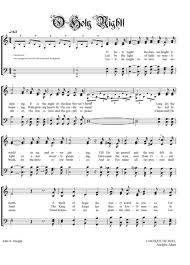
“O Holy Night” (“Cantique de Noël”) is a well-known Christmas carol composed by Adolphe Adam in 1847 to the French poem “Minuit, chrétiens” (Midnight, Christians) by Placide Cappeau (1808–1877).
Cappeau, a wine merchant and poet, had been asked by a parish priest to write a Christmas poem. Unitarian minister John Sullivan Dwight, editor of Dwight’s Journal of Music, created a singing edition based on Cappeau’s French text in 1855.
In both the French original and in the two familiar English versions of the carol, the text reflects on the birth of Jesus and of mankind’s redemption.
O Holy Night sung by the Mormon Tabernacle Choir and the King’s Singers






 1583 ~ Orlando Gibbons Read quotes by and about


 MaryO'Studio