
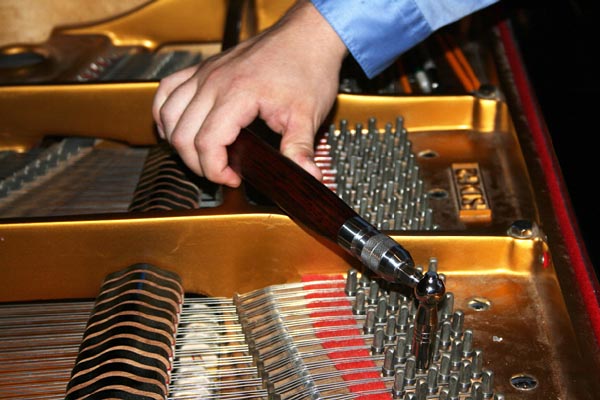
When it comes to tuning, every piano is different, even two pianos of the same style and make are different, and the humidity of the room makes a big difference, he said.
High humidity causes the sound board to swell, stretching the strings and causing the pitch to go sharp, while low humidity has the opposite effect.
In Minnesota, humidity can easily range from 80 percent in the summertime to 10-15 percent in the winter, if the home doesn’t have a humidifier. Wood-heated homes tend to be especially dry, he said.
“Pianos like it between 40 and 50 percent humidity in the house,” he said.
Even places that are supposedly “climate-controlled,” aren’t always. The heat might get turned down substantially evenings and weekends, for example.
A new piano needs a few weeks to settle into its new home before tuning, Fry said.
“If they get a new piano, generally they call us the day before it gets in the house,” he said. “It should sit in the house a couple weeks just to acclimatize it to its new surroundings … brand new pianos stretch for a while. They go out of tune quicker. The wire stretches and they settle into themselves.”
Some people think they have to let a new, or recently moved older piano, sit six months or a year before it gets tuned. That’s not true, Fry said, but it does need a few weeks.
He recommends that pianos be tuned at least once a year (he tunes his own piano once a year, even though he no longer gives lessons) and the busiest time for him is before the holidays — September through December.
“Piano-tuning is something people can put off,” he said. “We noticed a real drop in tuning when gas got over $3 a gallon. I didn’t think it would make that much of a difference, but it did.”
Fry said he is looking for some kind of work to do in the summertime when his other businesses are slow.
He doesn’t give piano or guitar lessons anymore, but does enjoy tuning all types of pianos.
“It takes me a couple of hours. I have time,” Fry said. “I’m going to do the job that I like to do, and do it right.”
Read the entire article at Keeping pianos, life in tune | Detroit Lakes Online.

 MaryO'Studio