November 12 ~ On This Day in Music

today

.1833 ~ Alexander Borodin, Russian composer. His busy life teaching at the Medico-Surgical Academy (& introducing medical courses for women) left him with little time to compose. Henry Hadow said of him: “no musician has ever claimed immortality with so slender an offering”!
More information about Borodin

.1920 ~ Jo Stafford, Singer

.1925 ~ Louis Armstrong recorded “My Heart”, starting a career that brought him worldwide fame.

.1939 ~ Lucia Popp, Czech soprano

.1940 ~ Walt Disney released “Fantasia”. One critic called the film “As terrific as anything that has ever happened on the screen.”

.1941 ~ Hot Lips Page performed the vocal for Artie Shaw’s very long and very slow version of St. James Infirmary on RCA Victor.

.1943 ~ Brian Hyland, Singer

.1943 ~ John Maus, Bass, singer with the trio, The Walker Brothers

.1944 ~ Booker T. Jones, Musician with Booker T and the MG’s

.1945 ~ Neil Young, Canadian folk-rock singer, songwriter and guitarist, with Crosby, Stills, Nash & Young

.1948 ~ Errol Brown, Songwriter with Tony Wilson singer with Hot Chocolate

.1950 ~ Barbara Fairchild, Singer

.1955 ~ Leslie McKeown, Singer with The Bay City Rollers

.1967 ~ Pearl Bailey took over the lead in the Broadway musical, “Hello Dolly”. ‘Pearlie Mae’ was a smash hit in the role.

.1970 ~ After a successful London run, Anthony Quayle starred in the Broadway opening of “Sleuth”.

.1980 ~ John Lennon’s “Starting Over” was released. John and Yoko were seen kissing on the record cover.

.1983 ~ Lionel Richie began the first of four consecutive weeks at the top of the music charts as All Night Long (All Night) became the most popular song in the U.S.

.2001 ~ Broadway composer Albert Hague, who won a Tony for his work on Redhead and who played the part of cranky music teacher Benjamin Shorofsky in the Fame movie and television series, died of cancer. He was 81. Hague composed the music for many Broadway shows, including The Fig Leaves Are Falling, Plain and Fancy, Cafe Crown and Miss Moffat, which starred Bette Davis. He won his Tony in 1959. He also wrote the music for the animated TV classic How the Grinch Stole Christmas and appeared in a number of movies, including the Michael Jordan- Bugs Bunny comedy Space Jam, in which he played a psychiatrist. It was his long-running role as white-bearded, German-accented teacher Shorofsky that brought him to Los Angeles. He played the part for five years on TV. Other TV acting credits included guest appearances on such shows as Hotel, Beauty and the Beast and Tales From the Dark Side. Born Albert Marcuse in Berlin, Hague fled his native Germany for Rome with his mother in 1937 after the Nazis came to power. He eventually settled in the United States, where he studied music at the University of Cincinnati and was adopted by Dr. Elliott B. Hague, an eye surgeon. In recent years, he and his late wife, actress Renee Orin Hague, had a successful cabaret act, appearing at Carnegie Hall two years ago.

.2003 ~ Guy Livingston, a theater maven and journalist who reviewed stage performances for Variety, died. He was 92. After serving in World War II, Livingston became a drama critic for Variety, traveling between Boston and New York reviewing musicals. Later, he became a press agent for many musicals, as well as for musical artists, among them Judy Garland, Nat ‘King’ Cole and Ray Charles.

.2003 ~ Tony Thompson, the driving force behind such groups as Chic and the Power Station, and a drummer whose effortless ability to move from jazz to rock to funk made him a prized session man, died of renal cell cancer. He was 48. The drummer was noted not only for keeping perfect time but also for subtle cymbal syncopation and raw power, talents that kept him in demand as a session player for such stars as Madonna, David Bowie, Diana Ross, Patti LaBelle and Sister Sledge. By the late 1970s, Chic was one of the most popular groups of the disco era. The group sold millions of records beginning with the hit single Dance, Dance, Dance in 1977. Other hits included the singles Le Freak and Good Times and the albums C’est Chic and Risque. After the group disbanded in 1983, Thompson kept busy as a session player, appearing on Sister Sledge’s We Are Family album in 1979, Bowie’s Let’s Dance in 1983 and Madonna’s Like a Virgin in 1984. He also appeared on Mick Jagger’s solo album She’s The Boss in 1985. That same year, Thompson and others formed Power Station. The group’s hits included Some Like it Hot.

2013 ~ John Tavener, British composer, dies from complications from Marfan syndrome at the age of 69

2017 ~ Eric Salzman, American composer (New Musical Theater), died at the age of 84

November 11 ~ On This Day in Music

veterans-day Veteran’s Day

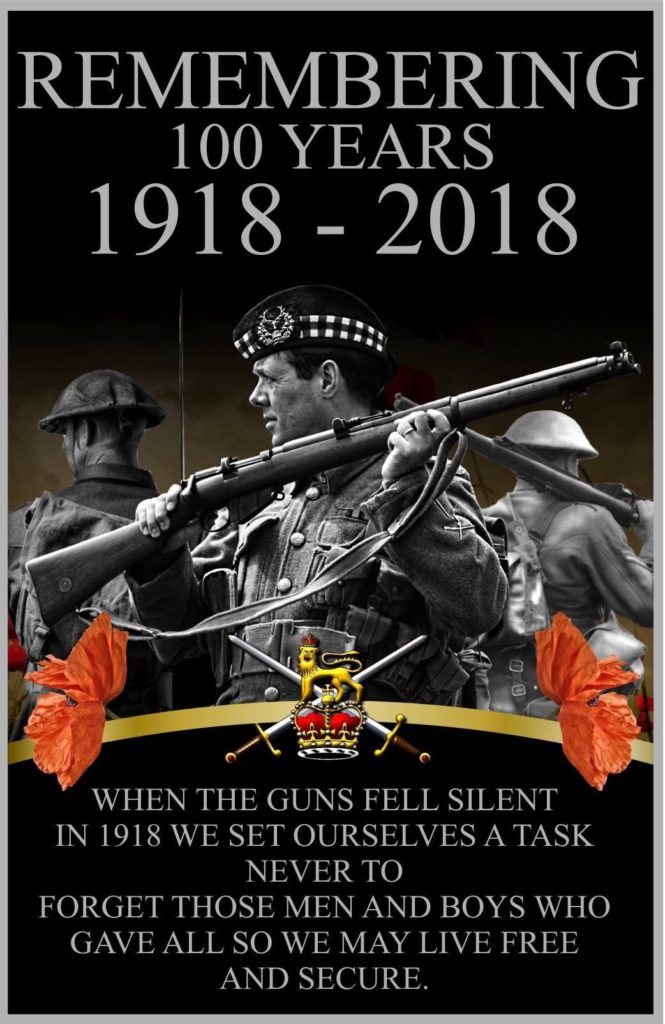
.1918 ~ This is Armistice Day or Remembrance Day or Veterans Day or Victory Day or World War I Memorial Day. The name of this special day may be different in different places throughout many nations; but its significance is the same. It was on this day, at 11 a.m., that World War I ceased. The Allied and Central Powers signed an armistice agreement at 5 a.m. in Marshal Foch’s railway car in the Forest of Compiegne, France. Even today, many still bow their heads in remembrance at the 11th hour of this the 11th day of the 11th month.

The Armistice of 11 November 1918 was the armistice that ended fighting on land, sea and air in World War I between the Allies and their opponent, Germany. Previous armistices had eliminated Bulgaria, the Ottoman Empire and the Austro-Hungarian Empire from the war.

Also known as the Armistice of Compiègne from the place where it was signed, it came into force at 11 a.m. Paris time on 11 November 1918  (“the eleventh hour of the eleventh day of the eleventh month”) and marked a victory for the Allies and a complete defeat for Germany, although not formally a surrender.

.1883 ~ Ernst Ansermet, Swiss conductor

.1927 ~ Mose Allison, American jazz pianist, trumpeter and singer

.1929 ~ Dick Clark, TV producer, host of American Bandstand, former Philadelphia DJ

.1929 ~ Andy Kirk and his orchestra recorded “Froggy Bottom” in Kansas City.

.1931 ~ Leslie Parnas, American cellist

.1932 ~ The National Broadcasting Company opened its new studios at Radio City in New York City. They celebrated with a gala program at Radio City Music Hall.

.1938 ~ Kate Smith sang God Bless America for the very first time. It would later become her signature song. Irving Berlin penned the tune in 1917 but never released it until Miss Smith sang it for the first time on her radio broadcast. Actually, the song was then 20 years old, but it had never been publicly performed before.

.1944 ~ Frank Sinatra began a long and successful career with Columbia Records.

.1964 ~ Edward Steuermann, composer, died at the age of 72. Howard Lebow, one of Mrs. O’Connor’s teachers studied under Steuermann

.1974 ~ Leonardo DiCaprio, American actor

.1979 ~ Dimitri Tiomkin passed away.  He was a Russian-American film score composer and conductor.

.1992 ~ Erskine Hawkins passed away.  He was an American trumpet player and big band leader.

.2000 ~ Isadore Granoff, a Ukrainian immigrant who started teaching violin lessons as a teenager and built a famed music school in Philadelphia, died in his sleep at the age of 99. Granoff taught Dizzy Gillespie, John Coltrane and others during more than a half-century at the Granoff School of Music. Granoff taught amateurs and professionals. Some of his students went on to become prominent players of classical music, jazz, swing, big band and Latin sounds. Granoff sold the school in 1970 and later stepped down from the board of directors, renouncing the new owner’s promotional tactics.

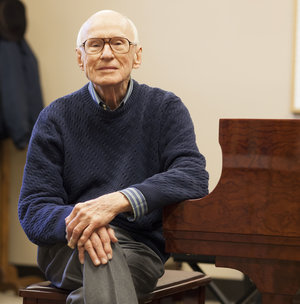
.2015 ~ Dr. Maurice Hinson died. He was one of America’s most respected authorities on piano literature. Many of the books in the OCMS library were edited by Dr. Hinson.  Mrs. O’Connor took a piano pedagogy class with him several years ago and learned so much from him.

Among his outstanding achievements, he received the Lifetime Achievement Award from the Music Teachers National Association at it Washington, D.C. convention in the spring of 1994, the Outstanding Alumni Award from the University of Florida in 1990, and the Outstanding Alumni Award from the University of Michigan in the fall of 1995. Dr. Hinson has performed, lectured and given master classes worldwide. His books and editions have become classic standards in the studios of serious piano teachers and students the world over. He was awarded the Franz Liszt Medal by the Hungarian Government in 1986. Hailed as a specialist in American piano music, some of his most recent articles appear in the New Grove Dictionary of American Music in the United States.

. 2021, Graeme Charles Edge died at the age of 80. He was an English musician, songwriter, and poet, best known as the co-founder and drummer of the English band the Moody Blues. In addition to his work with the Moody Blues, Edge worked as the bandleader of his own outfit, the Graeme Edge Band. He contributed his talents to a variety of other projects throughout his career. In 2018, Edge was inducted into the Rock and Roll Hall of Fame as a member of the Moody Blues.

Dr. Maurice Hinson

hinson


I have always respected Dr. Hinson’s work and his music.  So much so that I went to Connecticut to take a class on Piano Pedagogy with him several years ago.  I have also attended several local piano teacher workshops with him.  At one of them, he claimed to remember me from that Connecticut class.  Whether true or not, I treasure that comment and the signature on a piano book he gave me.

We have several of his books at the O’Connor Music Studio and many are available for loan.  If you are interested in buying any for yourself, amazon.com has a great selection.  In addition to those books he has authored, he has edited the works of many composers.  Amazon lists 270 works edited and annotated by Dr. Hinson.


From his page on alfred.com:

One of America’s most respected authorities on piano literature, Dr. Maurice Hinson received the Lifetime Achievement Award from the Music Teachers National Association at its Washington, D.C. convention in the spring of 1994, the Outstanding Alumni Award from the University of Florida in 1990, and the Outstanding Alumni Award from the University of Michigan in the fall of 1995. Hailed as a specialist in American piano music, some of his articles appear in the New Grove Dictionary of American Music in the United States.

Dr. Hinson received his Bachelor of Arts degree from the University of Florida and his Master of Music and Doctor of Musical Arts degrees from the University of Michigan. He also studied at The Juilliard School and the Conservatoire National in Nancy, France.

While a Senior Professor of Piano in the School of Church Music at the Southern Baptist Theological Seminary in Louisville, Kentucky, Dr. Hinson’s curriculum included teaching piano, piano literature, and piano chamber music. He performed, lectured, and gave masterclasses worldwide. His books and editions have become classic standards in the studios of serious piano teachers and students the world over.


From his obituary at legacy.com:

Hinson, Dr. G. Maurice, age 84 died November 11, 2015 in the company of his family. Dr. Hinson was Professor and Senior Professor of Piano at the Southern Baptist Theological Seminary from 1957 to 2015, and a member of Broadway Baptist Church. He was also organist-choirmaster of churches in Florida, Michigan and Kentucky from 1943 to 1980. Dr. Hinson received his BA degree from the University of Florida and his MM and DMA degrees from the University of Michigan, and also studied at The Julliard School and the University of Nancy, France (Conservatoire National).

He was the first president of the Greater Louisville Music Teachers Association, and president of the Kentucky Music Teachers Association as well as the Southern Division of the MTNA. He also taught “The Dorsey Class,” a group of selected piano teachers from 1963 to 2015.

Dr. Hinson is the author of 14 books mostly published by Indiana University Press, plus over 100 articles for music publications. He was a senior editor for The Alfred Publishing Company of California. He edited more than 300 editions of classical piano music and recorded five DVDs of piano music.

As Professor of Piano at the Southern Baptist Theological Seminary for 58 years, he taught and nurtured many pianists who now hold distinguished positions in churches and universities throughout the world.

Dr. Hinson received many awards in piano pedagogy and performance. He was awarded the Liszt Commemorative Medal by the Hungarian Government and the Medal of Excellence by the American Liszt Society for his research on the music of Franz Liszt. He was hailed as a specialist in American Piano music and some of his most recent articles appeared in the NEW GROVE DICTIONARY OF AMERICAN MUSIC. He gave recitals, lectures, and master classes in five continents and 50 states.

Hinson was the founding editor of the JOURNAL OF THE AMERICAN LISZT SOCIETY, past editor of THE AMERICAN MUSIC TEACHER, and contributing editor of THE PIANO QUARTERLY and PIANO AND KEYBOARD.

November 10 ~ On This Day in Music

today

. 1483 ~ Martin Luther, German religious reformer, composer of hymns and flutist

.1668 ~ François Couperin, French composer and organist
Read more about Couperin

.1888 ~ Fritz Kreisler, a 13-year-old violinist from Vienna, made his American debut in New York City.

https://youtu.be/TjXAc5NxsHI

.1900 ~ “Floradora” opened in New York City this day. The play was received by cheering audiences.

.1928 ~ Ennio Morricone, Italian composer/musician

.1939 ~ Muggsy Spanier and his band recorded Dipper Mouth Blues on Bluebird Records.

.1944 ~ Tim Rice, British author and librettist
Read more about Rice

.1956 ~ Billie Holiday returned to the New York City stage at Carnegie Hall after a three-year absence. The concert was called a high point in jazz history.

.1969 ~ On this day, twenty years after the first release of “Rudolph the Red-Nosed Reindeer”, Gene Autry received a gold record for the single.

.1969 ~ “Can you tell me how to get … how to get to Sesame Street?” The classic, “Sesame Street” debuted on 170 Public Broadcasting stations and 20 commercial outlets. Created by the Children’s Television Workshop, the show starred endearing characters including Gordon, Susan, Bob, Bert, Ernie, the Cookie Monster, Oscar the Grouch and, of course, Big Bird!

https://youtu.be/LXqMzmFSX_4

.1986 ~ “Bruce Springsteen & The E Street Band Live/1975-85”, the long-anticipated album by ‘The Boss’, hit record stores this day. Fans made the LP a one~day sellout, buying over a million copies and generating more first-day dollars than any record in 30 years. It’s a five-disc, 40-song set.

.1993 ~ “Joseph and the Amazing Technicolor Dreamcoat” opened at Minskoff Theater in New York for 223 performances

.1994 ~ Carmen McRae passed away

.2014 ~ “Uptown Funk” single released by Bruno Mars (Billboard Song of the Year 2015, Grammy Record Of The Year, Grammy Song of the Year 2016)

.2015 ~ Allen Toussaint passed away.  He was a New Orleans-based pianist, songwriter and Rock and Roll Hall of Famer.

.2015 ~ Robert Lawson Craft died.  He was an American orchestral conductor, scholar and writer. Mr. Craft spent nearly a quarter-century as Stravinsky’s amanuensis, rehearsal conductor, musical adviser, globe-trotting traveling companion and surrogate son. After Stravinsky’s death in 1971, at 88, he was a writer, lecturer, conductor, public intellectual and keeper of the Stravinskian flame.

November 9 ~ On This Day in Music

today

.1881 ~ Johannes Brahms gave the first performance of his Piano Concerto No.2 in Budapest.

.1899 ~ “Mezz” Mezzrow, American jazz clarinetist and saxophonist

.1929 ~ Piero Cappuccili, Italian baritone

.1930 ~ Ivan Moravec, Czech pianist

.1938 ~ 24-year-old Mary Martin made her Broadway stage debut in the musical comedy “Leave It to Me”. She brought down the house as she sang My Heart Belongs to Daddy. And the critics raved about New York’s bright new star. The following year brought Martin a top-ten hit with the same song. Martin suddenly found herself singing duets with Bing Crosby; starring on “Broadway in One Touch of Venus” in 1943; “Lute Song” in 1946; touring in “Annie Get Your Gun”; and then taking on what would become her immortal role, that of Nellie in “South Pacific”. South Pacific was one of Broadway’s biggest hits and the cast album was one of the first of its kind, also a big seller. Then came Mary’s stage and TV performances as Peter Pan. This would become her signature role, a memorable moment as the petite actress flew through the air with Tinkerbell and fought the dangerous Captain Hook. Broadway called to Mary Martin again in 1959 for “The Sound of Music” and once more in 1966 for “I Do, I Do”. Back in 1951, Mary Martin recorded a duet with a young man who was also destined for instant and long-term stardom. The song they sang together was Get Out Those Old Records. The twenty-year-old was her son, Larry Hagman, who later played J.R. Ewing. This is one man that Mary Martin didn’t want to wash out of her hair!

.1955 ~ Harry Belafonte recorded Jamaica Farewell and Come Back Liza for RCA Victor. The two tunes completed the Calypso album which led to Belafonte’s nickname, ‘Calypso King’.

.1967 ~ The first issue of Rolling Stone was published. John Lennon was on the cover. The magazine said it was not simply a music magazine but was also about “…the things and attitudes that music embraces.”

.1969 ~ Simon and Garfunkel recorded what would become their signature tune, ‘Bridge Over Troubled Water’ with a future member of Bread, Larry Knechtel on piano. Art wanted Paul to sing the song, but Paul insisted that Art’s voice was better suited for it. It was a decision that Paul would later say he regretted. The song won five awards at the 13th Annual Grammy Awards in 1971, including Grammy Award for Record of the Year and Song of the Year.

.1974 ~ Bachman Turner Overdrive went to No.1 on the US singles chart with ‘You Ain’t Seen Nothin’ Yet’. Randy Bachman stuttered through the lyrics of the demo recording as a private joke about his brother Gary, who had a speech impediment. The record company liked that take better than the non-stammering version and released it.

.2003 ~ Saxophonist Buddy Arnold, who performed with such jazz greats as Stan Kenton, Buddy Rich and Tommy Dorsey and co-founded a program to help musicians suffering from drug and alcohol abuse, died at the age of age 77. Born Arnold Buddy Grishaver, he began playing the saxophone at age 9. And by the time he was 16, he was touring as a professional sideman and performing at the Apollo Theater in Harlem with bandleader George Auld. After serving in the Army during World War II, Arnold joined the band of super-drummer Buddy Rich on a West Coast tour. Arnold earned his first recording credits in 1949 on the Mercury Records release of Gene Williams and the Junior Thornhill Band, and he toured with clarinetist Buddy DeFranco’s orchestra in 1951. But he soon descended into a decades-long struggle with drug addiction. Although he landed a recording contract with ABC Paramount in 1956 following an 18-month hospitalization, he was sentenced to prison in 1958 on an attempted burglary conviction. Pardoned two years later, he played with the Dorsey Band and toured with Stan Kenton. He later settled in Los Angeles and recorded four albums for Capitol Records. Arnold took a job in a drug treatment program after his early release from prison and went on to establish the Musician’s Assistance Program with his wife, Carole Fields, in 1992. The organization, dedicated to helping needy musicians obtain treatment for drug and alcohol addiction, has served more than 1,500 individuals during the past decade.

November 8 ~ On This Day in Music

today

1793 ~ The Louvre Museum opened in Paris.

.1880 ~ Sarah Bernhardt made her American stage debut. Bernhardt appeared in Adrienne Lecouvreur in New York City.

.1890 ~ Caesar-Auguste Franck, Belgian organist/composer died in Paris

.1921 ~ Jerome Hines, American bass

.1924 ~ Sergei Mikhailovich Lyapunov, Russian pianist and composer

.1927 ~ Patti Page, American singer of popular music

.1927 ~ Chris Conner, Singer

.1932 ~ The team of Jerome Kern and Oscar Hammerstein II debuted with their show, Make Mine Music. The Broadway production continued for 342 performances.

.1939 ~ This day marked Frank Sinatra’s last recording session with the Harry James Band. Sides recorded were Every Day of My Life and Ciribiribin.

.1939 ~ “Life With Father” premiered on Broadway in New York City. Eight years later, the show broke the existing record for longest-running stage production.

.1941 ~ Rodney Slater, Saxophone, trumpet with The Bonzo Dog Doo-Dah Band

.1944 ~ Bonnie Bramlett, Songwriter, singer with Delaney and Bonnie and Friends

.1946 ~ Roy Wood (Ulysses Adrian Wood), Singer, songwriter, formed Electric Light Orchestra

.1947 ~ Minnie (Julia) Riperton, Singer

.1949 ~ Alan Berger, Bass with Southside Johnny & The Asbury Jukes

.1949 ~ Bonnie Raitt, American blues-rock singer and guitarist, won the Grammy Award in 1990, daughter of actor, John Raitt

.1954 ~ Ricki Lee Jones, Singer

.1958 ~ Terry Lee Miall, Drummer with Adam & The Ants

.1964 ~ Judy Garland and her daughter, Liza Minnelli, appeared together at the London Palladium. The program was shown on U.S. TV; and the LP, Live at the London Palladium became a classic on Capitol Records.

.1967 ~ The first solo movie by a Beatle opened in the U.S. It was John Lennon’s How I Won the War.

.2003 ~ Henry Phace Roberts, a tap dancer who performed with the Copasetics, the Five Blazers and the Three Rockets, died. He was 92. Roberts performed on television on “The Tonight Show” and “The Ed Sullivan S Show” and was in the films “Cabin in the Sky,” “Stormy Weather” and “The Cotton Club.” Born in Savannah, Ga., he was trained to tap dance on the streets as a child. Roberts began dancing professionally at 14, and performed for the last time at 87 with the Copasetics on a European tour.

Today is World Pianist Day!

World Pianist Day, celebrated on November 8, is a symphony of joy for pianists and music lovers alike. It’s a day dedicated to tickling the ivories, embracing the melodies, and having a grand ol’ time celebrating the magic of the piano and the talented souls who make it sing.
In the world of piano, we’re transported on a musical journey, where the notes and chords create a tapestry of emotions that tug at our heartstrings. Pianists, those maestros of the keys, have the power to move us to the rhythm of ultimate joy. And how do we revel in this melodious merriment? Well, we throw a piano party, of course! From dazzling classical compositions to the jazzy, bluesy tunes, pianists have a treasure trove of styles to choose from, and they’re ready to share their musical gifts with the world. And guess what? You don’t have to be a seasoned pianist to join in the fun – it’s the perfect day to tinkle those ivories if you’ve never tried before!
Now, let’s take a little trip down the history of World Pianist Day. Picture the greats like Mozart, Beethoven, Clementi, Liszt, Brahms, Chopin, Mendelssohn, Rachmaninoff, and Schumann. They’re like the rockstars of classical piano, setting stages ablaze with their virtuosity. These ivory-ticklers aren’t just known for their compositions; they were the original piano showstoppers, dazzling audiences far and wide.
And then there’s the fabulous world of jazz pianists, where spontaneity reigns supreme. It’s like a jam session where they dance to the rhythm of their own tune, improvising and weaving musical stories on the spot. Names like Bill Evans, Art Tatum, Duke Ellington, Thelonious Monk, Oscar Peterson, and Baden Powell are the jazz legends who’ve made the keys sing with swing.
So, how can you join the grand celebration of World Pianist Day? Here are some jazzy suggestions:
1. **Concert Time:** Hit up a piano concert and let the melodies sweep you off your feet. It’s like a musical rollercoaster that you won’t want to end.
2. **Movie Magic:** Watch “The Pianist” movie, a deep dive into the intricate and fulfilling life of a pianist and composer. You’ll be mesmerized by the world of music.
3. **Tickle the Ivories:** If you’ve always wanted to try your hand at piano, seize the moment on World Pianist Day. Grab an instrument, play your favorite tune, and let the music flow through your fingertips.
So, here’s to a day of musical wonder, where the piano takes center stage, and joyous melodies fill the air. Whether you’re a seasoned pianist or a newbie, let the piano keys be your guide to an enchanting musical journey.

November 7 ~ On This Day in Music

.1916 ~ Joe Bushkin, American jazz pianist (A Couple of Joes)

.1922 ~ Al Hirt, Trumpeter, Flight of the Bumble Bee as theme song for TV’s The Green Hornet, played in singer Don Gibson’s band, regular on Make Your Own Kind of Music

.1926 ~ Dame Joan Sutherland, Australian coloratura soprano

.1930 ~ The Waltz You Save for Me, by ‘The Waltz King’ himself, Wayne King, was recorded on Victor. It became King’s theme.

.1937 ~ Mary Travers, American folk singer, Mary of Peter, Paul and Mary

.1938 ~ Dee (Delectus) Clark, Singer

.1942 ~ Johnny Rivers (John Ramistella), Singer

.1943 ~ Joni Mitchell, Canadian folk-rock singer, songwriter and guitarist, 1970 UK No.11 single ‘Big Yellow Taxi’, 1974 US No.7 single ‘Help Me’. She wrote ‘Both Sides Now’ a hit for Judy Collins and ‘Woodstock’ a hit for Crosby Stills Nash and Young and Matthews Southern Comfort. Mitchell’s work is highly respected by critics, and she has deeply influenced fellow musicians in a diverse range of genres.

.1947 ~ Billboard magazine began listing the top 15 popular records. Only 10 songs had been featured previously.

.1956 ~ Elvis Presley hit the charts with Love Me. The song was the first million-seller to make the charts without being released as a single. It was, instead, an EP (extended play) 45 rpm, with three other songs on it: Rip It Up, Paralyzed and When My Blue Moon Turns to Gold Again on RCA Victor.

.1970 ~ Does Anybody Really Know What Time It Is? was released by Columbia. It became the third tune by Chicago to hit the pop music charts. Make Me Smile and 25 or 6 to 4 were previous hits. Does Anybody Really Know What Time It Is? made it to #7 on the charts, January 7, 1971.

.1976 ~ Gone With the Wind was aired (over two nights) on NBC-TV. The showing was the highest-rated TV show in history. 65 percent of all viewers turned on their sets to watch Scarlet O’Hara and Rhett Butler.

.1978 ~ Nick Gilder, Singer

.1979 ~ The Rose, starring Bette Midler, got star treatment with a world premiere in Los Angeles. The movie was modeled after the life of Janis Joplin.

.2000 ~ Doug Nelson, bassist in teen blues star Jonny Lang’s band, was killed when he was hit by a pickup truck on a rural highway in northern Minnesota. He was 46. Nelson began playing professionally at age 15. He worked in Los Angeles for a time and toured with Olivia Newton-John, before returning in the late 1980s to the Twin Cities, where he played with local bands. He joined Lang’s group about three years ago.

.2000 ~ Columbia Legacy and Verve released a five-CD box set companion titled “Ken Burns Jazz: The Story of American Music” in addition to 22 individual artist discs.
Read the news item

.2001 ~ Gene Wooten, a dobro player who backed Patty Loveless, the Osborne Brothers, Wilma Lee Cooper and other country stars, died from complications of lung cancer. He was 49. “He was like a teacher for everyone,” said mandolinist Roland White. “He was like our guru. He just helped everybody in music. … There was no ego ever – ever – and that’s hard to find.” Wooten, a native of Franklinton, N.C., attended Appalachian State University in Boone, N.C., where he began his career in music. He moved to Nashville in 1977 and was hired by Cooper. Wooten played on the Mountain Soul album by Loveless this year. He was voted best dobro player three times by the Society for the Preservation of Bluegrass in America.

.2004 ~ Howard Keel, American actor, singer and president of the Screen Actors Guild (7 Brides for 7 Brothers, Kiss Me Kate), died at the age of 87

.2016 ~ Leonard Cohen, Canadian writer and singer-songwriter (Death of Ladies Man), died at the age of 82

.2018 ~ Francis Lai, the French composer best known for his themes for the movies “Love Story” and “A Man and a Woman,” died at the age of 86.

November 6 ~ On This Day in Music

today

.1814 ~ Adolphe Sax, Belgian instrumentalist, inventor of the saxophone and saxotromba
More information about Sax

.1854 ~ John Phillip Sousa, American bandmaster and composer; “The March King”
Read quotes by and about Sousa
More information about Sousa

.1860 ~ Ignace Jan Paderewski, Composer, pianist, Polish patriot, First Premier of Poland (1919), brought white Zinfandel wine grapes to U.S. for the first time
More information about Ignace Jan Paderewski

.1893 ~ Pyotr Ilyich Tchaikovsky, Russian composer of the late-Romantic period (1812 Overture, Swan Lake), died at the age of 53

.1916 ~ Ray Conniff, American conductor, arranger and composer of popular music, trombonist

.1932 ~ Stonewall Jackson, Singer

.1936 ~ This was the day that big band icon Woody Herman played in his first recording session. He recorded Wintertime Dreams on Decca disc #1056.

.1937 ~ Eugene Pitt, Singer

.1938 ~ P.J. Proby (James Smith), Singer

.1940 ~ Guy Lombardo and the Royal Canadians recorded one of their lesser-known songs for Decca. It was The Moon Fell in the River.

.1941 ~ Doug Sahm, Singer, founded Sir Douglas Quintet

.1943 ~ Mike Clifford, Singer

.1947 ~ George Young, Guitarist with The Easybeats

.1948 ~ Glenn Frey, Songwriter, singer with The Eagles

.1965 ~ Edgard Varèse, French-born composer, died at the age of 81

.2001 ~ John Denman, a clarinetist who was most recently artistic adviser to the Tucson Symphony Orchestra’s pops division, died from complications of esophageal cancer. He was 68. Denman, a native of London, was a principal clarinetist for the orchestra for more than 20 years. Denman also played principal clarinet with the London Symphony Orchestra and the Royal Philharmonic Orchestra. He taught music at Trinity College in England before coming to teach at the University of Arizona. He joined the Tucson Symphony Orchestra in the late 1970s. In 1984, Denman left the University of Arizona after failing to receive tenure. For the rest of his life, he focused on his performing career. He also designed a small clarinet, the Kinder-Klari, to make practicing easier for young hands. Denman performed and recorded with jazz icon Buddy DeFranco and was a member of several jazz bands.

.2002 ~ Maria Johansson, an organist who became a local legend for singing religious songs and hymns in one of Stockholm’s main squares every day for nearly three decades, died at the age of 84. The daughter of a preacher, Johansson often served homemade sandwiches to the poor during breaks in her daily performance. At one point, she went to work at a bakery to help pay for the sandwiches, her husband said.

.2016 ~ Zoltan Kocsis, Hungarian pianist and conductor, died at the age of 64

Beatles AI

I love the new song, Now and Then, but I’m not sure of the implications of manipulating the voices of dead people.  It could change history and what we know – or think we know – about people.

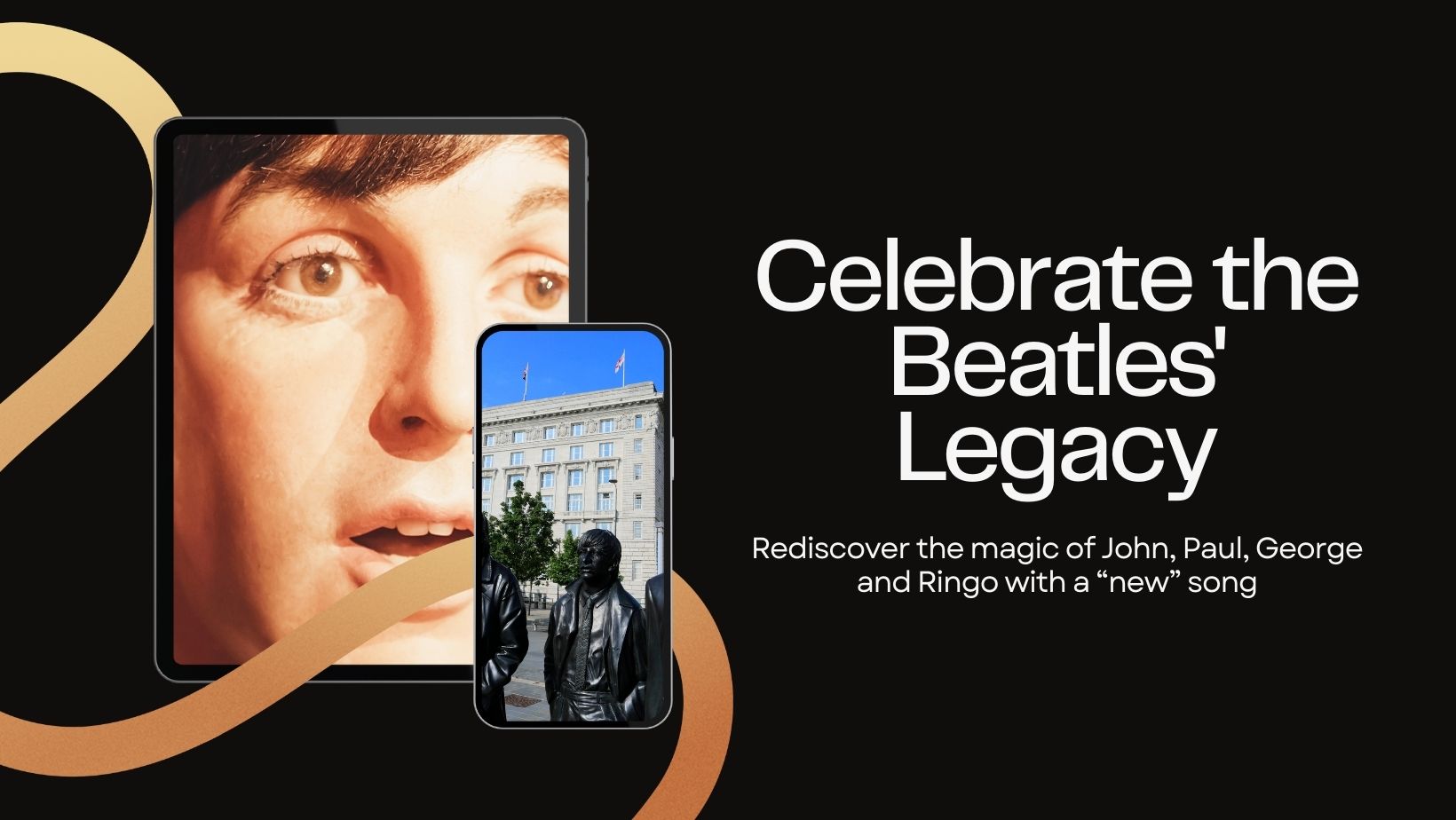
A new Beatles song called “Now And Then” is being released 45 years after John Lennon started writing it. The full Fab Four are featured thanks to artificial intelligence technology.

In the mid-’70s, long after The Beatles had officially parted ways, John Lennon recorded a series of demos straight to cassette tape in his home in New York City. After his death in 1980, his wife, Yoko Ono, passed the tapes to the remaining Beatles, and in 1995, Paul McCartney, Ringo Starr, and George Harrison began work on a trio of new Beatles songs born from Lennon’s sketches. You’ve heard a couple of them before—“Real Love” and “Free as a Bird”—but one of them never came to fruition during those sessions. “When we started ‘Now and Then,’ it was very difficult because John was sort of hidden in a way,” said Starr in a documentary about how The Beatles’ final song came together. “In John’s demo tape, the piano was a little hard to hear,” said McCartney. They put together some of the song’s building blocks, including having Harrison record guitar parts for the song. But they couldn’t properly isolate Lennon’s vocals from his piano. So “‘Now and Then’ just kind of languished in a cupboard,” McCartney said.

Fast-forward to 2022. Using machine-learning technology that director Peter Jackson’s team had developed for the 2021 Beatles documentary Get Back, engineers were able to separate Lennon’s voice from his original demo of “Now and Then,” finally allowing the remaining Beatles to finish the track. “It’s like John’s there,” said Ringo of the now-crystalline vocal track. “It’s far out.” Paul and producer Giles Martin (son of Beatles producer George Martin) were then able to assemble John’s 1970s vocals with George’s 1995 guitar lines and Paul and Ringo’s new vocal and instrumental parts, as well as a string arrangement, to complete the song.

Bearing the signatures of all four Beatles, it’s a doleful ballad and a poignant good-bye, with lyrics—“And if you go away, I’ll know you’re there”—that resonate far beyond their initial intentions. Hear The Beatles’ last song alongside their very first—1962’s “Love Me Do”—and watch the trailer for the documentary about how “Now and Then” was made.

Now and Then’s eventful journey to fruition took place over five decades and is the product of conversations and collaborations between the four Beatles that go on to this day.

The long mythologised John Lennon demo was first worked on in February 1995 by Paul, George and Ringo as part of The Beatles Anthology project but it remained unfinished, partly because of the impossible technological challenges involved in working with the vocal John had recorded on tape in the 1970s. For years it looked like the song could never be completed.

But in 2022 there was a stroke of serendipity. A software system developed by Peter Jackson and his team, used throughout the production of the documentary series Get Back, finally opened the way for the uncoupling of John’s vocal from his piano part. As a result, the original recording could be brought to life and worked on anew with contributions from all four Beatles.

This remarkable story of musical archaeology reflects The Beatles’ endless creative curiosity and shared fascination with technology. It marks the completion of the last recording that John, Paul and George and Ringo will get to make together and celebrates the legacy of the foremost and most influential band in popular music history.

What do you think?