June 13 in Music History

today

• 1550 ~ Johann Spangenberg, Composer, died at the age of 66

• 1592 ~ Tobias Michael, Composer

• 1627 ~ Fidel Molitor, Composer

• 1701 ~ Angelo Antonio Caroli, Composer

• 1713 ~ Arcangelo Corelli, Italian violinist and composer, died at about 49
More information on Corelli

• 1736 ~ Henryk Klein, Composer

• 1757 ~ Christian Ludwig Dieter, Composer

• 1761 ~ Anton Wranitzky, Composer

• 1765 ~ Anton Eberl, Composer

• 1775 ~ Antoni Henryk Radziwill, Composer

• 1839 ~ Martin-Pierre Dalvimare, Composer, died at the age of 66

• 1824 ~ Julius Eichberg, Composer

• 1829 ~ Antonio Zamara, Composer

• 1863 ~ Josef Venantius von Woss, Composer

• 1869 ~ Ede Poldini, Composer

• 1873 ~ Angelo Maurizio Gaspare Mariani, Composer, died at the age of 51

• 1875 ~ Max d’Ollone, Composer

• 1888 ~ Elisabeth Schumann, German-born American soprano

• 1899 ~ Carlos Chávez, Principal Mexican composer and conductor

• 1903 ~ Philipp Kutev, Composer

• 1905 ~ Doc Cheatham, Jazz musician

• 1911 ~ “Petrushka”, one of the earliest works of Russian composer Igor Stravinsky, was first performed in Paris.

• 1917 ~ Sy (Simon) Zentner, Bandleader, trombonist with the Boyd Raeburn Orchestra

• 1919 ~ Leif Kayser, Composer

• 1927 ~ Knut Wiggen, Composer

• 1928 ~ Damaso Ledesma, Composer, died at the age of 60

• 1929 ~ Kurt Equiluz, Austrian tenor

• 1938 ~ Gwynne Howell, British opera singer

• 1939 ~ Lionel Hampton and his band recorded Memories of You for Victor Records.

• 1940 ~ Bobby Freeman, Singer

• 1944 ~ The wire recorder was patented by Marvin Camras. Wire recorders were the precursor of much easier to use magnetic tape recorders.

• 1948 ~ Liz Phillips, Composer

• 1948 ~ Dennis Locorriere, Musician, guitarist, singer

• 1954 ~ Nikolai Obouhov, Composer, died at the age of 62

• 1954 ~ Jorge Santana, rocker

• 1958 ~ Frank Zappa graduated from Antelope Valley High School in Lancaster, California

• 1959 ~ “Sammy Kaye Show,” last aired on ABC-TV

• 1960 ~ Alley-Oop by Dyna-Sores peaked at #59

• 1962 ~ Eugene Goossens, British Composer (Perseus), died at the age of 69. A member of a famed musical family, he spent his later years conducting in Australia where he trained many musicians.

• 1970 ~ The Summertime by Mungo Jerry hit #1 in England

• 1970 ~ The Beatles’ “Let It Be,” album went #1 & stayed #1 for 4 weeks

• 1970 ~ The Beatles’ Long & Winding Road, single went #1 & stayed #1 for 2 weeks

• 1970 ~ The song Make It with You, by David Gates and Bread, was released. It turned out to be a number-one hit on August 22, 1970. Though Bread had a dozen hits, including one other million-seller (Baby I’m-A Want You, 1971); Make It with Youwas the soft-pop group’s only number one tune.

• 1971 ~ Singer Francis Albert Sinatra made an attempt to retire from show business following a performance this night at the Music Center in Los Angeles, CA. ‘Ol’ Blue Eyes’ got a bit restless in retirement, however, and was back in Sinatra – The Main Event at Madison Square Garden in November, 1973.

• 1972 ~ Clyde L Mcphatter, American singer with the Drifters, died at the age of 39

• 1973 ~ Alvin Derold Etler, Composer, died at the age of 60

• 1973 ~ Frantisek Suchy, Composer, died at the age of 82

• 1976 ~ Bob Marley performed in Amsterdam

• 1980 ~ Billy Joel’s Glass Houses hit #1
More information on Joel

• 1980 ~ Paul McCartney released Waterfall
More information on McCartney

• 1984 ~ Marinus de Jong, Dutch Composer, died at the age of 92

• 1986 ~ Benny Goodman, American Jazz clarinetist, composer and bandleader died
More information on Goodman

• 1988 ~ George Harrison released This is Love

• 1989 ~ Jerry Lee Lewis got a star on the Hollywood Walk of Fame

• 1990 ~ “Les Miserables” opened at South Alberta Jubilee Centre, Calgary

• 1993 ~ “Someone Who’ll Watch Over Me” closed at Booth NYC after 232 performances

• 2001 ~ Makanda McIntyre, a jazz musician and educator, died at the age of 69. McIntyre’s best-known album was “Looking Ahead” (1960). He taught music in Manhattan schools and at Wesleyan University, Smith College, Fordham University and the New School. He was the founder and chairman of the American music, dance and theater program at the State University at Old Westbury, N.Y. McIntyre was born in Boston. After serving in the Army, he studied at the Boston Conservatory of Music and later earned a doctorate from the University of Massachusetts. Formerly Ken McIntyre, he changed his name to Makanda after a stranger in Zimbabwe handed him a piece of paper on which was written, “Makanda,” a word in the Ndebele and Shona languages meaning “many skins.”
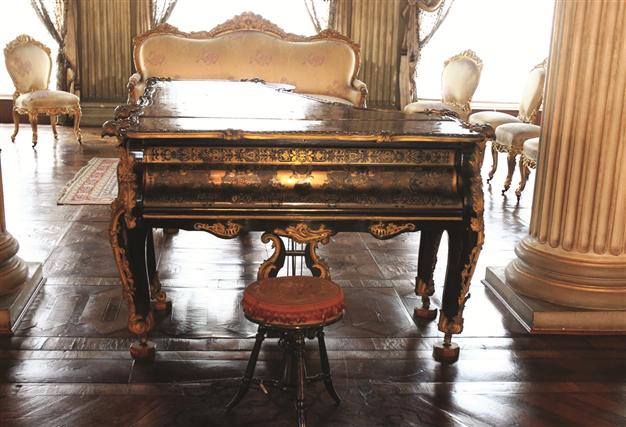
Pianos in Harmony with Palace Halls

pianos-Istanbul

The pianos in Istanbul’s Dolmabahçe Palace, which hosted some 1 million people last year, draw great interest from local and foreign visitors for their magnificence and harmony with their surroundings.

National Palace guide Osman Nihat Bişgin said Dolmabahçe Palace was a Tanzimat (reform-era) palace, adding, “All features of the reform era are clearly seen in Dolmabahçe Palace. This process, which we call the Europeanization and westernization process, made western music enter Dolmabahçe Palace.”

He said the palace had a total of 12 pianos, and all of them had ornamentations suitable to the style and harmony of the palace.

Bişgin said the palace opened in 1856 and the pianos were brought there nearly at the same time. “The wives of sultans were taking piano education in the palace, particularly in the final years of the Ottomans. There are many pianos and none of them were inactive; all of them were being played,” he said.

He said most of the piano brands in the palace were Hertz, Pleyel, Gaveau and Erard, and that the number of grand pianos was less.

Speaking of a striking green piano in Zülvecheyn Hall on the upper floor of the palace, Bişgin said it was a classical Pleyel-brand palace piano.

“Since the magnificence and glory was dominant in the palace, the pianos draw our attention visually. Their sound is not very famous, but they are very important and famous visually,” he said.

Bişgin said Zülvecheyn Hall had gilded ornamentation on its white and beige ceiling, adding, “We see enormous harmony between the piano and the ceiling.”

He said the furniture in Dolmabahçe Palace was in its original place, and added, “We can say that the pianos belong to these halls. The pianos in the Zülvecheyn and Süfera halls were designed to add visual richness to halls like them. They are not generally played.”

Crystal piano and chair in the Glass Kiosk

As for the rare crystal piano in the Glass Kiosk, Bişgin said the following: “The Glass Kiosk is a big venue hidden behind the walls of the palace. Mustafa Kemal Atatürk greeted the public in this place. It is like a winter garden surrounded with glass. In harmony with this kiosk, there is a crystal piano. It is a Paris-made Gaveau piano. Its chair is crystal, too.”

Another piano in the palace is a plain black German-made Steinway. Bişgin said its sound was very strong and it was very valuable.

“It was produced as a Hamburg Steinway in 1912. Then the factory moved to the U.S. Accordingly, there were only five Steinway pianos made in Germany. This is one of them. Its estimated price is 200,000 euros. It also has the emblem of the sultan Abdulmecid,” Bişgin added.

Speaking of the piano, which was used during the acceptance of ambassadors in the Süfera Hall, Bişgin said, “Süfera is the plural of the word sefir [ambassador]. This hall was created to address foreigners. The furniture is gold-plated; the ceiling is the same. There is a boulle-work piano here to show the beauty of metal and gold. This piano is wonderful for decoration.”

More pictures at Pianos in harmony with palace halls – ARTS.

June 12 in Music History

today

• 1468 ~ Juan del Encina, Composer

• 1526 ~ Marc-Antoine de Muret, Composer

• 1616 ~ Cornelis F Schuyt, Dutch organist/composer, died

• 1761 ~ Meinrad Spiess, Composer, died at the age of 77

• 1858 ~ William Horsley, Composer, died at the age of 83

• 1876 ~ Narciso Garay, Composer

• 1881 ~ Juan de Hernandez, Composer

• 1887 ~ Gustav Weber, Composer, died at the age of 41

• 1892 ~ John Donald Robb, Composer

• 1900 ~ Amadeo Roldan, Composer

• 1904 ~ Eino Roiha, Composer

• 1907 ~ Giorgio Nataletti, Composer

• 1909 ~ Mansel Treharne Thomas, Composer

• 1909 ~ Archie Bleyer, Orchestra leader for Arthur Godfrey

• 1909 ~ Shine On, Harvest Moon by Ada Jones & Billy Murray hit #1

• 1912 ~ Eddie Williams, Blues/jazz bassist

• 1917 ~ Maria Teresa Carreno, Composer, died at the age of 63

• 1922 ~ Leif Thybo, Composer

• 1927 ~ Al Fairweather, Jazz musician

• 1928 ~ Richard Sherman, Composer/lyricist

• 1928 ~ Vic Damone (Vito Farinola), American singer of popular music

• 1930 ~ Jim Nabors, Singer

• 1935 ~ Ella Fitzgerald recorded her first sides for Brunswick Records. The tunes were Love and Kisses and I’ll Chase the Blues Away. She was featured with Chick Webb and his band. Ella was 17 at the time and conducted the Webb band for three years following his death in 1939.

• 1938 ~ Ian Partridge, British tenor

• 1941 ~ “Chick” Corea, American Grammy Award-winning (4) Jazz musician and composer

• 1942 ~ Walter Leigh, Composer, died at the age of 36

• 1942 ~ Paul Whiteman and his orchestra recorded Travelin’ Light on Capitol Records of Hollywood, California. On the track with Whiteman’s orchestra was the vocal talent of ‘Lady Day’, Billie Holiday.

• 1944 ~ Reg Presley, Singer with Troggs

• 1947 ~ Jazeps Medins, Composer, died at the age of 70

• 1948 ~ William Tell Overture by Spike Jones (originally an opera by Rossini) peaked at #6

Original:

• 1951 ~ Bun Carlos (Brad Carlson), Musician, drummer with Cheap Trick

• 1951 ~ Brad Delp, Musician, guitarist, singer with Boston

• 1954 ~ Bill Haley’s Rock Around the Clock, was originally released

• 1957 ~ James F “Jimmy” Dorsey, American orchestra leader, died at the age of 53

• 1962 ~ John N Ireland, English Composer/pianist, died at the age of 82

• 1965 ~ The Queen of England announced that The Beatles would receive the coveted MBE Award. The Order of the British Empire recognition had previously been bestowed only upon British military heroes, many of whom were so infuriated by the news, they returned their medals to the Queen. In fact, John Lennon wasn’t terribly impressed with receiving the honor. He returned it (for other reasons) four years later.

• 1965 ~ Rolling Stones released Satisfaction

• 1965 ~ Sonny and Cher made their first TV appearance, “American Bandstand”

• 1966 ~ Hermann Scherchen, German conductor and music publisher, died at the age of 74

• 1966 ~ The Dave Clark Five set record as they appear for twelfth time on Ed Sullivan

• 1968 ~ Fidelio Friedrich Finke, Composer, died at the age of 76

• 1968 ~ “What Makes Sammy Run?” closed at 84th St Theater NYC after 540 performances

• 1977 ~ “Pippin” closes at Imperial Theater NYC after 1944 performances

• 1982 ~ Paul Simon and Art Garfunkel performed in Rotterdam

• 1989 ~ Peter Conrad Baden, Composer, died at the age of 80

• 1992 ~ “Batman Returns”, music by Danny Elfman, was released in America

• 1993 ~ Three Little Pigs by Green Jelly hit #17

• 1994 ~ Cab Calloway suffered massive stroke at his home White Plaines NY

• 1995 ~ Arturo Benedetti Michelangeli, Italian Pianist, died at the age of 75. He was hailed as one of the greatest pianists of the 20th century.

• 1996 ~ MacKenzie John, Pipe major, died at the age of 83

• 2000 ~ Robert J. Lurtsema, a classical music show host with a sonorous voice and unique delivery who became a fixture of the Boston radio scene over nearly three decades, died of lung disease. He was 68. Lurtsema, who worked at WGBH-FM for more than 28 years, is well-known to classical music buffs as the host of “Morning pro musica”, which could be heard throughout the Northeast.

Josh Groban: The Science of Music

There’s more to a song than meets the ear, as Neil deGrasse Tyson finds out when he interviews singer/songwriter/producer Josh Groban. Josh shares how he got started playing his family’s electronic Casio piano while he was still in diapers, and whether he was a science geek in school.

In studio, concert pianist and MIT Lecturer in Music, Elaine Kwon, and co-host Chuck Nice add their voices to the chorus to help us hear the science woven into the songs. You’ll learn how artists breathe life into their music, and about the qualitative difference between human generated and automated music.

Explore the importance of the acoustics of a performance space, the effect music has on people, the difference between melody and harmony, the ranges the human voice is capable of, and which was more important, Charlie Parker’s personal style or his sax.

Plus, Neil and Josh discuss “acoustic panty removers”, Chuck admits to singing first soprano in his church choir, and we find out whether Rachmaninoff really had “big hands” and what rubato means.

via The Science of Music with Josh Groban | StarTalk Radio Show by Neil deGrasse Tyson.

June 11 in Music History

today

• 1672 ~ Francesco Antonio Bonporti, Composer

• 1678 ~ Antonio Vivaldi, Italian composer
More information about Vivaldi

• 1697 ~ Francesco A Vallotti, Italian organist, composer and theorist

• 1704 ~ Jose Antonio Carlos de Seixas, Composer

• 1740 ~ Luigi Gatti, Composer

• 1764 ~ Christoph Stoltzenberg, Composer, died at the age of 74

• 1775 ~ Egidio Romoaldo Duni, Italian Composer, died at the age of 67

• 1808 ~ Giovanni Battista Cirri, Composer, died at the age of 83

• 1861 ~ Sigismund Vladislavovich Zaremba, Composer

• 1864 ~ Richard Strauss, German composer and conductor.  Strauss wrote in nearly every genre, but is best known for his tone poems and operas.
Read quotes by and about Strauss
More information about Richard Strauss

• 1874 ~ Richard Stohr, Composer

• 1896 ~ Friedrich Gottlieb Schwencke, Composer, died at the age of 72

• 1899 ~ George Frederick McKay, Composer

• 1900 ~ Charles Swinnerton Heap, Composer, died at the age of 53

• 1904 ~ Emil Frantisek Burian, Composer

• 1904 ~ Clarence “Pinetop” Smith, Jazz pianist and singer of Boogie Woogie Piano

• 1910 ~ Carmine Coppola, Composer and conductor

• 1912 ~ Mukhtar Ashrafi, Composer

• 1913 ~ Risë Stevens (Steenberg), American mezzo-soprano at the New York Metropolitan Opera

• 1920 ~ Shelly Manne, Composer, musician, drummer

• 1920 ~ Hazel Scott, Trinidad singer and pianist

• 1924 ~ Théodore Dubois, French organist and composer, died at the age of 86

• 1926 ~ Carlisle Floyd, American opera composer

• 1927 ~ Josef Anton Reidl, Composer

• 1928 ~ King Oliver and his band recorded Tin Roof Blues for Vocalion Records.

• 1939 ~ Wilma Burgess, Country singer

• 1940 ~ Joey Dee (Joseph DiNicola), Singer with Joey Dee and The Starliters

• 1940 ~ The Ink Spots recorded Maybe on Decca Records. By September, 1940, the song had climbed to the number two position on the nation’s pop music charts.

• 1946 ~ John Lawton, Singer

• 1949 ~ Hank Williams sang a show-stopper on the stage of the Grand Ole Opry at the Ryman Auditorium in Nashville. He sang the classic Lovesick Blues, one of his most beloved songs. 1951 ~ Bonnie Pointer, Grammy Award-winning singer (with sister Anita) in the Pointer Sisters

• 1955 ~ Marcel Louis Auguste Samuel-Rousseau, Composer, died at the age of 72

• 1961 ~ Roy Orbison was wrapping up a week at number one on the Billboard record chart with Running Scared, his first number one hit. Orbison recorded 23 hits for the pop charts, but only one other song made it to number one: Oh Pretty Woman in  1964. He came close with a number two effort, Crying, number four with Dream Baby and number five with Mean Woman Blues. Orbison was inducted into the Rock and Roll Hall of Fame in 1987; but suffered a fatal heart attack just one year later.

• 1964 ~ The group, Manfred Mann, recorded Do Wah Diddy Diddy

• 1966 ~ Janis Joplin made her first onstage appearance — at the Avalon ballroom in San Francisco. She began her professional career at the age of 23 with Big Brother and The Holding Company. The group was a sensation at the Monterey Pop Festival in 1967. Piece of My Heart was the only hit to chart for the group in 1968. Big Brother and The Holding Company disbanded in 1972, though Joplin continued in a solo career with hits such as Down on Me and Me and Bobby McGee. Janis ‘Pearl’ Joplin died of a heroin overdose in Hollywood in October, 1970. The movie The Rose, starring Bette Midler, was inspired by the life of the rock star.

• 1966 ~ (I’m A) Road Runner by Jr Walker & The All-Stars peaked at #20

• 1966 ~ I Am A Rock by Simon and Garfunkel peaks at #3

• 1966 ~ “On A Clear Day You…” closed at Mark Hellinger NYC after 280 performances

• 1966 ~ Paint It, Black by The Rolling Stones peaked at #1

• 1966 ~ “Skyscraper” closed at Lunt Fontanne Theater NYC after 248 performances

• 1966 ~ Sloop John B by The Beach Boys hit #1 in the United Kingdom

• 1969 ~ “The Ballad Of John & Yoko” by The Beatles hit #1 in the United Kingdom

• 1969 ~ David Bowie released Space Oddity

• 1975 ~ Floro Manuel Ugarte, Composer, died at the age of 90

• 1976 ~ Australian band AC/DC began their first headline tour of Britain

• 1976 ~ The Beatles “Rock & Roll Music” LP was released in America

• 1977 ~ Dance & Shake Your Tambourine by Universal Robot Band peaked at #93

• 1977 ~ I Need A Man by Grace Jones peaked at #83

• 1977 ~ I’m Your Boogie Man by KC & Sunshine Band peaked at #1

• 1977 ~ Lonely Boy by Andrew Gold peaked at #7

• 1977 ~ The Pretender by Jackson Browne peaked at #58

• 1990 ~ Clyde McCoy, Jazz trumpeter, died at the age of 86

• 1995 ~ Lovelace Watkins, Singer, died at the age of 58

• 2001 ~ Amalia Mendoza, one of Mexico’s most famous singers of mariachi and ranchera music, died at the age of 78. She was famous for songs such as Echame a mi la Culpa (Put the Blame on Me) and Amarga Navidad (Bitter Christmas). Born in the Michoacan town of San Juan Huetamo in 1923, she was part of a family of noted musicians. Ranchera music is a kind of Mexican country music that overlaps with Mariachi music.

• 2001 ~ Ponn Yinn, a flutist of traditional Cambodian music and dance who survived the Khmer Rouge purge and helped preserve his country’s culture, died of a stroke at the age of 82. Yinn was working under Prince Norodom Sihanouk, then Gen. Lon Nol, for the Classical Symphony of the Army for the Royal Ballet, when the Khmer Rouge overthrew Cambodia’s government in 1975. Khmer Rouge forces found Yinn during their campaign to uncover and eliminate Cambodia’s intellectuals and artists. He begged for his life and claimed to be a steel worker who enjoyed playing the flute. He was allowed to live, but was forced to play a makeshift flute nightly into loudspeakers to drown out the screams of people being slaughtered in fields nearby. In 1979, Yinn crossed through minefields and escaped to Thailand. In a border refugee camp, Yinn headed the Khmer Classical Dance Troupe. At a time when Cambodian culture was believed to have been almost eradicated – a result of the Khmer Rouge’s genocide of 1 million to 2 million people, the troupe was discovered by Western visitors. Yinn settled in Long Beach in 1984, where he taught music for more than 20 years and continued to perform.

• 2015 ~ Ornette Coleman died.  He was an American jazz saxophonist, violinist, trumpeter and composer. He was one of the major innovators of the free jazz movement of the 1960s.

June 10 in Music History

today

• 1781 ~ Giovanni Battista Polledro, Composer

• 1790 ~ Louis Joseph Daussoigne-Mehul, Composer

• 1800 ~ Johann Abraham Peter Schulz, German Composer, died at the age of 53

• 1818 ~ Pesaro opera theater opened with Rossini’s “La gaza ladra”

• 1831 ~ W A Remy, Composer

• 1843 ~ Heinrich von Herzogenberg, Composer

• 1865 ~ Wagner’s “Tristan und Isolde” first performance Münich, Germany

• 1883 ~ Carl Gradener, Composer, died at the age of 71

• 1890 ~ Powell Weaver, Composer

• 1891 ~ Al Dubin, Swiss songwriter of Tiptoe Through the Tulips

• 1893 ~ Elek Erkel, Composer, died at the age of 49

• 1894 ~ Pavel Borkovec, Czech Composer

• 1899 ~ Ernest Chausson, French Composer, died at the age of 44
More information about Chausson

• 1902 ~ Gaston Brenta, Composer

• 1904 ~ Frederick Loewe, Austrian-born American composer for the musical theater
More information about Loewe

• 1906 ~ Janos Viski, Composer

• 1910 ~ Robert Still, Composer

• 1910 ~ Howlin’ Wolf (Chester Arthur Burnett), Harmonica, blues musician, rhythm guitar, singer

• 1911 ~ Ralph Kirkpatrick, Harpsichordist, famed for playing the works of Domenico Scarlatti

• 1913 ~ John Edmunds, Composer

• 1918 ~ Arrigio Enrico Boito, Composer, died at the age of 76

• 1922 ~ Judy Garland (Frances Ethel Gumm), American actress and singer of popular music

• 1925 ~ Nat Hentoff, Journalist and music critic

• 1926 ~ Bruno Bartoletti, Italian conductor

• 1929 ~ Vasile Herman, Composer

• 1934 ~ Nicolas Roussakis, Composer

• 1934 ~ Frederick Delius, English Composer, died at the age of 72
More information about Delius

• 1940 ~ John William Stevens, Jazz drummer

• 1941 ~ Shirley Owens Alston, Singer with The Shirelles

• 1946 ~ Matthew Fisher, English keyboardist with Procol Harum

• 1954 ~ Will Rossiter, Composer, died at the age of 87

• 1964 ~ Louis Gruenberg, Composer, died at the age of 79

• 1964 ~ Rolling Stones recorded their 12×5 album at Chess Studios Chicago

• 1966 ~ The Beatles Paperback Writer was released in England

• 1966 ~ The Beatles recorded Rain, first to use reverse tapes

• 1966 ~ Janis Joplin’s first live concert in the Avalon Ballroom, San Francisco

• 1966 ~ The Mamas and The Papas won a gold record for Monday, Monday

• 1968 ~ Yury Sergeyevich Milyutin, Composer, died at the age of 65

• 1972 ~ Elvis Presley recorded a live album at NY’s Madison Square Garden

• 1972 ~ The Rolling Stones double album Exile On Main Street went to No.1 on the UK chart, the band’s seventh UK No.1 album. In 2010, the re-released album entered the UK chart at No.1, almost 38 years to the week after it first occupied that position. The Rolling Stones are the first act to ever have a studio album return to No.1 after it was first released.

• 1972 ~ Sammy Davis, Jr. earned his place at the top of the popular music charts for the first time, after years in the entertainment business. His number one song, The Candy Man, stayed at the top for three consecutive weeks. The Candy Man was truly a song of fate for Sammy. He openly did not want to record the song, but did so as a favor to MGM Records head Mike Curb, since it was to be used in the film, Willy Wonka and the Chocolate Factory. Davis said he would give the tune one take, “and that’s it!” Sure enough, in that one-time recording, Sammy nailed it. The Candy Man stayed on the pop charts for 16 weeks. The best the legendary performer had done before was 12 weeks for Love Me or Leave Me in 1955 and 11 weeks for I’ve Gotta Be Me (from Golden Rainbow) in 1969. After TheCandy Man became a hit, Davis included it in his stage shows and concerts — and collected huge royalties from it.

• 1976 ~ Paul McCartney and Wings set a record for an indoor concert crowd as 67,100 fans gathered in Seattle, WA to hear the former Beatle and his new group.

• 1982 ~ Addie “Micki” Harris, American singer with the Shirelles, died at the age of 42

• 1985 ~ Nineteenth Music City News Country Awards: Statler Brothers, BarbaraMandrell

• 1990 ~ “Meet Me St Louis” closed at Gershwin Theater NYC after 253 performances

• 1992 ~ Hachidal Nakamura, Composer, died at the age of 61 of heart failure

• 1996 ~ Thirtyth Music City News Country Awards: Alan Jackson

• 2001 ~ Pianist Yaltah Menuhin, last of three famous siblings whose musical talents brought them fame at an early age, died at the age of 79. Yaltah, the youngest, and her sister Hepzibah, also a pianist, did not achieve the international renown of their brother, the violinist Yehudi Menuhin. But they often appeared with him in concerts around the world, including the Bath Festival in Britain, where Yehudi was artistic director in the 1960s. Yaltah Menuhin was born in San Francisco, to Russian-Jewish parents. Like her siblings, she began studying music as a child, and moved about the world performing. Her brother was astonishing audiences with his virtuosity by the age of 7. Yaltah Menuhin and her husband, pianist Joel Ryce, often performed together as a duo in the United States, and she also performed with violist Michael Mann.

• 2001 ~ Harold S. Grossbardt, a founder of Colony Records, the famed record collector’s store in Manhattan, died at the age of 85. Grossbardt founded the store in 1948 with his partner, Sidney Turk, and the shop quickly became popular with music lovers. Hundreds of musicians, including Frank Sinatra, John Lennon and Michael Jackson, shopped at the store. Grossbardt worked at Colony Records until his retirement in 1988.

• 2004 ~ US singer, songwriter Ray Charles died aged 73. Glaucoma rendered Charles blind at the age of six. He scored the 1962 UK & US No.1 single ‘I Can’t Stop Loving You’ plus over 30 other US Top 40 singles and the 2005 US No.1 album ‘Genius Loves Company.’ Charles who was married twice and fathered twelve children by nine different women appeared in the 1980 hit movie, The Blues Brothers was also the winner of 17 Grammy Awards.

June 9 in Music History

today

• 1361 ~ Philippe de Vitry, French Composer and poet, died at the age of at 69

• 1656 ~ Thomas Tomkins, Composer, died

• 1717 ~ Louis Le Quointe, Composer, died at the age of 64

• 1810 ~ (Carl) Otto (Ehrenfried) Nicolai, Composer
More information about Nicolai

• 1828 ~ Carlo Marsili, Composer

• 1829 ~ Gaetano Braga, Composer

• 1832 ~ Manuel Garcia, Composer, died at the age of 57

• 1849 ~ Joseph Vezina, Composer

• 1849 ~ The term recital used for the first time to describe a solo performance by an instrumental player. The first recitalist was Franz Liszt

• 1865 ~ Carl Nielsen, Danish composer and conductor
More information about Nielsen

• 1865 ~ Alberic Magnard, Composer

• 1870 ~ Erik Drake, Composer, died at the age of 82

• 1879 ~ Oscar Back, Austrian-Dutch viola player

• 1886 ~ Kusaku Yamada, Composer

• 1888 ~ Hugo Kauder, Composer

• 1890 ~ The opera “Robin Hood” premiered in Chicago

• 1891 ~ Cole Porter, American composer and and lyricist for the musical theater. His many famous musicals include “Anything Goes”, “Kiss Me Kate” and “Can Can”.
More information about Porter

• 1892 ~ Friedrich Wilhelm Langhans, Composer, died at the age of 59

• 1900 ~ Fred Waring, Musician, conductor and inventor of the Waring Blender

• 1904 ~ The London Symphony Orchestra presented its inaugural concert.

• 1905 ~ Walter Kraft, Composer

• 1912 ~ Edgar Evans, Tenor

• 1914 ~ Hermann Haller, Composer

• 1915 ~ Les Paul, Guitarist and inventor of the Les Paul guitar

• 1924 ~ Jelly-Roll Blues was recorded by blues great, Jelly Roll Morton

• 1927 ~ Franco Donatoni, Composer

• 1931 ~ Henrique Oswald, Composer, died at the age of 79

• 1932 ~ Natalia Janotha, Composer, died at the age of 76

• 1904 ~ Pal Karolyi, Composer

• 1934 ~ Jackie Wilson, Singer

• 1934 ~ Wild Jimmy Spruill, blues guitarist

• 1938 ~ Charles Wuorinen, American composer, won the Pulitzer Prize in 1980

• 1957 ~ Robert Oboussier, Composer, died at the age of 56

• 1958 ~ Purple People Eater by Sheb Wooley hit #1

• 1962 ~ Tony Bennett debuted in concert at Carnegie Hall in New York City

• 1963 ~ Barbra Streisand appeared on “Ed Sullivan Show”

• 1967 ~ Stefan Boleslaw Poradowski, Composer, died at the age of 64

• 1970 ~ Bob Dylan given honorary Doctorate of Music at Princeton University

• 1971 ~ Paul McCartney’s album “Ram” went gold

• 1972 ~ Bruce Springsteen signed a record deal with Columbia

• 1975 ~ David Frederick Barlow, Composer, died at the age of 48

• 1975 ~ Tony Orlando and Dawn received gold record for He Don’t Love You

• 1980 ~ Fourteenth Music City News Country Awards, Statler Brothers & Loretta Lynn

• 1984 ~ Cyndi Lauper’s first #1 Time After Times

• 1986 ~ Twentieth Music City News Country Awards, Statler Brothers & Loretta Lynn

• 1990 ~ Michael Jackson was hospitalized with inflamed rib cartilage

• 1991 ~ Claudio Arrau, Chilian/American pianist and composer, died at the age of 88

• 1991 ~ Bruce Springsteen wed his backup singer Patty Scialfa

• 1991 ~ Max van Praag, Dutch singer, died at the age of 77

• 1992 ~ Clarence Miller, Blues/jazz vocalist, died at the age of 69 of a heart attack

• 1993 ~ Arthur Alexander, Singer/songwriter, died at the age of 53

• 1995 ~ Frank Chacksfield, Conductor/arranger, died at the age of 81

• 2000 ~ Jazz bassist Burgher “Buddy” Jones, who played in big bands behind Peggy Lee and Frank Sinatra and toured with Harry James and Tommy Dorsey, died at the age of 76. A native of Hope, Ark., Jones was a childhood friend of the late Virginia Kelley, mother of President Clinton. At 17, Jones went to the University of Kansas City, where he met and befriended saxophonist Charlie Parker. Jones later introduced Parker to his wife, Chan. Jones played in the Elliot Lawrence band, when its arrangers included Al Cohn, Tiny Kahn and Johnny Mandel. As a staff musician for CBS in New York in the 1950s and 1960s, Jones played for the Jack Sterling radio show and in bands behind Lee and Sinatra. In 1996, Jones was inducted into the Arkansas Jazz Hall of Fame.

Practice Just 20 Minutes A Day

Here are 8 bits of wisdom from Play It Again that remind us that it is possible to make time for what matters most in the face of life’s demands and stresses.

Own Your Stress

Rusbridger is completely clear-eyed about just how stressful his job is, and by confronting — rather than denying — the reality of his stress, he’s able to seek out ways to reduce it. Being editor of the Guardian is “one of those jobs which expands infinitely to fill the time and then spill beyond it,” he writes. “An editor, particularly within a modern global media company, is never truly off duty.”

A typical day in the life of a newspaper editor, he writes, means “a hum of low-level stress much of the time, with periodic eruptions of great tension.”

Find Your Metaphor

When Rusbridger felt frustration and self-doubt — which was nearly all the time — he found it helpful to think of people who took on great challenges in different fields. This helped put his own project in perspective, and also let him feel solidarity with others who had taken on great challenges. He compares learning Chopin to climbing the Matterhorn, the forbidding mountain in the Alps.

He writes: “Jerry R. Hobbs, an American computational linguistics expert and amateur climber, described the mountain as ‘just about the hardest climb and ordinary person can do’, which, apropos the G minor Ballade, sounds familiar.”

You’re Not Alone

Rusbridger supplements his piano practice with lots of reading. One book in particular, Arnold Bennett’s 1910 How to Live on 24 Hours a Day, reminds him that the sense of having not enough time to do all we want to do is universal, and not exactly new.

As Bennett writes: “We never shall have any more time. We have, and we have always had, all the time there is.”

There’s Power In A Morning Routine

Rusbridger learns quickly that his daily 20 minutes have to happen in the morning, before the unpredictable demands of work kick in. Here is how he describes his routine:

“I get up half an hour earlier. I fit in ten minutes of yoga listening to the Todayprogramme – not exactly meditative. Then breakfast and the papers with more Today programme all at the same time. Then I slip upstairs to the sitting room to play before driving into work.”

Pursuing Your Passion Is An Investment

Even though his morning piano practice is a solitary activity, he undertakes it knowing that it will have social benefits. After all, when he was a child, his mother told him that playing the piano would help him make friends. She’s right, and he finds her message echoed in the pages of Charles Cooke’s book Playing the Piano for Pleasure: “The better you play, the more your circle of friends will expand. You can count on this as confidently as you can count on the sun rising. Music is a powerful magnet which never fails to attract new, congenial, long-term friends.”

Mortality Is A Good Motivator

When Rusbridger’s former girlfriend gets in touch to tell him that her breast cancer has returned, he finds himself reflecting on mortality, and thinking of other friends more or less his age who are undergoing treatment for various serious diseases. Each brush with illness or mortality strengthens his determination to lean the Ballade. “In terms of getting on with life’s ambitions,” he writes, “I’m hit by more than a tinge of carpe diem.”

“Amateur” Is Not An Insult

Rusbridger has no illusions or intentions about becoming a professional pianist. He’s a dedicated amateur from the start, and his conversations and meetings with other music lovers — both professional and amateur — is a reminder that “amateur” isn’t a value judgment (i.e. worse than a professional), but a worthy end in itself. In fact, it’s probably a good deal more enjoyable and less stressful than being a pro.

In conversation with Rusbridger, the New York Times music critic Michael Kimmelman talks about the perks of being an amateur. “You have another life, it’s a full and interesting life, but you decide to add this life as well because music gives you something that you can’t get from this other life. It isn’t about having a career and making a living from it, it’s about something that only music-making will give you.”


It’s Never Too Late

As he improves and comes closer to learning the entire Ballade, no one is as surprised as Rusbridger himself. “It’s a funny thing to discover about yourself in your mid-50s — that you spent the previous forty years not doing something on the assumption that you couldn’t do it, when all along you could.”

He is astonished to learn, after memorizing complex passages of the Ballade, just how powerful his own memory is. “Back in the summer of 2010 I had no idea of just how capable a 56-year-old brain was of learning new tricks,” he writes. “So it’s heartening to know that, quite well into middle age, the brain is plastic enough to blast open hitherto unused neural pathways and adapt to new and complicated tasks. So, no, it’s not too late.”

From http://www.huffingtonpost.com/2013/10/14/how-alan-rusbridger-edito_n_4080735.html

A Different Piano Design

Renowned pianist and conductor Daniel Barenboim has unveiled a new type of piano, which he says is a “sound alternative” to the standard concert grand piano that has not undergone much change over a century.

Barenboim, 72, launched the instrument at the Royal Festival Hall here on Tuesday, in advance of his Schubert recital series.

Declaring the new piano a “sound alternative”, Barenboim said: “I’ve fallen in love with it and I want to spend as much time with it as possible.”

The exterior of the new piano looks much the same as any other modern concert grand piano, but inside, there are some dramatic differences, The Guardian reported.

Designed by the Belgian instrument-maker Chris Maene, the Barenboim has straight parallel strings instead of the diagonal-crossed ones of a contemporary piano. The wooden soundboard veins go in different directions. The bridges, ribs and bracings are specially designed and the hammers and strings have been repositioned.

Barenboim, currently heading Berlin’s flagship opera house, the State Opera, said he intended to perform the entire series on the new piano.

Modern pianos have become highly standardised, with few changes to their fundamental design over the past 100 years.

They are largely cross-strung, with the bass strings crossing over the middle and treble strings in an “X” pattern, allowing the sound to be concentrated on the centre of the soundboard.

He developed his idea with Belgian instrument maker Chris Maene, with support from Steinway & Sons.

via A different music from this piano.

As well as the straight strings, the Barenboim-Maene piano features a double bridge and horizontal soundboard veins.

According to a press release, the piano “combines the touch, stability, and power of a modern piano with the transparent sound quality and distinguishable colour registers of more historic instruments”.

Pianist Gwendolyn Mok, who plays an 1875 straight-strung Erard piano, has said that such instruments possess superior clarity.

“If you look inside your own piano, you will notice that the strings are all crossing each other,” she told the San Francisco Examiner in 2013.

“With the straight strung piano you get distinct registral differences – almost like listening to a choir where you have the bass, tenor, alto, and soprano voices.

“It is very clear and there is no blending or homogenizing of the sound. It therefore gives you huge opportunities in experimenting with colour.”

Via http://www.bbc.com/news/entertainment-arts-32885683