April 9 in Music History

today

. 1886 ~ Enrique Granados, Spanish pianist and composer, performed his debut piano concert in Barcelona.

. 1888 ~ Sol Hurok, Impresario

OCMS 1890 ~ Efram Zimbalist, Russian-born American violinist and composer
More information about Zimbalist

https://youtu.be/f5HFk8iwiZE

. 1898 ~ Paul Robeson, American bass. Known for his sympathy for Russia he had his passport revoked for many years. The song Ole Man River, whose words he changed to fit his views, became his signature song.

. 1906 ~ Antal Dorati, Hungarian-born American conductor and composer. He was the first conductor to record all of Haydn’s symphonies.

. 1916 ~ Julian Dash, Jazz musician, tenor sax

. 1928 ~ Tom Lehrer, Songwriter

. 1932 ~ Carl Perkins, early American rock ‘n’ roll figure who originally recorded Blue Suede Shoes. Inducted into the Rock and Roll Hall of Fame in 1987

. 1940 ~ Jimmy Dorsey and his orchestra, along with singer Helen O’Connell, recorded Six Lessons from Madame La Zonga for Decca Records.

. 1950 ~ Bob Hope hosted a Star-Spangled Review on NBC-TV. Hope became the highest- paid performer for a single show on TV. The Star-Spangled Review was a musical special.

. 1970 ~ Paul McCartney sought a High Court writ to wind up the Beatles business partnership, effectively ending the group’s career.

. 1977 ~ The Swedish pop group Abba made its debut at number one on the American pop charts, as Dancing Queen became the most popular record in the U.S.

. 1988 ~ Brook Benton passed away.  He was an American singer and songwriter who was popular with rock and roll, rhythm and blues, and pop music audiences.

. 2001 ~ Graziella Sciutti, an Italian soprano and opera director best known for her interpretations of Mozart, died at the age of 68. Born in Turin, northern Italy, in 1932, Sciutti made her first operatic appearance at the Aix-en-Provence Festival in France in 1951. She went on to perform under Herbert von Karajan at Milan’s La Scala. She was lead soprano at a smaller theatre at La Scala called La Piccola Scala for eight years from its inception in 1955. She became a member of the Vienna State Opera in 1960 and the following year made her debut in San Francisco in one of her most celebrated roles, as Susanna in The Marriage of Figaro. She began her directing career at Covent Garden in London and at the Glyndebourne Festival in England, where she directed and performed in Poulenc’s La Voix Humaine in 1977. She then went on to direct in Canada and for the opera companies in San Francisco, Chicago, New York, Dallas and Miami, as well as in Britain, Germany and Italy. She joined London’s Royal College of Music in the mid 1980s and continued to teach there until shortly before her death.

April 8 in Music History

today

Buddha’s Birthday

. 1848 ~ Gaetano Donizetti (born in 1797), died in Bergamo. He was an Italian composer.

. 1889 ~ Sir Adrian Boult, British conductor. In 1918 Gustav Holst asked him to conduct the first performance of “The Planets.”

. 1922 ~ Carmen McRae, Singer

. 1923 ~ Franco Corelli, Italian tenor, debut: Spoleto (Italy) as Don Jose in Bizet’s Carmen in 1951; in films: Great Moments in Opera, Franco Corelli in Tosca, The Great Tenors – Voice of Firestone Classic Performances

. 1929 ~ Jacques Brel, Belgian-born French singer and songwriter

. 1941 ~ Peggy Lennon, Singer with The Lennon Sisters

. 1950 ~ Vaslav Nijinsky, legendary Russian ballet dancer, died. He is generally regarded as the 20th century’s greatest male dancer.

. 1963 ~ Julian Lennon, Singer, son of John and Cynthia Lennon

. 1968 ~ The Beatles went gold again, receiving a gold record for the single, Lady Madonna.

. 1971 ~ Chicago became the first rock group to play Carnegie Hall in New York City.

. 1986 ~ It took 18 years of singing the U.S. national anthem, but on this day, at long last, baritone Robert Merrill of the Metropolitan Opera became the first person to both sing the anthem and throw out the first ball at Yankee Stadium for the Yanks home opener.

. 2001 ~ Van Stephenson, a hit Nashville songwriter who also earned onstage success as a member of the trio BlackHawk, died after suffering from cancer at the age of 47. Stephenson released two albums as a solo pop artist in the 1980s, and scored the hit Modern Day Delilah in 1984. Moving back to Nashville from Los Angeles, Stephenson partnered with songwriter Dave Robbins to write a string of hits for Restless Heart, Dan Seals, and others. Stephenson and Robbins teamed up with former Outlaws singer Henry Paul at the suggestion of record executive Tim DuBois. The trio has had a string of hits since 1993, including Goodbye Says it All and Down in Flames.

The Life and Hymns of Charles Wesley

charles-wesley

Charles Wesley lived from December 18, 1707 until March 29, 1788.  He was an English leader of the Methodist movement, son of Anglican clergyman and poet Samuel Wesley, the younger brother of Methodist founder John Wesley and Anglican clergyman Samuel Wesley the Younger. Charles Wesley is mostly remembered for the over 6,000 hymns he wrote.

In the course of his career, Charles Wesley published the words of over six thousand hymns, many of which are still popular. These include:

  • “Arise my soul arise”
  • “And Can It Be That I Should Gain?”
  • “Christ the Lord Is Risen Today”
  • “Christ, Whose Glory Fills the Skies”
  • “Come, O Thou Traveler Unknown”
  • “Come Thou Long Expected Jesus”
  • “Depth of Mercy, Can it Be”
  • “Father, I Stretch My Hands to Thee”
  • “Hail the Day that Sees Him Rise”
  • “Hark! the Herald Angels Sing”
  • “Jesus, Lover of My Soul”
  • “Jesus, The Name High Over All”
  • “Lo! He Comes with Clouds Descending”
  • “Love Divine, All Loves Excelling”
  • “O for a Heart to Praise My God”
  • “O for a Thousand Tongues to Sing”
  • “Rejoice, the Lord is King”
  • “Soldiers of Christ, Arise”
  • “Thou Hidden Source of Calm Repose”
  • “Ye Servants of God”

April 7 in Music History

today

. 1899 ~ Robert Casadesus, French pianist and composer

. 1908 ~ Percy Faith, Grammy Award-winning orchestra leader, composer

. 1915 ~ Billie Holiday, American jazz singer, born as Eleanora Fagan. She sang with all the American big band leaders of her day while developing her own intimate style.

. 1919 ~ Ralph Flanagan, Bandleader

. 1920 ~ Ravi Shankar, Indian sitarist and composer

. 1925 ~ David Carr Glover, Piano Educator

. 1949 ~ Opening day of Rogers and Hammerstein’s Pulitzer Prize-winning musical “South Pacific”. It was a musical classic of love and war, and it unfolded on a lush tropical island swarming with Seabees, nurses, natives and coconut trees on this night in 1949. Actually, it was not a tropical island, but the stage of the Majestic Theatre in New York City. Ezio Pinza starred as the suave French plantation owner with a shady past and Mary Martin portrayed the bubbly, pretty, but naive Navy nurse. Mary Martin washed her hair a zillion times as she sang, I’m Gonna Wash that Man Right Out of My Hair in 1,925 performances.

. 1950 Tony Awards went to the show and its producers, performers, director (Joshua Logan) and composers nine statuettes. It also earned a Pulitzer Prize in the same year and in 1958 was made into a movie.
More about Mary Martin

. 1951 ~ Janis Ian, Singer-songwriter

. 1954 ~ Gee, by The Crows, became the first rhythm and blues single to gain attention on pop music charts.

. 1973 ~ Vicki Lawrence got her number one single as The Night the Lights Went Out in Georgia made it to the top of the pop charts on this day.

. 1987 ~ Maxine Sullivan (Marietta Williams) passed away

Summer Camp Opportunity


Prepare to embark on an adventure like no other, scouring the mysterious fathoms of the deep sea. Thrilling discoveries await just beyond the portholes of your submarine. Things look very different once you get below the surface – and that’s true for life above the surface, too.

As kids submerge themselves in God’s Word, they will discover that Jesus saw people differently. He didn’t just see what’s on the outside; He saw who people were down deep.

As kids learn to see themselves and others as Jesus sees them, they can realize that everyone needs a Savior – even those who look like they have it all together. A relationship with Jesus Christ changes everything! All you have to do is dive in!

Kids will rotate through music, recreation, snack, crafts and storytelling!

  • Registration is open online now! 
  • Please fill out a separate form for each child.
  • There is a total limit of 250 children.
  • The charge will be $30 per child and $60 max per family.
    NOTE:  Be sure to check the box that asks if you are registering 3 or more siblings to get a refund (Are you registering 3 or more siblings (brothers or sisters)?)


Basics:

  • July 11-15, 9:00 to 12:00 each day at Pender UMC, 12401 Alder Woods Drive, Fairfax, VA 22033
  • Music Camp will be from 12:30-3:30 the same dates.  Registration information coming soon.
  • Kids age 3 through 6th grade are welcome – note all children must be potty trained, teachers will NOT change diapers

.Please contact Jami Flemmons or Ann Hines if you have questions or want to volunteer.

Register at http://www.penderumc.org/vbs

April 6 in Music History

today

. 1895 ~ Waltzing Matilda, one of Australia’s best-known tunes written by bush poet Banjo Paterson, was first publicly performed at a hotel in the remote northern town of Winton.

. 1913 ~ ‘Pappy’ Wade Ray, Country entertainer/musician with the Grand Ole Opry

. 1917 ~ George M. Cohan wrote Over There, which became the chief marching song for World War I

. 1924 ~ Mimi (Miriam) Benzell, Opera singer, mezzo-soprano

. 1924 ~ Dorothy Donegan, Jazz pianist

. 1925 ~ Eddie Cantor recorded the standard, If You Knew Susie, for Columbia Records. There was none classier.

. 1927 ~ Gerry Mulligan, Jazz musician, composer

. 1929 ~ Edison Denisov, Soviet composer

OCMS 1929 ~ André Previn, German-born American pianist, composer and conductor, Known as a classical orchestral conductor, notably of Shostakovich, he also conducted and scored film music and arrangements, Oscar-winning film scores: Gigi, Porgy and Bess, Irma La Douce, My Fair Lady, Washington Honored Eastwood, Baryshnikov, Domingo, Berry, 2000
More information about Previn

. 1931 ~ Little Orphan Annie, the comic strip character developed by Harold Gray, came to life on the NBC Blue network. About 5 decades later, the comic strip inspired a Broadway play and a movie, both titled, Annie.

. 1937 ~ Merle Haggard, American country-music singer, songwriter, fiddler and guitarist, CMA Entertainer and Male Vocalist of the Year (1970)

. 1944 ~ Michelle Phillips (Holly Michelle Gilliam), Singer with The Mamas and the Papas

. 1956 ~ Capitol Tower, the home of Capitol Records in Hollywood, CA, was dedicated. The building was the first circular office tower designed in America. It is 13 stories tall and 92 feet in diameter. At night, a light at the tip of the tower blinks the letters “H-O-L-L-Y-W-O-O-D” in Morse Code.

. 1971 ~ Igor Stravinsky, Russian-born composer, died in New York. One of the 20th Century’s leading musical figures and most famous for his ballets “The Rite of Spring” and “Petrushka.”

. 1971 ~ Rolling Stone Records was formed to promote the hits of The Rolling Stones. The famous Stones trademark, the lips logo, became widely used. Brown Sugar was the first hit by the Rolling Stones on the new label, followed by Wild Horses, Tumbling Diceand Start Me Up.

. 1973 ~ The Stylistics received a gold record for their ballad hit, Break Up to Make Up. The Philadelphia soul group placed 10 hits on the pop charts in the 1970s. More of their gold record winners include: You Are Everything, Betcha By Golly Wow, I’m Stone in Love With You and You Make Me Feel Brand New.

. 1974 ~ The first concert film featuring a soundtrack in quadraphonic sound opened at the Ziegfeld Theatre.

. 1985 ~ The country group, Alabama, went five-for-five as the album 40 Hour Week grabbed the top spot on the Billboard country chart. The group had a number one album for each of the previous five years. The popularity of the quartet (three are cousins from Fort Payne, AL) continues today.

. 1994 ~ Dick Cary passed away.  He was an American jazz pianist, trumpet and alto horn player, and prolific arranger and composer.

. 1998 ~ Tammy Wynette, known as “The First Lady of Country Music” and world- renowned for her hit Stand by Your Man, died aged 55.

. 2001 ~ Daniel J. “Danny” Gaither, the original tenor voice of the former Bill Gaither Trio, died after a five-year battle with lymphoma. He was 62. He joined the Bill Gaither trio when he turned 18. His brother, Bill, led the group, and his younger sister, Mary Ann, was the group’s original female singer. Danny Gaither traveled with the family trio for about 10 years until the early 1980s, when he started doing solo work. Problems with his vocal chords forced him to give up his solo career about 10 years later. Danny Gaither won several Grammy and Dove awards for his work. He was inducted into the Gospel Music Hall of Fame in April 1999.

. 2016 ~ Merle Ronald Haggard died.  He was an American country music singer, songwriter, guitarist, fiddler, and instrumentalist

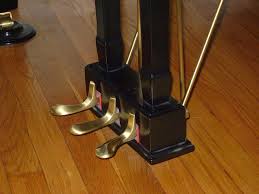
A History of Piano Pedals

piano-pedal-diagrampiano-pedal


Piano pedals have existed for almost as long as the modern piano itself, but they had a rocky start. While the modern piano accepted most of its final touches, the evolution of the piano pedal continued.

In 1722, the piano’s first tone-modifying mechanism came in the form of a hand stop, and was created by Father Piano himself: Bartolomeo Cristifori. The device positioned the hammers to strike only one piano string per key, which created a soft, relaxed timbre. But it was far from ideal; a spare hand was required to use it, meaning the pianist either repeatedly removed one hand from the keys, or practiced alongside a hand-stop operator. Thankfully, the mechanism was later modified to be operated by the knee, and became the predecessor to today’s una corda, or “soft,” pedal.

The next modification arrived soon after. Gottfried Silbermann — renowned European constructor of keyboard instruments — created a mechanism that lifted the dampers off of the strings, causing a reverb effect. This early sustain pedal had an advantage over most modern sustains: treble and bass notes could be controlled separately from one another; however, like the una corda, the sustain did not start off as a foot pedal; an impracticality which may have justified its early unpopularity. Today, the sustain is the most frequently used, and possibly the most favored, piano pedal.

Which brings us to the underdog: the sostenuto pedal. Created in the mid 1800s by Boisselot & Sons, it is by far the most misunderstood piano pedal. The sostenuto is constantly being replaced — or removed entirely — from its position as the middle pedal, and is only standard on an American grand. It allows certain notes to be “sustained” while other notes are left unaffected, and even piano leader Steinway saw potential in the pedal, opting to patent the idea three years after its début in 1844. But, surprisingly, the impressive effects of the sostenuto never caught on.

Alternative middle pedals have included practice rails, which muffle the notes for quiet practice; and the faux-sostenuto, which allows only the bass notes to resonate. Most modern pianos now have only two pedals, leaving the sostenuto –- one of the most unique and inspiring pedals –- to fade into antiquity.

via Piano Pedals – History of Piano Pedals.

https://youtu.be/ciR52_fccoQ

April 5 in Music History

today

. 1724 ~ Giovanni Jacopo Casanova de Seingalt, Italian violinist During his life he was also a seminarian, a secretary to a cardinal, a Venetian ensign, an abbe, a gambler, an alchemist, a spy, a lover, adventurer, and a librarian.

. 1784 ~ Ludwig Spohr, German violinist, composer and conductor

. 1869 ~ Albert Roussel, French composer

. 1908 ~ Herbert von Karajan, Austrian conductor

https://youtu.be/WuqyfEyNXQo

. 1922 ~ Gale Storm (Josephine Cottle), Singer

. 1925 ~ Stan Levey, Musician, composer, drummer in band with Charlie Parker

. 1928 ~ Tony Williams, Singer with The Platters

. 1932 ~ Billy Bland, Singer

. 1934 ~ Stanley Turrentine, Jazz musician – tenor sax
More about Turrentine

. 1940 ~ Tommy Cash, Songwriter, Johnny Cash’s brother

. 1946 ~ Vincent Youmans passed away.  He was an American Broadway composer and Broadway producer.

https://youtu.be/T1sjCEsJM_4

. 1958 ~ Johnny Mathis’ album, Johnny’s Greatest Hits, on Columbia Records, made it to the pop music charts for the first time. The LP remained on the charts for a record 490 weeks (nearly 9~1/2 years!) The record began its stay at number one (three weeks) on June 9, 1958. Mathis studied opera from age 13 and earned a track and field scholarship at San Francisco State College. He was invited to Olympic try-outs and chose a singing career instead. He was originally a jazz-style singer when Columbia switched Mathis to singing pop ballads. Johnny would chart over 60 albums in 30 years.

. 1982 ~ After eight years of publication to the radio and recording industry, Record World magazine ceased publication and filed for bankruptcy protection.

. 1985 ~ Broadcasters banded together to play the single, We Are the World, at 10:50 a.m. E.S.T. Stations in the United States were joined by hundreds of others around the world in a sign of unification for the African relief cause. Even Muzak made the song only the second vocal selection it has ever played in elevators and offices since its inception.

Backwards Practice?

Found on Pinterest

Found on Pinterest

So often transfer students will come to me and play a piece they’ve been working on.  When they make a mistake, they’ll stop and start the piece all over again instead of correcting the mistake on the spot and moving on.

If they do this at home in practice, they’ll have played the beginning part many times more than the ending – or they may have never gotten to the ending at all!

The infographic above shows a way to get around this problem.  It’s also great for memorizing pieces during recital preparation.

Similar to this are some pieces in the early pages of beginning method books.  Lines 1, 2 and 4 will be identical with only line 3 being changed.

If a student plays this over and over all the way through, he’s learned line 1 three times better than line 3.  I always suggest practicing line 3 by itself several times to help counter this problem.

April 4 in Music History

today

. 1843 ~ Hans Richter, Hungarian conductor

. 1859 ~ Daniel Emmett introduced I Wish I was in Dixie’s Land (later named Dixie) in New York City. Just two years later, the song became the Civil War song of the Confederacy.

. 1875 ~ Pierre Monteux, French conductor, famed for his interpretation of early 20th century music, he conducted the first performances of Stravinsky’s “Rite of Spring” and Ravel’s “Daphnis and Chloe.”

. 1891 ~ Distinguished American actor Edwin Booth made his final stage appearance in a production of Hamlet at the Brooklyn Academy of Music.

. 1895 ~ Arthur Murray Dancer

. 1915 ~ “Muddy” Waters, American blues singer and guitarist

. 1922 ~ Elmer Bernstein, Composer of Academy Award-winning film scores: Thoroughly Modern Millie (1967); Sudden Fear, The Man with the Golden Arm, Ten Commandments, Sweet Smell of Success, To Kill a Mocking Bird, Walk on the Wild Side and The Magnificent Seven

. 1938 ~ After seven years of singing on the radio, Kate Smith began a new noontime talk show.

. 1939 ~ Glenn Miller recorded his theme song, Moonlight Serenade, for Bluebird Records. Previously, the Miller theme had been Gone with the Dawn and, before then, Now I Lay Me Down to Sleep.

. 1939 ~ Hugh Masakela, Trumpeter

. 1946 ~ Serge Leiferkus, Russian baritone

. 1954 ~ Maestro Arturo Toscanini conducted his last concert with the NBC Symphony Orchestra at Carnegie Hall in New York City. Toscanini ended a 17-year association with the orchestra.

. 1964 ~ The Beatles set an all-time record on the Top 100 chart of Billboard magazine this day. All five of the top songs were by the British rock group. In addition, The Beatles also had the number one album as Meet the Beatles continued to lead all others. The LP was the top album from February 15 through May 2, when it was replaced by The Beatles Second Album. It was estimated at the time that The Beatles accounted for 60 percent of the entire singles record business during the first three months of 1964. The top five singles by The Beatles this day were:
1) Can’t Buy Me Love
2) Twist and Shout
3) She Loves You
4) I Want to Hold Your Hand
5) Please Please Me

. 1968 ~ Bobby Goldsboro received a gold record for the single, Honey. The poignantly sad song charted for 13 weeks, spending five weeks at number one. Goldsboro produced a total of 11 hits on the pop charts in the 1960s and 1970s. Honey was his only million seller and only number one hit.

. 1994 ~ Ginny Simms passed away.  She was an American popular singer and film actress.

. 2000 ~ Blues singer Mary Smith McClain, better known to fans as “Diamond Teeth Mary,” died in St. Petersburg, Fla. She was believed to have been 97 or 98. McClain was a teen-ager posing as a boy when she hopped a train in her native West Virginia to begin a new life as a traveling blues musician more than 80 years earlier. She went from singing at carnivals with the Rabbit Foot Minstrels to the Chicago Blues Festival, New York City’s Carnegie Hall and Europe. She sang with such music greats as B.B. King, Duke Ellington, Billie Holiday and Louis Armstrong. McClain, who once had diamonds set in her teeth, was considered the world’s oldest-performing true blues musician, appearing at local clubs until two weeks before her death.