December 8 ~ On This Day in Music

today

Christmas Countdown: It Came Upon A Midnight Clear

• 1731 ~ Frantisek Xaver Dusek, Czech composer and one of the most important harpsichordists and pianists of his time.

• 1865 ~ Jean (Johan) Julius Christian Sibelius, Finnish composer
Read quotes by and about Sibelius
More information about Sibelius

• 1882 ~ Manuel Maria Ponce, composer

• 1890 ~ Bohuslav Martinu, composer

• 1924 ~ Franz Xaver Scharwenka, German pianist/composer (Mataswintha), died at the age of 74

• 1925 ~ Jimmy Smith, Grammy Award-winning musician, modern jazz organist

• 1925 ~ Sammy Davis, Jr., American singer of popular music

• 1939 ~ James Galway, Irish flutist
Read quotes by and about Galway
More information about Galway

• 1939 ~ Jerry Butler, Singer with The Impressions

• 1941 ~ Ray Eberle and The Modernaires teamed with the Glenn Miller Orchestra to record Moonlight Cocktail on Bluebird Records. By April, 1942, the song was a solid hit.

• 1942 ~ Bobby Elliott, Drummer with The Hollies

• 1943 ~ Jim (James Douglas) Morrison ‘The Lizard King’, Singer in the rock group The Doors

• 1946 ~ John Rubinstein, Tony Award-winning actor, composer

• 1947 ~ Gregg Allman, Keyboards, guitar, singer with Allman Brothers Band

• 1957 ~ Phil Collen, Guitarist with Def Leppard

• 1961 ~ Surfin’, The Beach Boys first record, was released on Candix Records. It became a local hit in Los Angeles but only made it to #75 nationally. The surfin’ music craze didn’t take hold across America for another year. By the time Surfin’ Safari entered the Top 40 (September, 1962), though, The Beach Boys were ridin’ a wave of popularity that continues today.

• 1963 ~ Florence Henderson and Jose Ferrer co-starred in The Girl Who Came to Supper on Broadway. The production, however, only lasted for 112 shows.

• 1963 ~ Frank Sinatra, Jr. was kidnapped in Lake Tahoe, Nevada. He was set free four days later. It was discovered that Sinatra, Jr. cooperated with his abductors in their plot. Dad was not proud, nor pleased. Frank, Jr. went on to conduct the big band for Frank, Sr. and all was well.

• 1966 ~ Sinead O’Connor, Singer

• 1980 ~ John Lennon was shot and killed on this day as he stood outside of his New York City apartment house, the Dakota. A deranged, obsessed ‘fan’ asked Lennon to autograph an album, then shot him as Lennon started to comply. The man was quickly apprehended by others gathered at the scene. A several-days vigil by hundreds of mourning fans is remembered as candles flickered and the song Give Peace a Chance was heard, a continuing tribute to the musician and songwriter of a generation. John Lennon’s wife, Yoko Ono, together with New York’s officials, set up a permanent memorial to her husband: a section of Central Park, opposite the Dakota, named Strawberry Fields.

• 1982 ~ Marty Robbins passed away

. 1995 ~ American rock band Grateful Dead announced they were breaking up after 30 years of making music. The news came four months after the death of lead guitarist Jerry Garcia.

• 2003 ~ Lewis Allen, producer of the Broadway hit “Annie” and winner of three Tony Awards, died of pancreatic cancer, his wife said. He was 81. “Annie” opened in 1977 and ran for six years. Allen won a Tony for it and for two plays he produced: Herb Gardner’s “I’m Not Rappaport” in 1986 and Terrence McNally’s “Master Class” in 1996. Allen also produced several films, including Shirley Clarke’s “The Connection” (1961), Francois Truffaut’s “Fahrenheit 451” (1966) and both the 1963 and 1990 versions of “Lord of the Flies.” He was an early supporter of “Annie,” which started life at a regional theater in Connecticut. Although that production received lukewarm reviews, Allen got producer-director Mike Nichols to join him in backing the Broadway version, which spawned the 1982 film version that Allen did not produce. Allen was born in Berryville, Va., graduated from the University of Virginia and served with the American Field Service during World War II. His wife, Jay Presson Allen, wrote the screenplays for “Cabaret” (1972) and Alfred Hitchcock’s “Marnie”(1964).

• 2003 ~ Cuban pianist Ruben Gonzalez, who found new fame in the mid-1990s playing with Compay Segundo’s Buena Vista Social Club band, died. He was 84. Gonzalez’s keyboard gymnastics provided the heartbeat of the Buena Vista Social Club’s string of traditional Cuban “son” music albums beginning in 1997. The smallish man with grizzled hair and beard gained worldwide attention as the pianist on the opening album of the series, the Grammy-winning “Buena Vista Social Club.”

. 2013 ~ Britain’s Got Talent singer Susan Boyle announced that she had been diagnosed with Asperger’s Syndrome. While Boyle said this diagnosis will not change her life she believes that it gives her a greater understanding of herself.

Christmas Countdown: It Came Upon A Midnight Clear

It Came Upon A Midnight Clear

In 1850, Richard Storrs Willis, a composer who trained under Felix Mendelssohn, wrote the melody called “Carol.” This melody is most often set in the key of B-flat major in a six-eight time signature. “Carol” is the most widely known tune to the song in the United States.

It came upon the midnight clear,
That glorious song of old,
From angels bending near the earth,
To touch their harps of gold:
“Peace on the earth, goodwill to men,
From heaven’s all-gracious King.”
The world in solemn stillness lay,
To hear the angels sing.

Still through the cloven skies they come,
With peaceful wings unfurled,
And still their heavenly music floats
O’er all the weary world;
Above its sad and lowly plains,
They bend on hovering wing,
And ever o’er its Babel sounds
The blessèd angels sing.

Yet with the woes of sin and strife
The world has suffered long;
Beneath the angel-strain have rolled
Two thousand years of wrong;
And man, at war with man, hears not
The love-song which they bring;
O hush the noise, ye men of strife,
And hear the angels sing.

And ye, beneath life’s crushing load,
Whose forms are bending low,
Who toil along the climbing way
With painful steps and slow,
Look now! for glad and golden hours
come swiftly on the wing.
O rest beside the weary road,
And hear the angels sing!

For lo!, the days are hastening on,
By prophet bards foretold,
When with the ever-circling years
Comes round the age of gold
When peace shall over all the earth
Its ancient splendors fling,
And the whole world give back the song
Which now the angels sing.


Another version:

December 7 ~ On This Day in Music

today


Pearl Harbor Day


Christmas Countdown: Hark the Herald Angels Sing

• 1637 ~ Bernardo Pasquini, Italian composer of operas, oratorios, cantatas and keyboard music.

• 1840 ~ Hermann Goetz, German Composer

• 1842 ~ The Philharmonic Society of New York, the first permanent orchestra in the U.S., held its first concert. Despite uncomfortable seating, the event was a huge success. They performed works of Beethoven.

• 1863 ~ Pietro Mascagni, Italian composer and conductor
More information about Mascagni

• 1879 ~ Rudolf Friml, Musician, composer

• 1887 ~ Ernst Toch, Austrian-born American composer

• 1899 ~ Antoni de Kontski, Polish pianist and composer, died at the age of 82

• 1911 ~ Louis Prima, Trumpeter, bandleader with Louis Prima and His New Orleans Gang, Gleeby Rhythm Orchestra; songwriter, singer, married to Keely Smith

• 1931 ~ Bobby Osborne, Musician, mandolin, singer with the duo – Osborne Brothers

• 1942 ~ Harry Chapin, American folk-rock singer and songwriter, Recipient of Special Congressional Gold Medal, Worldwide Humanitarian for the Hungry, Needy and Homeless

• 1948 ~ NBC presented Horace Heidt’s Youth Opportunity Program for the first time. The talent show earned Dick Contino, an accordionist, the $5,000 prize as the program’s first national winner.

• 1949 ~ Tom Waits, Singer, songwriter, playwright, married to Kathleen Brennan

• 1954 ~ Mike Nolan, Singer with Bucks Fizz

• 1957 ~ Pat Boone was at the top of the pop charts for the first of six weeks with April Love. His other number one hits included Ain’t That a Shame, I Almost Lost My Mind, Don’t Forbid Me and Love Letters in the Sand.

• 1980, Leonard Bernstein received the Kennedy Center Honors for lifetime contributions to American culture through the performing arts. His co-recipients were James Cagney, Leontyne Price, Lynn Fontanne, and Agnes de Mille.

At the White House reception for the honorees, President Jimmy Carter said:

“Leonard Bernstein single-handedly, or I might say, with both hands and his entire body, as a matter of fact— [laughter] —has brought great music as a vital part of the personal lives of literally millions of Americans and people throughout the world with his deep commitment, his knowledge of communication, his ability as a teacher, and the inner commitment that makes his words and his attitudes a kind of a burning inspiration to those who have admired his own works and the way he interprets and explains the fine works of others. In motion pictures, on Broadway, in the concert hall, and, I am thankful to say, here in The White House, he’s been a favorite of us and of millions of his fellow Americans.”

• 1984 ~ Michael Jackson was in Chicago to testify that the song, The Girl is Mine, was exclusively his and he didn’t swipe the song, Please Love Me Now. It was a copyright infringement case worth five million dollars. He won.

• 1990 ~ Dee (Delectus) Clark passed away

• 2016 ~ Greg Lake, English rock vocalist and bassist (King Crimson, Emerson, Lake & Palmer), died of cancer at the age of 69

December 6 ~ On This Day in Music

today

Christmas Countdown: Just In Time For Christmas

• 1877 ~ Thomas Alva Edison made the first sound recording ever by reciting and recording the nursery rhyme, “Mary had a Little Lamb”. Edison recorded sound on a cylinder, which was then rotated against a needle. The needle moved up and down in the grooves of the cylinder, producing vibrations that were amplified by a conical horn. Edison assumed that this would be useful only for office dictation purposes and not much for recording music.

• 1887 ~ Joseph Lamb, American ragtime composer

• 1896 ~ Ira Gershwin (Israel Gershvin), American librettist and lyricist

• 1920 ~ Dave Brubeck, American jazz pianist and composer
More information about Brubeck

• 1929 ~ Nikolaus Harnoncourt, German conductor, cellist and musicologist

• 1930 ~ Bobby Van (Bobby King Robert Stein), Actor, dancer

• 1939 ~ Steve Alaimo, Singer, actor

• 1941 ~ Helen Cornelius, Singer

• 1942 ~ Len Barry (Borrisoff), Singer, with The Dovells

• 1944 ~ Jonathan (Kenneth) King, Singer, songwriter, producer

• 1944 ~ Red Bank Boogie, Count Basie’s salute to his hometown, was recorded on Columbia Records. The tune is a tribute to Red Bank, New Jersey.

• 1948 ~ Arthur Godfrey’s Talent Scouts debuted on CBS-TV. The show ran for almost10 years and the redhead introduced such talent as Pat Boone, The Chordettes, Carmel Quinn, The McGuire Sisters, Rosemary Clooney, Tony Bennett, Connie Francis, Steve Lawrence and Al Martino.

• 1950 ~ Joe Hisaishi, Japanese composer

• 1956 ~ Peter Buck, Guitarist with R.E.M.

• 1956 ~ Rick (Paul) Buckler, Drummer, singer with The Jam

• 1960 ~ Eileen Farrell debuted at the Metropolitan Opera House in NYC in the title role of Gluck’s Alcestis.

• 1962 ~ Ben Watt, Guitarist, keyboard, singer with Everything but the Girl

• 1969 ~ Musician Cab Calloway turned actor as he was seen in the Hallmark Hall of Fame presentation of The Littlest Angel on NBC. The big band singer, known for such classics as Minnie the Moocher, became a movie star in The Blues Brothers (1980) with John Belushi and Dan Ackroyd.

• 1969 ~ Na Na Hey Hey Kiss Him Goodbye, by Steam, reached the #1 spot on the top 40. It stayed at the top for two weeks and was the only major hit for the group.

. 1969 ~ A free concert organized by the Rolling Stones featuring Santana, Jefferson Airplane, The Flying Burrito Brothers, and Crosby, Stills, Nash and Young and The Rolling Stones at the disused Altamont Speedway in Livermore, Calif., was marred by the deaths of four people.


• 1969 ~ Led Zeppelin made their debut on the US singles chart with ‘Whole Lotta Love’, it went on to make No.4 on the chart and was the first of six Top 40 singles for the group in the US. During the bands career, Zeppelin never released any singles in the UK.

• 1984 ~ Two former Beatles debuted in two film releases this day. Paul McCartney’s Give My Regards to Broad Street and George Harrison’s A Private Function were finalized for theater audiences.

• 1988 ~ Roy Orbison, Singer, passed away

• 1989 ~ Sammy Fain passed away.

• 2000 ~ Werner Klemperer, a Jewish refugee from Nazi Germany who went on to play the inept German prison-camp commandant Col. Klink on TV’s “Hogan’s Heroes,” died of cancer at the age of 80. Klemperer fled Germany in 1935 with his father, Otto, a distinguished conductor and composer. He won two Emmy Awards for his portrayal of the monocled Col. Wilhelm Klink on the 1960s sitcom about World War II Allied prisoners of war. He was a gifted actor on both film and stage, receiving a Tony nomination in 1988 as a feature actor in a musical for his role in Hal Prince’s revival of “Cabaret.” Other Broadway roles included starring opposite Jose Ferrer in “The Insect Comedy,” and with Tallulah Bankhead in the 1955 production of “Dear Charles.” Most recently, he co-starred in Circle in the Square’s production of Chekhov’s “Uncle Vanya.” Klemperer also appeared as a narrator with nearly every major symphony orchestra in the United States. His repertoire included such works as Beethoven’s “Egmont” and “Fidelio,” Stravinsky’s “L’Histoire du Soldat” and “Oedipus Rex.” His narration of Mozart’s “The Impresario,” with the Mostly Mozart Festival Orchestra, aired on PBS’s “Live from Lincoln Center.” He also performed in various operas, including “The Sound of Music,” with the New York City Opera. He played Prince Orlofsky in “Die Fledermaus” with companies in Seattle and Cleveland.

• 2003 ~ Hans Hotter, the world’s leading Wagnerian bass-baritone of his time, died at the age of 94. The 6-foot-4 Hotter, whose career spanned half a century, was known for his booming, noble voice. He mastered such roles as Wotan in Wagner’s Ring Cycle, Gurnemanz in “Parsifal”, the title role in “The Flying Dutchman” and Hans Sachs in Die Meistersinger. He also won praise for Schubert lieder. Hotter started his operatic career in 1930, and sang in Prague and Hamburg and at the Munich Opera, where he became a leading singer in 1937. He remained with the company until 1972. He also was a member of the Vienna Opera from 1939 until 1970. Hotter created the role of Olivier in the world premiere of Richard Strauss “Capriccio” in 1942. According to the British newspaper The Guardian, the role of Jupiter in Strauss’s “Die Liebe der Danae” had been written for him but its premiere was disrupted when all theaters were closed after the assassination attempt on Adolf Hitler in August 1944. After the war, Hotter began a 12-year association with the Wagner family’s opera house at the Bayreuth festival in 1952. The same year, he made his Metropolitan Opera debut as the Dutchman. He also became a producer. His final production was in 1981 in Chicago of Beethoven’s “Fidelio”.

December 5 ~ On This Day in Music

today

Christmas Countdown: Carol of the Bells

• 1687 ~ Francesco Xaverio Geminiani, Italian violinist, writer and composer

• 1791 ~ Wolfgang Amadeus Mozart, composer, died in Vienna, Austria at the age of 35. Mozart, the precocious child prodigy, composed several pieces that are deemed central to the classical era. Though he ranked as one of the greatest musical genius, he did not live a life of affluence as none of his compositions earned him a decent commission.

• 1870 ~ Vitezslav Novak, Czech composer and pedagogue

• 1901 ~ Walt Disney, Man behind many much-loved animated musicals

• 1922 ~ Don Robertson, Nashville Songwriters Association Hall of Famer, whistler

• 1930 ~ Larry Kert, Actor, singer, dancer in the West Side Story original cast, 1957

• 1932 ~ Little Richard (Pennimann), US rock ‘n roll artist, preacher, songwriter and pianist who had a string of hits in the fifties including “Tutti Frutti,” “Long Tall Sally” and “Good Golly, Miss Molly”. He had a great stage presence which made him an idol of girls and boys alike. Rolling Stone magazine chose him as the eighth greatest artist of all time.

• 1936 ~ Chad Mitchell, Singer with Chad Mitchell trio

• 1936 ~ Bing Crosby took over as host of The Kraft Music Hall. Jimmy Dorsey (who would later be host, himself) led the Kraft Orchestra.

• 1945 ~ José Carreras, Spanish tenor with the New York Metropolitan Opera.  Best known as a member of the highly successful “Three Tenors”.   Plácido Domingo, José Carreras and Luciano Pavarotti played in some of the largest stadiums around the world helping to make opera music popular with a wider public. They combined some of the best of opera with popular and broadway musical hits with their signature tune Nessun Dorma from Puccini’s Turandot.

• 1947 ~ Jim Messina, American rock guitarist and singer, duo of Loggins and Messina and groups: Buffalo Springfield and Poco

• 1960 ~ Les Nemes, Bass with Haircut 100

• 1960 ~ Jack Russell, Singer with Great White

• 1973 ~ Paul McCartney released Band On The Run, his fifth album since his departure from The Beatles. Two hit singles from the album – ‘Jet’ and ‘Band on the Run’ made it McCartney’s most successful album.

• 2003 ~ Avie Parton, mother of country music singer, songwriter and actress Dolly Parton, died after a long illness. She was 80. Parton was responsible for stitching the patchwork rag coat for young Dolly that the singer later recounted in the song, Coat of Many Colors. The song helped propel Dolly Parton to stardom and came to symbolize her climb from rags to riches. She also was the witness at Dolly’s secret marriage to Carl Dean in 1966 in Ringgold, Ga.

• 2012 ~ Dave Brubeck, American jazz pianist and composer died from heart failure at the age of 91
More information about Brubeck

Christmas Countdown: Angels We Have Heard On High


Angels We Have Heard On High

Angels we have heard on high
Sweetly singing o’er the plains
And the mountains in reply
Echoing their joyous strains
CHORUS:
Gloria, in excelsis Deo!
Shepherds, why this jubilee?
Why your joyous strains prolong?
What the gladsome tidings be
Which inspire your heavenly song?
Chorus
Come to Bethlehem and see
Him Whose birth the angels sing;
Come, adore on bended knee,
Christ the Lord, the newborn King.
Chorus
See Him in a manger laid
Jesus Lord of heaven and earth;
Mary, Joseph, lend your aid,
With us sing our Savior’s birth.
Chorus

This is a traditional French carol (Les Anges dans nos Campagnes) that was translated into English by Bishop James Chadwick.

This carol commemorates the story of the birth of Jesus Christ found in the Gospel of Luke, in which shepherds outside Bethlehem encounter a multitude of angels singing and praising the newborn child.

This is “Angels We Have Heard on High” with choir and orchestra.

The Piano Guys, Peter Hollens, David Archuleta, and The Mormon Tabernacle Choir get together to sing “Angels We Have Heard On High”

December 4 ~ On This Day in Music

Christmas Countdown

• 1660 ~ André Campra, French composer

• 1667 ~ Michel Pignolet De Monteclair, French composer

• 1861 ~ Lillian Russell (Helen Louise Leonard), Singer, actress, burlesque

• 1879 ~ Sir Herbert Hamilton Harty, Irish composer, conductor, pianist and organist

• 1915 ~ Eddie Heywood, Jr., Pianist, composer

• 1927 ~ Duke Ellington’s big band opened the famed Cotton Club in Harlem. It was the first appearance of the Duke’s new and larger group. He played the club until 1932.

For part 2:

• 1934 ~ Ethel Merman recorded I Get a Kick Out of You, from Cole Porter’s musical, Anything Goes. She was backed by the Johnny Green Orchestra. The tune was recorded for Brunswick Records.

• 1934 ~ Wink (Winston Conrad) Martindale, TV host, singer

• 1938 ~ Yvonne Minton, Australian mezzo-soprano

• 1940 ~ John Cale, Bass, keyboard, viola, singer with The Velvet Underground

• 1942 ~ Bob Mosley, Bass with Moby Grape

• 1942 ~ Chris Hillman, Guitar, bass, mandolin with The Byrds

• 1944 ~ Dennis Wilson, American rock-and-roll singer and drummer

• 1948 ~ Southside Johnny (Lyon), Singer with Southside Johnny and The Asbury Dukes

• 1953 ~ Leonard Bernstein conducted at Teatro alla Scalafor the first time, in a production of Cherubini’s “Medea.” Maria Callas(1923-1977) sang the title role. Bernstein was the first American to conduct at La Scala.

“Then came the famous meeting with Maria Callas [in 1953].

To my absolute amazement, she understood immediately the dramatic reasons for the transposition of scenes and numbers, and the cutting out of her aria in the second act. We got along famously – it was perfect. She understood everything I wanted, and I understood everything she wanted…Then I met the orchestra, [began 5 days of rehearsals]…and we opened.

I can tell you I was quaking as I entered that pit, because it was the first time I had ever entered a pit – and of all places, at La Scala!

The opera audience didn’t really know who I was. I felt like an interloper and a bit of a student. However, I pulled myself together and played the overture [of Medea], which is very long, and hoped for the best. It seemed as though we could never get the opera to begin. By the end of Medea, the place was out of its mind.”

Leonard Bernstein, Interview with John Gruen, 1972

• 1965 ~ Composer, lyricist, and singer, Jacques Brel made his American debut in concert at Carnegie Hall in New York City. Brel composed Jackie, You’re Not Alone, If You Go Away and more.

• 1972 ~ Billy Paul from Philadelphia received a gold record for his smash hit, Me and Mrs. Jones.

• 1976 ~ Baron (Edward) Benjamin Britten (of Aldeburgh) died in Aldeburgh. He was a British composer, conductor, and pianist.

• 2002 ~ Emmy-nominated pianist George Gaffney, who accompanied such musicians as Peggy Lee, Engelbert Humperdink and Sarah Vaughan, died. He was 62. Born in New York City, Gaffney began studying the piano at age 10 but switched to the trombone. After serving in the U.S. Marine Corps from 1958 to 1961, Gaffney returned to New York, where he played piano and began arranging and accompanying singers. Gaffney moved to the Chicago area in the mid-1960s and was musical director of the Playboy Club in Lake Geneva, Wis., where he first met Vaughan. Gaffney came to California in the early 1970s and found work as a studio musician and accompanist. He worked on a number of television programs, including the TV series “Moonlighting,” and was nominated for an Emmy. From 1980 to 1990, he was Vaughan’s accompanist and musical director. He moved to Las Vegas in 1994 and worked as Humperdink’s musical director. In recent years, he also orchestrated tunes for Rita Moreno.

• 2002 ~ Mary Hansen, guitarist and vocalist with the ’90s alternative band Stereolab died. She was 36. Hansen, from Maryborough in Queensland, Australia, died in a cycling accident in London, The Independent newspaper reported Friday. Details of the accident were not available. Band spokesman Mick Houghton was quoted by The Independent as saying a truck might have backed into her, “but I really don’t know much more than that.” Hansen joined the band in 1992, two years after it was formed by Tim Gane, formerly of the band McCarthy, and his girlfriend Laetitia Sadier. Among hundreds of messages posted on the band Web site, one from a fan who identified himself as Louis called Hansen “the soul” of the band. Hansen, who played several instruments, first appeared on 1992’s LoFi single and all subsequent releases, including 1994’s Mars Audiac Quintet and 1996’s Emperor Tomato Ketchup. Stereolab had been working on a new album, expected to be released next year.

• 2003 ~ Barry Morell, a tenor who played leading roles at the Metropolitan Opera and internationally for more than two decades, died of esophageal cancer. He was 75. Morell began his career as a baritone, until he sought the guidance of former Metropolitan Opera baritone Giuseppe Danise, who told him he should be a tenor. He was best known for performing the operas of Puccini. He made his debut as Pinkerton in “Madame Butterfly” in 1955 with the New York City Center Opera Company. In 1958, he made his Met debut in the same role. He appeared in Berlin, Barcelona, Vienna and other opera houses in Europe, South America and across the United States. Among his more than 20 roles during 257 performances at the Met were Rodolfo in “La Boheme,” Enzo in “La Gioconda” and the title roles of “Don Carlo”and “Faust”.

December 3 ~ On This Day in Music

today


Christmas Countdown: Angels We Have Heard On High

• 1596 ~ Nicola Amati, Italian violin maker, teacher of Guarneri and Stradivari

• 1729 ~ Padre Antonio Francisco Javier Jose Soler, Spanish composer whose works span the late Baroque and early Classical music eras. He is best known for his keyboard sonatas, an important contribution to the harpsichord, fortepiano and organ repertoire.

• 1876 ~ Hermann Goetz died.  He was a German composer.

• 1883 ~ Anton Webern, Austrian composer and conductor
Read quotes by and about Webern
More information about Webern

• 1907 ~ Connie (Connee) Boswell, Singer Connie or Connee (a spelling she preferred later in life), who also played several musical instruments, arranged vocals for herself and her two sisters. Although she was stricken with polio and worked from her wheelchair, she never let this get in the way of being part of her jazz-singing trio. The Boswell Sisters’ talent was quickly recognized and by the time Connee was 24 years old, the sisters were doing vaudeville, radio, playing New York’s Paramount Theatre, recording with the Dorsey Brothers: You Oughta Be in Pictures; making films and appearing on the U.S.A.’s first public TV broadcast. One thing led to another and Connie went solo, entertaining World War II troops, making films, appearing on Broadway and recording with big names like Woody Herman’s; even a duet classic with Bing Crosby: Basin Street Blues. Her musical influence spanned many generations and music styles. If you’d have asked Ella Fitzgerald, she would have told you, “They just don’t make ’em like Connee Boswell anymore.”

• 1911 ~ Nino Rota, composer (Torquemada)

•  1923 ~ Maria Callas (Calogeropoulous), American soprano
More information about Callas
Read quotes by and about Callas

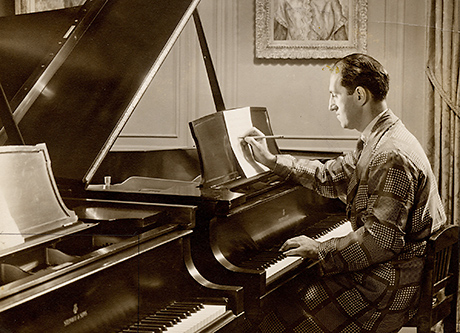
• 1925 ~ The first jazz concerto for piano and orchestra was presented at Carnegie Hall in NYC. Commissioned by Walter Damrosch, American composer George Gershwin presented Concerto In F, and was also the featured soloist playing a flugelhorn in a slow, bluesy style as one of his numbers.

• 1927 ~ Phyllis Curtin, Singer: soprano with the New York City OperaMetropolitan Opera, Vienna Staatsoper, La Scala, Teatro Colon; coordinator of Voice Dept and Opera at Yale School of Music, Dean Emerita of Boston Univ School for the Arts

• 1927 ~ Ferlin Husky (aka: Simon Crum, Terry Preston), Singer

• 1930 ~ Andy (Howard Andrew) Williams, American Emmy Award-winning entertainer, singer

• 1931 ~ Jaye P. (Mary Margaret) Morgan, Singer, performer

• 1941 ~ Johann Christian Sinding, Norwegian composer

• 1944 ~ Frank Sinatra was in the Columbia Records studio recording Old Man River.

• 1948 ~ Ozzy (John) Osbourne, Songwriter, singer

• 1949 ~ Mickey Thomas, Singer with Jefferson Starship

• 1953 ~ Kismet opened on Broadway in New York. The show ran for 583 performances.

• 1955 ~ Elvis Presley’s first release on RCA Victor Records was announced. No, it wasn’t Hound Dog or Heartbreak Hotel. The first two sides were actually purchased from Sam Phillips of Sun Records: Mystery Train and I Forgot to Remember to Forget. Elvis was described by his new record company as “The most talked about personality in recorded music in the last 10 years.”

• 1960 ~ Camelot opened at the Majestic Theatre in New York City. Richard Burton and Julie Andrews played the leading roles in the musical written by Lerner and Loewe. Robert Goulet got rave reviews for his songs, If Ever I Would Leave YouThen You May Take Me to the Fair and How to Handle a Woman, among others. Camelot had a run of 873 performances. Broadway went Hollywood in the 1967 film version of Camelot. Its run was not quite as successful.


. 1965 ~ The Beatles sixth studio album Rubber Soul was released. Often referred to as a folk rock album, Rubber Soul incorporates a mix of pop, soul and folk musical styles. The title derives from the colloquialism “plastic soul”, which referred to soul played by English musicians.

• 1968 ~ The O’Kaysions received a gold record for Girl Watcher. The song had a promotional reprise in the 1990s as a theme for Merv Griffin’s Wheel of Fortune, with the revamped lyrics, I’m a Wheel Watcher…

. 1969 ~ The Rolling Stones recorded ‘Brown Sugar’ at Muscle Shoals studios. The single went on to be a UK and US Number 1.

.1972 ~ The Temptations earn their final #1 hit with “Papa Was A Rolling Stone”

• 1977 ~ After 29 weeks in the #1 position on the album charts (a record, literally…), Rumours, by Fleetwood Mac, was replaced at the top spot by the album Simple Dreams, sung by Linda Ronstadt.

• 1999 ~ Handel’s Messiah Gets Modern Makeover in Ireland

• 2000 ~ Kevin Mills, a member of the Christian rock groups Newsboys and White Heart, died after a motorcycle accident in Hollywood. He was 32. Mills, of Louisville, Ky., was a singer and bass player, his family said. He also was a member of the Screen Actors Guild and appeared on TV in “An Inconvenient Woman” in 1991. White Heart started in 1982. Newsboys, an Australian band now based near Nashville, was formed four years later. Newsboys have sold nearly 3 million records and earned three Grammy nominations on the religious rock circuit.

• 2000 ~ Washington Honored Eastwood, Baryshnikov, Others

• 2002 ~ Rich Dangel, credited with creating the opening guitar chords of garage band staple Louie Louie, died of an aneurysm at his home. He was 60. Dangel was a member of the seminal Northwest rock band the Wailers, who introduced the nation to the Northwest sound – raw, unpolished and catchy. He may be best known for coming up with the power chords that opened the Wailers’ 1961 regional hit, Louie, Louie, written by rhythm-and-blues singer Richard Berry and taken to the top of the national charts by another Northwest band, the Kingsmen from Portland, Ore. Dangel co-wrote his first chart hit, “Tall Cool One” with fellow Wailer John Greek when he was still in high school. The song resulted in the group’s first album, “The Fabulous Wailers,” a cross-country tour and a 1959 appearance on Dick Clark’s “American Bandstand.”

December 2 ~ On This Day in Music

today

Christmas Countdown: Joy To The World

• 1774 ~ Johann Friedrich Agricola, German composer, organist, singer, pedagogue, and writer on music.

• 1856 ~ Robert Kajanus, Finnish conductor and composer

• 1899 ~ Sir John Barbirolli, British conductor and cellist

• 1914 ~ Eddie Sauter, Drummer, trumpeter, composer, orchestra leader of the Sauter- Finegan Orchestra, arranger for Benny Goodman and Artie Shaw

• 1916 ~ Charlie Ventura, Tenor sax, played with Gene Krupa, Stan Kenton, Charlie Parker, Count Basie, band leader

• 1917 ~ Sylvia Syms, Singer, ‘world’s greatest saloon singer’

• 1918 ~ Milton DeLugg, Bandleader on The Tonight Show Starring Johnny Carson; Milton DeLugg and His Orchestra: Abe Burrows’ Almanac, The Chuck Barris Rah Rah Show, Dagmar’s Canteen, Doodles Weaver, The Gong Show, Judge for Yourself, Your Hit Parade; played accordion in The Milton DeLugg Quartet and songwriter

• 1928 ~ Jörg Demus, Austrian pianist

• 1934 ~ Billy Paul (Paul Williams), Singer

• 1941 ~ Tom McGuinness, Bass, guitar with Manfred Mann; McGuinness Flint; and Blues Band

• 1942 ~ Ted Bluechel, Jr., Singer, drummer with The Association

• 1944 ~ Eric Bloom, Singer, guitarist

• 1945 ~ John Densmore, Musician with The Doors

• 1950 ~ Dino Lipatti, classical pianist and composer whose career was cut short from causes related to Hodgkin’s disease, died at the age of 33

• 1952 ~ Michael McDonald, Singer, songwriter, keyboard with The Doobie Brothers

• 1960 ~ Rick Savage, Bass with Def Leppard

• 1972 ~ Motown’s Temptations reached the #1 spot on the top 40 charts with Papa Was a Rollin’ Stone. It was the fourth #1 hit for the Temptations, joining My Girl, I Can’t Get Next to You and Just My Imagination.

• 1981 Hershy Kay, composer, died at the age of 62. Union Jack is a ballet made by New York City Ballet co-founder and founding choreographer George Balanchine to traditional British tunes, hornpipe melodies and music-hall songs, ca. 1890–1914, adapted by Hershy Kay. The premiere took place on 13 May 1976, at the New York State Theater, Lincoln Center, to honor British heritage in the United States its bicentennial with costumes by Rouben Ter-Arutunian, original lighting by Ronald Bates and current lighting by Mark Stanley. At the finale, the ensemble spells out “God Save the Queen” in semaphore code and the Union Jack unfurls. Principal dancer Jock Soto included an excerpt from Union Jack in his farewell performance in June 2005.

December 1 ~ On This Day in Music

today

Christmas Countdown: Sleigh Ride

• 1707 ~ Jeremiah Clarke, composer, died

• 1709 ~ Franz Xaver Richter, Austro-Moravian singer, violinist, composer, conductor and music theoretician

• 1879 ~ Gilbert and Sullivan’s operetta, H.M.S. Pinafore, opened. Arthur Sullivan conducted the orchestra while William Gilbert played the role of a sailor in the chorus and in the Queen’s Nay-vee.

• 1912 ~ Terence Beckles, pianist/teacher

• 1913 ~ Mary Martin, American singer and actress, primarily for the musical theater, Tony and Emmy Award-winning actress, mother of actor Larry Hagman

• 1924 ~ Lady Be Good opened in New York City. George Gershwin wrote the music while Fred and Adele Astaire were well-received by the show’s audience for their dancing talents.

• 1936 ~ Lou Rawls (Louis Allen), American Grammy Award-winning singer of popular music, TV regular on Dean Martin Presents

• 1938 ~ Sandy Nelson, Drummer

• 1939 ~ Diane Lennon, Singer with The Lennon Sisters on Lawrence Welk ShowJimmy Durante Presents the Lennon Sisters

• 1940 ~ Glenn Miller got a call from ASCAP (American Society of Composers and Publishers). He was informed that he couldn’t use his Moonlight Serenade as his band’s theme song. He had to use Slumber Song instead because of an ASCAP ban.

• 1945 ~ Bette Midler, American Grammy Award-winning pop-rock singer and actress

• 1945 ~ Burl Ives made his concert debut. He appeared at New York’s Town Hall. We lovingly listen every year for the voice of this old-time radio personality as the narrator and banjo-pickin’ snowman in TV’s Rudolph the Red-Nosed Reindeer.

• 1946 ~ Gilbert (Raymond) O’Sullivan, Singer

• 1950 ~ John Wesley Ryles, Singer

• 1950 ~ Ernest John Moeran passed away

• 1968 ~ Promises, Promises opened on Broadway. The play ran for 1,281 performances, earning $35,000 in profits each week of 1969. Dionne Warwick had a hit version of the title song.

• 1986 ~ Horace Heidt, orchestra leader (Swift Show Wagon), died at the age of 85

• 1989 ~ Alvin Ailey, US choreographer (Blues Suite, Revelations), died at the age of 58

• 1997 ~ Stéphane Grappelli, French jazz violinist who founded the Quintette du Hot Club de France, died at the age of 89

• 2012 ~ Galina Vishnevskaya, Russian soprano opera singer, died at the age of 85