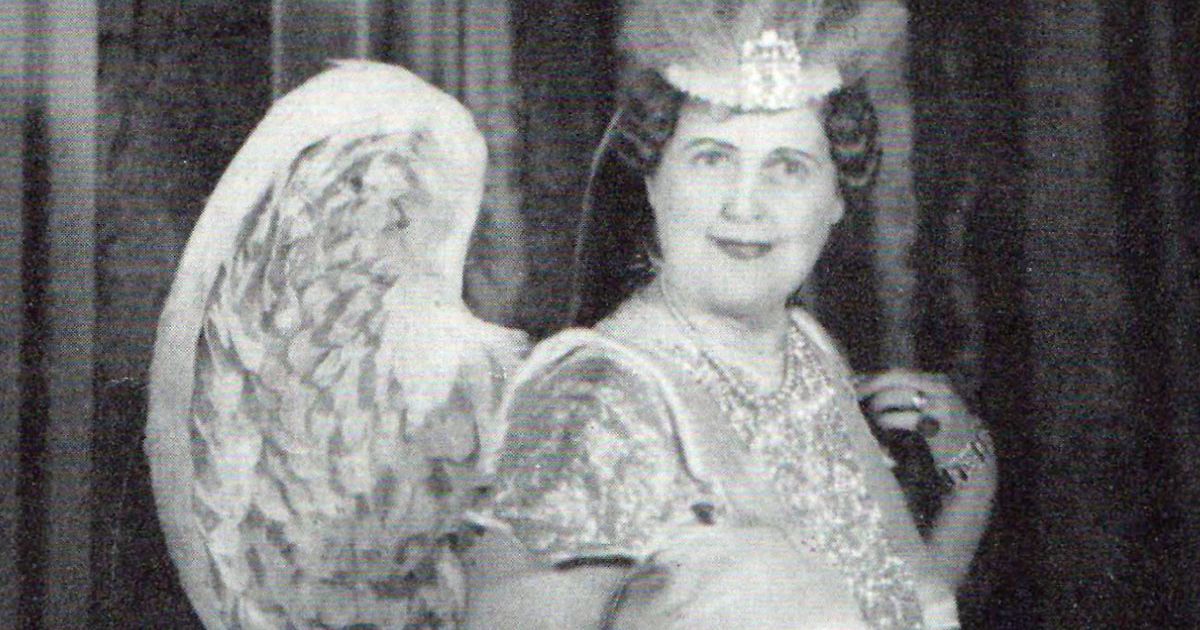
Florence Foster Jenkins was an American socialite and amateur soprano who was known and mocked for her flamboyant performance costumes and notably poor singing ability. The historian Stephen Pile ranked her “the world’s worst opera singer … No one, before or since, has succeeded in liberating themselves quite so completely from the shackles of musical notation.”
Despite (or perhaps because of) her technical incompetence, she became a prominent musical cult figure in New York City during the 1920s, 1930s, and 1940s. Cole Porter, Gian Carlo Menotti, Lily Pons, Sir Thomas Beecham, and other celebrities were fans. Enrico Caruso is said to have “regarded her with affection and respect”.
In the 1940s, New York socialite Florence Foster Jenkins (Meryl Streep) dreams of becoming a great opera singer. Unfortunately, her ambition far exceeds her talent. The voice Florence hears in her head is beautiful, but to everyone else it is quite lousy. Her husband St. Clair goes to extreme lengths to make sure his wife never finds out how awful she truly is. When Florence announces her plans for a concert at Carnegie Hall, St. Clair soon realizes that he’s facing his greatest challenge yet.
• 1806 ~ George Alexander Osborne, Irish pianist and composer (La Pluie de perles),
• 1922 ~ Cornell MacNeil, American baritone
• 1927 ~ Alfredo Kraus, Spanish tenor
• 1936 ~ Jim (James Maury) Henson, Creator of vocalist, Kermit the Frog.
There’s a fictional neighborhood where some of the residents are named Kermit, Big Bird, Bert & Ernie, Miss Piggy, and Oscar the Grouch. It’s called Sesame Street. The creator of the lifelike characters, Jim Henson, was born on this day. The puppeteer first named his puppets, Muppets, in 1954 when he was working as a producer of the Washington, D.C. TV show, Sam and Friends. Henson moved his Muppets to network TV in 1969. Children of all ages were able to enjoy the Muppets’ antics on the educational, yet entertaining Sesame Street. The Muppets then got their own show, The Muppet Show; which generated The Muppet Movie and other films, like The Muppets Take Manhattan and The Great Muppet Caper. And Jim Henson got the awards: 18 Emmys, 17 Grammys, 4 Peabody Awards and 5 Ace Awards (National Cable Television Association). The premier muppeteer, and voice of Kermit the Frog, died suddenly in May of 1990. Jim Henson lives on through his Muppets.
• 1938 ~ Pablo Elvira, Puerto Rican baritone
• 1940 ~ Barbara Allbut, Singer with Angels
• 1940 ~ Mamie “Galore” Davis, Blues singer
• 1941 ~ Linda McCartney (Eastman), Photographer for Rolling Stone magazine, singer with Wings with husband Paul McCartney
• 1942 ~ Gerry Marsden, Singer with Gerry & The Pacemakers
• 1942 ~ Glenn Miller ended his CBS radio broadcasts for Chesterfield Cigarettes. It was time for Miller to go to war. The show had aired three times a week for three years.
• 1955 ~ Millions of Americans tuned in to watch Judy Garland make her TV debut on the Ford Star Jubilee. The CBS show received the highest television ratings to that time.
• 1968 ~ The Vogues received a gold record for Turn Around Look at Me on the Reprise label.
• 2002 ~ Tim Rose, a raw-voiced folk-rocker who recorded memorable versions of Hey Joe and Morning Dew, died shortly after surgery for bowel cancer. He was 62. Rose started his music career in his hometown of Washington, D.C., in a duo billed as Michael & Timothy. Rose then worked with Cass Elliot, a future member of the Mamas and the Papas, in a group called The Triumvirate. When James Hendricks – who later married Elliot – joined the group, it was renamed The Big Three. Rose signed a recording contract with Columbia in 1966, and his album, “Tim Rose,” debuted a year later. In 1968, Rose toured in Britain with a band including John Bonham, the drummer for Led Zeppelin. Rose’s musical career stalled in the 1980s. In 1996, he returned to live performing in London with a show that featured reminiscences of his career’s ups and downs.
• 1870 ~ John Lomax, American folk-song collector and founder of the American Folklore Society at the Library of Congress
• 1923 ~ Jan Savitt and his orchestra recorded 720 in the Books on Decca Records.
• 1926 ~ John (William) Coltrane, American jazz tenor and soprano sax, composer
1930 ~ Ray Charles, American soul singer, pianist and songwriter
More information about Charles
• 1935 ~ Les McCann, Singer
• 1940 ~ Paul Williams, Academy Award-winning songwriter
• 1943 ~ Steve Boone, Bass, singer with The Lovin’ Spoonful
• 1943 ~ Julio Iglesias, Singer, Guinness Book of Records for sales of more than 100 million copies of 60 LPs in five languages
• 1945 ~ Ronald Bushy, Drummer with Iron Butterfly
• 1949 ~ Bruce Springsteen ‘The Boss’, American rock singer and songwriter, inducted
into the Rock and Roll Hall of Fame on March 15, 1999
• 1959 ~ Lita Ford, Guitarist with The Runaways
• 1967 ~ The Box Tops from Memphis hit #1 with The Letter. Though the song was #1 for four weeks and remained on the charts for 13 weeks. The Box Tops reorganized right after that first hit and never made it to #1 again.
• 1969 ~ The London Daily Mirror became a rumormonger. It printed a story saying that BeatlePaul McCartney was dead. It was the first, but not the last, time that rumor would make the rounds.
• 1971 ~ The Honey Cone scored their second gold record with Stick-Up on the Hot Wax label. It was a follow~up to their #1 smash, Want Ads on June 12, 1971.
• 1987 ~ Bob Fosse passed away. He was an American dancer, musical theatre choreographer, director, screenwriter, film director and actor.
• 2003 ~ Rex Robbins, a Broadway actor who traveled nationally with “Gypsy,” “Hello Dolly!” and “Into the Woods,” died of a subdural aneurysm while visiting relatives. He was 68. Robbins, who lived in Manhattan, had roles in 18 Broadway shows between 1963 and 2000, including Herbie in the 1974 revival of “Gypsy” with Angela Lansbury and Buckingham in “Richard II” with Al Pacino in 1979. He also appeared in films including the original “Shaft,” “The Royal Tenenbaums” and “1776,” and was in more than 300 television commercials.
• 2006 ~ Sir Malcolm Arnold, English composer and professional trumpeter died. His output of works features music in many genres, including a cycle of nine symphonies, numerous concertos, concert works, chamber music, choral music and music for brass band and wind band. He wrote extensively for the theatre, with five ballets specially commissioned by the Royal Ballet, as well as two operas and a musical. He also produced scores for more than a hundred films, among these The Bridge on the River Kwai (1957), for which he won an Oscar.
• 1918 ~ Henryk Szeryng, Polish-born Mexican violinist
• 1926 ~ William O. Smith, American composer and jazz clarinetist
• 1930 ~ Joni James (Joan Carmello Babbo), Singer
• 1937 ~ Red Norvo and his orchestra recorded the Russian Lullaby on the Brunswick label. Norvo did more famous work at a later date, recording with a singer named Dinah Shore.
• 1941 ~ Anna Tomowa-Sintow, Bulgarian soprano
• 1943 ~ Singer Kate Smith finished her War Bond radio appeal. For 13 continuous hours Smith had stayed on the air, collecting a whopping $39 million dollars in bond pledges.
• 1951 ~ David Coverdale, Singer with Deep Purple
• 1954 ~ Shari Belafonte, Actress, TV co-host, singer Harry Belafonte’s daughter
• 1956 ~ Debby Boone, Grammy Award-winning singer: Best New Artist in 1977, sang with The Boone Family; daughter of singers Pat and Shirley Boone
• 1962 ~ It was a hootenanny of a good time in, of all places, New York’s famed Carnegie Hall. The cast included newcomer Bob Dylan making his first appearance at Carnegie Hall.
• 1964 ~ In the tradition of the Broadway stage, the lights lowered, the curtain rose and Zero Mostel stepped into the spotlight as the fiddler played. “Tra-a–a- dition”, he sang, as he began the first of 3,242 performances of Fiddler on the Roof. The musical opened on Broadway this day. The story of Tevye (brilliantly played by Mostel), a poor Jewish milkman with five daughters, takes place in a small Russian village in the late 1890s. He sings and dances his way through the tragedies and comedies of a father fighting for tradition in a changing world. “To life”, he sang, as the music of Jerry Bock and Sheldon Harnick made the stories by Sholem Aleichem come alive. And he brought tears to audiences eyes with the poignant, Sunrise, Sunset, and laughter, too, with the memorable, If I were a Rich Man — which surely made Zero Mostel a wealthy man.
• 1980 ~ John Lennon signed with Geffen Records. The Lennon LP, Double Fantasy, was released on Geffen. (Lennon was assassinated on December 8, 1980.)
• 1985 ~ The poor of America’s Heartland … the financially troubled farmers of Middle America … got help from their friends in the music biz. Singing stars Willie Nelson, Neil Young and John Cougar Mellencamp held a benefit concert to raise funds. The stars came out and so did the money. The Farm Aid concert raised ten million dollars.
• 2001 ~ Isaac Stern, the master violinist who saved Carnegie Hall from the wrecking ball, died at the age of 81. Stern, one of the last great violinists of his generation, helped advance the careers of a new generation, including Itzhak Perlman, Pinchas Zukerman and Yo-Yo Ma. He played well over 175 performances at Carnegie Hall, America’s musical temple renown for its acoustics. The hall opened in 1891. As the city was planning Lincoln Center in the 1950s, a builder proposed an office building to replace Carnegie Hall. Using his prestige and his contacts among fellow artists and benefactors, Stern rallied the opposition, eventually securing legislation that enabled the city to acquire the building in 1960 for $5 million. On Jan. 8, 1943, he made his Carnegie Hall debut in a recital produced by the impresario Sol Hurok. Performing with pianist Alexander Zakin, who became his longtime accompanist, Stern played Mozart, Bach, Szymanowski, Johannes Brahms and Wieniawski. The performance attracted the attention of composer-critic Virgil Thomson. Writing in the New York Herald Tribune, Thomson proclaimed him “one of the world’s master fiddle players.” At his peak, Stern would perform more than 200 concerts a year. Stern boycotted Germany for years because of the Holocaust, but taught a nine-day seminar there in 1999.
The American Fotoplayer is a type of photoplayer developed by the American Fotoplayer Company between the years of 1912 and 1925. The Fotoplayer is a type of player piano specifically developed to provide music and sound effects for silent movies.
…
The appeal of the Fotoplayer to theatre owners was the fact that it took no musical skill to operate. The Fotoplayer would play the piano and pipe organ mechanically using an electric motor, an air pump, and piano rolls while the user of the Fotoplayer would follow the onscreen action while pulling cords, pushing buttons, and pressing pedals to produce relatable sounds to what was occurring onscreen. These actions could create sounds such as a steamboat whistle, a bird chirp, wind, thunder, a telephone bell, as well as many others. On Fotoplayers specifically, most effects were created using leather cords with wooden handles on the ends which the effects were directly connected to. For example, the steamboat whistle sound effect was created using a household bellows with a whistle at the end. Pulling the cord compressed the bellows, delivering a gust of air into the whistle. Creating a drum roll on the other hand was a bit more complicated. A clockwork device was needed to time the strikes of the drum which required constant winding.
Jelly Roll Morton, born Ferdinand Joseph La Menthe in 1885, was one of the most influential composers of the jazz era, bridging an important gap between ragtime, blues, and jazz. In a sense, he was the first great jazz composer.
His career began in New Orleans, where he began to experiment with a unique blend of blues, ragtime, Creole, and Spanish music in bordellos as a piano player. Along with being a musician, he also worked as a gambler, pool shark, vaudeville comedian, and was known for his flamboyant personality and diamond front tooth.
Morton became successful when he started making what would be some of the first jazz recordings in 1923 with “the New Orleans Rhythm Kings”. Whether he played on the West Coast, New Orleans, or in Chicago, his recordings were always very popular. He joined the group “the Red Hot Peppers” in 1924 and made several classic albums with the Victor label.
Nothing but success came to him until 1930, when “Hot Jazz” began to die out, and big bands began to take over. Morton died in 1941, claiming that a voodoo spell was the cause of his demise.
• 1880 ~ Ildebrando Pizzetti, Italian composer and educator
1885 ~ “Jelly Roll” Morton, American jazz pianist and composer
Read quotes by and about Morton
More information about Morton
• 1911 ~ Frank DeVol, Bandleader, songwriter
• 1924 ~ Gogi Grant (Audrey Brown), Singer, dubbed vocals for Ann Blythe in The Helen Morgan Story
• 1927 ~ Johnny Dankworth, Alto sax, bandleader, composer
• 1945 ~ Laurie Spiegel, American composer
• 1946 ~ WNBT~TV, New York became the first station to promote a motion picture. It showed scenes from The (Al) Jolson Story.
• 1948 ~ One of the most popular singing groups of the 1950s got their professional start on this day. The Four Freshmen did their first gig in Fort Wayne, Indiana and went on to major success with Capitol Records. Hits included It’s a Blue World, Charmaine and Love is Just Around the Corner.
• 1969 ~ Sugar, Sugar, by the Archies, hit number one in Billboard. The Archies sat at the top of the hit heap for four weeks.
• 1973 ~ The in place for radio and record types to see, and be seen, opened in Los Angeles, to a sold-out crowd. On the opening bill at the Roxy Theatre: Elton John, Carole King and Jackson Browne.
• 1973 ~ Singer Jim Croce, his lead guitarist, Maury Muehleisen, and four others died when their plane crashed into a tree while taking off for a concert in Sherman, Texas.
• 1978 ~”Eubie!” opened at Ambassador Theater NYC for 439 performances
• 1989 ~ Musical “Miss Saigon,” premiered in London
• 1994 ~ Jule Styne, Broadway composer (Gypsy, Funny Girl), died at the age of 88
Pianist and composer Sonya Belousova celebrated 30 years of Super Mario Bros. with an epic piano medley on the world’s coolest piano.
YouTube channel Player Piano had Belousova play the tribute to the late Nintendo president Satoru Iwata on a piano styled after a classic Nintendo Entertainment System. While the medley is good, it’s the amazingly detailed piano that stands out.
The bench looks like a Nintendo controller, while the piano itself is modeled after the console. It comes complete with power and reset buttons as well as connection cords. The flip top door can cover the keys, which Belousova appropriately takes the time to blow on at the end!
• 1829 ~ Gustav Schirmer, German music publisher. He founded G. Schirmer Inc., a classical music publishing company based in New York City, founded in 1861.
• 1818 ~ Blanche Thebom, American mezzo-soprano
• 1921 ~ Billy Ward, Singer, musician: piano with Billy Ward and the Dominoes
• 1953 ~ Gisele MacKenzie took over as host on NBC-TV’s Your Hit Parade. Her biggest hit during that stint, 1953 to 1957, was Hard to Get in June of 1955. Ironically, the song was first sung by Gisele in an episode of the NBC-TV show, Justice. It became a hit and she performed it again on Your Hit Parade.
• 1955 ~ Eva Marie Saint, Frank Sinatra and Paul Newman starred in the Producer’s Showcase presentation of Our Town on NBC~TV.
• 1974 ~ Eric Clapton received a gold record for I Shot the Sheriff. The song reached #1 on the pop charts on September 14th.
• 1968 ~ Red (Clyde Julian) Foley passed away
• 1981 ~ For their first concert in years, Paul Simon and Art Garfunkel reunited for a free concert to benefit New York City parks. The concert attracted a crowd of 500,000 people in Central Park and was broadcast to a TV audience in the millions.


 1930 ~ Ray Charles, American soul singer, pianist and songwriter


