March 4 in Music History

march4

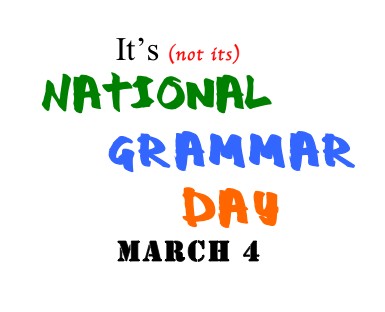
More about National Grammar Day.

. 1678 ~ Antonio Lucio Vivaldi, Italian baroque composer. The creator of hundreds of spirited, extroverted instrumental works, Vivaldi is widely recognized as the master of the Baroque instrumental concerto, which he perfected and popularized perhaps more than any of his contemporaries. A group of four violin concerti from Vivaldi’s Op. 8, better known as “The Four Seasons”, may well be the most universally recognizable musical work from the Baroque period. Perhaps the most prolific of all the great European composers, he once boasted that he could compose a concerto faster than a copyist could ready the individual parts for the players in the orchestra.
More information about Vivaldi

(MaryO’Note:  Spring from The Four Seasons is available in the Piano Maestro App for piano students)

. 1801 ~ The U.S. Marine Band performed for the first time at a presidential nomination. That president was Thomas Jefferson.

. 1875 ~ Bizet’s Carmen premier, Paris

. 1877 ~ The ballet of Swan Lake, composed by Peter Ilyich Tchaikovsky, was performed for the first time in the famous Bolshoi Theatre in Moscow, Russia

and

. 1915 ~ Carlos Surinac, Catalan Spanish-born composer and conductor

. 1918 ~ Frank Wigglesworth, American composer

. 1925 ~ Enzo Stuarti, Opera singer

. 1928 ~ Samuel Adler, German-born American composer

. 1929 ~ Bernard Haitink, Dutch conductor

. 1932 ~ Miriam (Zensile) Makeba, South African born singer who was the first black South African to attain international stardom.

. 1934 ~ Barbara McNair, Singer, TV hostess of The Barbara McNair Show, actress

. 1942 ~ Dick Jurgen’s orchestra recorded One Dozen Roses on Okeh Records in Chicago.

. 1942 ~ The Stage Door Canteen opened on West 44th Street in New York City. The canteen became widely known as a service club for men in the armed forces and a much welcomed place to spend what would otherwise have been lonely hours. The USO, the United Service Organization, grew out of the ‘canteen’ operation, to provide entertainment for American troops around the world.

. 1943 ~ Irving Berlin picked up the Best Song Oscar for a little ditty he had written for the film, Holiday Inn: White Christmas at the 15th Academy Awards.

. 1944 ~ Bobby Womack, Songwriter, singer

. 1948 ~ Chris Squire, Bass with Yes

. 1948 ~ Shakin’ Stevens (Michael Barratt), Singer, actor

. 1951 ~ Chris Rea, Guitarist with these groups Chris Rea Band and Ambrosia; singer, songwriter

. 1969 ~ Chastity Bono, Singer, daughter of Sonny & Cher

. 1978 ~ Andy Gibb reached the top of the music charts as (Love is) Thicker ThanWater reached #1 for a two-week stay. The Bee Gees also set a record on this day as their single, How Deep Is Your Love, from the Saturday Night Fever soundtrack stayed in the top 10 for an unprecedented 17 weeks.

. 1981 ~ Lyricist E.Y. ‘Yip’ Harburg died in an auto accident in Hollywood, CA at the age of 82. Two of his most successful hits were Over the Rainbow from The Wizard of Oz and It’s Only a Paper Moon, popularized by Nat King Cole and many others.

. 2001 ~ Glenn Hughes, a singer who performed as the mustachioed, leather-clad biker in the disco band the Village People, died at the age of 50. The group, which was the brainchild of producer Jacques Morali, featured men dressed as an Indian, a soldier, a construction worker, a police officer, a cowboy and Hughes’ character, a biker. The band released its first single, San Francisco (You’ve Got Me), in 1977. It followed the next year with its first hit, Macho Man. The band then produced a string of hits, including Y.M.C.A., In the Navy and Go West. Collectively the Village People sold 65 million albums and singles. Although disco fell out of fashion in the 1980s, Hughes stayed with the band until 1996, when he left to sing in Manhattan cabarets.

. 2003 ~ Fedora Barbieri, a mezzo-soprano whose passionate singing sometimes stole the scene from opera diva Maria Callas, died. She was 82. Born in Trieste in 1920, Barbieri performed on stages ranging from Milan’s La Scala to New York’s Metropolitan Opera House to London’s Covent Garden. Barbieri’s career started in 1940 and for her 80th birthday, she sang the role of Mamma Lucia in Pietro Mascagni’s “Cavalleria Rusticana” in Florence. Her repertoire included roles in operas by Giuseppe Verdi and Giacomo Puccini. Barbieri died in Florence, which she had adopted as her home and where she gave many performances.

. 2003 ~ Emilio Estefan Sr., father of the Latin music mogul, died at the age of 83. Estefan Sr. played the plump and comical ambassador in a music video for the Miami Sound Machine’s hit song Conga, which featured singer Gloria Estefan, wife of Estefan Jr. The Miami Sound Machine’s office was once located in Estefan Sr.’s garage. His son later built a home for his parents on his Star Island compound. Estefan Sr. was born in Santiago de Cuba and moved to Spain with Estefan Jr. in 1966. His wife and another son stayed in Cuba because the boy was of military draft age and couldn’t leave until 1980. Estefan Sr. came to Miami in 1968, a year after Estefan Jr., and opened a clothing business in Hialeah.

February 27 ~ Today in Music History

today

. 1848 ~ Hubert Parry, English composer, teacher and historian of music.

. 1873 ~ Enrico Caruso, Italian tenor, sang nearly 70 roles; appeared in nearly every country of Europe and North and South America
Read quotes by and about Caruso
More information about Caruso

. 1883 ~ Oscar Hammerstein of New York City patented the first practical cigar- rolling machine. If Oscar’s name sounds familiar, it should. Hammerstein’s grandson later made his mark by writing some of the best- known music in the world, teaming up frequently with Richard Rodgers.

. 1887 ~ Lotte Lehman, Singer

. 1897 ~ Marian Anderson, Opera diva

. 1923 ~ Dexter Gordon, American jazz tenor saxophonist

. 1927 ~ Guy Mitchell (Al Cernick), Singer, actor

. 1935 ~ Mirella Freni, Italian soprano

. 1936 ~ Chuck Glaser, Singer with Glaser Brothers

. 1948 ~ Eddie Gray, Guitarist with Tommy James & The Shondells

. 1951 ~ Steve Harley (Nice), Singer with Steve Harley & Cockney Rebel

. 1954 ~ Neal Schon, Guitarist with Santana; Journey

. 1955 ~ Garry Christian, Singer with The Christians

. 1970 ~ Simon and Garfunkel received a gold record for the single, Bridge Over Troubled Water.

. 2003 ~ Tom Glazer, 88, the balladeer, guitarist and songwriter who, along with Burl Ives, Josh White, Pete Seeger and others, helped spark national interest in folk music in the 1940s, died. Mr. Glazer wrote songs for children, including a hit 1963 parody, On Top of Spaghetti, that won him National Critics’ and Parent Magazine awards. He also acted, sang and wrote for movies and TV. He was singer-narrator for the film, Sweet Land of Liberty, and composed the score for the Andy Griffith film A Face in the Crowd. Mr. Glazer was a native of Philadelphia who attended the City College of New York. As a young man, he played tuba and bass in military and jazz bands and worked at the Library of Congress. He began singing with a group while living in Washington, and was invited by Eleanor Roosevelt to perform at the White House. Mr. Glazer became a full-time musician in 1943 and, over the years, hosted three radio series. He also wrote books about music, including a number of songbooks. His song Because All Men Are Brothers, based on the Passion Chorale by J. S. Bach, was recorded by the Weavers and Peter, Paul and Mary. Other hits included, Old Soldiers Never Die for Vaughn Monroe, More for Perry Como, Til We Two Are Onefor Georgie Shaw, and A Worried Man, recorded by the Kingston Trio. His song, The Musicians was used on the “Barney” television show for children; Bob Dylan recorded his Talking Inflation Blues.

. 2003 ~ Fred Rogers, who gently invited millions of children to be his neighbor as host of the public television show Mister Rogers’ Neighborhood for more than 30 years, died. He was 74. From 1968 to 2000, Rogers, an ordained Presbyterian minister, produced the show at Pittsburgh public television station WQED. The final new episode, which was taped in December 2000, aired in August 2001, though PBS affiliates continued to air back episodes. Rogers composed his own songs for the show and began each episode in a set made to look like a comfortable living room, singing “It’s a beautiful day in the neighborhood…”, as he donned sneakers and a zip-up cardigan. His message remained simple: telling his viewers to love themselves and others. On each show, he would take his audience on a magical trolley ride into the Neighborhood of Make-Believe, where his puppet creations would interact with each other and adults. Rogers did much of the puppet work and voices himself. He also studied early childhood development at the University of Pittsburgh and consulted with an expert there over the years. Rogers’ show won four Emmy Awards, plus one for lifetime achievement. He was given a George Foster Peabody Award in 1993, “in recognition of 25 years of beautiful days in the neighborhood.” One of Rogers’ red sweaters hangs in the Smithsonian Institution.

. 2003 ~ Jean Sullivan, a musician, dancer and actress who starred opposite Errol Flynn in the 1944 film “Uncertain Glory,” died of cardiac arrest. She was 79. Sullivan was the leading lady Marianne in “Uncertain Glory” and also has a starring role in the 1945 movie “Escape in the Desert.” The young actress also played the daughter of Rosalind Russell and Jack Carson in the motion picture comedy “Roughly Speaking.” Despite a budding acting career, Sullivan relocated to New York and began studying ballet and dancing professionally. While practicing flamenco steps during a Carnegie Hall rehearsal, Sullivan was discovered by choreographer Anthony Tudor and was a dancer with the American Ballet Theatre. She enhanced her flamenco by playing Spanish guitar and became a popular entertainer at Latin nightclubs throughout New York City. Sullivan also played cello and piano. Despite her career change, Sullivan performed flamenco on TV variety shows, including “The Steve Allen Show” and “The Jackie Gleason Show.” She also was a meteorologist on local New York television stations.

. 2013 ~ Van Cliburn died.  He was an American pianist who achieved worldwide recognition in 1958 at the age of 23, when he won the first quadrennial International Tchaikovsky Piano Competition in Moscow at the height of the Cold War.

February 24 ~ Today in Music History

today

. 1766 ~ Samuel Wesley, English organist and composer in the late Georgian period. Wesley was a contemporary of Mozart (1756–1791) and was called by some “the English Mozart.”

. 1771 ~ Johann Baptist Cramer,  English musician of German origin. He was the son of Wilhelm Cramer, a famous London violinist and musical conductor, one of a numerous family who were identified with the progress of music during the 18th and 19th centuries.

. 1832 ~ Frederic Chopin’s first Paris concert. The musicologist Arthur Hedley has observed that “As a pianist Chopin was unique in acquiring a reputation of the highest order on the basis of a minimum of public appearances—few more than thirty in the course of his lifetime.

. 1842 ~ Arrigo Boito, Italian composer, librettist and poet

. 1858 ~ Arnold Dolmetsch, British music antiquarian and musician

. 1932 ~ Michel Legrand, Academy Award-Winning composer for Best Original Score: Yentl in 1983, Brian’s Song, Ice Station Zebra

. 1934 ~ Renata Scotto, Italian soprano. She made her operatic debut at age 18 and is best known for performances as Violetta in La Traviata, Cio-Cio- San in Madama Butterfly, Mimi (and the occasional Musetta) in La Bohème, Lucia in Lucia di Lammermoor, Lady Macbeth in Macbeth and Francesca in Francesca da Rimini. She is also an opera director.

. 1940 ~ Frances Langford recorded one of the classic songs of all time — and one that would become a Walt Disney trademark. When You Wish Upon a Star was recorded on Decca Records during a session in Los Angeles. Many artists have recorded the song, including pop diva Linda Ronstadt (with the Nelson Riddle Orchestra in the early 1980s). One can hear the song not only on record, but as the theme in the opening credits of any Disney movie, video and TV program and those “I’m going to Disneyland/World!” commercials, too.

. 1942 ~ Paul Jones, Harmonica, singer with Manfred Mann

. 1947 ~ Rupert Holmes, Songwriter: over 300 songs & jingles, singer, producer

. 1947 ~ Lonnie Turner, Bass, singer with The Steve Miller Band

. 1964 ~ The musical, “What Makes Sammy Run”, opened in New York at the 54th Street Theatre. Making his Broadway debut in the show was Steve Lawrence. The production ran for 540 performances.

. 1985 ~ Yul Brynner reprised his role in “The King and I” setting a box office record for weekly receipts. The show took in $520,920.

. 1990 ~ Johnnie Ray died.  He was an American singer, songwriter, and pianist.

. 1991 ~ Webb Pierce passed away.  He was one of the most popular American honky tonk, rockabilly vocalists, guitarists of the 1950s

February 23 ~ Today in Music History

today

. 1648 ~ John Blow, Composer

. 1685 ~ George Frederic Handel, German-born English composer Listen to Handel’s music Read quotes by and about Handel
More information about Handel

. 1931 ~ Dame Nellie Melba died.  She was an Australian operatic soprano who became one of the most famous singers of the late Victorian Era and the early 20th century.
More information about Melba

. 1937 ~ Bing Crosby sang with Lani McIntyre and his band, as Sweet Leilani was recorded on Decca Records. The Academy Award-winning song was featured in the movie Waikiki Wedding.

. 1944 ~ Mike Maxfield, Guitarist with Billy J. Kramer & The Dakotas

. 1944 ~ Johnny Winter (John Dawson III), Musician

. 1946 ~ Rusty Young, Steel Guitar with Poco

. 1950 ~ Steve Priest, Bass with The Sweet

. 1952 ~ Brad Whitford, Guitarist with Aerosmith

. 1955 ~ Howard Jones, Singer

. 1958 ~ David Sylvian (Batt), Guitarist, singer with Japan

. 1963 ~ The Chiffons recording of He’s So Fine was released. It later rose to the #1 position on March 30th for a four-week stay. The song later became the center of one of the most publicized lawsuits in music history. The estate of songwriter Ronnie Marks won the suit against former Beatle George Harrison, saying that the song My Sweet Lord, was a note-for-note copy of He’s So Fine. The Chiffons also scored big with One Fine Day, Sweet Talkin’ Guy and others.

. 1983 ~ The rock group, Toto, won Grammy Awards for the hit single, Rosanna, and the album, Toto IV, at the 25th annual ceremonies in Los Angeles. The group received four other awards to tie the 1965 record of six Grammies (Roger Miller).

. 2001 ~ Guy Wood, a songwriter whose works include Shoo-Fly Pie and Apple Pan Dowdy, died Friday. He was 89. Wood wrote music for Radio City Music Hall and the children’s television show Captain Kangaroo. His songs include Music of Love (aka The Bell Waltz), After All, Rock-a-Bye Baby, Till Then and My One and Only Love. Wood was born in Manchester, England, where he played saxophone in dance bands before moving to the United States in the early 1930s. He spent five years with the foreign-production divisions of Paramount and Columbia Pictures studios before leading his own band at the Arcadia Ballroom in New York from  1939 to 1942.

. 2003 ~ Rock musician Howie Epstein, bassist for Tom Petty & the Heartbreakers for 20 years until ousted from the band last May, died. Epstein, who was 47, was inducted into the Rock and Roll Hall of Fame with the veteran rock band in 2001. He had battled legal and drug problems in recent years. Epstein, a Milwaukee native who previously played with John Hiatt and Del Shannon, joined the Heartbreakers in 1982. In addition to playing bass, he sang harmony.

. 2003 ~ James Taylor and Yo-Yo Ma performed on the 45th Annual GRAMMY(R) Awards telecast, at Madison Square Garden in New York City. Four-time GRAMMY winner and consummate singer/songwriter James Taylor earned a nomination for Best Male Pop Vocal Performance. Taylor will be accompanied by famed cellist Yo-Yo Ma, who has won 14 GRAMMY Awards throughout his career. Established in 1957, the National Academy of Recording Arts & Sciences, Inc., also known as the Recording Academy, is dedicated to improving the quality of life and cultural condition for music and its makers. An organization of 18,000 musicians, producers and other recording professionals, the Recording Academy is internationally known for the GRAMMY Awards, and is responsible for numerous groundbreaking outreach, professional development, cultural enrichment, education and human services programs.

. 2014 ~ Maria von Trapp, the last of the singing children immortalized in the musical The Sound of Music, died at the age of 99.

February 22 ~ Today in Music History

today

. 1817 ~ Niels Wilhelm Gade, Danish composer

. 1834 ~ Albert Heinrich Zabel, harpist and composer

mu. 1857 ~ Robert Baden-Powell, founder of the Boy Scouts

. 1923 ~ Frederick A. Julliard set up a million-dollar fund to establish a music school. Today, Juilliard is one of the world’s leading music and dance schools.

. 1927 ~ David Ahlstrom, American composer

. 1931 ~ Maurice Chevalier recorded Walkin’ My Baby Back Home for Victor Records in New York City. The same tune was recorded 21 years later by Nat ‘King’ Cole and Johnny Ray. It became a major hit for both artists.

. 1945 ~ Oliver (Swofford), Singer

. 1956 ~ Elvis Presley entered the music charts for the first time. Heartbreak Hotel  began its climb to the number one spot on the pop listing, reaching the top on April 11, 1956. It stayed at the top for eight weeks.

. 1958 ~ Roy Hamilton’s record, Don’t Let Go, became #13 in its first week on the record charts. The song was the first stereo record to make the pop music charts. 1958 was the year for several stereo recordings, including Hang Up My Rock and Roll Shoes by Chuck Willis, Yakety Yak by the Coasters, Born Too Late by The Poni-Tails,It’s All in the Game by Tommy Edwards and What Am I Living For by Chuck Willis.

. 1965 ~ Filming began for The Beatles’ second movie, “HELP!”, in the Bahamas.

. 1976 ~ Florence Ballard passed away.  She was an American vocalist, one of the founding members of the popular Motown vocal group the Supremes. Ballard sang on sixteen top forty singles with the group, including ten number-one hits.

. 2001 ~ Ray Hendricks, a singer of the Big Band era who performed with Benny Goodman and Betty Grable, died at the age of 88. His career took him to Hollywood and across the country with stars including Goodman, Grable, Hoagy Carmichael, Ben Bernie, Ray Noble and Sid Lippman. His earliest performances were on Spokane radio station KFPY. He soon set out for California with Bob Crosby, brother of Bing Crosby. After serving as a flying instructor in the Air Force during World War II, he returned to Spokane and formed his own orchestra. He continued playing local venues for several decades, but said he regretted not pushing his career after the war.

. 2001 ~ Herbert Kupferberg, a music critic and a senior editor of Parade magazine, died at the age of 83. For more than 20 years, Kupferberg was an editor and critic for The New York Herald Tribune. After it folded in 1966, he joined Parade. He also wrote reviews for The Atlantic Monthly, and The National Observer. Kupferberg, born in New York in 1918, published several books including Amadeus: A Mozart Mosaic and Those Fabulous Philadelphians: The Life and Times of a Great Orchestra, a history of the Philadelphia Orchestra.

February 20 ~ Today in Music History

today

. 1937 ~ Nancy Wilson, American jazz singer

. 1941 ~ Buffy (Beverly) Sainte-Marie, Singer, songwriter, married to Jack Nitzsche

. 1940 ~ Christoph Eschenbach, German pianist and conductor

. 1940 ~ Larry Clinton and his orchestra recorded Limehouse Blues on Victor Records.

. 1946 ~ Sandy Duncan, Dancer, actress

. 1946 ~ J. (Jerome) Geils, Guitarist with The J. Geils Band

. 1950 ~ Walter Becker, Bass, guitarist with Steely Dan

. 1951 ~ Randy California (Wolfe), Singer, guitarist with Spirit

. 1963 ~ Ian Brown, Singer with Stone Roses

. 1974 ~ After a decade of marriage, Cher filed for separation from husband Sonny Bono. Not long afterwards, she filed for divorce and the accompanying alimony. This time she sang, I Got You Babe, for real … before becoming a successful solo singer and movie actress in films such as “Moonstruck” (Best Actress Oscar in 1987).

. 1975 ~ Brian (Thomas) Littrell, Singer with Backstreet Boys

. 1982 ~ Singer Pat Benatar married musician-producer Neil Geraldo in Hawaii.

February 18 ~ Today in Music History

today

. 1655 ~ Pietro Giovanni Guarneri, Italian violin maker
More information on Guarneri

. 1735 ~ The first opera performed in America, known as either “Flora” or “Hob in the Well”, was presented in Charleston, SC.

. 1850 ~ Sir George Henschel, German-born British conductor, composer and baritone

. 1927 ~ Singer Jessica Dragonette starred on radio’s “Cities Service Concerts” (sponsored by the oil company of the same name) and literally, “sang her way into radio immortality.” She also sang on the “Palmolive Beauty Box Theatre” in the 1930s. In 1940 she starred on Pet Milk’s “Saturday Nite Serenade”. Her many fans referred to her as the “first great voice of the air.”

. 1933 ~ Yoko Ono, Japanese-born American rock singer, songwriter and artist Widow of John Lennon
More information on Ono

. 1938 ~ One of the most famous and popular motion pictures of all time lit up the silver screen, as The Big Broadcast of 1938 was released to movie houses. The film featured Bob Hope and his version of what would be his theme song, Thanks for the Memory. The song received an Oscar for Best Song. Dorothy Lamour and W.C. Fields also had starring roles in the film.

. 1941 ~ Herman Santiago, Singer with Frankie Lymon & The Teenagers

. 1942 ~ The Mills Brothers waxed one of their three greatest hits. Paper Doll became Decca record #18318. In addition to Paper Doll, the other two classics by the Mills Brothers are: You Always Hurt The One You Love in 1944 and Glow Worm in 1952.

. 1964 ~ “Any Wednesday” opened at the Music Box Theatre in New York City. The play established Gene Hackman as an actor. Don Porter and Sandy Dennis also starred in the show.

. 2001 ~ Legendary singer and songwriter Charles Trenet, whose fanciful ballads and poetic love songs captured the hearts of the French for more than six decades, died of a stroke at the age of 87. Trenet, who wrote nearly 1,000 songs and gained world renown with the romantic ballad La Mer (The Sea), was decorated in 1998 by President Jacques Chirac as a Commander of the Legion of Honor – France’s highest civilian honor. La Mer was recorded in 1946 and remade by American Bobby Darin as Beyond the Sea in 1960. Known as Le Fou Chantant (The Singing Fool), Trenet was known for his flashing smile, tilted-back hat and buttonhole carnation. Trenet spent several years in the United States after World War II, appearing in Broadway cabarets. He returned to France in 1951 and resumed a career that included five novels and lead roles in a dozen films.

. 2003 ~ Jonathan Eberhart, 60, an award-winning aerospace writer who also was a folk singer and a founder in 1964 of the Folklore Society of Greater Washington, died. By day, Mr. Eberhart was space sciences editor of the weekly newsmagazine Science News, covering space sciences and the development of the U.S. aerospace program. He worked there for more than 30 years before he retired in 1991. For three decades, he also was a fixture of the Washington folk music scene, performing and recording on his own and with the group Boarding Party. He helped folk singer Pete Seeger sail the sloop Clearwater on its maiden voyage and sang at performances along the route and on the record of sea chanteys made by the crew. He wrote songs — including “Lament for a Red Planet,” inspired by his coverage of NASA’s Mars explorer mission for Science News — and collected rare folk music and instruments from around the world. Among Mr. Eberhart’s own records were “Life’s Trolley Ride” on the Folk-Legacy label. He helped stage the Folklore Society’s popular free summer festivals, which drew thousands of music lovers to Glen Echo Park and other venues. The gatherings started out as concerts at the Washington Ethical Society. They quickly grew into two-day, five-stage celebrations co-sponsored by the National Park Service. Hundreds of singers, dancers, musicians, storytellers and craftspeople came, along with thousands of visitors over a weekend. Mr. Eberhart was born in Evanston, Ill., and raised in Hastings-On-Hudson, N.Y. He attended Harvard University, working during the summer at Science News, and then joining the staff as a writer in 1964. Mr. Eberhart’s contributions to the local music scene included a radio program on international folk music for WGTB. His search for international talent reached to more than 30 countries as well as Washington’s own international communities. “It’s easy to find a good banjo player,” he said in an interview in The Washington Post, “but how do you find an Eritrean krar lyre player?” One of his investigative techniques was to ask cabdrivers speaking accented English where they were born and whether they knew someone who could play native instruments. The result would be festival or folklore society acts from Afghanistan or Iceland or Vietnam. Mr. Eberhart also wrote articles about music for publications that included Sing Out and liner notes for numerous recordings, notably the Nonesuch Explorer international series world music.

. 2003 ~ Faith Marian Forrest, 83, a pianist who performed in recitals in Washington and elsewhere in the country and taught at her Kensington home, died of cancer. Mrs. Forrest was a native of Brooklyn, N.Y., and a graduate of Brooklyn College. She did graduate work in music at Columbia University. After moving to Washington in 1941, she was a secretary for the War Department. From 1942 to 1946, she worked for the music department of the Library of Congress. Until the mid-1960s, she gave recitals, sometimes with her husband, clarinetist Sidney Forrest, at concert locations that included the Phillips Gallery as well as in Baltimore, New York and the Midwest. She taught piano during the summer for several decades at the Interlochen Arts Camps in Michigan and taught privately at home until last year.

. 2003 ~ Johnny Paycheck, the carousing country music singer best remembered for his blue-collar anthem Take This Job and Shove It died. His 1977 hit about a factory worker bent on revenge against his boss still resonates with listeners and continues to get radio play, especially on Friday afternoons. Paycheck had nearly three-dozen hits, beginning with the hard-driving 1965 song A-11. He earned two Grammy nominations during his career, the first in 1971 for the single She’s All I Got and the second in 1978 for Take This Job and Shove It. He had a powerful, expressive voice, distinctive inflection and a knack for delivering solid country emotion. Born Donald Eugene Lytle in Greenfield, Ohio, he picked up a guitar at age 6, and was performing and traveling on his own by age 15. He launched his career as a sideman to such stars as George Jones and Faron Young. He adopted the name Paycheck from a boxer.

February 17 ~ Today in Music History

today

. 1653 ~ Arcangelo Corelli, Italian violinist and composer
More information on Corelli

. 1902 ~ Marian Anderson, American contralto
Read quotes by and about Anderson
More information on Anderson

. 1904 ~ Puccini’s opera, Madama Butterfly was first performed at La Scala, world’s most famous opera house in Milan, Italy.

. 1909 ~ Marjorie Lawrence, Opera soprano: “One of the truest Wagnerian interpreters of our time, unchallenged for the stirring magnificence of her Brunnhilde and the tender simplicity of her Sieglinde, or the stately loveliness of her Elsa and the compelling malevolence of her Ortrud.”


. 1923 ~ Buddy (Boniface) DeFranco, Clarinetist, bandleader. He won all modern jazz music polls in the early 1950s

. 1933 ~ Bobby Lewis, Pianist, singer

. 1941 ~ Gene Pitney, Singer, songwriter

. 1945 ~ Zina Bethune, Dancer, choreographer, actress

. 1946 ~ Dodie Stevens (Geraldine Ann Pasquale), Singer

. 1954 ~ Doris Day’s single, Secret Love, became the #1 tune in the U.S. The song, from the motion picture, “Calamity Jane”, stayed at the top of the music charts for three weeks.

. 1962 ~ The Beach Boys started making waves with their first Southern California hit, Surfin’. Their new musical style swept the U.S. like a tidal wave when they hit nationally with Surfin’ Safari in August of this same year.

. 1962 ~ Gene Chandler hit #1 with Duke of Earl on this day. The song stayed at the top for three weeks. It hit #1 on the rhythm & blues charts, as well. Duke of Earl was Chandler’s biggest hit out of a half-dozen he recorded. His only other million seller came with Groovy Situation in

. 1970. Curtis Mayfield wrote several hits for Chandler, including Just Be True, What Now and Nothing Can Stop Me. Chandler’s real name is Eugene Dixon. He owned his own record label, Mr. Chand, from 1969 to 1973, though Groovy Situation was recorded in 1970 for Mercury.

. 1966 ~ Staff Sgt. Barry Sadler received a gold record from RCA Victor, for both the album and the single of The Ballad of the Green Berets. Sadler, who recorded one other single (“The “A” Team”) for the label, had served in Vietnam until injuring a leg in a Viet Cong booby trap.

. 1972 ~ Billie Joe Armstrong, Grammy Award-winning singer (1994), guitarist and songwriter with Green Day

. 1998 ~ Bob Merrill passed away.  Merrill was an American songwriter, theatrical composer, lyricist, and screenwriter.

Musical Presidents

presidents-day


Presidents’ Day (celebrated on the third Monday in February), was originally established in 1885 in recognition of George Washington. The holiday became popularly known as Presidents’ Day after it was moved as part of the 1971 Uniform Monday Holiday Act, an attempt to create more three-day weekends for the nation’s workers. Presidents’ Day is now popularly viewed as a day to celebrate all U.S. presidents past and present.

Wondering how many U.S. Presidents played musical instruments?

Thomas Jefferson (1743 – 1826) Third president of the United States, drafted the Declaration of Independence, and played the violin and cello.

John Quincy Adams (1767 – 1848) The sixth president of the United States formulated the Monroe Doctrine, and played the flute.

John Tyler (1790-1862) The tenth president of the United States was the first Vice President to become President by the death of his predecessor.  He played the violin.

Abraham Lincoln (1809-1865) The sixteenth president of the United States issued the Emancipation Proclamation and played the violin.

Ulysses S. Grant (1822- 1884) The eighteenth president of the United States certainly scrapes the bottom of the list. He was tone deaf and famously commented, “I only know two tunes. One of them is Yankee Doodle and the other isn’t.”

Chester Alan Arthur (1829 – 1886) Became the 21st president of the United States following the assassination of President James A. Garfield. He played the banjo.

Franklin Roosevelt (1882-1945) The 32nd President of the United States and the fifth cousin to President Theodore Roosevelt, played the piano and sang soprano in his school choir.

Woodrow Wilson (1856 – 1924) The 28th president of the United States and creator of the League of Nations, played the violin and sang tenor in his college glee club.

Warren Harding (1865-1923) The 29th president of the United States organized the Citizen’s Cornet Band, available for both Republican and Democratic rallies. He once remarked that, “I played every instrument but the slide trombone and the E-flat cornet.”

Calvin Coolidge (1872-1933) The 30th president of the United States was determined to preserve old moral and economic precepts amid American prosperity. He played the harmonica.

Harry Truman (1884 – 1972) The 33rd president of the United States who served during the conclusion of World War II, played the piano.

Richard Nixon (1913 – 1994) The 37th president of the United States, who ended American fighting in Vietnam and later resigned from office in the aftermath of the Watergate Scandal, was a classically-trained pianist and also played the accordion. He composed and played this piece, set to concerto form with “15 Democratic violinists.”  Nixon takes a dig at Harry Truman just before playing.:

Ronald Reagan (1911-2004) The 40th president of the United States implemented the Reagan Revolution, which aimed to reinvigorate the American people and reduce their reliance upon Government. He played the harmonica.

Bill Clinton (born 1946) The 42nd president of the United States and the first Democratic president since Franklin D. Roosevelt to win a second term, plays the saxophone.

Barack Obama (born 1961) The 44th president of the United States and first African American president has broken into song on several recent occasions. President Obama sang Amazing Grace at the funeral for South Carolina State Senator Clementa Pinckney:

Happy Valentine’s Day!

Valentines-Day

valentine-stomp

Thomas Wright “Fats” Waller (May 21, 1904 – December 15, 1943) was an influential American jazz pianist, organist, composer, singer, and comedic entertainer, whose innovations to the Harlem stride style laid the groundwork for modern jazz piano.  He wrote the Valentine Stomp above in 1929.

MaryOOneRose