November 15 ~ On This Day in Music

today

• 1766 ~ Rodolphe Kreutzer, French violinist, teacher and composer. In 1810 a broken arm ended his virtuoso career. Beethoven dedicated sonata op 47 to him.

• 1905 ~ Mantovani, Orchestra leader, (1953 UK No.1 single ‘Moulin Rouge’, 1957 US No. 12 single ‘Around The World In Eighty Days’) was born. He died on 30th March 1980.

• 1914 ~ Jorge Bolet, Cuban-born American pianist was born

• 1926 ~ NBC broadcast its first music program. It featured the New York Symphony Orchestra and many distinguished soloists. 24 stations carried the first broadcast. The program was a gala 4½-hour broadcast from the Waldorf-Astoria Hotel in New York City. Two remote pickups were also on the program. Opera star Mary Garden sang from Chicago and Will Rogers presented a humorous monologue from Independence, Kansas. Charles Lindbergh was among the luminaries who attended the broadcast.

• 1928 ~ C.W. McCall (William Fries), Singer, songwriter was born

• 1932 ~ Petula Clark, British pop singer (Downtown, My Love) was born

• 1933 ~ Clyde (Lensley) McPhatter, Singer with the Dominoes was born

• 1937 ~ Little Willie John (William Edward John), Singer, convicted of manslaughter

• 1942 ~ Daniel Barenboim, Argentine-born Israeli pianist and conductor of English Chamber Orchestra was born.  “He’s not a pianist who conducts, or a conductor who plays the piano: he’s a total musician.” – Lang Lang

• 1945 ~ Anni-Frid Lyngstad, Singer with Abba was born

• 1946 ~ Janet Lennon, Singer with The Lennon Sisters was born

• 1954 ~ Tony Thompson, Drummer with Chic; played with Led Zeppelin, Live Aid, drummer with Patti LaBelle was born

• 1954 ~ Studio One on CBS-TV featured Joan Weber singing Let Me Go, Lover. The song had enjoyed limited popularity before the TV show, but skyrocketed to fame immediately after.

• 1956 ~ Love Me Tender, the first Elvis Presley film, premiered.

.1963 ~ Fritz Reiner died at the age of 74. He was a prominent conductor of opera and symphonic music in the twentieth century. Hungarian born and trained, he emigrated to the United States in 1922, where he rose to prominence as a conductor with several orchestras. He reached the pinnacle of his career while music director of the Chicago Symphony Orchestra in the 1950s and early 1960s.

• 1967 ~ Mari Fernandez, Singer with Sweet Sensation was born

• 1969 ~ The first album featuring Karen and Richard Carpenter was released by A&M Records. The offering would not be a big seller, but a single from the disc, a remake of The Beatles’ Ticket to Ride, would gain national attention. Their next album, however, would establish them as major international stars (Close to You).

• 1969 ~ Janis Joplin was arrested during a gig in Tampa, Florida, after badmouthing a policeman and using vulgar and indecent language. Joplin became upset after police moved into the hall forcing fans to move back to their seats. As the singer left the stage she confronted a detective calling him ‘a son of a bitch’ and told him she would kick his face in. She was released on $504 bail.

• 1974 ~ The most expensive 2-record album was released on Casablanca Records. It was a comedy disc titled, Here’s Johnny – Magic Moments from the Tonight Show.

• 1974 ~ The group, Faces, released their tune with the longest title. You Can Make Me Dance, Sing or Anything (Even Take the Dog for a Walk, Mend a Fuse, Fold Away the Ironing Board, Or Any Other Domestic Shortcomings).

• 1980 ~ After years of success on the music charts with the New Christy Minstrels and the First Edition, Kenny Rogers got his first #1 song. Lady, written by Lionel Richie, stayed at the top for six weeks.

• 1986 ~ The first major operetta written by Gian Carlo Menotti in over 20 years was presented at the Kennedy Center in Washington, DC. Starring tenor Placido Domingo, Goya was said by critics to be only “intermittently good.”

• 2003 ~ David Holt, a former child actor once touted by Paramount Pictures as its answer to Shirley Temple, has died. He was 76. Holt, who later became a successful jazz musician and songwriter, died of congestive heart failure. Although his career never rivaled Temple’s, Holt had his share of success as a child actor, playing Elizabeth Taylor’s older brother in “Courage of Lassie” in 1946 and appearing as bratty Sidney Sawyer in “The Adventures of Tom Sawyer” in 1938. He also played the crippled boy for whom New York Yankee great Lou Gehrig hit a home run in “Pride of the Yankees” and appeared in “The Big Broadcast of 1936.” Paramount signed Holt to a long-term contract after his 1934 role as a boy whose mother dies in “You Belong To me.” Holt eventually segued into music. He co-wrote the song The Christmas Blues with Sammy Cahn and wrote the music for numerous jazz albums. He hosted the TV show “American Music Shop” in the 1990s.

• 2018 ~ Roy Clark, American singer and musician beloved by generations of fans for his work on the TV show Hee Haw died at the age of 85.

October 22 ~ On This Day in Music

today

OCMS 1811 ~ Franz Liszt, Hungarian composer and pianist
Read quotes by and about Franz Liszt
More information about Liszt

• 1885 ~ Giovanni Martinelli, Opera singer, tenor with Metropolitan Opera for 30 seasons

• 1904 ~ Paul Arma, Hungarian composer and theorist

• 1917 ~ Leopold Stokowski led the Philadelphia Orchestra in its first recording session, for Victor Records.

• 1930 ~ Dory Previn, Songwriter with André Previn

• 1939 ~ Ray Jones, Bass with Billy J. Kramer & The Dakotas

• 1943 ~ Paul Zukofsky, American violinist

• 1943 ~ Bobby Fuller, Singer, guitarist with Bobby Fuller Four

• 1945 ~ Leslie West (Weinstein), Singer, musician, guitarist with Mountain

• 1945 ~ Eddie Brigati, Singer, a musician with The (Young) Rascals

• 1959 ~ “Take Me Along” opened on Broadway and quickly became an American classic. Walter Pidgeon starred along with Jackie Gleason.

• 1966 ~ The Supremes rocketed to the top of the pop album charts with “Supremes A’ Go-Go”. They were the first all-female vocal group to hit the top of the LP chart.

• 1969 ~ Giovanni Martinelli passed away on his birthday

• 1969 ~ Michael Tilson Thomas, the 25-year-old assistant conductor of the Boston Symphony Orchestra, took over for ailing conductor William Steinberg in the symphony’s appearance in New York City.

• 1971 ~ Folk singer Joan Baez received a gold record for her hit, The Night They Drove Old Dixie Down. It turned out to be her biggest hit, peaking at #3 on the charts on October 2, 1971.

• 1979 ~ Nadia Boulanger, French composer and conductor (1st woman to conduct Boston Symphony), died at the age of 92

• 1983 ~ Celebrating its 100th anniversary, New York’s Metropolitan Opera featured a daylong concert with some of the world’s greatest opera stars. On stage at the Met were Dame Joan Sutherland, Placido Domingo and Luciano Pavarotti.

• 2001 ~ Tom Baker, one of Australia’s most respected jazz musicians, died of a heart attack while touring in the Netherlands. He was 49. Baker, a native of California, took up residence in Australia 30 years ago. He was a regular at Sydney’s famous jazz club, The Basement. Willie Qua, drummer and co-founder of one of Australia’s best-known jazz bands, Galapagos Duck, said Baker had often played as “a part-time member” of the band and was an icon of the Sydney jazz scene. Baker formed his first band, Tom Baker’s San Francisco Jazz Band, in 1975, earning himself a reputation as one of Australia’s very best jazz musicians. Recently he toured extensively through Europe and America.

July 5: Today’s Music History

today

Be sure your student reads and listens to Today’s Daily Listening Assignment

• 1546 ~ Johann Steuerlein, Composer

• 1654 ~ Antonio Maria Pacchioni, Composer

• 1764 ~ Janos Lavotta, Composer

• 1847 ~ Agnes Marie Jacobina Zimmermann, Composer

• 1852 ~ Stefano Gobatti, Composer

• 1874 ~ Gerhard von Keussler, Composer

• 1877 ~ Wanda Landowska, Harpsichordist

• 1878 ~ Joseph Holbrooke, English pianist, conductor and composer

• 1897 ~ Paul Ben-Haim, Israeli composer and student of Middle Eastern folk music

• 1918 ~ George Rochberg, American composer and music editor

• 1924 ~ Janos Starker, Hungarian-born Grammy Award-winning American cellist.

• 1934 ~ Love in Bloom, sung by Bing Crosby with Irving Aaronson’s orchestra, was recorded for Brunswick Records in Los Angeles. The song was fairly popular, but became a much bigger success when comedian Jack Benny made it a popular standard.

• 1944 ~ Robbie Robertson, Musician, composer, guitarist with The Band

• 1950 ~ Michael Monarch, Musician, guitarist with Steppenwolf

• 1951 ~ Huey Lewis (Cregg), Rock Singer

• 1954 ~ Elvis Presley recorded That’s All Right (Mama) and Blue Moon of Kentucky. It was his first session for Sam Phillips and Sun Records in Memphis, TN.

• 1965 ~ Maria Callas gave her last stage performance, singing Puccini’s opera “Tosca” at London’s Covent Garden.

• 1969 ~ The Rolling Stones gave a free concert in Hyde Park, London, in memory of Brian Jones, who had died two days before.

• 1973 ~ Bengt Lagerberg, Rock Musician

• 1992 ~ Astor Piazzolla, Argentinian composer, died.

• 1983 ~ Placido Domingo’s performance of Puccini’s opera La Bohème had one and one-half hours of applause and 83 curtain calls at the State Opera house in Vienna, Austria.

• 2001 ~ Ernie K-Doe, a flamboyant rhythm and blues singer who had a No. 1 hit with Mother-In-Law in 1961, died Thursday. He was 65. K-Doe, born Ernest Kador Jr., was one of many New Orleans musicians, including Fats Domino, Aaron Neville and The Dixie Cups, who landed singles at or near the top of the national charts in the 1950s and ’60s. He had a handful of minor hits, such as T’aint it the Truth, Come on Home and Te-Ta-Te-Ta-Ta. But he was forever associated with his only No. 1 single. Mother-In-Law was produced by legendary New Orleans producer and songwriter Allen Toussaint, who also played piano for the recording. In 1995, K-Doe opened Ernie K-Doe’s Mother-In-Law Lounge near the French Quarter, where he performed on Sundays.

• 2003 ~ Johnny Cash made his last ever live performance when he appeared at the Carter Ranch. Before singing “Ring of Fire”, Cash read a statement about his late wife that he had written shortly before taking the stage: “The spirit of June Carter overshadows me tonight with the love she had for me and the love I have for her. We connect somewhere between here and heaven. She came down for a short visit, I guess, from heaven to visit with me tonight to give me courage and inspiration like she always has.” Cash died on Sept 12th of that same year.

January 21 ~ On This Day in Music

hug-day

. 1626 ~ John Dowland, English composer (In Darkness We Dwell), died at the age of 62

. 1899  ~ Alexander Tcherepnin, pianist and composer

. 1903 ~ First performance of “The Wizard of Oz” as a Broadway musical

. 1917 ~ Billy Maxted, Pianist, songwriter, arranger and bandleader

. 1927 ~ The first opera to be broadcast over a national radio network was presented in Chicago, IL. Listeners heard selections from “Faust” by Charles Gounod.

. 1932 ~ Annunzio Paolo Mantovani gave a memorable concert at Queen’s Hall in England to ‘glowing notices’. This was the beginning of the musician’s successful recording career that provided beautiful music to radio stations for nearly five decades. Better known as just Mantovani, his music still entertains us with hits like Red Sails in the Sunset, Serenade in the Night, Song from Moulin Rouge and Charmaine.

. 1939 ~ Wolfman Jack (Robert Smith), Disc jockey, icon of ’60s radio, broadcasting from XERF, then XERB in Mexico and heard throughout a major part of the U.S.; TV announcer: The Midnight Special; actor: American Graffiti; author: Have Mercy! Confessions of the Original Rock ‘n’ Roll Animal

. 1941 ~ Placido Domingo, Spanish tenor and conductor
More information about Domingo Grammy winner
Washington Honored Eastwood, Baryshnikov, Domingo, Berry in 2000

. 1941 ~ Ritchie Havens, American rock singer

. 1942 ~ Mac (Scott) Davis, Singer, actor, host of The Mac Davis Show, songwriter, ACM Entertainer of the Year in 1975

. 1942 ~ Nostalgia buffs will want to grab the greatest hits CD of Count Basie (on Verve) and crank up One O’Clock Jump. Just one of the many signature tunes by Bill Basie; the tune was originally recorded on Okeh Records this day.

. 1948 ~ Ermanno Wolf-Ferrari, Italian composer and teacher

. 1950 ~ Billy Ocean, Grammy Award-winning R&B Male Vocal in 1984

. 1957 ~ Singer Patsy Cline appeared on Arthur Godfrey’s nighttime TV show. She sang the classic, Walking After Midnight, which quickly launched her career.

. 1959 ~ The Kingston Trio (Bob Shane, Nick Reynolds and Dave Guard) received a gold record for Tom Dooley. The Kingston Trio recorded many hits, including Greenback Dollar, M.T.A., Reverend Mr. Black, Tijuana Jail, and the war protest song, Where Have All the Flowers Gone?.

. 1966 ~ George Harrison of The Beatles married Patricia (Patty) Anne Boyd in Surrey, England. The two met on the set of the movie, “A Hard Day’s Night”.

. 1970 ~ ABC-TV presented “The Johnny Cash Show” in prime time. Previously, the show had been a summer replacement. The regular season series was a big boost for country music. Johnny wore black in the all-color show, however, like he still does today.

. 1978 ~ The soundtrack of “Saturday Night Fever” reached #1 on the album charts — a position it held for the next six months.

. 1987 ~ Thirty years after its release, Jackie Wilson’s single, Reet Petite (written by Motown founder Berry Gordy), ended a month at the top of England’s music charts. Three years earlier, on this same date, Jackie Wilson died after being in a coma (following a heart attack) for eight and a half years.

. 2002 ~ Peggy Lee, the singer-composer whose smoky voice in such songs as Is That All There Is? and Fever made her a jazz and pop legend, died of a heart attack. She was 81. Lee battled injury and ill health, including heart trouble, throughout a spectacular career that brought her a Grammy, an Oscar nomination and sold- out houses worldwide. In more than 50 years in show business, which began during a troubled childhood and endured through four broken marriages, Lee recorded hit songs with the Benny Goodman band, wrote songs for a Disney movie and starred on Broadway in a short-lived autobiographical show, Peg. A string of hits, notably Why Don’t You Do Right?, made her a star. Then she fell in love with Goodman’s guitarist, Dave Barbour, and withdrew from the music world to be his wife and raise their daughter, Nicki. She returned to singing when the marriage fell apart. Lee’s other notable recordings included Why Don’t You Do Right? I’m a Woman, Lover, Pass Me By, Where or When, The Way You Look Tonight, I’m Gonna Go Fishin‘ and Big Spender. The hit Is That All There Is? won her a Grammy for best contemporary female vocal performance in 1969. She collaborated with Sonny Burke on the songs for Disney’s The Lady and the Tramp, and was the voice for the wayward canine who sang He’s a Tramp (But I Love Him).

. 2022 ~ Marvin Lee Aday (Meatloaf), died at age 74.  He was a singer who appeared in several television shows and films, including the cult classic “The Rocky Horror Picture Show,” “Fight Club” and “Wayne’s World.”

January 12 ~ On This Day in Music

today

. 1715 ~ Jacques Duphly, French harpsichordist and composer.

.1782 ~ On this day Mozart wrote a letter to his father about Muzio Clementi.  He said: “Clementi plays well, as far as execution with the right-hand goes. His greatest strength lies in his passages in 3rds. Apart from that, he has not a kreuzer’s worth of taste or feeling – in short he is a mere mechanicus.”

. 1876 ~ Ermanno Wolf-Ferrari, Italian Opera Composer

. 1905 ~ Tex (Woodward Maurice) Ritter, Country singer, actor, John Ritter’s father

. 1921 ~ The opening of Town Hall in New York City, an important new concert hall

. 1926 ~ Ray Price, Singer

. 1926 ~ Morton Feldman, American composer, born in NYC, New York

. 1928 ~ Vladimir Horowitz debuted as a soloist with the New York Philharmonic at Carnegie Hall in New York City. It was the very same night that Sir Thomas Beecham gave his first public performance in the United States.

. 1930 ~ Glenn Yarbrough, Singer with The Limeliters

. 1933 ~ Václav Suk, Czech-born Russian composer and violinist, died at the age of 71

. 1939 ~ William Lee Golden, Singer with The Oak Ridge Boys

. 1939 ~ The Ink Spots gained national attention after five years together, as they recorded If I Didn’t Care. Many other standards by the group soon followed.

. 1940 ~The Shep Fields Orchestra went to the top of Billboard’s Pop Chart with their song “South of the Border (Down Mexico Way).”

. 1946 ~ Cynthia Robinson, Singer, trumpeter with Sly and the Family Stone

. 1949 – Arthur Godfrey and His Friends was first seen on CBS-TV this day. The program stayed on the network for seven years.

. 1959 ~ Per Gessle, Guitarist, singer with Roxette

. 1963 ~ Songwriter Bob Dylan sang Blowin’ In the Wind on the BBC radio presentation of “The Madhouse on Castle Street”. The song soon became one of the classics of the 1960s protest movement.

. 1985 ~ After a record 24 weeks as the #1 album in the nation, Prince (now known as The Artist Previously Known as Prince) slipped to the #2 spot with Purple Rain. Replacing Prince at the top spot: ‘The Boss’ Bruce Springsteen’s Born In the USA, which spent 24 weeks waiting for Purple Rain to fall.

. 1995 ~ Laurel McGoff, American singer

. 2001 ~ Luis Floriano Bonfa, the master guitarist and composer who helped found Bossa Nova music, died of cancer at the age of 78. Bonfa, who was born in Rio de Janeiro in Oct. 17, 1922, began composing in the 1940s and launched his career as a solo artist in 1952. Better known abroad than at home, Bonfa became internationally famous for his contributions to the soundtrack of Marcel Camus’ 1959 classic film “Black Orpheus.” The film introduced an international audience to Bossa Nova – a more sophisticated and less percussive samba style – and made Bonfa and fellow composer Antonio Carlos Jobim stars. “Bonfa plays the guitar like no other, in a very personal, charismatic style. His guitar is a little orchestra,” the late composer Jobim once said. His reputation grew further when he was a featured performer at the Bossa Nova festival at Carnegie Hall in New York City in 1962. He was even more famous for his more than 500 compositions especially Manha de Carnaval andSamba de Orpheu. Placido Domingo, Julio Iglesias, Frank Sinatra and Elvis Presley recorded songs written by Bonfa. In recent years, his productivity slowed. His last major label release “The Bonfa Magic,” was recorded in 1991.

. 2001 ~ Opera singer Kyra Vayne, a star of the 1940s and 1950s whose talents were rediscovered in the 1990s, died at age 84. The Russian-born soprano was born in St. Petersburg. Vayne fled the 1917 Bolshevik Revolution with her family and was eight years old when her family settled in London. She began a successful opera career in the 1940s, and sang for allied troops during World War II. She later joined the Russian Opera Company, then based at London’s Savoy Theater. Her career collapsed in 1957 when her agent, Eugene Iskoldoff, committed suicide, and for the next 35 years she worked as a secretary for the British Broadcasting Corp.

In the early 1990s, a music company released four recordings of her voice, leading the U.S. music magazine “Fanfare” to ask, “How is it possible that such a singer has not come down to us as one of the century’s most celebrated sopranos?” Soon afterward, Arcadia Books published her autobiography, “A Voice Reborn,” which tenor Placido Domingo described as having “all the elements of an opera.” At the end of 1999, nearly 80 years after she fled Russia, Vayne was invited to perform at Moscow’s Bolshoi Theater to mark the new millennium – her first public performance in 40 years. “For me to sing at the Bolshoi is beyond any fairy tale,” she said at the time. “I am not worried about singing in public again after so long, but I am fearful of the emotional impact.” Vayne never married and had no children.

. 2003 ~ Maurice Gibb, a member of the famed disco band the Bee Gees, died at a Miami Beach hospital. He was 53. Gibb, joined with his older brother and his twin to harmonize their way to becoming one of the best selling musical groups ever. Gibb played bass and keyboard for the group, whose name is short for the Brothers Gibb. In a 1978 interview with TG Magazine, Gibb lamented the perception that the Bee Gees were only a disco band. “People accuse us of being nothing more than a disco band now,” Gibb said. “But they don’t know what they’re talking about. If you listen to our records, you’ll find that there’s dance music. But there are also ballads like More Than A Woman. And there are some very beautiful, undanceable songs, too.” The Bee Gees – twins Maurice and Robin, and their older brother Barry – have lived in South Florida since the late 1970s. Their younger brother, Andy, who had a successful solo career, died in 1988 at age 30 from a heart ailment. Chris Hutchins, a writer and former press agent for the Bee Gees, said Maurice was “very much a tormented soul.” “He was not the star (of the Bee Gees), and he knew it, he felt it,” Hutchins told British Broadcasting Corp. radio. Known for their close harmonies and original sound, the Bee Gees are members of the Rock and Roll Hall of Fame, and their 1977 contributions to the “Saturday Night Fever” album made it the best selling movie soundtrack ever with more than 40 million copies sold. Among their disco hits on that album are Stayin’ Alive, More Than a Woman and How Deep Is Your Love and Night Fever. The group won seven Grammy Awards. The Bee Gees last album was in 2001, entitled “This Is Where I Came In.” The family emigrated from England to Australia in 1958, and the brothers soon gained fame as a teen pop group. They returned to England in the 1960s, and their first four albums contained hits such as 1941 New York Mining Disaster, To Love Somebody and their first U.S. number one song, 1971’s How Can You Mend A Broken Heart.

The Bee Gees followed “Saturday Night Fever” with the 1978 album “Spirits Having Flown” which sold 20 million copies. The brothers wrote and produced songs for Barbra Streisand, Diana Ross and Dionne Warwick in the 1980s. They also wrote the Kenny Rogers and Dolly Parton hit Islands in the Stream. The Bee Gees released three studio albums and went on a world tour in the 1990s. The live album from the tour “One Night Only,” sold more than 1 million albums in the United States. The Bee Gees run a music production company in Miami called Middle Ear Studios. Gibb’s first wife was British singer Lulu. He and his second wife, Yvonne, were married for more than 20 years and had two children.

Christmas Countdown: O Holy Night

o-holy-night

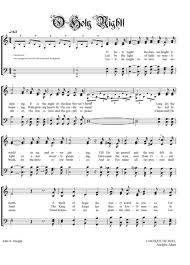
“O Holy Night” (“Cantique de Noël”) is a well-known Christmas carol composed by Adolphe Adam in 1847 to the French poem “Minuit, chrétiens” (Midnight, Christians) by Placide Cappeau (1808–1877).

Cappeau, a wine merchant and poet, had been asked by a parish priest to write a Christmas poem. Unitarian minister John Sullivan Dwight, editor of Dwight’s Journal of Music, created a singing edition based on Cappeau’s French text in 1855.

In both the French original and in the two familiar English versions of the carol, the text reflects on the birth of Jesus and of mankind’s redemption.
O Holy Night

O Holy Night sung by the Mormon Tabernacle Choir and the King’s Singers


Composers – D


Dallapiccola

Luigi Dallapiccola was an Italian composer known for his lyrical twelve-tone compositions.

Debussy

Claude Debussy lived between 1862 and 1918. He is considered to be a impressionistic composer, because he tried to capture the mood of the action instead of the action itself, and was known as the Father of Impressionistic Music. Debussy’s work influenced another Impressionistic composer, Maurice Ravel.

The French Impressionistic painters like Auguste Renoir were painting at the same time that Debussy was composing and that influenced his music. “Clair de Lune” is a famous example of this as it creates the feeling of rippling water.

Debussy liked to create tonal “impressions” rather than conventional melodies. “Rêverie” was one of his first successes, although the critics of the 1890’s said things like “strangeness”, “dissonance”, “ugliness” and “difficulties” about it, missing the fragile loveliness and vague shimmer which were stylistic innovations.

Debussy was playing piano and composing by the time he was 12.

DeForest

Lee DeForest was born in 1873 in Council Bluffs, Iowa. We’re sure his parents had big plans for him; but they could never have realized how their son, Lee, would change the world.

DeForest seemed to be a born inventor. He held patents for hundreds of different items including the photoelectric cell and the surgical radio knife. But none had as much impact on the world as his invention of the electron tube, specifically the triode, a three element vacuum tube, which later became the audion tube ~~ possibly the most significant invention that made radio possible.

Wireless radio broadcasting was unthinkable in the early 1900s and DeForest was considered a fraud. He was arrested for selling stock to underwrite the development of his invention, which no one believed would work. He was forced into selling the rights to his patent to American Telephone and Telegraph for $500,000; considered by most to be foolish of AT&T. The rest is history.

Lee DeForest’s 1950 autobiography is called “Father of Radio”.

Delius

Frederick Delius was born in Bradford, England. His father owned a wool company and hoped that his son would follow a career in business. Delius, however, wanted to study music. In 1884, he left England for Florida, where he worked on a plantation as an orange grower. Delius proved to be a failure as an orange grower, and began supporting himself as a musician. During 1886 – 1887, he composed Florida Suite.

Des Prez

Josquin Des Prez was born around 1440 and he died: August 27, 1521 in Cond?-sur-l-Escaut, France.

He was a French/Franco-Flemish composer and generally acknowledged as the greatest composer of the High Renaissance.

Martin Luther, who had a good knowledge of music, said of Josquin Desprez, “he alone is the master of the notes, they have to do as he bids them.” Indeed, Josquin was acknowledged by nearly all his contemporaries as the greatest composer of his time. If so, he stands as the first among many great musicians, for the composers of what we often term the Netherlands School created one of the richest periods in Western musical history. His contemporaries — including Antoine Brumel (c.1460-c.1515), Pierre de la Rue (c.1460-1518) and Loyset Comp?re (c.1445-1518) — and the previous generation — led by Johannes Ockeghem (c.1410-1497) — created a style of music that can rightly be compared to the art of Leonardo da Vinci and Michelangelo.

As for Josquin himself, we know surprisingly little of his early life. We know that in the 1470s he began service in the court of Cardinal Ascanio Sforza, and that by 1489 he was a member of the papal choir in Rome. But we know nothing of his early training, or even when he came to Italy (it was believed that he came in 1459 as a choirboy in the Milan cathedral, but it seems that this was a case of mistaken identity). Later in his life he served Duke Ercole d’Este in Ferrara, and possibly King Louis XII of France. The final years of his life were spent in the town of Cond?-sur-l’Escaut in northern France (possibly his birthplace). The rest of his biography is still subject to scholarly speculation.

What we do know is just what Josquin’s contemporaries knew: that he created wonderful music. What stands out most in this music is his care for the words. This is seen in part by the way he uses imitation to allow each voice to present the text before the texture becomes too dense to be clear. He also made use of homophonic textures to give the text an added clarity. Some of his works, especially his Masses, use the older cantus firmus technique. Here he uses the borrowed melody to create a huge scaffolding upon which he constructs the other melodies. Some of these pieces display a high level of technical complexity. At the same time, he could create pieces of marvelous simplicity and elegance, as he did so often in his motets and chansons.

Musical Examples:

  • Inviolata, integra et casta es Maria
  • Miserere mei, Deus
  • Missa “La sol fa re mi” (Agnus Dei II)
  • Tu solus, qui facis mirabilia

Works:

  • Sacred works, including 18 masses (Missa “La sol fa re mi”, 2 L’homme arm?
  • Masses, Missa “Pange lingua”), more than 100 motets
  • Secular works, including nearly 70 French chansons and settings of German,
    Spanish and Italian texts

Diaghilev

Sergei Pavlovich Diaghilev lived from 1872 until 1929. He was a ballet impresario, born in Novgorod, Russia. Diaghilev obtained a law degree, but was preoccupied with the arts. In 1898 he became editor of Mir Iskousstva (World of Art), and during the next few years arranged exhibitions and concerts of Russian art and music. His permanent company was founded in 1911, and remained perilously in existence for 20 years, triumphantly touring Europe. Many of the great dancers, composers, and painters of his period contributed to the success of his Ballets Russes. He also encouraged several major choreographers (eg Fokine, Nijinsky, Balanchine), and gave them opportunities for artistic collaboration.

Dispeker

Thea Dispeker molded operatic talent from Lauritz Melchior to Richard Leech and lived to be 97 years old.

Dispeker owned a classical music artists agency for more than 50 years. In her career, she influenced musicians such as Richard Tucker, Judith Blegen, Roberta Peters and Pablo Casals, among others.

In 1947, she helped found the Little Orchestra Society for children’s concerts and went into business for herself.

Even in her 80s and 90s, Dispeker continued to seek out young singers and musicians to promote. Her portfolio also included the Swedish baritone Hakan Hagegard.

Her agency, Thea Dispeker Inc., received an International Society for the Performing Arts Foundation award of merit in 1997, its 50th anniversary year.

Dittersdorf

Carl Ditters von Dittersdorf lived from 1739 until 1799. He was a composer and violinist. He had composition lessons from Giuseppe Bonno in his native Vienna and served as a violinist in the orchestra of the Prince of Sachsen-Hildburghausen, followed by a position in the imperial theatre. There followed a period as Kapellmeister to the Bishop of Grosswardein, where, in 1762, he succeeded Michael Haydn. In 1769 he became Kapellmeister to the Prince-Bishop of Breslau, at this period acquiring the patent of nobility that added to the name of Ditters the honorific von Dittersdorf. Conditions in Johannisberg, the seat of the Prince-Bishop, deteriorated in the political circumstances of the time, and on the death of his employer in 1795, he moved with his family to join the household of a nobleman in Bohemia.

Dohnányi

Ernő Dohnányi lived from 1877 until 1960. He was born in Poszony (now Bratislava) in 1877 and opted for further musical study in Budapest rather than, more conventionally, in Vienna, setting an example that was followed by his younger contemporary Bartok. He played a leading part in forming the musical culture of Hungary, although there were difficulties with the regime that replaced the first republican government of the country. Due to his overt opposition to the association of Hungary with National Socialist Germany, he found it necessary to spend his final years in America, dying in New York in 1960.

As a composer Dohnányi was versatile, continuing existing traditions of music, while as a pianist he enjoyed international fame.

Domingo

Opera king Plácido Domingo
joins the Global Music Network and serves up an aria for online listeners. Live events and interviews, along with jazz and classical clips.

Donizetti

Gaetano Donizetti was born in in Bergamo, November 29, 1797 and died in Bergamo, April 8, 1848.

Inheriting the bel canto tradition from Rossini, Donizetti’s operas are today mostly admired for their many attractive melodies and fine ensembles. Although he composed over seventy operas, only a handful have remained in the general repertory, but those are generally regarded as outstanding examples of the Italian Bel Canto period. Donizetti’s most famous opera is surely Lucia di Lammermoor, based on a novel by Sir Walter Scott. The plot concerns a young girl who is tricked by her brother into thinking her lover has been unfaithful to her and forces her into a marriage of political convenience. During the wedding scene, Lucia’s lover makes an unexpected entrance, and all the protagonists give vent to their varied emotions in the celebrated Sextet from Lucia di Lammermoor. As was popular in Italian opera of the time, Lucia then goes mad, giving the prima donna an opportunity to display great acting and vocal skill in an extended scena.

The Italian operatic tradition was continued and taken to sublime heights later in the nineteenth century in the works of Giuseppe Verdi.

Dowland

John Dowland lived from 1562 until 1626. He was an English composer, singer and lutenist who wrote about 90 works for the Renaissance lute, several psalm harmonizations and many sacred songs.

Driggo

Riccardo Drigo was born and educated in Padua but he spent most of his life – from 1878 until 1915 – among Russian royalty as conductor ot the Marinsky Theater. He lived from 1846 until 1930.

Du Fay

Guillaume Du Fay was born on August 5, 1397(?) in Cambrai, France and died on November 27, 1474 in Cambrai, France. He was a French composer and was considered the leading composer of the early Renaissance.

The fifteenth century saw the rise of a new musical style, one in which harmonies began to center on full triads and the setting of the text became an important concern to composers. Guillaume Du Fay is one of the most important figures in the transition from the medieval to Renaissance style, which took place mainly among composers associated with the rich court of Burgundy. For this reason, Du Fay and his contemporaries are usually referred to as the “Burgundian School.”

Guillaume Du Fay probably received his early musical training in the cathedral choir at Cambrai, in northern France. But his career took a decidedly international turn early on. By the age of twenty-five he had gone to Italy. During his years there, he worked for courts in Pesaro, Ferrara and sang in the Papal choir in Rome. During that time he also earned a degree in canon law, probably at the University of Bologna. He spent the latter part of his life back at the cathedral in Cambrai. Du Fay wrote both sacred and secular music; he is perhaps best known for his cantus firmus Masses. Before he died, he composed a Requiem Mass (now lost) to be sung at his funeral, and asked that four of the best singers from the cathedral sing his motet Ave regina caelorum (Hail, Queen of Heaven) to him on his deathbed.

Du Fay’s music set the tone for the Renaissance (one scholar credits him with defining the “central style” of the period). His triad-based harmonies and arching melodies create a pleasant balance of melody and harmony. In his sacred music, he changed the overall sound by a more regular use of four-voice textures. At the same time, we can still find the medieval concern with structure and isorhythm in his sacred music, especially his cantus firmus Masses.

Sacred works including at least 7 complete Mass settings, numerous Mass movements and pairs, 30 motets and 60 other sacred works (hymns, etc.)
Secular works including more than 50 rondeaux, 10 ballades, 4 virelais, 15 other works.

Dukas

Paul Dukas’ The Sorcerer’s Apprentice was featured in the Walt Disney movie Fantasia and Fantasia 2000.

Dvorák

Antonín Dvorák’s piece, “Humoresque” became one of the most famous pieces ever written nearly overnight. It was later discovered that this could be played simultaneously with Steven Foster’s “Way Down Upon the Swanee River”.

Dvorák, a native of Bohemia, traveled in the United States in 1892 and found American music to be “magical” and “spacious”. When Dvorák visited the United States, he encouraged American composers to use their native music. He himself incorporated folk melodies into 19th century Romantic music. His compositions include Slavonic Dances, Fifth Symphony, The Water Nymph, Carnival, Gypsy Melodies.

Dvorák lived from 1841 until 1904.

July 5: On This Day in Music

today


Be sure your student reads and listens to Today’s Daily Listening Assignment


• 1546 ~ Johann Steuerlein, Composer

• 1654 ~ Antonio Maria Pacchioni, Composer

• 1764 ~ Janos Lavotta, Composer

• 1847 ~ Agnes Marie Jacobina Zimmermann, Composer

• 1852 ~ Stefano Gobatti, Composer

• 1874 ~ Gerhard von Keussler, Composer

• 1877 ~ Wanda Landowska, Harpsichordist

https://youtu.be/U7s9TPpAlhs

• 1878 ~ Joseph Holbrooke, English pianist, conductor and composer

• 1897 ~ Paul Ben-Haim, Israeli composer and student of Middle Eastern folk music

• 1918 ~ George Rochberg, American composer and music editor

• 1924 ~ Janos Starker, Hungarian-born Grammy Award-winning American cellist.

• 1934 ~ Love in Bloom, sung by Bing Crosby with Irving Aaronson’s orchestra, was recorded for Brunswick Records in Los Angeles. The song was fairly popular, but became a much bigger success when comedian Jack Benny made it a popular standard.

• 1944 ~ Robbie Robertson, Musician, composer, guitarist with The Band

• 1950 ~ Michael Monarch, Musician, guitarist with Steppenwolf

• 1951 ~ Huey Lewis (Cregg), Rock Singer

• 1954 ~ Elvis Presley recorded That’s All Right (Mama) and Blue Moon of Kentucky. It was his first session for Sam Phillips and Sun Records in Memphis, TN.

• 1965 ~ Maria Callas gave her last stage performance, singing Puccini’s opera “Tosca” at London’s Covent Garden.

• 1969 ~ The Rolling Stones gave a free concert in Hyde Park, London, in memory of Brian Jones, who had died two days before.

• 1973 ~ Bengt Lagerberg, Rock Musician

• 1992 ~ Astor Piazzolla, Argentinian composer, died
More information about Piazzolla

• 1983 ~ Placido Domingo’s performance of Puccini’s opera La Bohème had one and one-half hours of applause and 83 curtain calls at the State Opera house in Vienna, Austria.

• 2001 ~ Ernie K-Doe, a flamboyant rhythm and blues singer who had a No. 1 hit with Mother-In-Law in 1961, died Thursday. He was 65. K-Doe, born Ernest Kador Jr., was one of many New Orleans musicians, including Fats Domino, Aaron Neville and The Dixie Cups, who landed singles at or near the top of the national charts in the 1950s and ’60s. He had a handful of minor hits, such as T’aint it the Truth, Come on Home and Te-Ta-Te-Ta-Ta. But he was forever associated with his only No. 1 single. Mother-In-Law was produced by legendary New Orleans producer and songwriter Allen Toussaint, who also played piano for the recording. In 1995, K-Doe opened Ernie K-Doe’s Mother-In-Law Lounge near the French Quarter, where he performed on Sundays.

• 2003 ~ Johnny Cash made his last ever live performance when he appeared at the Carter Ranch. Before singing “Ring of Fire”, Cash read a statement about his late wife that he had written shortly before taking the stage: “The spirit of June Carter overshadows me tonight with the love she had for me and the love I have for her. We connect somewhere between here and heaven. She came down for a short visit, I guess, from heaven to visit with me tonight to give me courage and inspiration like she always has.” Cash died on Sept 12th of that same year.

January 21: On This Day in Music

hug-day


. 1626 ~ John Dowland, English composer (In Darkness We Dwell), died at the age of 62

. 1899  ~ Alexander Tcherepnin, pianist and composer

. 1903 ~ First performance of “The Wizard of Oz” as a Broadway musical

. 1917 ~ Billy Maxted, Pianist, songwriter, arranger and bandleader

. 1927 ~ The first opera to be broadcast over a national radio network was presented in Chicago, IL. Listeners heard selections from “Faust” by Charles Gounod.

. 1932 ~ Annunzio Paolo Mantovani gave a memorable concert at Queen’s Hall in England to ‘glowing notices’. This was the beginning of the musician’s successful recording career that provided beautiful music to radio stations for nearly five decades. Better known as just Mantovani, his music still entertains us with hits like Red Sails in the Sunset, Serenade in the Night, Song from Moulin Rouge and Charmaine.

. 1939 ~ Wolfman Jack (Robert Smith), Disc jockey, icon of ’60s radio, broadcasting from XERF, then XERB in Mexico and heard throughout a major part of the U.S.; TV announcer: The Midnight Special; actor: American Graffiti; author: Have Mercy! Confessions of the Original Rock ‘n’ Roll Animal

. 1941 ~ Placido Domingo, Spanish tenor and conductor
More information about Domingo Grammy winner
Washington Honored Eastwood, Baryshnikov, Domingo, Berry in 2000


. 1941 ~ Ritchie Havens, American rock singer

. 1942 ~ Mac (Scott) Davis, Singer, actor, host of The Mac Davis Show, songwriter, ACM Entertainer of the Year in 1975

. 1942 ~ Nostalgia buffs will want to grab the greatest hits CD of Count Basie (on Verve) and crank up One O’Clock Jump. Just one of the many signature tunes by Bill Basie; the tune was originally recorded on Okeh Records this day.

. 1948 ~ Ermanno Wolf-Ferrari, Italian composer and teacher

. 1950 ~ Billy Ocean, Grammy Award-winning R&B Male Vocal in 1984

. 1957 ~ Singer Patsy Cline appeared on Arthur Godfrey’s nighttime TV show. She sang the classic, Walking After Midnight, which quickly launched her career.

. 1959 ~ The Kingston Trio (Bob Shane, Nick Reynolds and Dave Guard) received a gold record for Tom Dooley. The Kingston Trio recorded many hits, including Greenback Dollar, M.T.A., Reverend Mr. Black, Tijuana Jail, and the war protest song, Where Have All the Flowers Gone?.

. 1966 ~ George Harrison of The Beatles married Patricia (Patty) Anne Boyd in Surrey, England. The two met on the set of the movie, “A Hard Day’s Night”.

. 1970 ~ ABC-TV presented “The Johnny Cash Show” in prime time. Previously, the show had been a summer replacement. The regular season series was a big boost for country music. Johnny wore black in the all-color show, however, like he still does today.

. 1978 ~ The soundtrack of “Saturday Night Fever” reached #1 on the album charts — a position it held for the next six months.

. 1987 ~ Thirty years after its release, Jackie Wilson’s single, Reet Petite (written by Motown founder Berry Gordy), ended a month at the top of England’s music charts. Three years earlier, on this same date, Jackie Wilson died after being in a coma (following a heart attack) for eight and a half years.

. 2002 ~ Peggy Lee, the singer-composer whose smoky voice in such songs as Is That All There Is? and Fever made her a jazz and pop legend, died of a heart attack. She was 81. Lee battled injury and ill health, including heart trouble, throughout a spectacular career that brought her a Grammy, an Oscar nomination and sold- out houses worldwide. In more than 50 years in show business, which began during a troubled childhood and endured through four broken marriages, Lee recorded hit songs with the Benny Goodman band, wrote songs for a Disney movie and starred on Broadway in a short-lived autobiographical show, Peg. A string of hits, notably Why Don’t You Do Right?, made her a star. Then she fell in love with Goodman’s guitarist, Dave Barbour, and withdrew from the music world to be his wife and raise their daughter, Nicki. She returned to singing when the marriage fell apart. Lee’s other notable recordings included Why Don’t You Do Right? I’m a Woman, Lover, Pass Me By, Where or When, The Way You Look Tonight, I’m Gonna Go Fishin‘ and Big Spender. The hit Is That All There Is? won her a Grammy for best contemporary female vocal performance in 1969. She collaborated with Sonny Burke on the songs for Disney’s The Lady and the Tramp, and was the voice for the wayward canine who sang He’s a Tramp (But I Love Him).


January 12: On This Day in Music

today

. 1715 ~ Jacques Duphly, French harpsichordist and composer.

.1782 ~ On this day Mozart wrote a letter to his father about Muzio Clementi.  He said: “Clementi plays well, as far as execution with the right-hand goes. His greatest strength lies in his passages in 3rds. Apart from that, he has not a kreuzer’s worth of taste or feeling – in short he is a mere mechanicus.”

. 1876 ~ Ermanno Wolf-Ferrari, Italian Opera Composer

. 1905 ~ Tex (Woodward Maurice) Ritter, Country singer, actor, John Ritter’s father

. 1921 ~ The opening of Town Hall in New York City, an important new concert hall

. 1926 ~ Ray Price, Singer

. 1926 ~ Morton Feldman, American composer, born in NYC, New York

. 1928 ~ Vladimir Horowitz debuted as a soloist with the New York Philharmonic at Carnegie Hall in New York City. It was the very same night that Sir Thomas Beecham gave his first public performance in the United States.

. 1930 ~ Glenn Yarbrough, Singer with The Limeliters

. 1933 ~ Václav Suk, Czech-born Russian composer and violinist, died at the age of 71

. 1939 ~ William Lee Golden, Singer with The Oak Ridge Boys

. 1939 ~ The Ink Spots gained national attention after five years together, as they recorded If I Didn’t Care. Many other standards by the group soon followed.

. 1946 ~ Cynthia Robinson, Singer, trumpeter with Sly and the Family Stone

. 1949 – Arthur Godfrey and His Friends was first seen on CBS-TV this day. The program stayed on the network for seven years.

. 1959 ~ Per Gessle, Guitarist, singer with Roxette

. 1963 ~ Songwriter Bob Dylan sang Blowin’ In the Wind on the BBC radio presentation of “The Madhouse on Castle Street”. The song soon became one of the classics of the 1960s protest movement.

. 1985 ~ After a record 24 weeks as the #1 album in the nation, Prince (now known as The Artist Previously Known as Prince) slipped to the #2 spot with Purple Rain. Replacing Prince at the top spot: ‘The Boss’ Bruce Springsteen’s Born In the USA, which spent 24 weeks waiting for Purple Rain to fall.

. 1995 ~ Laurel McGoff, American singer

. 2001 ~ Luis Floriano Bonfa, the master guitarist and composer who helped found Bossa Nova music, died of cancer at the age of 78. Bonfa, who was born in Rio de Janeiro in Oct. 17, 1922, began composing in the 1940s and launched his career as a solo artist in 1952. Better known abroad than at home, Bonfa became internationally famous for his contributions to the soundtrack of Marcel Camus’ 1959 classic film “Black Orpheus.” The film introduced an international audience to Bossa Nova – a more sophisticated and less percussive samba style – and made Bonfa and fellow composer Antonio Carlos Jobim stars. “Bonfa plays the guitar like no other, in a very personal, charismatic style. His guitar is a little orchestra,” the late composer Jobim once said. His reputation grew further when he was a featured performer at the Bossa Nova festival at Carnegie Hall in New York City in 1962. He was even more famous for his more than 500 compositions especially Manha de Carnaval andSamba de Orpheu. Placido Domingo, Julio Iglesias, Frank Sinatra and Elvis Presley recorded songs written by Bonfa. In recent years, his productivity slowed. His last major label release “The Bonfa Magic,” was recorded in 1991.

. 2001 ~ Opera singer Kyra Vayne, a star of the 1940s and 1950s whose talents were rediscovered in the 1990s, died at age 84. The Russian-born soprano was born in St. Petersburg. Vayne fled the 1917 Bolshevik Revolution with her family and was eight years old when her family settled in London. She began a successful opera career in the 1940s, and sang for allied troops during World War II. She later joined the Russian Opera Company, then based at London’s Savoy Theater. Her career collapsed in 1957 when her agent, Eugene Iskoldoff, committed suicide, and for the next 35 years she worked as a secretary for the British Broadcasting Corp.

In the early 1990s, a music company released four recordings of her voice, leading the U.S. music magazine “Fanfare” to ask, “How is it possible that such a singer has not come down to us as one of the century’s most celebrated sopranos?” Soon afterward, Arcadia Books published her autobiography, “A Voice Reborn,” which tenor Placido Domingo described as having “all the elements of an opera.” At the end of 1999, nearly 80 years after she fled Russia, Vayne was invited to perform at Moscow’s Bolshoi Theater to mark the new millennium – her first public performance in 40 years. “For me to sing at the Bolshoi is beyond any fairy tale,” she said at the time. “I am not worried about singing in public again after so long, but I am fearful of the emotional impact.” Vayne never married and had no children.

. 2003 ~ Maurice Gibb, a member of the famed disco band the Bee Gees, died at a Miami Beach hospital. He was 53. Gibb, joined with his older brother and his twin to harmonize their way to becoming one of the best selling musical groups ever. Gibb played bass and keyboard for the group, whose name is short for the Brothers Gibb. In a 1978 interview with TG Magazine, Gibb lamented the perception that the Bee Gees were only a disco band. “People accuse us of being nothing more than a disco band now,” Gibb said. “But they don’t know what they’re talking about. If you listen to our records, you’ll find that there’s dance music. But there are also ballads like More Than A Woman. And there are some very beautiful, undanceable songs, too.” The Bee Gees – twins Maurice and Robin, and their older brother Barry – have lived in South Florida since the late 1970s. Their younger brother, Andy, who had a successful solo career, died in 1988 at age 30 from a heart ailment. Chris Hutchins, a writer and former press agent for the Bee Gees, said Maurice was “very much a tormented soul.” “He was not the star (of the Bee Gees), and he knew it, he felt it,” Hutchins told British Broadcasting Corp. radio. Known for their close harmonies and original sound, the Bee Gees are members of the Rock and Roll Hall of Fame, and their 1977 contributions to the “Saturday Night Fever” album made it the best selling movie soundtrack ever with more than 40 million copies sold. Among their disco hits on that album are Stayin’ Alive, More Than a Woman and How Deep Is Your Love and Night Fever. The group won seven Grammy Awards. The Bee Gees last album was in 2001, entitled “This Is Where I Came In.” The family emigrated from England to Australia in 1958, and the brothers soon gained fame as a teen pop group. They returned to England in the 1960s, and their first four albums contained hits such as 1941 New York Mining Disaster, To Love Somebody and their first U.S. number one song, 1971’s How Can You Mend A Broken Heart.

The Bee Gees followed “Saturday Night Fever” with the 1978 album “Spirits Having Flown” which sold 20 million copies. The brothers wrote and produced songs for Barbra Streisand, Diana Ross and Dionne Warwick in the 1980s. They also wrote the Kenny Rogers and Dolly Parton hit Islands in the Stream. The Bee Gees released three studio albums and went on a world tour in the 1990s. The live album from the tour “One Night Only,” sold more than 1 million albums in the United States. The Bee Gees run a music production company in Miami called Middle Ear Studios. Gibb’s first wife was British singer Lulu. He and his second wife, Yvonne, were married for more than 20 years and had two children.