May 13 in Music History

today

OCMS 1842 ~ Sir Arthur Seymour Sullivan, British composer, best known for his comic operettas
Read quotes by and about Sullivan
More information about Sullivan

• 1868 ~ Composer Gioacchino Rossini died. He was was very superstitious. He particularly feared Friday the thirteenth. And here’s an incredible fact: he died on Friday the thirteenth, 1868!

• 1911 ~ Maxine Sullivan (Marietta Williams), Singer

• 1912 ~ Gil Evans, Canadian jazz pianist, composer, arranger and bandleader

• 1914 ~ Johnny ‘Johnnie’ Wright, Country singer: duo: Johnnie and Jack, married to singer Kitty Wells since 1937

• 1938 ~ Louis Armstrong and his orchestra recorded the New Orleans jazz standard, When the Saints Go Marching In, on Decca Records.

• 1941 ~ Ritchie Valens (Richard Steven Valenzuela), Singer
More about Valens

• 1943 ~ Mary Wells, Singer

• 1946 ~ Danny Klein, Musician, bass with The J. Geils Band

• 1950 ~ Stevie Wonder, American rock singer, songwriter and instrumentalist.   A child prodigy who developed into one of the most creative musical figures of the late 20th century. Wonder who has been blind from shortly after birth, signed with Motown’s Tamla label at the age of eleven and continues to perform and record for Motown to this day. Wonder has scored over 40 other US & UK Top 40 singles.
More information about Wonder

• 1954 – The Pajama Game made its debut on Broadway in New York City at the St. James Theatre. Harold Prince produced The Pajama Game, his first Broadway endeavor. The show ran for 1,063 performances. John Raitt and Janis Paige starred in the leading roles. Carol Haney came to national fame for her rendition of the song, Steam Heat. The movie version also starred Raitt — along with Doris Day.

• 1971 ~ Aretha Franklin, the ‘Queen of Soul’, received a gold record for her version of Bridge over Troubled Water, originally a Paul Simon and Art Garfunkel tune.

• 1984 ~ The Fantasticks, playing at the Sullivan Theatre in Greenwich Village in New York City, became the longest-running musical in theatre history with performance number 10,000 on this night. The Fantasticks opened on May 3, 1960.

Piano Recitals, Thanks to Liszt!

Last year, Google’s homepage ran a picture to celebrate the 360th birthday of Bartolomeo Cristofori, inventor of the piano and keeper of instruments for the Medicis in Florence. The instrument Cristofori invented was originally called a “harpsichord with soft and loud” even though the distinction between the two is large (the harpsichord produces sound by plucking strings, the piano by striking them with a hammer). Only three of the newfangled instruments he made – all of them dating from the 1720s – survive.

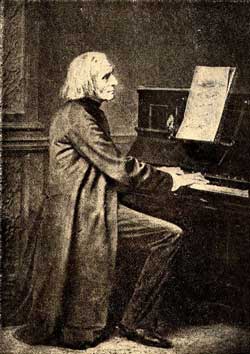
liszt-recitalMore than a century later the piano recital was devised. It was Liszt who first decided to have the whole stage to himself, and set the fashion for dispensing with the mixture of celebrities and supporting acts that had prevailed up to that time. As he wrote about his audacity to a friend: “Le concert, c’est moi!” And he called his appearance at the Hanover Square Rooms in London in June 1840 not a concert but a recital.

The composer-pianists of the day concentrated on their own works. Liszt set a marker in this regard, too, choosing music that ranged from Bach through Beethoven and up to Chopin. He set the pattern for playing from memory, and cemented the platform layout we know today by turning the then-conventional position of the instrument on the stage through 90 degrees. He was what we would now call a sex symbol as well as a star musician, and the new arrangement allowed the audience to see his impressive profile as well as to hear the instrument more clearly. The standards he set have survived without significant alteration right up to the present.

via Liszt is dead, long live the piano recital.

May 9 in Music History

today

• 1914 ~ Carlo Maria Guilini, Italian conductor

• 1914 ~ Hank Snow (Clarence Eugene), Canadian-born American country-music singer, guitarist and songwriter, Country Music Hall of Fame

• 1937 ~ Sonny Curtis, Guitarist with Buddy Holly & The Crickets, songwriter

• 1939 ~ Nokie Edwards, Guitarist with The Ventures

• 1939 ~ Ray Eberle recorded Stairway to the Stars with the Glenn Miller Orchestra for Bluebird records.

• 1941 ~ Pete Birrell, Guitarist with Freddie & The Dreamers

• 1942 ~ Tommy Roe, Singer, songwriter

• 1944 ~ Richie Furay, Musician with Poco and Buffalo Springfield

• 1945 ~ Steve Katz, Record producer; musician: guitar, harmonica, singer with Blood, Sweat and Tears

• 1949 ~ Billy Joel, Grammy Award-winning American rock singer, songwriter and pianist Inducted into the Rock and Roll Hall of Fame on 3/15/99
More information on Joel

• 1962 ~ The Beatles signed their first recording contract. George Martin was hired to be the group’s producer and the band would record for EMI Parlophone.

• 1964 ~ Hello Dolly! became the nation’s top pop record. The milestone put Louis Armstrong on the Billboard music chart in the top spot for the first time in his 41-year music career. Later, ‘Satchmo’ was cast in the movie version of Hello Dolly!

• 1965 ~ Vladimir Horowitz played his first public concert in 12 years at Carnegie Hall in New York City. The audience applauded the piano virtuoso with a standing ovation that lasted for 30 minutes.


• 1970 ~ Guess Who started a three-week run at No.1 on the US singles chart with ‘American Woman’, it was the group’s sixth Top 30 hit and only chart topper. The song was born by accident when guitarist Randy Bachman was playing a heavy riff on stage after he had broken a string, the other members joined in on the jam. A fan in the audience who had recorded the gig on tape presented it to the group after the show and they developed it into a full song.


• 1991 ~ Rudolph Serkin passed away.  He was a Bohemian-born pianist who was widely regarded as one of the greatest Beethoven interpreters of the twentieth century.

• 2001 ~ James Myers, whose two-minute, eight-second tune Rock Around the Clock is considered the granddaddy of all rock ‘n’ roll songs, died of leukemia. He was 81. The song was No. 1 for eight weeks and went on to sell 22 million copies worldwide. It has been recorded by more than 500 artists, from Mae West to the Sex Pistols, and has been used in more than 40 movies. Myers, who also wrote under the name Jimmy DeKnight, penned more than 300 songs and had bit parts in movies and TV shows, but Rock Around the Clock remained his most famous work.

May 8 in Music History

mothers-day-38


OCMS  1829 ~ Louis Moreau Gottschalk, American pianist and composer
Listen to Gottschalk’s music
More information on Gottschalk

• 1948 ~ Oscar Hammerstein I, Playwright, producer

• 1910 ~ Mary Lou Williams, American jazz pianist, composer and arranger

• 1911 ~ Robert Johnson, Blues Hall of Fame, singer, songwriter, guitarist, inducted into Rock and Roll Hall of Fame in 1986

• 1941 ~ Anita O’Day recorded Let Me Off Uptown on Okeh Records with Gene Krupa and his band.

• 1943 ~ Toni Tennille, Singer

• 1944 ~ Gary Glitter (Paul Gadd), Singer

• 1945 ~ Keith Jarrett, American jazz pianist and composer


May 6 in Music History

today

•  1833 ~ Johannes Brahms, German composer
More information about Brahms

• 1840 ~ Piotr Ilyich Tchaikovsky, Russian composer
Listen to Tchaikovsky’s music
Read about Tchaikovsky
Read quotes by and about Tchaikovsky
More information about Tchaikovsky

• 1919 ~ Eva (Evita) Peron, Argentina’s spiritual leader and wife of Argentina’s President, Juan Peron; actress on stage, film and radio; subject of the Broadway musical and film Evita

• 1927 ~ Elisabeth Söderström, Swedish soprano

• 1931 ~ Teresa Brewer (Breuer), Singer

• 1941 ~ Glenn Miller and his Orchestra recorded one of the great American music standards, Chattanooga Choo Choo
More information about Chattanooga Choo Choo

• 1942 ~ Felix Weingartner, Austrian conductor and composer, died; best known for his interpretations of Wagner and Beethoven.

• 1958 ~ Pianist Van Cliburn signed an artist’s contract with RCA Victor Records.

• 1966 ~ The Mamas & The Papas made the climb to the top of the Billboard pop music chart with Monday, Monday.

• 1995 ~ Ray McKinley passed away.  He was an American jazz drummer, singer, and bandleader.

• 2002 ~ Buster Brown, a tap star and choreographer who danced on stage, in films and on television, died. He was 88. Brown was one of the last surviving members of the Copasetics, a legendary group of veteran dancers who performed together. Known for his quick rhythms and charm, Brown was a mentor and teacher for a younger generation of dancers. Brown, who was born James Brown in Baltimore, began his dancing career with a trio called the Three Aces and Speed Kings. He eventually began a solo career, appearing in the Hollywood musical “Something to Shout About” in 1943. Brown toured with the bands of Count Basie, Dizzy Gillespie and Duke Ellington, and was a featured dancer in Ellington’s concerts in the 1960s. He danced in the films “The Cotton Club” and “Tap” and on two public television specials. He also performed with the original casts of the Broadway musicals “Bubbling Brown Sugar” and “Black and Blue.” Brown toured South America with the Cab Calloway Orchestra and was commissioned by the State Department to perform in several African counties. He also taught master classes throughout Europe. Beginning in 1997, Brown was master of ceremonies at a weekly Sunday tap jam at the Manhattan club Swing 46, where young and old dancers stopped by to perform. He recently received an honorary doctorate from Oklahoma City University.

May 5 in Music History


cinco-de-mayo

Cinco de Mayo

• 1891 ~ New York City was the site of the dedication of a building called the Music Hall. It was quite a celebration. A festival was held for five days, featuring guest conductor Peter Ilich Tchaikovsky. The structure is not called the Music Hall anymore. It’s called Carnegie Hall, named in honor of Andrew Carnegie.

• 1900 ~ The Billboard, a magazine for the music and entertainment industries, began weekly publication after six years as a monthly. The name was later shortened to Billboard.

• 1910 ~ Giulietta Simionato, Italian contralto

• 1927 ~ Charles Rosen, American pianist, musicologist, and writer

• 1934 ~ Ace Cannon, Saxophonist

• 1935 ~ The radio program, Rhythm at Eight, made its debut. The star of the show was 24-year-old Ethel Merman. Though Merman would become a legend years later, she didn’t fare so well on radio. Her show was taken off the air after 13 weeks and Miss Merman returned to her first love, Broadway. Tammy Wynette (1942) (Pugh) Grammy Award-winning country singer and songwriter

• 1948 ~ Bill Ward, Musician, drummer

• 1955 ~ The musical, Damn Yankees, opened in New York City for a successful run of 1,019 performances. The show at the 42nd Street Theatre mixed both baseball and ballet. It is an adaptation of the book, The Year the Yankees Lost the Pennant. Gwen Verdon starred in the role of Lola. Whatever Lola wants Lola gets including the Tony for Best Actress in a musical for her performance.

• 1973 ~ 56,800 fans paid $309,000 to see Led Zeppelin at Tampa Stadium. This was the largest, paid crowd ever assembled in the U.S. to see a single musical act. The concert topped The Beatles 55,000-person audience at Shea Stadium in New York ($301,000) on August 15, 1965.

• 2000 ~ Hugh N. Pruett, the wardrobe director for the Lyric Opera of Chicago, died at 68. Pruett worked with countless international opera singers, directors and designers on 329 productions in his more than 40 years with the Lyric Opera.

• 2002 ~ Veteran movie director George Sidney, famed for such musicals as “Anchors Aweigh,” “Kiss Me Kate” and “Annie Get Your Gun,” died at his Las Vegas home. Born into a show business family, the Long Island, New York, native shot 28 features in 27 years, and worked with such stars as Frank Sinatra, Gene Kelly, Tony Curtis, Lana Turner, Dick Van Dyke, Elvis Presley and Ann-Margret. He once defined a star as “someone who attracts your attention even when he or she isn’t doing anything.” After making his mark in short films, Sidney moved to features in 1941 with “Thousands Cheer,” a hit musical starring Kathryn Grayson and Gene Kelly. “Anchors Aweigh” (1945), which starred Sinatra and Gene Kelly as sailors on liberty, received five Oscar nominations including best picture. In 1950, Sidney took over the troubled production of “Annie Get Your Gun,” which was a major success — as was his 1951 remake of “Show Boat” and his 1953 film version of Cole Porter’s musical “Kiss Me Kate.” In 1963, he directed Presley and Ann-Margret in “Viva Las Vegas,” considered one of the better entries in the rock legend’s woeful Hollywood career. Sidney’s last film was the 1968 British musical “Half a Sixpence,” starring Tommy Steele. Sidney served two stints as president of the Directors Guild of America, and helped animators William Hanna and Joseph Barbera set up what would become a cartoon powerhouse.

May 3 in Music History

today

• 1844 ~ Richard D’Oyly Carte, British impresario; producer of Gilbert and Sullivan operettas. He also founded the Savoy Theater in London.

• 1912 ~ Virgil Fox, Organ virtuoso: credited for bringing the organ “to the forefront among classical concert instruments”

• 1919 ~ Betty Comden, Composer

• 1919 ~ Pete Seeger, American folk singer, banjo player, guitarist and songwriter

• 1924 ~ Joe Ames, Singer with The Ames Brothers

• 1926 ~ Jimmy Cleveland, Composer, musician, trombone

• 1928 ~ Dave Dudley (Pedruska), Country singer

• 1933 ~ James Brown, American rhythm-and-blues singer songwriter, dancer and instrumentalist, The Godfather of Soul, Rock and Roll Hall of Fame in 1986

• 1937 ~ Frankie Valli (Francis Castellucio), Falsetto singer with The Four Seasons

• 1939 ~ Beer Barrel Polka, one of the standards of American music, was recorded by The Andrews Sisters for Decca Records. Patti, Maxine and LaVerne turned this song into a giant hit.

• 1951 ~ In Britain, the King and Queen inaugurated the Festival of Britain on London’s South Bank and also opened the Festival Hall.

• 1956 ~ Most Happy Fella, a musical by Frank Loesser, opened at the Imperial Theatre in New York City. The show, an adaptation of They Knew What They Wanted by Sidney Howard, ran for 676 performances on Broadway.

• 1960 ~ The play, The Fantasticks, opened at the Sullivan Playhouse in New York City. It would later become the longest-running off-Broadway play.

• 1971 ~ NPR, National Public Radio, the U.S. national, non-commercial radio network, was born.

• 1997 ~ Narciso Yepes, famous Spanish classical guitarist, died.

• 2001 ~ Legendary jazz drummer Billy Higgins died at the age of 64. Higgins was one of the most recorded figures in the history of jazz, performing with John Coltrane, Dexter Gordon, Herbie Hancock, Milt Jackson, Charles Lloyd, Pat Metheny, Lee Morgan, Art Pepper and Joshua Redman, among others. He played with pianist Cedar Walton and was involved with the first edition of bassist Charlie Haden’s innovative Quartet West. Higgins came to prominence in the 1950s with saxophonist Ornette Coleman’s free jazz group, which included Haden and trumpeter Don Cherry. Higgins’ drumming laid the foundation for the group’s free jazz flights of fancy. That group sparked a decade of innovation in jazz that was carried on by the Coleman Quartet, Coltrane, George Russell, Charles Mingus and Albert Ayler, among others. Higgins’ ability to adapt his sense of swing to any genre made him one of the most in-demand drummers of the past four decades. Higgins helped found World Stage, a storefront performance space and teaching venue in Los Angeles’ Leimert Park. He was also on the jazz faculty at the University of California, Los Angeles. Higgins was awarded a National Endowment for the Arts Jazz Master’s Fellowship in 1997.

• 2002 ~ Yevgeny Svetlanov, a renowned Russian pianist, composer and former chief conductor of the Bolshoi Theater, died. He was 73. He was born in Moscow in 1928. He graduated from the Gnesinykh Musical- Pedagogical Institute and from the Moscow Conservatory. For several years he was conductor and chief conductor of the Bolshoi Theatre. From 1965 on he was artistic director and chief conductor of the State Symphonic Orchestra of USSR. He composed several symphonies, symphonic poems, chamber music works, and vocal-instrumental works. Svetlanov was the chief conductor of the Bolshoi Theater from 1963 to 1965, when he was named artistic director and chief conductor of the Soviet State Symphony. He was named a People’s Artist of the Soviet Union in 1968 and was awarded the Lenin prize in 1972 and the Order of Lenin 1978. He was given the Soviet State prize for creative achievement in 1983. Svetlanov was born in the Soviet Union in 1928. In 1951, he graduated from the Gnesin Institute of Music. Svetlanov graduated from the Moscow Conservatory in 1955 as a pianist, composer and conductor.

April 30 in Music History

today

. 1717 ~ Guillaume Gommaire Kennis, composer

. 1792 ~ Johann Friedrich Schwencke, composer

. 1837 ~ Alfred Gaul, composer

. 1852 ~ Anton Rubinstein’s opera “Dmitri Donskoi”, premiered in St Petersburg

OCMS 1870 ~ Franz Lehar, Austrian composer of operettas. He achieved worldwide recognition for “The Merry Widow”.
More information about Lehar

. 1883 ~ David John de Lloyd, composer

. 1884 ~ Albert Israel Elkus, composer

. 1885 ~ The Boston Pops Orchestra forms

. 1885 ~ Luigi Russolo, composer

. 1886 ~ Frank Merrik, composer

. 1900 ~ Train engineer Casey Jones was killed when trying to save the Cannonball Express as it highballed its way through Vaughn, MS. The famous song about Jones is based on this train accident.

. 1903 ~ Victor Records made its first Red Seal recording this day. The premiere disk featured Ada Crossley, an opera contralto.

. 1916 ~ Robert Shaw, American conductor, Robert Shaw Chorale; music director of Atlanta Symphony Orchestra and Chorus

. 1923 ~ Percy Heath, Jazz musician: bass: founder of Modern Jazz Quartet, The Heath Brothers

. 1933 ~ Willie Nelson, American country-music singer, songwriter and guitarist

. 1940 ~ Jimmy Dorsey and his band recorded the bandleader’s signature song, Contrasts, for Decca Records. The song went on to become one of the most familiar big band themes of the era.

. 1941 ~ Johnny Farina, Musician: rhythm guitar with Santo & Johnny

. 1943 ~ Bobby Vee (Velline), Singer

. 1944 ~ Richard Schoff, Singer with The Sandpipers

. 1953 ~ Frank Sinatra and Nelson Riddle became a team this day at Capitol Records in Hollywood. Sinatra’s new musical style, under Riddle’s direction, brought the crooner to the top of the record world for the second time in his illustrious career.

. 1953 ~ Merrill Osmond, Singer with The Osmonds: Alan, Donny, Jay, Marie, Wayne,Jimmy

. 1954 ~ Darius Milhaud’s Fourth Concerto for piano and orchestra premiered in Haifa

. 1956 ~ Richard Farina, folk singer: Reflections in a Crystal Wind

. 1983 ~ Muddy Waters (McKinley Morganfield) passed away.  He was an American blues musician.

. 1987 ~ Three more compact discs of music by The Beatles went on sale for the first time. The discs were Help!, Rubber Soul and Revolver. All became hits again for the Fab Four.

. 2000 ~ Bill Woods, a band leader who helped Buck Owens, Merle Haggard and other country music stars launch their careers, died. He was 76. In the 1950s, Woods ran The Blackboard country music club in Bakersfield. The club attracted many country music stars and helped develop what became known as the Bakersfield Sound. Woods also could play many instruments, including piano, guitar, fiddle, drums, and the banjo.

. 2000 ~ Jonah Jones, a Grammy award-winning jazz trumpet player who began his career on a Mississippi riverboat and became a star playing with Cab Calloway, died at the age of 90.

. 2001 ~ Herman “Rock” Johnston, a musician known for his innovative work on steel drums, died of prostate cancer. He was 63. Johnston gained acclaim in the early 1960s with an innovation that stretched the musical range of the instrument from 24 to 36 notes. During his career, the Trinidad native appeared at the United Nations, Lincoln Center and Radio City Musical Hall in New York City, and with the Boston Symphony at its summer festival in Tanglewood. His repertoire spanned rock, spiritual, classical, show tunes and Caribbean folk music.

. 2003 ~ Bill Napier, a clarinetist who rose to prominence with the premier San Francisco jazz bands of the 1940s and 50s, died. He was 76. Napier helped create a catchy West Coast style with a Dixieland sound and a San Francisco vibe. He played with jazz stars including trombonist Turk Murphy, Lu Watters and Bob Scobey’s Frisco Jazz Band. Though he took some lessons, Napier essentially taught himself to play. His talent, and his love of music, brought him to an eclectic mix of venues – from cable car turnabouts to halftime of Harlem Globetrotters’ games to Silicon Valley soirees at the height of the dot-com boom. His last show was December 30, 2002.

Duke Ellington’s Birthday

ellington-bd
Duke Ellington (1899 to 1974) was a composer, bandleader, and pianist. He was born Edward Kennedy Ellington in Washington, D.C.

From an early age, the handsome, sharply dressed teenager (that’s where he got the nickname, Duke) was headed for success. At first it was art. He won a poster-design contest and an art scholarship, left school and started a sign-painting business. But it was his natural piano-playing ability that attracted the young women, so Duke Ellington headed in that direction. He developed his keyboard skills by listening to local black ragtime pianists; he composed his first piece, Soda Fountain Rag, around 1915. A successful professional musician by the early 1920s, he left Washington in the spring of 1923 for New York, which was his home base for the rest of his life. Between December 1927 and 1931 his orchestra held forth at Harlem’s Cotton Club, where regular radio broadcasts, together with an active recording schedule, helped him establish a nationwide reputation. Take the “A” Train was his “signature song”.

In such compositions as Black and Tan Fantasy (1927), Mood Indigo (1930),Solitude (1934), and Echoes of Harlem (1935), Ellington emerged as a distinctive composer for his ensemble, employing the rhythms, harmonies, and tone colors of jazz to create pieces that vividly captured aspects of the African-American experience. At the same time, he sought to broaden jazz’s expressive range and formal boundaries in such extended works asReminiscing in Tempo (1935), Black, Brown, and Beige (1943), and Harlem(1951).

An essential feature of Ellington’s composing method was to write with specific instrumentalists in mind, often drawing them into the creative process by building entire pieces out of their musical ideas.

He wrote scores for big band pieces, film scores, operas, ballets, Broadway shows, gospel music, musicals, films, television, and ballet and in the 1960s produced a series of sacred concerts combining his orchestra, choirs, vocalists, and dancers. He would work with each section of his orchestra as an entity unto its own and then bring them together to create the unique sounds such as, Mood Indigo. Over 1,000 musical pieces are credited to the great Duke Ellington. James Lincoln Collier studied the Duke and his Orchestra, comparing Duke Ellington to a “master chef who plans the menus, trains the assistants, supervises them, tastes everything, adjusts the spices … and in the end we credit him with the result.”

Ellington was successful, as few others have been, in reconciling the practical function of a popular entertainer with the artistic aspirations of a serious composer. His rich legacy consists of hundreds of recordings, his many pieces that have entered the standard repertory, and his musical materials now preserved in the Duke Ellington Collection at the Smithsonian Institution. There is a statue of Duke Ellington in New York.

 Ellington’s birthday

 anniversary of Ellington’s death

Ellington’s works were played in an Grammy Winning performance, Forty-Second Annual Awards

Read quotes by and about Ellington

 News Item about Ellington

April 29 in Music History

today


OCMS 1879 ~ Sir Thomas Beecham, English conductor. Founded the Royal Philharmonic Orchestra in 1947 and did much to promote the works of Delius, Sibelius and Richard Strauss.
Read quotes by and about Beecham

. 1895 ~ Sir Malcolm Sargent, English conductor, born. He was in charge of the Liverpool Philharmonic Orchestra from 1942 until 1948 and of the BBC Symphony Orchestra from 1950 until 1957.

OCMS 1899 ~ Duke Ellington, American jazz pianist, bandleader and composer
Read quotes by and about Ellington
More information about Ellington
Grammy winner

. 1913 ~ Donald Mills, Singer with The Mills Brothers.

. 1925 ~ Danny Davis (George Nowland), Grammy Award-winning bandleader with Danny Davis and the Nashville Brass. Best Country Instrumental Performance in 1969, Country Music Awards Instrumental Group of the Year 1969 to 1974

. 1927 ~ Carl Gardner, Singer with The Coasters

. 1931 ~ (Anthony James) Lonnie Donegan, Folk singer, musician: guitar, banjo

. 1933 ~ Rod McKuen, Singer, poet-song writer

. 1936 ~ Zubin Mehta, Indian conductor, Los Angeles Philharmonic Orchestra, and violinist

. 1936 ~ April Stevens (Carol Lo Tempio), Singer

. 1943 ~ Duane Allen, Singer with the Oak Ridge Boys

. 1947 ~ Tommy James (Jackson), Singer with Tommy James and The Shondells

. 1949 ~ Francis Rossi, Musician, guitar and singer with Status Quo

. 1968 ~ Hair made its way from Greenwich Village to Broadway. The show certainly opened eyes. It was the first time that actors appeared nude in a Broadway musical. Hair ran for 1,844 shows on and off Broadway. It was even more successful in its London run later. Big songs from the show: Hair (The Cowsills) and Aquarius/Let the Sunshine In (The 5th Dimension).

. 1969 ~ Sir Duke, Duke Ellington, celebrated his 70th birthday. He was honored with the presentation of the Medal of Freedom, the U.S. government’s highest civilian honor.

. 2001 ~ Opera diva Rita Nellie Hunter, a powerful soprano celebrated for her fine Wagnerian performances, died at the age of 67. Hunter, originally from Wallasey, England, was best remembered as the quintessential Brunnhilde of Wagner’s “Ring” cycle, which she performed in London, New York, Germany and Sydney. Hunter’s agile voice led her through performances of Verdi’s “Aida,” and “Macbeth,” Puccini’s “Turandot” and Strauss’ challenging “Elektra.” Despite her remarkable voice, Hunter did not reach international stardom. Her physical size, at a time when the opera was seeking slimmer performers, and the fact that she sang roles primarily in English, kept her from achieving global fame. Hunter married tenor John Darnley Thomas in 1960, and after his death in 1994, took over management of his Singing Academy in Sydney.