January 16 ~ This Day in Music History

martin-luther-king


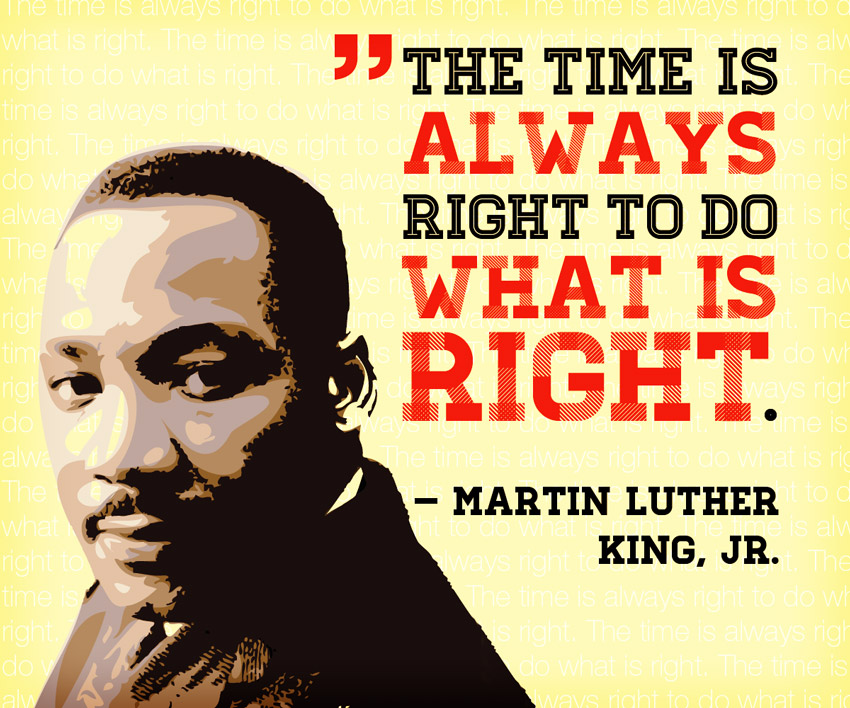
Martin Luther King, Jr Day.

. 1875 ~ First American performance of Johannes Brahms’ “Hungarian Dances”

. 1886 ~ Death of Italian opera composer Amilcare Ponchielli, in Milan

. 1891 ~ French Composer Leo Delibes died in Paris

. 1905 ~ Ernesto Halffter, Spanish composer and conductor

. 1908 ~ Ethel Merman (Zimmerman), American singer of popular music, Tony Award-winning actress (musical), Musical Theater Hall of Fame. She is most famous for Call Me Madam in 1951, It’s a Mad, Mad, Mad, Mad World, There’s No Business Like Show Business and Alexander’s Ragtime Band

. 1929 ~ Marilyn Horne, American mezzo-soprano

. 1929 ~ G.T. (Granville) Hogan, Jazz drummer who played with Elmo Hope, Earl Bostic

. 1934 ~ Bob Bogle (Robert Lenard Bogle), Guitarist, bass with The Ventures

. 1938 ~ Béla Bartók and his wife, Ditta performed their first public concert featuring his Sonata for Two Pianos and Percussion

. 1938 ~ Benny Goodman and his band, plus a quartet, brought the sound of jazz to Carnegie Hall in New York City. When asked how long an intermission he wanted, he quipped, “I don’t know. How much does Toscanini get?”

. 1942 ~ Bill Francis, Keyboard, singer with Dr. Hook and the Medicine Show

. 1942 ~ Kay Kyser and the band recorded A Zoot Suit for Columbia Records. The tune is about the problems associated with wearing this garish, exaggerated ‘hep’ fashion.

. 1946 ~ Katia Ricciarelli, Italian soprano

. 1946 ~ Ronnie Milsap, Grammy Award-winning singer in 1976, CMA Male Vocalist of the Year (1974, 1976, 1977), CMA Entertainer of the Year (1977), blind since birth, he learned to play several instruments by age 12

. 1950 ~ Debbie Allen, Dancer, actress, choreographer, sister of actress Phylicia Rashad

. 1957 ~ Conductor Arturo Toscanini died in New York

. 1957 ~ The Cavern Club opened for business in Liverpool, England. The rock club was just a hangout for commoners. Then, things changed — big time. It all started in the early 1960s when four kids from the neighborhood popped in to jam. They, of course, turned out to be The Beatles.

. 1962 ~ Paul Webb, Bass with Talk Talk

. 1964 ~ “Hello Dolly!” opened at the St. James Theatre in New York City. Carol Channing starred in the role of Mrs. Dolly Levi. The musical was an adaptation of Thornton Wilder’s play, “The Matchmaker”. The show, with an unforgettable title song, was hailed by critics as the “…possible hit of the season.” It was possible, all right. “Hello Dolly!” played for 2,844 performances. And, it returned to Broadway in the 1990s, again starring Carol Channing.

. 1972 ~ David Seville died on this day in Beverly Hills, CA. Born Ross Bagdasarian, the musician was the force, and artist, behind the Alvin and the Chipmunks novelty songs of the 1950s, ’60s and ’70s.

. 1973 ~ Clara Ward passed away. Ward was an American gospel artist who achieved great artistic and commercial success in the 1940s and 1950s.

. 1976 ~ The album, “Frampton Comes Alive”, was released by Herb Alpert’s A&M Records. The double LP soon reached the top spot of the album charts and stayed perched there for 17 weeks. It sold 19 million copies in its first year.

. 1984 ~ Michael Jackson received eight awards at the 11th annual American Music Awards this night.

. 2001 ~ Eleanor Lawrence, a flutist who played often in chamber music performances and with several orchestras in New York City, died of brain cancer at the age of 64. She is credited with transforming a simple newsletter into an important source for flutists. Lawrence studied the flute at the New England Conservatory with the principal flutist of the Boston Symphony Orchestra, James Pappoutsakis. She later studied with flutists from the Philadelphia Orchestra and the Metropolitan Opera orchestra. She joined the American Symphony Orchestra and the Brooklyn Philharmonic after moving to New York in the 1960s. She played periodically with the New York Philharmonic and the Metropolitan Opera. Besides performing, Lawrence taught at the Manhattan School of Music. She served three times as the president of the New York Flute Club. She edited The National Flute Association Newsletter, now The Flutist Quarterly, from the mid-1970s to the early 1980s, expanding it from a brief information sheet to a publication with regular interviews.

January 6 ~ This Day in Music History

today

. 1695 ~ Giuseppe Sammartini

. 1838 ~ Max Bruch, German Composer
More information about Bruch

. 1850 ~ Franz Xaver Scharwenka, Polish composer
More information about Scharwenka

. 1852 ~ Louis Braille passed away

. 1856 ~ Giuseppe Martucci.  He was an Italian composer, conductor, pianist and teacher influential in reviving Italian interest in non-operatic music.

. 1863 ~ First performance of Johannes Brahms‘ Piano Sonata No. 3 in f, in Vienna.

. 1872 ~ Alexander Scriabin, Russian composer
Recommended Books and CD’s by Scriabin

. 1878 ~ Carl Sandburg, Author, poet, folk balladeer

. 1924 ~ Earl Scruggs, American country music singer, banjo player and songwriter, born. He was with the Grand Ole Opry.

. 1929 ~ Wilbert Harrison, Singer

. 1934 ~ Bobby Lord, Country singer

. 1937 ~ Nino Tempo, Sax musician, singer with April Stevens

. 1937 ~ Doris Troy, Singer

. 1938 ~ Trummy Young played trombone and sang with the Jimmy Lunceford Orchestra in New York City as Margie became Decca record number 1617.

. 1946 ~ Roger Keith, Lead guitarist, Pink Floyd

. 1946 ~ Syd (Roger) Barrett, Guitarist, singer with Pink Floyd

. 1959 ~ Kathy Sledge, Singer with Sister Sledge

. 1964 ~ Premier of “Hello Dolly”

. 1966 ~ Duke Ellington’s concert of sacred music, recorded at 5th Avenue Presbyterian Church in New York City, was broadcast on CBS-TV.

. 1975 ~ The Broadway premiere of “The Wiz” opened, receiving enthusiastic reviews. The show, a black version of “The Wizard of Oz”, ran for 1,672 shows at the Majestic Theatre. Moviegoers, however, gave a thumbs down to the later cinema version of the musical that starred Diana Ross and Michael Jackson. One memorable song from the show is Ease on Down the Road.

. 1993 ~ The great jazz trumpeter, Dizzy Gillespie died of cancer at age 75. He has been credited with being a co-founder (with Charlie Parker) of ‘bebop’ music and wrote many jazz numbers (Salt Peanuts, Night in Tunisia). Gillespie also created the ‘afro-cuban’ sound in jazz music. A few of the disciples who preached Dizzy’s gospel of bebop were Thelonious Monk, Earl ‘Bud‘ Powell, Charlie Parker and Miles Davis.

. 2000 ~ Ancient note: music as bridge between species

Victor Borge’s Birthday!

Victor BorgeVictor Borge was born in 1909 in Copenhagen, Denmark. He was an entertainer and pianist – a deliciously funny performer. He studied at the Royal Danish Academy of Music, Copenhagen, and in Vienna and Berlin.
He made his debut as a pianist in 1926, and as a revue actor in 1933.

From 1940 until his death in 2000 he worked in the USA for radio, television, and theater, and has performed with leading symphony orchestras on worldwide tours since 1956. He was best known for his comedy sketches combining music and narrative. He used his classical training to skew serious music and performers.


From his obituary:

Pianist Victor Borge, died in his sleep Dec 23, 2000 at his Greenwich, Connecticut home, was known as the unmelancholy Dane of international show business. He would have turned 92 on Jan. 3, 2001.

“The cause of death was heart failure,” his daughter, Sanna Feirstein, told Reuters.

“He had just returned from a wonderfully successful trip to Copenhagen … and it was really heartwarming to see the love he experienced in his home country,” she said.

Borge was one of five performers selected for the Kennedy Center Honors in 1999.

“He went to sleep, and they went to wake him up this morning, and he was gone,” said his agent, Bernard Gurtman.

“He had so much on the table, and to the day he died he was creative, and practicing piano several hours a day,” Gurtman told Reuters. “He was just a great inspiration.”

Funeral services will be private, his daughter said.

Borge made a career of falling off piano stools, missing the keys with his hands and getting tangled up in the sheet music.

One of his inspirations was a pianist who played the first notes of the Grieg A Minor Concerto and then fell on the keys dead.

He said that the only time he got nervous on stage was when he had to play seriously and adds that if it had not been for Adolf Hitler he probably would never have pursued a career as a concert-hall comedian.

Until he was forced to flee Denmark in 1940 he was a stage and screen idol in his native country.

Lampooned Hitler

But as a Jew who had lampooned Hitler, Borge — his real name was Boerge Rosenbaum — was in danger and fled first to Sweden and then to the United States, where he arrived penniless and unknown and by a fluke got booked on the Bing Crosby radio show. He was an instant success.

He became an American citizen in 1948, but thought of himself as Danish. It was obvious from the numerous affectionate tributes and standing ovations at his 80th birthday concert in Copenhagen in 1989 that Danes felt the same way.

In the concert at Copenhagen’s Tivoli gardens, Borge played variations on the theme of  “Happy Birthday to You in the styles of Mozart, BrahmsWagner and Beethoven — all executed with such wit that the orchestra was convulsed with laughter that a woman performing a piccolo solo was unable to draw breath to play.

“Playing music and making jokes are as natural to me as breathing,” Borge told Reuters in an interview after that concert.

“That’s why I’ve never thought of retiring because I do it all the time whether on the stage or off. I found that in a precarious situation, a smile is the shortest distance between people. When one needs to reach out for sympathy or a link with people, what better way is there?

“If I have to play something straight, without deviation in any respect, I still get very nervous. It’s the fact that you want to do your best, but you are not at your best because you are nervous and knowing that makes you even more nervous.”

His varied career included acting, composing for films and plays and writing but he was best known for his comic sketches based on musical quirks and oddities.

Unpredictable Routine

His routines were unpredictable, often improvised on stage as his quick wit responded to an unplanned event — a noise, a latecomer in the audience — or fixed on an unlikely prop — a fly, a shaky piano stool.

Borge was born in Denmark on January 3, 1909, son of a violinist in the Danish Royal Orchestra.

His parents encouraged him to become a concert pianist, arranging his first public recital when he was 10. In 1927 he made his official debut at the Tivoli Gardens.

Borge’s mischievous sense of humor was manifest from an early age. Asked as a child to play for his parent’s friends he would announce “a piece by the 85-year-old Mozart” and improvise something himself.

When his mother was dying in Denmark during the occupation, Borge visited her, disguised as a sailor.

“Churchill and I were the only ones who saw what was happening,” he said in later years. “He saved Europe and I saved myself.”

From 1953 to 1956, he appeared in New York in his own production “Comedy in Music,” a prelude to world tours that often took him to his native Scandinavia.

On radio and television, Borge developed the comedy techniques of the bungling pianist that won him worldwide fame.

Many of his skits were based on real-life events. One of his classics evolved from seeing a pianist playing a Tchaikovsky concerto fall off his seat.

Borge’s dog joined the show after it wandered on stage while he was at the keyboard — an entrance nobody would believe had been unplanned.

One incident could not be repeated. A large fly flew on to Borge’s nose while he was playing. “How did you get that fly to come on at the right time?” people asked. “Well, we train them,” Borge explained.

Borge’s book, “My Favorite Intervals”, published in 1974, detailed little-known facts of the private lives of composers describing Wagner’s pink underwear and the time Borodin left home in full military regalia but forgot his trousers.

In 1975, Borge was honored in recognition of the 35th anniversary of his arrival in the United States and his work as unofficial goodwill ambassador from Denmark to the United States. He celebrated his 75th birthday in 1984 with a series of concerts at Carnegie Hall and in Copenhagen.

Borge received a host of honors from all four Scandinavian countries for his contributions to music, humor and worthy causes.

Borge, who had lived in Greenwich since 1964, is survived by five children, nine grandchildren, and one great grandchild. His wife of many years, Sanna, died earlier this year.

Borge’s birthday

Anniversary of Borge’s death

November 17, 2016 ~ Today in Music History

today

• 1726 ~ The first performance of J. S. Bach‘s Sacred Cantata No. 55 Ich armer Mensch, ich Sündenknecht on the 22nd Sunday following Trinity. Was part of Bach’s third annual Sacred Cantata cycle in Leipzig 1725-27

• 1848 ~ Frederic Chopin played his final piano concert at a Polish benefit ball at Guildhall in London.

• 1850 ~ Giuseppe Verdi‘s opera Stifellio was first performed at the Teatro Grande in Trieste despite difficulties with the censors which resulted in cuts and changes.

• 1861 ~ First Performance of Johannes Brahms Piano Quintet No. 1 in g, Op. 25, at a rehearsal in Hamburg, with pianist Clara Schumann.

• 1862 ~ The work noted above received its official premiere with members of the Hellmesberger Quartet; Brahms at the piano, in Vienna.

• 1870 ~ Birth of Australian composer Alfred Hill in Melbourne. d-Sydney, 30 OCT 1960.

• 1876~ The first performance of Peter Ilyich Tchaikovsky‘s March Slav in Moscow.

• 1877 ~ The first production of Gilbert and Sullivan’s opera, The Sorcerer, was presented, in London.

• 1888~ The first production of Tchaikovsky‘s Fifth Symphony in St. Petersburg.

• 1891 ~ Poland’s premier and premier ivory tickler, Ignace Jan Paderewski, made his American debut at Carnegie Hall in New York City. In later years, Paderewski, who suffered from arthritis, settled in Paso Robles, CA. The hot mineral baths located there eased his pain. He played only Steinway grand pianos custom-built to his specifications. In fact, five were made just for his use.

• 1925 ~ Sir Charles Mackerras, Australian conductor

• 1930 ~ David Amram, American composer and French-horn player

• 1938 ~ Gordon Lightfoot, Canadian folk singer, songwriter and guitarist

• 1938 ~ Orchestra leader Kay Kyser, speaking to an audience at the College of the City of New York (CCNY) told of the “inner workings and artistic features of swing music.” It marked the first of a series of lectures on swing music presented by Kyser, who went on to presentThe Kollege of Musical Knowledge on radio.

• 1941 ~ Gene Clark, Singer, guitar with The Byrds

• 1942 ~ Bob Gaudio, Singer with The Royal Teens; The Four Seasons

• 1946 ~ Martin Barre, Guitarist with Jethro Tull

• 1950 ~ Roberta Peters filled in for the lead in Mozart’s Don Giovanni, making her debut at the Metropolitan Opera in New York City. She would become one of the Met’s most famous stars.

• 1962 ~ The 4 Seasons, with Frankie Valli as lead singer, began a five-week run at the top of the tunedex with Big Girls Don’t Cry.

• 1967 ~ Ronald DeVoe, Singer with New Edition

• 1970 ~ Elton John recorded an album live, on what was WABC-FM in New York City. It marked the first time that a concert was aired live and recorded for release as aired. The LP was titled, 11/17/70.

• 1981 ~ Bob Eberly died

• 2001 ~ Jerry Jerome, a tenor sax player who was a featured soloist with the bands of Glenn Miller and Benny Goodman, died of leukemia. He was 89. One of the big names in the Big Band era, Jerome was a featured soloist with the Glenn Miller, Benny Goodman, Red Norvo and Artie Shaw orchestras. He then became a successful musical director and conductor on radio and television. Jerome also established a music business, scoring and arranging commercial jingles. Three years ago, Arbors Records released Jerome’s “Something Old, Something New.” The sequel recording, “Something Borrowed, Something Blue,” will be released in December. Born in Brooklyn, N.Y., Jerome started playing the sax while in high school. He attended the University of Alabama and went on the medical school, playing gigs at jazz clubs to earn tuition money. He joined Goodman’s orchestra at the height of its popularity in 1938. When Goodman broke up his band in 1940, Jerome joined Shaw. While with Shaw, he appeared in the film “Second Chorus,” with Fred Astaire and Burgess Meredith.

• 2003 ~ Arthur Conley, a 1960s soul singer and protege of Otis Redding’s, died at his home in the town of Ruurlo, in the eastern Netherlands. He was 57. Conley was born in Atlanta and started his recording career in 1959 as leader of the group Arthur and the Corvets. He was best known for his 1967 hit, Sweet Soul Music, which he co-wrote with Redding based on a number by Sam Cooke. Conley had several minor hits in the following two years. He moved to Europe in the early 1970s after several tours of the continent, deciding that he was “fed up with the pressure” in the United States, said Giesen. In the Netherlands, Conley appeared on television and radio, and ran an independent record label. In the last five years he was an adviser to The Original Sixties R&B and Soul Show, which sought to reproduce the sound and look of the heyday of soul.

November 16, 2016 ~ Today in Music History

today

• 1569 ~ Birth of German organist and composer Paul Sartorius in Nuremberg. d-28 February 1609, Innsbruck.

• 1615 ~ Birth of French violinist and composer Guillaume Dumanoir, II. He composed dance music enjoyed by Louis XIV

• 1667 ~ Death of composer Nathaniel Schnittelbach, at 34. b-1633.

• 1715 ~ Birth of composer Girolamo Abos on the island of Malta. Italian opera and church music.

• 1720 ~ Birth of Italian composer Carlo Antonio Campioni.

• 1757 ~ Birth of American composer Daniel Read, of the First New England School, and one of the primary figures in early American classical music. d-4 DEC 1836.

• 1775 ~ Death of German composer Karl Marian Paradeiser, at 28.

• 1780 ~ Birth of English composer Robert Archibald Smith.

• 1840 ~ Birth of composer Frederick Scotson Clark.

• 1848 ~ Frédéric Chopin played his final piano concert at a Polish benefit ball at Guildhall in London.

• 1850 ~ Giuseppe Verdi‘s opera Stifellio was first performed at the Teatro Grande in Trieste despite difficulties with the censors which resulted in cuts and changes.

• 1852 ~ Birth of American soprano Minnie Hauk in NYC. d-near Lucerne, 6 FEB 1929.

• 1854 ~ First Performance of Anton Rubinstein‘s Ocean Symphony in Leipzig.

• 1860 ~ Birth of Viennese harpist Edmund Scheucker.

• 1861 ~ Birth of composer Vaclav Suk.

• 1861 ~ First Performance of Johannes Brahms‘ Piano Quintet No. 1 in g, Op. 25, at a rehearsal in Hamburg, with pianist Clara Schumann.

• 1862 ~ The work noted above received its official premiere with members of the Hellmesberger Quartet; Brahms at the piano, in Vienna.

• 1870 ~ Birth of Australian composer Alfred Hill in Melbourne. d-Sydney, 30 OCT 1960.

• 1873 Birth of Swedish tenor David Karl Björling, in Harmånger parish of northern Sweden’s Hälsingland province. d. Aug. 16, 1926.

• 1873 ~ W.C. Handy, American blues composer and bandleader
More information about Handy

• 1889 ~ George S. (Simon) Kaufman, Playwright: The Cocoanuts, A Night at the Opera, with Moss Hart, The Man Who Came to Dinner, You Can’t Take It with You

• 1894 ~ Debut of opera star Enrico Caruso in Mario Morelli’s L’Amico Francesco at Naples Teatro Nuovo.

1895 ~ Paul Hindemith, German-born American composer and conductor
Read quotes by and about Hindemith
More information about Hindemith

• 1896 ~ Lawrence Mervil Tibbett, American baritone

• 1905 ~ Eddie (Albert) Condon, Guitarist, bandleader, promoter of Dixieland Jazz

• 1908 ~ Conductor Arturo Toscanini made his debut in the United States this day. He appeared at the Metropolitan Opera House in New York, conducting Aida.

• 1931 ~ Bob Gibson, Singer, songwriter, leader of folk music movement in late ’50s, duo of Gibson and (Bob) Camp

• 1932 ~ The Palace in New York City closed its doors. It was the most famous vaudeville theater in America. Later, it became a movie house with live performances preceding the flicks; most notably: the team of Dean Martin and Jerry Lewis in their heyday.

• 1935 ~ The Rodgers and Hart musical, Jumbo, opened in New York City for a run of 233 performances.

• 1937 ~ Bob Crosby and his orchestra recorded South Rampart Street Parade on Decca Records.

• 1945 ~ Martine Van Hammel, Ballet, American Ballet Theatre

• 1955 ~ ‘Tennessee’ Ernie Ford drove to the top spot on the record charts on this day. Sixteen Tons, where he owed his “soul to the company store…”, became the fastest-selling record in history, jumping to #1 in just 3 weeks. The tune, on Capitol Records, stayed at #1 for eight weeks.

• 1970 ~ Anne Murray received a gold record for Snowbird. She was the first Canadian recording artist to receive a gold record.

• 2000 ~ Russ Conway, a British pianist known as the “Prince Charming of Pop” who sold
More than 30 million records in the 1950s and ’60s, died at age 75. He had 17 consecutive hits in the late 1950s and early 1960s, and won a silver disc when his record Roulette topped 250,000 sales – a total rapidly equaled by three other hits, Sidesaddle, China Tea and Snow Coach. Conway’s formal piano education consisted of one lesson at age 4. He left school at 14 and got work in a lawyer’s office. But he was sent to juvenile detention for three years for taking money he found in a package. In a detention center, he found a piano to play. While doing a stint as a pianist in a club, he was discovered by choreographer Irving Davies. He went on to provide piano accompaniment to a string of singers. Soon he was composing the songs that made him famous and won him the nicknames “Prince Charming of Pop” and the “Sheik of the Keyboard.”

• 2001 ~ Blue guitarist and singer Isaac Scott, a major figure in the city’s music scene for more than a quarter century, died of complications from diabetes. He was 56. A stream of musicians paid their respects to Scott, said his ex-wife, Eloise DePoe. He was found in his apartment Nov. 4 and never regained consciousness. Scott recorded several albums, including “The Isaac Scott Band,” “Big Time Blues Man” and “High Class Woman.” He also appeared on the compilation albums “Live at the San Francisco Jazz Festival” and “Live at the Roadhouse.” Primarily a “cover artist,” Scott did not write his own songs, which hindered national recognition. But he received several local honors, including the Washington Blues Society’s Hall of Fame (1991) and lifetime-achievement (2000) awards. He also performed at last year’s opening of the Experience Music Project. Scott taught himself piano and guitar, and started out playing gospel music, once touring the West Coast with the Five Blind Boys of Mississippi. In 1974, he turned his attention to blues, with a sound flavored by his love of Seattle-born guitar legend Jimi Hendrix. Like Albert Collins, an early influence, Scott played electric guitar with his thumb instead of a pick, which contributed to his distinctive sound. He also was known for his stamina, often playing two- and three-hour sets.

• 2001 ~ Tommy Flanagan, a jazz pianist who worked with such artists as Ella Fitzgerald, died of an arterial aneurysm. He was 71. Flanagan, part of his own classic jazz trio, accompanied Fitzgerald for 20 years, also acting as her musical director. He also worked for Tony Bennett. He became a celebrated figure in jazz with such trio albums as “Jazz Poet” (1989) and “Let’s” (1993). Flanagan’s trio included bassists George Mraz and Peter Washington, and drummers Kenny Washington, Lewis Nash and Albert Heath. Flanagan won the distinguished Danish Jazzpar Prize in 1993. Born in Detroit, Flanagan was the youngest of six children. He recorded “Sunset and the Mockingbird: The Birthday Concert,” live at the Vanguard in 1998. He was to appear at Iridium this holiday season.

November 9, 2016 ~ Today in Music History

today

OCMS 1881 ~ Johannes Brahms gave the first performance of his Piano Concerto No.2 in Budapest.

.1899 ~ “Mezz” Mezzrow, American jazz clarinetist and saxophonist

.1929 ~ Piero Cappuccili, Italian baritone

.1930 ~ Ivan Moravec, Czech pianist

.1938 ~ 24-year-old Mary Martin made her Broadway stage debut in the musical comedy “Leave It to Me”. She brought down the house as she sang My Heart Belongs to Daddy. And the critics raved about New York’s bright new star. The following year brought Martin a top-ten hit with the same song. Martin suddenly found herself singing duets with Bing Crosby; starring on “Broadway in One Touch of Venus” in 1943; “Lute Song” in 1946; touring in “Annie Get Your Gun”; and then taking on what would become her immortal role, that of Nellie in “South Pacific”. South Pacific was one of Broadway’s biggest hits and the cast album was one of the first of its kind, also a big seller. Then came Mary’s stage and TV performances as Peter Pan. This would become her signature role, a memorable moment as the petite actress flew through the air with Tinkerbell and fought the dangerous Captain Hook. Broadway called to Mary Martin again in 1959 for “The Sound of Music” and once more in 1966 for “I Do, I Do”. Back in 1951, Mary Martin recorded a duet with a young man who was also destined for instant and long-term stardom. The song they sang together was Get Out Those Old Records. The twenty-year-old was her son, Larry Hagman, who later played J.R. Ewing. This is one man that Mary Martin didn’t want to wash out of her hair!

.1955 ~ Harry Belafonte recorded Jamaica Farewell and Come Back Liza for RCA Victor. The two tunes completed the Calypso album which led to Belafonte’s nickname, ‘Calypso King’.

.1967 ~ The first issue of Rolling Stone was published. John Lennon was on the cover. The magazine said it was not simply a music magazine but was also about “…the things and attitudes that music embraces.”

.1969 ~ Simon and Garfunkel recorded what would become their signature tune, ‘Bridge Over Troubled Water’ with future member of Bread, Larry Knechtel on piano. Art wanted Paul to sing the song, but Paul insisted that Art’s voice was better suited for it. It was a decision that Paul would later say he regretted. The song won five awards at the 13th Annual Grammy Awards in 1971, including Grammy Award for Record of the Year and Song of the Year.

.1974 ~ Bachman Turner Overdrive went to No.1 on the US singles chart with ‘You Ain’t Seen Nothin’ Yet’. Randy Bachman stuttered through the lyrics of the demo recording as a private joke about his brother Gary, who had a speech impediment. The record company liked that take better than the non-stammering version and released it.

.2003 ~ Saxophonist Buddy Arnold, who performed with such jazz greats as Stan Kenton, Buddy Rich and Tommy Dorsey and co-founded a program to help musicians suffering from drug and alcohol abuse, died at the age of age 77. Born Arnold Buddy Grishaver, he began playing the saxophone at age 9. And by the time he was 16, he was touring as a professional sideman and performing at the Apollo Theater in Harlem with bandleader George Auld. After serving in the Army during World War II, Arnold joined the band of super-drummer Buddy Rich on a West Coast tour. Arnold earned his first recording credits in 1949 on the Mercury Records release of Gene Williams and the Junior Thornhill Band, and he toured with clarinetist Buddy DeFranco’s orchestra in 1951. But he soon descended into a decades-long struggle with drug addiction. Although he landed a recording contract with ABC Paramount in 1956 following an 18-month hospitalization, he was sentenced to prison in 1958 on an attempted burglary conviction. Pardoned two years later, he played with the Dorsey Band and toured with Stan Kenton. He later settled in Los Angeles and recorded four albums for Capitol Records. Arnold took a job in a drug treatment program after his early release from prison and went on to establish the Musician’s Assistance Program with his wife, Carole Fields, in 1992. The organization, dedicated to helping needy musicians obtain treatment for drug and alcohol addiction, has served more than 1,500 individuals during the past decade.

Getting Ready for Halloween: Dreams of a Witches’ Sabbath from Symphonie fantastique by Hector Berlioz

berlioz-symphony-fantastique
The final movement is the best known part of the symphony, thanks to its use in the Julia Roberts movie, Sleeping With The Enemy. It features a four-part structure, which Berlioz described in his own program notes from 1845 as follows:

“He sees himself at a witches’ Sabbath, in the midst of a hideous gathering of shades, sorcerers and monsters of every kind who have come together for his funeral. Strange sounds, groans, outbursts of laughter; distant shouts which seem to be answered by more shouts. The beloved melody appears once more, but has now lost its noble and shy character; it is now no more than a vulgar dance tune, trivial and grotesque: it is she who is coming to the Sabbath… Roar of delight at her arrival… She joins the diabolical orgy… The funeral knell tolls, burlesque parody of the Dies irae, the dance of the witches. The dance of the witches combined with the Dies irae.”

The Dies irae melody is one of the most-quoted in musical literature, appearing in the works of many diverse composers.

The traditional Gregorian melody has also been used as a theme or musical quotation in a number of  classical compositions, notable among them:

Free sheet music from IMSLP for the basic Dies irae

Free sheet music from IMSLP for the basic Symphonie fantastique (look under Arrangements and Transcriptions)

The basic Gregorian Chant

An animated version of the  Dreams of a Witches’ Sabbath from Symphonie fantastique.  Can you hear the Dies irae in this?  It starts around 3:18.

Leonard Bernstein conducts the “Orchestre National de France” in Berlioz’s Symphonie Fantastique
5th Movement

Have You Heard the Piano Puzzlers?

puzzlers


The Piano Puzzlers book is available in the O’Connor Music Studio library if you’d like to give any a try.  Piano Puzzlers as heard on American Public Media’s “Performance Today.” Includes 32 tunes with songs by Gershwin, Berlin, Arlen, Porter, Rodgers, Fats Waller, Lennon & McCartney, and others disguised in the styles of Bach, Handel, Haydn, Mozart, Beethoven, Brahms, Schubert, Schumann, Chopin, Janacek, Debussy, Ravel, Rachmaninoff, Stravinsky, Prokofiev, Bartok, and Copland.

Includes an introduction by Fred Child, host of “Performance Today” as well as background info by Bruce Adolphe. “Bruce Adolphe has taken a common musician’s party game and elevated it to high art and truly funny musical slapsticks. The Piano Puzzlers are a unique combination of extraordinary insight into the styles of many composers subtle, expert workmanship and great, great fun!”

From http://jasonmorris.blogsome.com/2008/08/08/piano-puzzlers/

If you’re a music geek (like me), I have a program for you. Now, let me be clear, to fully qualify as a music geek…you must have a fond appreciation for classical music (no, Poison, Quiet Riot, and Zepplin do not count as classical music). So, if you’re a “music geek” without an appreciation for classical music…well, I hate to burst your bubble…but, you’re not truly a music geek. Instead, you’re a music appreciator, but not a geek. So, if you just listen to indie music and scowl at anything on a label larger than Matador…don’t bother following the link I’ll provide…the fun will be lost on you…And, you probably won’t have a chance.

Every Wednesday night, on my way home from WNL, I turn on my local NPR station to listen to Piano Puzzlers on Performance Today. It’s absolutely incredible. A pianist/composer (Bruce Adolphe) takes a familiar folk or pop tune and sets it inside a classical masterpiece (or in the style of a particular composer). Sometimes it’s easy…sometimes it’s ridiculously difficult. There are days when I say, “got it” on the first pass. Then there are days when I say, “what the heck?” And, more often than not, I’m able to get either the popular/folk tune or the composer.

This is sad to admit, but there are nights when I’ll slow down on the drive home or sit in the car in the driveway to finish an episode. In fact, I get a little worked up if someone stops me after WNL…as I might miss the beginning of Piano Puzzlers (it usually hits around 8:20pm on our local station).

Take a listen to some of the archives and see if you can figure it out! It’s really cool…but probably only appreciated by music geeks (the kind of people that listen to NPR for their musical programs and not just the snipets of cool indie rock between segments on All Things Considered…which is a great show too).

Play Piano Puzzlers HERE!

May 7 in Music History

today

•  1833 ~ Johannes Brahms, German composer
More information about Brahms

• 1840 ~ Piotr Ilyich Tchaikovsky, Russian composer
Listen to Tchaikovsky’s music
Read about Tchaikovsky
Read quotes by and about Tchaikovsky
More information about Tchaikovsky

• 1919 ~ Eva (Evita) Peron, Argentina’s spiritual leader and wife of Argentina’s President, Juan Peron; actress on stage, film and radio; subject of the Broadway musical and film Evita

• 1927 ~ Elisabeth Söderström, Swedish soprano

• 1931 ~ Teresa Brewer (Breuer), Singer

• 1941 ~ Glenn Miller and his Orchestra recorded one of the great American music standards, Chattanooga Choo Choo
More information about Chattanooga Choo Choo

• 1942 ~ Felix Weingartner, Austrian conductor and composer, died; best known for his interpretations of Wagner and Beethoven.

• 1958 ~ Pianist Van Cliburn signed an artist’s contract with RCA Victor Records.

• 1966 ~ The Mamas & The Papas made the climb to the top of the Billboard pop music chart with Monday, Monday.

• 1977 ~ The Eagles went to No.1 on the US singles chart with ‘Hotel California’, the group’s fourth US No.1, a No.8 hit in the UK. The Eagles also won the 1977 Grammy Award for Record of the Year for ‘Hotel California’ at the 20th Annual Grammy Awards in 1978. The song’s guitar solo is ranked 8th on Guitar Magazine’s Top 100 Guitar Solos and was voted the best solo of all time by readers of Guitarist magazine.

• 1995 ~ Ray McKinley passed away.  He was an American jazz drummer, singer, and bandleader.

• 2002 ~ Buster Brown, a tap star and choreographer who danced on stage, in films and on television, died. He was 88. Brown was one of the last surviving members of the Copasetics, a legendary group of veteran dancers who performed together. Known for his quick rhythms and charm, Brown was a mentor and teacher for a younger generation of dancers. Brown, who was born James Brown in Baltimore, began his dancing career with a trio called the Three Aces and Speed Kings. He eventually began a solo career, appearing in the Hollywood musical “Something to Shout About” in 1943. Brown toured with the bands of Count Basie, Dizzy Gillespie and Duke Ellington, and was a featured dancer in Ellington’s concerts in the 1960s. He danced in the films “The Cotton Club” and “Tap” and on two public television specials. He also performed with the original casts of the Broadway musicals “Bubbling Brown Sugar” and “Black and Blue.” Brown toured South America with the Cab Calloway Orchestra and was commissioned by the State Department to perform in several African countries. He also taught master classes throughout Europe. Beginning in 1997, Brown was master of ceremonies at a weekly Sunday tap jam at the Manhattan club Swing 46, where young and old dancers stopped by to perform. He recently received an honorary doctorate from Oklahoma City University.