On Monday, Google’s homepage ran a picture to celebrate the 360th birthday of Bartolomeo Cristofori, inventor of the piano and keeper of instruments for the Medicis in Florence. The instrument Cristofori invented was originally called a “harpsichord with soft and loud” even though the distinction between the two is large (the harpsichord produces sound by plucking strings, the piano by striking them with a hammer). Only three of the newfangled instruments he made – all of them dating from the 1720s – survive.
More than a century later the piano recital was devised. It was Liszt who first decided to have the whole stage to himself, and set the fashion for dispensing with the mixture of celebrities and supporting acts that had prevailed up to that time. As he wrote about his audacity to a friend: “Le concert, c’est moi!” And he called his appearance at the Hanover Square Rooms in London in June 1840 not a concert but a recital.
The composer-pianists of the day concentrated on their own works. Liszt set a marker in this regard, too, choosing music that ranged from Bach through Beethoven and up to Chopin. He set the pattern for playing from memory, and cemented the platform layout we know today by turning the then-conventional position of the instrument on the stage through 90 degrees. He was what we would now call a sex symbol as well as a star musician, and the new arrangement allowed the audience to see his impressive profile as well as to hear the instrument more clearly. The standards he set have survived without significant alteration right up to the present.
The inventor of the piano, Bartolomeo Cristofori, is celebrated in today’s Google Doodle.
Born on 4 May, 1655 in Padua, northern Italy, Cristofori initially worked making harpsichords and clavichords and was employed by Prince Ferdinando de Medici, son of the duke of Tuscany.
He is believed to have started work on what would become a piano in the 1690s and the first one is thought to have been made in 1709.
In a harpsichord the strings are plucked, so it is not possible to play the notes softer or louder. Cristofori managed to design a mechanism that transferred the pressure placed on the keys to the hammers that hit the strings.
He called his invention a “gravecembalo col piano e forte” – a clavichord with soft and loud. The name was shortened to pianoforte and then simply piano.
Francesco Mannucci, a musician at the Medici court, described one early version as “a large ‘Arpicembalo’ [the name of a type of harpsichord] by Bartolomeo Cristofori, of new invention that produces soft and loud, with two sets of strings at unison pitch, with soundboard of cypress without rose”.
Bartolomeo Cristofori di Francesco was an Italian maker of musical instruments, generally regarded as the inventor of the piano.
While other musical instrument makers had attempted to solve the same problem with the harpsichord, Cristofori’s invention is generally regarded as the first real piano.
However, the piano was not popular at first and many felt it was too difficult to play. Cristofori died largely uncelebrated for an invention that would later change the musical world in 1731 – a year before the first sheet music for the piano appeared.
What’s the difference between music of the 1770s and music of the 1970s? According to The Piano Guys, just enough to create a really fantastic mash-up. And so they did.
The group’s latest music video, released on YouTube Tuesday, is the most psychedelic throwback yet to grace the interweb.
Titled “What if the 1770s collided with the 1970s? – ‘I Want You Bach,’” the four-minute video features the alter-egos of musicians Jon Schmidt (“Duke Johann van Keymeister” and “Phil”) and Steven Sharp Nelson (“Sir Reginald von Sharp” and “Scooby”) in a Bach and Jackson 5 mash-up that will make you wonder why the two centuries never met before.
Here’s what The Piano Guys had to say about their inspiration:
“What if the harpsichord from the 1770s hit headlong into the talk box from 1970s? What if J.S. Bach and Jackson 5 met up and just jammed? Would they jive? Can you dig it? These are the kind of far out questions we asked ourselves as we laid down these licks and cut this film. We decided to put together a gig with two wigs in dandy attire and two hep-cats in some funkadelic threads to see if it would fly. … Presenting … ‘I Want You Bach’ – Jackson 5’s funky ‘I Want You Back’ mashed-up with 5 illustrious themes written by J.S. Bach.”
. 1727 ~ Armand-Louis Couperin, French composer, organist, and harpsichordist of the late Baroque and early Classical periods.
. 1890 ~ Dame Myra Hess, British pianist
. 1929 ~ Tommy Newsom, Musician: tenor sax, arranger, composer, back-up conductor for NBC’s Tonight Show Band
. 1943 ~ George Harrison, British rock singer, guitarist and songwriter and former member of The Beatles group
. 1952 ~ The complete choreographic score of Cole Porter’s “Kiss Me Kate” became the first musical choreography score given a copyright. The work was the effort of Hanya Holm.
. 1953 ~ The musical, “Wonderful Town”, opened at the Winter Garden Theatre in New York City. The show was based on the book, “My Sister Eileen”, and the ran for 559 performances.
. 1957 ~ Buddy Holly and The Crickets traveled to Clovis, NM, to record That’ll Be the Day (one of the classics of rock ‘n’ roll) and I’m Looking for Someone to Love. Both songs were released on Brunswick Records in May of that year.
. 1963 ~ Please Please Me was the second record released in the U.S. by The Beatles. Some labels carried a famous misprint, making it an instant, and valuable, collector’s item. The label listed the group as The Beattles.
. 1986 ~ We are the World captured four Grammy Awards. The song, featuring more than 40 superstar artists gathered at one time, was awarded the Top Song, Record of the Year, Best Pop Performance and Best Short Video Awards.
. 2001 ~ Ann Colbert, a manager of classical musicians, died at the age of 95. Colbert founded Colbert Artists Management Inc. Her clientele included the Juilliard String Quartet; conductors Sir Georg Solti, Christoph von Dohnanyi and Richard Bonynge; singers Dame Joan Sutherland, Elizabeth Schwarzkopf, Christa Ludwig and Dietrich Fischer-Dieskau; and musicians Alfred Brendel and the late Jean-Pierre Rampal. Colbert moved to the United States from Berlin in 1936 and started the management company with her husband, Henry Colbert, in 1948. She retired in 1991, leaving the company to her longtime associate, Agnes Eisenberger. The company has retained Colbert’s name.
. 2003 ~ Walter Scharf, 92, a composer who earned 10 Academy Award nominations and worked on more than 200 movies and television programs, including “Funny Girl,” “Mission: Impossible” and “White Christmas,” died in Los Angeles. He received Oscar nominations for the scores for such films as “Mercy Island” (1941), “Hans Christian Andersen” (1952), “Funny Girl” (1968), “Willy Wonka and the Chocolate Factory” (1971) and “Ben” (1972). He won an Emmy for his work on a National Geographic television special and a Golden Globe for “Ben,” whose theme song helped launch singer Michael Jackson’s solo career.
The thought-provoking talk on February 10th was given by Keith Pascoe, second violinist of the Vanbrugh Quartet, in connection with tomorrow night’s violin and piano recital by Ray Chen and Julien Quentin. Pascoe came up with a great title, David and Goliath, The Ballet of Unequals: A Stradivari and Model D Steinway Recital. Using videos from YouTube as illustrations (which unfortunately allowed in snippets of a couple of unwanted advertisements), Pascoe began at the beginning, with the emergence of the piano and violin as instruments in their own right, and traced some of the changes they have both undergone in the centuries since.
The piano has become bigger, stronger and louder. Not only were extra notes added to the keyboard, but the early wooden frames were replaced with cast iron. The violin may not have grown externally, but the shape of the body was remoulded, the neck and fingerboard realigned, and internal buttressing extended, all with the intention of producing greater sound.
What composers did with the combination of violin and piano – and before that, violin and harpsichord – changed too. In the typical baroque violin sonata, the violin was to the fore. In the classical era, the roles were reversed, although this reversal has long been dishonoured by performers. And in the 19th century, the balance as we know it today began to take hold. That balance usually presents the two performers in a master-servant relationship, the violinist usually the boss whose bidding is carried out by the pianist.
. 1875 ~ Fritz Kreisler, Austrian-born American violinist and virtuoso/composer Some of his best known works are Caprice Viennois, Tambourin Chinois, Liebesfreud and La Gitana
. 1901 ~ Jascha Heifetz, Russian-born American violinist
Read quotes by and about Heifetz
More information about Heifetz
. 1911 ~ Jussi Björling, Swedish tenor
. 1912 ~ Burton Lane (Levy), Composer of How Are Things in Glocca Morra, That OldDevil Moon, Look to the Rainbow, How About You, I Hear Music, Come Back toMe,On a Clear Day You Can See Forever, How Could You Believe Me?; His Broadway musicals were Finian’s Rainbow (collaboration with Yip Harburg), On a Clear Day You Can See Forever (collaboration with Alan Jay Lerner). He contributed songs to over 30 films: Babes onBroadway, Royal Wedding, Ship Ahoy, St. Louis Blues and credited with discovering Judy Garland
. 1937 ~ Tom Smothers, Entertainer, The Smothers Brothers Comedy Hour, The Smothers Brothers Show, The Steve Allen Show, Dick’s Brother
. 1937 ~ Guy Lombardo and his orchestra recorded one of Guy’s most famous tunes. Boo Hoo was waxed on Victor Records and became one of the group’s all-time great hits.
. 1942 ~ Graham Nash, Singer with Crosby, Stills, Nash and Young
. 1947 ~ Peter Lucia, Drummer with Tommy James and The Shondells
. 1949 ~ Ross Valory, Bass with Journey
. 1959 ~ The Coasters tune, Charlie Brown, was released. The tune went to #2 and stayed there for three weeks, but didn’t make it to the top spot of the charts. A catchy song (“Fee fee fi fi fo fo fum. I smell smoke in the auditorium…”), it was on the charts for a total of 12 weeks. The song at number one, preventing Charlie Brown from reaching the top, was Venus, by Frankie Avalon.
. 2001 ~ French pianist Nicole Henriot, who entered the Paris Conservatory at age 7 and went on to perform around the globe with conductor Charles Munch, died at the age of 75. Emerging on the world music scene after World War II, Henriot built her reputation on interpretations of works from Liszt to Prokofiev, and especially French composers such as Ravel, Fauré and Milhaud. She was most famous for her performances with Munch, music director of the BostonSymphony from 1949 to 1962. Munch, who died in 1968, was the uncle of Henriot’s husband. Born in 1925, Henriot won the Paris Conservatory’s first prize at age 13. During the war, Henriot gave aid to her brother, a member of the French Resistance. When Gestapo agents searched her home in 1944, she managed to destroy her brother’s secret documents but was badly beaten. After the war, Henriot became the first French pianist to appear in Britain and began an international tour that took her from Scandinavia to Egypt. She made her American debut in 1948 as a soloist with the New York Philharmonic under Munch’s direction. When Munch formed the Orchestra of Paris in 1967, Henriot was one of the fledgling orchestra’s first soloists. In the 1970s and 1980s, Henriot devoted herself to teaching, and worked at the Conservatory of Liege, Belgium, and at the Walloon Conservatory of Brussels.
. 2001 ~ Victor Norman, who founded the Eastern Connecticut Symphony Orchestra and conducted the group for three decades, died at the age of 95. Colleagues said Norman was a visionary who needed to be as skilled in politics as he was in music to keep the symphony together. “He had this idea that a symphony orchestra could be created around here, when really it had been tried several times before, never with any kind of significant success,” said Charles Frink, a New London composer who studied with Norman. Norman founded the New London Civic Orchestra in 1946. It merged with the Willimantic Orchestra in 1952 to become the Eastern Connecticut Symphony Orchestra. He stepped down from the podium in 1980. In his retirement, Norman composed music. Two of his orchestral pieces were performed by the New Britain Symphony Orchestra and the Westminster Community Orchestra in Princeton, N.J. His memoirs, “Victor Norman: A Life in Music, a Lifetime of Learning,” were published in 1999.
. 2015 ~ French piano virtuoso Aldo Ciccolini died at age 89. Born on August 15, 1925, into a musical family in Naples, Aldo Ciccolini was a child prodigy, beginning composition classes in the city’s conservatory at age nine.
What better way to get things started than with a party?
At Wolfie, that means the first worldwide event in honor of Mozart’s birthday – taking place this Tuesday, January 27th! Every musician – concert pianist or 2nd-grader – playing a score on the Wolfie app on January 27th will automatically appear on an interactive world map at www.wolfiepiano.com.
Share this special event with colleagues and inspire your students by enabling them to take part in a worldwide event that will connect them to piano players around the world! It all starts by joining the event, here.
Finally, we’d love to hear from you. You, Mozart’s ambassadors, are keeping his legacy alive and instilling the gift of music appreciation into young peoples’ lives every day.
See you on Tuesday – on the map!
~~~~~~~~ Wolfgang Amadeus Theophilus Mozart lived between 1756 and 1791. He is considered to be a classical composer. Mozart, born in Salzburg, Austria, began composing before most children go to kindergarten. By the time he was six he had played the piano and violin in public.
A Wunderkind, a prodigy of the first rank before the age of five, Mozart astounded the musical world with compositions of unsurpassed brilliance. His father Leopold had recognized his talent at the age of three and immediately set out to teach him to play the harpsichord, violin, and organ. Mozart and his sister made their debut in Munich when he was just six and traveled about Europe together, performing at courts and before royalty, always with success. While still a little child Mozart was inventing symphonies, sonatas, and his first opera. Legends abound about how Mozart could hear an entire work in his head and write everything down without making even one change.
As a child performer he was often treated as a freak. People would cover his hands as he played the piano, make him compose tunes on the spot and perform all sorts of other musical tricks.
In 1787 Mozart became court composer to Joseph II. He played for royalty, received commissions from aristocrats and in his short lifetime composed nearly a thousand masterpieces, including symphonies, operas, serenades, sonatas, concertos, masses, vocal works, and church works.
Mozart was a prolific composer writing masterpieces using every form of music, including his operas “The Marriage of Figaro” (based on a play by Pierre Beaumarchais), “Don Giovanni”, “Cosi fan tutte” and “The Magic Flute”. His mastery of instrumental and vocal forms, from symphony to concerto and opera, was unrivalled in his own time and perhaps in any other.
Composing the Requiem Mass commissioned for Count Walsegg, he felt he was writing his own requiem and he died before it was finished.
Wolfgang Amadeus Mozart, composer, died in Vienna Austria at the age of 35, penniless, on December 5th, 1791, of malignant typhus. Mozart, the precocious child prodigy, composed several pieces that are deemed central to the classical era. Though he ranked as one of the greatest musical genius, he did not live a life of affluence as none of his compositions earned him a decent commission but the world is forever enriched by such works as Eine Kleine Nachtmusik, the Symphonies No. 38 through 41 and the Coronation Mass.

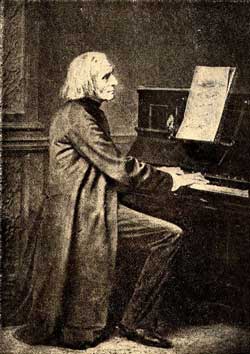 More than a century later the piano recital was devised. It was Liszt who first decided to have the whole stage to himself, and set the fashion for dispensing with the mixture of celebrities and supporting acts that had prevailed up to that time. As he wrote about his audacity to a friend: “Le concert, c’est moi!” And he called his appearance at the Hanover Square Rooms in London in June 1840 not a concert but a recital.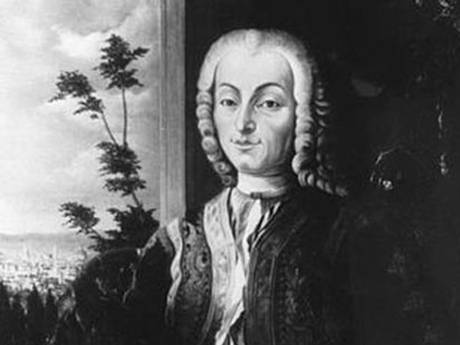


 Wolfgang Amadeus Theophilus Mozart lived between 1756 and 1791. He is considered to be a classical composer. Mozart, born in Salzburg, Austria, began composing before most children go to kindergarten. By the time he was six he had played the piano and violin in public.


 MaryO'Studio