March 13: Today’s Music History

today

. 1860 ~ Hugo Wolf, Austrian composer
Read quotes by and about Wolf
More information about Wolf

. 1890 ~ Fritz Busch, German composer

. 1910 ~ Sammy Kaye, Bandleader, Swing and Sway with Sammy Kaye

. 1914 ~ Bobby Haggart, Bass with these groups: Bob Cats; Peanuts Hucko’s Pied Piper Quintet, Lawson-Haggart Jazz Band, composer

. 1915 ~ Percy Grainger makes his debut as a pianist with the New York Philharmonic playing Grieg’s Piano Concerto

. 1916 ~ Ina Ray Hutton (Odessa Cowan), a Tap dancer in the Ziegfeld Follies, pianist, bandleader, singer and actress

. 1918 ~ Tessie O’Shea, Singer, actress

. 1923 ~ Red Garland, Jazz musician, reeds, pianist

. 1926 ~ Roy Haynes, Modern jazz drummer, bandleader

. 1930 ~ Liz Anderson (Haaby), Country singer, songwriter, mother of country/pop singer Lynn Anderson

. 1932 ~ Jan Howard, Country singer, toured with Carter sisters

. 1933 ~ Mike Stoller, Record producer, songwriter with Jerry Leiber

. 1934 ~ Dick Katz, Pianist, a composer with the Tony Scott Quartet, J.J. Johnson & Kai Winding groups

. 1939 ~ Neil Sedaka, American songwriter and singer of popular music

. 1942 ~ Bing Crosby and Mary Martin were heard having a bit of fun as they joined together to record Wait Till the Sun Shines, Nellie for Decca Records.

. 1946 ~ Thomas Frederick Dunhill passed away.  He was an English composer and writer on musical subjects.

. 1947 ~ The musical “Brigadoon” opened at the Ziegfeld Theatre in New York City. The show ran for 581 performances and was later staged in London (1949). Memorable melodies from “Brigadoon” include I’ll Go Home with Bonnie Jean, The Heather on the Hill, Come to Me, Bend to Me, Almost Like Being in Love and There but for You Go I.

. 1949 ~ Donald York, Singer with Sha Na Na

. 1949 ~ Imperial Records was created in Los Angeles, California. Lew Chudd created the company that became famous for distributing recordings of some of music’s greatest icons, including Fats Domino, Ricky Nelson and many others.

. 1960 ~ Adam Clayton, Musician with U2

. 1965 ~ British blues guitarist Eric Clapton left the Yardbirds.

. 1968 ~ The Byrds received a gold record for the album, “Greatest Hits”, which featured Turn! Turn! Turn!, written by Pete Seeger (excerpted from the Book of Ecclesiastes in the Bible). The Byrds were inducted into the Rock and Roll Hall of Fame in 1991.

. 1972 ~ The Merv Griffin Show, starring perennial game show and late-night TV host, singer and pianist, Merv Griffin, debuted in syndication for Metromedia Television. Joining Merv were sidekick, Arthur Treacher and Mort Lindsey and his orchestra. Griffin had a number one song with the Freddy Martin Orchestra in the 1940s. I’ve Got a Lovely Bunch of Cocoanuts that launched him to fame and fortune.

. 1976 ~ The Four Seasons, featuring the falsetto voice of Frankie Valli, returned to the pop charts after a 10-year absence. The group scored with December 1963 (Oh, What A Night), which became the top song in the country. They were inducted into the Rock and Roll Hall of Fame in 1990.

. 1987 ~ Gerald Moore, England, pianist (Am I Too Loud), died at the age of 87.
Practice Just 20 Minutes A Day

Here are 8 bits of wisdom from Play It Again that remind us that it is possible to make time for what matters most in the face of life’s demands and stresses.

Own Your Stress

Rusbridger is completely clear-eyed about just how stressful his job is, and by confronting — rather than denying — the reality of his stress, he’s able to seek out ways to reduce it. Being editor of the Guardian is “one of those jobs which expands infinitely to fill the time and then spill beyond it,” he writes. “An editor, particularly within a modern global media company, is never truly off duty.”

A typical day in the life of a newspaper editor, he writes, means “a hum of low-level stress much of the time, with periodic eruptions of great tension.”

Find Your Metaphor

When Rusbridger felt frustration and self-doubt — which was nearly all the time — he found it helpful to think of people who took on great challenges in different fields. This helped put his own project in perspective, and also let him feel solidarity with others who had taken on great challenges. He compares learning Chopin to climbing the Matterhorn, the forbidding mountain in the Alps.

He writes: “Jerry R. Hobbs, an American computational linguistics expert and amateur climber, described the mountain as ‘just about the hardest climb and ordinary person can do’, which, apropos the G minor Ballade, sounds familiar.”

You’re Not Alone

Rusbridger supplements his piano practice with lots of reading. One book in particular, Arnold Bennett’s 1910 How to Live on 24 Hours a Day, reminds him that the sense of having not enough time to do all we want to do is universal, and not exactly new.

As Bennett writes: “We never shall have any more time. We have, and we have always had, all the time there is.”

There’s Power In A Morning Routine

Rusbridger learns quickly that his daily 20 minutes have to happen in the morning, before the unpredictable demands of work kick in. Here is how he describes his routine:

“I get up half an hour earlier. I fit in ten minutes of yoga listening to the Todayprogramme – not exactly meditative. Then breakfast and the papers with more Today programme all at the same time. Then I slip upstairs to the sitting room to play before driving into work.”

Pursuing Your Passion Is An Investment

Even though his morning piano practice is a solitary activity, he undertakes it knowing that it will have social benefits. After all, when he was a child, his mother told him that playing the piano would help him make friends. She’s right, and he finds her message echoed in the pages of Charles Cooke’s book Playing the Piano for Pleasure: “The better you play, the more your circle of friends will expand. You can count on this as confidently as you can count on the sun rising. Music is a powerful magnet which never fails to attract new, congenial, long-term friends.”

Mortality Is A Good Motivator

When Rusbridger’s former girlfriend gets in touch to tell him that her breast cancer has returned, he finds himself reflecting on mortality, and thinking of other friends more or less his age who are undergoing treatment for various serious diseases. Each brush with illness or mortality strengthens his determination to lean the Ballade. “In terms of getting on with life’s ambitions,” he writes, “I’m hit by more than a tinge of carpe diem.”

“Amateur” Is Not An Insult

Rusbridger has no illusions or intentions about becoming a professional pianist. He’s a dedicated amateur from the start, and his conversations and meetings with other music lovers — both professional and amateur — is a reminder that “amateur” isn’t a value judgment (i.e. worse than a professional), but a worthy end in itself. In fact, it’s probably a good deal more enjoyable and less stressful than being a pro.

In conversation with Rusbridger, the New York Times music critic Michael Kimmelman talks about the perks of being an amateur. “You have another life, it’s a full and interesting life, but you decide to add this life as well because music gives you something that you can’t get from this other life. It isn’t about having a career and making a living from it, it’s about something that only music-making will give you.”


It’s Never Too Late

As he improves and comes closer to learning the entire Ballade, no one is as surprised as Rusbridger himself. “It’s a funny thing to discover about yourself in your mid-50s — that you spent the previous forty years not doing something on the assumption that you couldn’t do it, when all along you could.”

He is astonished to learn, after memorizing complex passages of the Ballade, just how powerful his own memory is. “Back in the summer of 2010 I had no idea of just how capable a 56-year-old brain was of learning new tricks,” he writes. “So it’s heartening to know that, quite well into middle age, the brain is plastic enough to blast open hitherto unused neural pathways and adapt to new and complicated tasks. So, no, it’s not too late.”

From http://www.huffingtonpost.com/2013/10/14/how-alan-rusbridger-edito_n_4080735.html

Master Chopin By Practicing Just 20 Minutes A Day

Here are 8 bits of wisdom from Play It Again that remind us that it is possible to make time for what matters most in the face of life’s demands and stresses.

Own Your Stress

Rusbridger is completely clear-eyed about just how stressful his job is, and by confronting — rather than denying — the reality of his stress, he’s able to seek out ways to reduce it. Being editor of the Guardian is “one of those jobs which expands infinitely to fill the time and then spill beyond it,” he writes. “An editor, particularly within a modern global media company, is never truly off duty.”

A typical day in the life of a newspaper editor, he writes, means “a hum of low-level stress much of the time, with periodic eruptions of great tension.”

Find Your Metaphor

When Rusbridger felt frustration and self-doubt — which was nearly all the time — he found it helpful to think of people who took on great challenges in different fields. This helped put his own project in perspective, and also let him feel solidarity with others who had taken on great challenges. He compares learning Chopin to climbing the Matterhorn, the forbidding mountain in the Alps.

He writes: “Jerry R. Hobbs, an American computational linguistics expert and amateur climber, described the mountain as ‘just about the hardest climb and ordinary person can do’, which, apropos the G minor Ballade, sounds familiar.”

You’re Not Alone

Rusbridger supplements his piano practice with lots of reading. One book in particular, Arnold Bennett’s 1910 How to Live on 24 Hours a Day, reminds him that the sense of having not enough time to do all we want to do is universal, and not exactly new.

As Bennett writes: “We never shall have any more time. We have, and we have always had, all the time there is.”

There’s Power In A Morning Routine

Rusbridger learns quickly that his daily 20 minutes have to happen in the morning, before the unpredictable demands of work kick in. Here is how he describes his routine:

“I get up half an hour earlier. I fit in ten minutes of yoga listening to the Todayprogramme – not exactly meditative. Then breakfast and the papers with more Today programme all at the same time. Then I slip upstairs to the sitting room to play before driving into work.”

Pursuing Your Passion Is An Investment

Even though his morning piano practice is a solitary activity, he undertakes it knowing that it will have social benefits. After all, when he was a child, his mother told him that playing the piano would help him make friends. She’s right, and he finds her message echoed in the pages of Charles Cooke’s book Playing the Piano for Pleasure: “The better you play, the more your circle of friends will expand. You can count on this as confidently as you can count on the sun rising. Music is a powerful magnet which never fails to attract new, congenial, long-term friends.”

Mortality Is A Good Motivator

When Rusbridger’s former girlfriend gets in touch to tell him that her breast cancer has returned, he finds himself reflecting on mortality, and thinking of other friends more or less his age who are undergoing treatment for various serious diseases. Each brush with illness or mortality strengthens his determination to lean the Ballade. “In terms of getting on with life’s ambitions,” he writes, “I’m hit by more than a tinge of carpe diem.”

“Amateur” Is Not An Insult

Rusbridger has no illusions or intentions about becoming a professional pianist. He’s a dedicated amateur from the start, and his conversations and meetings with other music lovers — both professional and amateur — is a reminder that “amateur” isn’t a value judgment (i.e. worse than a professional), but a worthy end in itself. In fact, it’s probably a good deal more enjoyable and less stressful than being a pro.

In conversation with Rusbridger, the New York Times music critic Michael Kimmelman talks about the perks of being an amateur. “You have another life, it’s a full and interesting life, but you decide to add this life as well because music gives you something that you can’t get from this other life. It isn’t about having a career and making a living from it, it’s about something that only music-making will give you.”


It’s Never Too Late

As he improves and comes closer to learning the entire Ballade, no one is as surprised as Rusbridger himself. “It’s a funny thing to discover about yourself in your mid-50s — that you spent the previous forty years not doing something on the assumption that you couldn’t do it, when all along you could.”

He is astonished to learn, after memorizing complex passages of the Ballade, just how powerful his own memory is. “Back in the summer of 2010 I had no idea of just how capable a 56-year-old brain was of learning new tricks,” he writes. “So it’s heartening to know that, quite well into middle age, the brain is plastic enough to blast open hitherto unused neural pathways and adapt to new and complicated tasks. So, no, it’s not too late.”

From http://www.huffingtonpost.com/2013/10/14/how-alan-rusbridger-edito_n_4080735.html

The Studio Painting is Done!

photo 1photo 2


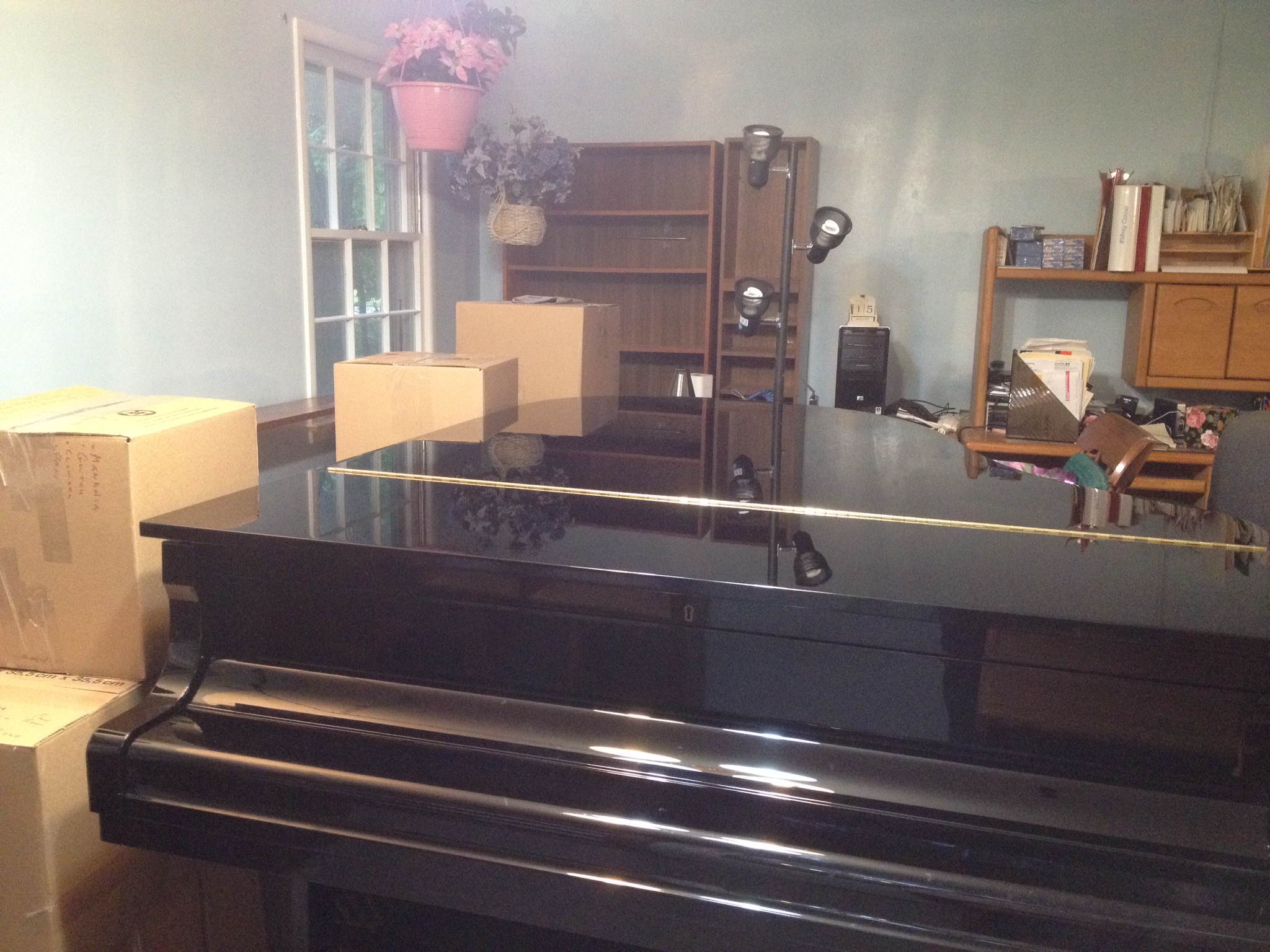
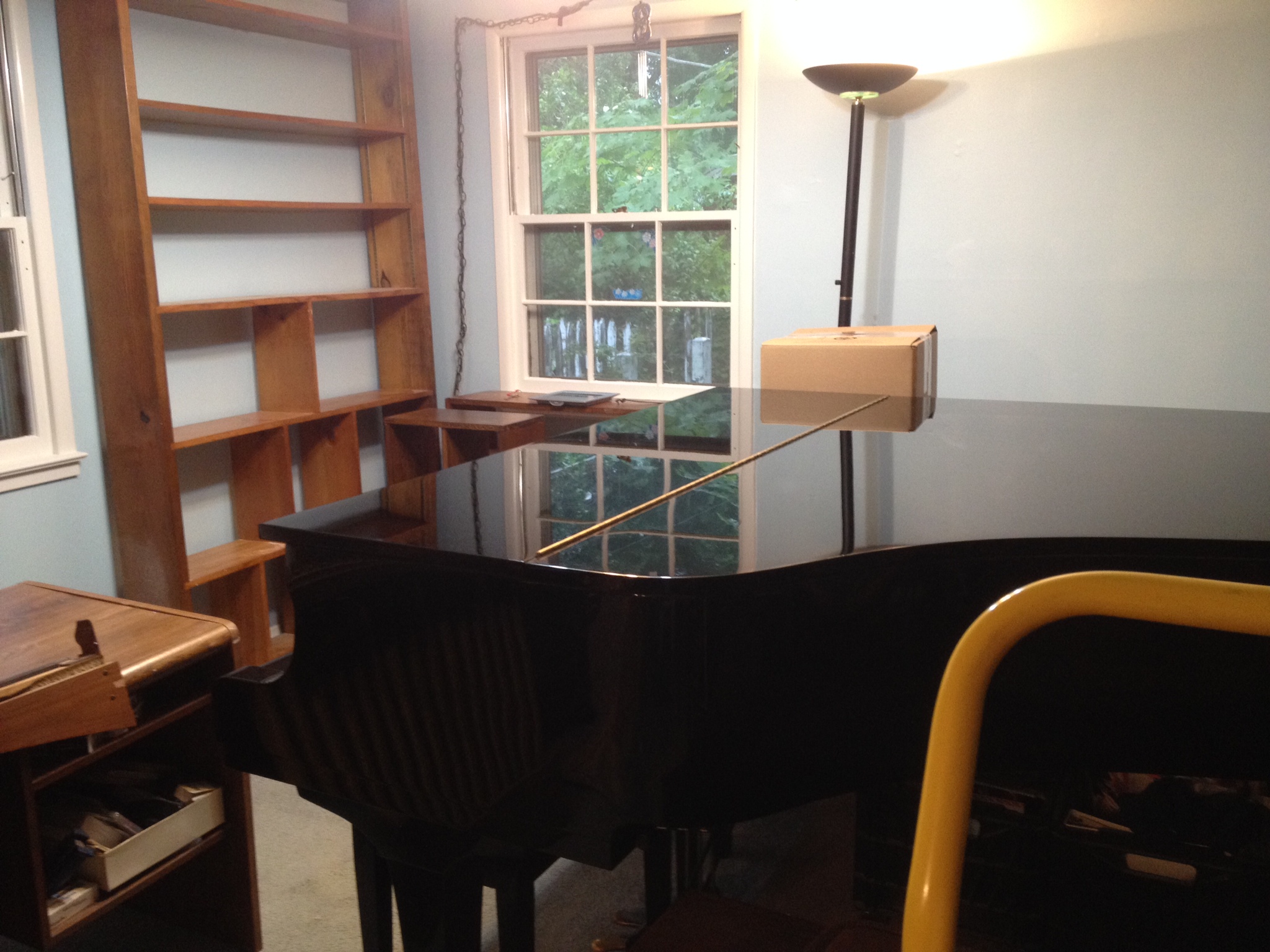
Now, it’s time to start putting the furniture back where it goes, although I think I’m leaving the piano more in the center of the room for now.  It shows the piano off better and I’ll have a place to put the digital keyboard against the wall and closer to the piano.

After a lot of thought, the organs will stay in their respective places next to each other but the music for them will be moving nearer to them.

Then putting all the other books away.  I have an iPad app which is a database that adds items by taking pictures of their barcodes.  Hopefully, this will help organize some of my books.

It won’t be done by Monday but it will be done enough for teaching purposes!