Johann Sebastian Bach (1685-1750) was also apparently a coffee enthusiast. So much so that he wrote a composition about the beverage. Although known mostly for his liturgical music, his Coffee Cantata (AKA Schweigt stille, plaudert nicht, BWV 211) is a rare example of a secular work by the composer. The short comic opera was written (circa 1735) for a musical ensemble called The Collegium Musicum based in a storied Zimmerman’s coffee house in Leipzig, Germany. The whole cantata seems very much to have been written with the local audience in mind.
Coffee Cantata is about a young vivacious woman named Aria who loves coffee. Her killjoy father is, of course, dead set against his daughter having any kind of caffeinated fun. So he tries to ban her from the drink. Aria bitterly complains:
Father sir, but do not be so harsh!
If I couldn’t, three times a day,
be allowed to drink my little cup of coffee,
in my anguish I will turn into
a shriveled-up roast goat.
Ah! How sweet coffee tastes,
more delicious than a thousand kisses,
milder than muscatel wine.
Coffee, I have to have coffee,
and, if someone wants to pamper me,
ah, then bring me coffee as a gift!
The copywriters at Starbucks marketing department couldn’t have written it any better. Eventually, daughter and father reconcile when he agrees to have a guaranteed three cups of coffee a day written into her marriage contract.
• 1598 ~ The first patent to print songbooks was issued on this day to Thomas Morley, a composer of madrigal songs.
• 1902 ~ Donald Jay Grout, American musicologist A History of Western Music. An older version of this book is available for loan in the O’Connor Music Studio
More information about Grout
• 1928 ~ Glen Gray’s orchestra recorded Under a Blanket of Blue, with Kenny Sargeant on vocals.
• 1930 ~ Tommy Collins (Leonard Sipes), Singer, songwriter
• 1938 ~ Ben E. King (Benjamin Earl Nelson), Singer, songwriter
• 1946 ~ Helen Shapiro, Singer, actress
• 1968 ~ The Beatles rode the nearly seven-minute-long Hey Jude to the top of the charts for a nine week-run starting this day. Talk about your microgroove recording! Copies of this Apple release were shipped by the dozen to radio stations because the platters wore out after just a few plays.
• 1984 ~ Saluting his 34 years in television, Bob “If There’s an Honor I’ll Be There” Hope showed outtakes of his years in television on (where else?) NBC. When he began in television’s infancy, back in 1950, Hope said he got into the new medium “…because the contract was so delicious, I couldn’t turn it down.”
Beethoven’s first published works—his Opus No.1—were three trios for piano, violin and cello and already they show a marked advance on Haydn’s trios in the comparative interdependence of the three parts. Their freedom from Haydn’s oppressive formality looks forward to the first mature trios, the pair that comprises Opus 70, displaying all sorts of harmonic twists, thematic innovations and structural idiosyncrasies, these trios make much of the piano part and contain plenty of dramatic outbursts that are typical of Beethoven’s middle period.
Even more arresting is the first of the Opus 70 trios (1808) nicknamed ”The Ghost” because of its mysterious and haunting Largo. Its sibling boasts a cheerful bombastic finale that is the most entertaining music that Beethoven composed for this combination of instruments.
The “Archduke” Trio Opus 97 (1811) was Beethoven’s last full-scale work for piano trio and is typically conclusive. The third movement is its center of gravity, a highly moving set of variations with the cello dominating the thematic content. It opens with a hymn-like theme and progresses to a coda which magnificently sums up the movements ideas. The finale might be less powerful than that of Opus 70 No. 2, but it nevertheless has a sweeping rhythmic power. Again, it is beyond the shadow of a doubt that Beethoven defined the piano trio form that it retained throughout the 19th century by allowing the string instruments the status of genuinely equal partners in this superlative performance.
• 1924 ~ Bud Powell, American jazz pianist and composer
• 1930 ~ Igor Kipnis, American harpsichordist 1933 ~ NBC radio debuted Waltz Time, featuring the orchestra of Abe Lymon. The program continued on the network until 1948.
• 1938 ~ Clarinet virtuoso Artie Shaw recorded the song that would become his theme song. Nightmare was waxed on the Bluebird Jazz label. 1938 ~ Thanks for the Memory was heard for the first time on The Bob Hope Show on the NBC Red radio network. Who was the bandleader? If you said Les Brown, you’d be … wrong. It was Skinnay Ennis accompanying Hope at the time.
• 1941 ~ Don Nix, Baritone sax with The Mar-Keys, Booker T and the M.G.’s, composer
• 1942 ~ Just after leaving CBS radio, Glenn Miller led his civilian band for the last time at the Central Theatre in beautiful Passaic, NJ. Miller had volunteered for wartime duty.
• 1943 ~ Randy Bachman, Guitarist, singer with Bachman-Turner Overdrive
• 1945 ~ Misha Dichter, American pianist, married to Cipa Dichter
• 1951 ~ Meat Loaf (Marvin Lee Aday), Singer, actor
• 1953 ~ Greg Ham, Saxophone, flute, keyboards with Men at Work
• 1954 ~ The Tonight show debuted on NBC-TV. Steve Allen hosted the late-night program which began as a local New York show on WNBT-TV in June 1953. Tonight became a launching pad for Steve and hundreds of guests, including Steve Lawrence and Eydie Gorme. Skitch Henderson and orchestra provided the music. Ernie Kovacs was the host from 1956 until 1957.
• 1962 ~ Detroit secretary Martha Reeves cut a side with a group called The Vandellas and the result was I’ll Have to Let Him Go. Soon thereafter, the hits of Martha and The Vandellas just kept on comin’.
• 1962 ~ After a concert that featured folk music at Carnegie Hall, The New York Times gave a glowing review in a story about “Bob Dylan: A Distinctive Folk Song Stylist.”
• 1970 ~ “Round and round and round it goes and where it stops, nobody knows.” Ted Mack said, “Good night from Geritol” for the last time. After 22 years on television, the curtain closed on The Original Amateur Hour on CBS. The show had been on ABC, NBC, CBS and originated on the Dumont Television Network.
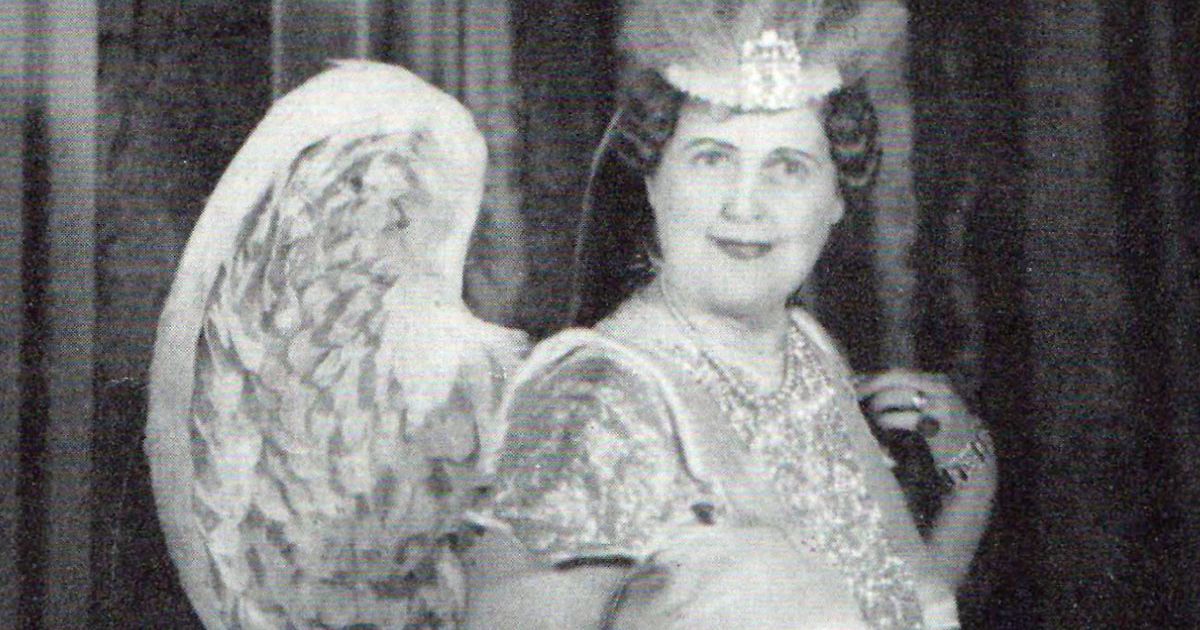
Florence Foster Jenkins was an American socialite and amateur soprano who was known and mocked for her flamboyant performance costumes and notably poor singing ability. The historian Stephen Pile ranked her “the world’s worst opera singer … No one, before or since, has succeeded in liberating themselves quite so completely from the shackles of musical notation.”
Despite (or perhaps because of) her technical incompetence, she became a prominent musical cult figure in New York City during the 1920s, 1930s, and 1940s. Cole Porter, Gian Carlo Menotti, Lily Pons, Sir Thomas Beecham, and other celebrities were fans. Enrico Caruso is said to have “regarded her with affection and respect”.
In the 1940s, New York socialite Florence Foster Jenkins (Meryl Streep) dreams of becoming a great opera singer. Unfortunately, her ambition far exceeds her talent. The voice Florence hears in her head is beautiful, but to everyone else it is quite lousy. Her husband St. Clair goes to extreme lengths to make sure his wife never finds out how awful she truly is. When Florence announces her plans for a concert at Carnegie Hall, St. Clair soon realizes that he’s facing his greatest challenge yet.
• 1887 ~ Emile Berliner patented a disk recording device that made it possible to mass produce phonograph records.
• 1892 ~ The ‘King of Marches’ was introduced to the general public. John Philip Sousa and his band played the Liberty Bell March in Plainfield, New Jersey.
• 1898 ~ George Gershwin (Jacob Gershvin), American composer, songwriter and pianist
Gershwin’s Rhapsody in Blue is featured in Disney’s Fantasia 2000.
Read quotes by and about Gershwin
More information about Gershwin
• 1908 ~ An ad for the Edison Phonograph appeared in The Saturday Evening Post. The phonograph offered buyers free records by both the Democratic and Republican U.S. presidential candidates!
• 1930 ~ Fritz Wunderlich, German tenor
• 1925 ~ Marty Robbins (Robertson), Country Music Hall of Famer, Grammy Award Winner, actor, last Grand Ole Opry singer to perform in Ryman Auditorium, first to perform in new Opryland
• 1926 ~ Julie London (Peck), Singer, actress
• 1931 ~ George Chambers, Bass, singer with The Chambers Brothers
• 1945 ~ Béla Viktor János Bartók, Hungarian composer, pianist, and ethnomusicologist died.
More about Béla Bartók
• 1945 ~ Bryan Ferry, Singer with Roxy Music
• 1947 ~ Lynn Anderson, Grammy Award~winning singer, CMA Female Vocalist of the Year, 1971
• 1948 ~ Olivia Newton-John, British country-music and rock singer
• 1954 ~ Craig Chaquico, Guitar, singer with Jefferson Starship
• 1955 ~ Carlene Carter, Singer, June Carter’s daughter
• 1955 ~ Debbie Reynolds married singing idol Eddie Fisher. The couple made it through four tempestuous years.
• 1957 ~ West Side Story opened in New York. The musical ran for 734 performances. The loose adaptation of William Shakespeare’s Romeo and Juliet produced several hit songs, including Maria and Tonight. Leonard Bernstein was the composer.
• 1962 ~ Tracey Thorn, Singer
• 1962 ~ “Come and listen to the story ’bout a man named Jed…” The Beverly Hillbillies aired on CBS-TV. U.S. audiences were enchanted with Jed, Ellie Mae, Granny, Jethro, Miss Jane and that banker feller. Enchanted, as in a trance, in fact, for 216 shows. Bluegrass stars Lester Flatt and Earl Scruggs had the honor of composing and recording the theme song and hit record, The Ballad of Jed Clampett.
• 1969 ~ The Beatles walked the road toward a hit LP for the last time, as Abbey Road was released in London. The 13th and last album for the ‘fab four’ zoomed quickly to the #1 spot on the charts and stayed there for 11 weeks. 1984 ~ History was made at the Metropolitan Opera House in New York City. Neil Shicoff, lead tenor in The Tales of Hoffmann, was unable to perform due to illness. His understudy, a chap named William Lewis, was a bit under the weather as well, and his voice began to falter during the performance. So, Kenneth Riegel was called in to sing the part from the orchestra pit while Mr. Lewis lip-synced the part on stage.
• 2003 ~ Yi Sung-chun, one of the most outstanding musicians of contemporary Korean classics, died at the age of 67. Born in what is now North Korea, Yi moved south during the 1950-53 Korean War and became a pioneer of Korean classics, called Gukak, or national music. Yi first entered a medical college but switched to study Korean classics two years later at the Seoul National University. He earned his doctorate and served his alma mater as a professor for 30 years. Students called him “a real model of Seonbi,” or the disciplined and well-mannered intellectual class of the old royal Korean Joseon Dynasty. Yi produced about 300 pieces of music, and helped reshape the “gayageum,” a traditional Korean instrument with nine strings, into the one with 21 strings to broaden its tones. His name was put on record in 2001 along with 30 other Korean musicians in the New Grove Dictionary of Music, an encyclopedia named after British musician Sir George Grove that lists 3,000 important music figures worldwide.
George Gershwin lived between September 26, 1898 and July 11, 1937. He is considered to be a twentieth century composer.
If you hate homework but like roller skating, you have something in common with American composer George Gershwin. Born in Brooklyn, New York to Russian immigrant parents, George loved to play street hockey, ‘cat’, and punch ball. He didn’t even have an interest in music until his family got him a piano when he was twelve. Nine years later he had his first hit, “Swanee”, with lyrics written by Irving Caesar. No one else in the Gershwin family was musical, but George was fascinated by music. When he heard a schoolmate play the violin, George struck up a friendship with the boy who introduced him to the world of concert music.
Gershwin’s American in Paris and Rhapsody in Blue (featured in Disney’s newly released Fantasia 2000) proved that jazz was powerful enough to combine will with symphonic music. Gershwin was only 26 years old at the time when he composed Rhapsody in Blue. No matter how you hear it, “Rhapsody in Blue” will remain the signature of one of the most influential of composers, songwriters and pianists in American music history.
His play Porgy and Bess has been produced as both a film and an opera.
• 1683 ~ Jean-Philippe Rameau, French composer, theorist and organist
Read more about Rameau
• 1906 ~ Dmitri Shostakovich, Soviet composer
Read more about Shostakovich Grammy winner
Shostakovich’s music was once condemned as being “un-Soviet” Shostakovich’s Piano Concerto number 2 is featured in Disney’s Fantasia 2000.
• 1932 ~ Glenn (Herbert) Gould, Canadian pianist, composer, wrote a piano essay about Petula Clark
Read quotes by and about Gould
Read news items about Gould
• 1933 ~ Erik Darling, Folk singer with The Weavers and also The Tarriers
• 1934 ~ Hot Lips was recorded by Henry Busse and his orchestra in Chicago, IL.
• 1943 ~ Gary Alexander, Guitar, singer with The Association
• 1945 ~ Onnie McIntyre, Guitar with Average White Band
• 1950 ~ NBC~TV introduced a new concept in daytime programming. Kate Smith debuted an hourlong show. Her theme song for the show was When the Moon Comes Over the Mountain. Kate’s daytime show ran for four years. God Bless America.
• 1953 ~ John Locke, Keyboards with Spirit
• 1953 ~ Following in the footlights of musical greats like Ignace Jan Paderewski and Victor Borge, a piano player named Liberace made his debut at Carnegie Hall. Liberace performed before a sellout audience. His candelabra and concert grand piano were instant trademarks that lasted throughout his career.
• 1955 ~ Steve Severin (Bailey), Bass with Siouxsie & The Banshees
• 1979 ~ The third musical resulting from the collaboration of Tim Rice and Andrew Lloyd Webber lit up the Great White Way. Evita opened on Broadway to rave reviews.
• 2002 ~ Bob Radonich, who for 47 years owned a local landmark cafe shaped like a coffee pot, died after suffering a series of strokes. He was 83. His cafe, Bob’s Java Jive, evokes a largely forgotten era of architecture. The street where it sits once featured toy factories shaped like castles, a gas station resembling a colossal neon gas pump and a yellow, lemon-shaped restaurant called the Lemon Lunch. Those other buildings vanished, but the Java Jive survived. Java Jive was originally known as the Coffee Pot Restaurant, built in 1927 by local veterinarian Otis G. Button and designed by an artist, inventor and promoter named Bert Smyser. Radonich bought the cafe in 1955. His wife Lylabell renamed the business for an Ink Spots’ song whose lyrics included I love coffee, I love tea, I love java jive, it loves me. The Java Jive, which was used for a scene in the 1990 movie “I Love You to Death,” was renowned for a pair of chimpanzees, Java and Jive, who played drums while Bobby Floyd, who was Bob and Lylabell’s son, entertained on the organ. Radonich’s daughter now owns and runs Bob’s Java Jive.
• 2009 ~ Alicia de Larrocha, Catalan pianist died. She was considered one of the great piano legends of the 20th century.
• 2012 ~ Andy Williams, American singer, died from bladder cancer at the age of 84
An educational parody of Meghan Trainor’s music “All About That Bass” that teaches the notes of the bass clef.
Learn the notes of “The Cool Bass Clef” by watching this cool animated video. Music by Karl Hitzemann. Animation by Bill Belongia. The song originally appeared in Music K-8 magazine, Vol. 22, No. 3.
• 1806 ~ George Alexander Osborne, Irish pianist and composer (La Pluie de perles),
• 1922 ~ Cornell MacNeil, American baritone
• 1927 ~ Alfredo Kraus, Spanish tenor
• 1936 ~ Jim (James Maury) Henson, Creator of vocalist, Kermit the Frog.
There’s a fictional neighborhood where some of the residents are named Kermit, Big Bird, Bert & Ernie, Miss Piggy, and Oscar the Grouch. It’s called Sesame Street. The creator of the lifelike characters, Jim Henson, was born on this day. The puppeteer first named his puppets, Muppets, in 1954 when he was working as a producer of the Washington, D.C. TV show, Sam and Friends. Henson moved his Muppets to network TV in 1969. Children of all ages were able to enjoy the Muppets’ antics on the educational, yet entertaining Sesame Street. The Muppets then got their own show, The Muppet Show; which generated The Muppet Movie and other films, like The Muppets Take Manhattan and The Great Muppet Caper. And Jim Henson got the awards: 18 Emmys, 17 Grammys, 4 Peabody Awards and 5 Ace Awards (National Cable Television Association). The premier muppeteer, and voice of Kermit the Frog, died suddenly in May of 1990. Jim Henson lives on through his Muppets.
• 1938 ~ Pablo Elvira, Puerto Rican baritone
• 1940 ~ Barbara Allbut, Singer with Angels
• 1940 ~ Mamie “Galore” Davis, Blues singer
• 1941 ~ Linda McCartney (Eastman), Photographer for Rolling Stone magazine, singer with Wings with husband Paul McCartney
• 1942 ~ Gerry Marsden, Singer with Gerry & The Pacemakers
• 1942 ~ Glenn Miller ended his CBS radio broadcasts for Chesterfield Cigarettes. It was time for Miller to go to war. The show had aired three times a week for three years.
• 1955 ~ Millions of Americans tuned in to watch Judy Garland make her TV debut on the Ford Star Jubilee. The CBS show received the highest television ratings to that time.
• 1968 ~ The Vogues received a gold record for Turn Around Look at Me on the Reprise label.
• 2002 ~ Tim Rose, a raw-voiced folk-rocker who recorded memorable versions of Hey Joe and Morning Dew, died shortly after surgery for bowel cancer. He was 62. Rose started his music career in his hometown of Washington, D.C., in a duo billed as Michael & Timothy. Rose then worked with Cass Elliot, a future member of the Mamas and the Papas, in a group called The Triumvirate. When James Hendricks – who later married Elliot – joined the group, it was renamed The Big Three. Rose signed a recording contract with Columbia in 1966, and his album, “Tim Rose,” debuted a year later. In 1968, Rose toured in Britain with a band including John Bonham, the drummer for Led Zeppelin. Rose’s musical career stalled in the 1980s. In 1996, he returned to live performing in London with a show that featured reminiscences of his career’s ups and downs.


 Grammy winner
 MaryO'Studio