Beethoven’s first published works—his Opus No.1—were three trios for piano, violin and cello and already they show a marked advance on Haydn’s trios in the comparative interdependence of the three parts. Their freedom from Haydn’s oppressive formality looks forward to the first mature trios, the pair that comprises Opus 70, displaying all sorts of harmonic twists, thematic innovations and structural idiosyncrasies, these trios make much of the piano part and contain plenty of dramatic outbursts that are typical of Beethoven’s middle period.
Even more arresting is the first of the Opus 70 trios (1808) nicknamed ”The Ghost” because of its mysterious and haunting Largo. Its sibling boasts a cheerful bombastic finale that is the most entertaining music that Beethoven composed for this combination of instruments.
The “Archduke” Trio Opus 97 (1811) was Beethoven’s last full-scale work for piano trio and is typically conclusive. The third movement is its center of gravity, a highly moving set of variations with the cello dominating the thematic content. It opens with a hymn-like theme and progresses to a coda which magnificently sums up the movements ideas. The finale might be less powerful than that of Opus 70 No. 2, but it nevertheless has a sweeping rhythmic power. Again, it is beyond the shadow of a doubt that Beethoven defined the piano trio form that it retained throughout the 19th century by allowing the string instruments the status of genuinely equal partners in this superlative performance.
• 1884 ~ Charles Tomlinson Griffes, American composer
• 1923 ~ Hank (Hiram) Williams, Sr., American country-western singer and songwriter. He was the first country musician whose music crossed over into pop and he wrote 125 compositions
• 1926 ~ Bill Black, Bassist with Bill Black Combo, played in Elvis Presley band, backup for Elvis
• 1929 ~ Sil Austin, Tenor saxophone, composer
• 1931 ~ RCA Victor began demonstrating a very early version of the long-playing (LP), 33~1/3 RPM phonograph record. It would be another 17 years before RCA rival Columbia would begin mass production of the LP.
• 1940 ~ LaMont McLemore, Singer with The 5th Dimension
• 1950 ~ Fee Waybill (John Waldo), Singer with The Tubes
• 1952 ~ Frank Sinatra sang at his final session with Mitch Miller and Columbia Records.
• 1955 ~ The Perry Como Show moved to Saturday nights on NBC~TV. Soon, U.S.A. audiences would “Sing along with me … I’m on my way to the stars…” with the incomparable Mr. C. Como’s hourlong variety show replaced his three-times-per-week, 15-minute show, which had been on the air since 1948. The new version of The Perry Como Show soon became Saturday’s highest-rated TV program, beating CBS competitor Jackie Gleason.
• 1955 ~ Capitol Records released Magic Melody, Part Two. The tune consists only of the last two notes of the musical phrase, “Shave and a haircut, two bits,” making it the shortest tune ever to be released.
• 1973 ~ Hugo Winterhalter passed away. He was an American easy listening arranger and composer.
• 2002 ~ Michael “Dodo” Marmarosa, a jazz pianist who played with luminaries like Dizzy Gillespie, Tommy Dorsey and Buddy Rich in the 1940s before a military stint derailed his music career, died of a heart attack. He was 76. Marmarosa died at the Veterans Administration Medical Center in Pittsburgh, where he lived the past few years, playing the piano and organ for other residents and guests. Marmarosa joined the Johnny “Scat” Davis Orchestra at age 15 in 1941. He then played with Gene Krupa’s band, Charlie Barnet’s big band, where he recorded “The Moose” and “Strollin”, and played with the great Gillespie. He played in Dorsey’s band in 1944, which included Buddy DeFranco, Sidney Block and Buddy Rich. And later that same year, Marmarosa joined Artie Shaw’s band. In 1947 Marmarosa was selected by Esquire magazine as one of the nation’s top jazz artists. Marmarosa disappeared from public view in the early 1950s after a series of personal tragedies and a stint in the Army.
• 2009 ~ Leon Kirchner, American classical composer (Pulitzer Prize for Music 1967), died at the age of 90
• 2015 ~ David Willcocks, English conductor and composer (Kings College Choir), died at the age of 95
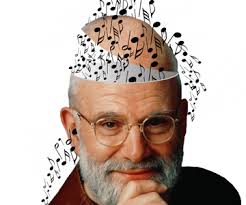
Writer and neurologist Oliver Sacks, who died on Sunday, August 30, 2015 at age 82, spent his life wondering on the myriad connections among biology, thought, emotion and perception.
For those of us who obsess over the how and why of music, Sacks’ work on sound and its effects on the brain – and vice versa – was particularly illuminating. His book on the subject, “Musicophilia: Tales of Music and the Brain,” remains essential reading for those who want to understand the mechanics of music.
Through bountiful research and mesmerizing case studies, Sacks addressed topics including music and amnesia, music therapy, musical prodigies and those who suffer from debilitating aural hallucinations.
1887 ~ Nadia Boulanger, French composition teacher
More information about Boulanger
• 1915 ~ Cy Walter, pianist (3’s Company)
• 1920 ~ Enrico Caruso made his last recording for Victor Records in Camden, NJ.
• 1925 ~ Charlie Byrd, Guitarist, played with Stan Getz
• 1925 ~ “B. B.” (Riley B.) King, American blues singer and guitarist, Grammy Lifetime Achievement Award in 1987
• 1934 ~ George Chakiris, Academy Award-winning actor, dancer in West Side Story (1961)
• 1938 ~ Tommy Dorsey and his orchestra recorded the swing classic Boogie Woogie for Victor Records.
• 1941 ~ CBS radio debuted The Arkansas Traveler. The program was later renamed The Bob Burns Show. Burns played a very strange musical instrument called the ‘bazooka’. The U.S. Army chose the name to identify its rocket launcher because it looked so much like Burns’ bazooka.
• 1943 ~ Bernie Calvert, Bass with The Hollies and also The Dolphins
• 1944 ~ Betty Kelly, Singer with Martha and the Vandellas
• 1948 ~ Kenny Jones, Drummer with Small Faces, Faces and also The Who
• 1950 ~ David Bellamy, Singer with a duo called The Bellamy Brothers, songwriter
• 1963 – Richard Marx, Singer, songwriter
• 1963 ~ She Loves You was recorded by The Beatles the Swan label. It was the first record recorded by The Beatles; but the second single by the ‘Fab Four’ to hit #1. I Want to Hold Your Hand, was the group’s first #1 song and million seller (on Capitol). It beat She Loves You to the top spot by just a few weeks. Other Beatles hits were also recorded on Capitol (Capitol had rejected She Loves You) and Swan labels; but the Beatles liked variety, so add these record companies to the Beatles list of recording labels: Vee-Jay, MGM, Tollie, United Artists, Atco, E.M.I., Parlaphone and Apple.
• 1964 ~ Shindig premiered on ABC-TV. The program had go-go girls and the biggest rock bands of the day in a dance party environment. Regulars were Jimmie O’Neill and the Shindig Dancers. The first show featured Sam Cooke, The Everly Brothers, The Righteous Brothers, The Wellingtons, Bobby Sherman and comic Alan Sues.
• 1965 ~ San Francisco’s Grace Cathedral became the site of the first concert of sacred music presented by Duke Ellington.
• 1965 ~ The Dean Martin Show debuted on NBC~TV. It was a weekly variety show that continued on the network for nine years. Regulars over the years were The Goldiggers, Ken Lane, The Ding-a-Ling Sisters, Tom Bosley, Dom DeLuise, Nipsey Russell, Rodney Dangerfield and Les Brown and His Band. The theme song? Everybody Loves Somebody.
• 1994 ~ Bernie Lazaroff Leighton, pianist, died at the age of 73
• 2000 ~ Israeli conductor David Shallon died in Tokyo after suffering an asthma attack at the age of 49. Shallon was born in Tel Aviv and studied violin, viola and horn.
• 2000 ~ Valeriu Stelian, a folk singer who inspired anti-communist protesters a decade ago, died of cancer at the age of 47. Shortly after the 1989 anti-communist uprising, Stelian began singing at University Square in downtown Bucharest for students who protesting the presence of former communists in government. Six weeks after the uprising, coal miners descended on Bucharest at the behest of the government and beat up the students. Six people died in the melee and the protest harmed Romania’s image to such a degree that many young Romanians emigrated, believing democracy would never come to the Balkan country. “Oh God, come here to see what has become of people”, went the lyrics of one of Stelian’s songs composed in 1973 and played to film footage of people who had died during the uprising. During his career, Stelian toured the former Soviet Union, Norway, Poland, Bulgaria, Hungary, France, England and the United States. He also set up some recording studios in Romania.
Steinway Place, Queens, New York, 11105. steinway.com or 718-721-2600.
It all begins with bare wood, rough and fragrant.
Skilled craftsmen then use muscle, fine motor skills and magic to transform simple planks into magnificent instruments. In the bridge-notching process, the “bellymen” use tools they’ve constructed themselves, the better to execute this highly skilled operation.
Alaskan Sitka Spruce becomes a soundboard, with ribs of Sugar Pine.
Eighty-eight keys, 88 hammers, more than 230 strings — all are carefully created, installed and tested in every piano.
All in all, it takes about 11 months to make a Steinway grand piano.
Steinway & Sons has been located in the same spot in the Astoria section of Queens since the early 1870s. Founded in 1853 in a loft on Varick Street in Manhattan, the company’s reputation grew quickly, and the company needed space to expand their operations.
Factory tours are offered from September through the end of June. (Factory tours are not available in July and August.) Tours are scheduled from 9:30 a.m. to noon on Tuesdays, for a maximum of 15 people.
Needless to say, tours fill up quickly and must be booked in advance. Steinway currently has no openings for the rest of 2017 and is not yet taking reservations for 2018. Plan way ahead, and check for updates by emailing tours@steinway.com or by calling 718-721-2600.
• 1930 ~ Hoagy Carmichael recorded Georgia on My Mind on the Victor label. Georgia on My Mind has been the official state song of Georgia since 1922. The song has been recorded by many artists over the years.
• 1934 ~ NBC radio presented The Gibson Family to American audiences. The program was the first musical comedy to be broadcast. The show originated from the studios of WEAF in New York City.
• 1940 ~ Jimmy Gilmer, Singer with Jimmy Gilmer and the Fireballs
• 1941 ~ Les (William) Braid, Bass, organ with The Swinging Blue Jeans
• 1945 ~ Jessye Norman, American soprano
• 1955 ~ Betty Robbins (Mrs. Sheldon Robbins) became the first woman cantor at services held at Temple Avodah in Oceanside, Long Island, New York.
• 1980 ~ The Elephant Man made its debut on Broadway with rock singer David Bowie in his acting debut.
• 2001 ~ Billy Hilfiger, a musician and younger brother of fashion mogul Tommy Hilfiger, died after a lengthy battle with cancer. He was 45. Hilfiger worked as a landscape architect in New York City but was best known as an avid guitarist. He played with former members of the rock band Blue Oyster Cult and with another brother, Andy Hilfiger, among others.
Cost: Admission is Free but for some of the food, there will be a cost.
Pender Church is rocking the block again! We’re having another block party for our neighbors, and you’re invited for food, games, and live entertainment.
Fun for the whole family includes:
Food available for purchase from local food trucks, plus cupcakes and ice cream!
“Minute to Win It” games
Moon bounce
Face painting
Balloon sculpting
Cake Walk
Games for kids, teens and adults
Live music
Parking will be available in parts of the Pender UMC parking lot, and at Christ Presbyterian Church just down Alder Woods Drive.
• 1741 ~ George Frederick Handel completed his The Messiah. It took the composer just 23 days to complete the timeless musical treasure which is still very popular during the Christmas holiday season.
• 1888 ~ Michael Haydn (1737) Austrian composer
1760 ~ Luigi Cherubini, Italian composer
More information about Cherubini
• 1814 ~ Frances Scott Key, an attorney in Washington, DC, was aboard a warship that was bombarding Fort McHenry (an outpost protecting the city of Baltimore, MD). Key wrote some famous words to express his feelings. Those words became The Star-Spangled Banner, which officially became the U.S. national anthem by an act of Congress in 1931.
• 1910 ~ Lehman Engel, American composer, conductor and writer
• 1927 ~ Gene Austin waxed one of the first million sellers. He recorded his composition, My Blue Heaven, for Victor Records.
• 1941 ~ Priscilla Mitchell, Singer
• 1946 ~ Pete Agnew, Bass, singer with Nazareth
• 1947 ~ Jon ‘Bowzer’ Bauman, Singer with Sha Na Na
• 1950 ~ Paul Kossoff, Guitarist with Free
• 1954 ~ Barry Cowsill, Singer with The Cowsills
• 1959 ~ Morten Harket, Singer with a-ha
• 1964 ~ Mary Howe, American composer and pianist (Sand), died at the age of 82
• 1973 ~ Donny Osmond received a gold record for his hit single, The Twelfth of Never. The song, released in March of 1973, was one of five which turned gold for the young Osmond. His other solo successes were Sweet & Innocent, Go Away Little Girl, Hey Girl and Puppy Love.
• 1985 ~ The first MTV Video Music Awards were presented at Radio City Music Hall in New York City. The Cars won Best Video honors for You Might Think and Michael Jackson won Best Overall Performance and Choreography for his Thriller video.
• 2002 ~ Jazz saxophonist and bandleader Paul Williams, whose 1949 Rhythm and Blues hit, The Huckle-Buck, was covered by Frank Sinatra, died, at the age of 87. Williams scored one of the first big hits of the R&B era in 1949 with The Huckle-Buck, based on Charlie Parker’s “Now’s the Time.” It was the biggest-selling record in the Savoy label’s 60-year history, topping the R&B charts for 14 weeks, and spawned vocal versions by Sinatra and others. The Huckle-Buck was one of three Top 10 and five Top 20 R&B hits Williams scored for Savoy in 1948 and 1949. Other Top 10 hits were 35-30 in 1948 and Walkin’ Around in 1949. Williams was later part of Atlantic Records’ house band in the ’60s and directed the Lloyd Price and James Brown orchestras until 1964. After leaving the music business temporarily, he opened a booking agency in New York in 1968. Born July 13, 1915, in Birmingham, Alabama, Williams played with Clarence Dorsey in 1946, and then made his recording debut with King Porter in 1947 for Paradise before forming his own band later that year. Saxophonists Noble “Thin Man” Watts and Wild Bill Moore, trumpeter Phil Guilbeau, and vocalists Danny Cobb, Jimmy Brown, Joan Shaw, and Connie Allen were among Williams’ band members.
Clara Schumann (1819-96) was much more than the wife of composer Robert Schumann. She was, quite simply, one of the greatest pianists of all time. A child prodigy, her technique and musicianship as a mature artist led to her being regarded as the equal of giants of the keyboard such a Franz Liszt, Sigismond Thalberg and Anton Rubinstein.
And from her girlhood until the end of her marriage she composed wonderful music, mostly solo piano music, but other works as well, including a concerto, a large number of songs and a sublime piano trio.
In her later years, she was an internationally famous teacher, and her performing career lasted more than six decades. She was, quite simply, a phenomenon.
• 1931 ~ Vaudeville star Eddie Cantor was heard for the first time – on NBC radio.
The Chase and Sanborn Hour became one of the most popular radio shows of the 1930s.
• 1941 ~ David Clayton-Thomas, Singer with Blood Sweat and Tears
• 1944 ~ Peter Cetera, Bass guitar, singer with Chicago
• 1952 ~ Randy Jones, Singer with The Village People
• 1954 ~ The cover of LIFE magazine was adorned with Judy Garland’s picture, with the caption, “Judy Garland takes off after an Oscar.” Garland had been nominated for her role in A Star is Born.
• 1956 ~ Joni Sledge, Singer with Sister Sledge
• 1968 ~ Clarence Carter received a gold record for his million-selling hit Slip Away. Carter earned two other gold records for Too Weak to Fight and Patches. The singer from Montgomery, Alabama had been blind since age one and taught himself to play guitar by age 11.
• 1969 ~ John Lennon and his wife, Yoko Ono, presented the Plastic Ono Band in concert for the first time. The appearance at the Toronto Peace Festival was Lennon’s first in four years. The first hit by the new group, Give Peace a Chance, made it to number 14 on the charts.
• 1986 ~ Captain EO, a 17-minute, three-dimensional, musical, science-fiction flick starring Michael Jackson, made its gala premiere at Disneyland in Anaheim, CA and at Disney’s Epcot Center in Orlando, FL this day. The innovative movie cost approximately $1,000,000 a minute to produce.
• 2001 ~ Barbara Matera, who made costumes for Broadway shows, the New York City Ballet and the Metropolitan Opera, died of a cerebral hemorrhage. She was 72. With her husband, Matera founded Barbara Matera Ltd. in 1968, which produced costumes seen in the current Broadway productions of The Lion King, Beauty and the Beast, Aida, Kiss Me, Kate and 42nd Street. As the costumer for the American Ballet Theater, Matera outfitted performers in productions including Swan Lake and Othello. Her film credits include The Great Gatsby, The Addams Family, Moonstruck, Indiana Jones and the Temple of Doom, The Age of Innocence and Death on the Nile. Matera also created the purple crystal-encrusted gown that Hillary Rodham Clinton wore at her husband’s first presidential inauguration.


 1887 ~ Nadia Boulanger, French composition teacher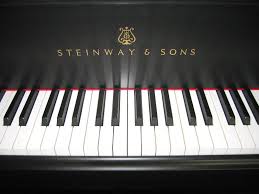


 MaryO'Studio