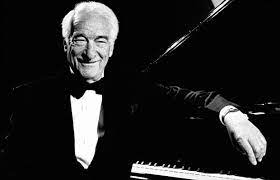
Frederic Chopin died at the age of 39 on this date in 1849. Chopin was a Polish composer and virtuoso pianist of the Romantic era who wrote primarily for solo piano. He has maintained worldwide renown as a leading musician of his era, one whose “poetic genius was based on a professional technique that was without equal in his generation.
• 1855 ~ William Barclay Squire, British musicologist
• 1893 ~ On this day a song called “Goodmorning to All” was copyrighted by two teachers who wrote it for their kindergarten pupils. The title was later changed to “Happy Birthday to You”. The copyright was claimed illegal in September, 2015.
• 1941 ~ Fry Me Cookie, with a Can of Lard was recorded by the Will Bradley Orchestra on Columbia. Ray McKinley was featured.
• 1942 ~ Dave Lovelady, Drummer with The Fourmost
• 1943 ~ C.F. (Fred) Turner, Musician with Bachman~Turner Overdrive
• 1947 ~ Bob Weir (Hall), American rock guitarist and singer with The Grateful Dead
• 1953 ~ Tony Carey, Keyboards with Rainbow
• 1959 ~ Gary Kemp, Guitarist with Spandau Ballet, brother of musician Martin Kemp
• 1969 ~ Wendy Wilson, Singer with Wilson Phillips, daughter of Beach Boys singer, Brian Wilson
• 1972 ~ John C. Fogerty and Creedence Clearwater Revival called it a career … and the group disbanded. Fogerty continued in a solo career with big hits including, Centerfield and The Old Man Down the Road.
• 1976 ~ Memphis, TN disc jockey Rick Dees and his ‘Cast of Idiots’ made it all the way to number one on the Billboard Hot 100 with the immortal Disco Duck(Part 1). Dees is still around, but not as a recording artist. He’s a DJ in Los Angeles and is hosting several varieties of the Weekly Top 40 show, syndicated around the world.
• 1983 ~ George Liberace passed away. He was an American musician and television performer. Born in Menasha, Wisconsin, he was the elder brother and business partner of famed U.S. pianist Liberace.
• 1990 ~ Art Blakey passed away. He was an American jazz drummer and bandleader.
• 2000 ~ David Golub, American pianist and chamber music conductor, passed away at the age of 50. Born in Chicago, Golub grew up in Dallas, where he began learning the piano. In 1969 he moved to New York and spent his student years honing his technique at New York’s Juilliard School of Music. He also began conducting during summer breaks at Vermont’s Marlboro festival. In 1979, he accompanied violinist Isaac Stern on a tour of China. A film about the tour, “From Mao to Mozart,” won the 1980 Academy Award for Best Documentary. As a performer, Golub was perhaps best known for his work with violinist MarkKaplan and cellist Colin Carr in the trio they formed in 1982. In the late 1990s, Golub began cultivating his interest in opera. Under his leadership, the Padua Chamber Orchestra recorded some of Haydn’s least-known work for opera. An acclaimed chamber ensemble performer – most notably with the Golub-Kaplan-Carr Trio – Golub led the Padua Chamber Orchestra during the 1994-95 season and took it on tour in the United States in 1999. He is survived by his wife, Maria Majno.
• 2001 ~ Oscar-winning composer and lyricist Jay Livingston, whose collaboration with Ray Evans led to such hits as Silver Bells, Que Sera, Sera and Mona Lisa, died of pneumonia. He was 86. Livingston’s songwriting partnership with Evans spanned 64 years. Often called the last of the great songwriters, Livingston and Evans had seven Academy Award nominations and won three – in 1948 for Buttons and Bows in the film The Paleface, in 1950 for Mona Lisa in Captain Carey, USA, and in 1956 for Que Sera, Sera in The Man Who Knew Too Much. They wrote the television theme songs for Bonanza and Mr. Ed, and were honored by the American Society of Composers, Authors and Publishers for the most performed music for film and TV for 1996. Livingston was born on March 28, 1915, in the Pittsburgh suburb of McDonald. He met Evans in 1937 at the University of Pennsylvania, where they were both students. The team’s final project was the recording, Michael Feinstein Sings the Livingston and Evans Song Book, due for 2002 release.
Parents might remember this one – or their grandparents! No one else has captured a monster quite so groovy as the one-eyed, one-horned, flying purple people eater. This is available for students to play in the Halloween Songbook (Easy Piano).
• 1906 ~ American premièr of Puccini’s opera, “Madama Butterfly”, Washington, D.C.
• 1913 ~ David Carroll, Conductor, arranger, record producer for The Diamonds and The Platters
• 1925 ~ Mickey (McHouston) Baker, Guitarist, singer in the duo, Mickey and Sylvia
• 1925 ~ Grand Ole Opry started on radio in Nashville, Tennessee (where it still originates). It was first heard on network radio in 1939. The show finally made it to TV on this day in 1955.
• 1926 ~ Karl Richter, German organist and conductor
• 1931 ~ The production of “Cat and the Fiddle” opened in New York. It played for 395 performances.
• 1932 ~ The first city-owned opera house, the War Memorial Opera House of San Francisco, opened this day. “Tosca” was the first opera presented.
• 1937 ~ Barry McGuire, Singer, songwriter with The New Christy Minstrels
• 1942 ~ Don Stevenson, Drummer, singer with Moby Grape
• 1946 ~ Richard Carpenter, Composer, singer, Grammy Award-winning group, the Carpenters
• 1948 ~ Chris De Burgh (Davidson), Singer, songwriter
• 1951 ~ I Love Lucy debuted on CBS-TV. For the next 20 years, Lucille Ball would be a TV regular. She did take 1956 off. Why? No, having little Ricky had nothing to do with it. She starred in “Damn Yankees” on Broadway that year.
• 1953 ~ Tito (Toriano) Jackson, Singer with The Jackson Five, brother of Michael,Janet, Jermaine, LaToya
• 1953 ~ “Teahouse of the August Moon” opened on Broadway to begin a long and successful run of 1,027 performances.
• 1964 ~ An American treasure passed away. Cole Porter, renowned lyricist and composer, died at age 73. I’ve Got You Under My Skin and hundreds of other classics crossed all musical style and format boundaries throughout his long and rich career.
• 2001 ~ Etta James, the prolific jazz vocalist whose soulful, blues-influenced recordings over more than a half century won her acclaim and two Grammy nominations, died of complications from a bout with cancer. She was 72. Jones’ style was described as a cross between Billie Holiday, her idol, and Dinah Washington. She died the same day her last recording, Etta Jones SingsLady Day, hit music stores. Born in Aiken, S.C., Jones was a teen-ager when she was discovered while competing in a contest at the famed Apollo Theater in Harlem. Jones collaborated with such greats as Oliver Nelson, Earl “Fatha” Hines, Kenny Burrell and Cedar Walton, both in concert and on recordings. She recorded prolifically for RCA, Prestige, Muse and more recently Highnote Records. Jones earned a gold record for her 1960 recording Don’t Go to Strangers, and received a Grammy nomination in 1981 for Save Your Love For Me. She got a second Grammy nomination in 1999 for a collection of songs: My Buddy – Etta Jones Sings the Songs of Buddy Johnson. Jones was the recipient of many awards, including the prestigious Eubie Blake Jazz Award and the Lifetime Achievement Award from the International Women in Jazz Foundation.
The Washington Folk Festival returns this year after a one-year hiatus on October 19, 12pm to 9:00pm, with a contra dance from 7:30-9:00pm. Now a one-day event, expect a jam-packed roster full of dancing, storytelling, and music ranging from American to International styles: bluegrass to Celtic, Klezmer to Americana, blues to Zydeco, we cover folk music from around the world! Five stages, hundreds of performers, food trucks, a picnic area, and it’s all free!
Come see such acts as Furia Flamenca, Dede and the Do-Rights, Karpouzi Trio, Urban Artistry, the Sweater Set, Rick Franklin, The Irish Inn Mates, Morris dancers, Mrs. Toretsky’s Nightmare, Slaveya, the Washington Balalaika Orchestra, The Chromatics, Mutual Agreement, The Poor Ellen Smith Band, Trio Sefardi, Little Red and the Renegades, Jillian Matundan, and many more!
Spanish Ballroom 4:00-4:45
Members of the community-based Washington Balalaika Society play a wide variety of music from around the world on authentic folk instruments.
Students always find this piece fun with its finger snaps. There are three versions in Piano Maestro and it’s in several piano books including Halloween Songbook (Easy Piano). There was a a new Addams Family animated movie out in 2019, so your students are going to be snapping all over the place when this Halloween rolls around.
• 1930 ~ I Got Rhythm, by George Gershwin, sung by Ethel Merman, was a show-stopper in the production of “Girl Crazy” on Broadway. It was Merman’s debut on the Great White Way as she captivated audiences and launched her stellar career. “Girl Crazy” went on for 272 performances.
• 1931 ~ Rafael Puyana, Colombian harpsichordist
• 1938 ~ Melba Montgomery, Singer
• 1938 ~ One of the great songs of the big band era was recorded by Bob Crosby (Bing’s brother) and The Bob Cats. Big Noise from Winnetka on Decca Records featured Bob Haggart and Ray Bauduc. Haggart whistled and played bass, while Bauduc played the skins.
• 1939 ~ Broadcast Music, Inc. (BMI) was organized on this day to compete with ASCAP (American Society of Composers and Publishers). The two music licensing organizations’ goal is to ensure that composers, artists and publishers are properly paid for the use of their works.
• 1940 ~ Cliff Richard (Harry Webb), Singer
• 1946 ~ Justin Hayward, Guitarist, singer with The Moody Blues
• 1961 ~ The Broadway production “How to Succeed in Business without Really Trying” opened.
• 1971 ~ It was John and Yoko Day on The Dick Cavett Show on ABC. The couple promoted Lennon’s new LP (Imagine) and film (Imagine) and Yoko’s book, two films and a fine arts show.
• 1996 ~ Eighteen years after its creation, The Rolling Stones’ Rock & Roll Circus was finally released. The 1968 event put together by The Stones comprised two concerts on a circus stage and included performances by The Who, Taj Mahal, Marianne Faithfull and Jethro Tull. John Lennon and Yoko Ono performed as part of a supergroup called The Dirty Mac, along with Eric Clapton, Mitch Mitchell and Keith Richards. It was originally planned to be aired on BBC TV.
• 2001 ~ Willam Farr Christensen, a Utah dancer who started on the vaudeville stage and went on to become one of the most important figures in American ballet, died at the age of 99. Founder of the San Francisco Ballet and Utah’s Ballet West, Christensen was the first person in the United States to choreograph full-length versions of several ballet classics, including “The Nutcracker”, “Coppelia” and “Swan Lake”. With his brothers Lew and Harold, he toured the famous Orpheum vaudeville circuit in the 1920s, performing a ballet act at a time when few Americans were familiar with the art. By 1934, Christensen had quit the circuit to found the first ballet company in Portland, Ore., then left three years later to join the San Francisco Opera Ballet as a principal soloist. Within a year he was named ballet master of the company. In 1941 he founded the San Francisco Ballet, the first major ballet company in the West. Christensen choreographed the country’s first full-length production of “The Nutcracker” in 1944, and today it is a Christmas tradition for nearly every ballet company in the nation.
• 1903 ~ Beginning this night, and for 192 performances, “Babes in Toyland” entertained youngsters of all ages in New York City. Toyland is just one of Victor Herbert’s timeless operettas.
• 1939 ~ Harry James and his band recorded On a Little Street in Singapore for Columbia Records. A kid singer named Frank Sinatra was the featured vocalist on what was his seventh recording.
• 1941 ~ Paul Simon, American folk-rock singer, songwriter and guitarist, duo called Simon and Garfunkel, Rock and Roll Hall of Famer
• 1944 ~ Robert Lamm, Singer, keyboards, songwriter with The Big Thing; Chicago Transit Authority; Chicago
• 1945 ~ Karen Akers, Singer
• 1947 ~ Sammy Hagar, Singer, guitarist with Van Halen
• 1948 ~ Leona Mitchell, American soprano
• 1948 ~ Lacy J. Dalton (Jill Byrem), Songwriter, singer
• 1957 ~ Two superstars introduced a new car on ABC-TV. Bing Crosby and Frank Sinatra joined forces in an hourlong special that turned out to be a big ratings hit. Too bad the Edsel, the car that Ford Motor Company was introducing, didn’t fare as well.
• 1958 ~ This day was musically memorable as Warren Covington conducted the TommyDorsey Orchestra for what would be the last big band tune to climb the pop charts. Tea for Two Cha Cha, made it into the Top 10, peaking at #7. And that was the end of the Big Band Era. Rock ’n’ roll was here to stay.
• 1959 ~ Marie (Olive) Osmond, Singer, TV host on Donny and Marie
• 1963 ~ Beatlemania hit the London Palladium. The Beatles made their first appearance on a major TV show for the BBC. Thousands of delirious fans jammed the streets outside the theatre to voice their support of the Fab Four. A few months later, Beatlemania would sweep the U.S. as well.
• 1965 ~The Who recorded ‘My Generation’ at Pye studios, London. When released as a single it reached No.2 on the UK chart, held off the No.1 position by The Seekers ‘The Carnival Is Over’. Roger Daltrey would later say that he stuttered the lyrics to try to fit them to the music. The BBC initially refused to play the song because it did not want to offend people who stutter.
• 1971 ~ ‘Little’ Donny Osmond received a shiny gold record for his rendition of the Steve Lawrence hit, Go Away Little Girl. He went on to garner million-seller success with Hey Girl and Puppy Love too. Donny was quite popular with the bubblegum set, as well he should have been. Donny was only 13 years old.
• 1974 ~ Ed Sullivan died. Edward Vincent Sullivan (September 28, 1901 – October 13, 1974) died at the age of 73. He is principally remembered as the creator and host of the television variety program The Toast of the Town, later popularly—and, eventually, officially—renamed The Ed Sullivan Show. Broadcast for 23 years from 1948 to 1971, it set a record as the longest-running variety show in US broadcast history. “It was, by almost any measure, the last great TV show,” proclaimed television critic David Hinckley. “It’s one of our fondest, dearest pop culture memories.”
Sullivan was a broadcasting pioneer at many levels during television’s infancy. As TV critic David Bianculli wrote, “Before MTV, Sullivan presented rock acts. Before Bravo, he presented jazz and classical music and theater. Before the Comedy Channel, even before there was the Tonight Show, Sullivan discovered, anointed and popularized young comedians. Before there were 500 channels, before there was cable, Ed Sullivan was where the choice was. From the start, he was indeed ‘the Toast of the Town’.” In 1996, Sullivan was ranked number 50 on TV Guide’s “50 Greatest TV Stars of All Time”
• 1979 ~ Michael Jackson went to #1 … 1 … 1 for the second time with Don’t Stop’Til You Get Enough. His first number one (Oct. 14, 1972 at age 14) was a ratty little number about Ben.
• 1979 ~’Reggatta De Blanc’ the second album from The Police started a four-week run at No.1 in the UK. The album which features the band’s first two No.1 hits, ‘Message in a Bottle’ and ‘Walking on the Moon’, cost only £6,000 to record. Do you have a favorite track from this album?
• 2000 ~ Britt Woodman, a versatile jazz musician best known for his work as a trombonist with Duke Ellington’s Orchestra in the 1950s, died. He was 80 and had been suffering from respiratory problems. Woodman was featured in Ellington numbers including Sonnet To Hank V (from “Such Sweet Thunder”) and Red Garter(from “Toot Suite”). He worked with greats including Miles Davis, Charles Mingus and John Coltrane, and played in many big bands, including the Lincoln CenterJazz Orchestra. Piano was Woodman’s first instrument, but soon he was playing trombone, saxophone and clarinet as well. By the time he was 15, he was playing professionally with his older brothers, William Jr. and Coney, in the Woodman Brothers Biggest Little Band in the World. The band became known in Los Angeles’ flourishingjazz scene of the 1930s because Britt and William – who played saxophone, clarinet and trumpet – often traded instruments in the middle of a set. William would go on to a professional career as a saxophonist. Britt Woodman played in such swing-oriented ensembles as the Les Hite Band in the late 1930s, and later played with the iconoclastic Boyd Raeburn Band.
• 2001 ~ Raoul Kraushaar, who scored or supplied music for classic television series like Lassie and Bonanza, and films including Cabaret and Invaders From Mars, died at the age of 93. Kraushaar’s contributions spanned film, cartoons and television dating back to the 1930s. Kraushaar is credited with composing hundreds of music cues – the bits of background music used to augment the action and emotion in a scene on film – during his 55-year career, according to The American Society of Composers, Authors and Publishers (ASCAP). Born in Paris, Kraushaar stowed away as a teen-ager aboard a ship bound for New York, where he went on to study at Columbia University. He moved to Los Angeles in the 1930s, and got his first music credit on the 1937 film, Round-Up Time In Texas, with Gene Autry. Kraushaar scored music for Hopalong Cassidy films, among other Westerns, musicals like “Cabaret”, and the 1953 film “Blue Gardenia”. Over the years, he supplied or scored music for such television shows as My Three Sons, The Donna Reed Show, Dennis The Menace and Father Knows Best.
The Monster Mash by Bobby “Boris” Pickett is in Piano Maestro with 3 different levels to play. The song was released as a single in August 1962 along with a full-length LP (record) called The Original Monster Mash, which contained several other monster-themed tunes. The “Monster Mash” single was #1 on the Billboard Hot 100 chart on October 20–27 of that year, just before Halloween. It has been a perennial Halloween favorite ever since.