Minot piano teacher prizes more than 50 years with students

piano-teacher

Someone once said that music can change the world because it can change people.

Arnola Leverson, longtime piano teacher and accompanist for countless students and groups in Minot, is living proof of this simple quote.

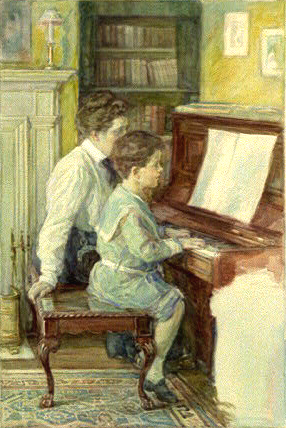
Leverson began taking piano lessons when she was just 7 years old and has since taught lessons to more than 250 students and accompanied thousands.

As a child, Leverson would trek across the street to her piano teacher’s house, schoolbooks in hand. Having grown up in a musical family, Leverson said she and all four siblings were encouraged to take piano lessons. Her mother did not play piano herself but loved music and wanted her children to grow up experiencing it. While Leverson also played the flute and auxiliary percussion in her lifetime, piano was always her favorite.

In eighth grade, Leverson began taking lessons from Doris Schroder, a piano teacher who would greatly impact her life. While Schroder was an avid piano player in her youth, she had developed arthritis and couldn’t play anymore. Because of this, she could teach her students but could not demonstrate by playing any songs.

Leverson said Schroder was the first person who encouraged her to begin accompanying groups, which she quickly grew to love, and was eye-opening in the delight of being able to demonstrate. Now, Leverson demonstrates songs as much as possible for her students “because I can.”

The very first group Leverson accompanied was the boy’s chorus in Mohall when she was only in ninth grade. In the years following, Leverson has accompanied or still accompanies the Erik Ramstad Jr. High choir, Magic City groups and singers, Central Campus, Jim Hill Jr. High and many festivals in towns nearby. She also plays the piano for her church, First Lutheran, and has been involved in the production of “Messiah” for more than 50 years.

In addition, Leverson is president of the Minot Piano Teachers group, has been a member of the Minot Symphony Orchestra and has been chairman of the Gold Cup Piano Festival for 38 years.

“There are so many great piano players in the city of Minot but so many of them are not available to do what I have made myself available to do,” said Leverson, who dedicated her life to piano after receiving her bachelor’s degree from Minot State in elementary education and music.

Along with accompanying and being a member of the aforementioned groups, Leverson has been teaching piano lessons to students for 52 years, beginning at the impressive age of 16.

And still, Leverson’s love for piano is just as strong as it was more than half a century ago. “There’s not a day that goes by that I’m not happy to play piano,” she said.

Even Leverson’s grandchildren are learning to play. “The plan was always that they would take lessons from grandma,” she said with a smile.

Leverson said that because being able to play the piano is the basis of many other instruments, it teaches kids rhythm, names of notes and the discipline of being with a teacher. “It is also such a great way to communicate,” she said. “For me, piano playing has always been an outlet for my mood, and I encourage students to use piano for this as well.”

Because the lives of students are usually busy, Leverson said that she never wants a student to have to choose between piano and a sport. Though she usually teaches lessons during the weekdays, she said that she is flexible and will teach on the weekends if that is the only time a student can meet. She said that if seniors in high school, for example, have stayed in piano for as long as they have regardless of busy lives, she will work with their schedules as much as she can.

“The most important thing is the student,” Leverson said, beaming as she told many stories of students who came in to her class shy and nervous and left with excitement and “their true selves shining through.”

At 68 years old, Leverson said she would not change her dedication to piano for the world.

“It has given me a really interesting life,” she said. “It is something I’ve found great pleasure in doing, and through it I have met so many great musicians, had the chance to work with wonderful people and it has even given me the opportunity to travel. My life would not be what it is today without it.”

via Minot piano teacher prizes more than 50 years with students.

March 13 ~ Today in Music History

today

. 1860 ~ Hugo Wolf, Austrian composer
Read quotes by and about Wolf
More information about Wolf

. 1890 ~ Fritz Busch, German composer

. 1910 ~ Sammy Kaye, Bandleader, Swing and Sway with Sammy Kaye

. 1914 ~ Bobby Haggart, Bass with these groups: Bob Cats; Peanuts Hucko’s Pied Piper Quintet, Lawson-Haggart Jazz Band, composer

. 1915 ~ Percy Grainger makes his debut as a pianist with the New York Philharmonic playing Grieg’s Piano Concerto

. 1916 ~ Ina Ray Hutton (Odessa Cowan), Tap dancer in the Ziegfeld Follies, pianist, bandleader, singer and actress

. 1918 ~ Tessie O’Shea, Singer, actress

. 1923 ~ Red Garland, Jazz musician, reeds, pianist

. 1926 ~ Roy Haynes, Modern jazz drummer, bandleader

. 1930 ~ Liz Anderson (Haaby), Country singer, songwriter, mother of country/pop singer Lynn Anderson

. 1932 ~ Jan Howard, Country singer, toured with Carter sisters

. 1933 ~ Mike Stoller, Record producer, songwriter with Jerry Leiber

. 1934 ~ Dick Katz, Pianist, composer with the Tony Scott Quartet, J.J. Johnson & Kai Winding groups

. 1939 ~ Neil Sedaka, American songwriter and singer of popular music

. 1942 ~ Bing Crosby and Mary Martin were heard having a bit of fun as they joined together to record Wait Till the Sun Shines, Nellie for Decca Records.
More about Mary Martin

. 1946 ~ Thomas Frederick Dunhill passed away.  He was an English composer and writer on musical subjects.

. 1947 ~ The musical “Brigadoon” opened at the Ziegfeld Theatre in New York City. The show ran for 581 performances and was later staged in London (1949). Memorable melodies from “Brigadoon” include I’ll Go Home with Bonnie Jean, The Heather on the Hill, Come to Me, Bend to Me, Almost Like Being in Love and There but for You Go I.

. 1949 ~ Donald York, Singer with Sha Na Na

. 1960 ~ Adam Clayton, Musician with U2

. 1968 ~ The Byrds received a gold record for the album, “Greatest Hits”, which featured Turn! Turn! Turn!, written by Pete Seeger (excerpted from the Book of Ecclesiastes in the Bible). The Byrds were inducted into the Rock and Roll Hall of Fame in 1991.

. 1972 ~ The Merv Griffin Show, starring perennial game show and late-night TV host, singer and pianist, Merv Griffin, debuted in syndication for Metromedia Television. Joining Merv were sidekick, Arthur Treacher and Mort Lindsey and his orchestra. Griffin had a number one song with the Freddy Martin Orchestra in the 1940s. I’ve Got a Lovely Bunch of Cocoanuts launched him to fame and fortune.

. 1976 ~ The Four Seasons, featuring the falsetto voice of Frankie Valli, returned to the pop charts after a 10-year absence. The group scored with December, 1963 (Oh, What A Night), which became the top song in the country. They were inducted into the Rock and Roll Hall of Fame in 1990.

March 12 ~ Today in Music History

today


. 1710 ~ Thomas Arne, English composer
More information about Arne

. 1890 ~ Vaslav Nijinsky, Ukrainian ballet dancer

. 1891 ~ Clara Schumann gave her final piano performance.

. 1921 ~ Gordon MacRae, Singer

. 1923 ~ Dr. Lee DeForest demonstrated his putting sound on motion picture film. One of the pioneers of radio in the early 1900s, DeForest came up with a snappy name for his invention; he called it phonofilm. Today, we call it a soundtrack.

. 1937 ~ Charles-Marie Widor died.  He was a was a French organist, composer and teacher.

. 1939 ~ Artie Shaw and his band recorded the standard, Deep Purple, in New York for the Bluebird label. Listening carefully after the first minute or so, one can hear Helen Forrest sing the vocal refrain. Larry Clinton and his orchestra had a number one song with a similar arrangement of the same tune that same year. It later was a hit for saxophonist, Nino Tempo and his sister, April Stevens in 1963. Hundreds of versions of this song have been recorded through the years, making it one of the most popular standards of all time.

. 1940 ~ Al Jarreau, Singer

. 1946 ~ Liza Minnelli, American actress and singer of popular music
More information about Minnelli

. 1948 ~ James Taylor, American folk-rock singer, songwriter, and guitarist

. 1955 ~ Charlie Parker, influential U.S. jazz saxophonist, died.

. 1955 ~ One of the great groups of jazz appeared for the first time at Carnegie Hall in New York City. The Dave Brubeck Quartet presented a magnificent concert for jazz fans.

. 1969 ~ Wedding bells rang in London for singer, Paul McCartney and his new bride, photographer, Linda Eastman.

. 1985 ~ Eugene Ormandy, U.S. conductor, died. He directed the Philadelphia Orchestra from 1936-1980 and was especially noted for his performances of Rachmaninoff and Shostakovitch.

. 1987 ~ The famous musical play “Les Miserables” by Victor Hugo opened on Broadway in New York.

. 1991 ~ Jimmy McPartland passed away

. 1993 ~ June Valli passed away

. 1999 ~ World-famous violin maestro Yehudi Menuhin died in Berlin.


Frozen Fever: Brother and sister play Frozen songs on the piano while sitting backwards | Metro News

frozen

If you haven’t seen someone playing the piano backwards before, take a good look at this video.

A brother and sister are seen battling it out on the piano in this clever clip, first nudging each other out of the way then rotating around on their stool.

Jason and Sarah Black perform a mash-up of Frozen songs including Love is an Open Door, For the First Time in Forever, Do You Want to Build a Snowman and Let it Go.

via Frozen Fever: Brother and sister play Frozen songs on the piano while sitting backwards | Metro News.

March 11 ~ Today in Music History

today

. 1851 ~ The first performance of Giuseppe Verdi’s opera “Rigoletto” was given in Venice.

Rigoletto lacks melody.  This opera has hardly any chance of being kept in the repertoire.” ~ Gazette Musicale de Paris, reviewing Rigoletto shortly after its premiere.

. 1876 ~ Carl Ruggles, American composer

. 1897 ~ Henry Dixon Cowell, American composer
More information about Cowell

. 1903 ~ Lawrence Welk, American accordionist and conductor of “champagne” music
More information about Welk

. 1914 ~ William Lloyd Webber, English composer

. 1919 ~ Mercer Ellington, Trumpeter, bandleader, songwriter, only son of Duke Ellington. He led the Duke’s band after he died.

. 1921 ~ Astor Piazzola, Argentine tango composer, bandoneon player and arranger

. 1942 ~ Vaughn Monroe and his orchestra recorded the classic, Sleepy Lagoon. It was the last song Monroe would record for Bluebird Records. Vaughn sang on the track while Ray Conniff played trombone. Both later moved to different record companies. Monroe went with RCA and Conniff to Columbia. The big- voiced baritone of Monroe was regularly heard on radio and he was featured in several movies in the 1950s. He died in May, 1973. Racing With the Moon and Ghost Riders in the Sky were two of his greatest contributions to popular music.

. 1950 ~ Bobby McFerrin, Singer, pianist, jazz musician, songwriter, improvisational solo, McFerrin can sing all vocal parts and imitate instruments.

. 1968 ~ Otis Redding posthumously received a gold record for the single, (Sittin’ on) The Dock of the Bay. Redding was killed in a plane crash in Lake Monona in Madison, WI on December 10, 1967. The song was recorded just three days before his untimely death. He recorded 11 charted hit songs between 1965 and 1969. Otis Redding was inducted into the Rock and Roll Hall of Fame in 1989.

. 1985 ~ DJs around the U.S. began questioning listeners to see which ones could name the 46 pop music stars who appeared on the hit, We Are the World. The song, airing first on this day as a single, contains a “Who’s Who” of contemporary pop music.

. 2000 ~ Roy Henderson, a baritone famed for his performances of Frederick Delius’ works and a teacher of Kathleen Ferrier, died. He was 100.

. 2003 ~ Sidney Lippman, a songwriter who helped compose hits for Nat King Cole and other artists, died. He was 89. Lippman, who studied musical composition at the Juilliard School in New York, wrote or co-wrote several well-known songs, including Too Young, a song Cole took to the top of the charts in 1951. That hit, co-written by longtime collaborator Sylvia Dee, came two years after he teamed up with Buddy Kaye and Fred Wise on ‘A’ You’re Adorable (The Alphabet Song), a No. 1 hit performed by Perry Como and the Fontane Sisters.

. 2015 ~ Jimmy Greenspoon died.  He was an American keyboard player and composer, best known as a member of the band, Three Dog Night.

‘Seymour’: Ethan Hawke Makes an Introduction

sbernstein

Seymour Bernstein might have ranked alongside such classical pianists as Alfred Brendel and Van Cliburn. His recitals were glowingly reviewed and he had a highly supportive patron. Yet, at the significant age of 50, he voluntarily withdrew from the world of public performance to concentrate on teaching.

When it comes to piano technique and music theory, he clearly has much to offer. But he also has insight into how one best pursues an artistic career in general, or at least that is what one future Oscar nominee thought when he happened to meet Bernstein at a dinner party. The music teacher gets a low-key but satisfying ovation in Ethan Hawke’s documentary profile, “Seymour: An Introduction.”

Evidently, Hawke found in Bernstein an empathetic counselor-guru who could well understand his bouts of stage fright and the general career uncertainty that was plaguing him. Perhaps he was also frustrated about that film he had spent over 10 years on, but had yet to come out. Regardless, Bernstein had a knack for saying reassuring things.

In a variety of master classes and private lessons, we observe Bernstein at work. He is indeed a calm and constructive instructor, but also firm and specific. If you have the talent, he will refine it. Should you doubt it, several of his former students, including pianists Joseph Smith and Kimball Gallagher, offer their reminiscences and insights into Bernstein’s lasting influence on their careers.

For his documentary directorial debut, Hawke was not out to rake any muck. While not exactly hagiography, his “Introduction” is unflaggingly nice and polite. Fortunately, Bernstein is a New Yorker (albeit a really pleasant one), whose experienced, down-to-earth personality keeps it all real and grounded.

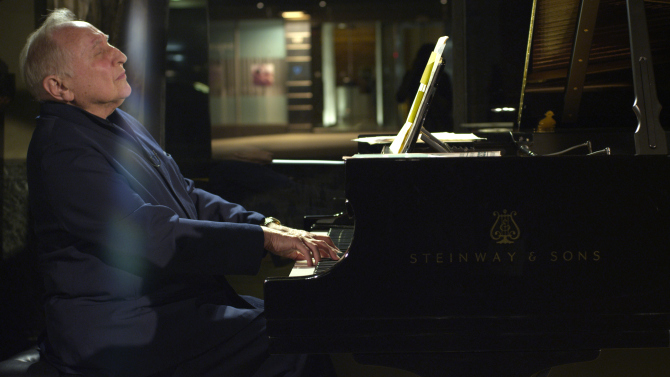
Anyone who knows pianos will not be surprised to see the prime placement for American Steinway in “Seymour.” As always, their concert models look and sound lovely. It is also cool to see that they still consider Bernstein a Steinway artist 30-some years after his last public performance. Fittingly, Hawke coaxes Bernstein into a return performance in the Steinway Rotunda on 57th Street, which naturally serves as the closing sequence for the film. Obviously, he still has his touch.

“Seymour: An Introduction” has surely received considerably more attention because of Hawke’s involvement than it otherwise would have, but that is a fine way for him to spend some of his accrued “Boyhood” and “Before Midnight” capital in a way that will generate further good will. It is a very refined and civilized film that will probably have a number of viewers checking out YouTube for Bernstein’s original compositions. (He has a number of them posted, including “The Hawke.”)

Respectfully recommended for classical connoisseurs, Hawke fans, and Steinway admirers, the Salingerishly titled “Seymour: An Introduction” opens this Friday, March 13, in New York at the IFC Center.

From ‘Seymour’: Ethan Hawke Makes an Introduction.

March 10 ~ Today in Music History

today

. 1832 ~ Muzio Clementi died.  He was an Italian-born English composer, pianist, pedagogue, conductor, music publisher, editor, and piano manufacturer.

. 1844 ~ Pablo de Sarasate, Spanish violinist

. 1879 ~ Ignaz Moscheles died.  He was a Bohemian composer and piano virtuoso

. 1892 ~ Arthur Honegger, French composer
Read quotes by and about Honegger
More information about Honegger

1903 ~ “Bix” Beiderbecke, American jazz cornetist
More information about Beiderbecke

. 1935 ~ Nelson Eddy recorded Ah! Sweet Mystery of Life for Victor Records. The song came from the film, “Naughty Marietta”. Later, Eddy recorded the classic tune with Jeanette MacDonald.

. 1937 ~ An audience of 21,000 jitterbuggers jammed the Paramount Theatre in New York City to see a young clarinetist whom they would crown, ‘King of Swing’ on this night. The popular musician was Benny Goodman.

. 1940 ~ W2XBS-TV in New York City originated the first televised opera as members of the Metropolitan Opera Company presented scenes from “I Pagliacci”.

. 1956 ~ Julie Andrews was 23 years old this night when she made her TV debut. She appeared with Bing Crosby and Nancy Olson in the musical adaptation of Maxwell Anderson’s play, “High Tor”.

. 2003 ~ Lionel Dakers, who directed the Royal School of Church Music for 16 years, died at age 79. Dakers was a stickler for high musical standards and opposed some of the modernizing trends in English church music. Dakers was organist at Ripon Cathedral from 1954 to 1957, then moved to Exeter Cathedral before his appointment as director of the Royal School of Church Music in 1972. In 1976, he was appointed a director of Hymns Ancient & Modern, publisher of some of the most widely used Anglican hymnals.

How Playing An Instrument Benefits Your Brain – Anita Collins | TED-Ed

When you listen to music, multiple areas of your brain become engaged and active. But when you actually play an instrument, that activity becomes more like a full-body brain workout.

What’s going on? Anita Collins explains the fireworks that go off in musicians’ brains when they play, and examines some of the long-term positive effects of this mental workout.

via How playing an instrument benefits your brain – Anita Collins | TED-Ed.

March 9 ~ Today in Music History

today


. 1745 ~ The first carillon was shipped from England to Boston, MA.

.1903 ~ “The Master of Charms“. ~ Claude Debussy on fellow composer Gabriel Fauré in the Paris periodical Gil Blas

. 1910 ~ Samuel Barber, Pulitzer Prize-winning American composer
Read quotes by and about Barber
More information about Barber

. 1925 ~ Billy Ford, Singer with Billy & Lillie

. 1927 ~ John Beckwith, Canadian composer and music critic

. 1930 ~ Thomas Schippers, American conductor

. 1932 ~ Keely Smith (Dorothy Keely), Singer, was married to Louis Prima

. 1942 ~ Tommy Dorsey and his orchestra recorded Well, Git It! for Victor Records. Ziggy Elman was featured on the session which was recorded in Hollywood. Sy Oliver arranged the Dorsey classic.

.1950 ~ Howard Gordon Shelley OBE, British pianist and conductor

. 1974 ~ Many new musical faces were on the scene, including Terry Jacks, who was starting week two of a three-week stay at the top of the pop charts with his uplifting ditty, Seasons in the Sun. Other newcomers: Jefferson Starship, Billy Joel, Kiss, Olivia Newton-John, Kool & the Gang and The Steve Miller Band.

. 1985 ~ The most requested movie in history, “Gone With The Wind”, went on sale in video stores across the U.S. for the first time. The tape cost buyers $89.95. The film, starring Clark Gable and Vivien Leigh, cost $4.5 million to produce and has earned over $400 million, making it one of the biggest money-makers in motion picture history. “GWTW” is now the cornerstone of the massive MGM film library owned by Ted Turner.

. 1986 ~ Bill Cosby broke Liberace’s long-standing record and earned the biggest box-office gross in the 54-year history of Radio City Music Hall in New York City.

. 1993 ~ Bob Crosby passed away

. 2001 ~ Richard Stone, whose musical compositions for such popular cartoon shows as “Animaniacs” and “Freakazoid” won him more than a half-dozen Emmys, died Friday at the age of 47. Stone grew up watching Warner Bros. “Looney Tunes” cartoons in the 1950s and ’60s before going on to study cello and music composition in college. He not only emulated the style of Carl Stalling, who composed hundreds of musical scores for classic Warner Bros. cartoons in the 1930s, ’40s and ’50s, but also incorporated elements of jazz, Broadway, country and rock music into his work. Stone also carved out his own style on modern-day shows, winning seven Emmys since 1994 for such cartoons as “Animaniacs,” “Freakazoid” and “Histeria!” He also worked on the cartoons “Pinky & the Brain,” “Taz-Mania,” “Road Rovers” and “The Sylvester & Tweety Mysteries” and scored several movies, including the cult classics “Sundown: The Vampire in Retreat” and “Pumpkinhead.”

What George Gershwin’s Piano Teaches Us About Technology

gershwinpiano

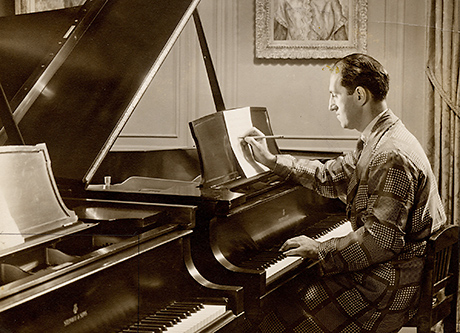
The Gershwin family donated the Steinway to the University as part of the George and Ira Gershwin initiative that is focused on research and study of the brothers’ music.

According to Marc Gershwin, George and Ira’s nephew, “I wanted the instrument to be accessible to the students and faculty who would be preserving the legacy of George and Ira Gershwin’s music… I’m delighted that the piano will once again be in regular use [by students and faculty], and am thrilled that it has been restored to performance condition.” [Two other Gershwin Steinways are in museums.]

From what I know of George he would have wanted it this way. Unlike some composers George was a gifted pianist. He had a rich social life and enjoyed playing his music for anyone who would listen.

There’s a lesson in that thought. If you have something valuable, sometimes it becomes more valuable – or at least more appreciated – when people can see it and use it. If you look at the piano as an instrument of technology that is it, then it makes sense that organizations give people access to technology – as well as resources – to do their work.

Adapted from  What George Gershwin’s Piano Teaches Us About Technology.