Johann Sebastian Bach’s towering monument of organ music, with its deep sense of foreboding, will forever be associated with Halloween.
Get a free copy of the sheet music at IMSLP or borrow a copy from the O’Connor Music Studio. I have this arranged for organ, piano, duet, 2-piano, simplified…
It’s also available in Piano Maestro, Piano Pronto Encore and Coda
• 1732 ~ Johann Christoph Friedrich Bach, composer and 5th son of Johann Sebastian Bach
• 1790 ~ Wilhelm Speyer, Composer
• 1805 ~ Karl Friedrich Curschmann, Composer
• 1846 ~ Adolphe Sax patented the saxophone he invented in 1840
• 1862 ~ Henry Holden Huss, Composer
• 1865 ~ Albert Herbert Brewer, Composer
• 1868 ~ Wagner’s opera “Die Meistersinger von Nuernberg” premiered in Munich
• 1887 ~ Adolf Schimon, Composer, died at the age of 67
• 1892 ~ Hilding Rosenberg, Swedish composer
• 1893 ~ Alois Hába, Czech opera composer and writer
• 1900 ~ Gunnar Ek, Composer (he died on 81st birthday)
• 1900 ~ Polibo Fumagalli, Composer, died at the age of 69
• 1903 ~ Louis Krasner, violinist
• 1906 ~ Luis Maria Millet, Composer
• 1908 ~ Nicolai Rimsky-Korsakov, Russian Composer, died at the age of 64. He was best known for his orchestral piece “Sheherezade” and the opera “The Golden Cockerel” as well as his re-orchestration of Moussorgsky’s opera “Boris Godunov.”
More information about Rimsky-Korsakov
• 1941 ~ Wayne King and his orchestra recorded Time Was, with Buddy Clark providing the vocal accompaniment, for Victor Records.
• 1944 ~ Ray Davies, Musician, guitar, singer, songwriter with The Kinks
• 1945 ~ Chris Britton, Guitarist with The Troggs
• 1946 ~ Brenda Holloway, American singer and songwriter
• 1946 ~ Heinrich Kaminski, Composer, died at the age of 59
• 1948 ~ Columbia Records announced that it was offering a new Vinylite long-playing record that could hold 23 minutes of music on each side. One of the first LPs produced was of the original cast of the Broadway show, South Pacific. Critics quickly scoffed at the notion of LPs, since those heavy, breakable, 78 RPM, 10- inch disks with one song on each side, were selling at an all-time high. It didn’t take very long though, for the 33-1/3 RPM album — and its 7-inch, 45 RPM cousin to revolutionize the music industry and the record-buying habits of millions.
• 1951 ~ Nils Lofgren, Musician, guitar, keyboards, singer, songwriter
• 1958 ~ Splish Splash was recorded by Bobby Darin. It was his first hit and it took Darin only ten minutes to write the song.
• 1972 ~ Billy Preston received a gold record for the instrumental hit, Outa-Space. Preston, who played for gospel singer Mahalia Jackson, back in 1956, was also in the film St. Louis Blues as a piano player. He was a regular on the Shindig TV show in the 1960s; and recorded with The Beatles on the hits Get Back and Let It Be. Preston also performed at The Concert for Bangladesh in 1969. Many well-known artists have utilized his keyboard talents, including Sly & The Family Stone and the Rolling Stones.
• 1972 ~ Seth Bingham, Composer, died at the age of 90
• 1975 ~ Heinz Lau, Composer, died at the age of 49
• 1985 ~ Ron Howard directed his first music video. The TV star of The Andy Griffith Show and Happy Days also directed the film Cocoon, which included Gravity, the song used in the video. Michael Sembello, a guitarist who played on Stevie Wonder’s hits between 1974 and 1979 was responsible for Gravity.
• 1990 ~ June Christy passed away
• 1990 ~ Little Richard received a star on Hollywood’s walk of fame
• 1992 ~ Thomas Whitfield, Gospel vocalist, died of heart attack at 38
• 1993 ~ “Camelot” opened at the Gershwin Theater New York City for 56 performances
• 1997 ~ Art Prysock, Jazz musician, died at the age of 68
• 2000 ~ Alan Hovhaness, a prolific composer who melded Western and Asian musical styles, died at the age of 89.
• 2001 ~ Bluesman John Lee Hooker, whose foot-stompin’ and gravelly voice on songs like Boom Boom and Boogie Chillen electrified audiences and inspired generations of musicians, died of natural causes at the age of 83. He recorded more than 100 albums over nearly seven decades. He won a Grammy Award for a version of In The Mood, was inducted into the Rock and Roll Hall of Fame in 1991 and received a Lifetime Achievement Award at last year’s Grammys. His distinctive sound influenced rhythm and blues musicians, as well as rock ‘n’ rollers including Van Morrison, the Rolling Stones, Eric Clapton, Bruce Springsteen, Bonnie Raitt and ZZ Top. Hooker’s 1990 album “The Healer“, featured duets with Carlos Santana, Raitt and Robert Cray. It sold 1.5 million copies and won him his first Grammy Award, for a duet with Raitt on I’m in the Mood. Born in Clarksdale, Miss., August 22, 1917, Hooker was one of 11 children born to a Baptist minister and sharecropper who discouraged his son’s musical bent. In Detroit, he was discovered and recorded his first hit, Boogie Chillen, in 1948.
• 2003 ~ William Leslie died at the age of 78. He was a jazz saxophonist who toured the world with the Louis Jordan Band in the 1950s in Sellersville, Pa. He played with the Jordan Band in New York, Chicago, Las Vegas and Europe and on the television show “Your Hit Parade.” Mr. Leslie had played the saxophone since he was 12. After serving in World War II, he attended the Landis School of Music in West Philadelphia, Pa., on the GI Bill.
• 2015 ~ Gunther Schuller, American hornist and jazz composer (1994 Pulitzer Prize), died at the age of 89
In the United States and the rest of the northern hemisphere, the first day of the summer season is the day of the year when the Sun is farthest north (on June 20th or 21st). This day is known as the Summer Solstice.
• 1594 ~ Orlandus Lassus, Composer (Prophet sybillarum), died at about 61
• 1671 ~ Thomoso Albinoni, Italian composer and violinist
More information about Albinoni
• 1691 ~ Jan Francisci, Composer
• 1709 ~ Gottfried Wegner, Composer, died at the age of 65
• 1744 ~ André Campra, Composer, died at the age of 83
• 1750 ~ Franz Anton Maichelbeck, Composer, died at the age of 47
• 1760 ~ Candido Jose Ruano, Composer
• 1763 ~ Johannes Simon Mayr, Composer
• 1769 ~ Dominique Della-Maria, Composer
• 1789 ~ Johann Wilhelm Hertel, Composer, died at the age of 61
• 1835 ~ Nikolay Rubinstein, Composer
• 1854 ~ Frederik Rung, Composer
• 1891 ~ Auguste Jean Maria Charles Serieyx (1865) Composer
• 1881 ~ The player piano was patented by John McTammany, Jr. of Cambridge, MA.
• 1882 ~ Michael Zadora, Composer
• 1884 ~ John McCormack, Irish/American singer of Irish folksongs
• 1891 ~ Nicolo Gabrielli, Composer, died at the age of 77
• 1895 ~ Cliff Edwards “Ukulele Ike”, Singer of When You Wish Upon a Star
• 1904 ~ Benno Ammann, Composer
• 1909 ~ Burl Ives, American folk singer, banjo player, guitarist and Oscar-winning actor. His gentle voice helped popularise American folk music. He played powerful dramatic roles in movies including “The Big Country,” for which he won an Acadamy Award for best-supporting actor, and “Cat on a Hot Tin Roof.”
• 1910 ~ Nappy (Hilton Napoleon) Lamare, Musician with Bob Cats
• 1911 ~ Johan Severin Svendsen, Composer, died at the age of 70
• 1916 ~ Karl-Rudi Griesbach, Composer
• 1916 ~ MIT and the American Telephone and Telegraph Company attempted the largest transcontinental telephone circuit of the time at Symphony Hall!
• 1918 ~ Carter Harman, Composer
• 1920 ~ Helmer-Rayner Sinisalo, Composer
• 1923 ~ Theodore Bloomfield, Composer
• 1923 ~ It was the beginning of the country music recording industry. Ralph Peer of Okeh Records recorded Fiddlin’ John Carson doing The Little Old Log Cabin in the Lane— and the first country music recording was in the can.
• 1929 ~ Cy Coleman (Seymour Kaufman), American composer of popular music and pianist
More information about Cy Coleman
• 1932 ~ Coleridge-Taylor Perkinson, Composer
• 1933 ~ Albert Ross Parsons, Composer, died at the age of 85
• 1940 ~ John Mizelle, Composer
• 1943 ~ Muff (Mervyn) Winwood, Singer, songwriter, bass with The Spencer Davis Group
• 1945 ~ Rod Argent, Keyboard
• 1948 ~ Ernst Henrik Ellberg, Composer, died at the age of 79
• 1948 ~ John Blackwood McEwen, Composer, died at the age of 80
• 1953 ~ Elvis Presley graduated from L.C. Humes High School in Memphis, TN. Within three years, the truck driver-turned-singer had his first number-one record with Heartbreak Hotel.
• 1960 ~ Vladimir Nikolayevich Kryukov, Composer, died at the age of 57
• 1962 ~ Boy George, Singer
• 1965 ~ Guido Guerrini, Composer, died at the age of 74
• 1965 ~ The Beatles released the album “Beatles VI”
• 1965 ~ John Lennon’s second book “A Spaniard in the Works” was published
• 1968 ~ Karl-Birger Blomdahl, Swedish opera composer, died at the age of 51
• 1969 ~ John & Yoko appeared on David Frost’s British TV Show
• 1974 ~ Knud Christian Jeppesen, Composer, died at the age of 81
• 1975 ~ America reached the top spot on the Billboard pop music chart with SisterGolden Hair. The group had previously (March, 1972) taken A Horse With No Name to the number one spot. The trio of Dan Peek, Gerry Beckley and Dewey Bunnell had received the Best New Artist Grammy in 1972. America recorded a dozen hits that made it to the popular music charts in the 1970s and 1980s. Though number one, Sister Golden Hair did not qualify for gold record (million-seller) status.
• 1975 ~ Janis Ian released At 17
• 1976 ~ The Beatles were awarded a gold record for the compilation album of past hits titled, Rock ’n’ Roll Music.
• 1978 ~ Theodore Karyotakis, Composer, died at the age of 74
• 1980 ~ Theme From New York, New York by Frank Sinatra hit #32
• 1986 ~ Alan Jay Lerner, Broadway librettist, died in NY at 67
More information about Lerner
• 1989 ~ Carole King got a star in Hollywood’s walk of fame
• 1994 ~ Henry Mancini passed away at the age of 70
More information about Mancini
• 1994 ~ Lionel Grigson, Professor of jazz, died at the age of 52
• 1994 ~ Harry “Little” Caesar, blues singer/actor (City Heat), died at the age of 66
• 1996 ~ Thomas Edward Montgomery, drummer, died at the age of 73
• 2002 ~ Marvin Paymer, Pianist, composer, musicologist and author, died of cancer. He was 81. His son, actor David Paymer, told the Los Angeles Times that Paymer died in San Diego. In 1977, he co-founded and, until his retirement in 1993, served as associate director of the Pergolesi Research Center at City University of New York Graduate Center. Pergolesi was 18th century Italian composer Giovanni Battista Pergolesi. Paymer authenticated 13 Pergolesi compositions among hundreds of fakes attributed to the posthumously famous composer, who died at 26.
National Flag Day is celebrated annually in the United States on June 14. This day commemorates the adoption of the United States flag on June 14, 1777.
On National Flag Day, Americans show respect for the U.S. Flag and what it represents. Our independence and unity as a nation is represented by our flag. The flag has become a powerful symbol of Americanism and is flown proudly.
Betsy Ross is given credit, by many, for creating the first American flag. Since 1977, the design of the flag has been officially modified 26 times. For 47 years, the 48-star flag was in effect. In 1959, the 49-star version became official on July 4. President Eisenhower ordered the 50-star flag on August 21, 1959.
Seventeen-year-old Robert G. Heft of Ohio is credited with designing the 50-star American flag. Of the more than 1,500 designs that were submitted to President Dwight D. Eisenhower, his was chosen.
National Donald Duck Day is observed annually on June 9th. This day commemorates the birthday of the funny animal cartoon character, Donald Duck. Donald made his first screen debut on June 9, 1934, in The Wise Little Hen.
• 1361 ~ Philippe de Vitry, French Composer and poet, died at the age of at 69
• 1656 ~ Thomas Tomkins, Composer, died
• 1717 ~ Louis Le Quointe, Composer, died at the age of 64
• 1810 ~ (Carl) Otto (Ehrenfried) Nicolai, Composer
More information about Nicolai
• 1828 ~ Carlo Marsili, Composer
• 1829 ~ Gaetano Braga, Composer
• 1832 ~ Manuel Garcia, Composer, died at the age of 57
• 1849 ~ Joseph Vezina, Composer
• 1849 ~ The term recital used for the first time to describe a solo performance by an instrumental player. The first recitalist was Franz Liszt
• 1865 ~ Carl Nielsen, Danish composer and conductor
More information about Nielsen
• 1865 ~ Alberic Magnard, Composer
• 1870 ~ Erik Drake, Composer, died at the age of 82
• 1879 ~ Oscar Back, Austrian-Dutch viola player
• 1886 ~ Kusaku Yamada, Composer
• 1888 ~ Hugo Kauder, Composer
• 1890 ~ The opera “Robin Hood” premiered in Chicago
• 1891 ~ Cole Porter, American composer and lyricist for the musical theater. His many famous musicals include “Anything Goes”, “Kiss Me Kate” and “Can Can”.
More information about Porter
• 1892 ~ Friedrich Wilhelm Langhans, Composer, died at the age of 59
• 1900 ~ Fred Waring, Musician, conductor and inventor of the Waring Blender
• 1972 ~ Bruce Springsteen signed a record deal with Columbia
• 1975 ~ David Frederick Barlow, Composer, died at the age of 48
• 1975 ~ Tony Orlando and Dawn received gold record for He Don’t Love You
• 1980 ~ Fourteenth Music City News Country Awards, Statler Brothers & Loretta Lynn
• 1984 ~ Cyndi Lauper’s first #1 Time After Times
• 1986 ~ Twentieth Music City News Country Awards, Statler Brothers & Loretta Lynn
• 1990 ~ Michael Jackson was hospitalized with inflamed rib cartilage
• 1991 ~ Claudio Arrau, Chilian/American pianist and composer, died at the age of 88
• 1991 ~ Bruce Springsteen wed his backup singer Patty Scialfa
• 1991 ~ Max van Praag, Dutch singer, died at the age of 77
• 1992 ~ Clarence Miller, Blues/jazz vocalist, died at the age of 69 of a heart attack
• 1993 ~ Arthur Alexander, Singer/songwriter, died at the age of 53
• 1995 ~ Frank Chacksfield, Conductor/arranger, died at the age of 81
• 2000 ~ Jazz bassist Burgher “Buddy” Jones, who played in big bands behind Peggy Lee and Frank Sinatra and toured with Harry James and Tommy Dorsey, died at the age of 76.
A native of Hope, Ark., Jones was a childhood friend of the late Virginia Kelley, mother of President Clinton. At 17, Jones went to the University of Kansas City, where he met and befriended saxophonist Charlie Parker. Jones later introduced Parker to his wife, Chan. Jones played in the Elliot Lawrence band, when its arrangers included Al Cohn, Tiny Kahn and Johnny Mandel. As a staff musician for CBS in New York in the 1950s and 1960s,
Jones played for the Jack Sterling radio show and in bands behind Lee and Sinatra. In 1996, Jones was inducted into the Arkansas Jazz Hall of Fame.
• 2020 ~ Bonnie Pointer, who rose to fame as a member of the Pointer Sisters, died at age 69.
Happy Birthday is a song that I like to have each of my students learn at various levels appropriate to their level. When a friend or family member has a birthday, it’s great to be able to sit down and play.
It’s only been fairly recently that piano students could have this music in their books.
“Happy Birthday to You”, more commonly known as simply “Happy Birthday”, is a song that is traditionally sung to celebrate the anniversary of a person’s birth. According to the 1998 Guinness World Records, “Happy Birthday to You” is the most recognized song in the English language, followed by “For He’s a Jolly Good Fellow”.
The melody, or part you sing, of “Happy Birthday to You” comes from the song “Good Morning to All”, which has traditionally been attributed to American sisters Patty and Mildred J. Hill in 1893, although the claim that the sisters composed the tune is disputed.
Patty Hill was a kindergarten principal and her sister Mildred was a pianist and composer. The sisters used “Good Morning to All” as a song that young children would find easy to sing. The combination of melody and lyrics in “Happy Birthday to You” first appeared in print in 1912, and probably existed even earlier.
“Happy Birthday” in the style of Bach, Mozart, Beethoven, Mendelssohn, Chopin, Liszt, Dvorak, and Stravinsky. Find the melody!
Lots of legal stuff below which you can skip…
None of the early appearances of the “Happy Birthday to You” lyrics included credits or copyright notices. The Summy Company registered a copyright in 1935, crediting authors Preston Ware Orem and Mrs. R. R. Forman. In 1988, Warner/Chappell Music purchased the company owning the copyright for US$25 million, with the value of “Happy Birthday” estimated at US$5 million. Based on the 1935 copyright registration, Warner claimed that the United States copyright will not expire until 2030, and that unauthorized public performances of the song are illegal unless royalties are paid to Warner. In one specific instance in February 2010, these royalties were said to amount to US$700. By one estimate, the song is the highest-earning single song in history, with estimated earnings since its creation of US$50 million.In the European Union, the copyright for the song expired on January 1, 2017.
The American copyright status of “Happy Birthday to You” began to draw more attention with the passage of the Sonny Bono Copyright Term Extension Act in 1998. When the U.S. Supreme Court upheld the Act in Eldred v. Ashcroft in 2003, Associate Justice Stephen Breyer specifically mentioned “Happy Birthday to You” in his dissenting opinion. American law professor Robert Brauneis, who extensively researched the song, concluded in 2010 that “It is almost certainly no longer under copyright.”
In 2013, based in large part on Brauneis’s research, Good Morning to You Productions, a company producing a documentary about “Good Morning to All”, sued Warner/Chappell for falsely claiming copyright to the song. In September 2015, a federal judge declared that the Warner/Chappell copyright claim was invalid, ruling that the copyright registration applied only to a specific piano arrangement of the song, and not to its lyrics and melody.
In 2016, Warner/Chappell settled for US $14 million, and the court declared that “Happy Birthday to You” was in the public domain.
Legal stuff is finished and people can now sing and play “Happy Birthday to You” whenever and wherever they want.
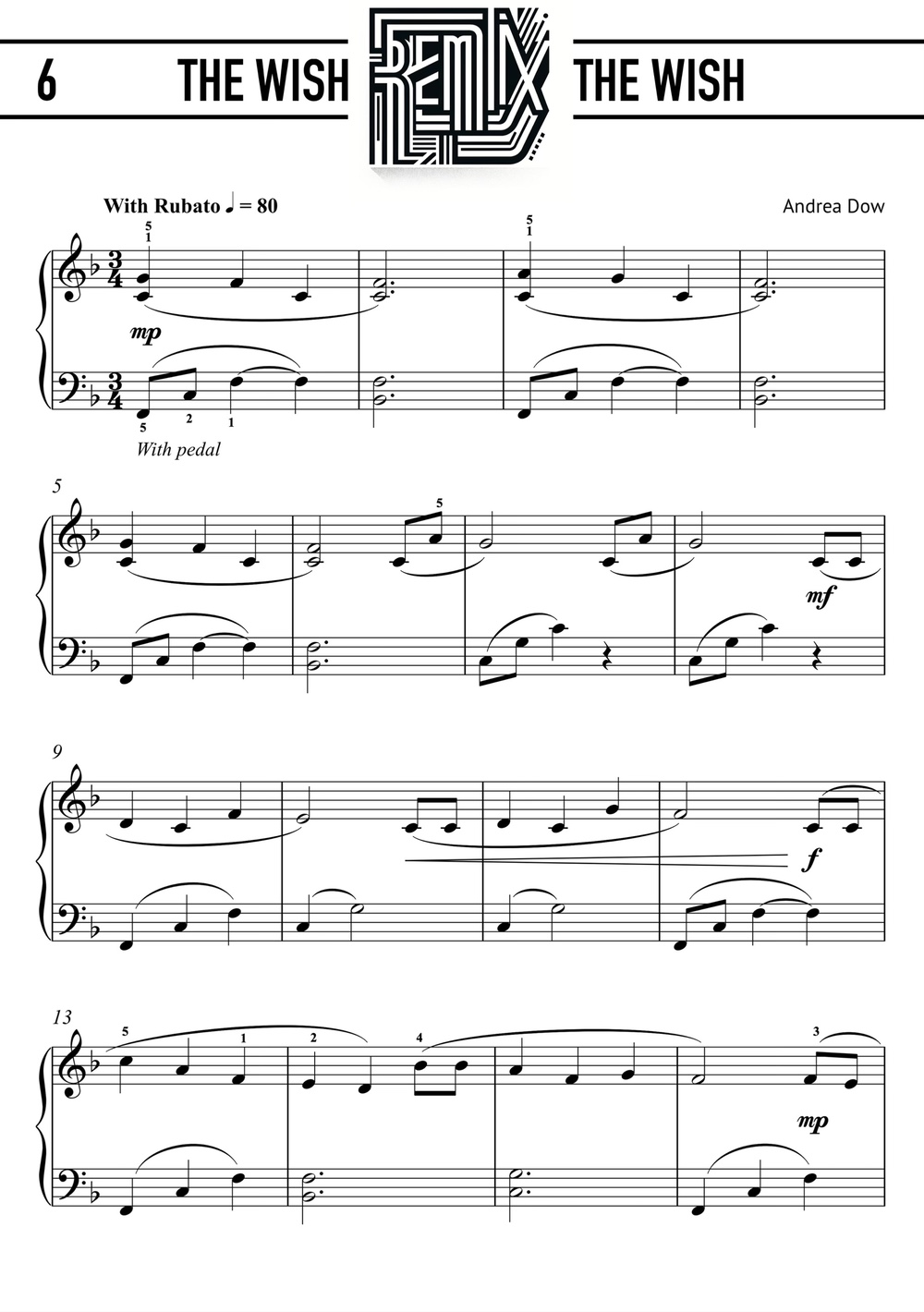
Students in Wunderkeys may play this version from Remix: Teen Hits from Kids Tunes
One of my all-time versions of Happy Birthday, in duet form – and I have the music if you want to tackle it.
• 1906 ~ Shields/Cobbs musical “His honor, the Mayor,” premiered in New York City
• 1910 ~ T-Bone Walker, Legendary blues guitarist
• 1914 ~ Adolf Gustaw Sonnenfeld, Composer, died at the age of 76
• 1915 ~ Wolfgang Schneiderhan, Violinist
• 1923 ~ György Ligeti, Hungarian-born Austrian composer
More information about Ligeti
• 1922 ~ Carl Tieke, Composer, died at the age of 58
• 1922 ~ Otto Krueger conducted the Detroit News Orchestra, the first known radio orchestra, which was heard on WWJ Radio in Detroit, MI. The “Detroit News” owned the radio station at the time.
• 1925 ~ Dietrich Fischer-Dieskau, German baritone. Known for his performance of opera, notably Mozart, Strauss and Wagner, he is also famed for his interpretation of German lieder.
• 1927 ~ Bernhard Lewkovitch, Composer
• 1930 ~ Julian Penkivil Slade, Composer
• 1931 ~ Peter Talbot Westergaard, Composer
• 1932 ~ Henning Christiansen, Composer
• 1934 ~ Julian Slade, Composer
• 1934 ~ Rob du Bois, Composer
• 1936 ~ Maki Ishii, Composer
• 1940 ~ Hans Dulfer, Tenor saxophonist and director of Paradiso
• 1940 ~ Theodor Streicher, Composer, died at the age of 65
• 1940 ~ Irving Berlin’s musical “Louisiana Purchase,” premiered in New York City
• 1941 ~ Frank Sinatra joined Tommy Dorsey’s orchestra in recording “This Love of Mine” for Victor Records.
• 1943 ~ Dennis Riley, Composer
• 1944 ~ Gladys Knight, American rhythm-and-blues singer. She has won 7 Grammys, had 6 number one R&B albums, and had 11 number one R&B singles. Her music career was at its most successful point during the 1960s, 1970s, and 1980s. She began her career as part of the group Gladys Knight and the Pips and later gained recognition as a solo artist. Her most well-known songs include “I Heard it Through the Grapevine,” “Midnight Train to Georgia,” and “That’s What Friends Are For.” Knight has also made several appearances in film and television, often playing herself. Gladys Knight and the Pips were inducted into the Rock and Roll Hall of Fame in 1996.
• 1945 ~ John Fogerty, Songwriter, singer with Creedence Clearwater
• 1945 ~ Gary Stewart, Country singer
• 1954 ~ Achille Longo, Composer, died at the age of 54
• 1957 ~ The National Academy of Recording Arts and Sciences (NARAS) was established. This is the organization that brings us the Grammy Awards for all forms of musical entertainment each year.
• 1958 ~ Mikulas Schneider-Trvavsky, Composer, died at the age of 77
• 1959 ~ Johnson and Bart’s musical “Lock up your daughters,” premiered in London
• 1963 ~ Vissarion Yakovlevich Shebalin, Composer, died at the age of 60
• 1964 ~ John Finley Williamson, conductor of the Westminster Choir, died at the age of 76
• 1966 ~ Percy Sledge hit number one with his first, and what turned out to be his biggest, hit. When a Man Loves a Woman would stay at the top of the pop music charts for two weeks. It was the singer’s only hit to make the top ten and was a million seller.
• 1973 ~ Hans Schmidt-Isserstedt, German composer and conductor, died at the age of 73
• 1975 ~ The Doobie Brothers went gold with the album, “Stampede”. The group, formed in San Jose, CA, recorded 16 charted hits. Two made it to number one, becoming million-selling, gold record winners: Black Water in March, 1975 and What a Fool Believes in April, 1979.
• 1977 ~ Jiri Reinberger, Composer, died at the age of 63
• 1981 ~ Mary Lou Williams, Musician, died at the age of 71
• 2014 ~ James K. Randall, American composer, died at the age of 84
• 1638 ~ Nicolas Forme, Composer, died at the age of 71
• 1652 ~ Jacques Huyn, Composer, died at the age of 39
• 1690 ~ Giovanni Legrenzi, Italian Composer, died at the age of 63
• 1708 ~ Jacques Danican Philidor, Composer, died at the age of 51
• 1738 ~ Bonaventura Furlanetto, Composer
• 1796 ~ James S McLean patented his piano
• 1799 ~ Jacques-François-Fromental-Elie Halévy, French composer whose five-act grand opera La Juive (1835) was, with Giacomo Meyerbeer’s Les Huguenots, the prototype of early French grand opera.
• 1822 ~ Joseph Joachim Raff, German composer and teacher, greatly celebrated in his lifetime but nearly forgotten in the late 20th century.
• 1822 ~ Henry Wylde, Composer
• 1840 ~ Niccolò Paganini Composer and violinist died at the age of 57. He wrote six concertos for violin.
Read quotes by and about Paganini
More information about Paganini
• 1849 ~ “Blind” Tom Bethune, Pianist and composer
• 1878 ~ Isadora Duncan, Dancer
• 1878 ~ Carlo Marsili, Composer, died at the age of 49
• 1884 ~ Bax Brod, Composer
• 1888 ~ Louis Durey, Composer
• 1891 ~ Claude Adonai Champagne, Composer
• 1900 ~ Leopold Godowsky, Jr., American musician and photographic technician primarily known as a co-developer of Kodachrome film (1935).
• 1915 ~ Mario del Monaco, Italian opera singer famed for Verdi and Puccini
• 1928 ~ Thea Musgrave, Scottish composer, best known for her concertos operas and choral and other vocal works.
• 1929 ~ Donald Howard Keats, Composer
• 1930 ~ Eino Tamberg, Composer
• 1931 ~ Veroslav Neumann, Composer
• 1932 ~ Jeffrey Bernard, Singer
• 1935 ~ Ramsey Lewis, American jazz pianist, composer and bandleader
• 1935 ~ Elias Gistelinck, Flemish Composer
• 1939 ~ Don Williams, Country singer
• 1940 ~ Rene Koering, Composer
• 1942 ~ Priscilla Anne McLean, Composer
• 1947 ~ Liana Alexandra, Composer
• 1950 ~ Frank Sinatra made his TV debut as he appeared on NBC’s “Star-Spangled Review” with show biz legend, Bob Hope.
• 1957 ~ Siouxsie Sioux (Susan Dallion), Singer with Siouxsie and the Banshees
• 1957 ~ That’ll be the Day, by The Crickets and featuring Buddy Holly, was released by Brunswick Records. On September 14th, the tune became the most popular record in the U.S. It was the first hit for Holly and his group after two previous releases went nowhere on Decca Records in 1956.
• 1961 ~ Singer Johnny Cash turned TV actor. He appeared on the NBC drama, “The Deputy”.
• 1972 ~ “Applause” closed at the Palace Theater in New York City after 900 performances
• 1975 ~ Andre 3000. One half of the famous hip hop duo Outkast, Andre 3000 (born Andre Lauren Benjamin), began his music career in the 1990s. He and Big Boi (Antwan Andre Patton) formed the hip hop group Outkast in 1992 and released their debut album in 1994. Andre 3000 had continued success with Outkast, becoming one of the most well-regarded rappers of the 1990s and 2000s and has won 7 Grammys.
• 1983 ~ Arnoldus Christian Vlok van Wyk, Composer, died at the age of 67
• 1988 ~ Melvin J “Cy” Oliver, American jazz composer and orchestra leader died at the age of 77
• 1994 ~ Red Rodney, Bebop-trumpeter died at the age of 66
• 1995 ~ C W Stubblefield, Music Promoter died at the age of 64
• 1995 ~ Ulysses Simpson Kay, Composer, died at the age of 78
• 1996 ~ Albert “Pud” Brown, Clarinetist and saxophonist died at the age of 79
• 1996 ~ Ivan Sutton, Concert Promoter died at the age of 82
• 2017 ~ Gregg Allman, the soulful singer-songwriter and rock n’ blues pioneer who founded The Allman Brothers Band with his late brother, Duane, and composed such classics as “Midnight Rider,” “Melissa” and the epic concert jam “Whipping Post,” died at age 69
Memorial Day was originally called Decoration Day and was initiated to honor the soldiers for the Union and Confederate armies who died during the American Civil War.
Celebrations honoring Civil War heroes started the year after the war ended. The establishment of a public holiday was meant to unify the celebration as a national day of remembrance instead of a holiday celebrated separately by the Union and Confederate states. By the late 19th century, the holiday became known as Memorial Day and was expanded to include the deceased veterans of all the wars fought by American forces. In 1971, Memorial Day became a federal holiday.
The original national celebration of Decoration Day took place on 30 May 1868. When Memorial Day became a federal holiday, it was given the floating date of the last Monday in May.