Grab your superhero cape and jump into the action during Pender VBS 2018! This summer’s group of heroes will learn the five pillars discovering their strength in God:
Heart
Courage
Hope
Power, and
Wisdom
So suit up and head down to Hero Central at Pender UMC from July 9-13!
The final program will be Friday July 13 at 11:30 am.
. 1890 ~ Lauritz Melchior, Danish-born American tenor
More information about Melchior
. 1890 ~ Beniamino Gigli, Italian operatic tenor, born; with a repertory of over 60 roles, he retired in 1955 after over 40 years singing.
. 1907 ~ Ozzie Nelson, Bandleader, actor in The Adventures of Ozzie and Harriet. He was married to actress, Harriet Nelson and they were the parents of David and Ricky Nelson.
. 1915 ~ Sviatoslav Richter, Russian pianist
More information about Richter
. 1917 ~ Dame Vera Lynn, English singer and sweetheart of British forces during World War Two
. 1920 ~ Marian McPartland, British jazz pianist
More information about McPartland
. 1936 ~ Benny Goodman and his orchestra recorded Christopher Columbus on Victor Records in Chicago, IL.
. 1948 ~ Eugene Ormandy and the Philadelphia Symphony Orchestra were featured in the first televised symphonic concert. CBS-TV, with help from its then Philadelphia television station, WCAU-TV 10, carried the program from the Philadelphia Academy of Music, the home of the world- famous orchestra. The concert was televised live, at 5 p.m.
Ninety minutes later, NBC-TV carried TV’s second symphonic concert. This one was from Carnegie Hall in New York City. Arturo Toscanini and the NBC Symphony Orchestra was featured in a presentation of Wagner compositions.
1791 ~ Carl Czerny, Austrian pianist and composer whose vast musical production amounted to over a thousand works.
His books of studies for the piano are still widely used in piano teaching.
More information on Czerny
Czerny is in the center top of this image. He influenced many!
At the age of fifteen, Czerny began a very successful teaching career. Basing his method on the teaching of Beethoven and Muzio Clementi, Czerny taught up to twelve lessons a day in the homes of Viennese nobility.
His ‘star’ pupils included Theodor Döhler, Stephen Heller, Sigismond Thalberg, Leopoldine Blahetka and Ninette de Belleville.In 1819, the father of Franz Liszt brought his son to Czerny.
Liszt became Czerny’s most famous pupil. He trained the child with the works of Beethoven, Clementi, Ignaz Moscheles and Johann Sebastian Bach. The Liszt family lived in the same street in Vienna as Czerny, who was so impressed by the boy that he taught him free of charge. Liszt was later to repay this confidence by introducing the music of Czerny at many of his Paris recitals.
Shortly before Liszt’s Vienna concert of 13 April 1823 (his final concert of that season), Czerny arranged, with some difficulty (as Beethoven increasingly disliked child prodigies) the introduction of Liszt to Beethoven. Beethoven was sufficiently impressed with the young Liszt to give him a kiss on the forehead. Liszt remained close to Czerny, and in 1852 his Études d’exécution transcendente (Transcendental Études) were published with a dedication to Czerny.
. 1895 ~ France, There’s no business like show business, right? Well, this is where it all started. A patent for a machine “to film and view phronopotographic proofs” (in simpler words, a projector) was assigned to the Lumiere brothers of Paris.
. 1914 ~ The American Society of Composers, Authors and Publishers (known as ASCAP) was formed in New York City. The society was founded to protect the copyrighted musical compositions of its members.
. 1918 ~ Oliver Smith, Scenic designer for Broadway Musicals such as On the Town, Brigadoon, My Fair Lady, Camelot, The Sound of Music, Hello Dolly! and films Guys and Dolls, Oklahoma!, Porgy and Bess, The Band Wagon
. 1919 ~ “Tennessee” Ernie Ford, American country-music singer and songwriter
. 1920 ~ Eileen Farrell, American soprano, San Francisco Opera, Lyric Opera of Chicago, Metropolitan Opera. Also successful in singing and recording popular music and jazz
. 1940 ~ Earl ‘Fatha’ Hines and his orchestra recorded the classic Boogie Woogie on St. Louis Blues on the famous Bluebird record label.
. 1925 ~ Gene Ames, Singer with The Ames Brothers
. 1929 ~ Jesse McReynolds, Guitarist, folk singer with Jim & Jesse
. 1930 ~ Dotty McGuire, Singer with McGuire Sisters
. 1944 ~ Peter Tork (Peter Halsten Thorkelson), Bassist, singer with The Monkees
. 1950 ~ Roger Christian, Singer with The Christians
. 1956 ~ Peter Hook. Bass with Joy Division
. 1957 ~ Tony Butler, Bass with Big Country
. 1971 ~ The Osmonds, a family singing group from Ogden, Utah, began a five-week stay at the top of the pop music charts with the hit, “One Bad Apple”. The song, featuring the voice of little Donny Osmond, also showcased the talent of Alan, Wayne, Merrill and Jay Osmond. The brothers were regulars on Andy Williams’ TV show from 1962 to 1967. The group began as a religious and barbershop quartet in 1959. Together, the Osmonds scored with 10 singles in four years — four of them were top ten hits.
. 2001 ~ Music critic George T. Simon, the original Glenn Miller Band drummer who swapped his sticks for a pen and eventually earned a Grammy for his acclaimed liner notes, died of pneumonia following a battle with Parkinson’s disease at the age of 88. In 1937 Simon sat in with the fledgling Glenn Miller Band. But he opted for writing over drumming, and became editor-in-chief of Metronome magazine in 1939. As a writer, Simon worked for the New York Post and the now-defunct New York Herald-Tribune. He also served as executive director of the National Academy of Recording Arts and Sciences, the organization behind the Grammy Awards. In 1977, Simon won his Grammy Award for best album notes – his contribution to the collection “Bing Crosby: A Legendary Performer.” Simon was hand-picked by Crosby to write the liner notes for the release.
. 2002 ~ Waylon Jennings, whose rebellious songs and brash attitude defined the outlaw movement in country music, died peacefully at his Arizona home after a long battle with diabetes-related health problems. He was 64. Jennings’ list of hits spans four decades and includes country music standards like Good-Hearted Woman andMammas Don’t Let Your Babies Grow Up to Be Cowboys, both duets with Willie Nelson. Jennings made 60 albums and had 16 country singles that reached No. 1. His “Greatest Hits” album in 1979 sold 4 million – a rare accomplishment in country music for that era. Jennings won two Grammy awards and four Country Music Association awards. Other hits include I’m a Ramblin’ Man, Amanda, Lucille, I’ve Always Been Crazy, and Rose in Paradise. Jennings’ deep, sonorous voice narrated the popular TV show “The Dukes of Hazzard” and sang its theme song, which was a million seller. Jennings had been plagued with health problems in recent years that made it difficult for him to walk. In December 2002, his left foot was amputated. He traditionally wore a black cowboy hat and ebony attire that accented his black beard and mustache. Often reclusive when not on stage, he played earthy music with a spirited, hard edge. Some of Jennings’ album titles nourished his brash persona: “Lonesome, On’ry and Mean,” “I’ve Always Been Crazy,” “Nashville Rebel,” “Ladies Love Outlaws” and “Wanted: The Outlaws.” He often refused to attend music awards shows on the grounds that performers shouldn’t compete against each other. He didn’t show up at his induction into the Country Music Hall of Fame last year. He made occasional forays into TV movies, including “Stagecoach” and “Oklahoma City Dolls,” plus the Sesame Street movie “Follow That Bird” and the B-movie “Nashville Rebel.”
. 2015 ~ John McCabe died. He was an English composer and pianist. He was a prolific composer from an early age but first became known as a pianist. He created works in many different forms, including symphonies, ballets, and solo works for the piano.
A quirky animated film for children showing the principles and inner workings of the mighty pipe organ, taking as its example the unique Klais organ resident in Birmingham’s Symphony Hall. Commissioned by Town Hall Symphony Hall as part of their ‘Science of Sound’ educational program.
I think the first time I ever came across anything related to Calloway was in the late 1960s when I was watching That Girl on TV – Ann’s father (Lew Parker) sang Minnie the Moocher for a talent show. The song stuck in my head. I wish I could find a video of that performance.
“Minnie the Moocher” is a jazz song first recorded in 1931 by Cab Calloway and His Orchestra, selling over a million copies. “Minnie the Moocher” is most famous for its nonsensical ad-libbed (“scat”) lyrics (for example, “Hi De Hi De Hi De Hi”).
In performances, Calloway would have the audience participate by repeating each scat phrase in a form of call and response. Eventually, Calloway’s phrases would become so long and complex that the audience would laugh at their own failed attempts to repeat them.
“Minnie the Moocher” was inducted into the Grammy Hall of Fame in 1999.
Lots of others have sung this song, as well including Stephen Fry and Hugh Laurie in “Jeeves and Wooster”.
and the Three Mo’ Tenors performed it in 2001
Calloway appeared in the 1980 film The Blues Brothers and sang a shortened version “Minnie The Moocher” in the film, in the original style of big band.
Cabell “Cab” Calloway III (December 25, 1907 – November 18, 1994) was an American jazz singer and bandleader. He was strongly associated with the Cotton Club in Harlem, New York City, where he was a regular performer.
Calloway was a master of energetic scat singing and led one of the United States’ most popular big bands from the start of the 1930s through to the late 1940s. Calloway’s band featured performers including trumpeters Dizzy Gillespie and Adolphus “Doc” Cheatham, saxophonists Ben Webster and Leon “Chu” Berry, New Orleans guitar ace Danny Barker, and bassist Milt Hinton. Calloway continued to perform until his death in 1994 at the age of 86.
An old Paramount short film of Cab Calloway singing many of his hits.
“The Old Man of The Mountain” is non-stop Cab from beginning to end. He appears first as an owl, singing the title song. The words have been changed for the cartoon, in which the Old Man is a villain. In the original song, the Old Man is a benevolent character. Next we see Cab as the Old Man himself, rotoscoped and singing, “You Gotta Hi-De-Hi,” followed by “The Scat Song.”
The cartoon begins with live footage of Cab and his Orchestra playing around with the tune of Minnie the Moocher while Cab scats mildly and grins at the camera. Whereas Cab may have been caught by surprise when they used live footage of him in the earlier cartoon, “Minnie the Moocher”, this time he is ready. He and his band are in dress white uniforms, Cab’s hair is slicked back, and he pays attention to the camera. (The drummer, Leroy Maxey, is still playing with his drumsticks, though!)
Of the three cartoons starring Cab Calloway, this one has the least interesting and least surreal plot, and the animation is the crudest. Never-the-less, the very early live footage of Cab is a treasure, and this cartoon showcases his music from beginning to end, featuring three of his songs. He does some of his most remarkable ever scat singing in this version of The Scat Song.
In all of the Fleisher cartoons, Cab’s characters are set in caves with menacing and ominous background illustrations: skeletons, skulls, ghosts, leering faces, and gambling, alcohol and drug paraphernalia. People have claimed that the Fleischers were unaware of the drug references in Cab’s songs (for example, “kicking the gong around” meaning “smoking opium”), but the imagery in the animations suggests otherwise.
Cab’s scat singing, dancing, comedic personality and flashy elegance had made him a star and a million-selling recording artist. He continued to perform right up until his death in 1994 at the age of 88.
Gunther Schuller sums up Calloway’s brilliance as an entertainer: “People still remember Cab Calloway as a dancer and vaudevillian with his wonderful white tuxedos and all of that — and, as a great, great showman.”
Died. Howard Lebow, 32, U.S. concert pianist; of injuries suffered in an automobile accident; in Amherst, Mass. One of the youngest and most promising of U.S. pianists, Lebow toured 15 countries after his 1963 Manhattan solo debut, played the works of such modern composers as Edward Levy and Erich Kahn with an adventurousness that sometimes startled the critics but more often won their applause.
Howard Lebow The University of Massachusetts Department of Music has established a trust fund for scholarships to assist both graduate and undergraduate music students in memory of the late Howard M. Lebow, professor of piano and concert artist whose untimely death in an automobile accident in January cut short a brilliant musical career. The scholarships will be awarded to students, selected by a special music committee, who demonstrate musical potential according to the ideals and standards of excellence that Lebow set for himself and for his students.
Lebow was graduated from the Juilliard School of Music in 1957, received his master’s degree in 1959, and was the winner of the school ‘ s highest pianistic honor, the Morris Loeb Memorial Prize. He studied at the State Academy of Music in Hamburg, Germany; the International Institute for New Music in Darmstadt, Germany; and the Mozarteum Summer Academy in Salzburg, Austria.
He studied under Edward Steuermann, a pupil of composer Ferruccio Busoni, and became well-known for his performances of Busoni ‘ s works. Lebow came to the University of Massachusetts in 1965 to assume his position as Assistant Professor of Piano. Internationally acclaimed as a remarkable pianist by music critics, Lebow was widely recognized as having a faultless technique, a richly varied touch, and a distinctive feeling for style. ” It is only Lebow, ” said the Darmstaedter Echo, ” who puts every fiber of his body and soul into the keys and truly performs with the utmost clarity, transparentness and plasticity. ” Dr. Philip Bezanson, head of the department said, ” The music department feels this memorial fund is a most fitting way to perpetuate the memory of Howard Lebow. He was actively interested in trying to develop scholarships for the music department. Because of his genuine interest in talented students it is most fitting that talented students should continue to receive help in his name. ”
~~~~~~~~
Howard Miles Lebow was an accomplished concert pianist and composer who was first celebrated during his tenure as a student at Julliard School of Music where he earned both his BA and MFA. While at Julliard, Lebow studied under Edward Steuermann, a pupil of composer Ferruccio Busoni, and was acclaimed for his performances of Busoni’s works. Lebow exceled as a pianist, performing in fifteen countries across Europe and the Americas. Appointed to the post of Assistant Professor of Piano at the University of Massachusetts in September 1965, Lebow lectured and performed until his untimely death in 1968 at age 32. Although known for his interpretations of contemporary music, Lebow was equally at home in the entire piano literature; one of his last and most memorable recitals was devoted to the music of Franz Liszt, another artist whom he had studied and whom he greatly admired. After his death, the Howard M. Lebow Scholarship Fund was established (1968).
The University of Massachusetts Department of
Music has established a trust fund for
scholarships to assist both graduate and
undergraduate music students in memory of
the late Howard M. Lebow, professor of piano
and concert artist whose untimely death in an
automobile accident in January cut short a
brilliant musical career. The scholarships
will be awarded to students, selected by a
special music committee, who demonstrate
musical potential according to the ideals
and standards of excellence that Lebow set
for himself and for his students.
Lebow was graduated from the Juilliard School
of Music in 1957, received his master’s
degree in 1959, and was the winner of the
school’s highest pianistic honor, the
Morris Loeb Memorial Prize. He studied at
the State Academy of Music in Hamburg,
Germany; the International Institute for New
Music in Darmstadt, Germany; and the
Mozarteum Summer Academy in Salzburg, Austria.
He studied under Edward Steuermann, a pupil
of composer Ferruccio Busoni, and became
well-known for his performances of Busoni’s
works.
Lebow came to the University of Massachusetts
in 1965 to assume his position as Assistant
Professor of Piano.
Internationally acclaimed as a remarkable
pianist by music critics, Lebow was widely
recognized as having a faultless technique,
a richly varied touch, and a distinctive
feeling for style. “It is only Lebow,” said
the Darmstaedter Echo, “who puts every fiber
of his body and soul into the keys and truly
performs with the utmost clarity,
transparentness and plasticity.”
Dr. Philip Bezanson, head of the department said, “The music department feels this memorial fund is a most fitting way to perpetuate the memory of Howard Lebow. He was actively interested in trying to develop scholarships for the music department. Because of his genuine interest in talented students it is most fitting that talented students should continue to receive help in his name.”
Howard Lebow was my piano teacher my freshman year at UMass. I was devastated over Christmas break to learn that he had died in a car crash. He had been walking on campus and was hit by a driver. 😦
• 1877 ~ Thomas Alva Edison made the first sound recording ever by reciting and recording the nursery rhyme, “Mary had a Little Lamb”. Edison recorded sound on a cylinder, which was then rotated against a needle. The needle moved up and down in the grooves of the cylinder, producing vibrations that were amplified by a conical horn. Edison assumed that this would be useful only for office dictation purposes and not much for recording music.
• 1956 ~ Rick (Paul) Buckler, Drummer, singer with The Jam
• 1960 ~ Eileen Farrell debuted at the Metropolitan Opera House in NYC in the title role of Gluck’sAlcestis.
• 1962 ~ Ben Watt, Guitarist, keyboard, singer with Everything but the Girl
• 1969 ~ Musician Cab Calloway turned actor as he was seen in the Hallmark Hall of Fame presentation of The Littlest Angel on NBC. The big band singer, known for such classics as Minnie the Moocher, became a movie star in The Blues Brothers (1980) with John Belushi and Dan Ackroyd.
• 1969 ~ Na Na Hey Hey Kiss Him Goodbye, by Steam, reached the #1 spot on the top 40. It stayed at the top for two weeks and was the only major hit for the group.
• 1984 ~ Two former Beatles debuted in two film releases this day. Paul McCartney’sGive My Regards to Broad Street and George Harrison’sA Private Function were finalized for theater audiences.
• 1989 ~ Sammy Fain passed away
More information about Fain
• 2000 ~ Werner Klemperer, a Jewish refugee from Nazi Germany who went on to play the inept German prison-camp commandant Col. Klink on TV’s “Hogan’s Heroes,” died of cancer at the age of 80. Klemperer fled Germany in 1935 with his father, Otto, a distinguished conductor and composer. He won two Emmy Awards for his portrayal of the monocled Col. Wilhelm Klink on the 1960s sitcom about World War II Allied prisoners of war. He was a gifted actor on both film and stage, receiving a Tony nomination in 1988 as a feature actor in a musical for his role in Hal Prince’s revival of “Cabaret.” Other Broadway roles included starring opposite Jose Ferrer in “The Insect Comedy,” and with Tallulah Bankhead in the 1955 production of “Dear Charles.” Most recently, he co-starred in Circle in the Square’s production of Chekhov’s “Uncle Vanya.” Klemperer also appeared as a narrator with nearly every major symphony orchestra in the United States. His repertoire included such works as Beethoven’s “Egmont” and “Fidelio,” Stravinsky’s “L’Histoire du Soldat” and “Oedipus Rex.” His narration of Mozart’s “The Impresario,” with the Mostly Mozart Festival Orchestra, aired on PBS’s “Live from Lincoln Center.” He also performed in various operas, including “The Sound of Music,” with the New York City Opera. He played Prince Orlofsky in “Die Fledermaus” with companies in Seattle and Cleveland.
• 2003 ~ Hans Hotter, the world’s leading Wagnerian bass-baritone of his time, died at the age of 94. The 6-foot-4 Hotter, whose career spanned half a century, was known for his booming, noble voice. He mastered such roles as Wotan in Wagner’s Ring Cycle, Gurnemanz in “Parsifal”, the title role in “The Flying Dutchman” and Hans Sachs in DieMeistersinger. He also won praise for Schubert lieder. Hotter started his operatic career in 1930, and sang in Prague and Hamburg and at the Munich Opera, where he became a leading singer in 1937. He remained with the company until 1972. He also was a member of the Vienna Opera from 1939 until
• 1970. Hotter created the role of Olivier in the world premiere of Richard Strauss“Capriccio” in 1942. According to the British newspaper The Guardian, the role of Jupiter in Strauss’s “Die Liebe der Danae” had been written for him but its premiere was disrupted when all theaters were closed after the assassination attempt on Adolf Hitler in August 1944. After the war, Hotter began a 12-year association with the Wagner family’s opera house at the Bayreuth festival in 1952. The same year, he made his Metropolitan Opera debut as the Dutchman. He also became a producer. His final production was in 1981 in Chicago of Beethoven’s“Fidelio”.
It will be fun watching your child improve their piano skills all while having fun using Piano Maestro in lessons each week!
As your child’s teacher (or YOUR teacher!), I’m looking forward to seeing the progress they will make when they start using it at home each day. This guide will help you understand how this app will benefit your child and how to get it set up on your own iPad.
Overview What is Piano Maestro?
Piano Maestro is the ultimate piano practice tool that will have students quickly playing their favorite classical, pop, rock, TV and video game songs and themes. It is available in the App Store and works on the iPad.
What skills does it improve?
• Note reading
• Sight reading
• Rhythm
• Inner pulse
• Confidence
What makes it so fun?
• Upbeat background tracks
• Stunning graphics
• Instant rewards and feed back
• Satisfaction of playing REAL music
It works with an acoustic piano?
Yes! Your child practices on your real acoustic or digital piano. Piano Maestro listens from the iPad’s built in microphone. No wires needed.
I’m already paying for lessons and books. What value does this add?
Sometimes I wish I could be there with your child to encourage them to keep practicing daily. I’m sure it’s not always easy, as unforeseen challenges will arise.
Since our time each week is just too short, this app will give me eyes on the ground and it will keep them practicing longer and improving more quickly.
How will it be used in lessons?
I will spend a few minutes of each lesson helping your child master a couple of new songs all while having fun! I will also teach them how to use the practice options at home.
At the end of the lesson, we will choose Home Challenge assignments within the app that will show up in your account at home. I’ll get updates when progress is made.
Getting Started
Wow, this sounds awesome. Now, how do I get started?
1) Download Piano Maestro on your iPad from the AppStore
2) Create a JoyTunes account with a parent’s email, under which, you can have multiple profiles for each member of the family.
3) Create a profile for each family member (that means you too Mom and Dad!) inside the Parent/Teacher zone (top right hand corner of main screen)
4) Connect to your teacher, me! After creating a profile in the “profiles” tab of the parent/teacher zone, select the student’s profile and click “connect to teacher.” Once I approve connection to your child, they will receive full access to all content for FREE! I will then also begin receiving weekly progress reports.
5) Start Playing – I will now start assigning you homework, meanwhile get started on Journey Mode.
When you connect to the O’Connor Music Studio, Piano Maestro is available for as long as you study here.
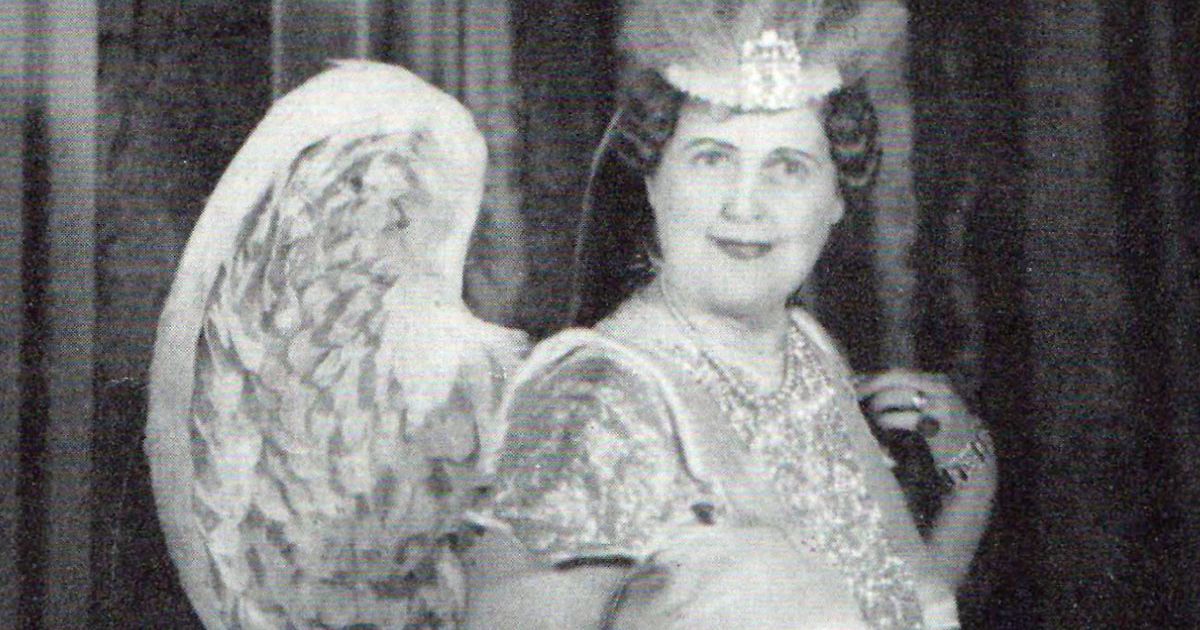
In the 1940s, New York socialite Florence Foster Jenkins (Meryl Streep) dreams of becoming a great opera singer. Unfortunately, her ambition far exceeds her talent. The voice Florence hears in her head is beautiful, but to everyone else it is quite lousy. Her husband St. Clair goes to extreme lengths to make sure his wife never finds out how awful she truly is. When Florence announces her plans for a concert at Carnegie Hall, St. Clair soon realizes that he’s facing his greatest challenge yet.



 1920 ~ Dave Brubeck, American
 MaryO'Studio