October 10 ~ On This Day in Music

• 1902 ~ The Gibson Mandolin guitar company was formed. Gibson’s first electric guitar the ES-150 was produced in 1936, and in 1946 Gibson introduced the P-90 single coil pickup, which was eventually used on the first Les Paul model made in 1952.

• 1906 ~ Paul Creston, American composer and organist

• 1908 ~ Johnny Green, Songwriter of Coquette, Body and Soul, I’m Yours, (You Came Along From) Out of Nowhere, I Cover the Waterfront, Easy Come, Easy Go; won five Oscars for work on MGM films: “Easter Parade”, “West Side Story”, “Oliver”, “An American in Paris”, “Bye Bye Birdie”, “High Society”, “Raintree County”, “The Great Caruso”, “Summer Stock” and “Brigadoon”

• 1914 ~ Ivory Joe Hunter, Singer, pianist, songwriter

• 1920 ~ Thelonious (Sphere) Monk, American jazz pianist and composer

• 1928 ~ You’re the Cream in My Coffee … comes from “Hold Everything”, which opened on Broadway this day and ran for 413 performances.

• 1935 ~ George Gershwin’s “Porgy & Bess” opened on Broadway New York

• 1937 ~ The Mutual Broadcasting System debuted Thirty Minutes in Hollywood. 48 sponsors shared the cost of the program that aired in 72 cities nationwide. It was the first Mutual co-op radio show. George Jessel and Norma Talmadge starred. Music was provided by the Tommy Tucker Orchestra.

• 1940 ~ Moonlight and Roses, by Lanny Ross, was recorded on the Victor label.

• 1942 ~ The anniversary of the first production of Verdi’s opera Aida by an all African-American cast

• 1946 ~ Ben Vereen, American dancer and singer of popular music, Tony Award-winning actor, TV host of You Write the Songs

• 1953 ~ Midge (James) Ure, Singer, songwriter

• 1955 ~ David Lee Roth, Singer with Van Halen

• 1958 ~ Tanya Tucker, Singer

• 1961 ~ Martin Kemp, Bass with Spandau Ballet, brother of musician Gary Kemp

• 1970 ~ Neil Diamond reached the #1 spot on the pop music charts for the first time with Cracklin’ Rosie. In 1972, Diamond would reach a similar pinnacle with Song Sung Blue.

• 1979 ~ Not just Rumours, but fact, that Fleetwood Mac got a star on the Hollywood Walk of Fame.

• 1985 ~ Yul Brynner passed away

• 2001 ~ Patricia Anne McKinnon, whose singing career began on Canadian television’s “Singalong Jubilee”, died of lymphatic cancer. She was 53. McKinnon was born in Shilo, Manitoba. Beginning her singing career at the age of 13, McKinnon sang for the Halifax-produced “Singalong Jubilee,” a show on the Canadian Broadcasting Corporation. She also starred in television programs, including “Juliette,” “Show of the Week,” and “A Go Go ’66.” For more than 28 years McKinnon fought Hodgkins disease, which put her career on hold at times.

• 2003 ~ Eugene Istomin, one of the first great classical pianists born in America, died after battling liver cancer. He was 77. At 17, Istomin won both the prestigious Leventritt and Philadelphia Youth Orchestra awards. In 1943, he made sensational debuts in the same week with the Philadelphia Orchestra under Eugene Ormandy and the New York Philharmonic under Artur Rodzinski, playing Johannes Brahms’Second Piano Concerto. At 25, he began a long association with cellist Pablo Casals. A year and a half after Casals’ death in 1973, Istomin married his widow, Marta, now president of the Manhattan School of Music. In a career that carried him throughout the world, Istomin gave more than 4,000 concerts with leading conductors – including Bruno Walter, Fritz Reiner, George Szell, Leopold Stokowski and Leonard Bernstein.

• 2010 ~ Dame Joan Sutherland, Australian operatic soprano died at the age of 83

Happy Birthday to Jelly Roll Morton!

jelly-grandpa

Jelly Roll Morton, born Ferdinand Joseph La Menthe in 1885, was one of the most influential composers of the jazz era, bridging an important gap between ragtime, blues, and jazz. In a sense, he was the first great jazz composer.

His career began in New Orleans, where he began to experiment with a unique blend of blues, ragtime, Creole, and Spanish music in bordellos as a piano player. Along with being a musician, he also worked as a gambler, pool shark, vaudeville comedian, and was known for his flamboyant personality and diamond front tooth.

Morton became successful when he started making what would be some of the first jazz recordings in 1923 with “the New Orleans Rhythm Kings”. Whether he played on the West Coast, New Orleans, or in Chicago, his recordings were always very popular. He joined the group “the Red Hot Peppers” in 1924 and made several classic albums with the Victor label.

Nothing but success came to him until 1930, when “Hot Jazz” began to die out, and big bands began to take over. Morton died in 1941, claiming that a voodoo spell was the cause of his demise.

anniversary of Morton’s death

Read quotes by and about Morton

October 9 ~ On This Day in Music

• 1813 ~ Giuseppe Verdi, Italian composer
Read quotes by and about Verdi
More information about Verdi

• 1835 ~ Camille Saint-Saëns, French composer, organist and conductor Saint-Saëns’ Carnival of the Animals is featured in Disney’s Fantasia and Fantasia 2000.
Read quotes by and about Saint-Saëns
More information about Saint-Saëns

• 1863 ~ Alexander Siloti, Russian pianist and composer, born in Kharkiv, Ukraine

• 1931 ~ Russ Columbo’s Prisoner of Love was recorded on Victor Records.

• 1940 ~ John Lennon, British rock singer, songwriter and guitarist
More information about Lennon

• 1935 ~ Cavalcade of America was first broadcast on radio this very day. The CBS show featured some of Hollywood and Broadway’s most famous stars in leading roles in the half-hour radio dramas. Thomas Chalmers narrated the stories about obscure incidents and people in American history. The orchestra (yes, radio shows had live orchestras back then) was led by Donald Voorhees. The show aired from 1935 to 1953, changing from CBS to NBC in 1939; with one sponsor for its entire duration. The DuPont Company introduced its slogan on Cavalcade of America …”Better things for better living through chemistry…”

• 1941 ~ Helen Morgan passed away

• 1944 ~ John Entwistle, Bass, French horn with The Who

• 1947 ~ “High Button Shoes”, opened on Broadway in New York City with an entertainer named Phil Silvers in the lead. The popular show ran for 727 performances.

• 1948 ~ Jackson Browne, Songwriter, singer

• 1967 ~ “And now…heeeeeeeeerrrree’s the Doctor!” Coming out of the NBC Tonight Show Orchestra to become musical director of The Tonight Show Starring Johnny Carson, Doc Severinsen replaced Skitch Henderson on this night. Doc became famous for an eccentric wardrobe, quick wit, great trumpet solos and fabulous charts. Tommy Newsome became Doc’s backup arranger for many of the tunes the band played. Later, Doc and the band would move to solo albums, group CDs and incredibly successful concert tours. Doc went on to play with various symphony orchestras and even became the owner of a custom trumpet company in the San Francisco Bay Area.

• 1973 ~ Priscilla Presley, was divorced from Elvis in Santa Monica, CA. Ms. Presley got $1.5 million in cash, $4,200 per month in alimony, half interest in a $750,000 home plus about 5% interest in two of Elvis’ publishing companies.

• 1973 ~ Paul Simon got a gold record this day for his hit, Loves Me like a Rock.

• 1975 ~ John Lennon turned 35. To celebrate, Yoko Ono Ono presented John with a newborn son, Sean Ono Lennon.

• 1976 ~ Ludwig van Beethoven’s “Symphony Number 5 in c minor” landed for a twenty-two-week stop in the first spot on the Top 5. Beethoven is dead and this isn’t a ghost story. It’s simply a case of Beethoven being updated with a disco-rock beat and a catchy new title: A Fifth of Beethoven.

• 1985 ~ A 2½ acre garden memorial was dedicated to John Lennon by his widow, Yoko Ono, this day. The memorial in New York City’s Central Park is named Strawberry Fields.

• 1988 ~ Elmer J. ‘Mousey’ Alexander passed away

• 2000 ~ Yoko Ono Opened John Lennon Museum in Japan

• 2001 ~ Herbert Ross died at the age of 76. He was a director and choreographer whose credits include the hit movies “The Goodbye Girl,” “The Sunshine Boys” and “The Turning Point.”

• 2003 ~ Don Lanphere, a saxophone player who came on strong at the dawn of bebop, nearly succumbed to drugs and drinking, then recovered to become the city’s jazz “grandpop,” died of hepatitis C. He was 75. As lead tenor in the Seattle Repertory Jazz Orchestra and in smaller groups, Lanphere’s versatility and virtuosity ranged from blazing riffs on the tenor to a solo jazz rendition of the Lord’s Prayer on the soprano sax. Many who were born long after Lanphere’s boyhood gigs with such legends as Charlie Parker, Fats Navarro and Max Roach hailed him as a jazz patriarch or, as his Web site proclaimed, “Seattle jazz grandpop.” Born in the apple country of central Washington about 95 miles east of Seattle, Lanphere played as a teenager with touring bands in Seattle, then studied music briefly at Northwestern University in Evanston, Ill. By the time he got to New York, captivated by the post-World War II bebop revolution, he was hooked on heroin. By his early 20s he had recorded with Navarro and Roach and played gigs with Parker, Woody Herman and top big bands, including one led by Artie Shaw. He could write a chart, the chord arrangement on which jazz improvisation is based, from the sound of water dripping in a tub. Battling alcohol and narcotics addictions that resulted in at least one arrest, he was back at his father’s store in Wenatchee – “from the Big Apple to the little apple,” he once said – by 1960. Only after he and his wife Midge became born-again Christians in 1969 did he dust off his horn. In an interview in 1998, he said that without the conversion, “I would be dead by now.”

• 2018 ~ Montserrat Caballé died at the age of 85. She was a was a Spanish operatic soprano.

October 8 ~ On This Day in Music

• 1585 ~ Heinrich Schütz, German composer

• 1895 ~ The Berliner Gramophone Company was founded in Philadelphia. Record players were not too far off in the future.

• 1904 ~ “Little Johnny Jones” opened in Hartford, CT. The show became a hit several times, due in part to a little ditty which became quite popular. Give My Regards to Broadway was penned, as was the entire musical, by the ‘Yankee Doodle Dandy’ himself, George M. Cohan.

• 1918 ~ Kurt Redel, German flutist and conductor

• 1930 ~ Toru Takemitsu, Japanese composer

• 1935 ~ Wedding bells pealed for a singer and a bandleader who tied the knot, making radio history together. The bandleader was Ozzie Nelson and the singer was Harriet Hilliard. They would make the history pages again on this very day in 1944.

• 1941 ~ The Benny Goodman Orchestra recorded Buckle Down Winsocki, with Tom Dix as featured vocalist, on the Columbia label.

• 1941 ~ George Bellamy, Guitarist with The Tornados

• 1942 ~ Buzz (Reese) Clifford, Singer

• 1944 ~ Susan Raye, Singer

• 1944 ~ The first broadcast of The Adventures of Ozzie & Harriet was heard on the CBS radio network. The show would continue on radio until 1953 and on ABC~TV from 1952 to 1966. “Hi Mom, Hi Dad, Hi Dave, Hi Ricky.”

• 1947 ~ Tony Wilson, Bass, singer with Hot Chocolate

• 1948 ~ Johnny Ramone (Cummings), Guitarist with The Ramones

• 1949 ~ Hamish Stuart, Guitarist, singer with Average White Band

• 1950 ~ Robert ‘Kool’ Bell, Bass guitar, singer with Kool and the Gang

• 1956 ~ Lawrence “a-one and a-two” Welk was doing so well with “da boys inta bant” on ABC-TV, that, after being on the tube for just one year with The Lawrence Welk Show, Welk originated another popular show called Lawrence Welk’s Top Tunes and New Talent.

• 1957 ~ Jerry Lee Lewis recorded “Great Balls Of Fire” in Memphis, Tennessee

• 1961 ~ Ted Kooshian, American jazz pianist

• 1974 ~ Then Came You, by Dionne Warwicke and The Spinners, went solid gold this day. While the editors are poring over the proper spelling of her name, might we add that due to some superstitious feeling having to do with astrology, the former Ms. Warwick changed her name for good luck to Warwicke. It apparently worked. That is, until she went solo again upon meeting Barry Manilow in the early 1980s. Tunes likeI’ll Never Love This Way Again, Deja Vu and hits with Johnny Mathis, Luther Vandross and some friends made it OK to be just Dionne Warwick again.

• 1979 ~ “Sugar Babies”, opened at the Mark Hellinger Theatre on Broadway. The star of the hit show was also making his debut on the Great White Way. Mickey Rooney, who had been acting since the 1930s, once again delighted one and all with his performance.

• 1984 ~ Anne Murray won the Country Music Association’s Album of the Year Award this day for A Little Good News. Murray was the first woman to win this award.

• 2015 ~ Jim Diamond, Scottish singer-songwriter (I Should Have Known Better), died at the age of 64

From the Way-Back Machine

ocms-logo

Today, since it’s a “teaching day”, I’m thankful for my piano studio, my students, and my pianos 🙂

When I was growing up, my dad was a minister, meaning we lived in whatever parsonage the church chose to let us live in.  The one we had in Pawcatuck, CT had an upright piano that someone had put out in the sunroom.  Not the best place for a piano, but I digress.

Since we had the piano already, someone – probably my mom – decided that I would take lessons.  We had the organist from the Baptist church just across the river in Westerly, RI

Apparently, Clara Pashley was fondly remembered at the church (now Central Baptist Church) since she was mentioned in an article from 2010.

screenshot-2016-11-04-10-04-33
25-centsMiss Pashley walked to our house each week and taught me (and my mom who was always listening in) piano for the grand sum of 25 cents.

I started with Ada Richter’s classic Teaching Little Fingers to Play, which has now been morphed into the John Thompson library.

From there, it was the Michael Aaron series, and some sheet music.

There was no music store in our town, so I have no idea where any of this music came from – but I still have it all.

My parents did very well for their quarter a week investment, especially since my mom paid good attention and was able to beef up lessons she’d had as a child.  Later on, she played well enough that she was church organist for a local Roman Catholic Church.

But I digress…

In those days, kids couldn’t do a whole lot of activities, so in 6th grade, I decided I wanted to be a Girl Scout.  Bye, bye Clara.

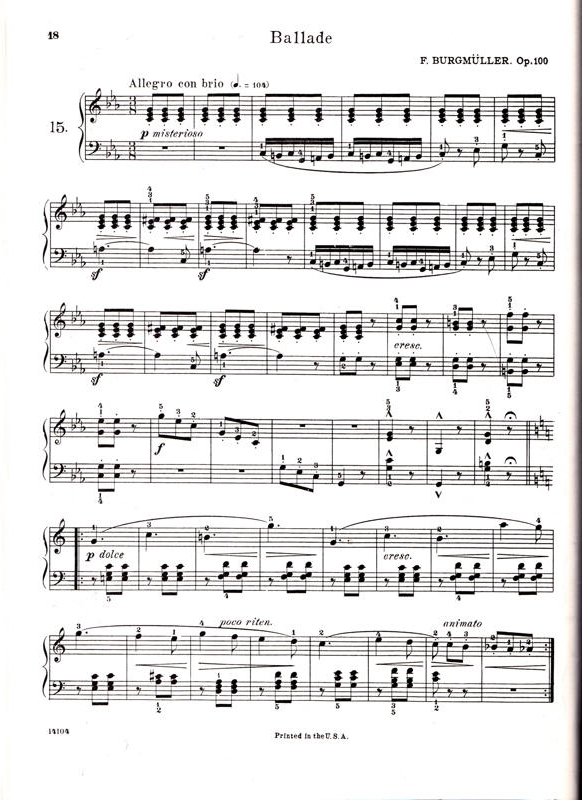
Girl Scouts didn’t last long but I did play piano in a talent show.  I remember, I carefully cut Burgmüller’s Ballade out of my Michael Aaron book and made a nice construction paper cover.  (I still have this, too)

balladeburgmuller

I doubt that I played this well but here’s what it was supposed to sound like:

A few years intervened and we moved to Springfield, MA.  The parsonage piano there was in terrible shape and in the dark, never-used basement.  But I decided to make it mine and cleared up the area around it and started “practicing”.

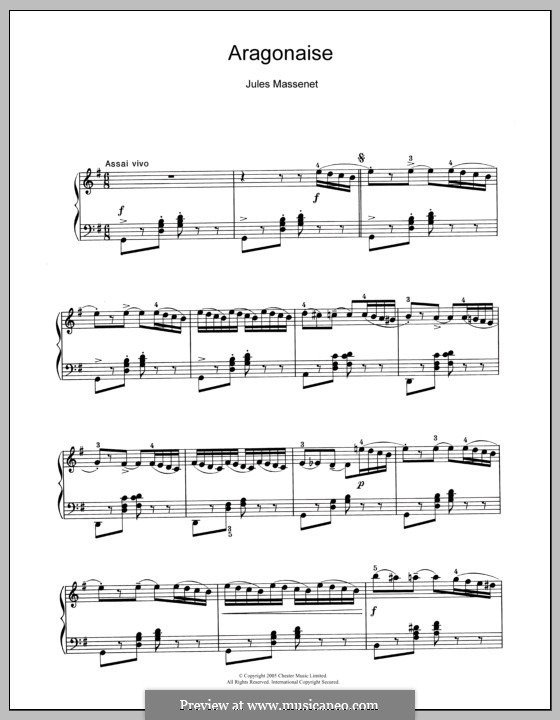
My Junior or Senior year of High School I decided I wanted to major in music in college.  I decided to learn, on my own, a piano arrangement of Aragonnaise by Jules Massenet.  I have no idea why or where that sheet music came from but I started working furiously on this piece.

aragonnaise

Hopefully, at some point, it should have sounded like this:

I started pedaling (no pun intended!) my music to the Universities of Connecticut and Massachusetts and ended up at UMass Amherst since we were state residents.

Early morning gym classes (usually swimming), then wet hair traipsing across campus to music theory in winter 5 days a week.  AARRGGH!

But I stuck it out.

My wonderful piano teacher, Howard Lebow, was killed in a car accident my sophomore year and I was devastated.  There was about him in a post on January 26, 2018 here: https://oconnormusicstudio.com/2024/01/26/in-memory-howard-lebow/

I took yet another break from piano lessons – but I kept playing.

After DH graduated, we moved to Milwaukee, WI for his graduate school.  Besides working 2 jobs, I found time to commandeer the practice rooms at the University of Wisconsin.  I also found a teacher at the Schaum School of Music.  She was amazed that I had no piano at home to practice on.

When we later moved to Alexandria, VA my DH gave me a choice of new car or piano. So, I found a used piano.  The owner had acquired it in a divorce and wanted it gone.  Yesterday.  She even paid to move it out of her apartment.

The new-to-me piano took up half our living room.  When my parents came to visit, their feet were under my piano as they slept on cots.

I found yet another new piano teacher and she is still my best friend to this day.

That piano moved to several locations before I bought a brand new Yamaha grand piano.  The movers accidentally brought in the wrong one and I made them return it.  The people who lived in an apartment were probably unhappy when they had to return my piano and take their own new baby grand back.

I started teaching as a traveling piano teacher in Silver Spring, Maryland.  I continued that in Wilmington, DE.

When we got to Fairfax, VA I decided no more traveling.  Students would come to me.  And so they have since 1973.

What is supposed to be our living room is filled with music books, electric keyboards, the grand piano, 2 organs, 2 violins, 2 clarinets, balalaika, electric saxophone, a hand-made (by me!) dulcimer, tenor and soprano recorders, and other musical “stuff”.

Piano playing has gotten me through the worst times of my life.  Teaching has been a lifeline for me, as well.

I am so thankful for the students who have stayed with me over the years.

October 7 ~ On This Day in Music

today

• 1746 ~ William Billings, American composer

• 1898 ~ Alfred Wallenstein, American cellist and conductor

• 1911 ~ Jo (Jonathan) Jones, Drummer, piano, reeds, trumpet. The first to minimize use of bass drum, keeping time on top cymbal. He played with Count Basie, Benny Goodman sextet.

• 1911 ~ Vaughn Monroe, Bandleader, singer

• 1922 ~ Martha Stewart (Haworth), Singer

• 1927 ~ Al Martino (Cini), Singer

• 1936 ~ Charles Dutoit, Symphony orchestra conductor

• 1940 ~ Artie Shaw’s orchestra recorded Hoagy Carmichael’s standard, Stardust, for Victor Records.

• 1942 ~ TIME magazine described Command Performance, which debuted this day, as “…the best wartime program in radio.” The show was originally produced by the U.S. War Department in cooperation with Armed Forces Radio Services specifically for those in the military overseas. It continued until 1949 and was reprised for more than three decades in syndication. Command Performance was hosted by Bob Hope, Bing Crosby, Don Wilson and Harry Von Zell and featured just about every major Hollywood and Broadway star.

• 1945 ~ Kevin Godley, Drummer, singer with 10cc

• 1949 ~ David Hope, Bass with Kansas

• 1950 ~ The Frank Sinatra Show debuted. It was the crooner’s first plunge into TV, the beginning of a $250,000 per year, five-year contract. Ben Blue, The Blue Family, the Whippoorwills and Axel Stordahl’s orchestra were regulars on the show.

• 1951 ~ John Cougar Mellencamp, Singer

• 1953 ~ Tico Torres, Drummer with Bon Jovi

• 1955 ~ Yo-Yo Ma, Chinese-born American cello virtuoso

• 1968 ~ Toni Braxton, Grammy Award-winning singer

• 1969 ~ Put on your headband, love beads, surfer’s cross and give the peace sign. It was on this day that The Youngbloods hit, Get Together, passed the million-selling mark to achieve gold record status.

• 1982 ~ “Cats”, another musical hit by Andrew Lloyd Webber, began a long Broadway run. It’s most memorable for its song, Memories. Cats ended on September 10, 2000.

• 1995 ~ Alanis Morissette went to No.1 on the US album chart with her third album Jagged Little Pill. The record produced six successful singles, including ‘You Oughta Know’, ‘Ironic’, ‘You Learn’, ‘Hand in My Pocket’, and ‘Head over Feet’ and went on to become the biggest selling album ever by a female artist with sales over 30m. Do you have a favorite track from the album?

• 1999 ~ New Beethoven work got its first public performance.

• 2000 ~ Dennis Sandole, a jazz guitarist and mentor to John Coltrane, died at 87. Beginning in the early 1940s, Sandole played with some of the major swing-era bands of the time, including those led by Charlie Barnet, Boyd Raeburn, Tommy Dorsey and Ray McKinley. He also recorded film soundtracks and played at recording sessions for Frank Sinatra and Billie Holiday. Sandole was a mentor to jazz giantJohn Coltrane from 1946 to the early 1950s, teaching him music theory and exposing him to music from other cultures. He recorded some of his own music, including “Modern Music From Philadelphia” in 1956. In 1999 Cadence Jazz released “The Dennis Sandole Project,” which contained parts of a jazz ballet/opera he wrote in the 1960s and 70s called “Evenin’ Is Cryin'”. Sandole published a book, “Guitar Lore,” in 1981.

• 2003 ~ Arthur Berger, a composer, critic and teacher who was an influential analyst of contemporary music, died of heart failure. He was 91. In 1943, Berger began a decade as a music critic for the New York Herald Tribune. Later, he was one of the founders of the periodical Perspectives of New Music. In 1953, he published the first book-length study of composer Aaron Copland. Berger’s “Ideas of Order” premiered with the New York Philharmonic in 1952. His primary interest as a composer, however, was in chamber music and in music for the piano. His neoclassicalQuartet for Winds is probably his most performed work. Igor Stravinsky admired Berger’s music, and Copland wrote of its distinction, craftsmanship, individuality and idiosyncrasy. Over his career, Berger taught at Mills College in California, Brandeis University and the New England Conservatory of Music. Berger celebrated his 90th birthday last year by publishing a collection of essays, “Reflections of an American Composer.”

• 2003 ~ William Bennett, whose Manhattan music studio gave hope to those with aspirations of escaping the corporate world to become rock stars, Oct. 7 from injuries he received in a car accident. He was 49. Bennett bought Off Wall Street Jam in 1997. The TriBeCa studio became a place where he mentored other musicians and helped to arrange music engagements at city clubs. Bennett grew up on the Upper East Side in a show business family. He majored in music in college and played guitar in bands like the Immortal Primitives, which had opened for the Ramones. But he eventually wound up working at a photography agency and did not play guitar for years. A friend advised him to purchase the studio, which grew to more than 400 dues-paying members.

• 2003 ~ John Pagaard “Johnnie” Jessen, a former vaudeville saxophone player and University of Washington instructor who inspired pop musician Kenny G, died at the age of 94. At Jessen’s retirement from the university in 1989, Kenny Gorelick, who shortened his name to Kenny G for performing and recording, said 12 years of working with Jessen were crucial to his success. “I made a breakthrough after I started studying with Johnnie,” he said. “One morning I woke up and I could play twice as fast. He had this great tone on flute, and got me to the point where I was doubling on clarinet and flute.” The son of Danish immigrants, Jessen was playing the violin at parties by age 9 and soon afterward formed his first band, the Rinky Dinks. He went on to play on cruise ships crisscrossing the Pacific Ocean in the 1920s and on the RKO vaudeville circuit behind stars such as Betty Grable, Judy Garland and Sammy Davis, Jr. in the 1930s.

Parents! How to Help Your Students Practice ~ Day Eight

We have established that regular practice routines will not happen without proactive piano parents. So, how can parents be proactive practice assistants even if they have never touched a piano?

Day 8. The Timekeeper: Some of the O’Connor Music Studio students are using Andrea And Trevor Dow’s Timed Note Reading Tests For Piano, so their parents can be the timekeeper when it is time for their daily note reading practice.

Andrea And Trevor Dow’s Timed Note Reading Tests For Piano, Book 1: 90 Days Of Exercises In Middle C Position And C Position

and

Andrea And Trevor Dow’s Timed Note Reading Tests For Piano, Book 2: 95 Days Of Exercises In Treble C Position And G Position

October 6 ~ On This Day in Music

today

• 1820 ~ Jenny (Johanna) Lind, Swedish coloratura soprano, “The Swedish Nightingale”

• 1882 ~ Karol Szymanowski, Polish composer

• 1917 ~ A new word cropped up in the American lexicon: Jazz. The Literary Digest described jazz as music that caused people to, “shake, jump and writhe in ways to suggest a return to the medieval jumping mania.”

• 1927 ~ Paul Badura-Skoda, Austrian pianist and music editor

• 1927 ~ “Mammy, how I love you, how I love you, my dear old mammy!” It was Al Jolson in blackface, singing in the first full-length talking picture, The Jazz Singer, as it opened in New York City. In reality, The Jazz Singer was not a true talkie. There were only 291 spoken words in the landmark film; however, it was the first to integrate sound and this small amount of dialogue into a story through the Vitaphone disk process; and the first to entertain a large audience. The talking part was mostly singing, and it was Al Jolson who made the flick a success, proving to the critics that an all-talking film could work. (Because he didn’t think the pioneer of talkies would be all the rage, George Jessel actually turned down the starring role; as did Eddie Cantor.) A silent version of the film was released to movie theaters who had not yet popped for the $20,000 or so that it cost to rewire their venue. The audience was thrilled with Jolson’s sound performance as a cantor’s son, Jake Rabinowitz, rejecting the world he came from to become a singer of popular music, changing his name to Jack Robin in the process. Although not jazz as we know it, the songs Jolson sang became part of American music culture: Toot Toot Tootsie (Goodbye), Blue Skies, Waiting for the Robert E. Lee and, of course, My Mammy. For those truly with a need to know, Neil Diamond did not audition for Jolson’s part when finding out that Jessel had turned it down. Diamond performed in a remake of The Jazz Singer in 1980. As Jolson said, “Wait a minute, wait a minute, you ain’t heard nothin’ yet!” Maybe, through the wonders of modern technology, we could hear Jolson and Diamond together, in concert. That would be the Mammy of all jazz singin’.

• 1941 ~ Claude Thornhill and his orchestra recorded Autumn Serenade on Columbia Records.

• 1946 ~ Millie Small (Smith), Singer, known as ‘The Blue Beat Girl’ in her native Jamaica

• 1949 ~ Bobby Farrell, Singer

• 1950 ~ Thomas McClary, Guitarist with The Commodores

• 1951 ~ Kevin Cronin, Singer with REO Speedwagon

• 1960 ~ Steve Lawrence and partner, Eydie Gorme, starred at the new Lotus Club in Washington, DC.

• 1962 ~ Robert Goulet stepped out of the role of Sir Lancelot after singing/acting the part since 1960. The fabulously successful Broadway musical, Camelot, also starred Richard Burton as King Arthur and Julie Andrews as Queen Guenevere.

• 1964 ~ Matthew Sweet, Guitarist, singer, songwriter

• 1969 ~ George Harrison‘s song ‘Something’ was released as the “A” side of a Beatles’ 45, a first for Harrison. Along with Lennon and McCartney’s ‘Come Together’, the single went on reach No.1 on the US chart the following month. Both tracks were lifted from the Abbey Road album.

• 1973 ~ Gene Krupa (1909) passed away. He was an American jazz drummer, bandleader, actor, and composer known for his energetic style and showmanship. His drum solo on “Sing, Sing, Sing” (1937) elevated the role of the drummer as a frequently used solo voice in the band.

• 1974 ~ “Mack & Mabel” opened at Majestic Theater NYC for 66 performances

• 1985 ~ Nelson Riddle, Grammy Award-winning orchestra leader passed away

• 2001 ~ Blues singer Mamie “Galore” Davis died of a stroke. She was 61. Davis was born Sept. 24, 1940, in Erwin, where she started singing the blues. She graduated from O’Bannon High School and joined a local band. She performed with such musicians as Little Johnny Burton, Buddy Hicks, Little Milton and the Ike and Tina Turner Revue. Her first solo recording, Special Agent 34-24-38, was recorded on the St. Lawrence label in 1965. Under her first producer, Monk Higgins, she recorded two more singles for St. Lawrence, including her biggest hit, It Ain’t Necessary, in 1966.

• 2003 ~ Victor Buelow, who made it into the record books as the longest-serving community band director, died os an apparent heart attack. He was 94. Buelow directed the Jefferson American Legion Band for 72 years, from 1931 through the 2002 band season. Guinness World Records declared him the longest-serving director anywhere after he retired. Buelow stayed with the band even in retirement, playing the alto horn this summer

• 2007 ~ Queen’s groundbreaking promo for their 1975 hit Bohemian Rhapsody was named the UK’s best music video in a survey of music fans. Out of 1,051 adults polled by O2, 30% named the six-minute video, (which took only three hours to shoot and cost a mere £3,500 to make), their favorite.

• 2018 ~ Montserrat Caballé, Spanish soprano, died at the age of 85

• 2020 ~ Eddie Van Halen (Edward Lodewijk Van Halen) died at the age of 65. was a Dutch-American musician, songwriter, producer, and inventor.

• 2020 ~ John Lester Nash Jr. was an American singer-songwriter, best known in the United States for his 1972 hit “I Can See Clearly Now”. Primarily a reggae and pop singer, he was one of the first non-Jamaican artists to record reggae music in Kingston.

The Simply Piano App

Simply-Piano

iOS: Learning to play the piano can be difficult, and even moreso if you don’t have someone there to help you fix your errors and learn good tempo. Simply Piano can do both of those things, and all it takes is your iPhone or iPad. Best of all, it’s free.

Like many “piano-learning” apps, Simply Piano teaches you various pieces of music by essentially displaying sheet music in front of you to play, guiding you to the right keys on your piano or keyboard, and showing you the right order in which to press them and when — that’s all great, and not terribly unique, even if it works well. Where the app shines however is its listening feature. Simply put the phone down near the keyboard, and Simply Piano will “listen” to you play.

As you play, the app identifies what you’re playing and gives you feedback on how to improve. Maybe you need to pick up the tempo, or maybe you missed a few notes here or there — whatever it is, the app can give you a few tips, and encourages you to try again, all while it listens and tries to help.

Simply Piano is free, and available now. It comes bundled with a ton of songs to learn (including classical and pop songs you’ll probably recognise), and is geared to all skill levels — and keyboard types, so you don’t need a fancy piano just to use the app, any keyboard will do. Hit the link below to try it out.

Simply Piano (Free) [iTunes App Store via JoyTunes]

From http://www.lifehacker.com.au/2015/10/simply-piano-teaches-you-piano-listens-and-corrects-your-mistakes/

October 5 ~ On This Day in Music

today

• 1830 ~ Chester A. Arthur, Piano-playing president
Other Presidential Musicians

• 1925 ~ Jürgen Jürgens, German conductor

• 1930 ~ The New York Philharmonic Orchestra was first heard on the air over CBS radio from Carnegie Hall. The Sunday afternoon concerts set CBS back $15,000. Not per week, but for the entire season!

• 1935 ~ Margie Singleton, Singer, TV performer on Louisiana Hayride

• 1938 ~ Johnny Duncan, Singer

• 1938 ~ Carlo Mastangelo, Singer with Dion and The Belmonts

• 1939 ~ As long as Ted Weems’ orchestra recorded on Decca Records, so did the featured vocalist in his band, the barber from Canonsburg, PA, Perry Como. Before becoming a star in his own right, and making the move to RCA Records and NBC, ‘Mr. C.’ recorded I Wonder Who’s Kissing Her Now with Weems on Decca.

• 1943 ~ Steve Miller, Singer, songwriter with The Steve Miller Band

• 1947 ~ A small Northern California company got a major boost from Bing Crosby. The first show recorded on tape was broadcast on ABC radio. ‘Der Bingle’ was so popular, that his taped show promoted wide distribution of the new magnetic tape recorders that would become broadcast classics – the venerable Ampex 200.

• 1949 ~ Brian Connolly, Singer with The Sweet

• 1949 ~ B.W. Stevenson, Singer, songwriter

• 1950 ~ Eddie Clarke, Guitarist with Motorhead

• 1951 ~ Bob Geldof, Singer, songwriter with Boomtown Rats, organized fund-raising group: Band Aid

• 1955 ~ Leo Barnes, Musician with Hothouse Flowers

• 1962 ~ Ken Noda, American pianist and composer

• 1962 ~ The Beatles debut single ‘Love Me Do’ was released in the UK. It spent 26 weeks on the chart peaking at No.17. Beatles producer George Martin has said when ‘Love Me Do’ was released, it was the day the world changed.

• 1965 ~ Adding to his many credits, accolades and honors, Henry Mancini received a gold record for the soundtrack LP from the movie, The Pink Panther.

• 2000 ~ Singer, actor and composer Cuco Sanchez, whose six-decade career included the ranchera hits La cama de piedra and Anillo de compromiso, died of liver failure. He was 79. Sanchez, whose full name was Jose del Refugio Sanchez Saldana, recorded his first song at 13. In 1940, he was signed by Mexico’s largest media company, for which he acted in movies and television programs. Sanchez’s long career included about 200 songs, which were translated into 27 languages. Among his hits were Mi chata, Anoche estuve llorando, No soy monedita de oro, Buenas noches mi amor, Con la misma moneda, Que manera de perder, Fallaste corazon, and Oigame compadre. Sanchez also composed music for movies.

• 2000 ~ The Beatles Release Own Account of Band’s History. Its title is “The Beatles Anthology”

• 2003 ~ Clarence B. Cagle, a legendary pianist for the Texas Playboys, died at the age of 83. Cagle began playing violin and banjo at house parties at age 9. In 1938, Cagle moved to Coffeyville, Kan., where he played with Herb Goddard’s Oklahoma Wanderers. By then, he’d switched to playing the piano. Cagle auditioned for legendary Texas swing musician Bob Wills in 1943 in Tulsa. He got the job and performed with the Texas Playboys until Wills left for Hollywood to make Western films. Cagle stayed in Tulsa with Wills’ brother, Johnnie Lee Wills, developing his well-known “Boogie Woogie Highball.” Cagle played with him for the next 17 years. He was admitted to the Western Swing Hall of Fame in Sacramento, Calif., in 1988.

• 2014 ~ Geoffrey Holder, Trinidadian-American actor, choreographer, singer, director and painter (Annie, The Wiz), died at the age of 84