. 1920 ~ Bruno Maderna, Italian-born German conductor and composer
. 1924 ~ Don Cornell (Louis Varlaro), Singer
. 1924 ~ Clara Ward, Gospel singer, Clara Ward Gospel Troupe
. 1931 ~ Carl Belew, Country singer
. 1947 ~ Iggy Pop (James Newell Osterburg), Singer, songwriter, with the Psychedelic Stooges
. 1963 ~ The Beatles and The Rolling Stones met for the first time together, at the Crawdaddy Club in Richmond, England. The Stones opened the show.
. 1977 ~ Annie opened on Broadway at the Alvin Theatre. Andrea McArdle was a shining star in the title role. Annie continued on the Great White Way until January 2, 1983.
. 2016 ~ Prince Rogers Nelson died. He was known by the mononym Prince, was an American singer, songwriter, multi-instrumentalist, record producer, and actor. Prince was renowned as an innovator and was widely known for his eclectic work, flamboyant stage presence, and wide vocal range.
. 1925 ~ Tito (Ernest) Puente, Jazz musician, bandleader
. 1925 ~ Henri Renaud, French pianist
. 1931 ~ Louis Armstrong recorded the classic, When It’s Sleepy Time Down South, for Okeh Records. Satchmo would use the tune as his theme song for decades. The song was waxed in Chicago, IL.
. 1934 ~ One of America’s most beloved child stars made her debut. Shirley Temple debuted in Stand Up and Cheer, which opened in New York City. Moviegoers would rave about her song and dance routine, Baby, Take a Bow, for many years.
. 1935 ~ Your Hit Parade, starring Kay Thompson, Charles Carlyle, Gogo DeLys and Johnny Hanser, was first broadcast on radio in 1935. A youngster named Frank Sinatra would later be part of the program as a featured vocalist. Your Hit Parade stayed on the radio airwaves for 24 years. Snooky Lanson would later host the program when it made the transition from radio to TV. Other long-time regulars on the TV version were: Russell Arms, Gisele MacKenzie and Dorothy Collins. They were the lucky ones who got to present the top seven songs each week. Since many songs stayed on the list for weeks on end, these vocalists had to invent new ways to present the hit parade. On April 24, 1959, Your Hit Parade died. The regulars just didn’t fit with the new rock ‘n’ roll hits. Imagine, if you can, Snooky Lanson singing Hound Dog. The original title of the radio show was, Lucky Strike Hit Parade, sponsored by, you guessed it, Lucky Strike cigarettes. The cigarette company continued to sponsor the TV show (those were the days when cigarette companies sponsored lots of TV shows), and the opening theme song was Be Happy, Go Lucky.
. 1943 ~ John Eliot Gardiner, British conductor
. 1945 ~ For the first time on radio, the show “Your Lucky Hit Parade” is broadcast in homes all over the country. It last for nearly 25 years before television led to its downfall in popularity.
. 1950 ~ Peter Frampton, British rock singer and guitarist
. 1951 ~ Luther Vandross, soul singer, (1989 UK No.13 single ‘Never Too Much’, first released 1983, US N0.10 and UK No.2 single with Janet Jackson ‘The Best Things In Life Are Free’). Also worked with David Bowie, Mariah Carey. Vandross died on 1st July 2005 aged 54 two years after suffering a major stroke.
. 1968 ~ Hair opened on Broadway
. 1985 ~ The British pop music group Wham!, featuring George Michael, became the first to release cassettes in the People’s Republic of China. Selections from two of the group’s albums were packaged and sold on the tape.
. 1986 ~ Pianist Vladimir Horowitz gave his first concert in the Soviet Union in 61 years. He had emigrated in 1925.
. 1987 ~ Starlight Express posted the largest week’s gross in Broadway history. The roller-skating musical earned $606,081 at the box office. The revival of The King and I starring Yul Brynner had been the previous leader (1985).
. 2000 ~ Canadian composer Louis Applebaum, long associated with the prestigious classical repertory company the Stratford Festival, died of cancer. He was 82.
. 2001 ~ Giuseppe Sinopoli, Italian conductor, collapsed at the podium while conducting a performance of Verdi’s Aida in Berlin. He was rushed to the hospital, but doctors could not revive him. Sinopoli, 54, was the music director of the Dresden Staatskapelle and was a controversial figure in classical music. An avid scholar, Sinopoli had a medical degree and was also studying archaeology.
. 2003 ~ Nina Simone, whose deep, raspy, forceful voice made her a unique figure in jazz and later helped define the civil rights movement, died. She was 70. Born Eunice Kathleen Waymon in 1933 in North Carolina, Simone was the sixth of seven children in a poor family. She began playing the piano at age 4. In the late 1950s Simone recorded her first tracks, including Plain Gold Ring and Don’t Smoke In Bed. But she gained fame in 1959 with her recording of I Loves You Porgy, from the opera “Porgy & Bess.” But she later wove the turbulent times of the 1960s into her music. In 1963, after the church bombing that killed four young black girls in Birmingham, Ala., and the slaying of Medgar Evers, she wrote Mississippi Goddam, and after the killing of Dr. Martin Luther King, Jr., she recorded Why? The King of Love is Dead. One of her most famous songs was the black pride anthem, To Be Young, Gifted and Black.
Simone enjoyed perhaps her greatest success in the 1960s and 70s, with songs like I Want A Little Sugar in My Bowl, and Four Women, the song with the famous line “they call me PEACHES.” She recorded songs from artists as diverse as Bob Dylan, Leonard Cohen and Bee Gees and made them her own. Perhaps one of her more popular covers was her version of House of the Rising Sun. While she had a regal presence onstage, she could often be temperamental. She had a reputation for chewing out audience members who interrupted her performances in clubs with conversation or loud drinking or talking. In 1999 she received a lifetime achievement award in Dublin and an award for excellence in music from the Association of African American Music in Philadelphia.
. 2017 ~ Cuba Gooding Sr., American singer (Everybody Plays the Fool), died at the age of 72
I’ve recently started playing the organ a bit at my church again. I started playing piano-organ duets with a friend and people were so glad to hear the organ again that the Director of Music asked me to play for final hymns and such.
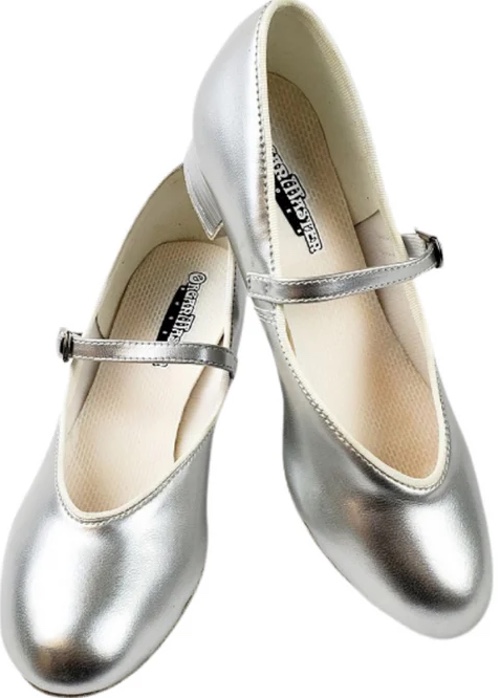
So, I dusted off my old Organmaster shoes and started practicing again. I was thinking back to how I got my start with organ – we have 2 now in the O’Connor Music Studio. One was my aunt’s Yamaha organ that I had shipped here from Maine when she died and the other is a Hammond that my mom brought with her when she moved in with us. That organ traveled a bit, too from Springfield, MA to Barre, MA to Wilmington, DE, to an apartment in Fairfax, VA, then to our home.
My mom learned to play piano by sitting in on my lessons with Miss Pashley and actually practicing. When my dad became pastor of the Barre (MA) Congregational Church, my mom was off at the local Catholic Church playing organ for their masses. Interesting division of religion!
Years later, my DH and I moved to Alexandria, Virginia, about a block away from a branch of Northern Virginia Community College (NOVA). At that time, their music department featured organ classes and I jumped on the opportunity.
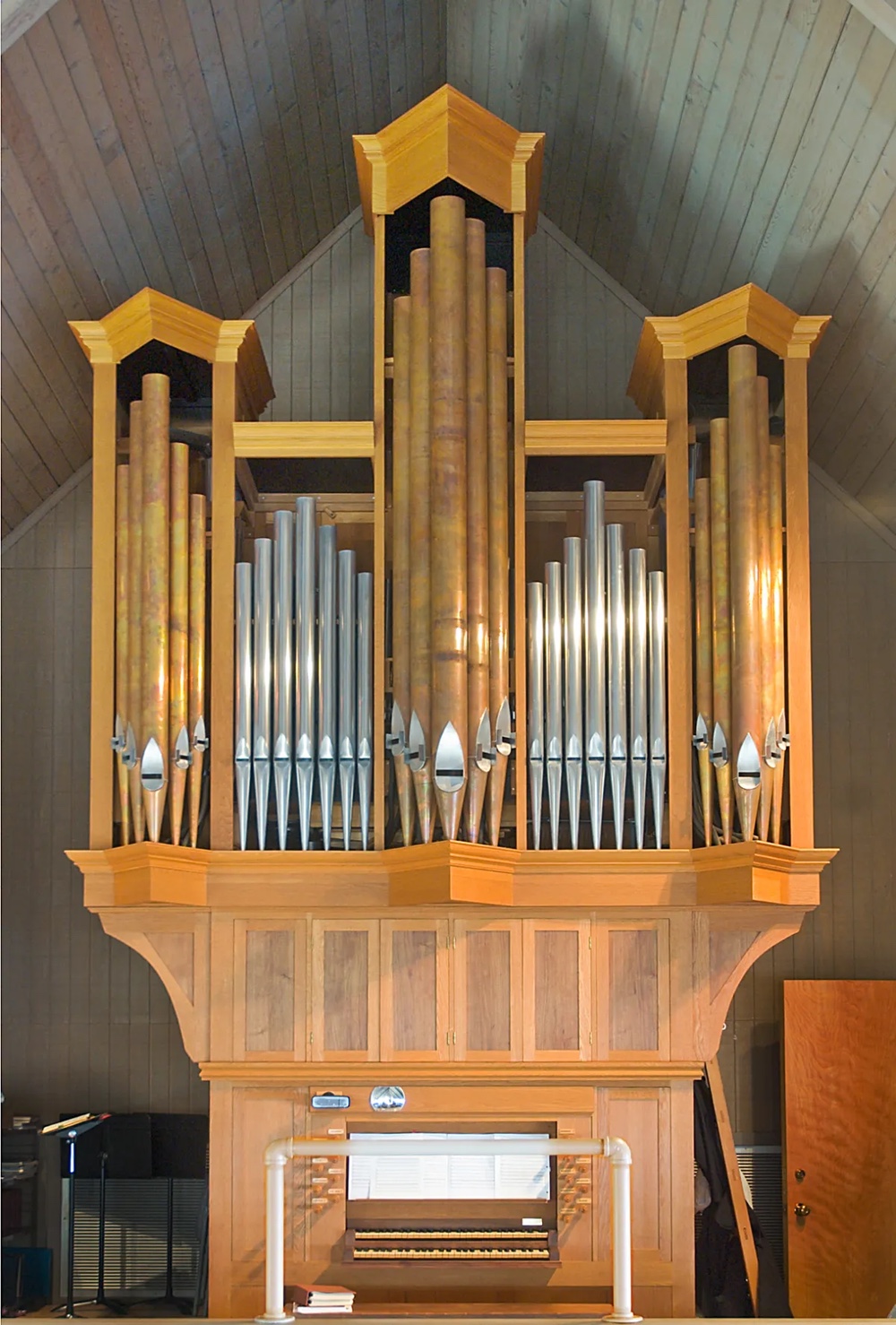
Ben Dobey actually taught on the organ at St. Albans Church in Annandale. The organ was in a small balcony, accessed by a narrow spiral staircase in what seemed to be a small closet. How they got the organ up there was a mystery to me unless they built the church around it.
Looking at their website, I got this picture of the organ and information about how it was updated in 2023. How workers accomplished the update I have no idea.
Our organ was manufactured by the John Leek Organ Company (Oberlin, Ohio) in 1982. It has two manuals, three divisions, 13 stops, 16 ranks, tracker action, mechanical couplers, no combination action, in the North German style.
In the fall of 2023 the organ was refurbished by Taylor and Boody Organbuilders of Staunton, VA, one of the finest firms specializing in mechanical action instruments. The organ was thoroughly cleaned, degraded leather was replaced, the action was reregulated and made even, and damaged pipes were repaired and fortified against future harm. The instrument was also tuned to a slightly unequal temperament, lending a special authenticity to the Baroque and Renaissance music so suited to this organ.
Ben was a stickler for Organmaster shoes. These days, I prefer to practice in socks – or barefoot – but I always wear the Organmasters to play. I even recently invested in a silver pair!
I always think of Ben when I’m wearing these shoes. I thought of him on Easter Sunday (4/20/2025) when my friend and I played a medley of Easter hymns for the postlude.
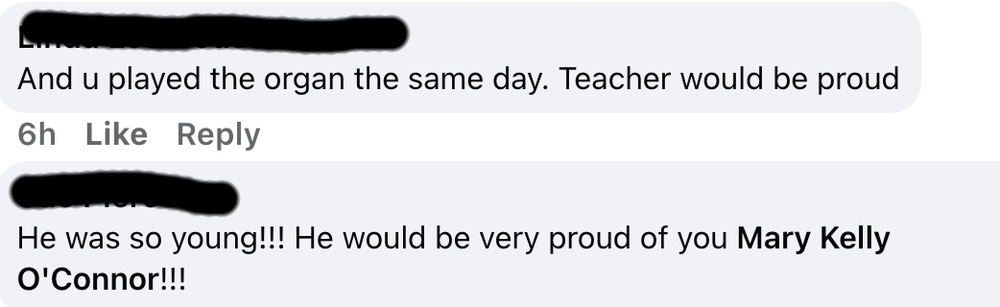
As it turned out, the 20th was the anniversary of his death. From this obituary, I assumed that he died on Easter of this year and shared on Facebook.
A couple friends posted:
Robert Benjamin Dobey, 72, died April 20. Born August 14, 1950, he was raised in Arlington, Virginia. He progressed from playing piano to organ by the age of 13. Dobey graduated from Oberlin Conservatory of Music, Oberlin, Ohio, in 1972, studying organ with Garth Peacock, before earning his Doctor of Musical Arts degree in organ performance and literature from Eastman School of Music, Rochester, New York, studying with David Craighead. Dobey studied music with Michael Schneider in Cologne, Germany, on a Fulbright scholarship and resided in England for two years as a member of the Wells Cathedral choir. His musical activities ranged from playing organ and harpsichord to singing, composing, and conducting. After years of building his career in Washington, D.C., as keyboard artist with the Washington Bach Consort, assistant director of the Cathedral Choral Society at the National Cathedral, as a singer in the Woodley Ensemble, and various parishes, Dobey moved to Sheboygan, Wisconsin, where he served as organist and choir director at Grace Episcopal Church.
Dobey recorded several discs for the Pro Organo label, among which are Herbert Howells & the Organ: The 30s & 40s, recorded on the Roosevelt-Schantz organ in the Cathedral of the Immaculate Conception, Syracuse, New York; The Wanderer, recorded on the Ernest M. Skinner/Aeolian-Skinner organ at Girard College, Philadelphia, Pennsylvania; Magnificat: Organ music and chant in honor of the Blessed Virgin Mary, recorded on the Schoenstein organ of the Shrine of Our Lady of Walsingham, Sheboygan, Wisconsin; The Intimate Reger and In Sweetest Joy: Christmas Carols for the Organ, both recorded on the Schoenstein organ at Grace Episcopal Church, Sheboygan.
Robert Benjamin Dobey is survived by his sister, Mary Carol Coleman, and brother-in-law, Cameron Coleman, as well as nieces and nephews. A Mass of Christian Burial May 6 at Holy Name of Jesus Catholic Church, Sheboygan.
I later read another obituary that said Ben died April 20, 2023.
Dr. Robert Benjamin Dobey passed away on Thursday, April 20, 2023, at the age of 72, following a determined and hard-fought battle with cancer. Born on August 14, 1950, Dr. Dobey was raised in Arlington, Virginia. Ben, to his many friends and colleagues, and Benjy, to his family, Dr. Dobey lived a full life steeped in his love of music, gardening, and deep friendships. In a family otherwise bereft of musical ability, Dr. Dobey’s extraordinary talent can only be considered providential. He progressed from the piano to the organ by the age of 13 and continued to develop as a musician of great talent until his passing. Dr. Dobey attended the Oberlin Conservatory before earning his doctorate at the Eastman School of Music. Among his travels and pursuits, Dr. Dobey studied music in Cologne, Germany on a Fulbright Scholarship and resided in England as a member of the Wells Cathedral choir. The breadth of his musical talent extended from organ and harpsichord to singing, composing, and conducting. His mastery of the organ spanned virtually every school and composer and resulted in multiple recorded works. After many years of building his career in Washington, DC with the Washington Bach Consort, the Cathedral Choral Society at the National Cathedral, the Woodley Ensemble, and prominent parishes, Dr. Dobey opted to devote himself to community, family, and friends in Sheboygan, Wisconsin, where he served as a beloved organist and choir director at Grace Episcopal. Dr. Dobey’s lifelong passion for gardening left a legacy of spectacular beauty in his wake. He cultivated floral gardens wherever he lived, attended church, and made friends. Responding to news that his niece had planted bulbs that he provided, Dr. Dobey’s proclamation that “you have so much to look forward to” was among his final words. That desire to cultivate and share beauty animated his life, work in the garden, and vocational devotion to music. Notwithstanding his accomplishments, Dr. Dobey’s compassion, generosity, and open acceptance of all were his defining traits. His penetrating sense of humor produced satire and wit that brought real joy to family, friends, and colleagues. True to these characteristics to the end, Dr. Dobey’s final performance was “The Teddy Bears’ Picnic” sang to his two-year-old great nephew shortly before his passing. Dr. Dobey will be missed by many and is survived by his beloved sister, Mary Carol Coleman, and brother-in-law, Cameron Coleman, as well as the nieces and nephews on whom he doted. A Mass of Christian Burial will be celebrated at 11:00 a.m. on Saturday, May 6, 2023 at Holy Name of Jesus Church, 8th & Huron Avenue, Sheboygan. In lieu of flowers, memorials in Ben’s name made be made to the Sharon S. Richardson Community Hospice, the music fund at Grace Episcopal Church or the St. Luke’s Community Cafe. The family would like to thank the nurses and staff of the Sharon S. Richardson Community Hospice for all of their loving care and support. The Olson Funeral Home & Cremation Service has been entrusted with Dr. Dobey’s arrangements.
. 1924 ~ A new show joined the airwaves. The Chicago Barn Dance aired on WLS radio in the Windy City. Later, the famous program would be renamed The National Barn Dance. This program was the first country music jamboree on radio. (The Grand Ole Opry on WSM Radio in Nashville, TN began in 1925.) National Barn Dance continued for many years on the radio station that was owned by the retailer, Sears Roebuck & Co. WLS, in fact, stood for ‘World’s Largest Store’. Though the Barn Dance gave way to rock music and now, talk radio, The Grand Ole Opry continues each weekend in Nashville.
. 1927 ~ Don Barbour, Singer with the group, The Four Freshmen
. 1928 ~ Alexis Korner, Musician: guitar, singer
. 1934 ~ Shirley Temple appeared in the American musical movie with many well known actors and actresses, stole the show and went on to appear in 10 movies in 1934, including 4 starring roles in major feature-length films.
. 1935 ~ Dudley Moore, English pianist and actor
. 1940 ~ Jimmy Dorsey and his orchestra recorded the song “Six Lessons from Madame La Zonga.”
. 1942 ~ Alan Price, Musician: keyboards, singer: groups: Alan Price Combo, The Animals. Some favorites were House of the Rising Sun, We Gotta Get Out of This Place
. 1942 ~ Larry (Hilario) Ramos, Jr., Musician, guitar, singer with the group: The Association
. 1945 ~ The musical Carousel, based on Molnar’s Liliom, opened at the Majestic Theatre in New York City. John Raitt and Jan Clayton starred in the show which ran for 890 performances. Music was by the team of Richard Rodgers and Oscar Hammerstein.
. 1947 ~ Murray Perahia, American pianist and conductor
. 1947 ~ Mark Volman, Saxophonist, singer
. 1959 ~ Singer Harry Belafonte appeared in the first of two benefit concerts for charity at Carnegie Hall in New York City.
. 1967 ~ Nancy Sinatra and her dad, Frank, received a gold record award for their collaboration on the hit single, Something Stupid.
1987 ~ The Simpsons TV show was born
John Brunning celebrates tonight with Danny Elfman’s theme to the series
. 2000 ~ Richard L. Campbell, a classical music announcer on WCPE-FM died during his on-the-air shift, apparently of a massive heart attack. He was 67. On the air, Campbell catered to his audience by using his warm baritone voice to soothing effect. Before coming to WCPE about 10 years ago, he was a computer programmer and helped design the station’s traffic system.
. 2012 ~ Greg Ham, Australian rock saxophonist and flutist (Men At Work), died at the age of 58
. 1796 ~ The Archers, the first opera composed by Benjamin Carr, an American composer, was performed in New York City.
1819 ~ Franz von Suppé, Austrian composer and conductor
More information about von Suppé
1882 ~ Leopold Stokowski, British-born American conductor
More information about Stokowski
. 1918 ~ Tony Mottola, composer, guitarist: played with Al Caiola, George Hall’s orchestra, CBS radio studio orchestra, worked with Raymond Scott backing up young Frank Sinatra and Perry Como, arranger for Como’s TV variety show
. 1929 ~ Red Nichols and his Five Pennies recorded the Glenn Miller arrangement of Indiana for Brunswick Records. Benny Goodman, Gene Krupa and Jack Teagarden were all part of the recording session that took place in New York City.
. 1936 ~ Ottorino Respighi, Italian composer, died. Best known for his orchestral pieces including the “Pines of Rome.”
More information about Respighi
. 1939 ~ Gene Autry recorded the popular song “Back in the Saddle Again.” Several decades later, the rock band Aerosmith recorded a song that shares the same title.
. 1941 ~ Mike Vickers, Musician: guitar, reeds played with the group Manfred Mann
. 1946 ~ Hayley Mills, Singer, actress
. 1946 ~ Alexander Spence, Musician: guitarist and singer with the group Moby Grape
. 1965 ~ Contralto Marian Anderson ended her 30-year singing career with a concert at Carnegie Hall in New York City.
. 1974 ~ James Brown, the ‘Godfather of Soul’, received a gold record this day for the single, The Payback. Of the 44 hits that Brown would put on the charts over three decades, he received only one other gold record – for Get on the Good Foot – Part 1 in 1972. His biggest pop hits include: I Got You (I Feel Good) at number three in 1965, Papa’s Got a Brand New Bag at number eight in 1965, It’s a Man’s Man’s Man’s World at number eight in 1966, I Got The Feelin’ at number six in 1968 and Living in America at number four in 1986. This song was featured in the Sylvester Stallone film, Rocky IV.
. 1984 ~ Michael Jackson faced surgery in Los Angeles. Doctors performed scalp surgery to repair the damage done after the megastar’s hair caught fire during the filming of a Pepsi commercial on January 27. Jackson was hospitalized and recuperated for months before he could return to work. His single recording of Thriller had been certified platinum in February 1984.
. 1985 ~ The sequined ‘King of Show Business’, Liberace, broke his own record for ticket sales at Radio City Music Hall. Liberace grossed more than $2,000,000 for his engagement in the historic New York City venue. His previous record was set in 1984 ($1.6 million in tickets sold).
. 2001 ~ Billy Mitchell died at the age of 74. He was a saxophonist who played with jazz greats Count Basie, Dizzy Gillespie and Woody Herman.
. 2012 ~ One of the most well-known television personalities from the US, Dick Clark, died at the age of eighty-two from a heart attack. Clark gained his popularity through hosting the American Bandstand show that introduced up and coming music stars to the nation and had also hosted ABC’s New Year’s Rockin’ Eve. Clark also ran a production company that produced several movies, game shows, beauty contests, and music programs like the American Music Awards.
1882 ~ Artur Schnabel, Austrian-born American pianist
Read quotes by and about Schnabel
More information about Schnabel
1903 ~ Gregor Piatigorsky, Russian-born American cellist and composer
More information about Piatigorsky
Read quotes by and about Piatigorsky
. 1930 ~ Chris Barber, Musician, trombone, bandleader
. 1933 ~ Backed by the On the Trail portion of the magnificent Grand Canyon Suite by Ferde Grofe, Johnny Rovetini, pillbox hat and all, uttered the words “Call for Philip Morris” for the first time on the radio. The famous phrase was said in perfect B flat pitch and tone to perfectly match the accompanying music.
. 1934 ~ Don Kirshner, American pop-music entrepreneur
. 1960 ~ American rock star Eddie (Ray Edward) Cochran died in a car crash while on tour with Gene Vincent in Britain.
. 1970 ~ The breakup of the most influential rock group in music history was official when Paul McCartney’s solo LP, McCartney, was released. Paul played all the instruments himself on this Apple album.
. 1971 ~ Joy to the World, by Three Dog Night, made it to the top of the pop music charts on this day. The song was number one for six weeks. Now that’s a hit! 1972 ~Betcha by Golly, Wow, by The Stylistics from Philadelphia, earned a gold record for the group. The Stylistics also scored million sellers with You AreEverything, I’m Stone in Love with You, Break Up to Make Up and You Make Me Feel Brand New.
. 1998 ~ Linda McCartney, photographer and wife of former Beatle Paul, died from cancer.
. 2013 ~ Deanna Durbin [Edna Mae Durbin], Canadian actress and vocalist (Every Sunday, Three Smart Girls, 100 Men & a Girl), died at the age of 91
. 1897 Milton J. Cross, American TV announcer. He was best known as the voice of the Metropolitan Opera, hosting its Saturday afternoon radio broadcasts for 43 years, from the time of their inception on December 25, 1931 until his death in 1975.
. 1919 ~ Merce Cunningham, Dancer, choreographer
. 1923 ~ Bennie Green, Trombonist, lyricist
1924 ~ Henry Mancini, American arranger, composer, conductor and pianist
More information about Mancini
. 1939 ~ Dusty Springfield (Mary Isabel Catherine Bernadette O’Brien), Singer, inducted into Rock and Roll Hall of Fame on March 15, 1999
. 1944 ~ Dennis Russell Davies, American conductor
. 1947 ~ Gerry Rafferty, Singer, songwriter
. 1949 ~ Bill Spooner, Musician, guitarist with The Tubes
. 1963 ~ Jimmy Osmond, Singer with The Osmonds, he is the youngest Osmond
. 1973 ~ Former Beatle, Paul McCartney, leading the group, Wings, starred in his first TV special titled, James Paul McCartney. The show featured the new group, including Paul’s wife, Linda on keyboards and backing vocals.
. 1996 ~ Lucille Bremer, American actress and dancer (Meet Me in St. Louis, Ziegfeld Follies), died at the age of 79
. 2001 ~ Walter Stanton, who invented an easily replaceable phonograph stylus that helped create a consumer market for audio equipment, died at the age of 86. Stanton invented the slide-in stylus in the 1940s. The design enabled users to replace a needle assembly by themselves instead of having to send it back to the factory when it wore out. The invention became one of the basics in phonograph cartridge design. He also prodded major manufacturers to arrive at a standard mounting system for cartridges and the type of recording on records, that enabled record players and styluses to be sold separately. He also helped found the Institute of High Fidelity, whose annual trade shows in New York attracted thousands of gadget lovers.
. 1452 ~ Leonardo da Vinci, Italian musician, painter, sculptor, engineer, mathematician, scientist and what-not
. 1651 ~ Domenico Gabrieli, Italian composer and cellist
. 1891 ~ Stephen Albert Emery, American composer and pianist, died at the age of 49
1894 ~ Bessie Smith, American blues, jazz and vaudeville singer
More information about Smith
. 1920 ~ Jim Timmens, Grammy Award-winning composer: Aren’t You Glad You’re You in 1995, Best Recording For Children, jazz musician, musical director of New York’s Radio City Music Hall
. 1923 ~ Dr. Lee DeForest’s Phonofilm, the first sound-on-sound film, motion picture, was demonstrated for a by-invitation-only audience at the Rivoli Theatre in New York City. The guests saw The Gavotte, a man and woman dancing to old-time music and The Serenade, four musicians who played on wind, percussion and string instruments.
. 1927 ~ Serge Koussevitsky directed the Boston Symphony Orchestra in the first performance of Frederick Converse’s symphony, Flivver Ten Million, a salute to the ‘Tin Lizzie’ automobile.
. 1930 ~ Herb Pomeroy, Musician: trumpet, teacher at Berklee in Boston, bandleader, directed radio Malaysia Orchestra
. 1933 ~ Roy Clark, Musician, guitar, banjo, CMA Entertainer of the Year in 1973, country singer, Comedian of the Year in 1970, 1971 and 1972
. 1972 ~ Roberta Flack started a six week run at No.1 on the US singles chart with ‘The First Time Ever I Saw Your Face’. Written in 1957 by political singer/songwriter Ewan MacColl for Peggy Seeger, who was later to become his wife. At the time the couple were lovers, although MacColl was married to someone else. MacColl is the father of singer/songwriter Kirsty MacColl. The song was featured in the Clint Eastwood film ‘Play Misty For Me.’
. 1759 ~ George Frideric Handel, organist, violinist and composer, died. Among his best-known oratorios are “Saul,” “Israel in Egypt” and the “Messiah”.
. 1900 ~ Salvatore Baccaloni, Opera singer
. 1922 ~ Soprano Jeanette Vreeland sang the first radio concert from an airplane as she flew over New York City.
. 1922 ~ Ali Akbar Khan, Indian composer and maestro sarod player
. 1933 ~ Morton Subotnick, American composer of experimental music
. 1935 ~ Loretta Lynn, American country music singer, songwriter and guitarist, first woman to earn the CMA’s Entertainer of the Year award; named ACM Artist of the Decade in 1979
. 1941 ~ Hildegarde recorded the standard Darling Je Vous Aime Beaucoup on Decca Records. Hildegarde was the elegant singer with the long white gloves who was accompanied by the Harry Sosnik Orchestra. It took another 14 years, but Nat ‘King’ Cole turned the song into an even bigger hit, landing at number 7 on the pop music charts.
. 1951 ~ Julian Lloyd Webber, British cellist
. 1958 ~ Pianist Van Cliburn was presented on national TV for the first time on NBC’s The Tonight Show with Jack Paar.
. 1958 ~ Laurie London reached the top spot on the music charts with He’s Got the Whole World in His Hands, knocking Perry Como’sCatch a Falling Star down a peg or two.
. 1960 ~ The musical Bye Bye Birdie opened at the Martin Beck Theatre in New York City. Chita Rivera and Dick Van Dyke starred in the Broadway show which ran for 607 performances.
. 1967 ~ Herman’s Hermits, featuring lead singer Peter Noone, went gold with the single, There’s a Kind of Hush. It was a two-sided hit, with the flip-side, No Milk Today, also receiving considerable play. Hush, however, was a top five song, while the ‘B’ side just made it into the top 40 at number 35.
. 1995 ~ Burl Ives, Oscar-winning actor and singer whose gentle voice helped popularize American folk music, died. He played powerful dramatic roles in movies including “The Big Country,” for which he won an Academy Award for best-supporting actor, and “Cat on a Hot Tin Roof.”
. 1999 ~ Anthony Newley, British actor and singer-songwriter (Doctor Dolittle; Goldfinger theme; Willy Wonka score), died at the age of 67
. 2007 ~ Don Ho, American musician (b. 1930)
. 2013 ~ Sir Colin Davis, English conductor (NY Met 1967-71), died at the age of 85
. 2015 ~ Percy Sledge, American soul singer (When A Man Loves A Woman), died at the age of 73


 1836 ~ Augustus D. Julliard, American music patron; responsible for founding
 MaryO'Studio