“We Three Kings”, also known as “We Three Kings of Orient Are” or “The Quest of the Magi”, is a Christmas carol written by the Reverend John Henry Hopkins, Jr., who wrote both the lyrics and the music.
We three kings of Orient are
Bearing gifts we traverse afar
Field and fountain, moor and mountain
Following yonder star
O Star of wonder, star of night
Star with royal beauty bright
Westward leading, still proceeding
Guide us to thy Perfect Light
Born a King on Bethlehem’s plain
Gold I bring to crown Him again
King forever, ceasing never
Over us all to reign
O Star of wonder, star of night
Star with royal beauty bright
Westward leading, still proceeding
Guide us to Thy perfect light
Frankincense to offer have I
Incense owns a Deity nigh
Prayer and praising, all men raising
Worship Him, God most high
O Star of wonder, star of night
Star with royal beauty bright
Westward leading, still proceeding
Guide us to Thy perfect light
Myrrh is mine, its bitter perfume
Breathes of life of gathering gloom
Sorrowing, sighing, bleeding, dying
Sealed in the stone-cold tomb
O Star of wonder, star of night
Star with royal beauty bright
Westward leading, still proceeding
Guide us to Thy perfect light
Glorious now behold Him arise
King and God and Sacrifice
Alleluia, Alleluia
Earth to heav’n replies
O Star of wonder, star of night
Star with royal beauty bright
Westward leading, still proceeding
Guide us to Thy perfect light
From Mannheim Steamroller, Chip Davis gives this song an “Arabian Nights” feel. A classic song that tells the story of the Gentiles who were quicker to recognize the significance of Christ’s birth than were His own people. Enjoy, and Merry Christmas!
• 1882 ~ Zoltán Kodály, Hungarian composer and collector of folk songs
More information on Kodály
• 1893 ~ Antonin Dvorák attended the first performance of his New World Symphony at Carnegie Hall in New York City.
• 1899 ~ Sir Noel Coward, British composer of musical comedies, actor and producer
• 1905 ~ Sime Silverman published the first issue of Variety, the weekly showbiz magazine. The first issue was 16 pages in length and sold for a nickel. Variety and Daily Variety are still going strong.
• 1907 ~ Eugene H. Farrar became the first singer to broadcast on radio. He sang from the Brooklyn Navy Yard in New York. The song was Do You Really Want to Hurt Me?
• 1940 ~ Bob Crosby and his Bobcats backed up brother Bing as San Antonio Rose was recorded on Decca Records.
• 1960 ~ Lucille Ball took a respite from her weekly TV series to star in the Broadway production of Wildcat, which opened at the Alvin Theatre in New York City. The show ran for 171 performances.
• 1967 ~ The Lemon Pipers released Green Tambourine on an unsuspecting psychedelic world this day. The tune made #1 on February 3, 1968.
• 1971 ~ Melanie (Safka) received a gold record for the single, Brand New Key, about roller skates and love and stuff like that. This one made it to #1 on Christmas Day, 1971.
• 1971 ~ Don McLean’s eight-minute-plus (8:32) version of American Pie was released. It became one of the longest songs with some of the most confusing (pick your favorite interpretation) lyrics to ever hit the pop charts. American Pie hit #1 on January 15, 1972.
• 1972 ~ Paul McCartney’s single, Hi, Hi, Hi, was released. It peaked at #10 on the top tune tabulation (February 3, 1973).
• 2003 ~ Singer and guitarist Gary Stewart, who had a No. 1 country hit in 1975 with She’s Actin’ Single (I’m Drinkin’ Doubles), died of an apparently self-inflicted gunshot wound. He was 58. A native of Letcher County, Ky., Stewart was a compelling songwriter and performer of guitar-driven, honky-tonk country. His last album, Live at Billy Bob’s Texas, was released in 2003. Besides the 1975 chart-topper, his hits included Drinkin’ Thing and Out of Hand. He worked with Southern rock greats Dickie Betts and Gregg Allman of The Allman Brothers Band on the 1980 album Cactus and a Rose.
• 2017 ~ Z’ev, a percussionist, performer, composer, instrument builder, visual artist, poet and theorist who explored visceral and mystical dimensions of sound — becoming a pioneer of industrial music along the way — died in Chicago, where he lived. He was 66.
• 2017 ~ Keely Smith, American jazz and popular music singer (Mrs. Louis Prima), died from heart failure at the age of 89
Words and music by William Harold Neidlinger (1863-1924), circa 1890. Neidlinger was a composer, conductor, organist at St. Michael’s Church, New York City, and voice teacher, but his main interest was working with retarded children, and he founded a school for this purpose in East Orange, N.J. Originally published in 1912 in Neidlinger’s native Brooklyn, the song has been popular ever since, particularly as a baritone solo, since it shows off the voice quite well and is not difficult to sing.
In the little village of Bethlehem,
There lay a Child one day;
And the sky was bright with a holy light
Over the place where Jesus lay.
Refrain Alleluia! O how the angels sang. Alleluia! How it rang! And the sky was bright with a holy light ‘Twas the birthday of a King.
‘Twas a humble birthplace,
But O how much God gave to us that day,
From the manger bed what a path has led,
What a perfect, holy way. Refrain
Beautiful song of God’s love for His creation.
Done beautifully by The Brooklyn Tabernacle Choir.
• 1921 ~ Alan Freed, American disc jockey, who became internationally known as the man who coined the name “Rock and Roll” for the new style of African-American rhythm and blues music on the radio in the United States and Europe in the Fifties. He was also one of the guest Disc Jockeys on the European Radio Station “Radio Luxembourg” the show which he recorded in New York was the weekly half-hour segment of the Radio Luxembourg called Jamboree and was aired on Saturday nights at 9:30 PM and gained massive European following and a wider audience for the American rock and rollers Little Richard and Chuck Berry.
• 1939 ~ One of the most celebrated motion pictures of all time, Gone with the Wind, starring Vivien Leigh and Clark Gable was premiered in Atlanta to critical acclaim. The picture ran for close to four hours.
• 1941 ~ A musical standard was recorded this day on Victor Records. Lena Horne sang the torch classic that became her signature: Stormy Weather. “Don’t know why there’s no sun up in the sky. Stormy weather…”
• 1942 ~ Dave Clark, British rock drummer and singer
• 1943 ~ Fats (Thomas Wright) Waller died at the age of 39 from pneumonia. He was an American jazz pianist, organist, composer, singer, and comedic entertainer, whose innovations to the Harlem stride style laid the groundwork for modern jazz piano.
• 1944 ~ Glenn Miller passed away when his plane disappeared over the English Channel. Major Glenn Miller was on his way to lead his Air Force Band in a Christmas concert.
• 1954 ~ Davy Crockett, Indian Fighter was featured on Walt Disney’s TV series for the first time. Crockett was played by Fess Parker. It wasn’t long before the Davy Crockett craze brought a new number one song to the pop music charts. “Davy, Davy Crockett, king of the wild frontier.”
• 1962 ~ The first record album to poke fun at a U.S. President became the #1 LP in the country. Vaughn Meader’sThe First Family made the humorist a household word. The album stayed at #1 for three months.
• 1984 ~ Jan Peerce passed away
• 1986 ~ Violinist Isaac Stern arrived in a horse-drawn carriage to cut the ribbon for the renovated Carnegie Hall in New York City.
• 1986 ~ Kenny Rogers cut himself a deal with the Dole Food Company. The singer became the highest-paid celebrity pitchman, ‘doling’ out nice words about pineapple and other Dole products for 17 million dollars.
• 2000 ~ Revered conjunto musician Valerio Longoria, who taught accordion to children in San Antonio for many years, died at the age of 76. Musicians and friends remembered the master accordionist as an innovator and influential stylist of conjunto music, a Texas-based rhythm fueled by the accordion and the bajo sexto, a 12-string Spanish bass guitar. As a teenager, Longoria played weddings and parties in Harlingen. In 1942, he was drafted into the U.S. Army and at the end of World War II was stationed in Germany, where he managed to get an accordion and play in nightclubs. In 1945, he moved to San Antonio, where he began recording for Corona Records. Longoria was among the first inductees into the Tejano Conjunto Music Hall of Fame in 1982, and in 1986 he received the National Heritage Award, the nation’s highest honor for folk artists.
• 2001 ~ Rufus Thomas, a musician whose Bear Cat helped Sun Records get its start and whose Funky Chicken gave a boost to the Stax Label, died at the age of 84. Rufus Thomas was best known for novelty dance recordings like Walking the Dog,Do the Funky Chicken and Push and Pull. He began tap dancing on the streets of Memphis for tips and performed in amateur shows in high school. In the 1940s, Thomas ran his own Beale Street amateur show that attracted B.B. King, Bobby “Blue” Bland and many other performers who went on to become famous. In his declining years, Thomas took on the title of Beale Street ambassador and liked to refer to himself as the world’s oldest teenager. In 1953, Thomas recorded Bear Cat, an answer to Big Mama Thornton’s Hound Dog, and it became Sun Record’s first hit. That was before Elvis Presley arrived on the scene to become Sun’s undisputed star. Thomas complained in later years that Sun’s black artists were pushed aside after Presley’s success. In the 1960s, Thomas became one of the founding performers for Stax Records, which created what came to be known as “the Memphis sound,” with performers like Isaac Hayes, Otis Redding and Sam and Dave.
• 2002 ~ John Crosby, founder and longtime former general director of the Santa Fe Opera, died in Rancho Mirage, Calif., after a brief illness. He was 76. Crosby founded the Santa Fe Opera in 1957 and was its general director until his retirement at the end of the 2000 season. After his military service during World War II, Crosby majored in music theory at Yale and studied under composer Paul Hindemith, whom Crosby later brought to Santa Fe for the 1961 U.S. premiere of Hindemith’s opera News of the Day. Crosby also had worked as a Broadway arranger and studied at Columbia University in New York before making his move to found an opera company in Santa Fe. With $200,000 in financing from his father, Crosby purchased a ranch seven miles north of Santa Fe and oversaw construction of a 480-seat, open-air theater. The inaugural performance July 3, 1957, was Puccini’sMadama Butterfly. With the participation of Igor Stravinsky, early Santa Fe seasons gained world attention. Stravinsky brought music to the 1957 through 1963 seasons. His last night as both conductor and general director was Aug. 24, 2000, when he led Richard Strauss’Elektra. Former President Bush presented Crosby a National Medal of Arts in 1991. He also received an Officer’s Cross of the Federal German Order of Merit in 1992 for his service to German music.
• 2002 ~ Rick Chase, a morning radio personality for KWIN-FM of Stockton, was found dead in his apartment. He was 45. Chase was best known for his work at KMEL-FM in San Francisco from 1986 to 1998. He also worked at KFRC-FM and KITS-FM in the Bay Area, KNVQ-FM in Reno and KZZO-FM in Sacramento. Chase, a 20-year radio veteran known to his listeners for his bombastic on-air personality, had worked at KWIN for two years.
• 2002 ~ Washington, DC Area: The storied history and sweeping skyline of US Airways Arena ended in a billowing cloud of dust Sunday morning as technicians reduced it to rubble with hundreds of pounds of dynamite. Almost 200 people, some of whom grew up watching sports and cultural events at the arena, gathered hundreds of yards away in the chill morning to say goodbye to the piece of 20th-century Washington’s history just outside the Capital Beltway. A shopping center will replace it. The arena began life in 1973 as the Capital Centre, a state-of-the-art architectural gem. In the ensuing decades, it housed the Washington Bullets basketball team and the Washington Capitals hockey team and held concerts by Elvis Presley, Michael Jackson, Frank Sinatra, the Rolling Stones, Luciano Pavarotti. “I remember seeing the Washington Bullets when they were really good and the Caps when they were really bad, as well as Prince and Tina Turner,” said Stewart Small, who grew up near the arena and now lives in Alexandria, Va. “I know it’s not Ebbets Field, but it had a lot of memories for me.” Crews used about 400 pounds of dynamite at 500 locations to do the job. In just over 15 seconds, the stadium that took 15 months to build caved into a cloud of light brown dust. Some in the crowd cheered, but most were silent. A few were teary-eyed as dust soared above where the 18,000-seat arena had stood. The arena opened Dec. 2, 1973, to a sellout crowd that watched the Bullets beat the Seattle SuperSonics 98-96. It has had no regular clients since the NBA Bullets, now Wizards, and the NHL Capitals moved to the MCI Center downtown.
“The First Nowell,” also known as “The First Noël,” is a carol steeped in the rich tapestry of English musical tradition, a gem that has been passed down through the ages, possibly originating as far back as the 18th century, or even earlier. This carol is not just a song; it’s a historical artifact, echoing the voices and sentiments of generations past.
The title “Nowell” is derived from the French word “Noël,” meaning “Christmas,” which in turn traces its roots back to the Latin “natalis,” signifying “birthday.” This linguistic journey across cultures and times adds a layer of depth to the carol, connecting it to the universal celebration of Christmas and the joy of birth and renewal.
What sets “The First Nowell” apart in the realm of English folk music is its unique melodic structure. It is built on a captivatingly simple yet profound musical pattern: one melodic phrase, so pure and resonant, repeated twice, followed by a reflective refrain. This refrain is not just a repetition but a subtle variation, a creative twist on the original theme. Remarkably, all three phrases culminate on the third of the scale, a musical choice that lends the carol a sense of completion and emotional fulfillment.
This carol is not just a melody but a journey through musical creativity, where simplicity and repetition weave a spell of enchantment. It’s a testament to the timeless beauty of folk music, where less is often more, and where the power of a melody can resonate through centuries, bringing the spirit of Christmas alive in the hearts of all who hear it. “The First Nowell” is not just sung; it is felt and experienced, a classic embodiment of the Christmas spirit.
The first Noel the angel did say
Was to certain poor shepherds in fields as they lay;
In fields where they lay tending their sheep,
On a cold winter’s night that was so deep.
Refrain
Noel, Noel, Noel, Noel, Born is the King of Israel.
They lookèd up and saw a star
Shining in the east, beyond them far;
And to the earth it gave great light,
And so it continued both day and night.
Refrain
And by the light of that same star
Three Wise Men came from country far;
To seek for a King was their intent,
And to follow the star wherever it went.
Refrain
This star drew nigh to the northwest,
Over Bethlehem it took its rest;
And there it did both stop and stay,
Right over the place where Jesus lay.
Refrain
Then did they know assuredly
Within that house the King did lie;
One entered it them for to see,
And found the Babe in poverty.
Refrain
Then entered in those Wise Men three,
Full reverently upon the knee,
And offered there, in His presence,
Their gold and myrrh and frankincense.
Refrain
Between an ox stall and an ass,
This Child truly there He was;
For want of clothing they did Him lay
All in a manger, among the hay.
Refrain
Then let us all with one accord
Sing praises to our heavenly Lord;
That hath made Heaven and earth of naught,
And with His blood mankind hath bought.
Refrain
If we in our time shall do well,
We shall be free from death and hell;
For God hath prepared for us all
A resting place in general.
Refrain
On the first Sunday of Advent, December 3, 2023, Pender’s Carillon Ringers presented “The First Noel” as the Prelude. This rendition of the beloved Christmas carol offers a magical and ethereal experience, prioritizing musical expression over technical complexity. The result is an elegant, moving, and beautifully crafted piece.
Our arrangement arranged was by arr. Sandra Eithun and introduced a simple yet captivating rhythmic motif with chimes, which resonate throughout the piece, breathing new life into this timeless standard.
“The First Noel” is a cherished holiday carol, hailing from 19th-century Boston, Massachusetts. Traditionally played in churches and festive gatherings during the Christmas season, the song narrates the story of ringing bells to herald the birth of Jesus Christ. Known for inducing feelings of joy, excitement, and embodying the Christmas spirit, “The First Noel” is set in the key of D major and is typically performed at a fast tempo.
The University of Utah Singers performed “The First Noel” arr. by Dan Forrest live in concert, December 11th & 12th, 2009 in Libby Gardner concert hall under the direction of Dr. Brady Allred.
Hanukkah 2025 will begin in the evening of December 14 and ends in the evening of December 22, 2025.
Hanukkah, often referred to as the Festival of Lights, is a luminous and joyous Jewish holiday that celebrates a remarkable historical triumph and a miraculous event. Rooted in the valorous victory of the ancient Israelites over the formidable Syrian Greek army, Hanukkah is a testament to resilience and faith.
The central miracle of Hanukkah revolves around the rededication of the Holy Temple in Jerusalem. Following their victory, the Israelites sought to purify and light the Temple’s menorah, a sacred seven-branched candelabrum, as a symbol of their regained freedom and spiritual resilience. However, they discovered just a single vial of consecrated oil, enough to keep the menorah’s flames burning for merely one day. In what is revered as a miraculous occurrence, this meager amount of oil defied all odds and kept the menorah illuminated for eight full days.
This extraordinary event is the heart of Hanukkah’s celebration. It’s not just a historical commemoration but a celebration of light prevailing over darkness, of spiritual strength overcoming adversity. The lighting of the menorah each night of Hanukkah, adding one candle each evening until all eight (plus the ‘shamash’ or helper candle) are lit, is a symbolic reenactment of this ancient miracle. The flickering candles serve as a reminder of the enduring nature of faith and the resilience of the human spirit against insurmountable odds.
Hanukkah, with its glowing candles, festive gatherings, and joyful traditions, continues to be a beacon of hope and a celebration of the indomitable spirit of the Jewish people. It’s a time of reflection, joy, and a reaffirmation of faith, illuminating the darkness with the light of hope and miracle.
• 1911 ~ “Spike” (Lindley Armstrong) Jones, American drummer, bandleader of satiric music
• 1913 ~ Dan Dailey, Singer, dancer, actor
• 1914 ~ Rosalyn Tureck, American pianist and harpsichordist
• 1920 ~ Clark Terry, Trumpet, flugelhorn with Lionel Hampton, Count Basie, Duke Ellington, Quincy Jones
• 1928 ~ America’s original Funny Girl, Fanny Brice, recorded If You Want the Rainbow, a song from the play, My Man, on Victor Records.
• 1932 ~ Abbe Lane (Lassman), Singer, glamour actress, photographed in a bathtub filled with coffee, bandleader Xavier Cugat’s ex-wife
• 1932 ~ Charlie RIch, American Country and Western Singer . He began his career while serving in the U.S. Air Force in the early 1950s, but did not have major success until the 70’s when he had a string of number 1 Country and Western Singles Hits including Behind Closed Doors, “The Most Beautiful Girl”, “A Very Special Love Song”, “I Don’t See Me in Your Eyes Anymore” and “I Love My Friend”. “The Most Beautiful Girl” also made number one on the US pop charts.
• 1936 ~ You Can’t Take It with You opened at the Booth Theatre in New York City.
• 1946 ~ Patty Duke, US film actress
• 1947 ~ Christopher Parkening, American guitarist
• 1953 ~ Fred Allen returned from semi-retirement to narrate Prokofiev’s classic, Peter and the Wolf, on the Bell Telephone Hour on NBC radio.
• 1963 ~ Singer Dinah Washington died in Detroit.
• 1970 ~ George Harrison received a gold record for his single, My Sweet Lord.
• 1983 ~ The musical biography of Peggy Lee opened at the Lunt-Fontanne Theatre in New York City. The show was titled Peg.
• 1984 ~ The Cotton Club opened around the U.S. There were nine classic songs by Duke Ellington on the soundtrack of the movie.
• 1990 ~ Opera lovers were turned into couch potatoes. For four evenings, starting on this day, they watched and listened to an unabridged telecast of Richard Wagner’s marathon-length opera The Ring.
• 2001 ~ Conte Candoli, a Trumpet player and staple of The Tonight Show band during Johnny Carson’s era, died of cancer. He was 74. Candoli was recognized for developing a musical style based on Dizzy Gillespie’s bebop playing, with a touch of Miles Davis and Clifford Brown. The Indiana-born Candoli, grew up surrounded by musical instruments and influences. His father, a factory worker, played the trumpet and wanted Candoli and his brother Pete to become musicians. At 16, he worked in Woody Herman’s orchestra during summer vacations. While playing in California, Candoli began his association with the then New York-based Tonight Show. In 1972, when Carson moved the show to Burbank, Candoli joined the band. He left when Carson retired in 1992.
“O Little Town of Bethlehem,” a beloved Christmas carol, resonates with the enchantment and wonder of the festive season. Its creation is a tale of inspiration and artistic collaboration between two remarkable individuals. The carol’s evocative lyrics were penned by the talented Phillips Brooks (1835–1893), an esteemed Episcopal priest and Rector of the Church of the Holy Trinity in Philadelphia. Brooks’ inspiration for this timeless piece stemmed from his profound experience during a visit to the historic and spiritually significant Palestinian city of Bethlehem in 1865.
Three years after his transformative journey, in a burst of creative inspiration, Brooks composed the poem for his congregation. In a splendid collaboration, his organist, Lewis Redner, lent his musical genius to the project, composing a simple yet profoundly moving melody. Named “St. Louis,” this tune has since become synonymous with the carol in the United States, evoking the spirit of Christmas in the hearts of millions.
Together, Brooks’ poignant words and Redner’s melodious tune have created more than just a carol; they have crafted a cherished musical tradition that continues to illuminate the beauty and significance of Christmas, bringing the story of Bethlehem closer to hearts around the world. This carol is not just a song; it’s a journey through time and tradition, echoing the sacred and joyful sentiments of the holiday season.
The Mormon Tabernacle Choir sings O Little Town Of Bethlehem
• 1761 ~ Johann Andreas Streicher, German piano maker
• 1835 ~ Phillips Brooks, Lyricist, O Little Town of Bethlehem
• 1838 ~ Marie-Alexis Castillon de Saint-Victor, French composer
• 1843 ~ Charles Dickens published his play “A Christmas Carol”
• 1874 ~ Josef Lhévinne, Russian pianist, teacher. After gaining fame as a soloist in Russia and Europe, he and Rosa came to the U.S.A. in 1919. While they continued to concertize, they both taught at Juilliard; although he had the more prominent concert career, she lived on to become legendary for teaching an endless succession of prominent pianists including Van Cliburn.
• 1877 ~ Mykola Leontovych, Ukrainian composer
• 1903 ~ Carlos Montoya, Spanish Flamenco guitarist
• 1925 ~ Wayne Walker, Songwriter
• 1925 ~ Dick Van Dyke, American Emmy Award-winning actor and comedian
• 1928 ~ Audiences at Carnegie Hall heard the first performance of George Gershwin’s composition, An American in Paris. The debut was performed by the New York Philharmonic Orchestra under the direction of Walter Damrosch. Advertised as “a tone poem with jazz and sound effects”, it was used as a ballet for Gene Kelly’s 1951 performance in the movie of the same name. Unfortunately, George Gershwin did not live to see his composition being danced to in the Academy Award-winning An American in Paris. It won six Oscars: Best Art Direction/Set Direction [Color], Best Color Cinematography, Best Costume Design [Color], Best Story and Screenplay, Best Picture … and Best Score.
• 1929 ~ Christopher Plummer (Orme), Actor, Sound of Music, Doll’s House
• 1929 ~ Hoagy Carmichael recorded with Louis Armstrong. They did Rockin’ Chair on Columbia records and cylinders.
• 1940 ~ The two-sided jump tune, The Anvil Chorus, was recorded by Glenn Miller and his orchestra for Bluebird Records in New York. The 10-inch, 78 rpm record ran six minutes (including flipping).
• 1941 ~ John Davidson, Actor, singer, TV game show host of the Hollywood Squares
• 1948 ~ Jeff ‘Skunk’ Baxter, Guitarist with Steely Dan, The Doobie Brothers
• 1948 ~ Ted Nugent, Guitarist, singer with Amboy Dukes
• 1948 ~ The American Federation of Musicians went back to work after an 11½-month strike. During the strike, there was an 11½-month ban on phonograph records as well.
• 1949 ~ Randy Owen, Guitarist, singer with Alabama
• 1949 ~ Tom Verlaine (Miller), Guitarist, singer with Television
• 1974 ~ Former Beatle George Harrison was greeted at the White House. President Gerald R. Ford invited Harrison to lunch. The two exchanged buttons, Ford giving George a WIN (Whip Inflation Now) pin and Harrison gave the President an OM (Hindu mantra word expressing creation) button.
• 2000 ~ Cellist Yo-Yo Ma made a special guest appearance on NBC television’s West Wing. No, he didn’t play a partisan leader, but he was featured in some of the music of Bach.
• 2002 ~ Maria Bjornson, a set and costume designer whose work on the hit musical The Phantom of the Opera won critical acclaim, was found dead at her London home. She was 53. Bjornson was born in Paris in 1949 and grew up in London, the daughter of a Romanian woman and a Norwegian father. She went to the French Lycee in London and then studied at the Byam Shaw School of Art and the Central School of Art and Design. Bjornson worked as a theater designer from 1969, and designed 13 productions at the Glasgow Citizens’ Theater. She worked for the Welsh National Opera and its English and Scottish counterparts and was involved with the Royal Shakespeare Company and the Royal Ballet. Her colorful and grand design for Andrew Lloyd Webber’s musical Phantom of the Opera at Her Majesty’s Theater in London in 1986 won her international acclaim. In 1988, Bjornson’s work on Phantom won two Tony Awards, one for sets and the other for costumes. After Phantom she collaborated with Lloyd Webber again on Aspects of Love, and worked on the Royal Ballet’s production of Sleeping Beauty at Covent Garden in London in 1994 and on Cosi Fan Tutte at Glyndebourne in 1991.
• 2002 ~ Former Lovin’ Spoonful guitarist Zal Yanovsky, who traded in the wild rock star life for a quiet existence as a restaurant owner in Canada, died. The Toronto native died of a heart attack at his home in Kingston, Ontario, six days before his 58th birthday. Famed for such hits as Do You Believe in Magic and Summer in the City, the Lovin’ Spoonful enjoyed a brief reign in the mid 1960s as America’s answer to the Beatles. The quartet, led by singer/guitarist John Sebastian, racked up seven consecutive top 10 singles in 16 months. Yanovsky, a tall Russian Jew who resembled Ringo Starr, joined forces with Sebastian in New York City in 1964. The pair shared a love of folk music, and both had played in the Mugwumps, a short-lived combo that also included future Mamas and Papas members “Mama” Cass Elliot and Denny Doherty. The Lovin’ Spoonful, named after a Mississippi John Hurt song, took shape in 1965 when Yanovsky and Sebastian teamed up with drummer Joe Butler and bass player Steve Boone. The group’s first single, Do You Believe In Magic reached the top 10 that year. Its follow-up, You Don’t Have To Be So Nice also went top 10 in early 1966. Summer in the City was their sole No. 1. Besides recording five albums, the band also did the soundtracks to Woody Allen’sWhat’s Up, Tiger Lily? and Francis Ford Coppola You’re A Big Boy Now. Yanovsky was the zany member of the group. He was the focal point during live performances, but his biting humor often rubbed his colleagues the wrong way, especially when one of his girlfriends ended up with Sebastian. In 1966, the group’s banner year, Yanovsky was faced with deportation after he and Boone were arrested for marijuana possession in San Francisco. They turned in their dealer, which damaged the band’s hipster credentials. Amid rising tensions, Yanovsky was voted out of the band in 1967, but remained on amicable terms with his colleagues. He recorded a solo album, Alive and Well in Argentina, in 1968. Sebastian, the band’s creative force, left that year, and the band soon broke up. The original members reunited in 1980 to appear in the Paul Simon film One-Trick Pony and then in 2000 when it was inducted into the Rock and Roll Hall of Fame. Yanovsky dabbled in TV before going into the restaurant business. He ran Chez Piggy, an acclaimed eatery in Kingston.
• 2003 ~ Jazz trumpeter Webster Young, who played with greats such as Miles Davis and John Coltrane in the 1950s, died of a brain tumor. He was 71. Young’s career got an early boost when Louis Armstrong took him as a student when he was 10 years old. As a teenager, Young jammed with Dizzy Gillespie, earning the nickname “Little Diz” in Washington D.C.-area clubs for a style that resembled Gillespie’s. Young broke into the modern jazz scene in New York City in the late 1950s, recording several albums. He returned to Washington D.C. in the 1970s to raise his family. He toured in Europe in the 1980s and performed regularly at jazz clubs until eight months before his death. Young’s career peaked in 1957, when he played cornet with John Coltrane for the album “Interplay for Two Trumpets and Two Tenors” for the Prestige record label.
• 2017 ~ The Rock & Roll Hall of Fame announced this morning that rock legends The Moody Blues will be inducted into The Rock & Roll Hall of Fame in 2018. Current members Justin Hayward (lead guitar, vocals), John Lodge (bass guitar, vocals) and Graeme Edge (Gray Edge) (drums); will receive the honor alongside former members Ray Thomas (flute/vocals) and Mike Pinder (keyboard/mellotron/vocals). The Moody Blues are one of five 2018 Inductees. Read more at http://www.moodybluestoday.com/moody-blues-inducted-rock-roll-hall-fame-2018/
• 1889 ~ Václav Štěpán, Czech pianist and composer
• 1900 ~ Black National Anthem, “Lift Every Voice & Sing”, composed. It was written as a poem by James Weldon Johnson (1871–1938) in 1900 and set to music by his brother John Rosamond Johnson (1873–1954) in 1905.
• 1915 ~ Frank (Francis Albert) Sinatra, American actor and singer of popular music
• 1918 ~ Joe Williams (Joseph Goreed), Jazz singer, sang with Count Basie, actor on The Bill Cosby Show
• 1938 ~ Connie Francis (Concetta Franconero), American singer and actress
• 1941 ~ Terry Kirkman, Wind instruments, keyboards with The Association
• 1941 ~ Dionne Warwick, American Grammy Award-winning of popular music
• 1942 ~ Mike Pindar, Keyboards with The Moody Blues
• 1943 ~ Dickie Betts, Guitar with The Allman Brothers and also Great Southern
• 1943 ~ Mike Smith, Organs, singer with The Dave Clark Five
• 1943 ~ Grover Washington, Jr., American jazz saxophonist
• 1946 ~ Clive Bunker, Drummer with Jethro Tull
• 1949 ~ Paul Rodgers, Piano, vocals with Free, Bad Company, The Firm
• 1959 ~ Sheila E. (Escovedo), Drummer, singer
• 1959 ~ Paul Rutherford, Singer with Frankie Goes to Hollywood
• 1984 ~ The group known as Band Aid, 38 of Britain’s top rock musicians, recorded Do They Know This is Christmas? for Ethiopian famine victims. Despite the best of intentions, much of the food raised never got to the starving Ethiopians. In fact, much of it was found rotting on docks, not fit for human consumption. More than a Band-Aid was needed to fix that political mess.
• 1989 ~ Lindsay Crosby, son of crooner Bing Crosby, died
• 2002 ~ Actor Brad Dexter, who rode with Yul Brynner as one of the “Magnificent Seven” and became a confidant of both Marilyn Monroe and Frank Sinatra, died. He was 85. Burly and handsome, he was often cast as a tough guy in supporting roles, which included 1958’s “Run Silent, Run Deep,” starring Burt Lancaster and Clark Gable, and 1965’s “None but the Brave,” starring Sinatra. He made his film debut in the “The Asphalt Jungle” in 1950, but his most prominent role came in 1960’s “The Magnificent Seven,” in which he starred with Brynner, Steve McQueen, Charles Bronson and James Coburn. Born Boris Milanovich in Goldfield, Nev., Dexter made guest appearances on the 1950s television shows “Zane Gray Theater,” “Death Valley Days” and “Wagon Train.” In January 1953, he married singer Peggy Lee, but they divorced eight months later. Soon after his divorce, Dexter befriended Monroe. In 1954, he tried unsuccessfully to persuade her to stay with her husband, Joe DiMaggio. His friendship with Sinatra took on legendary proportions during the filming of “None but the Brave” in 1964. On location in Hawaii, Sinatra nearly drowned and Dexter saved his life.
• 2002 ~ Marvin O. Herzog, who traveled the world with his for 58 years, died of pancreatic cancer. He was 70. Herzog was a polka celebrity who regularly booked 170 appearances a year. He and his band would travel more than 75,000 miles a year in a converted Greyhound bus. For years, Herzog was the star and co-sponsor of Frankenmuth’s Summer Music Fest, which drew about 25,000 visitors annually to the town known for its Bavarian events and shopping. Born in Frankenmuth, Herzog lived there his entire life. He quit his job at Star of the West Milling in 1973 to concentrate full-time on polka music. He played a Cordovox – a mix of organ and accordion. Herzog recorded 32 albums, including his Schnitzelbank and Octoberfest records in German as well as Polish, Italian and English polkas. He had a radio show and co-hosted a television show. Herzog was inducted into the International Polka Association Hall of Fame in 1979.
• 2020 ~ Charlie Pride died at the age of 86 of complications from COVID-19. He was an American singer, musician, guitarist, business owner, and professional baseball player.



 Grammy winner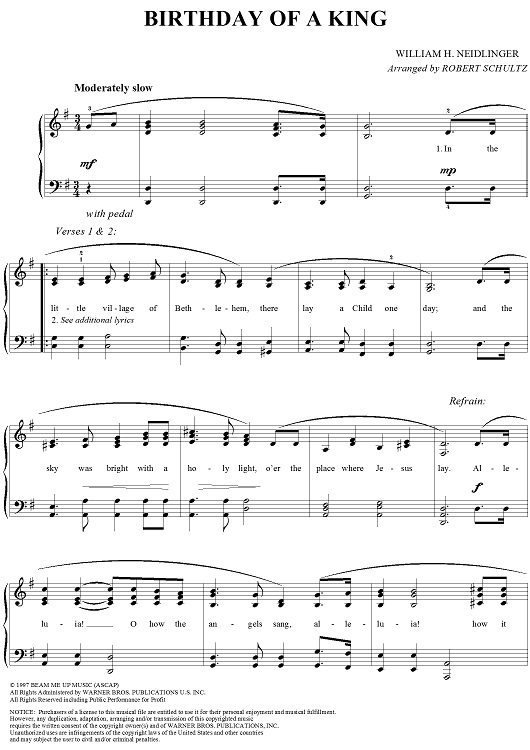




 MaryO'Studio