December 31 ~ On This Day in Music

new_years_eve

Christmas Music, Conclusion ~Auld Lang Syne

• 1894 ~ Ernest John Moeran, English composer who had strong associations with Ireland.

• 1904 ~ Nathan Milstein, Russian-born American violinist and composer

• 1908 ~ Jonah Jones (Robert Elliott Jones), Trumpeter, singer, played with Cab Calloway and threw spitball that got Dizzy Gillespie fired from a band

• 1922 ~ Rex Allen, ‘The Arizona Cowboy’, entertainer, rodeo star, singer, songwriter who published over 300 songs

• 1923 ~ Singer Eddie Cantor opened in the lead role of Kid Boots. Broadway critics called the production, “A smash musical hit!” Eddie made several of the songs from that show into smash hits also, like Alabamy Bound and If You Knew Susie. Three years later, If You Knew Susie became the title song for a movie starring Cantor.

• 1928 ~ Ross Barbour, Singer with The Four Freshmen

• 1929 ~ Guy Lombardo and his Royal Canadians played Auld Lang Syne as a New Year’s Eve song for the first time. Auld Lang Syne had been the band’s theme song long before 1929. However, this night was the start of a New Year’s Eve tradition as Lombardo’s famed orchestra played at the Hotel Roosevelt Grill in New York City to usher in the new year. Where did it Auld begin? Scottish poet Robert Burns said he heard an old man singing the words, and wrote them down, but Burns is considered the original author. The literal translation means “old long since”; less literal means “days gone by”. Auld Lang Syne and Happy New Year!

• 1930 ~ Odetta (Holmes Felious Gordon), American folk-blues singer, guitarist, songwriter and actress

• 1940 ~ As a result of a dispute between the radio networks and ASCAP (the American Society of Composers and Publishers), the radio industry was prevented from playing any ASCAP-licensed music. The ban lasted for ten months. An ASCAP competitor, BMI (Broadcast Music Incorporated) made giant strides, expanding to include 36,000 copyrights. Many radio stations had to resort to playing public domain songs, such as marches and operas, to keep their stations on the air. Even kids songs were played over and over again until the ban was lifted. One of the most popular songs to be played was Happy Birthday to You, which was performed in many different languages just to get past the ban.

The American copyright status of “Happy Birthday to You” began to draw more attention with the passage of the Sonny Bono Copyright Term Extension Act in 1998. When the U.S. Supreme Court upheld the Act in Eldred v. Ashcroft in 2003, Associate Justice Stephen Breyer specifically mentioned “Happy Birthday to You” in his dissenting opinion. American law professor Robert Brauneis, who extensively researched the song, concluded in 2010 that “It is almost certainly no longer under copyright.” In 2013, based in large part on Brauneis’s research, Good Morning to You Productions, a company producing a documentary about “Good Morning to All”, sued Warner/Chappell for falsely claiming copyright to the song. In September 2015, a federal judge declared that the Warner/Chappell copyright claim was invalid, ruling that the copyright registration applied only to a specific piano arrangement of the song, and not to its lyrics and melody.

In 2016, Warner/Chappell settled for US $14 million, and the court declared that “Happy Birthday to You” was in the public domain.

• 1942 ~ Andy Summers (Somers), Guitarist, singer with The Police

• 1943 ~ John Denver (Deutschendorf), American singer and songwriter of popular music

• 1943 ~ Pete Quaife, Bass with The Kinks

• 1946 ~ Patti Smith, Songwriter, singer, playwright

• 1947 ~ Burton Cummings, Jr., Singer with The Guess Who

• 1947 ~ Roy Rogers, ‘the King of the Cowboys’, and Dale Evans were hitched in marriage. They rode off into that sunset together for over fifty years. (Roy died July 6, 1998.)

• 1948 ~ Donna Summer (LaDonna Gaines), Grammy Award-winning singer

• 1951 ~ Tom Hamilton, Bass with Aerosmith

• 1960 ~ After playing California nightclubs as The Pendletones, Kenny and the Cadets, and Carl and the Passions, a new group emerged this day: The Beach Boys. The group’s first national hit, Surfin’ Safari, was soon to be. They recorded for local (Los Angeles) Colpix Records and at the height of their popularity, Capitol Records. The Beach Boys also recorded under the Reprise Records banner. The revitalized group still tours and Capitol continues to reissue various greatest hits packages. The Beach Boys were inducted into The Rock and Roll Hall of Fame in 1988.

• 1972 ~ Joe McIntyre, Singer with New Kids on the Block

• 1975 ~ Elvis Presley performed before 60,000 fans at the Silverdome in Pontiac, MI. He earned $800,000 for the concert, a world record for a single concert by a single artist.

• 1985 ~ Over 54,500 people played kazoos in downtown Rochester, New York. The assembled multitude played A Bicycle Built for Two. Any idea why? Well, they felt it was appropriate for the last day of the year and it got the crowd listed in the Guinness Book of World Records for ‘Most Kazoo-ers’.

• 1985 ~ Ricky Nelson killed in a plane crash.

• 1993 ~ Barbra Streisand performed her first paid concert in 22 years, singing to a sellout crowd at the MGM Grand Garden in Las Vegas.

• 1997 ~ Floyd Cramer, American Hall of Fame pianist (Nashville Sound), died of cancer at the age of 64

• 2000 ~ Tanaquil Le Clercq, the ballerina who dazzled the world in the 1940s and ’50s before her career was cut short by paralytic polio, died of pneumonia at the age of 71. Le Clercq contracted the disease, which left her paralyzed below the waist, in 1956. At the time, she was the fourth wife of George Balanchine and had attracted an adoring public because of her long-legged elegance. She later became a teacher at Dance Theater of Harlem, wrote two books and regularly attended dance performances. The New York City Ballet, of which Le Clercq was a charter member, paid tribute to her in 1988, when it opened its 50th-anniversary season. She acknowledged a thunderous New York State Theater ovation from her wheelchair. Le Clercq was blessed with an elongated physique that she used with refinement or humor. She epitomized the modernized look in classical dancing, which enthralled Balanchine, who once cast her as a dragonfly. As the first City Ballet ballerina trained since childhood by Balanchine, she was naturally identified with the roles he created for her in his major works, such as the ballets “Symphonie Concertante,” “Symphony in C” and “La Valse,” in which her doomed heroine danced herself to death. She was equally unforgettable in the ballets of Jerome Robbins and as the white-faced allegorical figure of Sacred Love in “Illuminations” in 1950.

• 2000 ~ José Greco, the famed flamenco dancer and choreographer who founded the José Greco Spanish Dance Company, of heart failure at the age of 82. Born in Montorio nei Frentani, Italy, of Spanish-Italian parents, he moved to Seville, Spain, at the age of 3, then was raised in Brooklyn from the age of 10. He began his career in 1937 and became known as the greatest Spanish dancer in the world. In 1941, the already famous Argentine-born dancer La Argentinita (known off the stage as Encarnacion Lopez) was preparing for an American tour when she saw Greco dance and asked him to perform as her partner and the featured male performer in her company until she died in 1945. After that, Greco danced with her sister Pilar Lopez. In 1951, Greco shared with Carol Channing the title of “New Broadway Personality of the Year.” The José Greco Dance Company, which helped integrate flamenco with mainstream ballet, toured extensively in North America, and six times worldwide, over the following two decades. In 1962, he Greco was knighted by the Spanish government. In 1971, Greco formed the Foundation for Hispanic Dance. His autobiography, “Gypsy in My Soul: The Autobiography of Jose Greco,” was published in 1977.

• 2000 ~ Eddy Shaver, a guitarist who performed with his father Billy Joe Shaver and Dwight Yoakam, died at the age of 38. Eddy Shaver grew up around music because of his father, a celebrated songwriter whose songs include I’m Just an Old Chuck of Coal (But I’m Gonna Be a Diamond Someday) and Georgia on a Fast Train. Dickie Betts of The Allman Brothers Band helped teach Eddy Shaver to play and gave him his two favorite guitars, one formerly owned by the late guitarist Duane Allman. Eddy Shaver began playing guitar with his father at 13, and gradually became Billy Joe Shaver’s musical partner and sometime co-writer. Billy Joe Shaver merged from country to a more rock-influenced sound because of his son. Albums by the band Shaver include “Tramp on Your Street,” the live “Shaver: Unshaven,” and “Electric Shaver.” A new album, “The Earth Rolls On,” was released on March 20, 2001.

• 2001 ~ Marie Hartford, a well-known businesswoman on Music Row and widow of the late songwriter and performer John Hartford, died of lung cancer. She was 67. Marie Hartford worked at Glaser Publishing, booking the studios at the Glaser Brothers’ Music Row operation, where country music’s Outlaw movement was bred. John Hartford, who wrote the standard Gentle on My Mind, died June 4 after a decade-long battle with cancer. The song was recorded more than 300 times, most prominently by Glen Campbell in 1967 but also by Dean Martin, Elvis Presley and Aretha Franklin.

• 2003 ~ Renata Babak, an internationally known mezzo-soprano with the Bolshoi Opera who defected from the Soviet Union in 1973, died of pancreatic cancer. She was 69. Babak gave recitals until last year, singing in a sweet but powerful and well-controlled voice described by critics as among the best in the world. Her last opera was in 1997, when she performed in Tchaikovsky’s Iolanta with Opera Camerata of Washington. Babak was an international star with 10 years’ experience at the Bolshoi when she defected while the opera company was playing at La Scala in Milan, slipping out of a hotel lobby wearing a wig and dark glasses. She immigrated to Canada and went into hiding for two years. Babak’s U.S. debut at Carnegie Hall in 1975 was met with enthusiastic reviews. She moved to New York and then to Washington in the hopes of working with George London, then general director of the Washington Opera. Babak joined the faculty of the Washington Conservatory of Music when London was disabled by a stroke.

. 2021 ~ Betty White died at the age of 99.  She would have turned 100 on January 17, 2022.

December 30 ~ On This Day in Music

today

• 1756 ~ Pavel Vranicky, Moravian classical composer

• 1853 ~ Andre-Charles-Prosper Messager, French composer, organist, pianist, conductor and administrator.

• 1859 ~ Josef Bohuslav Foerster, Czech composer of classical music

• 1877 ~ Johannes Brahms’ 2nd Symphony in D, premiered in Vienna

• 1884 ~ Anton Bruckner’s 7th Symphony in E, premiered in Leipzig

• 1895 ~ Vincent Lopez, Bandleader, played at NYC’s Astor Hotel, some of the greats started with him: Artie Shaw, Buddy Morrow, Buddy Clark

• 1904 ~ Dmitri Kabalevsky, Russian composer, pianist and conductor
More information about Kabalevsky

• 1910 ~ Paul Frederic Bowles, American composer and novelist

• 1914 ~ Bert Parks (Jacobson), Radio/TV host of Miss America Pageant, Break the Bank, Stop the Music

• 1919 ~ Sir David Willcocks, British organist, conductor and educator

• 1928 ~ Bo Diddley (Otha Ellas Bates McDaniel), Singer

• 1931 ~ Skeeter Davis (Mary Frances Penick), Singer

• 1936 ~ The famous feud between Jack Benny and Fred Allen was ignited. After a 10- year-old performer finished a violin solo on The Fred Allen Show, Mr. Allen said, “A certain alleged violinist should hide his head in shame for his poor fiddle playing.” It didn’t take long for Mr. Benny to respond. The humorous feud lasted for years on both comedian’s radio shows.

• 1937 ~ John Hartford, Grammy Award-winning songwriter, banjo, fiddle, guitar on Glen Campbell’s Good Time Comedy Hour

• 1939 ~ Del Shannon (Charles Westover), Singer, songwriter, inducted into the Rock and Roll Hall of Fame

• 1942 ~ Michael Nesmith, Guitarist with The Monkees, formed The First National Band, movie producer of the first Grammy-winning video

• 1945 ~ Davy Jones (David Thomas Jones), Singer with The Monkees, actor

• 1947 ~ Jeff Lynne, Singer, guitar with The Electric Light Orchestra, songwriter

• 1948 ~ Alfred Drake and Patricia Morrison starred in Kiss Me Kate which opened at the New Century Theatre in New York City. Cole Porter composed the music for the classic play that was adapted from Shakespeare’s comedy, The Taming of the Shrew. The show ran for 1,077 performances on the Great White Way.

• 1942 ~ Frank Sinatra opened at New York’s Paramount Theatre for what was scheduled to be a 4-week engagement (his shows turned out to be so popular that he was booked for an additional 4 weeks). An estimated 400 policemen were called out to help curb the excitement. It is said that some of the teenage girls were hired to scream, but many more screamed for free. Sinatra was dubbed ‘The Sultan of Swoon’, ‘The Voice that Thrills Millions’, and just ‘The Voice’. Whatever he was, it was at this Paramount Theatre engagement that modern pop hysteria was born.

• 1954 ~ Pearl Bailey opened on Broadway in the play, House of Flowers, about two madams with rival bordellos. Diahann Carroll was also cast in the play, written by Truman Capote. Harold Arlen provided the musical score.

• 1969 ~ Peter, Paul and Mary received a gold record for the single, Leaving On a Jet Plane. The song had hit #1 on December 20.

• 1970 ~ Paul McCartney sued the other three Beatles to dissolve the partnership and gain control of his interest. The suit touched off a bitter feud between McCartney and the others, especially his co-writer on many of the Beatles compositions, John Lennon. The partnership officially came to end in 1974.

• 1976 ~ The Smothers Brothers, Tom and Dick, played their last show at the Aladdin Hotel in Las Vegas and retired as a team from show business. Each continued as a solo artist. They reunited years later for another stab at TV (on NBC) plus concert appearances that proved very successful.

• 1979 ~ Richard Rodgers passed away.

• 2000 ~ Bohdan Warchal, a violinist and conductor who was one of Slovakia’s most popular musicians, of an unspecified illness at the age of 70. A violinist in the Slovak Philharmonic, Warchal, who died on Saturday, won acclaim as the founder and conductor of the Slovak Chamber Orchestra, which has given concerts all over the world ever since it was established in 1960. Warchal was awarded a medal by President Rudolf Schuster for his lifetime work last year.

• 2003 ~ Hong Kong’s Canto-pop diva and actress Anita Mui died. She was 40 years old. Mui began her career after winning a singing contest in Hong Kong in 1982. She rose to stardom with her song Homecoming in 1984. Canto-pop refers to hits sung in Cantonese, the dialect of Chinese that is widely spoken in Hong Kong and in many overseas Chinese communities. Mui also turned to acting and won Taiwan’s Golden Horse film award for best actress in 1987 for her role as a tormented ghost in the movie “Rouge.”

2004 ~ Artie Shaw (Arthur Arschawsky), American jazz clarinetist, bandleader, composer and arranger died
More information about Shaw

December 28 ~ On This Day in Music

today

• 1812 ~ Julius Rietz, German composer, conductor and cellist

• 1896 ~ Roger Sessions, American composer

• 1905 ~ Earl “Fatha” Hines, American jazz pianist and bandleader, a classic duet with Louis Armstrong was Weather Bird, songwriter

• 1911 ~ San Francisco established its own symphony orchestra as part of its comeback from a disastrous earthquake.

• 1921 ~ Johnny Otis (Veliotes), ‘Inventor of R&B’, composer, songwriter, drummer vibes with The Johnny Otis Show

• 1930 ~ Edmund Thigpen, Jazz Drummer

• 1932 ~ Dorsey Burnette, Singer, brother of singer Johnny Burnette

• 1938 ~ Charles Neville, Saxophone, flute, percussion with The Neville Brothers

• 1937 ~ Anniversary of Maurice Ravel’s death.

• 1943 ~ Bobby Comstock, Singer

• 1944 ~ The musical, On the Town, opened in New York City for a run of 462 performances. It was Leonard Bernstein’s first big Broadway success. The show’s hit song, New York, New York, continues to be successful.

• 1946 ~ Edgar Winter, American rock vocalist, saxophonist, guitarist and keyboardist

• 1946 ~ Carrie Jacobs Bond passed away.  She was an American singer, pianist, and songwriter who composed some 175 pieces of popular music from the 1890s through the early 1940s

• 1947 ~ Dick Diamonde (Dingeman Van Der Sluys), Bass with The Easybeats

• 1950 ~ Alex Chilton, Guitarist, singer

• 1952 ~ Fletcher Henderson, American musician died

• 1953 ~ Richard Clayderman, Pianist

• 1953 ~ Joe Diffie, Country Singer

• 1957 ~ At The Hop, by Danny and The Juniors, hit #1 on the music charts. It stayed at the top spot for seven weeks. The title of the tune was originally Do the Bop, but was changed at the suggestion of ‘America’s Oldest Living Teenager’ Dick Clark. Trivia: Danny and The Juniors filled in for a group that failed to appear on Clark’s American Bandstand show in Philadelphia. He called The Juniors to come into the studio immediately. They did and lip-synced At The Hop (written by Junior, Dave White and a friend, John Medora). It took off like a rocket to number one. (A few years later, Danny and The Juniors handed stardom to Chubby Checker when they failed to appear on Clark’s show.)

• 1963 ~ Paul Hindemith passed away.

• 1964 ~ Principal filming of the movie classic, Dr. Zhivago, began on location near Madrid, Spain. When completed, the film was 197 minutes long and so spectacular that it received ten Oscar nominations, winning five of the Academy Awards, including Best Original Score. Lara’s Theme was first heard in this movie.

• 1971 ~ Max Steiner, Austrian composer (Gone With the Wind), died at the age of 83

• 1990 ~ David Archuleta, American singer

• 1981 ~ WEA Records (Warner-Elektra-Atlantic) raised the price of its 45 rpm records from $1.68 to $1.98 this day. The company was the leader of the pack with other labels soon boosting their prices. Within a few years, the 45 rpm record was boosted right out of existence.

• 2001 ~ Frankie Gaye, whose combat experience during the Vietnam War was credited with influencing his older brother Marvin’s legendary Motown album “What’s Going On,” died of complications following a heart attack. He was 60. Gaye was a radio operator stationed in Vietnam in the 1960s when he wrote letters to his brother expressing his dissatisfaction with the war. His experiences influenced several songs on his brother’s 1971 album, including Save The Children, Inner City Blues and Mercy Mercy Me, according to Ralph Tee in the book “Soul Music Who’s Who.” Gaye, like his brother, had begun singing in church as a youngster. He went on to work with several Motown artists, including Mary Wells and Kim Weston and provided background vocals on many of his brother’s albums, including “What’s Going On” and 1977’s “Marvin Gaye, Live at the London Palladium.” On his own, Gaye composed the soundtrack to the 1972 film “Penitentiary 1” and toured extensively, both in the United States and England. He also released the singles Extraordinary Girl in 1989 and My Brother in 1990.

• 2016 ~ Debbie Reynolds, 84, died one day after the death of her daughter Carrie Fisher. She was an American actress, singer, businesswoman, film historian, and humanitarian.

More about Reynolds.

• 2017 ~ Rose Marie [Mazzetta], American actress, comedienne and singer, died at the age of 94

• 2018 ~ Christine McGuire, the eldest of the singing McGuire Sisters, who struck gold on the pop charts in the 1950s with “Sincerely,” “Sugartime” and other close-harmony hits that won young American hearts not quite ready for rock ′n’ roll, died at the age of 92.

December 27 ~ On This Day in Music

today
• 1879 ~ “Bunk” Johnson, American jazz trumpeter

• 1901 ~ Marlene Dietrich, German singer and actress

• 1903 ~ The barbershop quartet favorite, Sweet Adeline, was sung for the first time, in New York City. The song was composed by Henry Armstrong with the words of Richard Gerard. The title of the song came from a theater marquee that promoted the great operatic soprano, Adelina Patti. Now female barbershop quartets call themselves Sweet Adelines.

• 1906 ~ Oscar Levant, American pianist, composer, writer and radio personality

• 1911 ~ Anna Russell, Operatic parodies

• 1927 ~ The Jerome Kern (music) and Oscar Hammerstein II (lyrics) musical, Show Boat, opened at the Ziegfeld Theatre in New York City. Its star, Helen Morgan, received excellent reviews from critics of the show; a musical about riverboat show people and their romances and disappointments.

• 1931 ~ Walter Norris, Pianist, composer

• 1932 ~ 

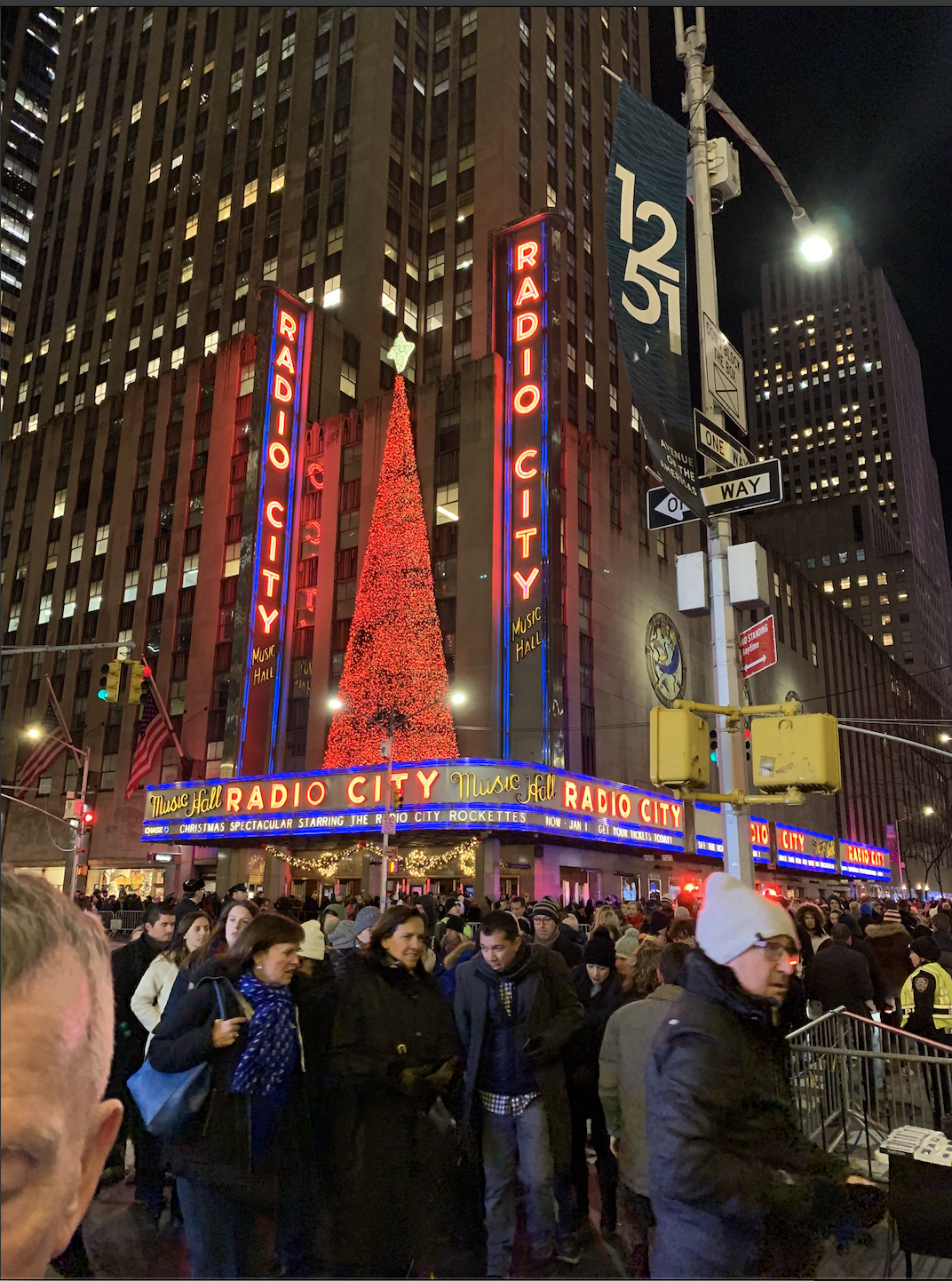
Radio City Music Hall, in New York City, opened. It was the largest indoor theater in the world. The gala grand opening show was a six-hour extravaganza that lost half a million dollars within three weeks. The theater has since been renovated to recapture its original decorative charm. An Art Deco cathedral of entertainment, it seats more than 6,200 people and is still a must-see for those visiting New York. During the holiday season, audiences continue to get a kick out of seeing the world- famous Rockettes perform in precision on Radio City Music Hall’s nearly 10,000-square-foot stage which is a combination movie palace and live theater. It remains a showcase for many exciting musical events. It has a seating capacity of 6,200 seats.

• 1939 ~ The Glenn Miller Show, also known as Music that Satisfies, started on CBS radio. The 15-minute, twice-a-week show was sponsored by Chesterfield cigarettes and was heard for nearly three years.

• 1940 ~ Singer Al Jolson and actress Ruby Keeler were divorced after 12 years of marriage. They had separated a year earlier; but Jolson talked Keeler into co-starring with him in the Broadway show, Hold on to Your Hats. She left the show before the opening and then left the marriage.

• 1941 ~ Leslie Maguire, Pianist with Gerry and The Pacemakers

• 1944 ~ Mick Jones, Guitarist with Foreigner

• 1952 ~ David Knopfler, Guitarist, singer with Dire Straits

• 1953 ~ Elliot Easton (Shapiro), Guitarist with The Cars

• 1975 ~ The Staple Singers reached the top spot on the pop music charts for the second time in their career. This time with Let’s Do It Again. The song, the theme from the movie soundtrack of the same name, was the last hit the group would have. I’ll Take You There was The Staple Singers’ first number one hit (June 3, 1972).

• 1980 ~ The John Lennon hit, (Just Like) Starting Over, began a five-week stay at #1 on the pop charts. The hit was from the album, Double Fantasy. Lennon was murdered on December 8th of that year, as the single and LP had started their climb up the charts.

• 1981 ~ Hoagland “Hoagy” Carmichael, American composer, singer and actor (In the Cool, Cool, Cool of the Evening), died at the age of 82

• 2003 ~ Vestal Goodman, a pioneering gospel music singer who performed for half a century, including a stint on “The PTL Club” with Jim and Tammy Faye Bakker, died. She was 74. Goodman and her late husband Howard “Happy” Goodman were part of The Happy Goodman Family act, which recorded 15 No. 1 gospel music songs and performed more than 3,500 concerts. In the mid-1980s, the couple were regulars on “The PTL Club” television show starring the Bakkers. They left in 1988 after three years on the show, and were not linked to financial improprieties as others on the show were. The Happy Goodman Family was inducted into the Gospel Music Hall of Fame in 1998. They were original members of “The Gospel Singing Jubilee” syndicated TV program that was a pioneer in gospel music broadcasting, appearing on more than 100 U.S. stations. The Goodmans sang at the White House in 1979 for President Carter.

• 2003 ~ Bobbie Nell Brookshire Gordon, a singer who toured in the 1970s with jazz great Duke Ellington, died. She was 64. Gordon, a Dayton native, was discovered in 1961 while singing at a bar in her hometown. She performed with pianist Betty Greenwood and had come to the attention of Ellington, the noted bandleader. Gordon toured from 1970 to 1974 with Ellington. A newly released digital video disc of a 1971 performance, “Live at Tivoli Gardens,” includes Gordon singing “Love You Madly” and “One More Time.” Gordon was featured as “Nell Brookshire” with Ellington on the cover of Jet magazine in September 1971.

• 2003 ~ Dick St. John, half of the Dick & Dee Dee duo, whose 1961 hit, The Mountain’s High, made No. 2 on the Billboard pop singles chart, died. He was 63. Dick & Dee Dee’s biggest hit was The Mountain’s High, but they also cracked the Top 25 pop singles chart in 1963 with Young and In Love and 1965’s Thou Shalt Not Steal. St. John, born Richard Gosting, began performing with his friend Mary Sperling in junior high. With St. John as the chief songwriter, the two soon attracted the attention of Liberty Records in Los Angeles. St. John and Sperling, who was renamed Dee Dee by the label, combined elements of doo-wop, soul and R&B in their sound. They toured with the Beach Boys and the Rolling Stones. Dick & Dee Dee were semi-regulars on such musical shows as “American Bandstand.” St. John also wrote songs that were recorded by Lesley Gore, Jan and Dean, the Four Seasons and Quincy Jones, and he contributed music to many television shows.

• 2025 ~ Pianist Gary Graffman died at the age of 97.

Graffman’s artistry was marked by extraordinary clarity, strength, and integrity. A towering figure on the concert stage, he was equally revered for his devotion to teaching and mentorship, shaping generations of pianists through his long tenure at the Curtis Institute of Music.

After focal dystonia ended his ability to perform with both hands, Graffman did not retreat from music. Instead, he transformed adversity into purpose, becoming one of the great champions of the left-hand repertoire. His performances and advocacy gave lasting life to works written for resilience, including the monumental concerto by Maurice Ravel, which remains a testament to human endurance and artistic will.

Graffman often spoke not of loss, but of responsibility. Responsibility to the music, to students, and to the act of making something meaningful despite limitation. In that way, his legacy extends far beyond the piano.

December 24 ~ On This Day in Music

today

Christmas Countdown: O Holy Night

• 1719 ~ Johann Christoph Altnikol, German organist, bass singer, and composer. He was a son-in-law and copyist of Johann Sebastian Bach

• 1818 ~ Franz Gruber of Oberndorf, Germany, composed the music for “Silent Night” to words written by Josef Mohr. The traditional song was sung for the first time during Midnight Mass on this night.

• 1824 ~ Peter Cornelius, German composer and writer

• 1871 ~ Opera-goers in Cairo, Egypt were treated to Verdi’s Aida in its world premiere. The composer was commissioned to write the opera for festivities celebrating the opening of the Suez Canal

• 1887 ~ Lucrezia Bori, Spanish lyric composer

• 1893 ~ Harry Warren (Salvatore Guaragna), Composer, Song Writer’s Hall of Famer: Best Song Oscar

• 1906 ~ Professor Reginald A. Fessenden sent his first radio broadcast from Brant Rock, MA. The program included a little verse, some violin and a speech.

• 1918 ~ Zara Nelsova, Canadian-born American cellist

• 1914 ~ Ralph Marterie, ‘Caruso of the trumpet’: musician, bandleader

• 1924 ~ Carol Haney, Dancer, member of Jack Cole dance company, worked with Bob Fosse, in films

• 1928 ~ The first broadcast of The Voice of Firestone was heard. The program aired each Monday evening at 8:00. The Voice of Firestone became a hallmark in radio broadcasting. It kept its same night, time (in 1931 the start time changed to 8:30) and sponsor for its entire run. Beginning on September 5, 1949, the program of classical and semiclassical music was also seen on television.

• 1930 ~ Robert Joffrey (Khan), Choreographer with The Joffrey Ballet; died in 1988

• 1931 ~ Ray Bryant, Pianist, composer

• 1944 ~ Mike Curb, Music executive, producer, Oscar-winner

• 1944 ~ The Andrews Sisters starred in the debut of The Andrews Sisters’ Eight-To- The-Bar-Ranch on ABC radio. Patti, Maxine and LaVerne ran a fictional dude ranch. George ‘Gabby’ Hayes was a regular guest along with Vic Schoen’s orchestra. The ranch stayed in operation until 1946.

• 1945 ~ Lemmy (Ian Kilmister), Bass, singer with Motorhead

• 1946 ~ Jan Akkerman, Guitar, lute with bands: Friendship Sextet, Johnny and the Cellar Rockers

• 1951 ~ Menotti’s “Amahl and the Night Visitors”, the first opera composed for television, made its debut on NBC-TV. Amal and the Night Visitors became a Christmas classic.

• 1955 ~ The lovely Lennon Sisters debuted as featured vocalists on The Lawrence Welk Show on ABC-TV. They became regulars with Welk within a month and stayed on the show until 1968.

• 1957 ~ Ian Burden, Keyboards with Human League

• 1977 ~ The Bee Gees spent Christmas and New Year’s Eve at the top of the music charts. How Deep is Your Love became #1 this day and stayed that way for three weeks.

• 2000 ~ Felix Popper, a conductor and music administrator at the New York City Opera, died at the age of 92. Popper joined the New York City Opera in 1949 as an assistant conductor and vocal coach. By 1958 he was named music administrator, and he played an important role in guiding the opera through a period in which the house truly established itself. During this time, the company is credited with discovering important American singers such as Johanna Meier, Tatiana Troyanos, Gianna Rolandi, Faith Esham and Jane Shaulis. Popper retired from the opera in 1980 but continued to work as a consultant and vocal coach.

• 2000 ~ Longtime Detroit blues radio personality and promoter Famous Coachman died of an apparent heart attack. He was 75. Coachman was host of the weekend blues and gospel show on Detroit’s WDET for 21 years until 1997 and remained busy in the city’s music world until his death. “Everybody knew Coachman,” said JoAnn Korczynska, blues music director for WHFR at Henry Ford Community College in Dearborn. “He really did know B.B. King and John Lee Hooker. When I met John Lee Hooker, one of the first things he said to me was `How is Coachman doing?'” Coachman said he was named “Famous” because “my mother knew I would be.”

• 2000 ~ Nick Massi, an original member of the Four Seasons who handled bass vocals and vocal arrangements throughout the band’s glory days, died of cancer at the age of 73. Massi was born in Newark as Nicholas Macioci. The longtime West Orange resident performed with several bands before joining Frankie Valli in a group called the Four Lovers. By 1961, the group had evolved into the Four Seasons. Massi remained with the group until 1965, when he grew tired of touring, Valli said. Massi performed on hits such as Sherry, Big Girls Don’t CryWalk Like a Man and Rag Doll, which friends said was his favorite. During his tenure, the group made the Billboard Top 40 chart 17 times and toured throughout the United States and overseas, melding doo-wop vocals with a contemporary beat. They were inducted into the Rock and Roll Hall of Fame in 1990. Valli’s falsetto was the band’s trademark, but he said Massi was his musical mentor. “He could do four-part modern harmonies that would amaze musicians who had studied for years. And he did it all in his head without writing it down,” Valli said.

December 22 ~ On This Day in Music

today

Christmas Countdown: Adeste Fideles

• 1723 ~ Carl Friedrich Abel, German composer of the Classical era. He was a renowned player of the viola da gamba, and composed important music for that instrument.

• 1738 ~ Jean-Joseph Mouret, French composer, died at the age of 56

• 1808 ~ Beethoven’s Fifth Symphony given world premiere in Vienna.

• 1821 ~ Giovanni Bottesini, Italian Romantic composer, conductor, and a double bass virtuoso

• 1853 ~ Maria Teresa Carreno, Venezuelan pianist, singer, composer, and conductor.

• 1858 ~ Giacomo Puccini, Italian opera composer
More information about Puccini

• 1874 ~ Franz Schmidt, Austrian composer, cellist and pianist.

• 1883 ~ Edgard Varèse, French-born American avant-garde composer
More information about Varèse

• 1885 ~ (Joseph) Deems Taylor, American opera composer and writer, music critic for New York World from 1921 until 1925, New York American from 1931 to 1932, intermission commentator for Sunday radio broadcasts of NY Philharmonic (1936 to 1943), president of ASCAP, married to poet and playwright Mary Kennedy

• 1894 ~ Claude Debussy’s first orchestral masterpiece “Prélude à l’apres-midi d’un faune” premiered in Paris

• 1901 ~ André Kostelanetz, Russian-born American conductor and arranger of Broadway show tunes

• 1939 ~ Gertrude ‘Ma’ Rainey (Mother of the Blues) passed away

• 1941 ~ Jimmy Lunceford and his orchestra recorded Blues in the Night on Decca. The song became one of Lunceford’s biggest hits. Between 1934 and 1946 Jimmy Lunceford had more hits (22) than any other black jazz band (except Duke Ellington and Cab Calloway).

• 1944 ~ Barry Jenkins, Drummer with Nashville Teens and also the Animals

• 1946 ~ Rick Nielsen, Guitarist, singer with Cheap Trick

• 1949 ~ Maurice Gibb, Bass, songwriter with the Bee Gees, married to singer Lulu, twin of Robin Gibb. The Bee Gees sold over 200 million records and were one of the most popular groups from the mid 60’s to late 70’s.

• 1949 ~ Robin Gibb, Songwriter for Bee Gees, twin of Maurice Gibb

• 1958 ~ The Chipmunks were at the #1 position on the music charts on this day in 1958 as Alvin, Simon, and Theodore sang with David Seville. The Chipmunk Song, the novelty tune that topped the charts for a month, is still a Christmas favorite today…

Christmas, Christmas time is near
Time for toys and time for cheer
We’ve been good, but we can’t last
Hurry Christmas, hurry fast

Want a plane that loops the loop
Me, I want a hula hoop
We can hardly stand the wait
Please Christmas, don’t be late.

• 1972 ~ Folk singer Joni Mitchell received a gold record for the album, For the Roses. The album included the song, You Turn Me on, I’m a Radio.

• 1981 ~ London was the scene of a rock ’n’ roll auction where buyers paid $2,000 for a letter of introduction from Buddy Holly to Decca Records. Cynthia and John Lennon’s marriage certificate was worth $850 and an autographed program from the world premiere of the Beatles film Help! brought $2,100.

• 1984 ~ CBS Records announced plans for the release of Mick Jagger’s first solo album, set for February,

• 1985 ~ The Rolling Stones went solo after a 20-year career with the self- proclaimed “greatest rock ’n’ roll band in the world.” The album: She’s the Boss.

• 2002 ~ Joe Strummer (John Mellors), who brought punk attitude and politics to one of the most significant bands in rock ‘n’ roll history, the Clash, died of a heart attack at his home in Somerset, England. He was 50. Strummer, a singer, guitarist, songwriter, activist and actor, had been touring with his band the Mescaleros since the release of their second album “Global a- Go-Go” in July 2001; the latest leg of the tour ended in November in Liverpool. The Clash, which formed in 1976, released its first album in ’77 and broke up for good in 1986, will be inducted into the Rock and Roll Hall of Fame in March. The original lineup of Strummer, Mick Jones, Terry Chimes and Paul Simonon was expected to re-form for the induction ceremony and play the band’s first single, “White Riot,” at the ceremony. Although it was written as an advertising tagline, the Clash successfully lived up to its slogan as “the only band that matters.” The son of a diplomat, Strummer was born John Graham Mellor on Aug. 21, 1952, in Ankara, Turkey. He attended boarding schools in London, and as a teenager grew infatuated with reggae, R&B and rock ‘n’ roll. He formed a pub band, the 101ers, in 1974, which he gave up to form the Clash with Jones, Chimes and Keith Levene. The band was playing standard rock ‘n’ roll prior to Strummer’s arrival. He added reggae to the mix and upped the ante in politics and intensity. He took a Jones tune, for example, that was a complaint about a girlfriend and turned it into one of the band’s early anthems, “I’m So Bored With the U.S.A.” “Within the Clash, Joe was the political engine of the band,” British troubadour Billy Bragg said. “Without Joe there’s no political Clash, and without the Clash the whole political edge of punk would have been severely dulled.” Jones and Strummer penned all of the tunes on their debut and often worked as a team, though later albums would have songs attributed solely to Strummer and, for their final two efforts, have all songs attributed to the band.


December 20 ~ On This Day in Music

Christmas Countdown: Tchaikovsky’s Nutcracker

• 1728 ~ Franz Xaver Pokorny, Czech Classical era composer and violinist.

• 1783 ~ Padre Antonio Francisco Javier Jose Soler

• 1871 ~ Henry Kimball Hadley, American composer and conductor

• 1890 ~ Yvonne Arnaud, French-born pianist, singer and actress

• 1898 ~ Irene (Marie) Dunne, Actress in Show Boat, Anna and the King of Siam, Alternate Delegate to the United Nations, Kennedy Center Honors Lifetime Achievement Award in 1985.

• 1909 ~ Vagn Holmboe, Danish composer and music critic

• 1920 ~ An English-born comedian named Leslie Downes became an American citizen. He had lived in the United States since 1908 and became one of the nation’s true ambassadors for show business and charity. We say, “Thanks for the memories,” to Bob Hope.

• 1928 ~ For the first time, a living actress in the United States had a theater named after her. The Ethel Barrymore Theatre opened in New York City.

• 1932 ~ Al Jolson recorded April Showers on Brunswick Records.

• 1938 ~ John Harbison, American composer and conductor

• 1944 ~ Bobby Colomby, Drummer, singer with Blood, Sweat & Tears

• 1948 ~ Little Stevie Wright, Singer with The Easybeats

• 1949 ~ Harry Belafonte had his second session with Capitol Records. Included in the session were Whispering and Farewell to Arms. With eight tunes then recorded and little enthusiasm from record buyers, Capitol decided to part company with Belafonte by not renewing the singer’s contract. He went to RCA Victor in April 1952.

• 1952 ~ Jimmy Boyd reached the #1 spot on the record charts with the Christmas song of the year, I Saw Mommy Kissing Santa Claus.

• 1957 ~ Billy (Steven) Bragg, Songwriter, guitarist, singer

• 1966 ~ Chris Robinson, Singer with The Black Crowes

• 1972 ~ Jack Albertson and Sam Levine starred as two retired vaudevillians in Neil Simon’s classic comedy, The Sunshine Boys, which opened at the Broadhurst Theatre in NYC. The play had a run of 538 performances. The movie version later became a box office smash, as well.

• 1973 ~ Singer Bobby Darin passed away following open-heart surgery at the age of 37. He left a legacy of memories in rock ’n’ roll and pop tunes, as well as on television and in movies (even an Oscar nomination for his role in Captain Newman, M.D.). The story of Darin being groomed to replace Frank Sinatra at Capitol Records is absolutely true. Unfortunately, Capitol didn’t think the grooming was going so well and withheld many of Darin’s songs for many years; releasing them in a compilation CD in 1995. Good stuff to listen to: Splish Splash, Queen of the Hop, Dream Lover, Mack the Knife, Beyond the Sea, If I Were a Carpenter, etc. At the end, Darin, who had recorded for Atco, Capitol and Atlantic Records had just begun recording for Motown.

• 1980 ~ Shirley Temple Black became a grandmother. Her oldest daughter gave birth to a baby girl.

• 1982 ~ Artur Rubinstein, pianist (My Young Years), died at the age of 95

• 1999 ~ Hank Snow passed away

• 2000 ~ Roebuck “Pops” Staples, patriarch of the Staple Singers whose lyrics on “Respect Yourself” and other hits delivered a civil rights message with a danceable soul beat, passed away. “They took this really positive message music and made it contemporary and popular by putting it with electric guitars and inserting a groove,” said Sherman Wilmott, who is helping create a museum in Memphis, Tennessee, honoring the musical stars at Stax Records, the Staple Singers’ principal label. Born in Winona, Mississippi, Staples learned to sing acapella and developed his Delta blues electric guitar style. Starting out as a gospel group in 1948, the Staple Singers with son Pervis and daughters Mavis and Cleotha as singers reached an even wider audience with 1970s soul hits such as Respect Yourself, I’ll Take You There and If You’re Ready (Come Go With Me). Before achieving stardom, Staples resisted taking his family on tour and held jobs in Chicago’s stockyards and steel mills. Staples came to believe he could contribute in song to the battle for blacks’ civil rights being waged by the Rev. Martin Luther King and others, Wilmott said. “He sang and played guitar. He was extremely well- spoken and calm and intelligent,” he said. Another daughter, Yvonne, told the Tribune: “When Dr. King started preaching, Pops said ‘I think we can sing it.’ That’s what he felt,” she said. “He believed that the world could be made a better place for all of us.” At age 80, Staples won a Grammy Award as a solo artist in 1994 for his album “Father Father.” He also received a National Heritage Fellowship Award at the White House from first lady Hillary Rodham Clinton. The group entered the Rock and Roll Hall of Fame last year. In a 1998 interview with the Tribune, Staples said his musical education began early. “We’d come home and didn’t have anything to do after we eat but go to bed. So we’d go out in the yard and sing.”

• 2000 ~ Rob Buck, lead guitarist for the rock band 10,000 Maniacs, died of liver failure at the age of 42, three weeks after he collapsed at his home in western New York.

• 2004 ~ Blues singer-guitarist Son Seals, one of the most distinctive voices to emerge in the genre during the 1970s, died at the age of 62.
More information about Son Seals

• 2004 ~ Italian soprano Renata Tebaldi, one of the great post-World War II opera divas who Arturo Toscanini said had the “voice of an angel,” died at the age of 82.
More information about Renata Tebaldi

December 19 ~ On This Day in Music

Christmas Music: Johnny Marks

• 1888 ~ Fritz Reiner, Hungarian-born American conductor who was the musical director of the Pittsburgh Symphony, New York Metropolitan Opera and Chicago Symphony. He died in 1963

• 1915 ~ Edith Piaf (Edith Giovanna Gassion), French chanteuse and songwriter.  The Little Sparrow” is regarded by many as France’s greatest female popular singer, Although she sang all her songs in French they were listened to around the world and recognized for the great voice she possessed. Her signature tune “La vie en rose” is our featured video today because even with the poor quality of recording it shows how talented she was.

• 1925 ~ ‘Little’ Jimmy Dickens, Country Music Hall of Famer

• 1928 ~ Galt MacDermot, Composer

• 1935 ~ Bobby Timmons, American jazz pianist

• 1940 ~ Phil Ochs, American folk singer, songwriter and guitarist

• 1941 ~ Maurice White, Singer, drummer, founder of the group Earth, Wind & Fire

• 1944 ~ Alvin Lee, Musician with Ten Years After

• 1944 ~ Zal Yanovsky, Guitarist, singer with The Lovin’ Spoonful

• 1952 ~ Jeff Davis, Bass with Amazing Rhythm Aces

• 1952 ~ Janie Fricke, Singer, Country Music Association Female Vocalist of the Year in 1982 and 1983

• 1957 ~ Meredith Willson’s The Music Man opened at the Majestic Theatre in New York City. The Broadway show starred Robert Preston and had a run of 1,375 shows. It also had 76 trombones and 101 cornets in the band…

• 1960 ~ Neil Sedaka’s Calendar Girl was released on RCA Victor Records. The song became Sedaka’s fourth record to make the charts. Other hits from the guy who made money off of a love song for Carole King (Oh, Carol) include The Diary, Stairway to Heaven, Bad Girl, Next Door to an Angel, Happy Birthday Sweet Sixteen, Laughter in the Rain and Breaking Up is Hard to Do.

• 1960 ~ Frank Sinatra recorded his first session with his very own record company. Frank did Ring-A-Ding-Ding and Let’s Fall in Love for Reprise Records.

• 2000 ~ Milt Hinton, a jazz bassist and photographer called “The Judge” by the jazz greats he worked with and photographed during a 70-year career, died at the age of 90. During his career, Hinton performed with almost every luminary of jazz and popular music, from Louis Armstrong, Cab Calloway, Dizzy Gillespie and John Coltrane to Bing Crosby, Frank Sinatra, Barbra Streisand and Paul McCartney. Hinton also documented his world with a camera, compiling close to 60,000 negatives depicting hundreds of jazz artists and popular musicians on the road, in the studio, backstage and at parties.

• 2001 ~ Bill Bissell, a former University of Washington marching band director who helped create “The Wave”, died in his sleep. He was 70. Bissell directed the Huskies’ band with flair, innovation and humor from 1970 until he retired in 1994. He and former Washington yell leader Robb Weller introduced “The Wave,” in which fans stand with arms raised and cheer section by section, to college football 20 years ago. Bissell directed halftime shows at 14 bowl games, including six Rose Bowls and an Orange Bowl, and was awarded a Citation of Excellence from the National Band Association in 1981.

• 2004 ~ Renata Tebaldi, Italian soprano, died at the age of 82

• 2015 ~ Kurt Masur, German conductor (New York Philharmonic), died at the age of 88

December 18 ~ On This Day in Music

Christmas Countdown: Good King Wenceslas

• 1644 ~ Antonio Stradivari, Italian, most celebrated of all violin makers, died on this date.
Read more information about Stradivari

• 1778 ~ Joseph Grimaldi, Clown: ‘greatest clown in history’, ‘king of pantomime’, Joey the Clown; singer, dancer, acrobat, his character was part of the plot for the movie “Her Alibi”. He died in 1837.

• 1786 ~ Baron Karl von Weber, Opera composer

• 1788 ~ Camille Pleyel, Austrian piano builder/composer

• 1869 ~ Edward Alexander MacDowell, American composer and pianist
More information about MacDowell

• 1869 ~ Louis Moreau Gottschalk, American pianist and composer, dies at 40

• 1892 ~ Premiere of The Nutcracker ballet by Tchaikovsky. This traditional Christmas ballet is so popular that its annual performances keeps many opera companies afloat. Act 1 tells a story of how little Clara aids her magical Christmas gift (a Nutcracker in the form of a soldier) defeat an army of mice. As a reward, he takes her to his magic kingdom and introduces her to a variety of subjects in a colorful stream of character dances. Tchaikovsky’s supply of themes is endless and he constantly provides brilliant orchestration.

• 1919 ~ Anita O’Day (Colton), American jazz singer

• 1920 ~ Conductor Arturo Toscanini made his first recording for Victor Records in Camden, New Jersey.

• 1934 ~ Willie Smith sang with Jimmy Lunceford and his orchestra on Rhythm is Our Business on Decca Records

• 1941 ~ Sam Andrew, Guitarist with Big Brother and the Holding Company

• 1943 ~ Keith Richards, British rock guitarist and singer with The Rolling Stones

• 1948 ~ Bryan ‘Chas’ Chandler, Bass with the Animals

• 1961 ~ The Tokens celebrated their first #1 hit single. The Lion Sleeps Tonight (Wimoweh) was a chart-topper for four weeks in a row.

• 1972 ~ Helen Reddy received a gold record for the song that became an anthem for women’s liberation, I Am Woman. The song had reached number one on December 9, 1972.

• 1975 ~ Rod Stewart announced that he was leaving the group, Faces, and was going solo in a deal with Warner Brothers.

• 1981 ~ Rod Stewart gave a concert at the Los Angeles Forum, which was televised to 23 countries and carried by FM radio stations in the US to an audience of about 35 million.

• 1982 ~ Daryl Hall and John Oates reached the #1 spot on the music charts for the fifth time with Maneater. The song stayed in the top spot for four weeks, making it Hall and Oates’ most popular hit.

• 2001 ~ Eddie Baker, whose efforts to create a jazz hall of fame planted the seeds for the American Jazz Museum in Kansas City, died after complications from heart surgery. He was 71. Baker, a trumpeter and pianist, had led the New Breed Jazz Orchestra since the 1960s, forming close relationships with many top jazz artists. He began calling for a jazz hall of fame as early as the 1970s. He held what he hoped would be the first annual induction to the International Jazz Hall of Fame in 1985 at the Music Hall. But attendance was low, despite a star-studded roster of talent that included the Count Basie Orchestra, George Benson and Woody Herman. He maintained the hall of fame on paper, even though it never had a physical home. Through the years, Baker suggested building a jazz hall in several spots in Kansas City, including the 18th and Vine district and Union Station. His push generated interest in the project, but the American Jazz Museum opened under a different name in 1997 without his involvement. He also was an original member of the Kansas City Jazz Commission, which organized pub crawls and promoted jazz in the 1980s, and he helped organize the Elder Statesmen of Jazz, a service organization of older musicians.

• 2004 ~ Legendary British saxophonist Dick Heckstall-Smith, who played with a list of musicians that reads like a who’s who of the international jazz and rock music scene, has died.

December 17 ~ On This Day in Music

Christmas Countdown: Good King Wenceslas

• 1749 ~ Domenico Cimarosa, Italian composer

• 1894 ~ Arthur Fiedler, American violinist and conductor
More information on Fiedler

• 1910 ~ Sy (Melvin James) Oliver, Trumpeter, singer, arranger, bandleader, composer

• 1926 ~ Benny Goodman played a clarinet solo. This was not unusual for Benny except that it was his first time playing solo within a group recording session. Goodman was featured with Ben Pollack and His Californians on He’s the Last Word.

• 1930 ~ Peter Warlock [Philip Heseltine], British composer and music critic, died of a probable suicide at the age of 36

• 1936 ~ Tommy Steele (Hicks), Singer, actor

• 1937 ~ Art Neville, Keyboards, percussion, singer with The Neville Brothers

• 1937 ~ Nat Stuckey, Country singer, songwriter

• 1939 ~ Eddie Kendricks, Singer with The Temptations

• 1942 ~ Paul Butterfield, American blues singer and harmonica player with Paul Butterfield Blues Band

• 1943 ~ Dave Dee (Harmon), Tambourine, singer, record promoter

• 1955 ~ Carl Perkins wrote Blue Suede Shoes. Less than 48 hours later, he recorded it at the Sun Studios in Memphis. The tune became one of the first records to be popular simultaneously on rock, country and rhythm & blues charts.

• 1958 ~ Mike Mills, Bass with R.E.M

• 1961 ~ Sarah Dallin, Singer with Bananarama

• 1969 ~ Tiny Tim (Herbert Buchingham Khaury) married Miss Vickie (Victoria Budinger) on The Tonight Show starring Johnny Carson. This is the Tiny Tim of the falsetto version of Tiptoe Through the Tulips fame. The NBC-TV program earned the second-highest, all-time audience rating; second only to Neil Armstrong’s walking on the moon. Mr. Tiny Tim and Miss Vickie had a daughter, Tulip. Then in 1977 they stopped tiptoeing together.

• 1969 ~ Chicago Transit Authority became a gold record for the group of the same name (they later changed their name to Chicago). When the album was released by Columbia Records, it marked the first time an artist’s debut LP was a double record.

• 1970 ~ The Beach Boys played to royalty at Royal Albert Hall in London. Princess Margaret was in attendance and shook the royal jewelry to such classics as Good Vibrations, I Get Around and Help Me, Rhonda.

• 1977 ~ Elvis Costello, making a rare TV appearance, agreed to perform on NBC’s Saturday Night Live.

• 1978 ~ Don Ellis passed away

• 1999 ~ Rex Allen passed away

• 2004 ~ Johnnie Carl, Crystal Cathedral Orchestra conductor, took his life. Mr. Carl has been in the employment of the Crystal Cathedral for nearly 30 years and was internationally renowned as a conductor and as a composer and arranger of over 3,500 musical pieces. He was 57 years old.

• 2018 ~ Galt MacDermot, Canadian musician and composer (Hair), died at the age of 89

• 2018 ~ Raven Wilkinson, American ballerina, first African American woman to dance with a major ballet company, died at the age of 83