On November 7 ~ in Music History


Happy Diwali!

Diwali is the Hindu festival of lights celebrated every year in autumn in the northern hemisphere (spring in southern hemisphere).  One of the most popular festivals of Hinduism, it spiritually signifies the victory of light over darkness, good over evil, knowledge over ignorance, and hope over despair.

As per India’s official holiday calendar, Diwali in 2017 will be on October 19, coinciding with the 15th day of Kartik, the holiest month in the Hindu lunar calendar.


.1916 ~ Joe Bushkin, American jazz pianist (A Couple of Joes)

.1922 ~ Al Hirt, Trumpeter, Flight of the Bumble Bee as theme song for TV’s The Green Hornet, played in singer Don Gibson’s band, regular on Make Your Own Kind of Music

.1926 ~ Dame Joan Sutherland, Australian coloratura soprano

.1930 ~ The Waltz You Save for Me, by ‘The Waltz King’ himself, Wayne King, was recorded on Victor. It became King’s theme.

.1937 ~ Mary Travers, American folk singer, Mary of Peter, Paul and Mary

.1938 ~ Dee (Delectus) Clark, Singer

.1942 ~ Johnny Rivers (John Ramistella), Singer

.1943 ~ Joni Mitchell, Canadian folk-rock singer, songwriter and guitarist, 1970 UK No.11 single ‘Big Yellow Taxi’, 1974 US No.7 single ‘Help Me’. She wrote ‘Both Sides Now’ a hit for Judy Collins and ‘Woodstock’ a hit for Crosby Stills Nash and Young and Matthews Southern Comfort. Mitchell’s work is highly respected by critics, and she has deeply influenced fellow musicians in a diverse range of genres.

.1947 ~ Billboard magazine began listing the top 15 popular records. Only 10 songs had been featured previously.

.1956 ~ Elvis Presley hit the charts with Love Me. The song was the first million-seller to make the charts without being released as a single. It was, instead, an EP (extended play) 45 rpm, with three other songs on it: Rip It Up, Paralyzed and When My Blue Moon Turns to Gold Again on RCA Victor.

.1970 ~ Does Anybody Really Know What Time It Is? was released by Columbia. It became the third tune by Chicago to hit the pop music charts. Make Me Smile and 25 or 6 to 4 were previous hits. Does Anybody Really Know What Time It Is? made it to #7 on the charts, January 7, 1971.

.1976 ~ Gone With the Wind was aired (over two nights) on NBC-TV. The showing was the highest-rated TV show in history. 65 percent of all viewers turned on their sets to watch Scarlet O’Hara and Rhett Butler.

.1978 ~ Nick Gilder, Singer

.1979 ~ The Rose, starring Bette Midler, got star treatment with a world premiere in Los Angeles. The movie was modeled after the life of Janis Joplin.

.2000 ~ Doug Nelson, bassist in teen blues star Jonny Lang’s band, was killed when he was hit by a pickup truck on a rural highway in northern Minnesota. He was 46. Nelson began playing professionally at age 15. He worked in Los Angeles for a time and toured with Olivia Newton-John, before returning in the late 1980s to the Twin Cities, where he played with local bands. He joined Lang’s group about three years ago.

.2000 ~ Columbia Legacy and Verve released a five-CD box set companion titled “Ken Burns Jazz: The Story of American Music” in addition to 22 individual artist discs.
Read the news item

.2001 ~ Gene Wooten, a dobro player who backed Patty Loveless, the Osborne Brothers, Wilma Lee Cooper and other country stars, died from complications of lung cancer. He was 49. “He was like a teacher for everyone,” said mandolinist Roland White. “He was like our guru. He just helped everybody in music. … There was no ego ever – ever – and that’s hard to find.” Wooten, a native of Franklinton, N.C., attended Appalachian State University in Boone, N.C., where he began his career in music. He moved to Nashville in 1977 and was hired by Cooper. Wooten played on the Mountain Soul album by Loveless this year. He was voted best dobro player three times by the Society for the Preservation of Bluegrass in America.

.2004 ~ Howard Keel, American actor, singer and president of the Screen Actors Guild (7 Brides for 7 Brothers, Kiss Me Kate), died at the age of 87

.2016 ~ Leonard Cohen, Canadian writer and singer-songwriter (Death of Ladies Man), died at the age of 82

.2018 ~ Francis Lai, the French composer best known for his themes for the movies “Love Story” and “A Man and a Woman,” died at the age of 86.

On October 26 ~ in Music History

today

OCMS 1685 ~ Domenico Scarlatti, Italian composer and harpsichordist
More information about Scarlatti

• 1898 ~ Beryl Rubinstein, American pianist and composer

• 1911 ~ Mahalia Jackson, American soul and gospel singer

• 1913 ~ Charlie Barnet, Saxophonist, bandleader, his autobiography is Those Swinging Years

• 1934 ~ Cole Porter recorded his own composition titled, You’re the Top, from the show “Anything Goes”, on Victor.

• 1935 ~ A talented twelve-year-old sang on Wallace Beery’s NBC radio show on NBC.  Judy Garland delighted the appreciative audience. The young girl would soon be in pictures and at the top of stardom. It would be only four years before Ms. Garland (George Jessel gave her the name, thinking it would be better than her own, Frances Gumm) captured the hearts of moviegoers everywhere with her performance as Dorothy in “The Wizard of Oz”.

• 1944 ~ Michael Piano, Singer with The Sandpipers

• 1946 ~ Keith Hopwood, Singer, guitarist with Herman’s Hermits

• 1952 ~ NBC~TV premiered Victory at Sea. The show was the first documentary film series to gain wide acceptance. Richard Rodgers wrote the score and Robert Russell Bennett orchestrated it. No Other Love, adapted from one of the songs in the score, became a hit for Perry Como in the summer of 1953.

• 1953 ~ Keith Strickland, Drummer with The B-52s

• 1956 ~ Walter Gieseking, German pianist/composer, died at the age of 60

• 1962 ~ The Rolling Stones consisting of Keith Richard, Mick Jagger, Brian Jones, pianist Ian Stewart and drummer Tony Chapman recorded their first demo tape at Curly Clayton Studios in Highbury, London. They recorded three songs, Jimmy Reed’s ‘Close Together’, Bo Diddley’s ‘You Can’t Judge A Book By The Cover’ and Muddy Waters’ ‘Soon Forgotten.’

• 1965 ~ The Beatles received MBE medals from the Queen of England, as they became Members of the British Empire. Ceremonies were held at Buckingham Palace. John Lennon returned his medal four years later in protest of Britain’s involvement in the Nigerian Civil War.

• 1971 ~ Memphis minister Al Green received a gold record for his single, Tired of Being Alone.

• 1984 ~ Barbra Streisand won multiplatinum certification for three albums that reached the four-million-dollar sales mark. “Greatest Hits, Vol. II”, “Guilty”, and “A Star is Born” (with Kris Kristofferson) were honored.

• 2001 ~ Laszlo Halasz, the first music director of the New York City Opera, died at the age of 96. Halasz became the opera’s first director in 1943. During his eight-year tenure, the New York City Opera became an important training ground for young singers. The company also became an important venue for new works. Born in Hungary, Halasz studied at the Liszt Academy in Budapest, where his teachers included Béla Bartók, Ernst von Dohnanyi, Leo Weiner and Zoltán Kodály. He made his professional debut as a pianist in 1928, but in 1931 decided to focus on conducting. He came to New York in 1936, and when the New York City Opera was formed in the fall of 1943, Halasz was appointed its music director. The company’s first season included productions of Puccini’s “Tosca,” Flotow’s “Martha” and Bizet’s “Carmen”  Halasz conducted the company’s first American premiere, Strauss’ “Ariadne auf Naxos,” in 1946, and the opera’s first world premiere, of  William Grant Still’s “Troubled Island,” with a libretto by Langston Hughes. But the opera’s board was uneasy with Halasz’s ventures into modern opera. When the board insisted in 1951 that Halasz submit his repertory plans for approval, he resigned. The board ultimately relented, but when Halasz became involved in union disputes later that year, the board fired him. After leaving City Opera, Halasz began a second career as a record producer. He also conducted opera at houses in Frankfurt, Barcelona, Budapest, London and South America. As a teacher, he was on the conducting faculty at the Peabody Conservatory, in Baltimore, and the Eastman School of Music, in Rochester, N.Y.

• 2001 ~ Herbert Weissenstein, a consultant who specialized in classical music, died at the age of 56. Weissenstein began his career in 1970 as public relations director for the Baltimore Symphony Orchestra. He moved on to the New York Philharmonic and in 1979 became director of development and strategic planning at Carnegie Hall. In 1984, he founded H.F. Weissenstein & Co., which specialized in consulting, directing seminars, and publishing articles in the fields of management and development. His clients included the Electronic Media Forum, the Folksbiene Yiddish Theater, the Manhattan Theater Club, the International Organization for the Transition of Professional dancers and the Brooklyn Botanic Garden.
On October 19 ~ in Music History

• 1911 ~ George Cates, Musician, worked with Steve Allen, musical director of the Lawrence Welk Show for 25 years

• 1916 ~ Karl-Birger Blomdahl, Swedish opera composer

• 1916 ~ Emil Gilels, Russian pianist

• 1938 ~ The Bob Crosby Orchestra recorded I’m Free for Decca. Billy Butterfield was featured on trumpet. A few years later, the song would be retitled, What’s New.

• 1939 ~ Benita Valiente, American soprano

• 1944 ~ Peter Tosh (Winston McIntosh), Singer, baritone and musician. He uses homemade instruments and performed reggae with Bob Marley

• 1944 ~ An actor who would become legend in scores of tough guy roles made his stage debut in New York. Marlon Brando appeared in the Broadway hit, “I Remember Mama”.

• 1945 ~ Jeannie C. Riley (Stephenson), Grammy Award-winning singer

• 1953 ~ Julius LaRosa, popular singer of the time, was unceremoniously fired on the air by Arthur Godfrey. “Julie lacks humility,” Godfrey told the stunned audience, while putting his arm around LaRosa. He said, “So, Julie, to teach you a lesson, you’re fired!”

• 1956 ~ Nino DeFranco, Singer with The DeFranco Family

• 1957 ~ Karl Wallinger, Musician, keyboards, guitarist with World Party

• 1959 ~ Twelve-year-old Patty Duke made her first Broadway appearance, in “The Miracle Worker”. The play would last for 700 performances and become a classic motion picture, launching Patty to fame and fortune.

• 1973 ~ Elvis and Priscilla Presley were divorced after six years and one child (Lisa Marie).

• 1987 ~ Jacqueline du Pre, British cellist, died at the age of 42

On October 15 ~ in Music History

today

• 1818 ~ Alexander Dreyschock, Bohemian pianist

• 1844 ~ Friedrich Niedzsche, German philosopher and composer

• 1886 ~ Modest Mussorgsky’s musical fantasy “Night on Bald Mountain” premiered in St. Petersburg’s Kononov Hall, Russia

• 1900 ~ Boston Symphony Hall’s first concert took place

• 1906 ~ American premièr of Puccini’s opera, “Madama Butterfly”, Washington, D.C.

• 1913 ~ David Carroll, Conductor, arranger, record producer for The Diamonds and The Platters

• 1925 ~ Mickey (McHouston) Baker, Guitarist, singer in the duo, Mickey and Sylvia

• 1925 ~ Grand Ole Opry started on radio in Nashville, Tennessee (where it still originates). It was first heard on network radio in 1939. The show finally made it to TV on this day in 1955.

• 1926 ~ Karl Richter, German organist and conductor

• 1931 ~ The production of “Cat and the Fiddle” opened in New York. It played for 395 performances.

• 1932 ~ The first city-owned opera house, the War Memorial Opera House of San Francisco, opened this day. “Tosca” was the first opera presented.

• 1937 ~ Barry McGuire, Singer, songwriter with The New Christy Minstrels

• 1938 ~ Marv Johnson, Singer

• 1942 ~ Don Stevenson, Drummer, singer with Moby Grape

• 1946 ~ Richard Carpenter, Composer, singer, Grammy Award-winning group, the Carpenters

• 1948 ~ Chris De Burgh (Davidson), Singer, songwriter

• 1951 ~ I Love Lucy debuted on CBS-TV. For the next 20 years, Lucille Ball would be a TV regular. She did take 1956 off. Why? No, having little Ricky had nothing to do with it. She starred in “Damn Yankees” on Broadway that year.

• 1953 ~ Tito (Toriano) Jackson, Singer with The Jackson Five, brother of Michael, Janet, Jermaine, LaToya

• 1953 ~ “Teahouse of the August Moon” opened on Broadway to begin a long and successful run of 1,027 performances.

• 1955 ~ The Grand Ole Opry started on TV

• 1964 ~ An American treasure passed away. Cole Porter, the renowned lyricist and composer, died at age 73. I’ve Got You Under My Skin and hundreds of other classics crossed all musical style and format boundaries throughout his long and rich career.
More information about Porter

• 2001 ~ Etta James, the prolific jazz vocalist whose soulful, blues-influenced recordings over more than a half-century won her acclaim and two Grammy nominations, died of complications from a bout with cancer. She was 72. Jones’ style was described as a cross between Billie Holiday, her idol, and Dinah Washington. She died the same day her last recording, Etta Jones Sings Lady Day, hit music stores. Born in Aiken, S.C., Jones was a teenager when she was discovered while competing in a contest at the famed Apollo Theater in Harlem. Jones collaborated with such greats as Oliver Nelson, Earl “Fatha” Hines, Kenny Burrell and Cedar Walton, both in concert and on recordings. She recorded prolifically for RCA, Prestige, Muse and more recently Highnote Records. Jones earned a gold record for her 1960 recording Don’t Go to Strangers, and received a Grammy nomination in 1981 for Save Your Love For Me. She got a second Grammy nomination in 1999 for a collection of songs: My Buddy – Etta Jones Sings the Songs of Buddy Johnson. Jones was the recipient of many awards, including the prestigious Eubie Blake Jazz Award and the Lifetime Achievement Award from the International Women in Jazz Foundation.

• 2008 ~ Edie Adams [Edith Enke], American businesswoman, singer, actress and comedian, died at the age of 81

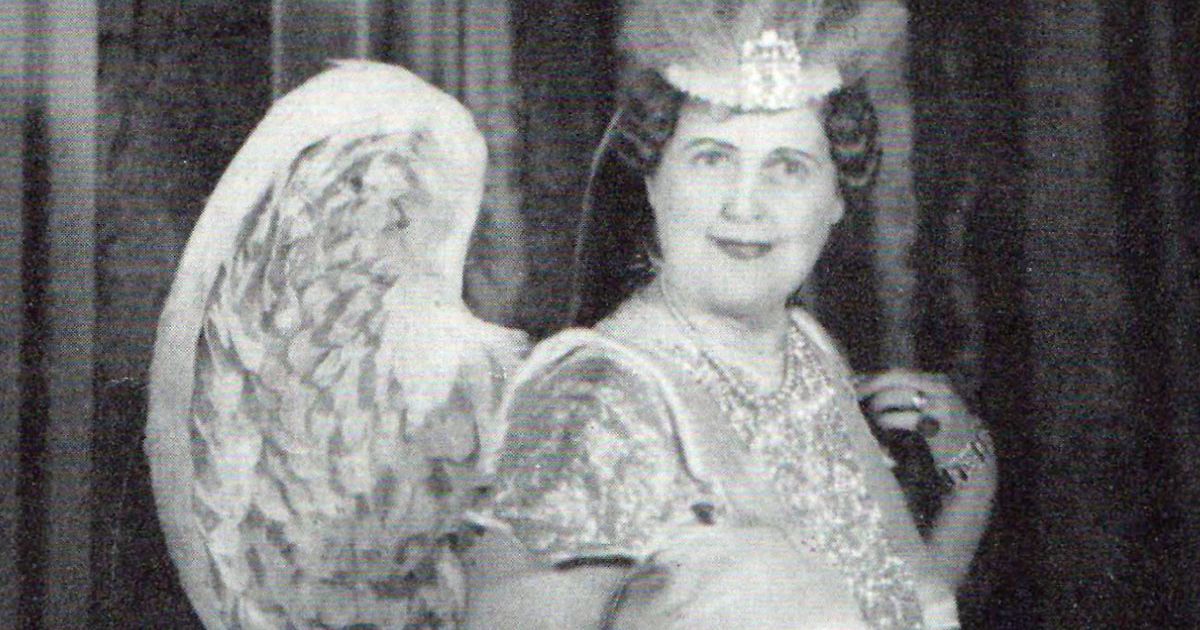
About Singer Florence Foster Jenkins

Florence-Foster-Jenkins

Florence Foster Jenkins was an American socialite and amateur soprano who was known and mocked for her flamboyant performance costumes and notably poor singing ability. The historian Stephen Pile ranked her “the world’s worst opera singer … No one, before or since, has succeeded in liberating themselves quite so completely from the shackles of musical notation.”

Despite (or perhaps because of) her technical incompetence, she became a prominent musical cult figure in New York City during the 1920s, 1930s, and 1940s. Cole Porter, Gian Carlo Menotti, Lily Pons, Sir Thomas Beecham, and other celebrities were fans. Enrico Caruso is said to have “regarded her with affection and respect”.

In 2016 Meryl Streep made Jenkins famous (again)

In the 1940s, New York socialite Florence Foster Jenkins (Meryl Streep) dreams of becoming a great opera singer. Unfortunately, her ambition far exceeds her talent. The voice Florence hears in her head is beautiful, but to everyone else it is quite lousy. Her husband St. Clair goes to extreme lengths to make sure his wife never finds out how awful she truly is. When Florence announces her plans for a concert at Carnegie Hall, St. Clair soon realizes that he’s facing his greatest challenge yet.


On August 28 ~ in Music History

• 1826 ~ Walter Cecil Macfarren, English pianist and composer, born in London

• 1850 ~ Wagner’s opera, Lohengrin, was performed for the first time.

• 1894 ~ Karl Böhm, Austrian conductor

OCMS   1913 ~ Richard Tucker, American tenor
More information about Tucker

• 1924 ~ Dinah Washington, American rhythm-and-blues singer. She popularized many, many great songs, including What a Diff’rence a Day Makes, Unforgettable, and several hits with Brook Benton.

• 1925 ~ Billy (William Wayne) Grammer, Singer

• 1931 ~ You Rascal You was recorded by Henry Allen, with the Luis Russell Band, for the Victor label.

• 1939 ~ Clem Cattini, Drummer with Tornados

• 1948 ~ Daniel Seraphine, Drummer with Chicago

• 1951 ~ Wayne Osmond, Singer with The Osmond Brothers

• 1964 ~ The Beatles appeared on the cover of LIFE magazine.

• 1965 ~ Shania Twain (Eilleen Regina Edwards), Grammy Award-winning singer

• 1984 ~ The Jacksons’ Victory Tour broke the record for concert ticket sales. The group surpassed the 1.1 million mark in only two months.

• 2002 ~ Kay Gardner, whose last musical work with the Bangor Symphony Orchestra memorialized the Sept. 11 terrorist attacks, died of a heart attack. She was in her early 60s.
On hearing of her death, symphony officials scheduled Gardner’s work, “Lament for Thousand,” for the orchestra’s season-opening concert Oct. 13 at the Maine Center for the Arts in Orono.
Gardner was a pianist, flutist and conductor who performed in 46 states and several countries.
More than 20 years ago, she sued the Bangor Symphony, unsuccessfully, for sex discrimination after she had applied for a conducting position and learned that orchestra members had been asked how they felt about working with a female conductor.
In 2000, she was the guest conductor for a 40-member orchestra of women from the Bangor Symphony, playing a repertoire written by women.
Gardner studied music at the University of Michigan and at the State University of New York at Stony Brook. In 1972, she helped found a feminist and openly lesbian women’s band, Lavender Jane.

On August 6 ~ in Music History

today

Be sure your student reads and listens to Today’s Daily Listening Assignment


• 1834 ~ Hermann Mendel, German music lexicographer

• 1909 ~ Karl Ulrich Schnabel, German pianist and composer

• 1912 ~ Marina Koshetz, who followed her famous Russian diva mother Nina to the opera and concert stage and into the movies, was born.  Koshetz was born in Moscow, trained in France and came to the United States as a teenager. She made her debut substituting for her mother Nina Koshetz on radio’s “Kraft Music Hall.”  Using her father’s surname, she began appearing in films in the early 1930s as Marina Schubert. Among her early films were “Little Women,” “All the King’s Horses” and “British Agent.”

Marina concentrated more on her voice in the 1940s. Adopting the professional name Marina Koshetz, she went on to sing with the New York Metropolitan Opera and the Boston Symphony Orchestra. Koshetz made her Los Angeles recital debut at the old Philharmonic Auditorium in 1947.

• 1921 ~ Buddy (William) Collette, Musician. reeds, piano and composer

• 1939 ~ After becoming a success with Ben Bernie on network radio, Dinah Shore started her own show on the NBC Blue radio network. Dinah sang every Sunday evening. Dinah also had a successful TV career spanning over two decades.

• 1940 ~ Columbia Records cut the prices of its 12-inch classical records. The records were priced to sell at $1. Within two weeks, RCA Victor did the same and ended a record-buying slump brought on by disinterested consumers.

• 1958 ~ Randy DeBarge, Musician, bass, vocals with DeBarge

• 1966 ~ The Beatles’ “Revolver” LP was released.

• 1973 ~ Stevie Wonder came close to losing his life, following a freak auto accident. Wonder, one of Motown’s most popular recording artists, was in a coma for 10 days. Miraculously, he recovered and was back in the recording studio in less than eight weeks.

• 1976 ~ Gregor Piatigorsky, Russian-born cellist, died
More information about Piatigorsky

• 1981 ~ Stevie Nicks’ first solo album, Bella Donna, was released. The lead singer for Fleetwood Mac scored a top-three hit with Stop Draggin’ My Heart Around from the album. Tom Petty and The Heartbreakers were featured on the track. Nicks went on to record a total of 11 hits for the pop-rock charts through 1988.

• 2012 ~ Marvin Hamlisch, American composer and conductor, died at the age of 68

• 2016 ~ Pete Fountain, the famed New Orleans jazz clarinetist whose 60-year career was marked by performances for presidents and a pope, making him an international ambassador for the music and culture of his hometown, died at the age of 86.


On August 2 ~ in Music History

today

• 1891 ~ Sir Arthur Bliss, British composer
Read quotes by and about Bliss

• 1900 ~ Helen Morgan (Riggins), Pop Singer

• 1905 ~ Karl Amadeus Hartmann, German composer

• 1924 ~ Joe Harnell, Conductor and arranger

• 1925 ~ John Dexter, Opera director, Mid-America Chorale

• 1921 ~ Enrico Caruso, Italian operatic tenor, died in Naples.

• 1926 ~ The first demonstration of the Vitaphone system, that combined picture and sound for movies, was held at the Warner Theatre in New York City. John Barrymore and Mary Astor starred in the demonstration film for the new moving picture projector.

• 1935 ~ Hank Cochran, Pop Singer and songwriter

• 1937 ~ Garth Hudson, Musician, keyboard with The Band

• 1937 ~ Benny Goodman and his quartet recorded Smiles for Victor Records. Playing with Goodman’s clarinet on the famous song were Lionel Hampton, Teddy Wilson and Gene Krupa.

• 1939 ~ Edwin Patten, Singer with Gladys Knight & The Pips

• 1941 ~ Doris Kenner-Jackson (Coley), Singer with The Shirelles

• 1943 ~ Kathy Lennon, Singer with The Lennon Sisters

• 1951 ~ Andrew Gold, Singer, son of composer Ernest Gold

• 1991 ~ Jeri Southern passed away

• 1997 – Nigeria’s musician Fela Anikulapo-Kuti, who popularized the Afro-music beat globally, died of AIDS aged 58.

• 2000 ~ Helen Quinn, who for more than 30 years presided over the Metropolitan Opera patrons who lined up to buy standing-room tickets, died at the age of 76. Often called the Queen of Standees by those who allowed her to take charge of the ticket queue, Quinn was herself a veteran of standing-room lines at the Met, and attended five or six performances a week, almost always as a standee. In 1966, on her own initiative, she imposed a system on the standee process that the throng of regulars was apparently happy to abide by, and to which the Met gave tacit approval.

• 2001 ~ Ron Townson, the portly centerpiece singer for the Grammy-winning pop group  The 5th Dimension, died of renal failure after a four-year battle with kidney disease. He was 68.  Other members of the reconstituted group – known for such 1960s hits as Aquarius/Let the Sun Shine In, Wedding Bell Blues and Stoned Soul Picnic – performed at the Capitol Fourth music and fireworks show on July 4 in Washington, D.C.   Declining health had forced Townson to retire from The 5th Dimension in 1997, bringing to an end a career that saw him tour with such music legends as Nat King’ Cole and Dorothy Dandridge, appear in operas and direct choirs. He helped front The 5th Dimension when the group’s smooth mixture of pop, jazz, gospel, and rhythm and blues won it four Grammys in 1968 for the Jimmy Webb song Up Up and Away. Other hits included One Less Bell to Answer and Sweet Blindness. As various members left The 5th Dimension in the 1970s to pursue solo projects, Townson formed the group Ron Townson and Wild Honey. Later, he reunited with McLemore and LaRue in a new version of The 5th Dimension that included Phyllis Battle and Greg Walker. He also appeared on television and in films, including the 1992 movie The Mambo Kings.

• 2002 ~ Freidann Parker, co-founder of the Colorado Ballet, died at the age of 77.  Colorado Ballet co-founder Lillian Covillo met Parker in the late 1940s in a dance class taught by Martha Wilcox. The two began the Covillo-Parker School of Dance, and then a fledgling ballet company. After an ambitious double bill in 1961, they created Colorado Concert Ballet, which presented Denver’s first Nutcracker the following season. Every performance sold out. By 1978, the board of directors more than doubled its budget to $100,000, and Colorado Ballet was born. Today its budget has grown to $7 million with a roster of 40 dancers. Parker’s first dance lessons were with Iris Potter. She later trained with modern-dance pioneer Hanya Holm.

On July 21 ~ in Music History

today


Be sure your student reads and listens to Today’s Daily Listening Assignment


• 1748 ~ Louis-Henry Paisible, Composer

• 1779 ~ Gottlob Wiedebein, Composer

• 1782 ~ Placidus Cajetan von Camerloher, Composer, died at the age of 63

• 1797 ~ Franz Schoberlechner, Composer

• 1865 ~ Robert Kahn, Composer

• 1870 ~ Josef Strauss, Austrian composer, died at the age of 42

• 1896 ~ Jean Rivier-Villemomble France, Composer

• 1898 ~ Ernest Willem Mulder, Composer

• 1898 ~ Sara Carter, Vocalist/guitarist with the Carter Family

• 1903 ~ Theodore Karyotakis, Composer

• 1906 ~ Daniel Ayala Perez, Composer

• 1915 ~ Floyd McDaniel ~ blues singer/guitarist

• 1920 ~ Isaac Stern, American concert violinist
Read quotes by and about Stern
More information about Stern

• 1920 ~ Manuel Valls Gorina, Composer

• 1921 ~ Billy Taylor, Orchestra leader on the David Frost Show

• 1922 ~ Kay Starr (Katherine Starks), Pop Singer

• 1925 ~ Lovro Zupanovic, Composer

• 1926 ~ Albert Fuller, American harpsichordist

• 1926 ~ Norman Jewison, Director of Jesus Christ, Superstar, Fiddler on the Roof

• 1927 ~ Stefan Niculescu, Composer

• 1931 ~ Leon Schidlowsky, Composer

• 1931 ~ Ted Husing was master of ceremonies for the very first CBS-TV program. The gala show featured singer Kate Smith, composer George Gershwin and New York City Mayor Jimmy Walker.

• 1935 ~ Kaye Stevens, Singer and comedienne on the Jerry Lewis Show

• 1938 ~ Anton Emil Kuerti, Composer

• 1938 ~ Paul Hindemith and Leonide Massines ballet premiered in London

• 1947 ~ Cat Stevens (Steven Demitri Georgiou) (Muslim name: Yusuf Islam), British folk-rock singer and songwriter

• 1948 ~ Donald Nichols Tweedy, Composer, died at the age of 58

• 1950 ~ Albert Riemenschneider, Composer, died at the age of 71

• 1958 ~ The last of Arthur Godfrey’s Talent Scouts programs aired on CBS-TV. Many artists got their start on Talent Scouts, including Tony Bennett, Pat Boone, The McGuire Sisters and a singer named Connie Francis, who not only sang but played the accordion, as well.

• 1962 ~ Dmitri Shostakovitch completed his 13th Symphony

• 1964 ~ Dmitri Shostakovitch completed his 10th String quartet

• 1969 ~ Just one day after Neil Armstrong set foot on the moon, Duke Ellington and a portion of his band performed a 10-minute composition on ABC-TV titled Moon Maiden. The work featured piano, drums, bass and vocals.

• 1973 ~ Bad, Bad Leroy Brown reached the top spot on the Billboard pop singles chart, becoming Jim Croce’s first big hit. Croce died in a plane crash two months later (September 20, 1973).

• 1976 ~ “Guys & Dolls” opened at Broadway Theater New York City for 239 performances

• 1994 ~ Dorothy Collins, Singer on Your Hit Parade, died at the age of 67

• 1995 ~ Edwin “Russell” House, Saxophonist, died at the age of 65

• 2000 ~ Iain Hamilton, the Scottish composer who turned Tolstoy’s “Anna Karenina” into an opera at the age of 78. Hamilton wrote four symphonies and dozens of orchestral and chamber works but is known best for his vocal music, which includes a cantata based on the poems of Robert Burns. “Anna Karenina” premiered at the English National Opera in 1981 to critical acclaim. His other operas include “Agamemnon”, “The Catiline Conspiracy”, based on a Ben Jonson play, and an adaptation of Peter Shaffer’s play “The Royal Hunt of the Sun”. From 1961 to 1978 he was a professor of music at Duke University in North Carolina.

• 2000 ~ Barbra Streisand announced final concerts

• 2001 ~ Norman Hall Wright, the last surviving writer who worked on the Disney film Fantasia 2000, died at the age of 91. Wright studied at the University of Southern California before being hired by Walt Disney Productions. He started as an animator but later became a writer, producer and director. Wright developed the story of The Nutcracker Suite sequence for Fantasia 2000. He also was responsible for a sequence in Bambi. He wrote several cartoon shorts for Mickey Mouse, Donald Duck, and Goofy and also produced several Wonderful World of Disney television programs.

• 2002 ~ Gus Dudgeon, a respected music producer who worked on many of Elton John’s hit recordings, died in a car crash in western England. He was 59. Dudgeon produced Rocket Man, Goodbye Yellow Brick Road, Your Song, Daniel and Don’t Let The Sun Go Down On Me. Dudgeon also produced David Bowie’s Space Oddity and worked with other stars, including Chris Rea and Joan Armatrading. But it was his partnership with Sir Elton in the 1970s for which he will be best remembered. Dudgeon began his career in the early 1960s as a tea boy, running errands at Olympic Studios in London before joining Decca Records. He engineered the Zombies’ classic She’s Not There and the groundbreaking Blues Breakers album by John Mayall with Eric Clapton, before moving into producing.

• 2015 ~ Theodore Meir Bikel,  Austrian-American actor, folk singer, musician, composer, and activist, died at the age of 91.

On July 16 ~ in Music History

ice-cream-day

It’s National Ice Cream Day!


Be sure your student reads and listens to Today’s Daily Listening Assignment


• 1698 ~ Cristoph Kaldenbach, Composer, died at the age of 84

• 1725 ~ Georg Simon Lohlein, Composer

• 1728 ~ Henri Moreau, Composer

• 1729 ~ Johann David Heinichen, Composer, died at the age of 46

• 1762 ~ Jacques Hotteterre, Composer, died at the age of 87

• 1782 ~ Wolfgang Amadeus Mozart’s opera “Das Entführung aus dem Serail,” premiered in Vienna

• 1822 ~ Luigi Arditi, Violinist and composer

• 1834 ~ Carlo Angeloni, Composer

• 1855 ~ Charles Francis Abdy Williams, Composer

• 1858 ~ Eugène Ysaÿe, Belgian violinist, conductor and composer. He taught fellow violinist Yehudi Menuhin for a short period.

• 1868 ~ Louis-Francois Dauprat, Composer, died at the age of 87

• 1901 ~ Fritz Mahler, Composer

• 1909 ~ John Edward “Teddy” Buckner, Trumpeter

• 1911 ~ Ginger Rogers, Dancer


Ginger and Fred Astaire


Ginger Rogers at 92 years old, dancing with her 29-year-old great-grandson. The first minute or so is a bit of a slow intro.. but stick it out, she is incredible. Most of us would love to be able to move like this at 22, let alone 92! (You do have to wonder whether she has bionic knees).

• 1912 ~ Ray Barr, American pianist on the Vincent Lopez Show

• 1916 ~ Ludwig P Scharwenka, German Composer, died at the age of 70

• 1925 ~ Cal Tjader, Vibraharpist

• 1928 ~ Bella Davidovich, Soviet-born American pianist

• 1930 ~ John Everett Watts, Composer

• 1932 ~ John Chilton, Jazz trumpeter

• 1933 ~ Sollie McElroy ~ Rhythm and Blues singer

• 1934 ~ The NBC Red radio network premiered the musical drama, Dreams Come True. It was a show about baritone singer Barry McKinley and his novelist sweetheart.

• 1936 ~ Buddy Merrill, American guitarist on the Lawrence Welk Show

• 1939 ~ William Bell, American singer

• 1940 ~ Tony Jackson, British rock bassist, vocalist with the Searchers

• 1947 ~ Tom Boggs ~ rock drummer (Box Tops)

• 1948 ~ Pinchas Zuckerman, Israeli violinist, violist and conductor

• 1948 ~ Ruben Blades, Singer

• 1949 ~ Alan “Fitz” Fitzgerald, Rock keyboardist, vocalist

• 1949 ~ Ray Major, Rock guitarist

• 1952 ~ Stewart Copeland, Drummer

• 1956 ~ Ian Curtis ~ English rock vocalist (Joy Division-Transmission)

• 1972 ~ Giorgio Nataletti, Composer, died at the age of 65

• 1972 ~ Max Zehnder, Composer, died at the age of 70

• 1981 ~ Harry Chapin, Folk vocalist, died in a car crash in New York. Chapin was 38. His hit songs included Taxi, W-O-L-D and the million-seller, Cat’s in the Cradle. He was a champion of the hungry and homeless and organized a massive effort to provide food for the needy. This was his legacy to the world; his work continues by other performers.

• 1984 ~ Billy Williams, Singer in Your Show of Shows, died at the age of 73

• 1985 ~ Wayne King, Orchestra leader, Wayne King Show, died at the age of 84

• 1986 ~ Columbia Records announced that after 28 years with the label, the contract of country star Johnny Cash would not be renewed. Cash recorded 13 hits on the pop music charts from 1956 to 1976, all but four on Columbia. The others were on Sam Phillips’ Memphis-based label, Sun. Cash’s biggest hit for Columbia was A Boy Named Sue in 1969.

• 1989 ~ Herbert von Karajan, Austrian conductor, died at the age of 81. He was one of the great conductors of the 20th century, dominating the post-war world of music in the concert hall, opera house and recording studio.

• 1994 ~ 3 Tenors, Placido Domingo, Luciano Pavarotti and José Carreras, perform in LA

• 1995 ~ Charles Bruck, Hungarian-French-American conductor, died at the age of 83

• 1996 ~ John Panozzo, Drummer, died at the age of 48