. 1674 ~ Pietro Antonio Locatelli died. He was an Italian Baroque composer and violinist.
. 1872 ~ Sergei Vasilenko, Russian composer
. 1900 ~ Ted (Edward) Heath, Musician, trombonist, bandleader: played big band concerts every Sunday at the Palladium in the 1940s and 1950s
. 1913 ~ Frankie Laine (Frank Paul LoVecchio), Singer
. 1923 ~ The Audubon Ballroom in New York City was the scene of the first dance marathon. Alma Cummings danced the foxtrot, one-step and waltz with half a dozen partners.
. 1932 ~ Leonard Bernstein participated in his first piano recital at New England Conservatory, performing Brahms’ Rhapsody in G Minor. He was 13.
. 1935 ~ Gordon Mumma, American composer of experimental music
. 1941 ~ Graeme Edge, Drummer with The Moody Blues
. 1942 ~ Bobby Wright, Country artist, actor, son of Johnny Wright of Johnnie and Jack country duo
. 1945 ~ Eric Clapton, British rock guitarist with the Yardbirds; songwriter, Grammy Award-winning singer: Bad Love in 1990
. 1959 ~ Sabine Meyer, German clarinetist
. 1963 ~ The Chiffons began a four-week stay at the top of the pop music charts as their hit single, He’s So Fine, became number one. The song stayed at the top of the top tune tabulation until Little Peggy March came along with I Will Follow Him on April 27th.
. 1964 ~ Tracy Chapman, Grammy Award-winning folk singer-songwriter
. 1964 ~ Willem Andriessen, Dutch composer and pianist (Beethoven), died at the age of 76
. 1968 ~ Celine Dion, Canadian and international superstar singer who has had a number of Number 1 singles in Canada, the Unites States and around the world including “The Power of Love” ( 1993 ), “Because You Loved Me” ( 1995 ). She got her big break following her win 1988 Eurovision Song Contest singing in French “Ne partez pas sans moi” for Switzerland. She is the best selling Canadian artist of all time selling 250 million albums, worldwide. She came from a poor area and poverty-stricken Charlemagne one of 14 children, but when asked has always said her childhood a good time in a happy household.
. 1970 ~ Lauren Bacall starred in Applause which opened on Broadway. The show became one of the hardest tickets to get on the Great White Way. Critics called Bacall “a sensation.” The play, at the Palace Theatre, was an adaptation of the film, All About Eve. It continued for 896 performances. A London version of the show, also starring Bacall, opened in 1972.
. 1971 ~ The Bee Gees received a gold record for the single, Lonely Days. When playing it, they heard the song at a faster speed and said, “Hey, this sounds like disco!” and the rest was Saturday Night Fever music history…
. 1974 ~ John Denver reached the top spot on the music charts with his hit, Sunshine on My Shoulders. It was the singer’s first number one song. Three other singles by Denver reached the top of the music world: Annie’s Song, ThankGod I’m a Country Boy and I’m Sorry. Take Me Home Country Roads made it to the number two position, while Rocky Mountain High just cracked the Top 10 at number 9. Denver wrote Leaving on a Jet Plane for Peter, Paul and Mary and won an Emmy for the TV special, An Evening With John Denver.
. 1827 ~ German composer Ludwig van Beethoven died in Vienna. Beethoven is considered one of the greatest western composers ever. He composed many of his finest works after he had become totally deaf.
. 1828 ~ Franz Schubert, Austrian composer, performed his one and only public concert in the capital city of Vienna.
. 1871 ~ François-Joseph Fetis died. He was a Belgian musicologist, composer, teacher, and influential music critic.
. 1918 ~ Cesar Cui, Russian composer, died
More information about Cui
. 1921 ~ Joe Loco (Jose Esteves, Jr.), Jazz musician, arranger, credited with introducing the mambo (1951) and cha-cha-cha (1953) to the US
. 1925 ~ Pierre Boulez, French composer and conductor. His later work, notably “Le Marteau sans maitre,” gained him a worldwide reputation.
More information on Boulez Grammy winner
. 1941 ~ Jimmy Lunceford and his orchestra recorded the tune, Battle Axe, for Decca Records. Lunceford began with the Chickasaw Syncopaters, a 10-piece band, in the late 1920s. By 1934, he would add names like Sy Oliver, Willie Smith, Earl Caruthers, Joe Thomas, Al Norris, Moses Allen, and James Crawford to form orchestras that would entertain through the mid-1940s.
. 1944 ~ Diana Ross (Diane Earle), American pop-soul singer with The Supremes
. 1948 ~ Richard Tandy, Bass with Electric Light Orchestra
. 1948 ~ Steven Tyler (Tallarico), Singer with Aerosmith
. 1950 ~ Teddy Pendergrass, American soul singer, songwriter and drummer
. 1950 ~ Alan Silvestri, American film score composer (Back To The Future, Forrest Gump)
. 1968 ~ Kenny Chesney, American singer
. 1974 ~ David Essex received a gold record for the hit, Rock On. Though a million seller, Rock On never made it to number one on the pop-rock charts – stalling at number five. It was on the charts for a total of 14 weeks. Essex portrayed the role of Christ in the London production of Godspell. He starred in several British films in 1970. 1975 ~ Tommy, the film based on the rock opera by the group, The Who, premiered in London.
. 2000 ~ John Corigliano won an Oscar for the score to the movie The Red Violin
. 2015 ~ Joseph Smith died. He was a well-liked, modest and warmly adventurous New York pianist.
Benita Meshulam, a close friend, wrote: “Joe was the most curious musician I have ever known, always looking for forgotten works, studying them thoroughly. He was interested not only in the works but the composers and investigated everything. He was a pianist who didn’t care about the condition of the pianos he performed on. It was his message that he wanted to get across–a real musician’s musician who lived and breathed his art. He was also the kindest and most generous colleague.”
. 1809 ~ Johann Georg Albrechtsberger passed away. He was was an Austrian musician.
. 1824 ~ “I am convinced that the soul and spirit of Mozart have passed into the body of young Liszt” ~ Review of a concert given on this day by Franz List in Paris.
. 1875 ~ Maurice Ravel, French composer
More information on Ravel
. 1907 ~ Victor Alphonse Duvernoy, French piano virtuoso, composer and professor of piano at the Conservatoire de Paris, died at the age of 64
. 1917 ~ In the United States, RCA released the first jazz record ever: The Dixie Jazz Band One Step by Nick LaRocca’s Original Dixieland Jazz Band.
. 1917 ~ Robert Erickson, American composer
. 1939 ~ Guy Lombardo and his Royal Canadians recorded one of the most popular songs of the century. The standard, “Auld Lang Syne”, was recorded for Decca Records.
. 1955 ~ “Peter Pan”, with Mary Martin as Peter and Cyril Richard as Captain Hook, was presented as a television special for the first time.
. 1969 ~ The Apollo astronauts began this day of their space voyage by singing Happy Birthday.
. 1985 ~ The song We Are the World, from the album of the same name, was played on the radio for the first time. Forty-five of pop music’s top stars gathered together to combine their talents to record the music of Lionel Richie and Michael Jackson. Richie and Jackson sang, too, while Quincy Jones did the producing of the USA for Africa record. The proceeds of the multimillion-selling recording went to aid African famine victims. The project, coordinated by Ken Kragen, was deemed a huge success.
. 2001 ~ Frankie Carle, a big-band leader best known for Sunrise Serenade, at the age of 97. Carle, who died in Mesa, Ariz., reached the high point of his popularity during World War II, when he was the focus of a bidding war among bands. His repertory was wide, ranging from classics like a revival of Stephen Foster’sSwanee River, to a World War II release that anticipated the Allied victory called I’m Going to See My Baby. Although Carle’s music did not rank high on record industry charts after the 1940s, he still toured and played concerts into the 1980s, some 70 years after he began his musical career.
. 2003 ~ A four-day walkout by 325 Broadway musical orchestra members over the issue of the size of the orchestras required for Broadway shows, forcing nearly every Broadway musical to cancel performances. The Musicians claim they want to replace live music with a virtual orchestra, a couple of synthesizers and computer-generated sound.
. 2015 ~ Steve Zegree died. He was a legendary jazz educator and former Western Michigan University Gold Company director.
. 1766 ~ Samuel Wesley, English organist and composer in the late Georgian period. Wesley was a contemporary of Mozart (1756–1791) and was called by some “the English Mozart.”
. 1771 ~ Johann Baptist Cramer, English musician of German origin. He was the son of Wilhelm Cramer, a famous London violinist and musical conductor, one of a numerous family who were identified with the progress of music during the 18th and 19th centuries.
. 1832 ~ Frederic Chopin’s first Paris concert. The musicologist Arthur Hedley has observed that “As a pianist Chopin was unique in acquiring a reputation of the highest order on the basis of a minimum of public appearances—few more than thirty in the course of his lifetime.”
. 1842 ~ Arrigo Boito, Italian composer, librettist and poet
. 1858 ~ Arnold Dolmetsch, British music antiquarian and musician
. 1932 ~ Michel Legrand, Academy Award-Winning composer for Best Original Score: Yentl in 1983, Brian’s Song, Ice Station Zebra
. 1934 ~ Renata Scotto, Italian soprano. She made her operatic debut at age 18 and is best known for performances as Violetta in La Traviata, Cio-Cio- San in Madama Butterfly, Mimi (and the occasional Musetta) in La Bohème, Lucia in Lucia di Lammermoor, Lady Macbeth in Macbeth and Francesca in Francesca da Rimini. She is also an opera director.
. 1940 ~ Frances Langford recorded one of the classic songs of all time — and one that would become a Walt Disney trademark. When You Wish Upon a Star was recorded on Decca Records during a session in Los Angeles. Many artists have recorded the song, including pop diva Linda Ronstadt (with the Nelson Riddle Orchestra in the early 1980s). One can hear the song not only on record, but as the theme in the opening credits of any Disney movie, video and TV program and those “I’m going to Disneyland/World!” commercials, too.
. 1942 ~ Paul Jones, Harmonica, singer with Manfred Mann
. 1943 ~ Stephen Douglas Burton, American composer and teacher
. 1947 ~ Lonnie Turner, Bass, singer with The Steve Miller Band
. 1964 ~ The musical, “What Makes Sammy Run”, opened in New York at the 54th Street Theatre. Making his Broadway debut in the show was Steve Lawrence. The production ran for 540 performances.
. 1985 ~ Yul Brynner reprised his role in “The King and I” setting a box office record for weekly receipts. The show took in $520,920.
. 1990 ~ Johnnie Ray died. He was an American singer, songwriter, and pianist.
. 1991 ~ Webb Pierce passed away. He was one of the most popular American honky tonk, rockabilly vocalists, guitarists of the 1950s
. 1994 ~ Donald Phillips, pianist/composer, died at the age of 80
. 1830 ~ Hans Bronsart Von Schellendorf, classical musician, pianist and composer who studied under Franz Liszt
. 1889 ~ John Mills, Guitarist, singer, bass with The Mills Brothers. He was father of the four Mills brothers and took youngest son John, Jr.’s place after his death in 1935
. 1912 ~ Rudolf Firkušný, Czech composer, classical pianist
. 1914 ~ Matt Dennis, Pianist, singer, recorded vocals for Paul Whiteman
. 1916 ~ The Baltimore Symphony Orchestra presented its first concert. The symphony was the first by a municipal orchestra to be supported by taxes.
. 1941 ~ Sergio Mendes, Brazilian jazz pianist and composer
. 1935 ~ Gene Vincent (Craddock), Singer, actor
. 1938 ~ Larry Clinton and his orchestra recorded Martha on Victor Records. Bea Wain was heard warbling the vocals on the tune.
. 1938 ~ Bobby”Boris” Pickett, American singer-songwriter (Monster Mash), born in Somerville, Massachusetts (d. April 25, 2007)
. 1939 ~ Gerry Goffin, Lyricist with Carole King and with Michael Masser
. 1940 ~ NBC radio presented “The Chamber Music Society of Lower Basin Street” for the first time. The famous Blue network series included several distinguished alumni — among them, Dinah Shore and Zero Mostel. The chairman, or host, of “The Chamber Music Society of Lower Basin Street” was Milton Cross. He would say things like, “A Bostonian looks like he’s smelling something. A New Yorker looks like he’s found it.” The show combined satire, blues and jazz and was built around what were called the three Bs of music: Barrelhouse, Boogie Woogie and Blues.
. 1968 ~ The new 20,000 seat Madison Square Garden officially opened in New York. It was the fourth arena to be named Madison Square Garden. The showplace for entertainment and sports opened with a gala show hosted by Bob Hope and Bing Crosby.
. 1973 ~ Ethan Iverson, US pianist, composer, and critic, born in Menomonie, Wisconsin
. 1982 ~ Eleanor Powell, American actress and tap dancer (Born to Dance), died of cancer at the age of 69
. 2001 ~ Dame Sonia Arova, a Bulgarian-born ballerina who danced with Rudolf Nureyev, at his request, in his American debut, died of pancreatic cancer at the age of 74. Arova was knighted by King Olaf V of Norway, only the second woman to receive that distinction. During her years as founding artistic director of the State of Alabama Ballet, Dame Sonia Arova changed the face of dance in Birmingham. Through a stage career that lasted three decades and a teaching career that occupied three more, she lived and breathed ballet. Born in Sofia, Bulgaria, Arova began dancing at age 6. By 8, she was studying ballet intensively in Paris. When war broke out in 1940, she escaped the Nazis’ advance with her English piano teacher in a harrowing flight during which their train was machine-gunned by German troops. Arriving in England, Arova was enrolled in an arts school and later joined the International Ballet. In 1965, Arova became artistic director of the Norwegian National Ballet, moved to California in 1971 to co-direct the San Diego Ballet and in 1975 accepted a teaching position at the Alabama School of Fine Arts. Maintaining her position at ASFA, she took over the newly formed State of Alabama Ballet in 1981 as artistic director, with her husband, Thor Sutowski, as artistic associate and choreographer. In 1996, the couple returned to San Diego, and she spent her last years with the San Diego Ballet.
. 2003 ~ Moses G. Hogan, 45, a pianist and choral conductor known for his contemporary arrangements of spirituals, died of a brain tumor in New Orleans. He was editor of the Oxford Book of Spirituals, published in 2001 by Oxford University Press. The book has become the U.S. music division’s top seller. Mr. Hogan also toured with his own singing groups, the Moses Hogan Chorale and Moses Hogan Singers. His arrangements, more than 70 of which have been published by the Hal Leonard publishing company, were performed by the Mormon Tabernacle Choir, soprano Barbara Hendricks and countertenor Derek Lee Ragin.
. 2003 ~ William L. “Weemo” Wubbena Jr., 72, a retired Army colonel who sang in Washington area barbershop quartets, died of cancer. Col. Wubbena was born in Marquette, Mich., and raised in Washington. He was a member of the Montgomery County chapter of the Society for the Preservation and Encouragement of Barber Shop Quartet Singing in America.
. 2012 ~ Mega-star and singer Whitney Houston died at the age of 48 in a Los Angeles hotel the night before the Grammy Awards. Plagued by substance abuse in her later life, Houston had become one of the most popular and celebrated singers in her early career.
. 2018 ~ Vic Damone [Vito Farinola], American singer (On the Street Where You Live), entertainer, actor and TV presenter (Vic Damone Show), died at the age of 89
. 1736 ~ Johann Georg Albrechtsberger, Austrian musician
. 1809 ~ (Jacob Ludwig) Felix Bartholdy Mendelssohn, German composer
More information about Mendelssohn
. 1900 ~ Mabel Mercer, British-born American cabaret singer
. 1904 ~ Luigi Dallapiccola, Italian composer
More information about Dallapiccola
. 1911 ~ Jehan Alain, French organist and composer
. 1928 ~ Frankie Vaughn (Abelson), Singer
. 1929 ~ Russell Arms, Singer
. 1940 ~ Angelo D’Aleo, Singer with Dion and The Belmonts
. 1941 ~ Jimmy Dorsey and his orchestra recorded the classic, Amapola, on Decca Records. Helen O’Connell and Bob Eberly joined in a vocal duet on this very famous and popular song of the Big Band era.
. 1943 ~ Eric Haydock, Bass with The Hollies
. 1943 ~ Dennis Edwards, singer with the Temptations since 1968. He sang on a string of the group’s hits including “I Can’t Get Next to You,” “Ball of Confusion” and “Papa Was a Rollin’ Stone” in an initial tenure that stretched to 1977.
. 1947 ~ Melanie (Safka), Singer
. 1947 ~ Dave Davies, Singer, guitarist with The Kinks
. 1950 ~ Ed, Gene, Joe and Vic, The Ames Brothers, reached the #1 spot on the pop music charts for the first time, as Rag Mop became the most favorite song in the U.S. The brothers enjoyed many successes with their recording efforts.
.
1959 ~ 22-year-old Buddy Holly, 28-year-old J.P. Richardson (The Big Bopper) and 17-year-old Ritchie Valens died in an airplane crash near Mason City, Iowa. February 3rd has been remembered as ‘The Day the Music Died’ since Don McLean made the line popular in his 1972 hit, “American Pie”. Buddy Holly, born Charles Hardin Holly in Lubbock, Texas, recorded That’ll Be the Day, Peggy Sue, Oh, Boy, Maybe Baby, and others, including It Doesn’tMatter Anymore (recorded just before his death, a smash in the U.K., non-top-10 in the U.S.). Buddy was inducted into the Rock and Roll Hall of Fame in 1986. A convincing portrait of the singer was portrayed by Gary Busey in The Buddy Holly Story, a made for TV movie. J.P. (Jiles Perry) Richardson was from Sabine Pass, TX. He held the record for longest, continuous broadcasting as a DJ at KTRM Radio in Beaumont, TX in 1956. He was on the air for 122 hours and eight minutes. In addition to his smash hit, Chantilly Lace, Richardson also penned Running Bear (a hit for Johnny Preston) plus White Lightning (a hit for country star, George Jones). Richard Valenzuela lived in Pacoima, CA (near LA) and had a role in the 1959 film, Go Johnny Go. Ritchie Valens’ two big hits were Donna and La Bamba … the last, the title of a 1987 film depiction of his life. La Bamba also represented the first fusion of Latin music and American rock. Of the three young stars who died in that plane crash, the loss of Buddy Holly reverberated the loudest over the years. But, fans of 1950s rock ‘n’ roll will agree, all three have been sorely missed.
. 1959 ~ Lol (Laurence) Tolhurst, Drummer, keyboard with The Cure
. 1964 ~ The British group, The Beatles, received its first gold record award for the single, I Want To Hold Your Hand. The group also won a gold LP award for “Meet The Beatles”. The album had been released in the United States only 14 days earlier.
. 1971 ~ Lynn Anderson received a gold record for the single, Rose Garden. The Grand Forks, ND country singer was raised in Sacramento, CA. In addition to being a singer, she was an accomplished equestrian and California Horse Show Queen in 1966.
. 1974 ~ “Pajama Game” closed at Lunt Fontanne Theater NYC after 65 performances
. 1979 ~ “YMCA“ by Village People peaked at #2 on the pop singles chart. It was fun to dance to!
. 2002 ~ Remo Palmier, a self-trained guitarist who was a fixture in the New York jazz scene in the 1940s, died at the age of 78, and had been suffering from leukemia and lymphoma, his wife said. Over the course of his career, Palmier played with jazz legends Charlie Parker, Billie Holiday and Dizzy Gillespie, among others. Born Remo Palmieri in the Bronx, Palmier achieved his greatest fame performing with broadcaster Arthur Godfrey on CBS, and taught Godfrey how to play the ukulele. After Godfrey retired, Palmier released his own albums, “Windflower and “Remo Palmier”.
. 1912 ~ Erich Leinsdorf, Austrian-born American conductor
. 1937 ~ Glen Gray and his Casa Loma Orchestra recorded A Study in Brown, on Decca Records.
. 1941 ~ John Steel, Singer, drummer with The Animals
. 1944 ~ Florence LaRue (Gordon), Singer with The Fifth Dimension
. 1962 ~ Clint Black, Singer, actor
. 2002 ~ Blues and jazz pianist Abie “Boogaloo” Ames died at the age of 83. Ames was born on Big Egypt Plantation in Cruger, Miss., on May 23, 1918. He began playing piano at the age of 5 and his style earned him the nickname “Boogaloo” in the 1940’s. Ames moved to Detroit as a teenager and started a band, touring Europe with Louis Armstrong in 1936. Ames worked at Motown Studio and befriended other great musicians like Nat King Cole and Erroll Garner. In 1980, Ames moved to Greenville, where he became a regular performer at local clubs and festivals. Cassandra Wilson’s forthcoming Blue Note CD tentatively titled “Belly of the Sun” is set to include Darkness in the Delta, a song written by Ames for the CD. Ames was named the 2001 winner of the Artist’s Achievement Award of the Governor’s Awards for Excellence in the Arts in the state of Mississippi. With his protege and 1990s musical partner Eden Brent, Ames performed at the Kennedy Center for Performing Arts in Washington, D.C., in 2000. Ames’ last public performance was in October 2001 at the E.E. Bass Cultural Center in Greenville with another former student, Mulgrew Miller.
. 2002 ~ David Stetler, a big band swing drummer who played with Benny Goodman and Spike Jones, died of pneumonia. He was 79. A Seattle native, Stetler was discovered in high school by Lunceford. With a style close to that of Gene Krupa and Jo Jones, Stetler toured the country in the 1940s but returned to Seattle after his first son was born. He backed up national acts in local performances, including many during the world’s fair in 1962.
. 2003 ~ Charlie Biddle, a leader of Montreal’s jazz scene in the 1950s and ’60s who played bass with Thelonious Monk and Charlie Parker, died after a battle with cancer. He was 76. Biddle was a native of Philadelphia who moved to Canada in 1948. Over the next five decades, the World War II veteran and former car salesman became synonymous with jazz in Montreal. Biddle opened his own club, Uncle Charlie’s Jazz Joint, in suburban Ste- Therese in 1958. He later performed in such legendary Montreal nightspots as The Black Bottom and the Penthouse, where he worked with the likes of Oscar Peterson, Art Tatum, Charlie Parker and Lionel Hampton. When there were no jobs in Montreal, Biddle played smaller Quebec cities with a group called Three Jacks and a Jill. Until recently, Biddle played four nights a week at Biddle’s Jazz and Ribs, a Montreal landmark for nearly 25 years. Coincidentally, the club closed Tuesday for planned renovations, which included erecting a wall of fame to honor Biddle and others who have played at the club. In 1979, he organized the three-day festival that some say paved the way for the renowned Montreal International Jazz Festival. News Item about Charlie Biddle
. 2003 ~ Jerome Hines, a bass vocalist who performed regularly at the Metropolitan Opera during a career that spanned more than six decades, died. He was 81. Hines spent 41 years performing at the Met, more than any other principal singer in its history. He was known for his timbral richness, as well as the research he conducted into the historical and psychological background of the roles he portrayed. During his career at the Met, he portrayed 45 characters in 39 works, including title roles in Mussorgsky’s “Boris Godunov” and Mozart’s “Don Giovanni,” and Colline in Puccini’s “La Boheme.” He gave a total of 868 performances at the Met, retiring in 1987. He went on to perform with regional opera companies and at benefits. Hines, who became a born-again Christian in the 1950s, composed his own opera, “I Am the Way,” about the life of Jesus. He sang the title role at the Met in 1968 and 93 times around the world.
. 2003 ~ Saxophonist Cornelius Bumpus, a former member of the Doobie Brothers who had performed with Steely Dan since 1993, died en route to a series of performances in California. He was 58. Bumpus began his career at age 10, playing alto saxophone in the school band in Santa Cruz, Calif. In 1966, he spent six months performing with Bobby Freeman, and joined Moby Grape in 1977, writing one tune for the “Live Grape” album. Bumpus also recorded two solo albums and toured with his own band. Since performing with The Doobie Brothers in the early 1980s, Bumpus played with a number of bands, most recently with Steely Dan, which won the “Album of the Year” Grammy for its 2000 “Two Against Nature” release. His relations with his former Doobies bandmates turned contentious in the late 1990s, when they sued him and several other musicians over their use of the Doobies name. A federal judge in 1999 ruled against Bumpus and the other musicians, ordering them not to use the name.
Michael Joe Jackson
A star was born on August 29, 1958 in Gary, Indiana. Singer, songwriter, dancer, actor Michael Joe Jackson started on the road to stardom while at Garnett Elementary School in Gary. Michael performed for his class by singing Climb Every Mountain. Within just a few years, he took his act to the stage joining his brothers as The Jackson Five. They were entertaining at Mr. Lucky’s, also in Gary, Indiana. Michael was only 8. By the time he was 11, Michael, the youngest of the five brothers, was the lead singer of the group.
And their hits were hitting the top of the charts: I Want You Back, ABC, The Love You Save, I’ll Be There. Then young Michael started recording solo hits like Ben, also #1.
And the hits just kept on coming … and the awards came with them: A Grammy for Best Male R&B Vocal in 1979 for Don’t Stop ’Til You Get Enough, 5 Grammy Awards in 1983 — Best Male Pop Vocal and Album of the Year (Thriller), Best Male R & B vocal and Best R & B song (Billie Jean), and Best Recording for Children: E.T., the Extraterrestrial; 2 in 1984 — Record of the Year and Best Male Pop Vocal (Beat It); another in 1985 with Lionel Richie for Song of the Year (We are the World); a Best Music Video/Short Form Grammy in 1989 for Leave Me Alone; and finally, The Legend Award Grammy — for the living legend in the music industry, Michael Jackson.
Whether Michael sings with his brothers, his sisters, alone or in duets with fellow performers, the results are hit, after hit, after hit … The Girl is Mine and Stay, Stay, Stay with Paul McCartney; I Just Can’t Stop Loving You with Siedah Garrett; Rock with You, Bad, Smooth Criminal … Ease on Down the Road with Diana Ross (from Broadway’s The Wiz in which Michael played the scarecrow). Michael, the actor, was also seen as a hologram, Captain Eo in Epcot Center’s multimedia show.
A celebrity for most of his life, he is both magic and tragic … the gloved one’s fame and infamy well-known throughout the world: he made $70 million from Thriller; he paid $50 million for the rights to the Beatles’ 251 songs; his Bad album was number one in 23 countries; he has an amusement park and zoo at his California estate; he married and divorced Lisa Marie Presley, the daughter of the King of Rock.
He remarried, became a father … and the rest of the story is still being written …. To date, Michael Jackson remains the King of Pop.
Janácek
Leos Janácek lived from 1854 until 1928. It was relatively late in life that the Moravian composer Janácek won more than local recognition. He made his early career in the capital of his native province, Brno, coupling an interest in regional folk music with a study of speech intonations, echoed in his instrumental as well as vocal writing. His opera Jenufa was first staged in Brno in 1904, but it was the performance in Prague in 1915 that brought the work of the composer a much wider public. The seven operas that followed have formed a very idiosyncratic part of current operatic repertoire, culminating in From the House of the Dead, completed in 1928, the year of Janácek’s death, and based on the novel by Dostoyevsky.
The best known of Janácek’s music for orchestra is the Sinfonietta, derived from an original festival piece of 1926. To this may be added the rhapsody based on the work of Gogol, Taras Bulba, and the Lachian Dances, based on folk-dances.
Joachim
Joseph Joachim lived from 1831 until 1907. He was a Hungarian violinist, conductor and composer whose exceptional talent was recognized by Mendelssohn. He was also a close friend of Brahms. His music had much in common with the music of Schumann.
John
Elton Dwight John was born in 1947 and is a rock singer and pianist. He was born in Pinner, NW Greater London, England. He played the piano by ear from age four, and studied at the Royal Academy of Music at 11. From 1967, he and Bernie Taupin began writing songs such as “Rocket Man’ (1972), “Honky Cat’ (1972), and “Goodbye Yellow Brick Road’ (1973). Their publisher pressed John to perform them, for which he obscured his short, plump, myopic physique in a clownish garb that included huge glasses, sequined and fringed jump suits, and ermine boots. The top pop star of the 1970s, he later became chairman (1976 to 1990) and then honorary life president in 1990 of the Watford Football Club and a stock-market speculator. Despite health problems in 1993 brought about by his stressful lifestyle he continues to perform live across the world.
Johnson
James Price Johnson, Ragtime composer
Jolivet
André Jolivet lived from 1905 until 1974. Versatile in the arts, André Jolivet was a pupil of Le Flem and later of Varèse and was, with Olivier Messiaen, Daniel Lesur and Yves Baudrier, a member of the composers grouped together as Jeune France. As director of music for the Comédie française he wrote a quantity of incidental music and elsewhere based his work on principles that stemmed from his interest in the magical and incantatory element fundamental to human music.
Jolivet wrote a number of concertos, all demanding considerable virtuosity from the soloist. These include a concerto for the ondes Martenot, an electronic instrument developed in France in the 1920s, and concertos for trumpet and piano, for flute, for piano, for harp, for bassoon and harp, for percussion, for cello and for violin.
In addition to his varied incidental music, whether for Molière, Claudel, Corneille or Plautus, Jolivet wrote music for the ballet and for marionette plays.
Jolivet made an early impression on Messiaen with the six piano pieces that constitute Mana. Chamber music includes music involving the flute, an instrument he particularly favoured for its primitive human associations.
Joplin
Scott Joplin (1868-1919) was the most influential and famous composer of the ragtime era, and one of the most daring pioneers in the history of American music. He was known as the Father of Ragtime. At first, the musical establishment absolutely refused to acknowledge ragtime as a worthy means of musical expression, dismissing it as catastrophic noise that had little musical meaning at all. Only within the last few decades has his work finally been truly appreciated and accepted as a truly great form of art, and as a unique and substantial contribution to music.
Ragtime, which first emerged in the 1890’s, is a style of piano playing with an up-and-down “ragged time” rhythm. Joplin made ragtime an international dance craze with “Maple Leaf Rag”. “The Maple Leaf Rag”, became the first song to sell over one million copies of sheet music.
The remarkable part of his success as a musician was the fact that he was African American. His success paved the way for all black musicians who would come after him, breaking a long-standing race barrier: acceptance as a performer.
Joplin’s music enjoyed renewed popularity with the use of “Solace” in the 1973 movie The Sting. Solace was not a typical rag, although it does have similar rhythmic elements.
Treemonisha was an opera composed by Joplin, although it was not produced until 1975, 58 years after his death.
Some other ragtime composers were Joseph Lamb and James Scott. Eventually, ragtime was replaced by jazz.
Giuseppe Tartini was born in Pirano, Italy and lived from 1692 until 1770. He was a violinist and composer, who also had studied law and divinity at Padua, and was an accomplished fencer. He secretly married a proteg?e of the Archbishop of Padua, for which he was arrested. He fled to Assisi but, after attracting the archbishop’s attention by his violin playing, he was invited back to his wife. Perhaps one of the greatest violinists of all time, he was also an eminent composer. His best-known work is the Trillo del Diavolo (c.1735, Devil’s Trill).
Tavener, John
John Taverner lived from about 1490 until 1545. He was employed as master of the choristers at Cardinal College (Christ Church), Oxford, in its early heyday, retiring, on Cardinal Wolsey’s fall from power, to Boston, where he was held in considerable regard until his death in 1545. The popular, if mistaken, account of his life is the subject of the opera by Peter Maxwell Davies, Taverner.
Taverner wrote Latin Mass settings, Magnificat settings and motets. Of the first of these the Western Wynde Mass, using the melody of a popular song of that name, is among the better known. From his Mass Gloria tibi Trinitas came the fragment of a theme that served later generations as the basis of an English genre of consort music, the In nomine.
Taverner himself began the tradition of the In nomine, an instrumental arrangement of part of the Benedictus of his Mass Gloria tibi Trinitas.
Taverner, John Keith
John Kenneth Tavener, born in 1944 in London, England is a composer. He studied at the Royal Academy of Music, London and has been professor of music at Trinity College of Music since 1969. He was still at college when he won the prestigious Prince Rainier of Monaco Prize in 1965 with his cantata, Cain and Abel. His music is predominantly religious, and includes the cantata The Whale (1966), Ultimos ritos (1972, Last Rites) for soloists, chorus, and orchestra, and a sacred opera Therese (1979). He was converted to the Russian Orthodox faith in 1976.
His work, Eternity’s Sunrise, won a Grammy Award. His sacred work, Song for Athene, was sung at the funeral ceremony of Princes Diana.
Tchaikovsky
Piotr Ilyich Tchaikovsky lived between 1840 and 1893. He is considered to be a romantic composer. He was a Russian composer who was a master of melancholy moods, emotional outbursts and dramatic climaxes in his music.
“Worthless, vulgar, derivative, unplayable” were a few of the adjectives that pianist and conductor Nicholas Rubinstein used to describe Tchaikovsky’s Piano Concerto in b-flat minor, when he first heard it on Christmas Eve, 1874. Ironically, Tchaikovsky had arranged the piece as a gift for Rubinstein, to whom he intended to dedicate it. Furious, Tchaikovsky re-dedicated the piece to pianist Hans von Bülow, who was the first to perform it.
Within a few yers, Rubinstein’s distaste for the concerto mellowed and he became one of its principal interpreters.
Tchaikovsky read Goethe’s novel Wilhelm Meisters Lehrjahre in the 1860’s and set its melancholy poem “None but the Lonely Heart” to music.
Tchaikovsky found one of his greatest successes with his lovely waltz from the “Serenade for Strings” which he composed in 1880. He was also composing the 1812 Overture at the same time. He conducted several early performances of the Serenade himself, but he had no formal conducting training and became so nervous that he sometimes lost the place in his own music.
Shakespeare’s Romeo and Juliet inspired the melancholy Tchaikovsky to write his own version, using musical themes to suggest various themes from the play.
On his way to New York in 1891 to participate in the opening of Carnegie Hall, Tchaikovsky stopped in Paris and discovered the celesta, The celesta is a small keyboard with tiny silver bars which sound like bells when struck. He ordered one to be sent to Moscow in strict secrecy so that he could be the first to use it. His ballet The Nutcracker included the “Dance of the Sugar Plum Fairy” which has several wonderfully shimmering phrases for the celesta.
Tchaikovsky’s Nutcracker was featured in the Walt Disney movie Fantasia.
The first performance of the Sixth Symphony was only a mild success. By the time of the next performance a few weeks later – which was a tremendous success – Tchaikovsky was dead of cholera. It’s title Pathétique – is characteristic of the composer, who always was afraid that his creativity would suddenly stop.
Teagarden
Weldon Leo ‘Jack’ Teagarden was a Jazz musician, born in Vernon, Texas and he lived from 1905 until 1964. He came from a musical family with his mother, Helen, playing piano and his father,Charles, trumpet. His two brothers, Charlie (trumpet) and Clois (drums) were also talented musicians as was his sister Norma (piano). Jack started on piano at the age of five and two years later learned to play the baritone horn, bought for him by his father. By the age of ten Jack was playing trombone.
The family moved from Vernon to Chappell, Nebraska in 1918 and Jack was soon playing in local theatres accompanied by his mother on piano. From here his travels become a little blurred but we know that he lived for a while in 1919 in Oklahoma City then with his uncle in San Angelo and started playing with local bands. He then played with a quartet at the Horn Palace Inn, San Antonio led by drummer Cotton Bailey,from late 1920 until September 1921 except for a summer season in Shreveport.
It was from Cotton Bailey that the young Weldon received his nickname, “Jack”. From then until the spring of 1923 he played with the legendary Peck Kelly’s Bad Boys. Dropped out of music in Wichita Falls in the summer of ’23 then joined Marin’s Southern Serenaders before rejoining Peck Kelly.
His recording debut came with Johnny Johnson and his Statler Pennsylvanians in early December 1927 when they cut two sides for Victor, “Thou Swell”/”My One and Only”. Jack was twenty-two years old. Two months with the Tommy Gott Orchestra then a major move to Ben Pollack where he remained from June 1928 until May 1933. This period with Pollack was extremely productive in recording terms as he led his own recording groups as well as playing as a sideman with Louis Armstrong, Benny Goodman, Red Nichols, Eddie Condon, and many other famous musicians of the day.
He took part in the first ‘mixed’ recording session with Louis which produced the majestic blues “Knockin’ a Jug”. In October 1928 Jack cut “Makin’ Friends” with Eddie Condon and made history by using a water glass as a substitute for a mute, removing the bell of the trombone and holding the glass over the open end of the tubing producing a unique sound.
In December 1933 he made his big move to join Paul Whiteman. He stayed with Whiteman’s star-studded aggregation until December 1938. His stay with Whiteman brought him financial security but we will never know if this residency was a good move or a bad one. Opinions differ strongly. It has been surmised that Benny Goodman would have offered Jack the trombone chair in his new orchestra as featured soloist.
After leaving Whiteman, Jack started up his own big band which he led until from February 1939 until November 1946. Musically the band was a success but financially a disaster. When the band was finally broken up, Jack gigged around, recorded as a freelance and played at the ‘Esquire’ jazz concert in January 1944 at the Metropolitan Opera House with Armstrong, Eldridge, Tatum, Hawkins. He led his own sextet until joining Louis Armstrong’s All Stars where he stayed from July 1947 until August 1951.
When he left Louis he formed his own All Stars and toured with them until he disbanded in 1956 when he played with Ben Pollack for a few months. He co-led another all-star group with Earl Hines which visited Britain and Europe in the fall of 1957 which was raptuorously received. Jack led another group on a State Department sponsored tour of Asia from September 1958 until January 1959.
Jack was a mainstay of late 1920s New York Jazz scene, a trombonist and singer whose relaxed, melodic instrumental style was highly influential. He was also one of the best White Jazz singers, particularly when he sang the Blues on songs like Makin’ Friends.
He continued playing and leading a group until his death on January 15, 1964. He played his last engagement at The Dream Room in New Orleans while suffering from bronchial pneumonia, returned to the Prince Conti Motor Hotel, just three blocks from Basin Street, after the gig and was found by the room-maid the next afternoon, dead on the floor clad in his dress shirt and shorts. He was 58 years old. The New Orleans “Times-Picayune” published his obituary on January 16, 1964. Jack was buried at Forest Lawn Memorial Park, Los Angeles, Plot # 7281. The headstone reads “Where there is Hatred, Let Me Sow Love”
Tebaldi
Renata Tebaldi is an Operatic soprano, born in Pesaro, Italy in 1922. She studied at Parma Conservatory, made her debut at Rovigo in 1944, and was invited by Toscanini to appear at the re~opening of La Scala, Milan, in 1946, where she sang until 1954. She then sang in many opera houses, including several seasons at the Metropolitan Opera, New York City, and made many recordings. Tebaldi had one of the most beautiful Italian voices of the century. Although her rivalry with Maria Callas attracted much attention, it was her singing that captivated her fans.
Her breakthrough came in 1946 when she auditioned in Milan for the great conductor Toscanini and from then until the late 1970s she performed across Europe and the United States.
When she made her debut at the city’s La Scala opera house in late 1946, the maestro dubbed her “The Voice of an Angel.”
Singing the soprano part in Giuseppe Verdi’s “Te Deum,” the concert marked the reopening of the theater after the end of World War II. It also branded Tebaldi in Italian minds as part of the country’s post-war renaissance.
She went on to perform at London’s Covent Garden, the San Francisco Opera and appeared regularly at the Metropolitan Opera (news – web sites) in New York taking the lead roles in “La Boheme,” “Madam Butterfly,” “Tosca” and “La Traviata.”
“I started my career at 22 and finished it at 54. 32 years of success, satisfaction and sacrifices. Singing was my life’s scope to the point that I could never have a family,” she wrote in a preface to her official Web site.
Tebaldi was born in the Italian seaside town of Pesaro on Feb. 1, 1922. Stricken with polio at the age of 3, she was unable to partake in strenuous activities and instead became interested in music.
In her early teens, she began studying music at the Conservatory of Parma.
“I started singing when I was a young girl but my family wanted me to study piano but my overwhelming need to express myself with my voice made me choose the art of singing,” she once told her fans.
Tebaldi has left a huge legacy of complete operas on disc with other famous singers including Mario del Monaco, Giulietta Simionato, and Carlo Bergonzi.
Her recordings include Verdi’s “Otello” and “Aida” and Puccini’s “La Boheme” and “Madama Butterfly.”
She last performed on the opera stage in 1973, and her last concert took place in 1976.
Tebaldi was a Knight Commander of the Order of Merit of the Italian Republic and had received a Commander, Order of Arts and Letters from France.
Te Kanawa
Dame Kiri Te Kanawa, born in 1944 in Gisborne, New Zealandin, is an Operatic soprano. After winning many awards in New Zealand and Australia she came to London, where she made her debut with the Royal Opera Company in 1970. She has since taken a wide range of leading roles, and in 1981 sang at the wedding of the Prince and Princess of Wales. She was made a dame in 1982 and has produced many non-classical recordings. In 1989 she published Land of the Long White Cloud: Maori Myths and Legends.
Teleman
Georg Philipp Telemann, born in 1681 in Magdeburg, Germany, was a very prolific late Baroque era composer, composing 600 overtures in the Italian style, 44 Passions, 40 operas, innumerable trio sonatas, suites and flute quartets. He was a self-taught composer and organist. When he died in 1767, his organist post in Leipzig went to Johann Sebastian Bach.
Tilson Thomas
Michael Tilson Thomas is the Music Director of the San Francisco Symphony, the Founder and Artistic Director of the New World Symphony, and the Principal Guest Conductor of the London Symphony Orchestra. He is currently Artistic Director of the Pacific Music Festival in Sapporo, Japan, which he and Leonard Bernstein inaugurated in 1990. Born in Los Angeles, he is the third generation of his family to follow an artistic career. At age nineteen he was named Music Director of the Young Musicians Foundation Debut Orchestra where he worked with Stravinsky, Boulez, Stockhausen and Copland on premieres of their compositions. He was also Assistant Conductor at the Bayreuth Festival. Noted for his commitment to music education, Michael Tilson Thomas founded the New World Symphony in 1988, to be a national orchestra for the most gifted graduates of America’s music conservatories. In addition to their regular season in Miami, they have toured France, Great Britain, South America, Japan, Israel and the United States, and in 1998 celebrated their 10th anniversary with concerts in New York, London, Paris, Amsterdam and Vienna.
Tilson Thomas has recently completed a very successful tour of Europe with the San Francisco Symphony and back at home in June 1999, they present a festival of Stravinsky’s music, some of which they have recently recorded together.
With the London Symphony Orchestra, Tilson Thomas has toured in Israel, Japan, the USA, as well as in Europe including an appearance at the Salzburg Festival. In London, he and the orchestra have mounted major festivals focusing on the music of Brahms, Mahler, Rimsky-Korsakov, Gershwin, Reich and Takemitsu.
Tilson Thomas’ recordings have received many awards and cover a wide range of repertoire including Bach, Beethoven, Mahler and Prokofiev as well as his pioneering work with the music of Ives, Ruggles, Reich, Cage and Gershwin. In 1994 Michael Tilson Thomas received the Ditson Award for contributions to American Music, was named Musical America’s Conductor of the Year and received five Grammy nominations and two Gramophone awards for his recordings. He has been an exclusive BMG Classics/RCA Victor Red Seal recording artist since 1995 and his most recent releases include the disc “New World Jazz” with the New World Symphony Orchestra.
Tilson Thomas has also worked extensively for television including educational broadcasts with the New York Philharmonic, a BBC series with the London Symphony Orchestra including programmes on Strauss, Sibelius and Beethoven, and other television productions celebrating works by Gershwin and Bernstein.
Von Tilzer, Albert
Albert Von Tilzer (Albert Gumm) (1878 – 1956) was born in Indianapolis, Indiana on Mar. 29, 1878. He was the younger brother of Harry Von Tilzer. He was a vaudeville performer and composer and wrote many hit tunes. Some of them were: Carrie (Carrie Marry Harry), Give Me the Moonlight, Give Me the Girl, I’ll Be with You in Apple Blossom Time, Put Your Arms Around Me Honey and Take Me Out to the Ball Game
Overview Composer Albert Von Tilzer was an important songwriter most active from the early 1900’s into the 1920’s. He was the younger brother of composer Harry Von Tilzer.
Albert went to work in his father’s Indianapolis shoe store after graduating from high school. He learned to play the piano by ear and did have some lessons in harmony before he joined a vaudeville troupe.
In 1899, he went to Chicago, and worked briefly for his older brother’s music publishing firm, Shapiro, Bernstein and Von Tilzer. Albert then traveled to New York City, and found work as a shoe salesman in a large Department store.
In 1900, he published his first song “The Absent Minded Beggar Waltz”, a piano instrumental. In 1903 he wrote “That’s What the Daisy Said”, with his own lyric. This was published by his brother’s firm.
In 1903, he formed York Music Company, his own publishing house, which would thereafter publish all of his own music.
All the while Albert was composing and publishing, he was also working as a vaudeville performer. He was a headliner on the Orpheum circuit. In 1930, he settled in Hollywood and worked in a few motion pictures. He was elected to the Songwriter’s Hall of Fame. Albert Von Tilzer died in L.A., in 1956, at age 78.
Von Tilzer, Harry
Harry Von Tilzer (Harry Gummbinsky -the family later shortened the name to “Gumm”.) lived from 1872 until 1946. He was born in Detroit, Michigan and was the older brother of Albert Von Tilzer. He was an entertainer and common laborer who turned to music composition and formed the Harry Von Tilzer Music Company in 1902. He wrote many hit tunes. Some of them are: (She was only a) Bird in a Gilded Cage; I Want a Girl (Just Like the Girl That Married Dear Old Dad); I’d Leave My Happy Home for You; Take Me Back to New York Town; Wait ‘Til the Sun Shines Nellie; When My Baby Smiles at Me and Why Do They Always Pick on Me?
Harry, one of six children, was to find a career in music as did his younger brother Albert. (Apparently, two of the children, a boy and an girl, perished in childhood.) When Harry was still a child, his family moved to Indianapolis, IN, where he father acquired a shoe store. A theatrical company gave performances in the loft above the store, and that’s where Harry learned to love show business.
His career really started in 1886 when, at age 14, he ran away from home and joined the Cole Brothers Circus. By 1887, he was playing piano, composing songs, and acting in a traveling repertory company. He changed his name at that time. His mother’s maiden name was Tilzer, and he ‘gussied’ it up by adding the ‘Von’. Thereafter he would be called Harry Von Tilzer, and later his younger brother would adopt the name also, Albert Von Tilzer.
Harry met Lottie Gilson when the burlesque troupe with which he was working reached Chicago. The popular vaudevillian took an interest, and induced him to go to New York. In 1892, Harry, working as a groom on a trainload of horses, arrived in New York, with just $1.65 in his pocket. He rented a room near the Brooklyn Bridge and became a $15.00 per week saloon pianist. He left New York briefly to work in a traveling medicine show, but returned to again work in saloons and later as a vaudevillian in a ‘Dutch’ act with George Sidney.
At this time, Harry was writing songs, literally hundreds of songs that were never published. He would sell them outright to other entertainers for $2.00 each. Even Tony Pastor sang a few of his songs in his theater. But the tide was about to turn for Harry.
One of his songs was published, “My Old New Hampshire Home”, lyric by Andrew B. Sterling. William C. Dunn, owner of a small print shop, purchased it outright for $15.00, and issued it in 1898. It was a hit that sold more than 2 million copies.
There is an interesting historical note connected with Harry Von Tilzer. In the Early 1900’s, Von Tilzer kept an upright piano in his publishing firm. Harry kept pieces of paper stuffed between the strings of the piano’s harp. It gave the piano a tinny sort of sound to which Von Tilzer was partial. One day, the lyricist and newspaper journalist Monroe Rosenfeld was in Harry’s office and heard him playing the tinny sounding piano. The sound suggested a title for a piece he was writing, – Tin Pan Alley.
Harry’s last years were spent in retirement, while living in the Hotel Woodward, in New York City. He died in 1946, at age 74.
Tippett
Sir Michael (Kemp) Tippett is a Composer, born in London, England, UK in 1905. He studied at the Royal College of Music, London, and became director of music at Morley College from 1940 until 1951. His oratorio, A Child of Our Time (1941), reflecting the problems of the 1930s and 1940s, won him wide recognition. A convinced pacifist, he was imprisoned for three months as a conscientious objector during World War 2. He scored a considerable success with his operas The Midsummer Marriage (1952) and King Priam (1961), and among his other works are four symphonies, a piano concerto, and string quartets. He was knighted in 1966, and received the Order of Merit in 1983.
Toscanini
Arturo Toscanini, 1867 to 1957, was a conductor who born in Parma, Italy. He was a cellist before the night in 1886 when he took over the baton from an indisposed conductor in Rio de Janeiro and stayed on the podium for the rest of his career. After years of journeyman work in Italian opera houses, he became conductor of Milan’s La Scala in 1898. In 1909 he came to the USA to lead the Metropolitan Opera orchestra; his subsequent career took him to positions in Europe, England, and the USA, including the podium of the New York Philharmonic from 1928 to 1936. In 1937 the NBC Symphony, primarily a broadcasting and recording orchestra, was created for Toscanini; he led it until 1954, cementing his reputation as one of the most revered conductors in the world. He helped pioneer a new performance tradition that proclaimed an end to Romantic interpretive excesses and substituted absolute fidelity to the score; in practice, that made for clean, sinewy performances, achieved partly by his legendary tantrums in rehearsals. He was equally admired for his performances of Beethoven and other 19th-century classics and of modern composers including Stravinsky, Debussy, and Richard Strauss.
Townshend
Born Peter Dennis Blandford Townshend on May 19, 1945, as a member of The Who, he wrote nearly all of the songs and sang “The Acid Queen” and “Sensation”. for the double album Tommy. Tommy is a deaf, dumb, and blind kid who becomes a Messiah and later is forsaken by his followers. Tommy is based, in part, on the spiritual teachings of Indian mystic Meher Baba, of whom Townshend had become a devotee. Read the rest of this biography at http://www.petetownshend.net
Tucker
There is a statue of Richard Tucker, an opera singer, in New York.
• 1927 ~ Paul Lacombe, Composer, died at the age of 89
• 1932 ~ Pete Jolly (Cragioli), Pianist
• 1937 ~ Stanley Lunetta, Composer
• 1941 ~ Martha Argerich, Brazilian pianist
• 1941 ~ Floyd Butler, Singer with Fifth Dimension and Friends of Distinction
• 1941 ~ Roy Eldridge was featured on trumpet and vocal as drummer Gene Krupa and his band recorded After You’ve Gone for Okeh Records.
• 1942 ~ Sammy Kaye and his orchestra recorded the classic I Left My Heart at the Stage Door Canteen for Victor Records.
• 1942 ~ Charles Dodge, Composer
• 1943 ~ Bill Hopkins, Composer
• 1944 ~ Riccardo Zandonai, Composer, died at the age of 61
• 1945 ~ Don Reid, Singer, Grammy Award-winning group: The Statler Brothers and CMA Vocal Group of the Year from 1972 to 1980
• 1946 ~ Fred Stone, Singer with Sly and the Family Stone
• 1947 ~ Laurie Anderson, American composer and performance artist
• 1956 ~ Kenny G (Gorelick), Saxophonist. Kenny G is one of the most successful international musicians, a best-selling artist with over 75 million record sales worldwide. He began playing the saxophone at the age of 10 and played music professionally while at University for various bands. In 1982 he got his big break and was signed to Arista Records and released his first solo album. Throughout his career he has worked with top artists including Patti LaBelle, Aretha Franklin, Frank Sinatra, Celine Dion, Smokey Robinson, Natalie Cole, and many others. He has also worked on several soundtracks including The Bodyguard. He has been nominated for 15 Grammy Awards and has won one in 1994 for his instrumental “Forever in Love.”
• 1956 ~ Elvis Presley made his second appearance on Milton Berle’s Texaco Star Theatre. Presley sang Heartbreak Hotel, his number one hit. The TV critics were not kind to Elvis’ appearance on the show. They panned him, saying his performance looked “like the mating dance of an aborigine.”
Also in 1956, Presley introduced his new single, “Hound Dog,” on The Milton Berle Show. and scandalized the audience with his suggestive hip gyrations.
• 1959 ~ Bob Zimmerman graduated from high school in Hibbing, MN. Zimmerman was known as a greaser to classmates in the remote rural community, because of his long sideburns and leather jacket. Soon, Zimmerman would be performing at coffee houses at the University of Minnesota in Minneapolis, and later, in Greenwich Village in New York City. He would also change his name to Bob Dylan (after poet Dylan Thomas, so the story goes).
• 1964 ~ David Jones and The King Bees had their first record, Liza Jane, released by Vocalion Records of Great Britain. Less than a decade later, we came to know Jones better as David Bowie.
• 1965 ~ “Wooly Bully” by Sam the Sham and Pharaohs hit #2
• 1971 ~ Marky Mark (Mark Wahlberg), Guitarist, singer with Marky Mark and The Funky Bunch
• 1972 ~ Maureen McGovern quit her job as a full-time secretary for a new career as a full-time singer. Maureen was part of a trio before recording as a solo artist in July, 1973. Her first song, The Morning After, from the movie, The Poseidon Adventure, was a million-seller. She also sang the theme, Different Worlds, from ABC-TV’s Angie, and Can You Read My Mind from the movie, Superman. Ms. McGovern starred in Pirates of Penzance for 14 months on Broadway.
• 1993 ~ Conway Twitty, Country star (Linda on My Mind), died at the age of 59 during surgery
• 1994 ~ Ish Kabbible (Merwyn A Bogue), Cornetist with Kay Kyser, died at the age of 86
• 1999 ~ Mel Torme passed away
• 2016 ~ Phyllis Curtin, American soprano (New York City Opera), died at the age of 94


 Grammy winner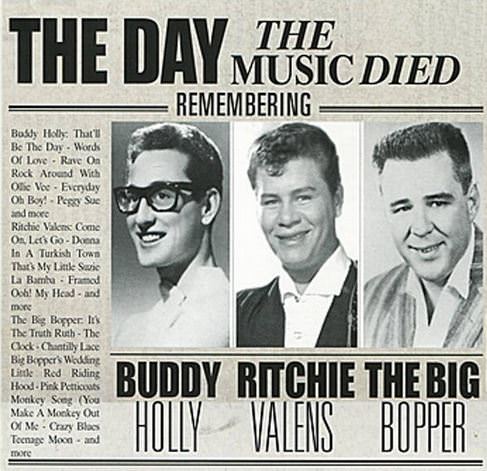



 MaryO'Studio