. 1699 ~ Johann Adolph Hasse, German composer, singer and teacher of music. Immensely popular in his time, Hasse was best known for his prolific operatic output, though he also composed a considerable quantity of sacred music.
. 1784 ~ François-Joseph Fetis, Belgian musicologist, composer, teacher, and influential music critic.
. 1851 ~ The Playel piano factory in Paris was destroyed by fire. Playel was the favorite of Chopin in the 19th century, and it was identified with French composers known as the impressionist musicians of the early 20th century — like Ravel and Debussy.
Pleyel was founded in 1807 by Ignaz Pleyel, a composer and music publisher who studied with Franz Joseph Haydn.
. 1867 ~ Arturo Toscanini, Italian conductor and musical director. Famed for his temper in rehearsals, he was director of La Scala and the Metropolitan opera houses. He also conducted the NBC symphony orchestra. With a career spanned 68 years, he was a cellist at age 19
Read quotes by and about Toscanini
More information on Toscanini
. 1881 ~ Béla Bartók, Hungarian composer and pianist, born. His knowledge of western musical techniques allied to the inspiration he derived from Hungarian peasant songs enabled him to become a unique musical force.
More information about Bartók
. 1903 ~ Grammy winner Frankie Carle (Carlone), Pianist and bandleader
. 1913 ~ The Palace Theatre opened its doors in New York City. Ed Wynn was first on the vaudeville bill. Some 20 years later, Wynn would be named as radio’s top entertainer. He later became popular on television, as well.
. 1918 ~ Debussy, French composer, died. His music, described as “musical Impressionism”, explored original avenues of expression.
. 1931 ~ Hal Kemp and his orchestra recorded Whistles, with Skinnay Ennis, for Brunswick Records. Both Kemp and Ennis sang in the Dorsey Brothers Concert Orchestra, under the direction of Dr. Eugene Ormandy (later, conductor of the Philadelphia Symphony Orchestra). The pair were part of the orchestra vocal quartet that also featured Nye Mayhew and Saxey Dowell in 1928.
. 1934 ~ Johnny Burnette, ‘The Master’, singer, brother of singer Dorsey Burnette
. 1938 ~ Hoyt Axton, Singer, musician and songwriter. Axton’s mother, Mae Boren Axton, wrote Elvis Presley’s Heartbreak Hotel
. 1940 ~ Anita Bryant, Singer
. 1942 ~ Aretha Franklin, American soul singer, known as the “Queen of Soul” and “Lady Soul”, she won 15 Grammy Awards and was the first woman inducted into Rock and Roll Hall of Fame (1987)
. 1947 ~ Elton John (Reginald Kenneth Dwight). English singer-songwriter, composer and pianist who has had hits in the charts since 1970 with his first hit “Your Song”, Over the next 40 years he had a large number of hits with the last being in 2009 “Tiny Dancer (Hold Me Closer)” (Ironik featuring Elton John). Possibly his best known top ten singles over the 40 year period include “Rocket Man”, “Crocodile Rock”, “Daniel”, “Candle in the Wind”, “Bennie and the Jets”, “Pinball Wizard”, “Don’t Go Breaking My Heart” (with Kiki Dee), “I’m Still Standing” and “Can You Feel the Love Tonight”. It does not matter which generation you are from you have more than likely grown up listening to his music . Billboard magazine ranked him as the most successful male solo artist on “The Billboard Hot 100 Top All-Time Artists” (Third overall, behind only The Beatles and Madonna). The awards he has gained during these years is also a testament to his music and include Academy Award, Golden Globe, Tony Award and multiple Grammys. From humble beginnings as a Pub Pianist to one of the music superstars of the modern era shows not only his talent but his commitment to his art.
More information about John
. 1948 ~ Kelly Garrett, Actress, singer
. 1949 ~ Neil Jones, Musician with Amen Corner
. 1951 ~ Maizie Williams, Singer with Boney M
. 1961 ~ “Gypsy” closed at the Broadway Theater in New York City after 702 performances
. 1966 ~ Jeff Healey, Guitarist, singer, songwriter with the Jeff Healey Band, CBC radio show: My Kind of Jazz
. 1971 ~ Tom Jones went gold with his single, She’s a Lady.
. 1971 ~ Louis Armstrong, the famous trumpet player, underwent a temporary tracheotomy after being admitted to a New York hospital. Armstrong had this throat operation after treatment for heart trouble.
. 1972 ~ The group, America, rode to the top of the pop music charts with their LP, America, and the single (included on the LP), A Horse with No Name. A Horse With No Name would be the group’s only gold record.
. 1991 ~ Eileen Joyce, pianist, died at the age of 78
. 1842 ~ Stephane Mallarme, French Symbolist poet, born. His “L’Apres-midi d’un Faune” inspired composer Claude Debussy to write an orchestral prelude of the same name.
. 1844 ~ Nicolai Rimsky-Korsakov, Russian composer More information about Rimsky-Korsakov
. 1882 ~ Gian Francesco Malipiero, Italian composer and musicologist
. 1902 ~ Enrico Caruso recorded 10 arias for the Gramophone Company. The recording session took place in Milan, Italy and Caruso walked away with $500 for his effort.
. 1905 ~ John Kirkpatrick, American pianist (Concord Sonata)
. 1910 ~ Hold on to your hats! The opera, Pipe of Desire, was first performed this day at the Metropolitan Opera House in New York City. Frederick Sheperd Converse wrote the work that turned out to be the first opera by an American composer to be performed at the Met.
. 1911 ~ composer Irving Berlin got the copyright for “Alexander’s Ragtime Band,” the multimillion-selling smash hit that helped turn American popular music into a major international phenomenon, both culturally and economically.
. 1927 ~ John Kander, composer (Cabaret, Chicago, Funny Lady, Kramer vs Kramer)
. 1970 ~ Brook Benton received a gold record for the hit single, Rainy Night in Georgia. It was Benton’s first hit since 1963’s Hotel Happiness.
. 1970 ~ Queen Latifah (Dana Elaine Owens), American actress, rapper, singer-songwriter, record producer, TV Personality and author. Her music, TV and Movie Acting has bought her a large number of awards including Golden Globe and a Grammy Award plus numbers of nominations including Emmy and Academy Award. She began her career as a Rapper in the group Ladies Fresh and the Flavor Unit before embarking on a solo career gaining considerable success including headlining at the Hollywood Bowl in Los Angeles in a live jazz concert. Queen Latifah is one of the few rappers who has not only continued with a successful music career but has also enjoyed major success and critical acclaim in both the movie industry and on Television. Her roles have included starring role on the TV Sitcom “Living Single” and her own show “The Queen Latifah Show” and as Matron “Mama” Morton in the Oscar-winning musical Chicago plus a number of starring and supporting roles in Scary Movie 3, Last Holiday, Mad Money, Back in Business, Taxi and Hairspray.
. 1978 ~ The Bee Gees started an eight-week stay at the top of the pop music charts with Night Fever from the Saturday Night Fever soundtrack.
. 2001 ~ John Phillips died at the age of 65. He was the singer-songwriter who founded the 1960s pop act the Mamas the Papas.
. 2017 ~ Trisha Brown, American choreographer and dancer, died at the age of 80
National Mario Day is observed each year on March 10th and honors Mario from the popular Nintendo game. It is celebrated on March 10th because of the way the date appears, when abbreviated (Mar.10), it looks just like the name Mario.
And
. 1832 ~ Muzio Clementi died. He was an Italian-born English composer, pianist, pedagogue, conductor, music publisher, editor, and piano manufacturer.
. 1844 ~ Pablo de Sarasate, Spanish violinist
. 1879 ~ Ignaz Moscheles died. He was a Bohemian composer and piano virtuoso.
. 1892 ~ Arthur Honegger, French composer Read quotes by and about Honegger More information about Honegger
1903 ~ “Bix” Beiderbecke, American jazz cornetist More information about Beiderbecke
. 1910 ~ Carl Heinrich Carsten Reinecke, composer, died at the age of 85
. 1935 ~ Nelson Eddy recorded Ah! Sweet Mystery of Life for Victor Records. The song came from the film, “Naughty Marietta”. Later, Eddy recorded the classic tune with Jeanette MacDonald.
. 1937 ~ An audience of 21,000 jitterbuggers jammed the Paramount Theatre in New York City to see a young clarinetist whom they would crown, ‘King of Swing’ on this night. The popular musician was Benny Goodman.
. 1940 ~ W2XBS-TV in New York City originated the first televised opera as members of the Metropolitan Opera Company presented scenes from “I Pagliacci”.
. 1956 ~ Julie Andrews was 23 years old this night when she made her TV debut. She appeared with Bing Crosby and Nancy Olson in the musical adaptation of Maxwell Anderson’s play, “High Tor”.
. 1977 ~ E Power Biggs, English organist/composer (CBS), died at the age of 70
. 2003 ~ Lionel Dakers, who directed the Royal School of Church Music for 16 years, died at age 79. Dakers was a stickler for high musical standards and opposed some of the modernizing trends in English church music. Dakers was organist at Ripon Cathedral from 1954 to 1957, then moved to Exeter Cathedral before his appointment as director of the Royal School of Church Music in 1972. In 1976, he was appointed a director of Hymns Ancient & Modern, publisher of some of the most widely used Anglican hymnals.
. 2016 ~ Keith Emerson died. He was an English keyboardist and composer with English rock musician Emerson, Lake & Palmer.
. 2017 ~ (Joan) Joni Sledge, vocalist (Sister Sledge “We are Family”), died at the age of 60
. 1643 ~ Girolamo Frescobaldi, Italian composer/organist, died at the age of 59 More about Frescobaldi
. 1810 ~ Frédéric Chopin, Polish composer and pianist Read quotes by and about Chopin More information about Chopin Grammy winner
. 1826 ~ John Thomas, Welsh composer and harpist
. 1904 ~ Glenn Miller, American trombonist and bandleader. Some of his memorable songs included In the Mood, Chattanooga Choo Choo, Tuxedo Junction, Moonlight Serenade and Pennsylvania 6-5000. The Glenn Miller Orchestra sound was a mix between jazz and swing and now more than 60 years later his music is unique and recognized by young and old the world over. More information about Miller
. 1907 ~ Albert Clifton Ammons was born in Chicago, Illinois. He developed an interest in boogie-woogie and his 1936 recording of “Boogie Woogie Stomp” has been described as “the first 12-bar piano-based boogie-woogie.”
. 1922 ~ Michael Flanders, Songwriter, comedian with the duo: Flanders and [Donald] Swann, made humorous mockery of English and American failings, died in 1975
. 1927 ~ Harry Belafonte, American calypso and folk singer, UNICEF goodwill ambassador, father of Shari Belafonte
. 1928 ~ Paul Whiteman and his orchestra recorded Ol´ Man River for Victor Records. The featured vocalist on the track was 29-year-old Paul Robeson. The song became an American classic.
. 1930 ~ Benny Powell, Jazz musician, trombone with the Ernie Fields band, Lionel Hampton, a Count Basie veteran
. 1941 ~ FM Radio began in the U.S. when station W47NV in Nashville, TN started operations on this day. W47NV was the first commercial FM radio station to receive a license, some 20 years after its AM radio counterpart, KDKA in Pittsburgh. FM stands for ‘frequency modulation´ as opposed to ‘amplitude modulation´.
. 1941 ~ Downbeat magazine scooped the entertainment world with news that Glenn Miller’s renewed contract with Chesterfield Cigarettes was worth $4,850 a week (for three 15-minute programs).
. 1944 ~ Roger Daltrey, Singer with The Who
. 1968 ~ Country music stars Johnny Cash and June Carter got married on this day. Johnny walked down the aisle knowing that his 1956 hit, Folsom Prison Blues, was about to be redone for a June release. Cash has a daughter, Rosanne, (previous marriage) who became a country star in her own right in the 1980s.
. 1968 ~ Elton John’s first record, I’ve Been Loving You, was released by Philips Records in England. Philips, not realizing the potential of the soon-to-be superstar, released him in 1969, just prior to his teaming with lyricist Bernie Taupin. Elton then signed a contract with Uni Records and began to turn out what would become a string of more than 50 hits over the next 25 years.
. 1973 ~ The Robert Joffrey Dance Company opened with a unique presentation in New York City. The show featured music of the Beach Boys in “Deuce Coupe Ballet”. A clever show, even if it didn’t do much to bring the masses to ballet.
. 1985 ~ A Beatles song was used for the first time in a U.S. TV commercial. The rights for Lincoln-Mercury to use the song, HELP!, cost $100,000, helping boost the fortunes of the Ford Motor Company.
. 1985 ~ Eugene List, American concert pianist and teacher (Eastman School of Music), died at the age of 66. List performed internationally during the mid-to-late 1900s. He championed the works of the American pianist and composer Louis Moreau Gottschalk (1829-1869). Gottschalk played this piece, with all its fanfares and flourishes reminiscent of an imaginary band concert, at all his concerts.
. 2003 ~ Nadine Conner, a soprano who performed for nearly two decades at the Metropolitan Opera after singing on national radio, died. She was 96. Conner debuted at the Met in 1941 as Pamina in Mozart’s “The Magic Flute,” conducted by Bruno Walter. She performed there 249 times over 18 seasons. She won acclaim not only for her Mozart roles, including Zerlina in “Don Giovanni” and Susanna in “The Marriage of Figaro,” but also for her portrayals of Violetta in Verdi’s “La Traviata,” Mimi in Puccini’s “La Boheme,” Gilda in Verdi’s “Rigoletto,” and Rosina in Rossini’s “The Barber of Seville.” Conner began her career singing on national radio from Los Angeles, and appeared with such stars as Bing Crosby and Gordon MacRae and toured with film star Nelson Eddy. She joined a fledgling opera troupe in Los Angeles, making her debut as Marguerite in Gounod’s “Faust.” Her Met farewell, in 1960, also was in “Faust.”
. 1895 ~ France, There’s no business like show business, right? Well, this is where it all started. A patent for a machine “to film and view phronopotographic proofs” (in simpler words, a projector) was assigned to the Lumiere brothers of Paris.
. 1914 ~ The American Society of Composers, Authors and Publishers (known as ASCAP) was formed in New York City. The society was founded to protect the copyrighted musical compositions of its members.
. 1918 ~ Oliver Smith, Scenic designer for Broadway Musicals such as On the Town, Brigadoon, My Fair Lady, Camelot, The Sound of Music, Hello Dolly! and films Guys and Dolls, Oklahoma!, Porgy and Bess, The Band Wagon
. 1919 ~ “Tennessee” Ernie Ford, American country music singer and songwriter
. 1920 ~ Eileen Farrell, American soprano, San Francisco Opera, Lyric Opera of Chicago, Metropolitan Opera. Also successful in singing and recording popular music and jazz
. 1940 ~ Earl ‘Fatha’ Hines and his orchestra recorded the classic Boogie Woogie on St. Louis Blues on the famous Bluebird record label.
. 1925 ~ Gene Ames, Singer with The Ames Brothers
. 1929 ~ Jesse McReynolds, Guitarist, folk singer with Jim & Jesse
. 1930 ~ Dotty McGuire, Singer with McGuire Sisters
. 1940 ~ “Boogie Woogie on St. Louis Blues” was recorded by Earl “Fatha” Hines and his orchestra. The song eventually became a classic and is still popular among big band fans today.
. 1944 ~ Peter Tork (Peter Halsten Thorkelson), Bassist, singer with The Monkees
. 1950 ~ Roger Christian, Singer with The Christians
. 1956 ~ Peter Hook. Bass with Joy Division
. 1957 ~ Tony Butler, Bass with Big Country
. 1967 ~ The Beatles released the double A-sided single in the United Kingdom with Penny Lane (Paul McCartney) and “Strawberry Fields Forever” (John Lennon) on the other side. Penny Lane was where Lennon and McCartney would meet to go into Liverpool.
Strawberry Fields was named after a Salvation Army house where Lennon would play as a child.
. 1971 ~ The Osmonds, a family singing group from Ogden, Utah, began a five-week stay at the top of the pop music charts with the hit, “One Bad Apple”. The song, featuring the voice of little Donny Osmond, also showcased the talent of Alan, Wayne, Merrill and Jay Osmond. The brothers were regulars on Andy Williams’ TV show from 1962 to 1967. The group began as a religious and barbershop quartet in 1959. Together, the Osmonds scored with 10 singles in four years — four of them were top ten hits.
. 2001 ~ Music critic George T. Simon, the original Glenn Miller Band drummer who swapped his sticks for a pen and eventually earned a Grammy for his acclaimed liner notes, died of pneumonia following a battle with Parkinson’s disease at the age of 88. In 1937 Simon sat in with the fledgling Glenn Miller Band. But he opted for writing over drumming, and became editor-in-chief of Metronome magazine in 1939. As a writer, Simon worked for the New York Post and the now-defunct New York Herald-Tribune. He also served as executive director of the National Academy of Recording Arts and Sciences, the organization behind the Grammy Awards. In 1977, Simon won his Grammy Award for best album notes – his contribution to the collection “Bing Crosby: A Legendary Performer.” Simon was hand-picked by Crosby to write the liner notes for the release.
. 2002 ~ Waylon Jennings, whose rebellious songs and brash attitude defined the outlaw movement in country music, died peacefully at his Arizona home after a long battle with diabetes-related health problems. He was 64. Jennings’ list of hits spans four decades and includes country music standards like Good-Hearted Woman and Mammas Don’t Let Your Babies Grow Up to Be Cowboys, both duets with Willie Nelson. Jennings made 60 albums and had 16 country singles that reached No. 1. His “Greatest Hits” album in 1979 sold 4 million – a rare accomplishment in country music for that era. Jennings won two Grammy awards and four Country Music Association awards. Other hits include I’m a Ramblin’ Man, Amanda, Lucille, I’ve Always Been Crazy, and Rose in Paradise. Jennings’ deep, sonorous voice narrated the popular TV show “The Dukes of Hazzard” and sang its theme song, which was a million seller. Jennings had been plagued with health problems in recent years that made it difficult for him to walk. In December 2002, his left foot was amputated. He traditionally wore a black cowboy hat and ebony attire that accented his black beard and mustache. Often reclusive when not on stage, he played earthy music with a spirited, hard edge. Some of Jennings’ album titles nourished his brash persona: “Lonesome, On’ry and Mean,” “I’ve Always Been Crazy,” “Nashville Rebel,” “Ladies Love Outlaws” and “Wanted: The Outlaws.” He often refused to attend music awards shows on the grounds that performers shouldn’t compete against each other. He didn’t show up at his induction into the Country Music Hall of Fame last year. He made occasional forays into TV movies, including “Stagecoach” and “Oklahoma City Dolls,” plus the Sesame Street movie “Follow That Bird” and the B-movie “Nashville Rebel.”
. 2015 ~ John McCabe died. He was an English composer and pianist. He was a prolific composer from an early age but first became known as a pianist. He created works in many different forms, including symphonies, ballets, and solo works for the piano.
. 1881 ~ Jacques Offenbach’s opera “Les Contes d’Hoffman” premiered in Paris
. 1914 ~ Larry Adler, Composer of movie scores such as A Cry from the Streets, Genevieve, Great Chase
. 1927 ~ Leontyne Price, American soprano, Metropolitan Opera
More information about Price
. 1929 ~ Jerry Goldsmith, pianist and composer (Twilight Zone)
. 1933 ~ The singing telegram was introduced by the Postal Telegraph Company of New York City.
. 1937 ~ Roberta Flack, American pop-soul singer
. 1942 ~ Glenn Miller was awarded the first-ever gold record for selling 1 million copies of “Chattanooga Choo Choo”
. 1944 ~ Peter Allen, Australian pop singer, songwriter and pianist
. 1942 ~ Ted Fio Rito’s orchestra recorded Rio Rita for Decca Records in Los Angeles. Bob Carroll sang on the disc that became the group’s theme song.
. 1946 ~ Donovan (Leitch), Singer
. 1956 ~ Elvis Presley wiggled his way through Heartbreak Hotel this day for RCA Records in Nashville, TN. The record received two gold records, one for each side. The hit on the other side was I Was the One.
. 1958 ~ Elvis Presley’s ballad “Don’t” reached #1 on music charts. This was his ninth #1 hit single since he had produced “Heartbreak Hotel”. In all, Elvis had recorded a total of 17 #1 hits.
. 1960 ~ “Unsinkable Molly Brown” closed at the Winter Garden in New York City after 532 performances. Molly Brown was based on the true story of a Titanic survivor.
. 1964 ~ The Beatles, British super rock group, made their first American appearance on the Ed Sullivan TV show
. 1964 ~ Bob Dylan released “The Times They Are a-Changin” his 3rd album, by Columbia Records. The album was seen as a protest album featuring songs about issues such as racism, poverty, and social change. The title track was one of Dylan’s most famous capturing the spirit of social and political upheaval that characterized the 1960s.
. 1966 ~ Billy Rose passed away. Rose was an American impresario, theatrical showman and lyricist.
. 2002 ~ Dave Van Ronk, a New York-born guitarist and singer who was at the forefront of the Greenwich Village folk boom, died at the age of 65. A prolific musician who was nominated for a Grammy, Van Ronk offered his home as a hangout for fellow musicians in the 1960s. Among them was a young Bob Dylan. “People were always stopping by,” said Mitch Greenhill, his longtime manager. “He (Van Ronk) was one of the few guys who was working at a pretty high level who went out of his way to be friendly.” Born in Brooklyn, Van Ronk started living in Greenwich Village by the time he was a teenager. His first album, “Ballads, Blues and a Spiritual” was released in 1957. He opened his home to Dylan when the artist arrived in New York in the 1960s. Inspired by a haunting version of House of the Rising Sun, released by Van Ronk, Dylan performed it on his debut album. They also appeared together in 1974 with other singers at a benefit for Chilean political prisoners. Asked over the years about his relationship with Dylan, Van Ronk always played down his influence on Dylan by saying, “He was as big an influence on me as I was on him,” said Greenhill, who knew Van Ronk for more than 40 years. Van Ronk spent 40 years on tour, and made at least 26 albums. His most recent was last year’s “Sweet and Lowdown,” a return to his jazz roots. He received a Grammy nomination in 1996 for his record “From … Another Time and Place.” He was also honored with a Lifetime Achievement Award by the American Society for Composers, Authors and Publishers (ASCAP).
. 2006 ~ At the XX Winter Olympic Games open in Turin, Italy, Luciano Pavarotti sang “Nessun Dorma” in his last ever performance.
. 1710 ~ William Boyce, English organist/composer (Cathedral Music), born in London (d. 1779)
. 1818 ~ Henry Charles Litolff, piano virtuoso, composer of Romantic music and music publisher
. 1871 ~ Wilhelm Stenhammar [Carl Wilhelm Eugen Stenhammar], Swedish composer considered the finest Swedish pianist of his time, born in Stockholm, Sweden (d. 1927)
. 1883 ~ Herbert “Eubie” Blake, American jazz pianist, vaudevillian, songwriter and composer
More information about Blake
. 1920 ~ Oscar Brand, Folk singer, composer, music director of NBC-TV Sunday, host of Let’s Sing Out
. 1921 ~ Wilma Lee Cooper (Leary), Country singer with husband, Stoney and the group, Clinch Mountain Clan with her daughter, Carol Lee
. 1931 ~ The American opera, “Peter Ibbetson”, by Deems Taylor premiered at the Metropolitan Opera House in New York City.
. 1941 ~ The Tommy Dorsey Orchestra and Frank Sinatra teamed to record Everything Happens to Me for Victor Records in New York City.
. 1948 ~ Jimmy Greenspoon, Organist with Three Dog Night
. 1949 ~ Alan Lancaster, Bass with Status Quo
. 1959 ~ Brian Travers, Saxophone with UB40
. 1962 ~ (Troyal) Garth Brooks, American Grammy Award-winning singer: In Another’s Eyes (1998 with Trisha Yearwood), Friends in Low Places and The Thunder Rolls. His LP Ropin’ the Wind was the first LP in history to debut at #1 on Billboard’s pop and country charts, The Chase, In Pieces, Fresh Horses, Sevens, Double Live has sold over 80 million albums — second only to The Beatles.
. 1962 ~ David Bryan, Keyboards with Bon Jovi
. 1964 ~ 3,000+ fans crowded the JFK airport in New York to receive the four stars of the music sensation, The Beatles. One word summarizes the reaction to The Beatles on their first US tour: hysteria.
. 1969 ~ Tom Jones, ‘The Prince of Wales’, premiered on ABC-TV after the network acquired the rights to the singing sensation’s popular United Kingdom show. The network paid a British production company an estimated $20 million for those rights. And they cried in one of Tom’s hankies all the way to the bank.
. 1974 ~ Barry White’s Love Unlimited Orchestra received a gold record for the disco hit Love’s Theme.
. 1985 ~ New York, New York became the official anthem of the Big Apple. The announcement was made by then New York mayor, Ed “How’m I Doin’?” Koch. Frank Sinatra fans rejoiced at the honor.
. 2001 ~ Dale Evans died at the age of 88. She was an actress-singer who became “Queen of the West” by starring with husband Roy Rogers in 27 cowboy films and writing their theme song, Happy Trails.
. 2002 ~ Bert Conway, an actor and director whose 60-year career included theater, movies and television, died of heart failure. He was 87. The son of vaudeville performers, Conway was born in Orange, N.J. He had a walk-on part in the original 1937 Group Theater staging of Clifford Odets’ “Golden Boy” and later had the lead as a reform school youth in Lee Strasberg’s production of “Dance Night.” After serving in the Army in World War II, Conway went to Hollywood. He began directing plays in 1947. His work included the first interracial production of “Golden Boy” for the Negro Art Theater in Los Angeles. In 1950, he returned to New York to act in and direct plays. His work included an off-Broadway revival of “Deep Are the Roots” and appearances with Joseph Papp’s New York Shakespeare Festival. He also appeared in several road company productions, had small roles in the movies “The Three Musketeers,” “Little Big Man” and “The Arrangement,” and on TV’s “St. Elsewhere.”
. 2009 ~ Blossom Dearie, American jazz singer and pianist, died of natural causes at the age of 84
. 1736 ~ Johann Georg Albrechtsberger, Austrian musician
. 1809 ~ (Jacob Ludwig) Felix Bartholdy Mendelssohn, German composer
More information about Mendelssohn
. 1900 ~ Mabel Mercer, British-born American cabaret singer
. 1904 ~ Luigi Dallapiccola, Italian composer
More information about Dallapiccola
. 1911 ~ Jehan Alain, French organist and composer
. 1928 ~ Frankie Vaughn (Abelson), Singer
. 1929 ~ Russell Arms, Singer
. 1940 ~ Angelo D’Aleo, Singer with Dion and The Belmonts
. 1941 ~ Jimmy Dorsey and his orchestra recorded the classic, Amapola, on Decca Records. Helen O’Connell and Bob Eberly joined in a vocal duet on this very famous and popular song of the Big Band era.
. 1943 ~ Eric Haydock, Bass with The Hollies
. 1943 ~ Dennis Edwards, singer with the Temptations since 1968. He sang on a string of the group’s hits including “I Can’t Get Next to You,” “Ball of Confusion” and “Papa Was a Rollin’ Stone” in an initial tenure that stretched to 1977.
. 1947 ~ Melanie (Safka), Singer
. 1947 ~ Dave Davies, Singer, guitarist with The Kinks
. 1950 ~ Ed, Gene, Joe and Vic, The Ames Brothers, reached the #1 spot on the pop music charts for the first time, as Rag Mop became the most favorite song in the U.S. The brothers enjoyed many successes with their recording efforts.
.
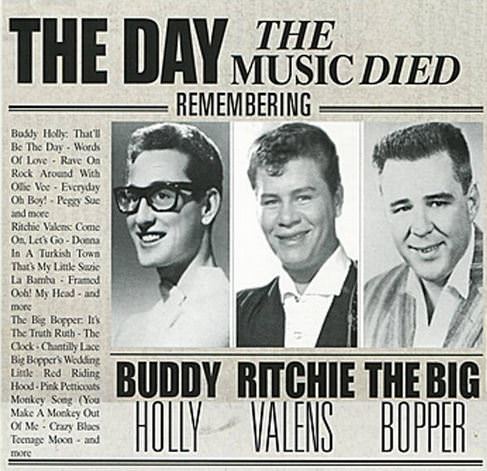
1959 ~ 22-year-old Buddy Holly, 28-year-old J.P. Richardson (The Big Bopper) and 17-year-old Ritchie Valens died in an airplane crash near Mason City, Iowa. February 3rd has been remembered as ‘The Day the Music Died’ since Don McLean made the line popular in his 1972 hit, “American Pie”. Buddy Holly, born Charles Hardin Holly in Lubbock, Texas, recorded That’ll Be the Day, Peggy Sue, Oh, Boy, Maybe Baby, and others, including It Doesn’tMatter Anymore (recorded just before his death, a smash in the U.K., non-top-10 in the U.S.). Buddy was inducted into the Rock and Roll Hall of Fame in 1986. A convincing portrait of the singer was portrayed by Gary Busey in The Buddy Holly Story, a made for TV movie. J.P. (Jiles Perry) Richardson was from Sabine Pass, TX. He held the record for longest, continuous broadcasting as a DJ at KTRM Radio in Beaumont, TX in 1956. He was on the air for 122 hours and eight minutes. In addition to his smash hit, Chantilly Lace, Richardson also penned Running Bear (a hit for Johnny Preston) plus White Lightning (a hit for country star, George Jones). Richard Valenzuela lived in Pacoima, CA (near LA) and had a role in the 1959 film, Go Johnny Go. Ritchie Valens’ two big hits were Donna and La Bamba … the last, the title of a 1987 film depiction of his life. La Bamba also represented the first fusion of Latin music and American rock. Of the three young stars who died in that plane crash, the loss of Buddy Holly reverberated the loudest over the years. But, fans of 1950s rock ‘n’ roll will agree, all three have been sorely missed.
. 1959 ~ Lol (Laurence) Tolhurst, Drummer, keyboard with The Cure
. 1964 ~ The British group, The Beatles, received its first gold record award for the single, I Want To Hold Your Hand. The group also won a gold LP award for “Meet The Beatles”. The album had been released in the United States only 14 days earlier.
. 1971 ~ Lynn Anderson received a gold record for the single, Rose Garden. The Grand Forks, ND country singer was raised in Sacramento, CA. In addition to being a singer, she was an accomplished equestrian and California Horse Show Queen in 1966.
. 1974 ~ “Pajama Game” closed at Lunt Fontanne Theater NYC after 65 performances
. 1979 ~ “YMCA“ by Village People peaked at #2 on the pop singles chart. It was fun to dance to!
. 2002 ~ Remo Palmier, a self-trained guitarist who was a fixture in the New York jazz scene in the 1940s, died at the age of 78, and had been suffering from leukemia and lymphoma, his wife said. Over the course of his career, Palmier played with jazz legends Charlie Parker, Billie Holiday and Dizzy Gillespie, among others. Born Remo Palmieri in the Bronx, Palmier achieved his greatest fame performing with broadcaster Arthur Godfrey on CBS, and taught Godfrey how to play the ukulele. After Godfrey retired, Palmier released his own albums, “Windflower and “Remo Palmier”.
. 1912 ~ Erich Leinsdorf, Austrian-born American conductor
. 1937 ~ Glen Gray and his Casa Loma Orchestra recorded A Study in Brown, on Decca Records.
. 1941 ~ John Steel, Singer, drummer with The Animals
. 1944 ~ Florence LaRue (Gordon), Singer with The Fifth Dimension
. 1962 ~ Clint Black, Singer, actor
. 2002 ~ Blues and jazz pianist Abie “Boogaloo” Ames died at the age of 83. Ames was born on Big Egypt Plantation in Cruger, Miss., on May 23, 1918. He began playing piano at the age of 5 and his style earned him the nickname “Boogaloo” in the 1940’s. Ames moved to Detroit as a teenager and started a band, touring Europe with Louis Armstrong in 1936. Ames worked at Motown Studio and befriended other great musicians like Nat King Cole and Erroll Garner. In 1980, Ames moved to Greenville, where he became a regular performer at local clubs and festivals. Cassandra Wilson’s forthcoming Blue Note CD tentatively titled “Belly of the Sun” is set to include Darkness in the Delta, a song written by Ames for the CD. Ames was named the 2001 winner of the Artist’s Achievement Award of the Governor’s Awards for Excellence in the Arts in the state of Mississippi. With his protege and 1990s musical partner Eden Brent, Ames performed at the Kennedy Center for Performing Arts in Washington, D.C., in 2000. Ames’ last public performance was in October 2001 at the E.E. Bass Cultural Center in Greenville with another former student, Mulgrew Miller.
. 2002 ~ David Stetler, a big band swing drummer who played with Benny Goodman and Spike Jones, died of pneumonia. He was 79. A Seattle native, Stetler was discovered in high school by Lunceford. With a style close to that of Gene Krupa and Jo Jones, Stetler toured the country in the 1940s but returned to Seattle after his first son was born. He backed up national acts in local performances, including many during the world’s fair in 1962.
. 2003 ~ Charlie Biddle, a leader of Montreal’s jazz scene in the 1950s and ’60s who played bass with Thelonious Monk and Charlie Parker, died after a battle with cancer. He was 76. Biddle was a native of Philadelphia who moved to Canada in 1948. Over the next five decades, the World War II veteran and former car salesman became synonymous with jazz in Montreal. Biddle opened his own club, Uncle Charlie’s Jazz Joint, in suburban Ste- Therese in 1958. He later performed in such legendary Montreal nightspots as The Black Bottom and the Penthouse, where he worked with the likes of Oscar Peterson, Art Tatum, Charlie Parker and Lionel Hampton. When there were no jobs in Montreal, Biddle played smaller Quebec cities with a group called Three Jacks and a Jill. Until recently, Biddle played four nights a week at Biddle’s Jazz and Ribs, a Montreal landmark for nearly 25 years. Coincidentally, the club closed Tuesday for planned renovations, which included erecting a wall of fame to honor Biddle and others who have played at the club. In 1979, he organized the three-day festival that some say paved the way for the renowned Montreal International Jazz Festival. News Item about Charlie Biddle
. 2003 ~ Jerome Hines, a bass vocalist who performed regularly at the Metropolitan Opera during a career that spanned more than six decades, died. He was 81. Hines spent 41 years performing at the Met, more than any other principal singer in its history. He was known for his timbral richness, as well as the research he conducted into the historical and psychological background of the roles he portrayed. During his career at the Met, he portrayed 45 characters in 39 works, including title roles in Mussorgsky’s “Boris Godunov” and Mozart’s “Don Giovanni,” and Colline in Puccini’s “La Boheme.” He gave a total of 868 performances at the Met, retiring in 1987. He went on to perform with regional opera companies and at benefits. Hines, who became a born-again Christian in the 1950s, composed his own opera, “I Am the Way,” about the life of Jesus. He sang the title role at the Met in 1968 and 93 times around the world.
. 2003 ~ Saxophonist Cornelius Bumpus, a former member of the Doobie Brothers who had performed with Steely Dan since 1993, died en route to a series of performances in California. He was 58. Bumpus began his career at age 10, playing alto saxophone in the school band in Santa Cruz, Calif. In 1966, he spent six months performing with Bobby Freeman, and joined Moby Grape in 1977, writing one tune for the “Live Grape” album. Bumpus also recorded two solo albums and toured with his own band. Since performing with The Doobie Brothers in the early 1980s, Bumpus played with a number of bands, most recently with Steely Dan, which won the “Album of the Year” Grammy for its 2000 “Two Against Nature” release. His relations with his former Doobies bandmates turned contentious in the late 1990s, when they sued him and several other musicians over their use of the Doobies name. A federal judge in 1999 ruled against Bumpus and the other musicians, ordering them not to use the name.
. 1904 ~ Enrico Caruso signed his first contract with Victor Records. He had debuted at the Metropolitan Opera just two months before.
. 1927 ~ Ronnie Scott (Schatt), Jazz musician: tenor sax, bandleader, jazz club owner in London
. 1927 ~ Twenty years before the famous record by Art Mooney was recorded, Jean Goldkette and his dancing orchestra recorded, I’m Looking Over a Four-Leaf Clover. Though the name of the bandleader may not be so famous, two of his sidemen on this Victor recording session certainly were: Big band fans know Bix Beiderbecke and Joe Venuti.
. 1940 ~ “Beat the Band” made its debut on NBC radio. The band was that of Ted Weems and his 14-piece orchestra, who were joined by Elmo ‘The Whistling Troubadour’ Tanner, Harry Soskind and Country Washington. One other star of the show was a barber from Pittsburgh, PA (nearby Canonsburg, actually), who would record many hits for RCA Victor from 1943 right through the dawn of the 1970s. His name was Perry Como. Beat the Band was a funky show where listeners’ questions were selected in the hopes of stumping the band. If a listener’s question was chosen, he or she received $10. The questions were posed as riddles: What song title tells you what Cinderella might have said if she awoke one morning and found that her foot had grown too large for her glass slipper? If the band played the correct musical answer, Where Oh Where Has My Little Dog Gone?, the listener lost.
. 1943 ~ Dick Taylor, Bass, guitar with The Pretty Things
. 1944 ~ John Tavener, British avant-garde composer More information about Tavener
. 1944 ~ Brian Keenan, Drummer with groups Manfred Mann and The Chambers Brothers
. 1956 ~ Elvis Presley made his first appearance on national television. No, he didn’t appear on some teenage dance show; but rather, “The Dorsey Brothers Show”, starring Tommy and Jimmy. Elvis sang Blue Suede Shoes and Heartbreak Hotel. He was backed by the instruments of the Dorsey band.
. 1968 ~ Sarah McLauchlan, Singer
. 1985 ~ 45 of the world’s top recording artists were invited to an all-night recording session at the A&M studios in Los Angeles. As each of the artists walked through the studio door, they were greeted by a hand-lettered sign — put there by Lionel Richie. It simply said, “Check your ego at the door.” The session started at 10 p.m. with producer Quincy Jones conducting. At 8 o’clock the following morning, the project, “USA for Africa”, spearheaded by promoter, Ken Kragen, was recorded and mixed. The resulting song, We Are the World, featuring Michael Jackson, Cyndi Lauper, Kenny Rogers, Dolly Parton, Sting, Harry Belafonte, Diana Ross, Paul Simon and many others became the top song in the U.S. on April 13, 1985.
. 2002 ~ Michael Hammond, who became chairman of the National Endowment for the Arts just a week earlier, died apparently of natural causes. He was 69. A native of Kenosha, Wis., the conductor and composer had been dean of the School of Music at Rice University in Houston when President Bush nominated him to lead the federal agency that decides grants for the arts. After being confirmed by the Senate on Dec. 20, 2001, Hammond had assumed the post-Jan. 22, 2002, and was still in the process of moving to Washington. A student of music and medicine, Hammond’s interests included music from Southeast Asia, the Renaissance and medieval times and the intersection between music and neuroscience. He received a Rhodes scholarship to study philosophy, psychology and physiology at Oxford University. He also studied Indian philosophy and music at Dehli University in India. In 1968, he left his post as director of the Wisconsin Conservatory of Music in Milwaukee to become the founding dean of music at the State University of New York at Purchase. He later served as president of the school, until he left for Rice’s Shepherd School of Music in 1986. All the while, he retained his interest in medicine, teaching neuroanatomy and physiology at Marquette Medical School and at the University of Wisconsin. Hammond also served as the founding rector of the Prague Mozart Academy in the Czech Republic, now the European Mozart Academy was on the board of the Houston Symphony, and was vice chairman of the board of Interlochen Center for the Arts in Michigan.
. 2002 ~ Steve Caldwell, who sang and played saxophone for the Swingin’ Medallions at the time of the band’s 1966 hit Double Shot (of My Baby’s Love), died of pancreatic cancer. He was 55. Caldwell was with the group from 1963 to 1969. After getting his master’s degree in chemistry at the University of South Carolina, he returned to his native Atlanta and ran the Norell temporary staffing agency until starting his own company in 1976. His wife, Lynn Caldwell, said he raised $1 million for charity through World Methodist Evangelism.
. 1885 ~ Jerome Kern, American songwriter and composer of musical comedies He was known as the father of the American musical, composing Show Boat, Ol’ Man River, Smoke Gets in Your Eyes, Lovely to Look At, The Way You Look Tonight and The Last Time I Saw Paris
. 1895 ~ Harry Ruby (Rubinstein), Musician and composer
. 1901 ~ Giuseppe Verdi, Italian composer, died at the age of 77. He was an Italian operatic composer, the leading figure of Italian music in the nineteenth century and made important contributions to the development of opera.
. 1905 ~ John Schaum, Pianist, composer and music educator. Schaum began his career as a piano teacher in the late 1920s. In 1933 he founded the Schaum Piano School in Milwaukee. About the same time he began to compose piano music for teaching purposes. He also founded the first company to produce award stickers specifically for music students. Always on the lookout for better materials for his students, Schaum eventually decided to create his own books, beginning in 1941 with Piano Fun for Boys and Girls, which he later revised as the first in a series of nine piano method books that became the Schaum Piano Course, completed in 1945. These books are still widely used today.
. 1918 ~ Skitch Henderson, Conductor of the Tulsa Symphony Orchestra, bandleader, musical director of NBC-TV’s The Tonight Show with Steve Allen and Johnny Carson
. 1948 ~ Mikhail Baryshnikov, Bolshoi ballet dancer, defected to the U.S.
. 1961 ~ Leontyne Price made her debut at the Metropolitan Opera House in New York City. She sang in the role of Leonora in “Il Trovatore”. Price was only the seventh black singer to make a debut at the Met. Marian Anderson was the first (1955).
. 1968 ~ The Bee Gees played their first American concert, as a group. They earned $50,000 to entertain at the Anaheim Convention Center in California. This is identical to what The Beatles were paid to perform at the Hollywood Bowl a few years earlier.
. 1968 ~ Otis Redding’s (Sittin’ On) The Dock of the Bay was released on this day, seven weeks after the singer’s death. It became #1 on March 16, 1968 and remained at the top spot for a month. Redding began his recording career in 1960 with Johnny Jenkins and The Pinetoppers (on Confederate Records). He sang a duet with Carla Thomas and had 11 chart hits. Redding of Dawson, GA was killed in a plane crash at Lake Monona near Madison, WI. Four members of the Bar-Kays were also killed in the crash. The Dock of the Bay, his only number one song, was recorded just three days before his death.
. 1973 ~ John Lennon wrote and recorded “Instant Karma” in a single day
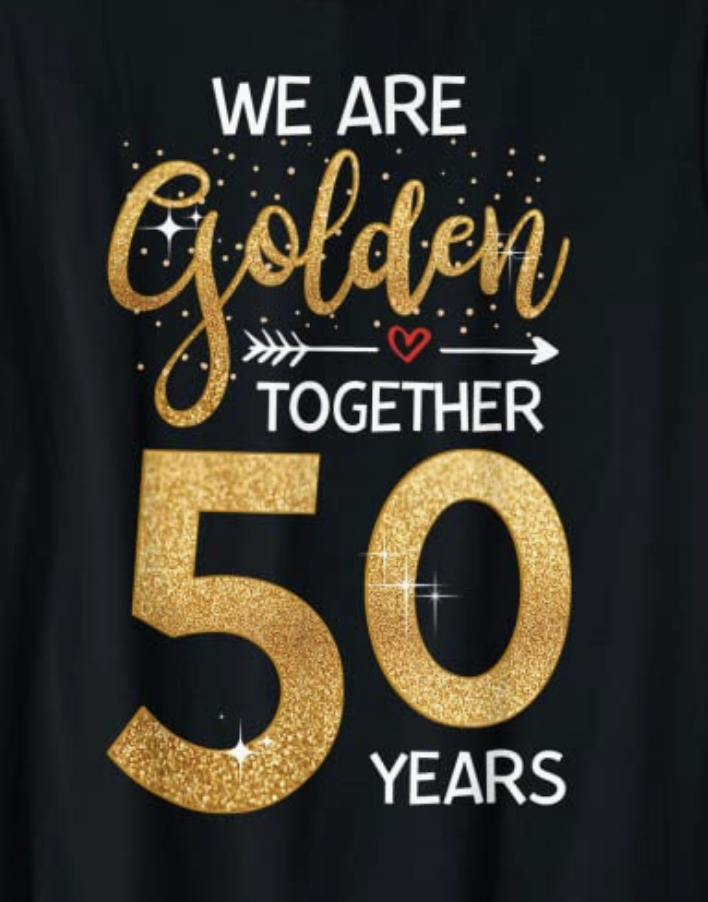
. 1973 ~ Mr and Mrs O got married 🙂 Read more here.
. 1982 ~ “Joseph & the Amazing Dreamcoat” opened at the Royale NYC for 747 performances
. 1984 ~ Michael Jackson’s hair caught on fire during the filming of a Pepsi commercial in Los Angeles. Pyrotechnics did not operate on cue, injuring the singer. Jackson was hospitalized for a few days and fans from around the world sent messages of concern.
. 2000 ~ Friedrich Gulda, Austrian pianist died at the age of 69.
. 2014 ~ Pete Seeger, American folk singer and activist, helped create the modern American folk music movement, died at 94

 Grammy winner Frankie Carle (Carlone), Pianist and bandleader


 MaryO'Studio