November 26 ~ Today in Music

today

. 1789 ~ Thanksgiving was celebrated nationally for the first time in the United States.

OCMS 1925 ~ Eugene Istomin, American pianist
More about Istomin

. 1932 ~ Alan Stout, American composer

. 1933 ~ Robert Goulet (Stanley Applebaum), Singer, actor

. 1935 ~ Marian Mercer, Singer, actress

. 1938 ~ Ray Brown, Singer with The Four Freshmen

. 1938 ~ Tina Turner (Annie Bullock), American soul-rock singer, Grammy Award-winning Pop Singer of the Year, 1985; Ike Turner’s ex-wife

. 1940 ~ Xavier Cugat and his orchestra recorded Orchids in the Moonlight on the Columbia label.

. 1944 ~ Alan Henderson, Bass with Them

. 1946 ~ John McVie, Guitarist with Fleetwood Mac

. 1956 ~ Tommy Dorsey passed away at the age of 51. His records sold more than 110,000,000 copies.

. 1963 ~ Amelita Galli-Curci passed away

. 1968 ~ Cream gave a farewell performance filmed by the BBC in London. The rock group played before a capacity crowd at Royal Albert Hall.

. 1969 ~ The Band received a gold record for the album, The Band.

. 1978 ~ Frank Rosolino passed away

. 1980 ~ “Wings Over America” premiered in New York City. The movie is about the first American tour of Paul McCartney and Wings.

. 2001 ~ Paul Hume, a music critic who once drew the ire of President Harry Truman after he panned his daughter’s recital, died of pneumonia at his home in Baltimore. Hume was 85. Hume worked for The Washington Post and built a reputation as one of the most learned critics in the nation. Classical music legends Vladimir Horowitz, Eugene Ormandy and Leonard Bernstein all held Hume in high esteem. Hume will always be remembered for his review of a recital by Truman’s daughter, Margaret, in 1950, in which he criticized her singing as flat. After reading the review, Truman wrote an angry, threatening letter to Hume. Truman’s remarks got him in hot water with the public, which felt he shouldn’t take time to joust with critics as the nation fought the Korean War. A Chicago native, Hume taught music history at Georgetown University from 1950 to 1977 and was a visiting professor at Yale University from 1975 to 1983. He wrote several books, including a study of Catholic church music and a biography of Giuseppe Verdi.

. 2003 ~ Meyer Kupferman, a prolific composer whose work ranged from contemporary classical music to opera, ballet and jazz, died. He was 77. Kupferman, a virtuoso clarinetist, taught composition and music theory at Sarah Lawrence College, where he was a staff member from 1951 to 1993. During his tenure there, he also served as chair of the music department and conducted the orchestra, chorus and chamber improvisation ensemble. In 1948 Kupferman wrote both his first piano concerto and opera. In all, he produced seven operas, 12 symphonies, nine ballets, seven string quartets, 10 concertos and hundreds of chamber works. His compositions have been performed and recorded worldwide. Kupferman also was commissioned by the Hudson Valley Philharmonic to write ‘FDR’ for the centennial of Franklin Roosevelt’s birth. The manuscript of the piece is now held by the Roosevelt Library. William Anderson, a family friend and a guitarist who performed Kupferman’s music, told the New York Times that Kupferman died of heart failure.
November 21 ~ Today in Music

today


. 1710 ~ Bernardo Pasquini died.  He was an Italian composer of operas, oratorios, cantatas and keyboard music. A renowned virtuoso keyboard player in his day, he was one of the most important Italian composers for harpsichord between Girolamo Frescobaldi and Domenico Scarlatti, having also made substantial contributions to the opera and oratorio.

. 1877 ~ Thomas A. Edison, who really enjoyed the jazz he heard coming from his newest invention, told those gathered that he just invented the ‘talking machine’ (phonograph). On February 19, 1878, Edison received a patent for the device.

. 1904 ~ Coleman Hawkins, American jazz tenor saxophonist, solo with the Fletcher Henderson band, jazz bandleader

. 1931 ~ Malcolm Williamson, Australian composer

. 1933 ~ Jean Shepard, Country singer

. 1934 ~ Cole Porter’s Anything Goes opened at the Alvin Theatre in New York City. The show ran for 420 performances.

. 1936 ~ James DePreist, Orchestra leader with the Oregon Symphony

OCMS 1937 ~ Following Carnegie Hall performances in both 1906 and 1919, Arthur Rubinstein presented another historic and highly acclaimed performance at the arts center this day.
More information about Rubinstein

. 1940 ~ Dr. John (‘Mac’ Malcolm John Rebennack), Organ, guitar, singer, songwriter

. 1940 ~ Natalia Makarova, Ballerina with the Kirov Ballet (now Saint Petersburg Ballet) from 1959 until 1970

. 1944 ~ Happy trails to you, until we meet again…. The Roy Rogers Show was first heard on the Mutual Broadcasting System. Singing along with Roy (‘The King of the Cowboys’), were the Whippoorwills and The Sons of the Pioneers.

. 1944 ~ I’m Beginning to See the Light, the song that would become the theme song for Harry James and his orchestra, was recorded this day. The song featured the lovely voice of Kitty Kallen (Little Things Mean a Lot).

. 1948 ~ Lonnie (LeRoy) Jordan, Keyboards, singer

. 1950 ~ Livingston Taylor, American folk singer, songwriter and guitarist, brother of singer James Taylor

. 1952 ~ Lorna Luft, Singer, actress, daughter of singer-actress Judy Garland and producer Sid Luft; sister of singer-actress Liza Minnelli

. 1955 ~ The first lady of the American stage, Helen Hayes, was honored for her many remarkable years in show business, as the Fulton Theatre in New York City was renamed the Helen Hayes Theatre.

. 1959 ~ Following his firing from WABC Radio in New York the day before, Alan Freed refused “on principle” to sign a statement that he never received money or gifts (payola) for plugging records. Incidentally, few may remember, but Freed left WABC while he was on the air. He was replaced in mid~record by Fred Robbins, who later became a nationally~known entertainment reporter for Mutual Radio.

. 1962 ~ Leonard Bernstein broadcast his Young People’s Concert “Sound of a Hall” from the New York Philharmonic’s new home at Lincoln Center (now David Geffen Hall). He spoke about the science of sound; acoustics, vibration, sound waves, echo and reverberation. ÒWell, the best test of dynamic range I can think of is that great piece of fireworks – Tchaikovsky’s Overture 1812, because it begins as softly as possible with only 6 solo strings, and runs the whole dynamic range to a full orchestra, plus at the end, an extra brass band…plus the deafening roar of cannon plus the jangle of church bells…” We share with you this excerpt of Bernstein and the New York Philharmonic performing the 1812 Overture.

. 1981 ~ Olivia Newton-John started the first of 10 weeks at the top of the pop music charts when Physical became the music world’s top tune.

. 1990 ~ Instrument lovers have paid some pretty awesome prices for violins made byAntonio Stradivari. But a red Strad owned by the family of composer Felix Mendelssohn sold on this day for an all-time high of $1,700,00.

. 2001 ~ Ralph Burns, who won Academy Awards, an Emmy and a Tony as a music arranger after making a name for himself in jazz as a piano player in the Woody Herman band, died at the age of 79. Burns collected his first Academy Award for adapting the musical score of the

. 1972 movie “Cabaret.” He won another Oscar for adapting the musical score for “All That Jazz,” an Emmy for television’s “Baryshnikov on Broadway” and a Tony in 1999 for the Broadway musical “Fosse.” His other film credits included “Lenny,” “In The Mood,” “Urban Cowboy,” “Annie,” “My Favorite Year” and “The Muppets Take Manhattan.” He also collaborated with Jule Styne on “Funny Girl” and Richard Rodgers on “No Strings.” The Massachusetts native, who took up piano as a child, was playing in dance bands in Boston when he was 12, graduating to jazz orchestras by his teens. He worked with Herman band’s for 15 years as both a writer and piano player, composing some of the group’s biggest hits. Among them were “Apple Honey,” “Bijou” and the three-part “Summer Sequence.” “Early Autumn,” written later as a fourth movement for “Summer Sequence,” became a hit with singers after Johnny Mercer supplied words for it. Later, Burns worked in the studio with such popular singers as Tony Bennett, Johnny Mathis, Ray Charles, Aretha Franklin and Natalie Cole.

. 2003 ~ Teddy Randazzo, co-author of more than 600 songs for acts including TheTemptations and Frank Sinatra, died at the age of 68. With co-author Bobby Weinstein and others, Randazzo wrote hits such as Goin’ Out of My Head, Hurt So Bad and It’s Gonna Take a Miracle for acts such as Little Anthony and the Imperials, The Lettermen, Linda Ronstadt, The Temptations and Sinatra. Randazzo began his career at age 15 as lead singer of the group The Three Chuckles. The group’s first hit,Runaround, rose to No. 20 on the Billboard charts and sold more than 1 million copies. Randazzo started a solo career in 1957 and found modest success over the next seven years before meeting Weinstein. The duo’s songs have been recorded by more than 350 artists, including Gloria Gaynor, Queen Latifah and Luther Vandross. They parted ways in 1970 and Weinstein became an executive for Broadcast Music Inc. and Randazzo became a producer for Motown Records.

November 19 ~ Today in Music History

today

• 1724 ~ First Performance of J. S. Bach’s Sacred Cantata No. 26 Ach wie flüchtig, ach wie nichtig performed on the 24th Sunday following Trinity. A portion of Bach’s second annual Sacred Cantata cycle in Leipzig, 1724-25.

• 1736 ~ J. S. Bach named court composer by Poland’s King Agustus III.

• 1739 ~ First Performance of Jean-Philippe Rameau‘s opera Dardanus in Paris.

• 1826 ~ Composer Felix Mendelssohn and his sister Fanny performed his overture to “A Midsummer Night’s Dream” for the first time.

• 1828 ~ Death of Austrian composer Franz Schubert in Vienna, at the age of 31 from typhus.   He is buried near Beethoven.

• 1859 ~ Mikhail Ippolitov-Ivanov, Russian composer and conductor
More information about Ippolitov-Ivanov

• 1874 ~ Birth of composer Karl Adrian Wohlfahrt.

• 1875 ~ First Performance of Tchaikovsky‘s Third Symphony, in Moscow.

• 1888 ~ Piano Debut in Boston of composer Edward MacDowell with the Kneisel Quartet.

• 1905 ~ Tommy Dorsey, American trombonist and bandleader

• 1923 ~ First Performances of Béla Bartók‘s Five Dances and Zoltán Kodály‘s Psalums Hungaricus in Budapest, marking the 50th anniversary of the union of cities Buda and Pest.

• 1936 ~ Birth of classical music commentator (Detroit Symphony broadcasts) Dick Cavett, in Kearney, Nebraska. ABC-TV talk show host (Dick Cavett Show).

• 1936 ~ First concert recorded on magnetic tape with the London Philharmonic orchestra conducted by Sir Thomas Beecham at BASF’s own concert hall in Ludwigshaven, Germany.

• 1937 ~ Ray Collins, Songwriter

• 1938 ~ Hank Medress, Singer with The Tokens, record producer

• 1943 ~ Fred Lipsius, Piano, sax with Blood Sweat & Tears

• 1943 ~ Stan Kenton and his orchestra recorded Artistry in Rhythm, the song that later become the Kenton theme. It was Capitol record number 159. The other side of the disk was titled, Eager Beaver.

• 1944 ~ Agnes Baltsa, Greek mezzo-soprano

• 1954 ~ Sammy Davis, Jr. was involved in a serious auto accident in San Bernardino, CA. Three days later, Davis lost the sight in his left eye. He later referred to the accident as the turning point of his career.

• 1957 ~ American conductor Leonard Bernstein named Music Director of the New York Philharmonic. First American-born and educated conductor named to head an important American Orchestra.

• 1961 ~ A year after Chubby Checker reached the #1 spot with The Twist, the singer appeared on The Ed Sullivan Show to sing the song again. The Twist became the first record to reach #1 a second time around, on January 13, 1962.

• 1962 ~ For the first time, a jazz concert was presented at the White House. Jazz had previously been served as background music only.

• 2000 ~ First Performance of Philip Glass‘ Double Concerto for Timpani and Orchestra, by the American Composers Orchestra. Lincoln Center in New York.

2004 ~ Composer Cy Coleman, who wrote the musical “Sweet Charity” and whose songs included such Frank Sinatra classics as WitchcraftBig Spender and The Best is Yet to Come, died at the age 75
More information about Cy Coleman

Adapted from http://www.oconnormusic.org/month-nov.htm

November 13 ~ Today in Music

today


.1817 ~ Louis Lefébure-Wély, French organist and composer

.1854 ~ George Whitefield Chadwick, American composer and conductor

.1921 ~ Loonas Kokkonen, Finnish composer

.1943 ~ Leonard Bernstein replaced an indisposed Bruno Walter as conductor of the New York Philharmonic Orchestra. Thus began a legendary career and worldwide appreciation for Bernstein’s many compositions with the orchestra.

.1951 ~ Nicolai Karlovich Medtner died.  He was a Russian composer and pianist.

.1965 ~ Julie Harris starred in “Skyscraper”, which opened on Broadway in New York City. The musical ran for seven months.

.1968 ~ This was a good day for The Beatles. Their movie, “Yellow Submarine”, premiered in the U.S. and the single, Hey Jude, topped the pop music charts (it was in its 7th of 9 weeks at #1).

.1975 ~ Whoa Whoa Whoa, Feeeelings. One of the great lounge-lizard songs of all time, Feelings by Morris Albert, went gold.

.1999 ~ Donald Mills passed away.  He had been one of the Mills Brothers.

.2000 ~ Cecil Blackwood, a gospel singer who was a member of the Blackwood Brothers and crooned with Elvis Presley, of cancer at the age of 66. The Blackwood Brothers, who have won nine Grammys and 20 Dove awards, were a favorite of Elvis Presley, who briefly sang with Cecil Blackwood in a group named the Songfellows. The Blackwood Brothers were formed in 1934, the same year Blackwood was born in Ackerman, Miss. He became the group’s baritone in 1954. The Blackwood Brothers have recorded 300 albums, backed country stars Porter Wagoner and Barbara Mandrell, and are members of the Southern Gospel Music Hall of Fame.

.2000 ~ Jimmy Payne Sr., a tap dancer whose rhythm and technique as well as a mastery of precise steps attracted Bob Fosse, June Allyson, Gregory Hines, Lena Horne and others to his Chicago studio, died Nov. 13 at the age of 95. The son of a Cuban mother and Barbadian father, Payne grew up in the Panama Canal Zone before moving to New York in 1917. After traveling from New York to Chicago in 1947, Payne helped introduce African and Afro-Cuban rhythms to the dance scene. He taught in a number of Chicago dance studios from the 1950s into the 1970s. He continued to teach some of the city’s top dancers until his regimen was slowed by a number of strokes in his early 90s.

.2000 ~ New York entertainment lawyer and tax expert Joseph Taubman, who wrote how- to books for people working in the business side of show business, died at the age of 81. Taubman’s clients included Lionel Richie, Pete Seeger, Joan Baez and Arlo Guthrie. He also served as counsel to the National Film Board of Canada. Taubman wrote “Financing a Theatrical Production,” and his treatises on various aspects of the entertainment business published in the 1970s remain in print.

.2000 ~ The site, thebeatles.com, went live and is the band’s only official presence on the Internet among a flood of unofficial fan sites.

.2002 ~ Mieke van Hoek, a dance choreographer and teacher, died. She was 56. The Dutch-born van Hoek taught modern-dance choreography and dance improvisation at the Rotterdamse Dansacademie. After emigrating to the United States in 1977, van Hoek worked as a teaching assistant at the American Dance Festival in Durham, N.C., and studied at the Laban/Bartenieff Institute in New York. She founded a center for meditation, healing and the arts in Canones in 2000.

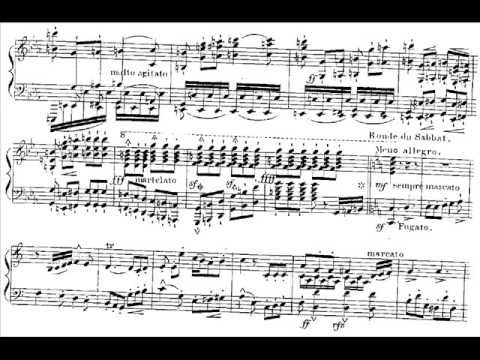
Halloween Music: Dreams of a Witches’ Sabbath from Symphonie fantastique by Hector Berlioz

berlioz-symphony-fantastique
The final movement is the best known part of the symphony, thanks to its use in the Julia Roberts movie, Sleeping With The Enemy. It features a four-part structure, which Berlioz described in his own program notes from 1845 as follows:

“He sees himself at a witches’ Sabbath, in the midst of a hideous gathering of shades, sorcerers and monsters of every kind who have come together for his funeral. Strange sounds, groans, outbursts of laughter; distant shouts which seem to be answered by more shouts. The beloved melody appears once more, but has now lost its noble and shy character; it is now no more than a vulgar dance tune, trivial and grotesque: it is she who is coming to the Sabbath… Roar of delight at her arrival… She joins the diabolical orgy… The funeral knell tolls, burlesque parody of the Dies irae, the dance of the witches. The dance of the witches combined with the Dies irae.”

The Dies irae melody is one of the most-quoted in musical literature, appearing in the works of many diverse composers.

The traditional Gregorian melody has also been used as a theme or musical quotation in a number of  classical compositions, notable among them:

Free sheet music from IMSLP for the basic Dies irae

Free sheet music from IMSLP for the basic Symphonie fantastique (look under Arrangements and Transcriptions)

The basic Gregorian Chant

An animated version of the  Dreams of a Witches’ Sabbath from Symphonie fantastique.  Can you hear the Dies irae in this?  It starts around 3:18.

Leonard Bernstein conducts the “Orchestre National de France” in Berlioz’s Symphonie Fantastique
5th Movement

September 26 ~ Today in Music

today


• 1887 ~ Emile Berliner patented a disk recording device that  made it possible to mass produce phonograph records.

• 1892 ~ The ‘King of Marches’was introduced to the general public. John Philip Sousa and his band played the Liberty Bell March in Plainfield, New Jersey.

OCMS 1898 ~ George Gershwin (Jacob Gershvin), American composer,  songwriter and pianist
Gershwin’s Rhapsody in Blue is featured in Disney’s Fantasia 2000.
Read quotes by and about Gershwin
More information about Gershwin

• 1901 ~ Ted Weems (Wilfred Theodore Weymes), Orchestra leader, Ted Weems Orchestra, played mostly on network radio shows: violin, trombone

• 1908 ~ An ad for the Edison Phonograph appeared in The Saturday Evening Post. The phonograph offered buyers free records by both the Democratic and Republican U.S. presidential candidates!

• 1930 ~ Fritz Wunderlich, German tenor

• 1925 ~ Marty Robbins (Robertson), Country Music Hall of Famer, Grammy Award Winner, actor, last Grand Ole Opry singer to perform in Ryman Auditorium, first to perform in new Opryland

• 1926 ~ Julie London (Peck), Singer, actress

• 1931 ~ George Chambers, Bass, singer with The Chambers Brothers

• 1937 ~ Bessie Smith passed away
More information about Smith

• 1941 ~ Joe Bauer, Drummer with The Youngbloods

• 1945 ~ Bryan Ferry, Singer with Roxy Music

• 1947 ~ Lynn Anderson, Grammy Award~-inning singer, CMA Female Vocalist of the Year, 1971

• 1948 ~ Olivia Newton-John, British country-music and rock singer

• 1954 ~ Craig Chaquico, Guitar, singer with Jefferson Starship

• 1955 ~ Carlene Carter, Singer, June Carter’s daughter

• 1955 ~ Debbie Reynolds married singing idol Eddie Fisher. The couple made it through four tempestuous years.

• 1957 ~ West Side Story opened in New York. The musical ran for 734 performances. The loose adaptation of William Shakespeare’s Romeo and Juliet produced several hit songs, including Maria and Tonight. Leonard Bernstein was the composer.

• 1962 ~ Tracey Thorn, Singer

• 1962 ~ “Come and listen to the story ’bout a man named Jed…” The Beverly Hillbillies aired on CBS-TV. U.S. audiences were enchanted with Jed, Ellie Mae, Granny, Jethro, Miss Jane and that banker feller. Enchanted, as in a trance, in fact, for 216 shows. Bluegrass stars Lester Flatt and Earl Scruggs had the honor of composing and recording the theme song and hit record, The Ballad of Jed Clampett.

• 1969 ~ The Beatles walked the road toward a hit LP for the last time, as Abbey Road was released in London. The 13th and last album for the ‘fab four’ zoomed quickly to the #1 spot on the charts and stayed there for 11 weeks. 1984 ~ History was made at the Metropolitan Opera House in New York City. Neil Shicoff, lead tenor in the The Tales of Hoffmann, was unable to perform due to illness. His understudy, a chap named William Lewis, was a bit under the weather as well, and his voice began to falter during the performance. So, Kenneth Riegel was called in to sing the part from the orchestra pit while Mr. Lewis lip-synced the part on stage.

• 2003 ~ Yi Sung-chun, one of the most outstanding musicians of contemporary Korean classics, died at the age of 67. Born in what is now North Korea, Yi moved south during the 1950-53 Korean War and became a pioneer of Korean classics, called Gukak, or national music. Yi first entered a medical college but switched to study Korean classics two years later at the Seoul National University. He earned his doctorate and served his alma mater as a professor for 30 years. Students called him “a real model of Seonbi,” or the disciplined and well-mannered intellectual class of the old royal Korean Joseon Dynasty. Yi produced about 300 pieces of music, and helped reshape the “gayageum,” a traditional Korean instrument with nine strings, into the one with 21 strings to broaden its tones. His name was put on record in 2001 along with 30 other Korean musicians in the New Grove Dictionary of Music, an encyclopedia named after British musician Sir George Grove that lists 3,000 important music figures worldwide.

August 9 ~ Today in Music History

today


• 1874 ~ Reynaldo Hahn, Venezuelan-born French composer, conductor and music critic

• 1902 ~ Solomon Cutner, Classical pianist. A virtuoso performer, he played Tchaikovsky’s First Concerto at the age of 10. His career was stopped after a stroke in 1965.

https://youtu.be/4Vi0DwX6MEg

• 1902 ~ Zino (Rene) Francescatti, French concert violinist; passed away in 1991

• 1910 ~ A.J. Fisher of Chicago, IL received a patent for an invention that moms, grandmas and single guys certainly came to appreciate: the electric washing machine. Previous to Mr. Fisher’s invention, washing machines were cranked by hand (not easily done) – or you used a washboard (also sometimes used as a musical instrument).

• 1919 ~ Ruggiero Leoncavallo, Italian composer and librettist, died. He is famous for the single opera “Pagliacci” but never repeated the success with his other works.
More information about Leoncavallo

• 1932 ~ Helen Morgan joined the Victor Young orchestra to record Bill, a popular tune from Broadway’s Showboat.

• 1934 ~ Merle Kilgore, Songwriter Hall of Famer

• 1939 ~ Billy Henderson, Singer with Spinners

• 1955 ~ Benjamin Orr (Orzechowski), Musician, bass guitar, singer with The Cars

• 1963 ~ Whitney Houston, Grammy Award-winning singer

https://youtu.be/N_lCmBvYMRs

• 1963 ~ The TV program Ready, Set, Go! premiered on the BBC in London, England. The show gave exposure to such music luminaries as Bob Dylan and The Rolling Stones.

• 1964 ~ Joan Baez and Bob Dylan shared the stage for the first time when the singers performed in a concert in Forest Hills, NY.

• 1969 ~ Hot Fun in The Summertime, by Sly and the Family Stone, and Easy to Be Hard, from the Broadway production Hair, were released on this day. Hot Fun made it to number two on the music charts and Easy to Be Hard climbed to number four.

• 1975 ~ Dmitri Shostakovitch, Russian composer, died. He wrote 15 symphonies as well as operas, ballets and film and theater scores.
More information about Shostakovitch

https://youtu.be/tAL50lkWI8g

• 1995 ~ Jerry Garcia passed away

• 2003 ~ Chester Ludgin, a baritone in the New York City Opera for more than 30 years, died at the age of 78.
Ludgin sang a host of lead baritone parts, but was most recognizable in operas including “The Ballad of Baby Doe,” “The Devil and Daniel Webster” and “Susannah.” He debuted at the City Opera in 1957 in Johann Strauss II’s “Fledermaus.”
He also portrayed the part of Sam for Leonard Bernstein’s “A Quiet Place” at the Houston Grand Opera in 1983. He also sang for the San Francisco Opera and other North American companies.
His last appearance at City Opera was in 1991, but he remained on the stage, singing in musical comedies. His most recent lead was in “The Most Happy Fella.”

• 2005 ~ News Item:  New Vivaldi work heard for first time in 250 years.

June 27 ~ Today in Music History

today

• 1679 ~ Pablo Bruna, Composer, died at the age of 68

• 1718 ~ Wenzel Raimund Pirck, Composer

• 1745 ~ Johann Nepomuk Went, Composer

• 1789 ~ Philipp Friedrich Silcher, Composer

• 1805 ~ Stephen Elvey, Composer

• 1812 ~ John Pike Hullah, Composer

• 1814 ~ Johann Friedrich Reichardt, Composer, died at the age of 61

• 1819 ~ Carl Albert Loeschhorn, Composer

• 1821 ~ August Conradi, Composer

• 1829 ~ Louis-Sebastien Lebrun, Composer, died at the age of 64

• 1832 ~ Claude-Joseph Rouget de Lisla, Composer, died at the age of 72

• 1933 ~ Vladislav Ivanovich Zaremba, Composer

• 1850 ~ Jacob Adolf Hagg, Composer

• 1859 ~ Mildred Hill, American organist, pianist and teacher, composed Happy Birthday To You along with with Patty Smith Hill, her younger sister, who wrote the lyrics. The first title was Good Morning to All.

• 1885 ~ Arthur Harmat, Composer

• 1885 ~ Chichester Bell and Charles S. Tainter applied for a patent for the gramophone. The patent was granted on May 4, 1886.

• 1889 ~ Carlotta Patti, Italian soprano, died

• 1889 ~ Whitney Eugene Thayer, Composer, died at the age of 50

• 1898 ~ Tibor Harsanyi, Composer

• 1901 ~ Giuseppe Verdi died. He was an Italian operatic composer, the leading figure of Italian music in the nineteenth century and made important contributions to the development of opera.
More information about Verdi

• 1908 ~ Hans de Jong, Musician and conductor

• 1909 ~ Gianandrea Gavazzeni, Composer

• 1910 ~ Karel Reiner, Czech composer and pianist

• 1911 ~ V K Narayana Menon, Composer

• 1915 ~ Hendrik W van Leeuwen, Musician

• 1916 ~ Hallvard Olav Johnsen, Composer

• 1917 ~ Ben Homer, Composer and songwriter

• 1922 ~ George Walker, American composer and pianist

• 1954 ~ Elmo Hope, Pianist, The Elmo Hope Trio

• 1924 ~ Rosalie Allen (Julie Bedra), Country singer and yodeler

• 1925 ~ (Jerome) ‘Doc’ Pomus, Songwriter, Atlantic Records co-owner, inducted into Rock and Roll Hall of Fame in 1992

• 1931 ~ Alojz Srebotnjak, Composer

• 1931 ~ Ryszard Kwiatkowski, Composer

• 1932 ~ Hugh Wood, Composer

• 1934 ~ Anna Moffo, Opera Singer with the Metropolitan Opera from 1959 until 1969

• 1942 ~ John Howard McGuire, Composer

• 1942 ~ Frank Mills, Musician, piano, composer of Music Box Dancer

• 1954 ~ Bruce Johnston (1944) Grammy Award-winning song writer in 1976, with The Beach Boys

• 1944 ~ Werner Wehrli, Composer, died at the age of 52

• 1946 ~ Daria Semegen, Composer

• 1946 ~ Janice Giteck, Composer

• 1954 ~ Francis L Casadesus, French violinist, composer and conductor, died at the age of 83

• 1955 ~ “Julius LaRosa Show,” debuted on CBS-TV

• 1959 ~ West Side Story, with music by Leonard Bernstein, closed after 734 performances on Broadway. The show remains one of the brightest highlights in Broadway history.

• 1962 ~ Two albums of melancholy music by Jackie Gleason received gold record honors. Music, Martinis and Memories and Music for Lovers Only got the gold. Both were issued by Capitol Records in Hollywood.

• 1963 ~ Brenda Lee inked a new recording contract with Decca Records. She was guaranteed one million dollars over the next 20 years.

• 1964 ~ Daniel Lazarus, Composer, died at the age of 65

• 1964 ~ Jan & Dean released Little Old Lady From Pasadena

• 1964 ~ Ernest Borgnine and Ethel Merman were married. It did not turn out to be one of Hollywood’s most enduring marriages. The couple broke up 38 days later.

• 1969 ~ Richard Vance Maxfield, Composer, died at the age of 42

• 1970 ~ Mariah Carey, Singer

• 1970 ~ The Jackson 5: Marlon, Tito, Jackie, Randy and Michael, jumped to number one on the music charts with The Love You Save. The song stayed at the top of the charts for two weeks. It was the third of four number one hits in a row for the group. The other three were I Want You Back, ABC and I’ll Be There. In 15 years (from 1969 to 1984), The Jackson 5/Jacksons had 23 hits, scored two platinum singles and one gold record.

• 1971 ~ “You’re a Good Man Charlie Brown” closed at Golden New York City after 31 performances

• 1971 ~ Promoter Bill Graham closed the Fillmore East in New York City. It was a spin- off of San Francisco’s legendary rock ’n’ roll palace, Fillmore West. The New York City landmark laid claim to having hosted every major rock group of the 1960s.

• 1975 ~ Robert Stolz, Austrian Composer, died at the age of 94

• 1976 ~ “Pacific Overtures” closed at Winter Garden New York City after 193 performances

• 1980 ~ Steve Peregrin Took, Percussionist, died at the age of 31

• 1981 ~ Bette Davis Eyes by Kim Carnes returned to #1 slot

• 1982 ~ “Dancin'” closed at Broadhurst Theater New York City after 1,774 performances

• 1982 ~ “Play Me a Country Song” opened & closed at Virginia Theater New York City

• 1992 ~ Allan Jones, Vocalist and actor in Show Boat, died of lung cancer at the age of 84

• 1992 ~ Stefanie Ann Sargent, Guitarist, died at the age of 24

• 1993 ~ “Falsettos” closed at John Golden Theater New York City after 487 performances

• 1995 ~ Lionel Edmund “Sonny” Taylor, musician, died at the age of 70

• 1995 ~ Prez “Kidd” Kenneth, blues singer/guitarist, died at the age of 61

• 2001 ~ Chico O’Farrill, the Afro-Cuban jazz pioneer who composed ballads and fiery, big band bebop for such greats as Benny Goodman, Stan Kenton and Dizzy Gillespie, died at the age of 79. Born Arturo O’Farrill in Havana, the trumpeter was most renowned as a composer and arranger of extended jazz pieces. He became one of the creators of Afro-Cuban jazz, dubbed Cubop, a melding of big-band Cuban music with elements of modern jazz. O’Farrill toiled largely in obscurity for more than 50 years. But like the musicians of Cuba’s Buena Vista Social Club, he had recently enjoyed a renaissance. His comeback began in 1995, with the release of his album “Pure Emotion,” a Grammy nominee for best Latin jazz performance. He released two other acclaimed albums, “Heart of a Legend” in 1999 and last year’s “Carambola.”

• 2002 ~ John Entwistle, the bass player for veteran British rock band The Who, died in Las Vegas at age 57, just one day before the group was set to begin a North American tour in the city, officials said.
More information about Entwistle

May 30 ~ Today in Music History

today


• 1578 ~ Valentin Dretzel, Composer

• 1746 ~ Giovanni Antonio Pollarolo, Composer, died at the age of 69

• 1778 ~ Voltaire, (François-Marie Arouet), French writer of Candide, died at the age of 42 Candide was later set to music by Leonard Bernstein

• 1791 ~ Ildephons Haas, Composer, died at the age of 56

• 1797 ~ Johann Christian Lobe, Composer

• 1797 ~ Carl Ludwig Junker, Composer, died at the age of 48

• 1794 ~ Ignaz Moschelles, Composer

• 1808 ~ Joaquim Casimiro Jr, Composer

• 1833 ~ Josef Slavik, Composer, died at the age of 27

• 1844 ~ Louis Varney, Composer

• 1853 ~ Karl Fritjof Valentin, Composer

• 1866 ~ Opera “Die Verkaufte Braut” premiered in Prague

• 1870 ~ Gustave Vogt, Composer, died at the age of 89

• 1883 ~ Riccardo Zandonai, Composer

• 1887 ~ Gino Tagliapietra, Composer

• 1906 ~ William Yeates Hurlstone, Composer, died at the age of 30

• 1909 ~ Benny Goodman, American jazz clarinetist, composer and bandleader. He became a leading player with his own bands during the 1930’s and also commissioned works from classical composers including Bartok and Copland.
More information on Goodman

• 1913 ~ Pee Wee (George) Erwin, Trumpet with Tommy Dorsey Band and Isham Jones Band

• 1913 ~ Cedric Thorpe Davie, Composer

• 1920 ~ George London, Baritone singer with Bel canto Trio (with Frances Yeend and Mario Lanza); member: Vienna State Opera, Metropolitan Opera; Artistic Director of the Kennedy Center for the Performing Arts; Director: National Opera Institute; head of the Washington Opera and established the George London Foundation for Singers in 1971.

• 1922 ~ ‘Smilin’ Ed McConnell debuted on radio, smiling and playing his banjo. McConnell quickly became a legend in the medium.

• 1923 ~ Howard Hanson’s 1st Symphony “Nordic,” premiered

• 1923 ~ Camille Chevillard, Composer, died at the age of 63

• 1925 ~ Claude Prey, Composer

• 1928 ~ Gustav Leonhardt, Dutch organist and harpsichordist

• 1935 ~ Lothar Windsperger, Composer, died at the age of 49

• 1936 ~ Galina Shostakovitch, daughter of Russian Composer Shostakovitch

• 1940 ~ Olivia Stapp, American soprano

• 1944 ~ Lenny Davidson, Musician with The Dave Clark Five

• 1947 ~ Sidney Hugo Nicholson, Composer, died at the age of 72

• 1952 ~ Zoltan Kocsis, Composer

• 1952 ~ Darius Milhaud’s “West Point Suite,” premiered

• 1954 ~ Heitor Villa-Lobos’ “Odisseia de Uma Raca,” premiered

• 1959 ~ Thomas Carl Whitmer, Composer, died at the age of 85

• 1962 ~ Benjamin Britten’s “War Requiem,” premiered

• 1962 ~ The King of Swing, Benny Goodman, turned 53 and led the first American jazz band to play in the Soviet Union. Goodman and his band played six concerts in the U.S.S.R.

• 1964 ~ The Beatles 1961 record of Cry for a Shadow was #1 in Australia

• 1964 ~ The Beatles’ Love Me Do, single was #1

• 1968 ~ The Beatles begin work on their only double album “Beatles”

• 1969 ~ Gaston Brenta, Composer, died at the age of 66

• 1971 ~ Marcel Dupré, French organist and composer, died at the age of 85. He was organist of St. Sulpice from 1934 until 1971.

• 1972 ~ Margaret Ruthven Lang, Composer, died at the age of 104

• 1973 ~ Hal Hastings, Orchestra leader for Chevrolet on Broadway, died at the age of 66

• 1975 ~ Wings released “Venus and Mars” album

• 1977 ~ Paul Desmond, American jazz saxophonist, died at the age of 52

• 1980 ~ Carl Radle, bassist with Derek and the Dominoes, died of a kidney ailment

• 1986 ~ Hank Mobley, American jazz saxophonist, died at the age of 55

• 1987 ~ Turk Murphy, Jazz trombonist, died at the age of 71

• 1989 ~ Zinka Milanov, Metropolitan Opera Diva, died at the age of a stroke at 83

• 1992 ~ Paul Simon married Edie Brickell

• 1993 ~ Sun Ra, Blues pianist/orchestra leader, died of a stroke at the age of 79

• 1996 ~ Bob Stroup, trombonist, died at the age of 57

• 1996 ~ John Kahn, bassist, died at the age of 47

March 30 ~ Today in Music History

today


. 1674 ~ Pietro Antonio Locatelli died.  He was an Italian Baroque composer and violinist.

. 1872 ~ Sergei Vasilenko, Russian composer

. 1900 ~ Ted (Edward) Heath, Musician, trombonist, bandleader: played big band concerts every Sunday at the Palladium in the 1940s and 1950s

. 1913 ~ Frankie Laine (Frank Paul LoVecchio), Singer

. 1923 ~ The Audubon Ballroom in New York City was the scene of the first dance marathon. Alma Cummings danced the fox trot, one-step and waltz with half a dozen partners.

. 1932 ~ Leonard Bernstein  participated in his first piano recital at New England Conservatory, performing Brahm’s Rhapsody in G Minor.  He was 13.

. 1935 ~ Gordon Mumma, American composer of experimental music

. 1941 ~ Graeme Edge, Drumer with The Moody Blues

. 1942 ~ Bobby Wright, Country artist, actor, son of Johnny Wright of Johnnie and Jack country duo

. 1945 ~ Eric Clapton, British rock rock guitarist with the Yardbirds; song writer, Grammy Award-winning singer: Bad Love in 1990

. 1959 ~ Sabine Meyer, German clarinetist

. 1963 ~ The Chiffons began a four-week stay at the top of the pop music charts as their hit single, He’s So Fine, became number one. The song stayed at the top of the top tune tabulation until Little Peggy March came along with I Will Follow Him on April 27th.

. 1964 ~ Tracy Chapman, Grammy Award-winning folk singer-songwriter

. 1968 ~ Celine Dion, Singer

. 1970 ~ Lauren Bacall starred in Applause which opened on Broadway. The show became one of the hardest tickets to get on the Great White Way. Critics called Bacall “a sensation.” The play, at the Palace Theatre, was an adaptation of the film, All About Eve. It continued for 896 performances. A London version of the show, also starring Bacall, opened in 1972.

. 1971 ~ The Bee Gees received a gold record for the single, Lonely Days. When playing it, they heard the song at a faster speed and said, “Hey, this sounds like disco!” and the rest was Saturday Night Fever music history…

. 1974 ~ John Denver reached the top spot on the music charts with his hit, Sunshine on My Shoulders. It was the singer’s first number one song. Three other singles by Denver reached the top of the music world: Annie’s Song, Thank God I’m a Country Boy and I’m Sorry. Take Me Home Country Roads made it to the number two position, while Rocky Mountain High just cracked the Top 10 at number 9. Denver wrote Leaving on a Jet Plane for Peter, Paul and Mary and won an Emmy for the TV special, An Evening With John Denver.