February 2 ~ This Day in Music History


. 1714 ~ Gottfried August Homilius, German composer, cantor and organist

. 1789 ~ Armand-Louis Couperin, French composer, organist, and harpsichordist

. 1875 ~ Fritz Kreisler, Austrian-born American violinist and virtuoso/composer Some of his best known works are Caprice Viennois, Tambourin Chinois, Liebesfreud and La Gitana

. 1901 ~ Jascha Heifetz, Russian-born American violinist
Read quotes by and about Heifetz
More information about Heifetz

. 1911 ~ Jussi Björling, Swedish tenor

. 1912 ~ Burton Lane (Levy), Composer of How Are Things in Glocca Morra, That Old Devil Moon, Look to the Rainbow, How About You, I Hear Music, Come Back to Me,On a Clear Day You Can See Forever, How Could You Believe Me?; His Broadway musicals were Finian’s Rainbow (collaboration with Yip Harburg), On a Clear Day You Can See Forever (collaboration with Alan Jay Lerner). He contributed songs to over 30 films: Babes on Broadway, Royal Wedding, Ship Ahoy, St. Louis Blues and credited with discovering Judy Garland

. 1927 ~ Stan Getz (Stanley Gayetzby), American jazz tenor saxophonist

. 1937 ~ Tom Smothers, Entertainer, The Smothers Brothers Comedy Hour, The Smothers Brothers Show, The Steve Allen Show, Dick’s Brother

. 1937 ~ Guy Lombardo and his orchestra recorded one of Guy’s most famous tunes. Boo Hoo was waxed on Victor Records and became one of the group’s all-time great hits.

. 1940 ~ target=”_blank”Alan Caddy, Guitarist with The Tornados

. 1942 ~ Graham Nash, Singer with Crosby, Stills, Nash and Young

. 1947 ~ Peter Lucia, Drummer with Tommy James and The Shondells

. 1949 ~ Ross Valory, Bass with Journey

. 1959 ~ The Coasters tune, Charlie Brown, was released. The tune went to #2 and stayed there for three weeks, but didn’t make it to the top spot of the charts. A catchy song (“Fee fee fi fi fo fo fum. I smell smoke in the auditorium…”), it was on the charts for a total of 12 weeks. The song at number one, preventing Charlie Brown from reaching the top, was Venus, by Frankie Avalon.

. 1996 ~ Gene Kelly passed away

. 2001 ~ French pianist Nicole Henriot, who entered the Paris Conservatory at age 7 and went on to perform around the globe with conductor Charles Munch, died at the age of 75. Emerging on the world music scene after World War II, Henriot built her reputation on interpretations of works from Liszt to Prokofiev, and especially French composers such as RavelFauré and Milhaud. She was most famous for her performances with Munch, music director of the target=”_blank”Boston Symphony from 1949 to 1962. Munch, who died in 1968, was the uncle of Henriot’s husband. Born in 1925, Henriot won the Paris Conservatory’s first prize at age 13. During the war, Henriot gave aid to her brother, a member of the French Resistance. When Gestapo agents searched her home in 1944, she managed to destroy her brother’s secret documents but was badly beaten. After the war, Henriot became the first French pianist to appear in Britain and began an international tour that took her from Scandinavia to Egypt. She made her American debut in 1948 as a soloist with the New York Philharmonic under Munch’s direction. When Munch formed the Orchestra of Paris in 1967, Henriot was one of the fledgling orchestra’s first soloists. In the 1970s and 1980s, Henriot devoted herself to teaching, and worked at the Conservatory of Liege, Belgium, and at the Walloon Conservatory of Brussels.

. 2001 ~ Victor Norman, who founded the Eastern Connecticut Symphony Orchestra and conducted the group for three decades, died at the age of 95. Colleagues said Norman was a visionary who needed to be as skilled in politics as he was in music to keep the symphony together. “He had this idea that a symphony orchestra could be created around here, when really it had been tried several times before, never with any kind of significant success,” said Charles Frink, a New London composer who studied with Norman. Norman founded the New London Civic Orchestra in 1946. It merged with the Willimantic Orchestra in 1952 to become the Eastern Connecticut Symphony Orchestra. He stepped down from the podium in 1980. In his retirement, Norman composed music. Two of his orchestral pieces were performed by the New Britain Symphony Orchestra and the Westminster Community Orchestra in Princeton, N.J. His memoirs, “Victor Norman: A Life in Music, a Lifetime of Learning,” were published in 1999.

. 2015 ~ French piano virtuoso Aldo Ciccolini died at age 89. Born on August 15, 1925, into a musical family in Naples, Aldo Ciccolini was a child prodigy, beginning composition classes in the city’s conservatory at age nine.

January 31 ~ This Day in Music History

today

. 1759 ~ François Devienne, French composer and professor of flute

. 1797 ~ Franz Peter Schubert, Austrian composer
Read quotes by and about Schubert
More information about Schubert

. 1798 ~ Carl Gottlieb Reissiger, German Kapellmeister and composer

. 1882 ~ Anna Pavlova, Russian ballerina and choreographer

. 1892 ~ Eddie Cantor (Iskowitz), Entertainer, ‘banjo eyes’ Some of his hits were: If You Knew Susie like I Know Susie, Alabamy Bound, Dinah, Ida, Makin’ Whoopee and Ma He’s Makin’ Eyes at Me

. 1906 ~ Benjamin Frankel, British composer

. 1921 ~ Mario Lanza, Opera singer. Some of his non-operatic songs were Be My Love, The Loveliest Night of the Year and Because You’re Mine

. 1923 ~ Carol Channing, Broadway entertainer and Tony Award-winning actress in shows such as Hello, Dolly! (1964) and Thoroughly Modern Millie

. 1936 ~ “The Green Hornet” was introduced by its famous theme song, The Flight of the Bumble Bee, originally by Rachmaninoff. The radio show was first heard on WXYZ radio in Detroit, MI on this day. The show stayed on the air for 16 years. “The Green Hornet” originated from the same radio station where “The Lone Ranger” was performed.

. 1937 ~ Phillip Glass, American composer of minimalist music
More information about Glass

. 1946 ~ Terry Kath, Guitarist with Chicago

. 1951 ~ Harry Wayne Casey, Keyboards, singer with KC and the Sunshine Band

. 1951 ~ Phil Collins, British rock drummer, songwriter and singer

. 1951 ~ Phil Manzanera (Targett-Adams), Guitarist with Roxy Music

. 1955 ~ Electronics pioneer RCA demonstrated the first music synthesizer that could electronically play musical sounds.

. 1960 ~ Julie Andrews, Henry Fonda, Rex Harrison and Jackie Gleason, appeared in a two-hour TV special titled, The Fabulous ’50s. 1961 ~ Lloyd Cole, Guitarist, singer with Lloyd Cole and The Commotions Dial Records founder Ross Russell died. He released 78-rpm recordings of Charlie Parker on his small jazz label and wrote a biography of Parker in 1973 called “Bird Lives! The High Life and Hard Times of Charlie (Yardbird) Parker”.

. 1976 ~ ABBA knocked Queen from the UK No.1 position on the UK singles chart with ‘Mamma Mia.’ Queen’s single ‘Bohemian Rhapsody’ had enjoyed a nine week run at the top of the charts, by coincidence, Queen’s single contains the famous “mamma mia, mamma mia, mamma mia let me go” line.

. 1981~ Justin Timberlake, singer with *NSYNC who had the 2000 US No.1 single ‘It’s Gonna Be Me’ and the 1999 UK No.5 single ‘I Want You Back’. As a solo artist scored the 2003 UK No.2 & US No.3 single ‘Cry Me A River’. His second solo album ‘FutureSex/LoveSounds’ was released in 2006 with the US No.1 hit singles ‘SexyBack’, ‘My Love’ and ‘What Goes Around… Comes Around.’ With his first two albums, Timberlake has sold over fourteen million albums worldwide. Timberlake has his own record label called Tennman Records. He also has an acting career, having starred in films such as The Social Network, Bad Teacher and Friends with Benefits.

. 1982 ~ Sandy Duncan of Tyler, Texas gave her final performance as Peter Pan in Los Angeles, CA. The actress completed 956 performances without missing a show. She flew a total of 261.5 miles while on stage.

. 1985 ~ target=”_blank”John Fogerty, former leader of Creedence Clearwater Revival, returned to the A&M recording studios in Hollywood, CA to give his first ‘live’ performance in 14 years. Actually, Fogerty performed in a video called Rock and Roll Girls.

. 1987 ~ Madonna’s record, Open Your Heart, moved to the #2 spot on the pop charts (right behind At This Moment by Billy Vera and The Beaters). A week later,Open Your Heart became Madonna’s fifth #1 hit since 1983. She had 11 consecutive singles in the Top 10, the most for any female artist of the rock era.

. 1995 ~ George Abbott, Director, passed away.

. 2002 ~ Evelyn Scott, the city’s first female disc jockey who later played a tough- talking tavern keeper on the television soap opera “Peyton Place,” died at the age of 86. Born in Brockton, Mass., Scott moved to Los Angeles and landed a job as a disc jockey on radio station KMPC. She later was hired as a singing DJ on KHJ’s “Rise and Shine” morning show. She began acting in theater companies and eventually landed small roles in films such as “Wicked Woman,” “The Green-Eyed Blonde” and “I Want to Live.” She may be best remembered as saloon keeper Ada Jacks in the soap “Peyton Place,” which showed the extramarital affairs and other dark secrets of the residents of a small New England town. Scott played the role from 1965 to 1969, and then reprised the role on “Return to Peyton Place” from 1972 to 1974. She also came back for the 1985 television movie “Peyton Place: The Next Generation.” Scott appeared in episodes of other TV shows including “Bonanza,” “Gunsmoke” and “Perry Mason.” After she retired from acting, she dedicated her time to helping the homeless and served as a board member of Portals House Inc., a center for mentally ill people.

. 2004 ~ Roberto Ocasio, a versatile musician and band leader of Latin Jazz Project, died in a car accident. He was 49. Ocasio performed more than 250 times last year, mostly in Cleveland. He has shared stages with such other Latino musicians as Eddie Palmieri and Nestor Torres. His band played venues from street festivals to Cleveland’s Severance Hall. Ocasio played the piano and six other instruments. He earned a degree in composition and arranging from the Berklee College of Music in Boston. He formed Latin Jazz Project in 1997. Ocasio composed and arranged the band’s music, a repertoire ranging from original pieces to rock tunes and American standards with his own twist. He performed songs in Spanish and English.

January 28 ~ This Day in Music History

today

. 1722 ~ Johann Ernst Bach, German composer of the Bach family

. 1791 ~ Ferdinand Herold, French composer

. 1887 ~ Artur Rubinstein, Polish-born American pianist, played solo for the Berlin Symphony at the age of 12.
Read quotes by and about Rubinstein
More information about Rubinstein

. 1904 ~ Enrico Caruso signed his first contract with Victor Records. He had debuted at the Metropolitan Opera just two months before.

. 1927 ~ Ronnie Scott (Schatt), Jazz musician: tenor sax, bandleader, jazz club owner in London

. 1927 ~ Twenty years before the famous record by Art Mooney was recorded, Jean Goldkette and his dancing orchestra recorded, I’m Looking Over a Four-Leaf Clover. Though the name of the bandleader may not be so famous, two of his sidemen on this Victor recording session certainly were: Big band fans know Bix Beiderbecke and Joe Venuti.

. 1929 ~ Acker (Bernard) Bilk, Clarinetist, composer

. 1938 ~ Bill Phillips, Country singer

. 1940 ~ “Beat the Band” made its debut on NBC radio. The band was that of Ted Weems and his 14-piece orchestra, who were joined by Elmo ‘The Whistling Troubadour’ Tanner, Harry Soskind and Country Washington. One other star of the show was a barber from Pittsburgh, PA (nearby Canonsburg, actually), who would record many hits for RCA Victor from 1943 right through the dawn of the 1970s. His name was Perry Como. Beat the Band was a funky show where listeners’ questions were selected in the hopes of stumping the band. If a listener’s question was chosen, he or she received $10. The questions were posed as riddles: What song title tells you what Cinderella might have said if she awoke one morning and found that her foot had grown too large for her glass slipper? If the band played the correct musical answer, Where Oh Where Has My Little Dog Gone?, the listener lost.

. 1943 ~ Dick Taylor, Bass, guitar with The Pretty Things

. 1944 ~ John Tavener, British avant-garde composer
More information about Tavener

. 1944 ~ Brian Keenan, Drummer with groups Manfred Mann and The Chambers Brothers

. 1948 ~ Mikhail Nikolayavich Baryshnikov, Russian-born American ballet dancer Washington Honored Eastwood, Baryshnikov, Others

. 1959 ~ Dave Sharp, Guitarist with The Alarm

. 1956 ~ Elvis Presley made his first appearance on national television. No, he didn’t appear on some teenage dance show; but rather, “The Dorsey Brothers Show”, starring Tommy and Jimmy. Elvis sang Blue Suede Shoes and Heartbreak Hotel. He was backed by the instruments of the Dorsey band.

. 1968 ~ Sarah McLauchlan, Singer

. 1985 ~ 45 of the world’s top recording artists were invited to an all-night recording session at the A&M studios in Los Angeles. As each of the artists walked through the studio door, they were greeted by a hand-lettered sign — put there by Lionel Richie. It simply said, “Check your ego at the door.” The session started at 10 p.m. with producer Quincy Jones conducting. At 8 o’clock the following morning, the project, “USA for Africa”, spearheaded by promoter, Ken Kragen, was recorded and mixed. The resulting song, We Are the World, featuring Michael Jackson, Cyndi Lauper, Kenny Rogers, Dolly Parton, Sting, Harry Belafonte, Diana Ross, Paul Simon and many others became the top song in the U.S. on April 13, 1985.

. 2002 ~ Michael Hammond, who became chairman of the National Endowment for the Arts just a week earlier, died apparently of natural causes. He was 69. A native of Kenosha, Wis., the conductor and composer had been dean of the School of Music at Rice University in Houston when President Bush nominated him to lead the federal agency that decides grants for the arts. After being confirmed by the Senate on Dec. 20, 2001, Hammond had assumed the post Jan. 22, 2002, and was still in the process of moving to Washington. A student of music and medicine, Hammond’s interests included music from Southeast Asia, the Renaissance and medieval times and the intersection between music and neuroscience. He received a Rhodes scholarship to study philosophy, psychology and physiology at Oxford University. He also studied Indian philosophy and music at Dehli University in India. In 1968, he left his post as director of the Wisconsin Conservatory of Music in Milwaukee to become the founding dean of music at the State University of New York at Purchase. He later served as president of the school, until he left for Rice’s Shepherd School of Music in 1986. All the while, he retained his interest in medicine, teaching neuroanatomy and physiology at Marquette Medical School and at the University of Wisconsin. Hammond also served as the founding rector of the Prague Mozart Academy in the Czech Republic, now the European Mozart Academy, was on the board of the Houston Symphony, and was vice chairman of the board of Interlochen Center for the Arts in Michigan.

. 2002 ~ Steve Caldwell, who sang and played saxophone for the Swingin’ Medallions at the time of the band’s 1966 hit Double Shot (of My Baby’s Love), died of pancreatic cancer. He was 55. Caldwell was with the group from 1963 to 1969. After getting his master’s degree in chemistry at the University of South Carolina, he returned to his native Atlanta and ran the Norell temporary staffing agency until starting his own company in 1976. His wife, Lynn Caldwell, said he raised $1 million for charity through World Methodist Evangelism.

January 26 ~ This Day in Music History

today


. 1905 ~ Maria von Trapp, singer

. 1908 ~ Stéphane Grappelli, French jazz violinist

. 1913 ~ Jimmy Van Heusen (Edward Chester Babcock), American songwriter and Academy Award-winning composer. He wrote Swinging on a Star in 1944, All the Way in 1957, High Hopes in 1959 and Call Me Irresponsible in 1963. He also wrote the music to over 75 songs for Frank Sinatra with lyricists Johnny Burke and Sammy CahnMy Kind of Town and Second Time Around

. 1928 ~ Eartha Kitt, American singer of popular music. See January 17 for Ms. Kitt’s real birthday.

. 1934 ~ The Apollo Theatre opened in New York City as a ‘Negro vaudeville theatre’. It became the showplace for many of the great black entertainers, singers, groups and instrumentalists in the country.

. 1945 ~ Jacqueline DuPré, British cellist

. 1956 ~ Buddy Holly had his first of three 1956 recording sessions for Decca Records and producer, Owen Bradley, in Nashville. Nothing much came out of those sessions. He formed the group, The Three Tunes (changed later to The Crickets), and went on to find fame and fortune when he hooked up with producer Norman Petty in New Mexico. Holly died in a plane crash near Mason City, IA, February 3, 1959 (“the day the music died”). He was 22. Holly was inducted into the Rock and Roll Hall of Fame in 1986.

. 1979 ~ The Gizmo guitar synthesizer was first demonstrated.

. 1992 ~ Jose Ferrer, Puerto Rican actor, theater, and film director, died.

January 22 ~ This Day in Music History

polka-dots


. 1886 ~ John J. Becker, American composer

. 1889 ~ The Columbia Phonograph Company was formed in Washington, DC.

. 1901 ~ Hans Erich Apostel, German-born Austrian composer

. 1904 ~ George Balanchine (Georgi Balanchivadze), Choreographer of Apollo, Orpheus, Firebird, Swan Lake, The Nutcracker. He founded School of American Ballet and New York City Ballet. He was married to Tanaquil Le Clercq.

. 1907 ~ The Richard Strauss opera, “Salome”, was featured with the Dance of the Seven Veils. It was copied by vaudeville performers. Soon, performances of the opera were banned at the Metropolitan Opera House.

. 1916 ~ Henri Dutilleux, French composer

. 1924 ~ James Louis “J.J.” Johnson, Trombonist, composer and bandleader. He was one of first to use the trombone in modern jazz
More about Johnson

. 1931 ~ Clyde McCoy and his orchestra recorded Sugar Blues. The tune became McCoy’s theme song, thanks to its popularity on Columbia Records, and later on Decca, selling over a million copies.

. 1935 ~ Sam Cooke, American rhythm-and-blues singer

. 1949 ~ Steve Perry, Drummer with Radio Stars

. 2002 ~ Pete Bardens, a keyboardist who played alongside such pop stars as Mick Fleetwood, Ray Davies, Rod Stewart and Van Morrison, died of lung cancer. He was 57. He was known for his progressive and New Age rock style on synthesizer, electric piano and organ. In the 1960s, the London-born Bardens played in the Blues Messengers with Davies, who later went on to form The Kinks; Shotgun Express with Stewart; Them with Morrison; and the group Cheynes with Fleetwood and Peter Green, who went on to form Fleetwood Mac. In 1972, Bardens formed the progressive rock band Camel and stayed with it through the late 1970s. In 1978, he began a successful solo career, releasing several well-received records, including “Speed of Light”, and also played on Morrison’s album “Wavelength” and accompanied him on a world tour. Barden continued to compose, produce and perform music through the 1990s, appearing in Europe with his group Mirage.

. 2004 ~ Milt Bernhart, a big band trombonist known for his solo on Frank Sinatra’s I’ve Got You Under My Skin, died. He was 77. During his three-decade career, Bernhart played in bands led by Benny Goodman, Henry Mancini and others. He was performing in Howard Rumsey’s Lighthouse All-Stars when Marlon Brando arranged for the band to play in the 1954 film The Wild One. Bernhart then became an in-studio musician for Columbia and other film and television studios, and in 1956 added a memorable solo to Sinatra’s I’ve Got You Under My Skin. Born in Valparaiso, Ind., Bernhart was drafted into the Army and was to be sent overseas during World War II before he was transferred to the service’s band. After his music career wound down in 1973, he bought Kelly Travel Service in Los Angeles. He created the Big Band Academy of America in 1986 and planned to retire as the organization’s founding president in March.

. 2004 ~ Ann Miller, a childhood dance prodigy who fast-tapped her way to movie stardom that peaked in 1940s musicals like “On the Town”, “Easter Parade” and“Kiss Me Kate”, died of lung cancer. She was 81. Miller’s film career peaked at MGM in the late 1940s and early ’50s, but she honed her chops into her 60s, earning millions for “Sugar Babies”, a razzmatazz tribute to the era of burlesque featuring Mickey Rooney. Miller’s legs, pretty face and fast tapping (she claimed the record of 500 taps a minute) earned her jobs in vaudeville and night clubs when she first came to Hollywood. Her early film career included working as a child extra in films and as a chorus girl in a minor musical, “The Devil on Horseback”. An appearance at the popular Bal Tabarin in San Francisco won a contract at RKO studio, where her name was shortened to Ann. Her first film at RKO, “New Faces of 1937”, featured her dancing. She next played an acting hopeful in “Stage Door”, with Katharine Hepburn, Ginge Rogers, Lucille Ball and Eve Arden. When Cyd Charisse broke a leg before starting “Easter Parade” at MGM with Fred Astaire, Miller replaced her. That led to an MGM contract and her most enduring work. She was teamed with Gene Kelly and Frank Sinatra in “On the Town”, Red Skelton in “Watch the Birdie”, and Bob Fosse in “Kiss Me Kate“. Other MGM films included: “Texas Carnival”, “Lovely to Look At”, “Small Town Girl”, “Deep in My Heart”, “Hit the Deck” and “The Opposite Sex.” The popularity of musicals declined in the 1950s, and her film career ended in 1956. Miller remained active in television and the theater, dancing and belting songs on Broadway in “Hello, Dolly” and “Mame”. In later years, she astounded audiences in New York, Las Vegas and on the road with her dynamic tapping in “Sugar Babies.” The show opened on Broadway in 1979 and toured for years. In 1990, she commented that “Sugar Babies” had made her financially independent. While her career in Hollywood prospered, Miller became a regular figure in the town’s night life, and she caught the eye of Louis B. Mayer, all- powerful head of MGM. After dating, she declined to marry him because her mother would not allow it. She later married and divorced steel heir Reese Milner and oilmen William Moss and Arthur Cameron.

. 2004 ~ Dick Rodgers, an insurance salesman known as the “Polka King” when he hosted a regional television show from the 1950s to the 1970s, died. He was 76. Rodgers’ television show was on the air from 1955-78, starting on WMBV in Marinette, which later moved to Green Bay and became WLUK-TV. The program was shown on 17 Midwestern stations at its height. Rodgers’ accomplishments included membership in the International Polka Music Hall of Fame (1976) and in the World Concertina Congress Hall of Fame (1996). He also was named Orchestra Leader of the Year by the Wisconsin Orchestra Leaders Association in 1967.

January 17 ~ This Day in Music History

today

. 1712 ~ John Stanley, English composer and organist

. 1728 ~ Johann Gottfried Muthel, German composer and noted keyboard virtuoso

. 1734 ~ François-Joseph Gossec, Belgian composer
More information about Gossec

. 1876 ~ The saxophone was played by Etta Morgan at New York City’s Olympic Theatre. The instrument was little known at the time in the United States.

. 1913 ~ Vido Musso, Reed instruments, played with Benny Goodman, bandleader: Stan Kenton was his pianist

. 1920 ~ George Handy (George Joseph Hendleman), Pianist, composer, arranger for the Boyd Raeburn band, Alvino Rey band, Paramount Studios

. 1922 ~ Betty White, Emmy Award-winning actress on The Mary Tyler Moore Show, singer

. 1926 ~ Moira Shearer, Ballerina

. 1927 ~ Eartha Kitt, Singer. Kitt’s birth certificate listing her actual birthdate as 1/17/27 was found in 1997. She has celebrated her birthday as Jan. 26 (1928) all of her life and says, “It’s been the 26th of January since the beginning of time and I’m not going to change it and confuse my fans.”

. 1941 ~ Gene Krupa and his band recorded the standard, Drum Boogie, on Okeh Records. The lady singing with the boys in the band during the song’s chorus was Irene Daye.

. 1944 ~ Chris Montez, Singer

. 1948 ~ Mick Taylor, Singer, rhythm guitar with The Rolling Stones

. 1955 ~ Steve Earle, Songwriter, singer, guitar

. 1956 ~ Paul Young, Singer

. 1959 ~ Susanna Hoffs, Singer, guitar with The Bangles

. 1960 ~ John Crawford, Singer, bass with Berlin

. 1969 ~ Lady Samantha, one of the very first recordings by Reginald Kenneth Dwight (aka Elton John), was released in England on Philips records. The song floundered, then bombed. The rock group, Three Dog Night, however, recorded it for an album.

. 2001 ~ Pianist and singer Emma Kelly, the “Lady of 6,000 Songs” made famous by the book “Midnight in the Garden of Good and Evil,” died from a liver ailment at the age of 82. Kelly’s nightclub act, in which she tapped her vast repertoire of American popular standards five nights a week until she became ill a month ago, was a must-see for Savannah tourists itching to meet a real-life character from author John Berendt’s Southern Gothic best seller. Though the book helped her book performances from New York to Switzerland, Kelly continued to crisscross south Georgia to play church socials and high school graduations, Kiwanis luncheons and wedding receptions. Berendt devoted an entire chapter to Kelly in the 1994 book, describing her as a teetotaling Baptist who would play smoky cocktail lounges Saturday nights and Sunday school classes the next morning. Kelly performed at her own nightclub, Emma’s, in Savannah, for five years in the late 1980s. She then bounced between lounges near the downtown riverfront. She also independently recorded three albums, the last of which were released posthumously, her son said.

. 2001 ~ Jazz musician, composer and conductor Norris Turney, who played alto sax and flute with the Duke Ellington Orchestra and led the Norris Turney Quartet, died of kidney failure at the age of 79. Turney recorded with a number of bands over the years, and toured with Billy Eckstine, Ray Charles and others. He was an original member of the Lincoln target=”_blank”Center Jazz Orchestra directed by Wynton Marsalis. Turney’s lone CD as a band leader, “Big, Sweet ‘N Blue,” was warmly received by jazz critics.

. 2002 ~ Edouard Nies-Berger, the veteran organist and protege of Albert Schweitzer, died at the age of 98. Nies-Berger, who played with the New York Philharmonic, was a native of Strasbourg in Alsace. His father, a church organist, was an associate of Schweitzer. The doctor, philosopher and Nobel laureate was pastor of a nearby church where the teen- age Nies-Berger played occasionally. Nies-Berger moved to New York in 1922 and for the next 15 years played the organ in houses of worship across the country. By the mid-’30s he settled in Los Angeles and performed in the soundtracks of several films, including “The Bride of Frankenstein” and “San Francisco.” He returned to Europe in 1937 to study conducting with Bruno Walter in Salzburg, Austria. After conducting for two years in Latvia and Belgium he returned to the United States. He was named organist of the New York Philharmonic, where he played under the direction of such conductors as Walter, George Szell and Leonard Bernstein. Nies-Berger was reunited with Schweitzer in 1949, when the humanitarian visited the United States. For six years they collaborated on the completion of Schweitzer’s edition of the organ music of Johann Sebastian Bach. After serving at St. Paul’s in Richmond, Nies-Berger returned to Europe for several years to perform as a recitalist and write several books, including a memoir of Schweitzer. In 1991 he was awarded the gold medal of the Art Institute of Alsace, and in 1993 was named a knight of the arts and letters by the French Ministry of Education and Culture.

January 16 ~ This Day in Music History

martin-luther-king


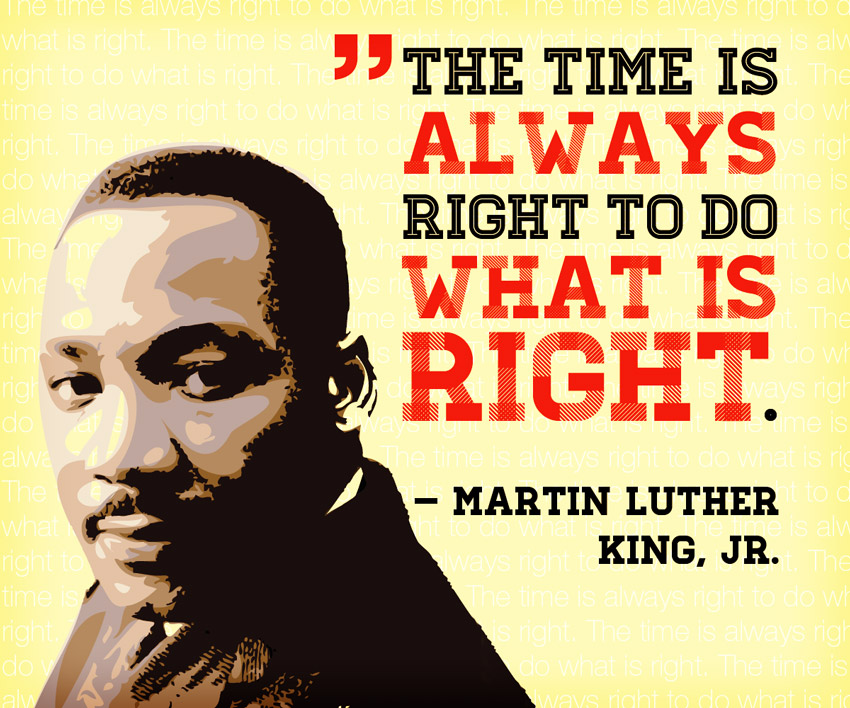
Martin Luther King, Jr Day.

. 1875 ~ First American performance of Johannes Brahms’ “Hungarian Dances”

. 1886 ~ Death of Italian opera composer Amilcare Ponchielli, in Milan

. 1891 ~ French Composer Leo Delibes died in Paris

. 1905 ~ Ernesto Halffter, Spanish composer and conductor

. 1908 ~ Ethel Merman (Zimmerman), American singer of popular music, Tony Award-winning actress (musical), Musical Theater Hall of Fame. She is most famous for Call Me Madam in 1951, It’s a Mad, Mad, Mad, Mad World, There’s No Business Like Show Business and Alexander’s Ragtime Band

. 1929 ~ Marilyn Horne, American mezzo-soprano

. 1929 ~ G.T. (Granville) Hogan, Jazz drummer who played with Elmo Hope, Earl Bostic

. 1934 ~ Bob Bogle (Robert Lenard Bogle), Guitarist, bass with The Ventures

. 1938 ~ Béla Bartók and his wife, Ditta performed their first public concert featuring his Sonata for Two Pianos and Percussion

. 1938 ~ Benny Goodman and his band, plus a quartet, brought the sound of jazz to Carnegie Hall in New York City. When asked how long an intermission he wanted, he quipped, “I don’t know. How much does Toscanini get?”

. 1942 ~ Bill Francis, Keyboard, singer with Dr. Hook and the Medicine Show

. 1942 ~ Kay Kyser and the band recorded A Zoot Suit for Columbia Records. The tune is about the problems associated with wearing this garish, exaggerated ‘hep’ fashion.

. 1946 ~ Katia Ricciarelli, Italian soprano

. 1946 ~ Ronnie Milsap, Grammy Award-winning singer in 1976, CMA Male Vocalist of the Year (1974, 1976, 1977), CMA Entertainer of the Year (1977), blind since birth, he learned to play several instruments by age 12

. 1950 ~ Debbie Allen, Dancer, actress, choreographer, sister of actress Phylicia Rashad

. 1957 ~ Conductor Arturo Toscanini died in New York

. 1957 ~ The Cavern Club opened for business in Liverpool, England. The rock club was just a hangout for commoners. Then, things changed — big time. It all started in the early 1960s when four kids from the neighborhood popped in to jam. They, of course, turned out to be The Beatles.

. 1962 ~ Paul Webb, Bass with Talk Talk

. 1964 ~ “Hello Dolly!” opened at the St. James Theatre in New York City. Carol Channing starred in the role of Mrs. Dolly Levi. The musical was an adaptation of Thornton Wilder’s play, “The Matchmaker”. The show, with an unforgettable title song, was hailed by critics as the “…possible hit of the season.” It was possible, all right. “Hello Dolly!” played for 2,844 performances. And, it returned to Broadway in the 1990s, again starring Carol Channing.

. 1972 ~ David Seville died on this day in Beverly Hills, CA. Born Ross Bagdasarian, the musician was the force, and artist, behind the Alvin and the Chipmunks novelty songs of the 1950s, ’60s and ’70s.

. 1973 ~ Clara Ward passed away. Ward was an American gospel artist who achieved great artistic and commercial success in the 1940s and 1950s.

. 1976 ~ The album, “Frampton Comes Alive”, was released by Herb Alpert’s A&M Records. The double LP soon reached the top spot of the album charts and stayed perched there for 17 weeks. It sold 19 million copies in its first year.

. 1984 ~ Michael Jackson received eight awards at the 11th annual American Music Awards this night.

. 2001 ~ Eleanor Lawrence, a flutist who played often in chamber music performances and with several orchestras in New York City, died of brain cancer at the age of 64. She is credited with transforming a simple newsletter into an important source for flutists. Lawrence studied the flute at the New England Conservatory with the principal flutist of the Boston Symphony Orchestra, James Pappoutsakis. She later studied with flutists from the Philadelphia Orchestra and the Metropolitan Opera orchestra. She joined the American Symphony Orchestra and the Brooklyn Philharmonic after moving to New York in the 1960s. She played periodically with the New York Philharmonic and the Metropolitan Opera. Besides performing, Lawrence taught at the Manhattan School of Music. She served three times as the president of the New York Flute Club. She edited The National Flute Association Newsletter, now The Flutist Quarterly, from the mid-1970s to the early 1980s, expanding it from a brief information sheet to a publication with regular interviews.

January 15 ~ This Day in Music History

today

1890 ~ Premiere of The Sleeping Beauty, ballet by Pyotr Il’yich Tchaikovsky. After the less-than-promising 1877 debut of Swan Lake, marred by a largely amateur production, over a decade lapsed before the composer was commissioned by the Director of the Imperial Theatres in St. Petersburg to supply music for a ballet on the Perrault fairy tale, The Sleeping Beauty. Tchaikovsky threw himself arms-deep into the project. Not only was the composer again on happy turf, he was currently in a state of delight by the occasional presence of a three-year old little girl; children seemed to tap a joyful vein in Tchaikovsky. The little girl’s proximity fed a spirit of fantasy which transmitted to this most lighthearted of the composer’s scores. Most musicologists and historians concede that Sleeping Beauty is the most perfectly wrought of Tchaikovsky’s three ballet scores, classic in its restraint, yet possessing the right amount of color and panache to render it pure Tchaikovsky; its waltz remains a Pops favorite.

. 1896 ~ Alexander Scriabin made his European debut as a pianist at the Salle Erard in Paris

. 1904 ~ Ellie Sigmeister, Classical composer

. 1905 ~ Weldon Leo ‘Jack’ Teagarden, died of pneumonia
More information about Teagarden

. 1909 ~ Gene Krupa, American Jazz bandleader and drummer

. 1941 ~ Captain Beefheart (Don Van Vliet), Singer with Captain Beefheart & His Magic Band, artist

. 1942 ~ Kenny Sargent vocalized with the Glen Gray Orchestra on Decca Records’ It’s the Talk of the Town.

. 1948 ~ Ronnie Van Zandt, Singer, songwriter with Lynyrd Skynyrd

. 1951 ~ Charo (Maria Rosario Pilar Martinez Molina Baeza), ‘The Hootchy Cootchy Girl’, actress, singer, wife of Xavier Cugat

. 1951 ~ Martha Davis, Singer with The Motels

. 1959 ~ Peter Trewavas, Bass with Marillion

. 1964 ~ The soundtrack album of the musical, “The King and I”, starring Yul Brynner, earned a gold record.

. 1967 ~ Ed Sullivan told the Rolling Stones to change the lyrics and the title to the song, Let’s Spend the Night Together, so it became Let’s Spend Some Time Together.

. 1972 ~ Elvis Presley, who was also censored from the waist down by Ed Sullivan, reportedly drew the largest audience for a single TV show to that time. Elvis presented a live, worldwide concert from Honolulu on this day.

. 1987 ~ Ray Bolger died.  He was an American entertainer of vaudeville, stage and actor, singer and dancer best known for his portrayal of the Scarecrow in The Wizard of Oz.

. 1993 ~ Sammy Cahn passed away.  He was an was an American lyricist, songwriter and musician.

January 11 ~ This Day in Music History

today

. 1837 ~ Death of Irish pianist and composer John Field in Moscow, while on tour

. 1856 ~ Charles (Johann Christian) Sinding, Norwegian composer

. 1875 ~Reinhold Moritsevich Glière Russian composer
More information about Glière

. 1901 ~ Vasily Sergeyevich Kalinnikov died. Kalinnikov was a Russian composer of two symphonies, several additional orchestral works and numerous songs, all of them imbued with characteristics of folksong.

. 1902 ~ Maurice Duruflé, French organist and composer

. 1924 ~ Don Cherry, Singer with Band of Gold

. 1928 ~ Ol’ Man River was recorded on Victor Records by Paul Whiteman and his orchestra. Bing Crosby crooned as the song’s featured vocalist. The tune came from the Broadway musical, “Showboat”.

. 1930 ~ Jack Nimitz, Jazz ‘reed’ musician, toured with Supersax

. 1933 ~ Goldie Hill, Country entertainer, married to country singer, Carl Smith

. 1946 ~ Naomi (Diane) Judd, Grammy Award-winning singer in the duo, The Judds, mother of singers Wynonna and Ashley

. 1949 ~ Dennis (Frederick) Greene, Singer with Sha-Na-Na

. 1958 ~ Vicki Peterson, Guitarist, singer with The Bangles

. 1980 ~ Rupert Holmes was at the top of the pop music charts, with Escape (The Pina Colada Song).

. 1981 ~ Leonard Bernstein began conducting the BR – Bayerischer Rundfunk Symphony Orchestra in Richard Wagner’s “Tristan und Isolde” in Munich’s Hercules Hall. Performed one act at a time, in January, April, and November of 1981, respectively, Bernstein’s “Tristan und Isolde” was telecast live and later released as an audio recording by Philips–to some controversy.

Karl Böhm remarked, with regards to Bernstein’s exaggeratedly slow tempi, “For the first time, someone dares to perform this music as Wagner wrote it.” Böhm’s own recording of the Prelude was four minutes faster.

Upon completion of the project, Bernstein declared, “My life is complete… I don’t care what happens after this. It is the finest thing I’ve ever done.”

. 2003 ~ Mickey Finn, bongo player with 1970s band T.Rex, died at the age of 55. Formed by flamboyant lead singer Marc Bolan in 1967, T.Rex shot to fame with hits such as Get it On, Hot Love and Children of the Revolution in the early 1970s. The band was originally called Tyrannosaurus Rex but the name was shortened to T.Rex in 1970 after Finn joined, replacing original member Steve Took. The band achieved a huge following in Britain — sparking a period of “T.Rextacy” among devoted fans — but achieved more limited popularity in the United States and elsewhere. Credited with introducing the phenomenon of “glam rock” to pop music and influencing artists such as David Bowie, the band played to crowds of up to 100,000 and sold 39 million albums, according to Rolling Stone music magazine.

. 2004 ~ Randy VanWarmer, who recorded the pop hit Just When I Needed You Most and then had a successful career as a songwriter, died. He was 48. Just When I Needed You Most reached No. 4 on Billboard’s pop chart in 1979. VanWarmer, also a guitarist, had written it when he was 18. More recently, VanWarmer wrote I’m in a Hurry (And Don’t Know Why), a No. 1 hit by the country group Alabama in 1992, and I Guess It Never Hurts to Hurt Sometimes, No. 1 by the Oak Ridge Boys in 1984. VanWarmer was born March 30, 1955, in Indian Hills, Colo., and spent much of his childhood in Cornwall, England, after his father died. As a young man he lived in New York City and then Los Angeles before moving to Nashville in 1985. VanWarmer had recently recorded a duet with country singer Razzy Bailey, Sandcastles.

. 2005 ~ Spencer Dryden, drummer for the San Francisco rock band the Jefferson Airplane, died. He was 66.

. 2005 ~ Jimmy Griffin, an Academy Award-winning songwriter and former guitarist for the 1970s pop group Bread, died. He was 61.

January 10 ~ This Day in Music History

today

. 1904 ~ Ray Bolger (Raymond Wallace Bulcao), Dancer, actor in The Wizard of Oz

. 1910 ~ Galina Ulanova, Russian-born ballerina with the Bolshoi Ballet from 1944 to 1962

. 1917 ~ Jerry Wexler, Record producer, Atlantic Records

. 1925 ~ Max Roach, Jazz musician/drummer, composer: Freedom Now Suite; educator: taught at Lennox, MA School of Jazz and Yale; Professor of Music at University of Massachusetts, Amherst  Note: This is my Alma Mater, and Michael’s as well.

. 1927 ~ Gisele MacKenzie (LaFleche), Singer

. 1927 ~ Johnnie Ray, Singer

. 1935 ~ Sherrill Milnes, American baritone

. 1939 ~ Sal Mineo (Salvatore Mineo, Jr.), Singer, actor in The Gene Krupa Story

. 1943 ~ Jim Croce, Singer, songwriter

. 1944 ~ Frank Sinatra, Jr., Singer, bandleader

. 1945 ~ Ronny Light, Songwriter, Nashville studio musician

. 1945 ~ Rod Stewart, British rock singer

. 1945 ~ Erskine Hawkins waxed a classic for Victor Records. The tune, with the Erskine Hawkins Orchestra, was titled Tippin’ In.

. 1946 ~ Bob Lang, Bass with Wayne Fontana & The Mindbenders

. 1947 ~ “Finian’s Rainbow” opened on the Great White Way in New York City. The musical played for 725 performances. Years later, Petula Clark would star and sing in the movie version.

. 1948 ~ Donald Fagen, Keyboard with Steely Dan

. 1948 ~ Cyril Neville, Percussion, singer with The Neville Brothers

. 1949 ~ The Radio Corporation of America, sometimes known as RCA, announced a new 7-inch, 45 rpm phonograph record. Soon, the 45, the record with the big hole in the middle, would change the pop music business. RCA even manufactured a record player that played only 45s – with a fat spindle that made “stacking wax” real simple and automatic.

. 1953 ~ Pat Benatar, Grammy award-winning singer

. 1956 ~ Elvis Presley recorded his first tunes as an RCA Victor artist. Recording in Nashville, Elvis sang Heartbreak Hotel, I Was the One, I’m Counting On You, I Got a Woman and Money Honey. Heartbreak Hotel was #1 by April 11, 1956 and stayed there for eight weeks. It was #1 on the pop and rhythm and blues charts and number five on the country music list.

. 1960 ~ Marty Robbins’ hit tune, El Paso, held the record for the longest #1 song to that time. The song ran 5 minutes and 19 seconds, giving many radio station Program Directors fits; because the average record length at that time was around 2 minutes, and formats didn’t allow for records much longer than that, (e.g., 2-minute record, 3 minutes for commercials, 60 seconds for promo, 2-minute record, etc.). DJs got used to the longer length quickly, however, realizing it gave them time, before the record ended, to actually think of something to say next.

. 1969 ~ Elvis Presley’s single, Don’t Cry Daddy, entered the Top 10 on the pop charts this day. If you listened to this song carefully, you’d hear a vocal duet with country artist Ronnie Milsap.

. 1976 ~ Howlin’ Wolf passed away.  Chester Arthur Burnett, known as Howlin’ Wolf, was an African-American Chicago blues singer, guitarist and harmonica player, from Mississippi. With a booming voice and looming physical presence, he is one of the best-known Chicago blues artists.

. 1984 ~ Cyndi Lauper became the first female recording artist since Bobbie Gentry in 1967 to be nominated for five Grammy Awards: Album of the Year, Best New Artist, Best Pop Vocal Performance (Female), Record of the Year and Song of the Year.

. 1986 ~ The uncut version of Jerome Kern’s musical, “Showboat”, opened at the Kennedy Center in Washington, DC. It marked the first time in almost 60 years that the four-hour version of the classic production had played before a mostly awake audience.

. 1991 ~ It was announced that jazz would become a regular part of New York City’s Lincoln Center for the Performing Arts repertoire.

. 2000 ~ Gospel singer Willie Neal “The Country Boy” Johnson died of a stroke at the age of 65. Johnson was a longtime member of the Gospel Keynotes, which produced more than 20 albums, including Ain’t No Stopping Us Now, and signature song That’s My Son. Ain’t No Stopping Us Now received a Grammy nomination in 1981. The group signed with Malaco Records in 1985 and changed its name to Willie Neal Johnson and the New Keynotes. The group received a Stellar Award for Lord Take Us Through, The Country Boy Goes Homeand a Stellar nomination for The Country Boy Goes Home II. Johnson’s group was inducted into The American Gospel Quartet Hall of Fame in Birmingham, Ala., and The Gospel Music Hall of Fame in Detroit in 1999.

. 2002 ~ Moe Foner, a labor official who brought art, theater and music to the largest health care workers union in New York City, died at the age of 86. As an executive secretary for New York’s Health and Human Service Union, Foner worked as a lobbyist, strategist and slogan writer for the city’s hospital workers for several decades. Foner was also the founder of Bread and Roses, a cultural program which organized art exhibitions and performances for union members, often during workers’ lunch hours. Under his direction, Bread and Roses recruited performers from folksingers Pete Seeger and Woody Guthrie to the ventriloquist Shari Lewis. He hired rising stars like Ossie Davis, Ruby Dee and Sidney Poitier to put on annual shows about civil rights for hospital workers. Foner also installed the only art gallery at a union headquarters. Born in Brooklyn, Foner graduated from Brooklyn College in 1936 and was employed by several other unions, including the now-defunct Department Store Local 1250, before going to work for the health care workers union.

.  2016 ~ David Bowie died after a courageous 18 month battle with cancer.  Bowie was an English singer, songwriter, multi-instrumentalist, record producer, arranger, painter, and actor.