January 25 ~ This Day in Music History


. 1759 ~ Burns Night commemorates the life of the Scottish bard (poet) Robert Burns, who was born on January 25, 1759. Burns’ best known work is “Auld Lang Syne”.

. 1858 ~ Felix Mendelssohn’s overture to “A Midsummer Night’s Dream” was first used as a wedding march. The bride was Queen Victoria’s daughter, the groom was the Crown Prince of Prussia.

. 1886 ~ Wilhelm Furtwängler, German conductor and composer

1913 ~ Witold Lutoslawski, Polish composer
More information about Lutoslawski

. 1938 ~ Etta James, Singer
More about Etta James

. 1940 ~ Mary Martin recorded My Heart Belongs to Daddy — for Decca Records. The song was her signature song until she starred in “South Pacific” in 1949. Then, Larry Hagman’s mother had a new trademark: “I’m gonna wash that man right out of my hair…”
More about Mary Martin

. 1945 ~ Richard Tucker debuted at the Metropolitan Opera House in New York City in the production of “La Gioconda”.

. 1964 ~ The Beatles reached the #1 spot on the music charts, as their hit single, I Want to Hold Your Hand, grabbed the top position in “Cash Box” magazine, as well as on the list of hits on scores of radio stations. It was the first #1 hit for The Beatles. “Billboard” listed the song as #1 on February 1. The group’s second #1 hit song, She Loves You, was also released this day – but not on Capitol Records. It was on Swan Records. Other songs by The Beatles were released on Vee Jay (Please, Please Me), M-G-M (My Bonnie with Tony Sheridan), Tollie (Twist and Shout), Atco (Ain’t She Sweet) and the group’s own label, Apple Records, as well as Capitol.

. 1999 ~ Robert Shaw passed away.  Shaw was an American conductor most famous for his work with his namesake Chorale, with the Cleveland Orchestra and Chorus, and the Atlanta Symphony Orchestra and Chorus. Shaw received 14 Grammy awards, four ASCAP awards for service to contemporary music, the first Guggenheim Fellowship ever awarded to a conductor, the Alice M. Ditson Conductor’s Award for Service to American Music; the George Peabody Medal for outstanding contributions to music in America, the Gold Baton Award of the American Symphony Orchestra League for “distinguished service to music and the arts,” the American National Medal of Arts, France’s Officier des Arts et des Lettres, England’s Gramophone Award, and was a 1991 recipient of the Kennedy Center Honors.

. 2004 ~ Ronald Fredianelli, a co-founder of the 1950s pop vocal group the Gaylords, died in Las Vegas. He was 73. Fredianelli, who performed as Ronnie Gaylord teamed with Bonaldo Bonaldi and Don Rea in the early 1950s. Bonaldi performed as Burt Holiday. Their debut song, Tell Me You’re Mine, was a Top 10 hit in 1953. Other hits included From the Vine Came the Grape and The Little Shoemaker.Although the Gaylords formed in Detroit, Fredianelli and Bonaldi became a staple in Nevada showrooms, where they performed for decades as Gaylord and Holiday. Bonaldi and Rea live in Reno. One of Fredianelli’s sons, Anthony, is guitarist for the rock group Third Eye Blind.

2014 ~ Artemios “Demis” Ventouris Roussos (June 15 1946-January 25, 2015) was a Greek singer and performer who had international hit records as a solo performer in the 1970s after having been a member of Aphrodite’s Child, a progressive rock group that also included Vangelis. He has sold over 60 million albums worldwide.

November 19, 2016 ~ Today in Music History

today

• 1724 ~ First Performance of J. S. Bach’s Sacred Cantata No. 26 Ach wie flüchtig, ach wie nichtig performed on the 24th Sunday following Trinity. A portion of Bach’s second annual Sacred Cantata cycle in Leipzig, 1724-25.

• 1736 ~ J. S. Bach named court composer by Poland’s King Agustus III.

• 1739 ~ First Performance of Jean-Philippe Rameau‘s opera Dardanus in Paris.

• 1826 ~ Composer Felix Mendelssohn and his sister Fanny performed his overture to “A Midsummer Night’s Dream” for the first time.

• 1828 ~ Death of Austrian composer Franz Schubert in Vienna, at the age of 31 from typhus.   He is buried near Beethoven.

• 1859 ~ Mikhail Ippolitov-Ivanov, Russian composer and conductor
More information about Ippolitov-Ivanov

• 1874 ~ Birth of composer Karl Adrian Wohlfahrt.

• 1875 ~ First Performance of Tchaikovsky‘s Third Symphony, in Moscow.

• 1888 ~ Piano Debut in Boston of composer Edward MacDowell with the Kneisel Quartet.

• 1905 ~ Tommy Dorsey, American trombonist and bandleader

• 1923 ~ First Performances of Béla Bartók‘s Five Dances and Zoltán Kodály‘s Psalums Hungaricus in Budapest, marking the 50th anniversary of the union of cities Buda and Pest.

• 1936 ~ Birth of classical music commentator (Detroit Symphony broadcasts) Dick Cavett, in Kearney, Nebraska. ABC-TV talk show host (Dick Cavett Show).

• 1936 ~ First concert recorded on magnetic tape with the London Philharmonic orchestra conducted by Sir Thomas Beecham at BASF’s own concert hall in Ludwigshaven, Germany.

• 1937 ~ Ray Collins, Songwriter

• 1938 ~ Hank Medress, Singer with The Tokens, record producer

• 1943 ~ Fred Lipsius, Piano, sax with Blood Sweat & Tears

• 1943 ~ Stan Kenton and his orchestra recorded Artistry in Rhythm, the song that later become the Kenton theme. It was Capitol record number 159. The other side of the disk was titled, Eager Beaver.

• 1944 ~ Agnes Baltsa, Greek mezzo-soprano

• 1954 ~ Sammy Davis, Jr. was involved in a serious auto accident in San Bernardino, CA. Three days later, Davis lost the sight in his left eye. He later referred to the accident as the turning point of his career.

• 1957 ~ American conductor Leonard Bernstein named Music Director of the New York Philharmonic. First American-born and educated conductor named to head an important American Orchestra.

• 1961 ~ A year after Chubby Checker reached the #1 spot with The Twist, the singer appeared on The Ed Sullivan Show to sing the song again. The Twist became the first record to reach #1 a second time around, on January 13, 1962.

• 1962 ~ For the first time, a jazz concert was presented at the White House. Jazz had previously been served as background music only.

• 2000 ~ First Performance of Philip Glass‘ Double Concerto for Timpani and Orchestra, by the American Composers Orchestra. Lincoln Center in New York.

2004 ~ Composer Cy Coleman, who wrote the musical “Sweet Charity” and whose songs included such Frank Sinatra classics as WitchcraftBig Spender and The Best is Yet to Come, died at the age 75
More information about Cy Coleman

January 25 in Music History

Snowday


. 1858 ~ Felix Mendelssohn’s overture to “A Midsummer Night’s Dream”was first used as a wedding march. The bride was Queen Victoria’s daughter, the groom was the Crown Prince of Prussia.

. 1886 ~ Wilhelm Furtwängler, German conductor and composer

1913 ~ Witold Lutoslawski, Polish composer
More information about Lutoslawski

. 1938 ~ Etta James, Singer
More about Etta James

. 1940 ~ Mary Martin recorded My Heart Belongs to Daddy — for Decca Records. The song was her signature song until she starred in “South Pacific” in 1949. Then, Larry Hagman’s mother had a new trademark: “I’m gonna wash that man right out of my hair…”
More about Mary Martin

. 1945 ~ Richard Tucker debuted at the Metropolitan Opera House in New York City in the production of “La Gioconda”.

. 1964 ~ The Beatles reached the #1 spot on the music charts, as their hit single, I Want to Hold Your Hand, grabbed the top position in “Cash Box” magazine, as well as on the list of hits on scores of radio stations. It was the first #1 hit for The Beatles. “Billboard” listed the song as #1 on February 1. The group’s second #1 hit song, She Loves You, was also released this day – but not on Capitol Records. It was on Swan Records. Other songs by The Beatles were released on Vee Jay (Please, Please Me), M-G-M (My Bonnie with Tony Sheridan), Tollie (Twist and Shout), Atco (Ain’t She Sweet) and the group’s own label, Apple Records, as well as Capitol.

. 1999 ~ Robert Shaw passed away.  Shaw was an American conductor most famous for his work with his namesake Chorale, with the Cleveland Orchestra and Chorus, and the Atlanta Symphony Orchestra and Chorus. Shaw received 14 Grammy awards, four ASCAP awards for service to contemporary music, the first Guggenheim Fellowship ever awarded to a conductor, the Alice M. Ditson Conductor’s Award for Service to American Music; the George Peabody Medal for outstanding contributions to music in America, the Gold Baton Award of the American Symphony Orchestra League for “distinguished service to music and the arts,” the American National Medal of Arts, France’s Officier des Arts et des Lettres, England’s Gramophone Award, and was a 1991 recipient of the Kennedy Center Honors.

. 2004 ~ Ronald Fredianelli, a co-founder of the 1950s pop vocal group the Gaylords, died in Las Vegas. He was 73. Fredianelli, who performed as Ronnie Gaylord teamed with Bonaldo Bonaldi and Don Rea in the early 1950s. Bonaldi performed as Burt Holiday. Their debut song, Tell Me You’re Mine, was a Top 10 hit in 1953. Other hits included From the Vine Came the Grape and The Little Shoemaker.Although the Gaylords formed in Detroit, Fredianelli and Bonaldi became a staple in Nevada showrooms, where they performed for decades as Gaylord and Holiday. Bonaldi and Rea live in Reno. One of Fredianelli’s sons, Anthony, is guitarist for the rock group Third Eye Blind.

2014 ~ Artemios “Demis” Ventouris Roussos (June 15 1946-January 25, 2015) was a Greek singer and performer who had international hit records as a solo performer in the 1970s after having been a member of Aphrodite’s Child, a progressive rock group that also included Vangelis. He has sold over 60 million albums worldwide.
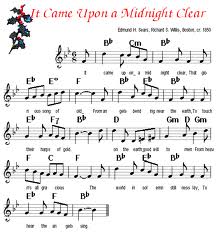
Christmas Music, Part 8 – It Came Upon A Midnight Clear

It Came Upon A Midnight Clear

In 1850, Richard Storrs Willis, a composer who trained under Felix Mendelssohn, wrote the melody called “Carol.” This melody is most often set in the key of B-flat major in a six-eight time signature. “Carol” is the most widely known tune to the song in the United States.

It came upon the midnight clear,
That glorious song of old,
From angels bending near the earth,
To touch their harps of gold:
“Peace on the earth, goodwill to men,
From heaven’s all-gracious King.”
The world in solemn stillness lay,
To hear the angels sing.

Still through the cloven skies they come,
With peaceful wings unfurled,
And still their heavenly music floats
O’er all the weary world;
Above its sad and lowly plains,
They bend on hovering wing,
And ever o’er its Babel sounds
The blessèd angels sing.

Yet with the woes of sin and strife
The world has suffered long;
Beneath the angel-strain have rolled
Two thousand years of wrong;
And man, at war with man, hears not
The love-song which they bring;
O hush the noise, ye men of strife,
And hear the angels sing.

And ye, beneath life’s crushing load,
Whose forms are bending low,
Who toil along the climbing way
With painful steps and slow,
Look now! for glad and golden hours
come swiftly on the wing.
O rest beside the weary road,
And hear the angels sing!

For lo!, the days are hastening on,
By prophet bards foretold,
When with the ever-circling years
Comes round the age of gold
When peace shall over all the earth
Its ancient splendors fling,
And the whole world give back the song
Which now the angels sing.

Another version:

https://youtu.be/KtV477Cqni0

Christmas Music, Part 7 – Hark the Herald Angels Sing

hark

Charles Wesley (1707-1788),  the younger brother of John Wesley wrote the words to this Christmas Carol.

Charles was a hymn writer and a poet, also known as one of the people who began the Methodist movement in the Church of England. Hark the Herald Angels Sing appeared in 1739 in a book called Hymns and Sacred Poems.

Wesley envisioned this being sung to the same tune as his hymn, Christ the Lord Is Risen Today,  and in some hymnals it is included along with the more popular version.

This hymn was regarded as one of the Great Four Anglican Hymns and published as number 403 in “The Church Hymn Book” (New York and Chicago, USA, 1872).

To celebrate the invention of the printing press, Felix Mendelssohn composed a cantata in 1840 called Festgesang or “Festival Song”. The melody of Mendelssohn’s cantata was then used by William H. Cummings and adapted it to the lyrics of Wesley’s “Hark the Herald Angels Sing”.

Hark the herald angels sing
“Glory to the newborn King!
Peace on earth and mercy mild
God and sinners reconciled”
Joyful, all ye nations rise
Join the triumph of the skies
With the angelic host proclaim:
“Christ is born in Bethlehem”
Hark! The herald angels sing
“Glory to the newborn King!”

And, of course, no one can do it better than The Mormon Tabernacle Choir.


November 19 ~ Today in Music History

today

• 1724 ~ First Performance of J. S. Bach’s Sacred Cantata No. 26 Ach wie flüchtig, ach wie nichtig performed on the 24th Sunday following Trinity. A portion of Bach’s second annual Sacred Cantata cycle in Leipzig, 1724-25.

• 1736 ~ J. S. Bach named court composer by Poland’s King Agustus III.

• 1739 ~ First Performance of Jean-Philippe Rameau‘s opera Dardanus in Paris.

• 1826 ~ Composer Felix Mendelssohn and his sister Fanny performed his overture to “A Midsummer Night’s Dream” for the first time.

http://youtu.be/SUDvZaMl4RU

• 1828 ~ Death of Austrian composer Franz Schubert in Vienna, at the age of 31 from typhus.   He is buried near Beethoven.

• 1859 ~ Mikhail Ippolitov-Ivanov, Russian composer and conductor
More information about Ippolitov-Ivanov

• 1874 ~ Birth of composer Karl Adrian Wohlfahrt.

• 1875 ~ First Performance of Tchaikovsky‘s Third Symphony, in Moscow.

http://youtu.be/9lQO7GR8g1Y

• 1888 ~ Piano Debut in Boston of composer Edward MacDowell with the Kneisel Quartet.

• 1905 ~ Tommy Dorsey, American trombonist and bandleader

• 1923 ~ First Performances of Béla Bartók‘s Five Dances and Zoltán Kodály‘s Psalums Hungaricus in Budapest, marking the 50th anniversary of the union of cities Buda and Pest.

• 1936 ~ Birth of classical music commentator (Detroit Symphony broadcasts) Dick Cavett, in Kearney, Nebraska. ABC-TV talk show host (Dick Cavett Show).

• 1936 ~ First concert recorded on magnetic tape with the London Philharmonic orchestra conducted by Sir Thomas Beecham at BASF’s own concert hall in Ludwigshaven, Germany.

• 1937 ~ Ray Collins, Songwriter

• 1938 ~ Hank Medress, Singer with The Tokens, record producer

• 1943 ~ Fred Lipsius, Piano, sax with Blood Sweat & Tears

• 1943 ~ Stan Kenton and his orchestra recorded Artistry in Rhythm, the song that later become the Kenton theme. It was Capitol record number 159. The other side of the disk was titled, Eager Beaver.

• 1944 ~ Agnes Baltsa, Greek mezzo-soprano

• 1954 ~ Sammy Davis, Jr. was involved in a serious auto accident in San Bernardino, CA. Three days later, Davis lost the sight in his left eye. He later referred to the accident as the turning point of his career.

• 1957 ~ American conductor Leonard Bernstein named Music Director of the New York Philharmonic. First American-born and educated conductor named to head an important American Orchestra.

• 1961 ~ A year after Chubby Checker reached the #1 spot with The Twist, the singer appeared on The Ed Sullivan Show to sing the song again. The Twist became the first record to reach #1 a second time around, on January 13, 1962.

• 1962 ~ For the first time, a jazz concert was presented at the White House. Jazz had previously been served as background music only.

• 2000 ~ First Performance of Philip Glass‘ Double Concerto for Timpani and Orchestra, by the American Composers Orchestra. Lincoln Center in New York.

2004 ~ Composer Cy Coleman, who wrote the musical “Sweet Charity” and whose songs included such Frank Sinatra classics as WitchcraftBig Spender and The Best is Yet to Come, died at the age 75
More information about Cy Coleman

Adapted from http://www.oconnormusic.org/month-nov.htm

January 25 ~ Today in Music History

today

. 1858 ~ Felix Mendelssohn’s overture to “A Midsummer Night’s Dream”was first used as a wedding march. The bride was Queen Victoria’s daughter, the groom was the Crown Prince of Prussia.

. 1886 ~ Wilhelm Furtwängler, German conductor and composer

1913 ~ Witold Lutoslawski, Polish composer
More information about Lutoslawski

. 1938 ~ Etta James, Singer
More about Etta James

. 1940 ~ Mary Martin recorded My Heart Belongs to Daddy — for Decca Records. The song was her signature song until she starred in “South Pacific” in 1949. Then, Larry Hagman’s mother had a new trademark: “I’m gonna wash that man right out of my hair…”
More about Mary Martin

. 1945 ~ Richard Tucker debuted at the Metropolitan Opera House in New York City in the production of “La Gioconda”.

. 1964 ~ The Beatles reached the #1 spot on the music charts, as their hit single, I Want to Hold Your Hand, grabbed the top position in “Cash Box” magazine, as well as on the list of hits on scores of radio stations. It was the first #1 hit for The Beatles. “Billboard” listed the song as #1 on February 1. The group’s second #1 hit song, She Loves You, was also released this day – but not on Capitol Records. It was on Swan Records. Other songs by The Beatles were released on Vee Jay (Please, Please Me), M-G-M (My Bonnie with Tony Sheridan), Tollie (Twist and Shout), Atco (Ain’t She Sweet) and the group’s own label, Apple Records, as well as Capitol.

. 1999 ~ Robert Shaw passed away.  Shaw was an American conductor most famous for his work with his namesake Chorale, with the Cleveland Orchestra and Chorus, and the Atlanta Symphony Orchestra and Chorus. Shaw received 14 Grammy awards, four ASCAP awards for service to contemporary music, the first Guggenheim Fellowship ever awarded to a conductor, the Alice M. Ditson Conductor’s Award for Service to American Music; the George Peabody Medal for outstanding contributions to music in America, the Gold Baton Award of the American Symphony Orchestra League for “distinguished service to music and the arts,” the American National Medal of Arts, France’s Officier des Arts et des Lettres, England’s Gramophone Award, and was a 1991 recipient of the Kennedy Center Honors.

. 2004 ~ Ronald Fredianelli, a co-founder of the 1950s pop vocal group the Gaylords, died in Las Vegas. He was 73. Fredianelli, who performed as Ronnie Gaylord teamed with Bonaldo Bonaldi and Don Rea in the early 1950s. Bonaldi performed as Burt Holiday. Their debut song, Tell Me You’re Mine, was a Top 10 hit in 1953. Other hits included From the Vine Came the Grape and The Little Shoemaker.Although the Gaylords formed in Detroit, Fredianelli and Bonaldi became a staple in Nevada showrooms, where they performed for decades as Gaylord and Holiday. Bonaldi and Rea live in Reno. One of Fredianelli’s sons, Anthony, is guitarist for the rock group Third Eye Blind.

2014 ~ Artemios “Demis” Ventouris Roussos (June 15 1946-January 25, 2015) was a Greek singer and performer who had international hit records as a solo performer in the 1970s after having been a member of Aphrodite’s Child, a progressive rock group that also included Vangelis. He has sold over 60 million albums worldwide.

November 19 ~ Today in Music History

today


• 1724 ~ First Performance of J. S. Bach’s Sacred Cantata No. 26 Ach wie flüchtig, ach wie nichtig performed on the 24th Sunday following Trinity. A portion of Bach’s second annual Sacred Cantata cycle in Leipzig, 1724-25.

• 1736 ~ J. S. Bach named court composer by Poland’s King Agustus III.

• 1739 ~ First Performance of Jean-Philippe Rameau‘s opera Dardanus in Paris.

• 1826 ~ Composer Felix Mendelssohn and his sister Fanny performed his overture to “A Midsummer Night’s Dream” for the first time.

http://youtu.be/SUDvZaMl4RU

• 1828 ~ Death of Austrian composer Franz Schubert in Vienna, at the age of 31 from typhus.   He is buried near Beethoven.

• 1859 ~ Mikhail Ippolitov-Ivanov, Russian composer and conductor
More information about Ippolitov-Ivanov

• 1874 ~ Birth of composer Karl Adrian Wohlfahrt.

• 1875 ~ First Performance of Tchaikovsky‘s Third Symphony, in Moscow.

http://youtu.be/9lQO7GR8g1Y

• 1888 ~ Piano Debut in Boston of composer Edward MacDowell with the Kneisel Quartet.

• 1905 ~ Tommy Dorsey, American trombonist and bandleader

• 1923 ~ First Performances of Béla Bartók‘s Five Dances and Zoltán Kodály‘s Psalums Hungaricus in Budapest, marking the 50th anniversary of the union of cities Buda and Pest.

• 1936 ~ Birth of classical music commentator (Detroit Symphony broadcasts) Dick Cavett, in Kearney, Nebraska. ABC-TV talk show host (Dick Cavett Show).

• 1936 ~ First concert recorded on magnetic tape with the London Philharmonic orchestra conducted by Sir Thomas Beecham at BASF’s own concert hall in Ludwigshaven, Germany.

• 1937 ~ Ray Collins, Songwriter

• 1938 ~ Hank Medress, Singer with The Tokens, record producer

• 1943 ~ Fred Lipsius, Piano, sax with Blood Sweat & Tears

• 1943 ~ Stan Kenton and his orchestra recorded Artistry in Rhythm, the song that later become the Kenton theme. It was Capitol record number 159. The other side of the disk was titled, Eager Beaver.

• 1944 ~ Agnes Baltsa, Greek mezzo-soprano

• 1954 ~ Sammy Davis, Jr. was involved in a serious auto accident in San Bernardino, CA. Three days later, Davis lost the sight in his left eye. He later referred to the accident as the turning point of his career.

• 1957 ~ American conductor Leonard Bernstein named Music Director of the New York Philharmonic. First American-born and educated conductor named to head an important American Orchestra.

• 1961 ~ A year after Chubby Checker reached the #1 spot with The Twist, the singer appeared on The Ed Sullivan Show to sing the song again. The Twist became the first record to reach #1 a second time around, on January 13, 1962.

• 1962 ~ For the first time, a jazz concert was presented at the White House. Jazz had previously been served as background music only.

• 2000 ~ First Performance of Philip Glass‘ Double Concerto for Timpani and Orchestra, by the American Composers Orchestra. Lincoln Center in New York.

2004 ~ Composer Cy Coleman, who wrote the musical “Sweet Charity” and whose songs included such Frank Sinatra classics as WitchcraftBig Spender and The Best is Yet to Come, died at the age 75
More information about Cy Coleman

Adapted from http://www.oconnormusic.org/month-nov.htm