March 26 in Music History

today

. 1827 ~ German composer Ludwig van Beethoven died in Vienna. Beethoven is considered one of the greatest western composers ever. He composed many of his finest works after he had become totally deaf.

. 1828 ~ Franz Schubert, Austrian composer, performed his one and only public concert in the capital city of Vienna.

. 1871 ~ François-Joseph Fetis died.  He was a Belgian musicologist, composer, teacher, and influential music critic.

. 1918 ~ Cesar Cui, Russian composer, died
More information about Cui

. 1921 ~ Joe Loco (Jose Esteves, Jr.), Jazz musician, arranger, credited with introducing the mambo (1951) and cha-cha-cha (1953) to the US

. 1925 ~ Pierre Boulez, French composer and conductor. His later work, notably “Le Marteau sans maitre,” gained him a worldwide reputation.
More information on Boulez
Grammy winner

. 1929 ~ Maurice Simon, Jazz musician, tenor sax

. 1940 ~ Rod Lauren, Singer

. 1941 ~ Jimmy Lunceford and his orchestra recorded the tune, Battle Axe, for Decca Records. Lunceford began with the Chickasaw Syncopaters, a 10-piece band, in the late 1920s. By 1934, he would add names like Sy Oliver, Willie Smith, Earl Caruthers, Joe Thomas, Al Norris, Moses Allen, and James Crawford to form orchestras that would entertain through the mid-1940s.

. 1944 ~ Diana Ross (Diane Earle), American pop-soul singer with The Supremes

. 1948 ~ Richard Tandy, Bass with Electric Light Orchestra

. 1948 ~ Steven Tyler (Tallarico), Singer with Aerosmith

. 1949 ~ Vicki Lawrence, Emmy Award-winning actress, singer

. 1949 ~ Fran Sheehan, Bass with Boston

. 1950 ~ Teddy Pendergrass, American soul singer, songwriter and drummer

. 1950 ~ Alan Silvestri, American film score composer (Back To The Future, Forrest Gump)

. 1968 ~ Kenny Chesney, American singer

. 1974 ~ David Essex received a gold record for the hit, Rock On. Though a million seller, Rock On never made it to number one on the pop-rock charts – stalling at number five. It was on the charts for a total of 14 weeks. Essex portrayed the role of Christ in the London production of Godspell. He starred in several British films in 1970. 1975 ~ Tommy, the film based on the rock opera by the group, The Who, premiered in London.

. 2000 ~ John Corigliano won an Oscar for the score to the movie The Red Violin

. 2015 ~ Joseph Smith died.  He was a well-liked, modest and warmly adventurous New York pianist.

Benita Meshulam, a close friend, wrote: “Joe was the most curious musician I have ever known, always looking for forgotten works, studying them thoroughly. He was interested not only in the works but the composers and investigated everything. He was a pianist who didn’t care about the condition of the pianos he performed on. It was his message that he wanted to get across–a real musician’s musician who lived and breathed his art. He was also the kindest and most generous colleague.”

March 25 in Music History

palm_sunday480

Palm Sunday marks the beginning of Holy Week, the most important week of the church year. At the other end of Holy Week is Easter, the most important day of the church year.

. 1699 ~ Johann Adolph Hasse, German composer, singer and teacher of music. Immensely popular in his time, Hasse was best known for his prolific operatic output, though he also composed a considerable quantity of sacred music.

. 1784 ~ François-Joseph Fetis, Belgian musicologist, composer, teacher, and influential music critic.

. 1851 ~ The Playel piano factory in Paris was destroyed by fire.  Playel was the favorite of Chopin in the 19th century, and it was identified with French composers known as the impressionist musicians of the early 20th century — like Ravel and Debussy.

Pleyel was founded in 1807 by Ignaz Pleyel, a composer and music publisher who studied with Franz Joseph Haydn.

. 1867 ~ Arturo Toscanini, Italian conductor and musical director. Famed for his temper in rehearsals, he was director of La Scala and the Metropolitan opera houses. He also conducted the NBC symphony orchestra. With a career spanned 68 years, he was a cellist at age 19
Read quotes by and about Toscanini
More information on Toscanini

. 1881 ~ Béla Bartók, Hungarian composer and pianist, born. His knowledge of western musical techniques allied to the inspiration he derived from Hungarian peasant songs enabled him to become a unique musical force.
More information about Bartók

. 1903 ~ Grammy winner Frankie Carle (Carlone), Pianist and bandleader
More about Carle

. 1913 ~ The Palace Theatre opened its doors in New York City. Ed Wynn was first on the vaudeville bill. Some 20 years later, Wynn would be named as radio’s top entertainer. He later became popular on television, as well.

. 1918 ~ Claude Debussy, French composer, died. His music, described as “musical Impressionism”, explored original avenues of expression.

. 1931 ~ Hal Kemp and his orchestra recorded Whistles, with Skinnay Ennis, for Brunswick Records. Both Kemp and Ennis sang in the Dorsey Brothers Concert Orchestra, under the direction of Dr. Eugene Ormandy (later, conductor of the Philadelphia Symphony Orchestra). The pair were part of the orchestra vocal quartet that also featured Nye Mayhew and Saxey Dowell in 1928.

. 1934 ~ Johnny Burnette, ‘The Master’, singer, brother of singer Dorsey Burnette

. 1938 ~ Hoyt Axton, Singer, musician and songwriter. Axton’s mother, Mae Boren Axton, wrote Elvis Presley’s Heartbreak Hotel

. 1940 ~ Anita Bryant, Singer

. 1942 ~ Aretha Franklin, American soul singer, known as the “Queen of Soul” and “Lady Soul”, she won 15 Grammy Awards and was the first woman inducted into Rock and Roll Hall of Fame (1987)

. 1947 ~ Elton John (Reginald Kenneth Dwight), Entertainer
More information about John

. 1948 ~ Kelly Garrett, Actress, singer

. 1949 ~ Neil Jones, Musician with Amen Corner

. 1951 ~ Maizie Williams, Singer with Boney M

. 1961 ~ “Gypsy” closed at the Broadway Theater in New York City after 702 performances

. 1966 ~ Jeff Healey, Guitarist, singer, songwriter with the Jeff Healey Band, CBC radio show: My Kind of Jazz

. 1971 ~ Tom Jones went gold with his single, She’s a Lady.

. 1972 ~ The group, America, rode to the top of the pop music charts with their LP, America, and the single (included on the LP), A Horse with No Name. A Horse With No Name would be the group’s only gold record.

. 1991 ~ Eileen Joyce, pianist, died at the age of 78

March 22 in Music History

today


. 1687 ~ Jean-Baptiste Lully, French composer, died.  He was an Italian-born French composer, instrumentalist, and dancer who spent most of his life working in the court of Louis XIV of France. He is considered the chief master of the French baroque style.

. 1840 ~ Clara Wieck wrote a letter dated today to Robert Schumann.  Part of it said: “When I heard Liszt for the first time…I was overwhelmed and sobbed aloud, it so shook me.”

. 1842 ~ Carl August Nicolas Rosa, German violinist and composer. In 1873 he founded the Carl Rosa Opera Company.

. 1865 ~ Theophile Ysaye, Belgian composer and pianist

. 1868 ~ Hamish Maccunn, Scottish Romantic composer, conductor and teacher

. 1911 ~ Herman Jadlowker became the first opera singer to perform two major roles in the same day at the Metropolitan Opera House in New York City.

. 1920 ~ Fanny Waterman, DBE is a piano teacher and the founder, Chairman and Artistic Director of the Leeds International Pianoforte Competition. She is also president of the Harrogate International Music Festival.

. 1925 ~ The first Japanese radio station, Tokyo Shibaura, began broadcasting.

. 1930 ~ Stephen Sondheim, American composer and lyricist of musicals
More information about Sondheim

. 1936 ~ Glen Campbell, Singer and studio guitarist

. 1937 ~ Johnny Ferguson, Singer

. 1943 ~ Keith Relf, Recording artist of The Yardbirds

. 1943 ~ George Benson, American jazz and pop guitarist and singer

. 1944 ~ Jeremy Clyde, Singer with Chad & Jeremy

. 1947 ~ Harry Vanda, Guitarist with The Easybeats

. 1948 ~ Andrew Lloyd Webber, British composer
More information about Lloyd Webber

. 1948 ~ Randy Hobbs, Bass with The McCoys

. 1948 ~ The Voice of Firestone was the first commercial radio program to be carried simultaneously on both AM and FM radio stations.

. 1956 ~ Sammy Davis, Jr. starred in the play, Mr. Wonderful, in New York City. The critics were unkind, saying that they didn’t care for the production. Audiences, however, gave it ‘thumbs up’ and the show went on to be one of Broadway’s more popular musicals — catapulting Davis into the limelight. His father had already launched him into the vaudeville spotlight when Sammy was just three years old. By the time he was Mr. Wonderful, Sammy Davis, Jr. had played vaudeville and the nightclub circuit singing and dancing his way to the top over a twenty-eight-year period. He entertained us for sixty-two years!

. 1956 ~ Perry Como became the first major TV variety-show host to book a rock and roll act on his program. The ‘Incomparable Mr. C.’ booked Carl Perkins for the show and Perkins sang Blue Suede Shoes. 1962 ~ The play, I Can Get It For You Wholesale, opened on Broadway. It featured a 19-year-old named Barbra Streisand. She stopped the show at the famed Shubert Theatre in New York City. Streisand starred as Miss Marmelstein. Audiences kept coming back for more of Barbra for 300 performances.

. 1980 ~ The first CD (compact disc) was put on sale by RCA.  The first major artist to have his entire catalog converted to CD was David Bowie, whose 15 studio albums were made available by RCA Records in February 1985, along with four greatest hits albums.

. 1980 ~ Pink Floyd started a 4-week run in the #1 slot on the pop charts with their smash, Another Brick in the Wall. When the boys popped open their gold record and threw it on the stereo, they heard Flowers on the Wall by the Statler Brothers.

. 2015 ~ Norman O. Scribner, founder and artistic director of the Choral Arts Society of Washington, one of the region’s preeminent symphonic choirs, died

March 21 in Music History

. 1685 ~ Johann Sebastian Bach, German composer birthday (Old Style)
Bach’s Toccata and Fugue in d minor was featured in the Walt Disney movie Fantasia and the new Fantasia 2000
Listen to Bach’s music
Read quotes by and about Bach
More information about Bach
Grammy winner

. 1839 ~ Modeste Mussorgsky, Russian composer
More information about Mussorgsky

. 1869 ~ Florenz Ziegfeld, Producer, Ziegfeld Follies ~ annual variety shows famous for the Ziegfeld Girls from 1907 to the 1930s
More information about Ziegfeld

. 1882 ~ Bascom (Lamar) Lunsford, Appalachian folk songwriter, started the first folk music festival in 1928 ~ annual Mountain Dance and Folk Festival at Asheville, N.C. He was responsible for the formation of the National Clogging and Hoedown Council.

. 1921 ~ Arthur Grumiaux, Belgian violinist

. 1921 ~ Astor Piazzolla, Argentinian composer
More information about Piazzolla

. 1934 ~ Franz Schreker, Austrian composer and conductor, died

. 1935 ~ Erich Kunzel, American orchestra conductor. Called the “Prince of Pops” by the Chicago Tribune, he performed with a number of leading pops and symphony orchestras, especially the Cincinnati Pops Orchestra, which he led for 32 years.

. 1936 ~ Alexander Glazunov died.  He was a Russian composer of the late Russian Romantic period, music teacher and conductor.

. 1939 ~ God Bless America, written by Irving Berlin back in 1918 as a tribute by a successful immigrant to his adopted country, was recorded by Kate Smith for Victor Records on this day in 1939. Ms. Smith first introduced the song on Armistice Day, November 11, 1938, at the New York World’s Fair. It was a fitting tribute to its composer, who gave all royalties from the very popular and emotional song to the Boy Scouts. The song became Kate Smith’s second signature after When the Moon Comes Over the Mountain and the second national anthem of the United States of America. On several occasions, it has even been suggested that the U.S. Congress enact a bill changing the national anthem to God Bless America.

. 1941 ~ Singer Paula Kelly joined Glenn Miller’s band. Her husband, also a part of the Miller organization, was one of the four singing Modernaires.

. 1955 ~ NBC-TV presented the first “Colgate Comedy Hour”. The show was designed to stop the Sunday popularity of Ed Sullivan’s “Toast of the Town” on CBS.  Gordon MacRae, the Gabor sisters and Mama Gabor, in addition to a host of singers and dancers were in the opening program with the gangway of the nation’s biggest ship, the “S.S. United States” as the stage. In addition to MacRae, other hosts of the “Colgate Comedy Hour” included: Fred Allen, Donald O’Connor, Bob Hope, Eddie Cantor and Jimmy Durante.

. 1961 ~ The Beatles made their debut in an appearance at Liverpool’s Cavern Club, where they became regulars in a matter of months.

. 1963 ~ A year after opening in the Broadway show, I Can Get It for You Wholesale, Elliott Gould and Barbra Streisand tied the matrimonial knot.

. 1964 ~ Singer Judy Collins made her debut at Carnegie Hall in New York City and established herself “in the front rank of American balladeers.” She would first hit the Top 40 in 1968 with Both Sides Now, a Joni Mitchell song. Her versions of Amazing Grace and Send In the Clowns also became classics.

. 1970 ~ The Beatles established a new record. Let It Be entered the Billboard chart at number six. This was the highest debuting position ever for a record. Let It Be reached number two a week later and made it to the top spot on April 11, overshadowing Simon & Garfunkel’s Bridge over Troubled Water.

. 1991 ~ Leo Fender, the inventor of The Telecaster and Stratocaster guitars died from Parkinson’s disease. He started mass producing solid body electric guitars in the late 40s and when he sold his guitar company in 1965, sales were in excess of $40 million a year.

. 1998 ~ Galina Ulanova, the leading ballerina at the Bolshoi Theater for nearly two decades, died aged 88.

. 2000 ~ Jean Howard, a Ziegfeld girl-turned-starlet who became known as a legendary Hollywood hostess and photographer, died at the age of 89. She wasn’t interested in becoming a film star. Instead, she came to wield power as favorite Hollywood hostess and photographer, turning her portraits into the books “Jean Howard’s Hollywood” in 1989 and “Travels With Cole Porter” in 1991.

. 2005 ~ Legendary cabaret singer Bobby Short, an icon of old-world style who played for more than three decades at New York’s Carlyle Hotel, died at the age of 80.

March 17 in Music History

Happy Saint Patrick’s Day


. 1884 ~ Joseph Bonnet, French organist and composer.  He founded the organ department at the Eastman School of Music during his time in the U.S.

. 1901 ~ Alfred Newman, Conductor
More information about Newman

. 1917 ~ Nat “King” Cole, American jazz singer and pianist
More information about Cole

. 1930 ~ Paul Horn, American jazz flutist, saxophonist, clarinetist and composer
More information about Horn

. 1938 ~ Rudolf Nureyev, Dancer
More information about Nureyev

. 1944 ~ John Lill CBE, English classical pianist

. 1944 ~ John Sebastian, American pop-rock singer-songwriter and guitarist, His group, The Lovin’ Spoonful performed Do You Believe In Magic, Summer In The CityDaydream, You Didn’t Have to be So Nice, Nashville Cats His solos include Darling Be Home Soon and Welcome Back


March 14 in Music History

pi-day

. 1681 ~ Georg Philipp Telemann, German composer. One of the leading composers of the German Baroque, Georg Philipp Telemann was immensely prolific and highly influential. He wrote an opera at age 12, produced it at school, and sang the lead. His mother put all his instruments away and forbade further music. However, he continued to study and write in secret. He led a remarkably busy life in Hamburg, teaching, composing two cantatas for each Sunday, leading a collegium, and writing immense amounts of additional music. For two centuries musical scholars tended to look down on him by comparison with Bach, but from the midpoint of the twentieth century his reputation soared as musicologists began cataloguing his immense output, uncovering masterpiece after masterpiece.
More information about Telemann

. 1727 ~ Johann Gottlieb Goldberg, German virtuoso harpsichordist, organist, and composer of the late Baroque and early Classical period

. 1804 ~ Johann Strauss, Sr., Austrian composer; “The Father of the Waltz”
Read quotes by and about Strauss
More information about Strauss

. 1864 ~ (John Luther) Casey Jones, railroad engineer, subject of The Ballad of Casey Jones, killed in train crash Apr 30, 1900

. 1879 ~ Albert Einstein, Mathematician and enthusiastic amateur violinist
Read quotes by and about Einstein

. 1885 ~ “The Mikado,’ the comic operetta by Gilbert and Sullivan, premiered at the Savoy Theater, London.

. 1912 ~ Les Brown, Bandleader, Les Brown and His Band of Renown

. 1922 ~ Les Baxter, Bandleader

. 1931 ~ Phil Phillips (Baptiste), Singer

. 1933 ~ Quincy Delight Jones, Jr., American jazz composer, trumpeter, band leader and pianist. He composed film scores, TV show themes; record producer; arranger; 25 Grammys, Grammy’s Trustees Award in 1989, Grammy’s Legends Award in 1990; Musical Director for Mercury Records, then VP; established Qwest Records

. 1934 ~ Shirley Scott, Swinging, blues-oriented organist, recorded mostly with former husband Stanley Turrentine

. 1941 ~ Years before Desi Arnaz would make the song Babalu popular on the I Love Lucy TV show, Xavier Cugat and his orchestra recorded it with Miguelito Valdes doing the vocal. The song was on Columbia Records, as was the Arnaz version years later.

. 1945 ~ Walter Parazaider, Reeds with Chicago

. 1955 ~ Boon Gould, Guitarist with Level 42

. 1958 ~ The Recording Industry Association of America (RIAA) certified the first gold record. It was Perry Como’s Catch A Falling Star on RCA Victor Records. The tune became the first to win million-seller certification, though other songs dating as far back as the 1920s may have sold a million records or more. Due to lack of a certification organization like the RIAA, they weren’t awarded the golden platter. The next three gold records that were certified after Perry Como’s million seller were the 45 rpm recordings of He’s Got the Whole World in His Hands by Laurie London, Patricia, an instrumental by the ‘Mambo King’, Perez Prado and Hard Headed Woman by Elvis Presley. The first gold-album certification went to the soundtrack of the motion picture, Oklahoma!, featuring Gordon MacRae. Is there really a gold record inside the wooden frame presented to winners? Those who know say, “No.” Its a gold-leaf veneer of maybe 18 kt. gold and/or it is a record painted gold. Yes, the song earning the award is supposed to be the one making up the gold record, but this is not always the case, according to several artists who have tried to play theirs.

. 1959 ~ Elvis Presley made the album charts, but no one would have known by the title of the disk. For LP Fans Only was the first LP ever issued without the artist’s name to be found anywhere on the cover — front or back.

. 1976 ~ Busby Berkeley, U.S. director and choreographer, died. He was best known for his lavish mass choreography in the films “42nd Street,” “Gold Diggers of 1933” and “Roman Scandals.”

. 1985 ~ Bill Cosby captured four People’s Choice Awards for The Cosby Show. The awards were earned from results of a nationwide Gallup Poll. Barbara Mandrell stunned the audience by announcing that she was pregnant while accepting her second award on the show. Bob Hope won the award as All-Time Entertainer beating Clint Eastwood and Frank Sinatra for the honor.

. 2016 ~ Sir Peter Maxwell Davies died.  He was an English composer and conductor.

March 10 in Music History

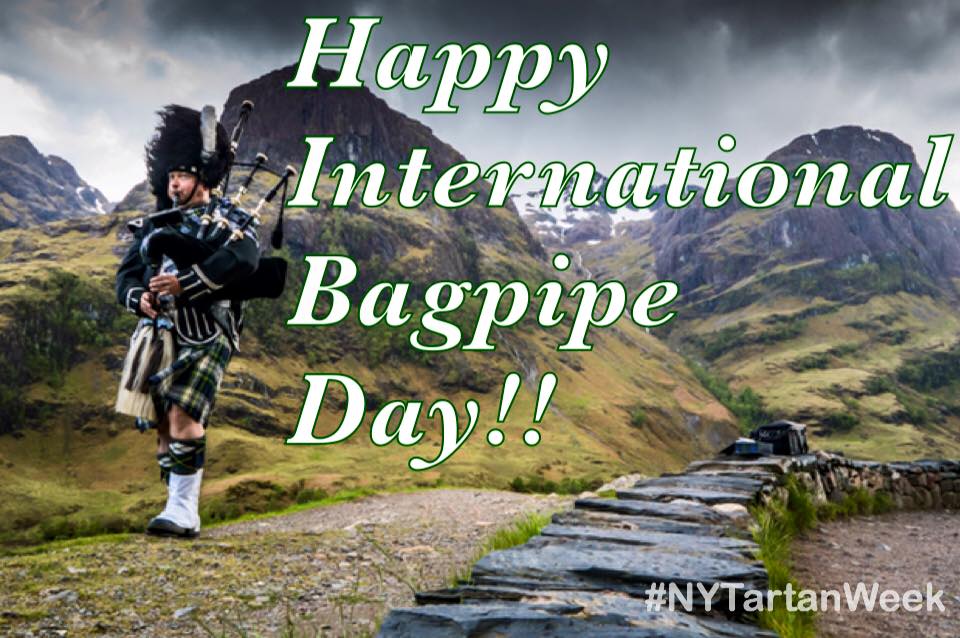
international-bagpipe


and

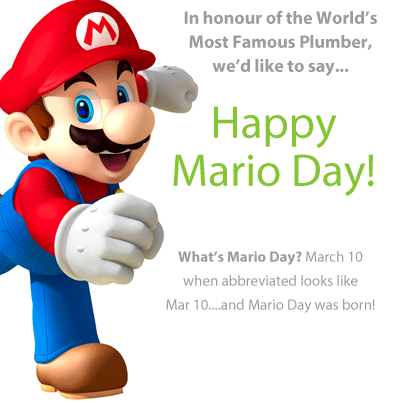
mario-day

National Mario Day is observed each year on March 10th and honors Mario from the popular Nintendo game.
It is celebrated on March 10th because of the way the date appears, when abbreviated (Mar.10),  it looks just like the name Mario.

. 1832 ~ Muzio Clementi died.  He was an Italian-born English composer, pianist, pedagogue, conductor, music publisher, editor, and piano manufacturer.  He is also the subject of this month’s Piano Explorer, which is enjoyed by my students.

. 1844 ~ Pablo de Sarasate, Spanish violinist

. 1879 ~ Ignaz Moscheles died.  He was a Bohemian composer and piano virtuoso

. 1892 ~ Arthur Honegger, French composer
Read quotes by and about Honegger
More information about Honegger

1903 ~ “Bix” Beiderbecke, American jazz cornetist
More information about Beiderbecke

. 1910 ~ Carl Heinrich Carsten Reinecke, composer, died at the age of 85

. 1935 ~ Nelson Eddy recorded Ah! Sweet Mystery of Life for Victor Records. The song came from the film, “Naughty Marietta”. Later, Eddy recorded the classic tune with Jeanette MacDonald.

. 1937 ~ An audience of 21,000 jitterbuggers jammed the Paramount Theatre in New York City to see a young clarinetist whom they would crown, ‘King of Swing’ on this night. The popular musician was Benny Goodman.

. 1940 ~ W2XBS-TV in New York City originated the first televised opera as members of the Metropolitan Opera Company presented scenes from “I Pagliacci”.

. 1956 ~ Julie Andrews was 23 years old this night when she made her TV debut. She appeared with Bing Crosby and Nancy Olson in the musical adaptation of Maxwell Anderson’s play, “High Tor”.

. 1977 ~ E Power Biggs, English organist/composer (CBS), died at the age of 70

. 2003 ~ Lionel Dakers, who directed the Royal School of Church Music for 16 years, died at age 79. Dakers was a stickler for high musical standards and opposed some of the modernizing trends in English church music. Dakers was organist at Ripon Cathedral from 1954 to 1957, then moved to Exeter Cathedral before his appointment as director of the Royal School of Church Music in 1972. In 1976, he was appointed a director of Hymns Ancient & Modern, publisher of some of the most widely used Anglican hymnals.

. 2016 ~ Keith Emerson died.  He was an English keyboardist and composer with English rock musician Emerson, Lake & Palmer.

. 2017 ~(Joan) Joni Sledge, vocalist (Sister Sledge “We are Family”), died at the age of 60

March 9 in Music History

today

. 1706 ~ Johann Pachelbel, German organist/composer, died at the age of 52
More about Pachelbel


Just the cello part:

and a bit of humor


. 1745 ~ The first carillon was shipped from England to Boston, MA.

.1903 ~ “The Master of Charms“. ~ Claude Debussy on fellow composer Gabriel Fauré in the Paris periodical Gil Blas

. 1910 ~ Samuel Barber, Pulitzer Prize-winning American composer
Read quotes by and about Barber
More information about Barber

. 1925 ~ Billy Ford, Singer with Billy & Lillie

. 1927 ~ John Beckwith, Canadian composer and music critic

. 1930 ~ Thomas Schippers, American conductor

. 1930 ~ Ornette Coleman, American jazz saxophonist and composer (Downbeat Musician of Year 1966), born in Fort Worth, Texas

. 1932 ~ Keely Smith (Dorothy Keely), Singer, was married to Louis Prima

. 1942 ~ Tommy Dorsey and his orchestra recorded Well, Git It! for Victor Records. Ziggy Elman was featured on the session which was recorded in Hollywood. Sy Oliver arranged the Dorsey classic.

.1950 ~ Howard Gordon Shelley OBE, British pianist and conductor

. 1974 ~ Many new musical faces were on the scene, including Terry Jacks, who was starting week two of a three-week stay at the top of the pop charts with his uplifting ditty, Seasons in the Sun. Other newcomers: Jefferson Starship, Billy Joel, Kiss, Olivia Newton-John, Kool & the Gang and The Steve Miller Band.

. 1985 ~ The most requested movie in history, “Gone With The Wind”, went on sale in video stores across the U.S. for the first time. The tape cost buyers $89.95. The film, starring Clark Gable and Vivien Leigh, cost $4.5 million to produce and has earned over $400 million, making it one of the biggest money-makers in motion picture history. “GWTW” is now the cornerstone of the massive MGM film library owned by Ted Turner.

. 1986 ~ Bill Cosby broke Liberace’s long-standing record and earned the biggest box-office gross in the 54-year history of Radio City Music Hall in New York City.

. 1993 ~ Bob Crosby, swing-era bandleader, passed away

. 2001 ~ Richard Stone, whose musical compositions for such popular cartoon shows as “Animaniacs” and “Freakazoid” won him more than a half-dozen Emmys, died Friday at the age of 47. Stone grew up watching Warner Bros. “Looney Tunes” cartoons in the 1950s and ’60s before going on to study cello and music composition in college. He not only emulated the style of Carl Stalling, who composed hundreds of musical scores for classic Warner Bros. cartoons in the 1930s, ’40s and ’50s, but also incorporated elements of jazz, Broadway, country and rock music into his work. Stone also carved out his own style on modern-day shows, winning seven Emmys since 1994 for such cartoons as “Animaniacs,” “Freakazoid” and “Histeria!” He also worked on the cartoons “Pinky & the Brain,” “Taz-Mania,” “Road Rovers” and “The Sylvester & Tweety Mysteries” and scored several movies, including the cult classics “Sundown: The Vampire in Retreat” and “Pumpkinhead.”

. 2016 ~ George Martin, British record producer (The Beatles), died at the age of 90

March 6 in Music History

today

. 1808 ~ The first college orchestra ever, organized at Harvard College.

. 1925 ~ Wes Montgomery, American jazz guitarist

. 1930 ~ Lorin Maazel, American conductor
More information on Maazel

. 1941 ~ Les Hite and his orchestra recorded The World is Waiting for the Sunrise on Bluebird Records. The instrumental became Hite’s most popular work. A decade later, Les Paul and Mary Ford added a vocal to the tune, making it one of their biggest-selling hit songs.

. 1944 ~ Dame Kiri Te Kanawa, New Zealand soprano
More information on Te Kanawa

. 1962 ~ Frank Sinatra recorded his final session for Capitol Records in Hollywood. Sinatra had been recording for his own record label, Reprise, for two years. His final side on Capitol was I Gotta Right to Sing the Blues, with Skip Martin’s orchestra.

. 1966 ~ Richard Hageman, Dutch-born American pianist, composer and conductor, died at the age of 84

. 1967 ~ Nelson Eddy passed away

. 1967 ~ Zoltán Kodály, Hungarian composer died

. 1985 ~ Yul Brynner played his famous role as the king in “The King and I” in his 4,500th performance in the musical. The actor, age 64, opened the successful production on Broadway in 1951.

. 2001 ~ Michael Smith, the drummer for the 1960s rock band Paul Revere and the Raiders, died in Kona, Hawaii, of natural causes at the age of 58. Smith, who played the part of the madcap jokester on stage, joined the band in 1962. The Raiders were known for their tri-cornered hats, colonial costumes and wild stage act. The Raiders were signed by CBS’ Columbia Records in 1963, and in 1965 they were hired to host “Where the Action Is,” a daily afternoon television show on ABC produced by Dick Clark Productions. The Raiders’ hit singles included Just Like Me, Kicks, Good Thing and Indian Reservation.

March 4 in Music History


March Forth is also known as Marching Music Day.  Find out more at http://www.maryo.co/march-forth-on-marching-music-day/

Today is also  National Grammar Day.

. 1678 ~ Antonio Lucio Vivaldi, Italian baroque composer. The creator of hundreds of spirited, extroverted instrumental works, Vivaldi is widely recognized as the master of the Baroque instrumental concerto, which he perfected and popularized perhaps more than any of his contemporaries. A group of four violin concerti from Vivaldi’s Op. 8, better known as “The Four Seasons”, may well be the most universally recognizable musical work from the Baroque period. Perhaps the most prolific of all the great European composers, he once boasted that he could compose a concerto faster than a copyist could ready the individual parts for the players in the orchestra.
More information about Vivaldi

(MaryO’Note:  Spring from The Four Seasons is available in the Piano Maestro App for piano students)

. 1801 ~ The U.S. Marine Band performed for the first time at a presidential nomination. That president was Thomas Jefferson.

. 1839 ~ Ignace Antoine Ladurner, pianist/composer, died at the age of 72

. 1875 ~ Bizet’s Carmen premier, Paris

. 1877 ~ The ballet of Swan Lake, composed by Peter Ilyich Tchaikovsky, was performed for the first time in the famous Bolshoi Theatre in Moscow, Russia

and

. 1915 ~ Carlos Surinac, Catalan Spanish-born composer and conductor

. 1918 ~ Frank Wigglesworth, American composer

. 1925 ~ Enzo Stuarti, Opera singer

. 1928 ~ Samuel Adler, German-born American composer

. 1929 ~ Bernard Haitink, Dutch conductor

. 1932 ~ Miriam (Zensile) Makeba, South African born singer who was the first black South African to attain international stardom.

. 1934 ~ Barbara McNair, Singer, TV hostess of The Barbara McNair Show, actress

. 1942 ~ Dick Jurgen’s orchestra recorded One Dozen Roses on Okeh Records in Chicago.

. 1942 ~ The Stage Door Canteen opened on West 44th Street in New York City. The canteen became widely known as a service club for men in the armed forces and a much welcomed place to spend what would otherwise have been lonely hours. The USO, the United Service Organization, grew out of the ‘canteen’ operation, to provide entertainment for American troops around the world.

. 1943 ~ Irving Berlin picked up the Best Song Oscar for a little ditty he had written for the film, Holiday Inn: White Christmas at the 15th Academy Awards.

. 1944 ~ Bobby Womack, Songwriter, singer

. 1948 ~ Chris Squire, Bass with Yes

. 1948 ~ Shakin’ Stevens (Michael Barratt), Singer, actor

. 1951 ~ Chris Rea, Guitarist with these groups Chris Rea Band and Ambrosia; singer, songwriter

. 1969 ~ Chastity Bono, Singer, daughter of Sonny & Cher

. 1978 ~ Andy Gibb reached the top of the music charts as (Love is) Thicker ThanWater reached #1 for a two-week stay. The Bee Gees also set a record on this day as their single, How Deep Is Your Love, from the Saturday Night Fever soundtrack stayed in the top 10 for an unprecedented 17 weeks.

. 1981 ~ Lyricist E.Y. ‘Yip’ Harburg died in an auto accident in Hollywood, CA at the age of 82. Two of his most successful hits were Over the Rainbow from The Wizard of Oz and It’s Only a Paper Moon, popularized by Nat King Cole and many others.

. 2001 ~ Glenn Hughes, a singer who performed as the mustachioed, leather-clad biker in the disco band the Village People, died at the age of 50. The group, which was the brainchild of producer Jacques Morali, featured men dressed as an Indian, a soldier, a construction worker, a police officer, a cowboy and Hughes’ character, a biker. The band released its first single, San Francisco (You’ve Got Me), in 1977. It followed the next year with its first hit, Macho Man. The band then produced a string of hits, including Y.M.C.A., In the Navy and Go West. Collectively the Village People sold 65 million albums and singles. Although disco fell out of fashion in the 1980s, Hughes stayed with the band until 1996, when he left to sing in Manhattan cabarets.

. 2003 ~ Fedora Barbieri, a mezzo-soprano whose passionate singing sometimes stole the scene from opera diva Maria Callas, died. She was 82. Born in Trieste in 1920, Barbieri performed on stages ranging from Milan’s La Scala to New York’s Metropolitan Opera House to London’s Covent Garden. Barbieri’s career started in 1940 and for her 80th birthday, she sang the role of Mamma Lucia in Pietro Mascagni’s “Cavalleria Rusticana” in Florence. Her repertoire included roles in operas by Giuseppe Verdi and Giacomo Puccini. Barbieri died in Florence, which she had adopted as her home and where she gave many performances.

. 2003 ~ Emilio Estefan Sr., father of the Latin music mogul, died at the age of 83. Estefan Sr. played the plump and comical ambassador in a music video for the Miami Sound Machine’s hit song Conga, which featured singer Gloria Estefan, wife of Estefan Jr. The Miami Sound Machine’s office was once located in Estefan Sr.’s garage. His son later built a home for his parents on his Star Island compound. Estefan Sr. was born in Santiago de Cuba and moved to Spain with Estefan Jr. in 1966. His wife and another son stayed in Cuba because the boy was of military draft age and couldn’t leave until 1980. Estefan Sr. came to Miami in 1968, a year after Estefan Jr., and opened a clothing business in Hialeah.

. 2009 ~ Joseph Bloch died. He was an American concert pianist and professor of piano literature at the Juilliard School in New York City. During a career at Juilliard that spanned five decades, Bloch’s students included Emanuel Ax, Van Cliburn, Misha Dichter, Garrick Ohlsson, Jeffrey Siegel and Jeffrey Swann.